No products in the cart.

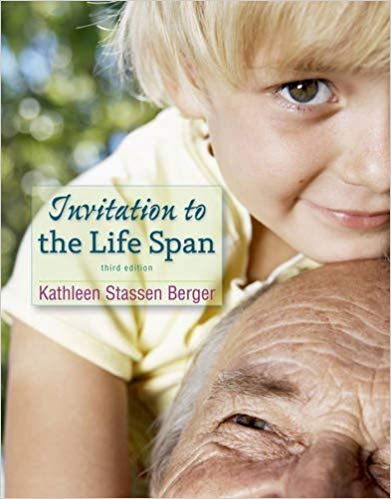
Invitation To The Life Span 3rd Edition By Kathleen Stassen Berger - Test Bank

Invitation To The Life Span 3rd Edition By Kathleen Stassen Berger - Test Bank   Instant Download - Complete Test Bank With Answers     Sample Questions Are Posted Below   273. Which of the following statements is true about alcohol use disorder?A) Alcohol use disorder is polygenic and culture is a pivotal factor.B) Alcohol …

$19.99

Invitation To The Life Span 3rd Edition By Kathleen Stassen Berger – Test Bank


Instant Download – Complete Test Bank With Answers


Sample Questions Are Posted Below


273. Which of the following statements is true about alcohol use disorder?
A) Alcohol use disorder is polygenic and culture is a pivotal factor.
B) Alcohol use disorder is polygenic and genes are a pivotal factor.
C) Alcohol use disorder is X-linked and culture is a pivotal factor.
D) Alcohol use disorder is X-linked and genes are a pivotal factor.
274. For biological reasons, such as metabolism, women become drunk on _____ than men.
A) more alcohol
B) less alcohol
C) the same amount of alcohol
D) more alcohol in the summer and less alcohol in the winter
275. All of the following affect vision EXCEPT _____.
A) genes
B) age
C) culture
D) gender
276. Eyeballs change shape at typical stages of development, including puberty and middle adulthood. This makes it more likely
that _____ will increase at puberty and _____ will decrease during middle adulthood.
A) nearsightedness; farsightedness
B) farsightedness; nearsightedness
C) nearsightedness; nearsightedness
D) farsightedness; farsightedness
277. _____ is the statistic that indicates how much of the variation in a particular trait in a particular population and in a particular
context can be traced to genes.
A) A correlation
B) Heritability
C) The mean
D) Probability
278. The heritability for human traits, such as nearsightedness, _____.
A) is the same in every culture
B) can differ between cultures
C) is not influenced by cultural factors
D) will always be different between cultures
279. Eight-year-old Joe has no difficulty seeing things near him but sometimes struggles to see things in the distance. When Joe
has his eyes checked, he is told that he does not yet need corrective lenses for nearsightedness. Instead, drawing on current
research, the ophthalmologist suggests that he should first try to _____.
A) do homework in a very brightly lit room
B) watch television on a larger screen
C) play outside more
D) avoid reading small print
Page 21
Answer Key
1. All living things are composed of cells. The work of cells is done by proteins. Each cell manufactures certain proteins
according to the instructions stored by molecules of DNA at the heart of each cell. These coding DNA molecules are on a
chromosome. The instructions in the chromosomes are organized into genes. Genes direct the formation of specific proteins.
2. Genotype refers to the collection of genes a person carries in his or her DNA. For example, a person may carry a gene for red
hair without having red hair. Phenotype is a person’s actual appearance and behavior. In addition to the genes a person
inherits, epigenetic factors and the interaction among genes determine the actual traits that are expressed in each person. For
example, a person may carry a gene for being tall, but without the nutrition needed may not become tall.
3. Sex is determined by the 23rd set of chromosomes. If the set contains two X chromosomes, then the infant is female. If it
contains an X and a Y, then the infant is a boy. The mother’s egg cell is always an X. Therefore, the father’s sperm determines
the sex of the infant because the sperm can carry either an X or a Y chromosome.
4. Monozygotic, or identical, twins result when one ovum is fertilized by one sperm, and the zygote splits into two separate
cells. This results in two identical cells that are eventually born as identical twins. Dizygotic, or fraternal, twins result when
two ova are fertilized by two different sperms.
5. Within hours after conception, a zygote begins duplication and division. First the 23 pairs of chromosomes carrying all the
genes duplicate, forming two complete sets of the genome. These two sets move toward opposite sides of the zygote, and the
single cell splits down the center, forming two cells. Each of these cells contains the original genetic code. These two cells
duplicate and divide again, becoming four, which duplicate and divide, becoming eight, and so on. At approximately the
eight-cell stage, although duplication and division continue, differentiation begins. During differentiation, cells specialize,
becoming heart, ear, or liver cells, etc.
Page 22
Define genotype and
phenotype
Defines genotype and
phenotype
Defines either
genotype or
phenotype
Cannot define either
term or confuses the
terms
Explain the impact of
both
Explains the impact of
both terms
Explains the impact of
either term
Does not explain the
impact of either term
or confuses the terms
Give an example for
both terms
Gives an example for
both terms
Gives an example for
either term
Does not give an
example for either
term or confuses the
terms
Weak (1-0 pts)
Explain how five
components are
related
Good (5 pts) Fair (3 pts) Weak (1-0 pts)
Explain how the
gender is decided
Gives the answer
listed above
Gives the answer
listed above using just
X-Y instead of
mentioning
chromosomes
Just states how a
father’s sperm
determines gender
without explanation
Explains how all five
components are
related
Explains how three or
four components are
related
Explains how two or
fewer components are
related
Good (5 pts) Fair (3 pts) Weak (1-0 pts)
Describe the
difference
States that
monozygotic twins are
identical and dizygotic
are fraternal
Uses the terms
identical and fraternal
instead of the
scientific terms
Cannot describe the
difference or confuses
the two twin types
Explain how each
type is conceived
Explains the
conception process for
both twin types
Explains the
conception process for
either twin type
Cannot explain the
conception process for
either twin type
Good (5 pts) Fair (3 pts)
Good (5 pts) Fair (3 pts) Weak (1-0 pts)
Describe initial
duplication
Describes initial
duplication, using
vocabulary such as
chromosomes and
genome
Describes initial
duplication without
using vocabulary
Does not describe
initial duplication
Describe division
and differentiation
Describes division and
differentiation,
including when
differentiation begins
Is vague about
division or
differentiation
Cannot describe
division and
differentiation
Good (5 pts) Fair (3 pts) Weak (1-0 pts)
6. Following the completion of the Human Genome Project in 2001, people were surprised to find that (1) humans have far
fewer than 100,000 genes, the number often cited in the twentieth century. The total number of human genes is about 20,000
to 23,000. (2) The precise number of genes is unknown because it is not always easy to figure out where one gene starts and
another ends, or even if a particular stretch of DNA is actually a gene. (3) Any two men or women, of whatever ethnicity,
share 99.5 percent of their genetic codes. (4) The genetic codes for humans and chimpanzees are 98 percent the same, and the
genomes for every other mammal are at least 90 percent the same as for people.
7. Color blindness is an X-linked recessive gene. This means that it is always passed on from a mother on the X chromosome.
Because boys have one X and one Y chromosome, they inherit one recessive gene on the X chromosome and have no
dominant chromosome to overpower it on the Y chromosome. This makes them much more apt to be color-blind. Girls have
two X chromosomes. This means that they will usually have a dominant gene on the other X chromosome. Thus, they may
carry the trait but will not experience it themselves.
8. At approximately the eight-cell stage of a zygote, although duplication and division continue, a process called differentiation
starts. In differentiation, cells specialize, taking different forms and reproducing at various rates, depending on where they are
located. For instance, some cells become part of an eye, others part of a finger, still others part of the brain or heart, etc.
9. The first two weeks (14 days) of prenatal development are the germinal period. During this time, the zygote experiences cell
duplication, division, and differentiation. The major milestone is that the outer cells become the placenta, which enables
implantation, and the inner cells form a nucleus that will become the embryo. The embryonic period lasts from the third
through the eighth prenatal week (day 14 to 56). The major developmental milestones are the formation of body structures
and systems, including a rudimentary central nervous system and circulatory system. The fetal period starts at the ninth
prenatal week and ends at birth. Fetal growth, sex organs, and refinement of all the body structures and systems are the major
developmental accomplishments.
Page 23
Good (5 pts) Fair (3 pts) Weak (1-0 pts)
Explain color
blindness inheritance
Explains how color
blindness is carried on
the X chromosome,
making males
vulnerable
Explains that color
blindness comes from
a parent without
identifying the mother
or without identifying
which gender is
vulnerable
Cannot explain sex-
linked color blindness
inheritance
Describe why males
are more apt to be
color-blind
Describes why males
are apt to have it by
discussing
chromosomes and
how females can carry
it
Describes why males
are apt to have it
without discussing
why females are
carriers
Cannot describe why
males are apt to have
this trait or how
females are carriers
Weak (1-0 pts)
Describe three
surprises
Good (5 pts) Fair (3 pts) Weak (1-0 pts)
Describe
differentiation
Defines differentiation
and gives at least two
examples
Defines differentiation
and gives one example
Does not define
differentiation or does
not give at least one
example
Tell when it
begins
Knows that it begins
around the eight-cell
stage of a zygote
Knows that it occurs
during the zygote stage
Does not state when it
occurs or gives the
wrong stage
Describes three of the
four surprises outlined
above (states far less
than 100,000 or
approx. 20,000 genes)
Describes two of the
four surprises outlined
above
Describes one or none of
the surprises outlined
above
Good (5 pts) Fair (3 pts) Weak (1-0 pts)
Describe the three
prenatal
developmental
periods, including
their lengths
Describes the three
prenatal periods,
including the length of
each one
Describes just two of
the prenatal periods or
does not accurately
describe the length of
all three
Describes one or none
of the periods or their
lengths accurately or
confuses the periods
Detail the milestones
that occur during
each period
Details the major
milestones for each
period
Details the milestones
for two of the periods
Details the milestones
for one or none of the
periods or confuses
them
Good (5 pts) Fair (3 pts)
10. The embryonic period covers the third through the eighth week of development. This period begins when a thin line (called
the primitive streak) appears down the middle of the cell mass. That line becomes the neural tube, eventually becoming the
central nervous system, including the brain and spine. It is during this time that differentiation leads to the formation and
development of all major internal and external body systems. By the end of this period, all body systems are present and
functioning with the exception of sex organs.
11. A cesarean section (c-section) is also known as a surgical birth. Incisions through the mother’s abdomen and uterus allow the
fetus to be removed quickly, instead of being delivered through the vagina. Generally, cesareans are (1) safe for mother and
baby and (2) can save a baby’s life when the infant’s head is too large for the pelvis. Advantages for hospitals include (3) ease
in scheduling, (4) quicker than vaginal deliveries, and (5) more profitable than vaginal deliveries. Drawbacks include (1)
complications after birth, (2) a reduction in breast-feeding, and (3) by age 3, children born by cesarean have double the rate
of childhood obesity.
12. Symptoms of postpartum depression include a mother’s deep sadness and feelings of inadequacy, including feeling burdened
by baby care, ignoring the baby’s needs, and thoughts of neglecting or hurting the infant.
Possible outcomes for the baby include inadequate food and care, possible abuse or neglect, lack of social stimulation, and
the likelihood of behavioral problems later on.
13. Couvade is when fathers have biological experiences related to pregnancy and birth. For example, many fathers experience
symptoms of pregnancy including weight gain, indigestion, and pain during the mother’s labor. Also, fathers are vulnerable to
depression.
14. Down syndrome occurs when a person has three copies of chromosome 21. Some 300 distinct characteristics can result from
that third chromosome 21. No individual with Down syndrome is identical to another, but the syndrome usually produces a
thick tongue, a round face, slanted eyes, hearing problems, heart abnormalities, muscle weakness, and short stature.
Intellectual development is often slow. Family context, educational efforts, and possibly medication can decrease the harm.
Page 24
Good (5 pts) Fair (3 pts) Weak (1-0 pts)
Explain the
procedure
Explains the
procedure, stating that
it is also called a c-
section or surgical
birth
Explains the
procedure without
extra details
Does not explain the
procedure
Discuss the risks and
benefits
Discusses two or more
risks and two or more
benefits
Discusses two risks or
two benefits or one
risk and one benefit
Does not discuss at
least one risk and one
benefit
Weak (1-0 pts)
Describe the
embryonic period
Good (5 pts) Fair (3 pts) Weak (1-0 pts)
Describe the
maternal symptoms
of postpartum
depression
Describes two of the
symptoms
Describes one of the
symptoms
Does not describe a
symptom
Name two possible
outcomes for the
baby
Names two possible
outcomes
Names one possible
outcome
Does not name a
possible outcome
States the time period
and what occurs to the
embryo (differentiation
into three layers)
States the time period
or what occurs to the
embryo
Cannot state the time
period covered or
what occurs to the
embryo
Good (5 pts) Fair (3 pts) Weak (1-0 pts)
Define couvade Defines couvade Gives a vague
definition
Fails to define
couvade
Give two examples Gives two examples Gives one example Gives no example or
an incorrect example
Detail fetal status States that all body
systems are present with
the exception of sex
organs
States that all body
systems are
present—but includes
the sex organs
Good (5 pts) Fair (3 pts) Weak (1-0 pts)
Identify how Down
syndrome is a
chromosomal
condition
Explains how it is
caused by three copies
of chromosome 21
Is vague about how
Down syndrome
occurs or fails to
mention the
chromosome number
Cannot explain how
Down syndrome
occurs
List four
characteristics
associated with
Down syndrome
Lists four
characteristics from
the list above
Lists three
characteristics from
the list above
Lists two or fewer
characteristics from
the list above
Does not state that all
body systems are
functioning
Good (5 pts) Fair (3 pts)
15. Behavioral teratogens are substances and conditions that do not cause physical defects in a developing fetus but increase the
risk of harm to the child’s brain, impairing the future child’s intellectual and emotional functioning. For example, if a pregnant
mother drinks alcohol, the fetus’s brain could be damaged. Consequences of exposure to behavioral teratogens include
hyperactivity, learning disabilities, and antisocial behavior.
16. Teratogens include any influence on the pregnant mother, including malnutrition, stress, exposure to drugs, viruses, or
pollutants. Teratogens increase the risk of harm to a developing embryo or fetus, but they do not always cause damage. (1)
Timing is critical because some teratogens may cause damage only during a critical period. (2) The dose and/or frequency of
exposure is important. Usually, the greater the dose or exposure, the greater the risk of fetal abnormalities. (3) Finally, the
genes of the developing embryo or fetus can influence the effects of teratogens because some embryos or fetuses are more
genetically vulnerable to certain teratogens.
17. Low birthweight can be caused by maternal drug use, especially smoking, maternal or fetal illness, underage (teen) mother,
underweight, undereating, poor maternal nutrition, and environmental pollution.
18. Nature and nurture can both contribute to a person experiencing alcohol use disorder. In some individuals, genes (nature) can
create the addictive desire to drink to excess. In addition, each human body metabolizes alcohol differently. Sex and gender
also affect the risk of the disorder. For biological reasons, women become drunk on less alcohol than men.
The environment and social factors (nurture) are important. For example, many cultures encourage men to drink but not
women. In Japan, both sexes have the same genes for metabolizing alcohol, yet women drink only about one-tenth as much as
men. When women of Japanese ancestry live in the United States, their alcohol consumption increases.
19. Genes
20. 46
21. allele
22. gamete
23. homozygous
24. polymorphic
25. heterozygous
26. copy number variations
27. genotype
28. phenotype
29. genome
30. XX
31. XX
32. XY
33. XY
34. Greg
35. monozygotic
36. one ovum fertilized by one sperm that splits apart
37. 100
38. dizygotic
Page 25
Weak (1-0 pts)
Identify teratogens Identifies three or
more teratogens;
answer may be
specific (alcohol,
crack, marijuana,
pesticides, etc.)
Identifies two
teratogens; answer
may be specific
(alcohol, crack,
marijuana, pesticides,
etc.)
Fails to identify more
than one teratogen
Describe two factors
that influence
teratogens’ impact
Describes two factors
from the list above
Describes one factor
from the list above
Does not describe a
factor
Weak (1-0 pts)
Define behavioral
teratogens
Good (5 pts) Fair (3 pts) Weak (1-0 pts)
Name four factors of
low birthweight
Names four of the
factors from the list
above
Names three of the
factors from the list
above
Names two or fewer
of the factors from the
list above
Defines the term and
expresses that these
cause brain damage,
not physical defects
Defines the term such
that it could also
include physical
defects
Does not accurately
define the term
Good (5 pts) Fair (3 pts) Weak (1-0 pts)
Explain how nature
and nurture can
result in alcoholism
Explains how both
nature and nurture can
contribute to
alcoholism
Explains how either
nature or nurture can
contribute to
alcoholism
Cannot explain how
either contribute to
alcoholism or
confuses the terms
Name at least two
behavioral teratogens
Names at least two
behavioral teratogens
Names one behavioral
teratogen
Does not name a
common behavioral
teratogen or gives an
example of one that
causes physical
defects
State two potential
consequences
States two potential
consequences
States one potential
consequence
Does not state a
potential consequence
or states a physical
defect
Good (5 pts) Fair (3 pts)
39. two separate ova that were fertilized by two separate sperm
40. polygenic
41. Multifactorial
42. additive
43. dominant–recessive pattern
44. carrier
45. epigenetic
46. stem
47. stem
48. differentiate
49. implantation
50. sonogram
51. age of viability
52. 4.5 (4 1/2)
53. 12
54. Apgar scale
55. cesarean section (c-section)
56. 34
57. epidural
58. suck (breast-feed)
59. induced
60. hospital labor rooms
61. home
62. doula
63. Brazelton Neonatal Behavioral Assessment Scale (NBAS)
64. reflex
65. postpartum depression
66. reduces
67. couvade
68. Down syndrome
69. Down syndrome
70. fragile X syndrome
71. teratogen
72. behavioral
73. threshold
74. fetal alcohol syndrome (FAS)
75. neural-tube
76. cerebral palsy
77. anoxia
78. false negative
79. small for gestational age
80. a combination of nature and nurture
81. heritability
82. nearsightedness (myopia)
83. B
84. B
85. A
86. B
87. A
88. B
89. B
90. B
91. B
92. A
93. A
94. B
95. B
96. A
97. B
98. A
99. A
100. B
101. A
102. A
103. B
104. A
105. B
106. A
107. A
108. A
109. B
110. A
111. B
112. A
113. B
114. B
115. A
116. B
Page 26
117. B
118. A
119. A
120. A
121. B
122. A
123. B
124. B
125. B
126. B
127. A
128. A
129. A
130. D
131. B
132. A
133. A
134. A
135. B
136. B
137. A
138. D
139. A
140. B
141. B
142. C
143. C
144. C
145. A
146. A
147. C
148. C
149. C
150. B
151. C
152. A
153. A
154. C
155. B
156. B
157. B
158. C
159. A
160. A
161. B
162. A
163. B
164. B
165. C
166. D
167. D
168. A
169. B
170. C
171. A
172. C
173. C
174. C
175. A
176. A
177. B
178. A
179. C
180. A
181. C
182. D
183. C
184. B
185. B
186. C
187. C
188. C
189. D
190. C
191. C
192. A
193. C
194. B
Page 27
195. C
196. D
197. A
198. D
199. B
200. D
201. B
202. C
203. D
204. A
205. D
206. B
207. C
208. D
209. A
210. B
211. C
212. D
213. D
214. D
215. C
216. B
217. B
218. C
219. B
220. B
221. C
222. B
223. A
224. D
225. D
226. D
227. B
228. D
229. A
230. B
231. D
232. C
233. B
234. B
235. C
236. B
237. A
238. C
239. A
240. C
241. D
242. D
243. C
244. A
245. C
246. D
247. D
248. A
249. B
250. A
251. A
252. C
253. A
254. D
255. C
256. C
257. B
258. C
259. D
260. D
261. A
262. C
263. B
264. A
265. B
266. D
267. A
268. D
269. C
270. A
271. C
272. C
Page 28
273. C
274. B
275. D
276. C
277. B
278. B
279. C

Additional information

Add Review

Your email address will not be published. Required fields are marked *