No products in the cart.

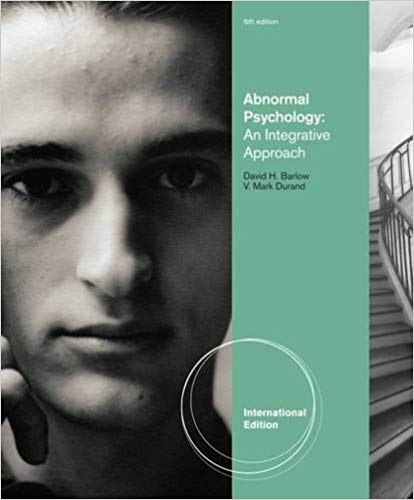
Abnormal Psychology An Integrative Approach, 6th Edition International Edition by David Barlow - Test Bank

Abnormal Psychology An Integrative Approach, 6th Edition International Edition by David Barlow - Test Bank   Instant Download - Complete Test Bank With Answers     Sample Questions Are Posted Below   CHAPTER 5: ANXIETY AND ITS DISORDERS   MULTIPLE CHOICE   Which of the following characterizes the mood-state known as anxiety? a. Positive mood …

$19.99

Abnormal Psychology An Integrative Approach, 6th Edition International Edition by David Barlow – Test Bank


Instant Download – Complete Test Bank With Answers


Sample Questions Are Posted Below


CHAPTER 5: ANXIETY AND ITS DISORDERS


MULTIPLE CHOICE


  1. Which of the following characterizes the mood-state known as anxiety?
a. Positive mood state
b. Reduced heart rate
c. Apprehension about the future
d. Muscle relaxation


ANS:  C                    DIF:    Easy                         OBJ:               1; APALO: 1.2.a(3)

MSC:  TYPE: Factual


  1. Anxiety is closely related to which of the following psychological disorders?
a. Schizophrenia
b. Depression
c. Dementia
d. Psychosis


ANS:  B                    DIF:    Easy                         OBJ:               1; APALO: 1.2.a(3)

MSC:  TYPE: Conceptual


  1. People behave best when they are ___________.
a. very anxious
b. not anxious at all
c. a little anxious
d. fearful


ANS:  C                    DIF:    Easy                         OBJ:               1; APALO: 1.2.a(3)

MSC:  TYPE: Factual


  1. When people are anxious, they
a. know it is irrational, but can’t help it.
b. believe their feelings are rational.
c. have trouble recognizing reality.
d. don’t realize they are feeling anxious.


ANS:  A                    DIF:    Easy                         OBJ:               1; APALO: 1.2.a(3)

MSC:  TYPE: Conceptual


  1. Anxiety is thought to be a____________ state, while fear is more_______.
a. future-oriented; immediate
b. short-term; long-term
c. real; irrational
d. immediate; future-oriented


ANS:  A                    DIF:    Easy                         OBJ:               1; APALO: 1.2.a(3)

MSC:  TYPE: Factual


  1. The “flight or fight” response that is triggered by anxiety primarily involves the ____________ nervous system.
a. autonomic
b. parasympathetic
c. peripheral
d. somatic


ANS:  A                    DIF:    Easy                         OBJ:               1; APALO: 1.2.a(3)

MSC:  TYPE: Conceptual


  1. “I’ve got to get out of here right now, or I may not make it!” This statement is most likely to be said by someone experiencing a(n)
a. episode of depression.
b. future-oriented mood state.
c. fear reaction.
d. parasympathetic “surge.”


ANS:  C                    DIF:    Moderate                  OBJ:               1; APALO: 1.2.a(3)

MSC:  TYPE: Applied


  1. ____________ is characterized by apprehension because of future unpredictability, whereas ____________ is characterized by strong escapist tendencies.
a. Anxiety; fear
b. Fear; anxiety
c. Psychoses; neuroses
d. neuroses; psychoses


ANS:  A                    DIF:    Moderate                  OBJ:               1; APALO: 1.2.a(3)

MSC:  TYPE: Conceptual


  1. Which of the following is NOT a basic type of panic attack?
a. Situation bound
b. Unexpected
c. Situation predisposed
d. Situation inevitable


ANS:  D                    DIF:    Easy                         OBJ:               1; APALO: 1.2.a(3)

MSC:  TYPE: Factual


  1. Mrs. Pan has an anxiety disorder in which she has occasional panic attacks when shopping at the mall. This type of panic attack is referred to as _______________.
a. uncued
b. situationally predisposed
c. cued
d. situationally bound


ANS:  B                    DIF:    Moderate                  OBJ:               1; APALO: 1.2.a(3)

MSC:  TYPE: Applied


  1. Which type of panic attack is most closely related to phobias?
a. Situationally predisposed
b. Situationally bound
c. Unexpected
d. Uncued


ANS:  B                    DIF:    Moderate                  OBJ:               1; APALO: 1.2.a(3)

MSC:  TYPE: Factual


  1. Lawanda was walking down the street on a bright sunny day when, all of a sudden, she had an abrupt attack of intense fear that totally surprised her. This is what type of panic attack?
a. Situationally predisposed
b. Situationally bound
c. Cued
d. Uncued


ANS:  D                    DIF:    Moderate                  OBJ:               1; APALO: 1.2.a(3)

MSC:  TYPE: Applied


  1. Hideki was attending his fifth baseball game at Condor Stadium, where he had previously had a panic attack. He did not know if he would have a panic attack today, but shortly after entering the stadium, he did. This type of panic attack is ____________.
a. situationally predisposed
b. situationally bound
c. cued
d. uncued


ANS:  A                    DIF:    Moderate                  OBJ:               1; APALO: 1.2.a(3)

MSC:  TYPE: Applied


  1. According to the DSM-IV-TR criteria, the symptoms of a panic attack develop abruptly and reach a peak within _____ minute(s).
a. 1
b. 10
c. 30
d. 60


ANS:  B                    DIF:    Easy                         OBJ:               1; APALO: 1.2.a(3)

MSC:  TYPE: Factual


  1. Fear activates a
a. surge of autonomic energy so we can flee.
b. psychological but not physiological response.
c. physiological but not psychological response.
d. decrease in autonomic energy so we can flee.


ANS:  A                    DIF:    Easy                         OBJ:               1; APALO: 1.2.a(3)

KEY:  WWW            MSC:  TYPE: Conceptual


  1. Research suggests that we inherit a tendency to be tense, which is ____________.
a. caused by a single gene
b. caused by multiple genes
c. related to depression
d. related to schizophrenia


ANS:  B                    DIF:    Easy                         OBJ:               1; APALO: 1.2.a(3)

MSC:  TYPE: Factual


  1. Physiological assessments of panic attacks recorded in the laboratory indicate an increase in all of the following EXCEPT ______________.
a. heartbeat
b. finger temperature
c. muscle tension
d. stomach contractions


ANS:  D                    DIF:    Easy                         OBJ:               1; APALO: 1.2.a(3)

KEY:  WWW            MSC:  TYPE: Factual


  1. Which of the following is an accurate statement about anxiety?
a. An inherited tendency can make us tense or uptight.
b. A single gene makes us vulnerable to anxiety.
c. Panic disorder does not “run in families.”
d. Stress is a direct cause of panic disorder.


ANS:  A                    DIF:    Moderate                  OBJ:               2; APALO: 1.2.a(3)

MSC:  TYPE: Conceptual


  1. Which of the following neurotransmitter systems is associated not only with anxiety but also with depression?
a. GABA-benzodiazepine
b. Noradrenergic
c. Serotonergic
d. Corticotropin releasing factor (CRF) system


ANS:  D                    DIF:    Difficult                   OBJ:               2; APALO: 1.2.a(3)

MSC:  TYPE: Conceptual


  1. The area of the brain most often associated with anxiety is the _____________.
a. limbic system
b. reticular activating system
c. occipital lobe
d. corpus callosum


ANS:  A                    DIF:    Easy                         OBJ:               2; APALO: 1.2.a(3)

KEY:  WWW            MSC:  TYPE: Factual


  1. According to Jeffrey Gray, a British neuropsychologist, the behavioral inhibition system (BIS) is activated by danger signals _________________, resulting in the experience of anxiety.
a. ascending from the brain stem
b. descending from the cortex
c. arising from both the brain stem and the cortex
d. within the amygdala only


ANS:  C                    DIF:    Moderate                  OBJ:               2; APALO: 1.2.a(3)

MSC:  TYPE: Conceptual


  1. Members of the Falcons High School senior class will have an increased risk of developing anxiety disorders if they
a. smoke pot more than once per week.
b. smoke 20 or more cigarettes daily.
c. drink alcohol every day.
d. use anabolic steroids for 6 months or more.


ANS:  B                    DIF:    Difficult                   OBJ:               2; APALO: 1.2.a(3)

MSC:  TYPE: Applied


  1. The recent research by Johnson et al. (2000) on cigarette smoking by teenagers indicates the possibility that
a. brain circuits are permanently “wired.”
b. neurotransmitter systems operate independently of non-biological influences.
c. sensitivity of brain circuits can be effected by environmental factors.
d. respiratory disorders cause changes in neurotransmitter systems.


ANS:  C                    DIF:    Difficult                   OBJ:               2; APALO: 1.2.a(3)

KEY:  WWW            MSC:  TYPE: Applied


  1. Which of the following brain areas is NOT closely associated with anxiety?
a. Hippocampus
b. Amygdala
c. Prefrontal cortex
d. Hypothalamus


ANS:  D                    DIF:    Moderate                  OBJ:               1; APALO: 1.2.a(3)

MSC:  TYPE: Factual


  1. The behavioral inhibition system is activated by signals from the _____________.
a. brain stem
b. hypothalamus
c. hippocampus
d. cortex


ANS:  A                    DIF:    Easy                         OBJ:               1; APALO: 1.2.a(3)

MSC:  TYPE: Factual


  1. Research suggests that anxiety is more likely to develop in adults if they
a. smoked after age 20.
b. never smoked.
c. smoked as a teen.
d. chewed tobacco as a teen.


ANS:  C                    DIF:    Easy                         OBJ:               1; APALO: 1.2.a(3)

MSC:  TYPE: Factual


  1. Studies suggest that parents can protect their child from anxiety if they
a. never let them experience adversity.
b. teach independence by ignoring the child’s needs.
c. let children explore the world and deal with the unexpected.
d. cope for the child as much as possible.


ANS:  C                    DIF:    Moderate                  OBJ:               1; APALO: 1.2.a(3)

MSC:  TYPE: Conceptual


  1. Stressful life events, such as marriage, divorce, familial death, academic pressures, etc., trigger our vulnerabilities to anxiety. These are examples of a ______________ contribution.
a. psychological
b. biological
c. social
d. cultural


ANS:  C                    DIF:    Easy                         OBJ:               1; APALO: 1.2.a(3)

MSC:  TYPE: Conceptual


  1. A child who is afraid of dogs because her father was afraid of dogs is said to have a ________ vulnerability.
a. specific psychological
b. general biological
c. general psychological
d. specific biological


ANS:  A                    DIF:    Easy                         OBJ:               1; APALO: 1.2.a(3)

MSC:  TYPE: Conceptual


  1. Research suggests that anxiety and depression frequently
a. co-occur.
b. are totally separate disorders.
c. can occur in the same person, but not at the same time.
d. share no vulnerability.


ANS:  A                    DIF:    Easy                         OBJ:               1; APALO: 1.2.a(3)

KEY:  WWW            MSC:  TYPE: Factual


  1. Recent research by Barlow (2002) and others indicates that vulnerability to anxiety disorders is related to
a. one’s sense of control over environmental events.
b. the number of unexpected occurrences in one’s life.
c. the number of siblings in one’s family.
d. genetic or biological factors only.


ANS:  A                    DIF:    Moderate                  OBJ:               2; APALO: 1.2.a(3)

MSC:  TYPE: Applied


  1. At the time of assessment of an anxiety disorder, _________ of patients should have at least one other anxiety or depressive disorder.
a. 15%
b. 25%
c. 55%
d. 75%


ANS:  C                    DIF:    Moderate                  OBJ:               3; APALO: 1.2.a(3)

MSC:  TYPE: Factual


  1. Having an anxiety disorder increases the risk of ______________.
a. depression
b. migraines
c. suicidal ideation
d. all of the above


ANS:  D                    DIF:    Moderate                  OBJ:               1; APALO: 1.2.a(3)

MSC:  TYPE: Factual


  1. Which of the following statements is TRUE about anxiety disorders?
a. Major depress occurs in 65% of the cases of people diagnosed with an anxiety disorder.
b. Having an anxiety disorder along with depression has no effect on the recovery rate.
c. Having an anxiety disorder might contribute to a physical disorder such as arthritis.
d. The most common additional diagnosis for all anxiety disorders was alcoholism.


ANS:  C                    DIF:    Moderate                  OBJ:               1; APALO: 1.2.a(3)

MSC:  TYPE: Factual


  1. In what way is worry useful?
a. It helps us plan for the future.
b. It makes sure we are prepared for a task.
c. It makes us double check that we have thought of everything before leaving on a trip.
d. All of these


ANS:  D                    DIF:    Moderate                  OBJ:               3; APALO: 4.2.b

MSC:  TYPE: Factual


  1. Which of the following terms is most associated with generalized anxiety disorder (GAD)?
a. Fear
b. Panic
c. Worry
d. Emotion


ANS:  C                    DIF:    Easy                         OBJ:               3; APALO: 1.2.a(3)

MSC:  TYPE: Factual


  1. All of the following are symptoms of generalized anxiety disorder (GAD) EXCEPT
a. muscle tension.
b. mental agitation.
c. worrying about minor daily events.
d. hypersomnia.


ANS:  D                    DIF:    Easy                         OBJ:               3; APALO: 1.2.a(3)

MSC:  TYPE: Conceptual


  1. Research studies have found that generalized anxiety disorder (GAD) is particularly prevalent among ______________.
a. young adult males
b. teenage girls
c. the elderly
d. midlife males


ANS:  C                    DIF:    Easy                         OBJ:               3; APALO;4.2.b

MSC:  TYPE: Factual


  1. People with GAD
a. have a media age of onset based on interviews was 25.
b. have episodes that come and go.
c. have a 58% chance of recovery after having the disorder for 12 years .
d. none of the above


ANS:  C                    DIF:    Moderate                  OBJ:               3; APALO: 1.3.a

MSC:  TYPE: Factual


  1. People with GAD tend to worry about
a. large, extremely stressful events only.
b. mostly minor things.
c. physical threats only.
d. germs and diseases only.


ANS:  B                    DIF:    Easy                         OBJ:               3; APALO: 4.2.b

MSC:  TYPE: Factual


  1. Which of the following people living in the United States is most likely to develop GAD?
a. Monica, a 50-year-old woman
b. Billy, an 8-year-old boy
c. Sam, a 50-year-old male
d. Tanya, a 15-year-old girl


ANS:  A                    DIF:    Easy                         OBJ:               3; APALO: 4.2.b

MSC:  TYPE: Applied


  1. Which physiological measure consistently distinguishes individuals with generalized anxiety disorder (GAD) from non-anxious normal subjects?
a. Increased muscle tension
b. Increased heart rate
c. Decreased EEG beta activity
d. Heightened autonomic arousal


ANS:  A                    DIF:    Moderate                  OBJ:               3; APALO: 4.2.b

MSC:  TYPE: Factual


  1. Findings from cognitive science combined with biological data indicate that the developmental model for generalized anxiety disorder includes all of the following EXCEPT
a. an inherited tendency to be tense.
b. a sense of control over life events.
c. stress leading to apprehension and vigilance.
d. autonomic restriction.


ANS:  B                    DIF:    Moderate                  OBJ:               3; APALO: 4.2.b

MSC:  TYPE: Conceptual


  1. For generalized anxiety disorder (GAD), the typical pharmacological treatment of choice has been the category of drugs known as ___________.
a. benzodiazepines
b. SSRIs
c. tricyclics
d. MAO inhibitors


ANS:  A                    DIF:    Easy                         OBJ:               3; APALO: 4.2.b

MSC:  TYPE: Factual


  1. Research suggests that people with GAD worry
a. with images but try to avoid the associated negative affect.
b. without images but try to avoid the associated negative affect.
c. with images to magnify the associated negative affect.
d. without images to magnify the associated negative affect.


ANS:  B                    DIF:    Moderate                  OBJ:               3; APALO: 4.2.b

MSC:  TYPE: Conceptual


  1. Barlow and others (1992) developed a cognitive-behavioral treatment for GAD that helps the patient
a. avoid feelings of anxiety as well as the negative images associated with those feelings.
b. confront anxiety-provoking thoughts and images.
c. adjust medication levels as needed to cope with the anxiety.
d. analyze the unconscious sources of the anxiety.


ANS:  B                    DIF:    Moderate                  OBJ:               3; APALO: 4.2.b

MSC:  TYPE: Applied


  1. Evidence now suggests that agoraphobic avoidance behavior is one component of
a. exaggerated obsessive-compulsive disorder.
b. major phobias.
c. severe panic attacks.
d. mild generalized anxiety disorder.


ANS:  C                    DIF:    Easy                         OBJ:               1; APALO: 4.2.b

MSC:  TYPE: Conceptual


  1. Agoraphobic avoidance behavior appears to be determined by
a. how recently the last panic attack occurred.
b. the extent to which the person expects another panic attack to occur.
c. the number of panic attacks the person has had in the past.
d. how severe the panic attacks have been.


ANS:  B                    DIF:    Difficult                   OBJ:               3; APALO: 1.3

KEY:  WWW            MSC:  TYPE: Conceptual


  1. Which of the following is an accurate statement about panic disorder with or without agoraphobia?
a. An individual who suffers through an agoraphobic situation rather than avoiding it entirely is not considered agoraphobic.
b. Most individuals with panic disorder will also avoid internal sensations that produce physiological arousal.
c. Approximately 75% of those with agoraphobia are male.
d. Women are more likely than men to cope with panic disorder by drinking alcohol.


ANS:  B                    DIF:    Difficult                   OBJ:               3; APALO: 1.3

MSC:  TYPE: Conceptual


  1. Agoraphobia, which has come to mean “fear of going out,” derives from the Greek word agora, meaning ____________.
a. marketplace
b. home
c. travel
d. safe


ANS:  A                    DIF:    Easy                         OBJ:               3; APALO: 1.3

MSC:  TYPE: Factual


  1. A teenage girl had recently been having panic attacks while shopping at the mall. She was sitting in her room feeling very depressed. To cheer her up, a friend suggested that they both go to an exercise class. Shortly after the warm-up started, however, she had another panic attack. What is the best explanation for this occurrence?
a. She was angry with the friend for insisting that she go out.
b. The medication that had been prescribed for her was only treating the depression, not the anxiety.
c. The physical sensations experienced during exercise had become an internal cue for panic to occur.
d. The exercise class was an unconditioned stimulus that resulted in a panic attack.


ANS:  C                    DIF:    Difficult                   OBJ:               3; APALO: 1.3

MSC:  TYPE: Applied


  1. An individual who suffers from panic disorder might become anxious about climbing stairs, exercising, or being in hot rooms because these activities produce sensations similar to those accompanying a panic attack. In psychological terms, the exercise and hot rooms have become __________.
a. conditioned stimuli
b. unconditioned stimuli
c. conditioned responses
d. unconditioned responses


ANS:  A                    DIF:    Moderate                  OBJ:               3; APALO: 1.3

KEY:  WWW            MSC:  TYPE: Applied


  1. Panic attack studies suggest that men
a. simply endure panic attacks better than women.
b. don’t experience panic attacks.
c. mask panic attacks with depression.
d. consume alcohol to deal with panic attacks.


ANS:  D                    DIF:    Easy                         OBJ:               1; APALO: 1.3

MSC:  TYPE: Factual


  1. Panic attacks tend to occur most often
a. at daybreak due to a fear of the new day.
b. at sunset after a stressful day.
c. during deep sleep between 1:30 and 3:30 a.m.
d. in the evening when people start dreaming.


ANS:  C                    DIF:    Easy                         OBJ:               1; APALO: 1.3

MSC:  TYPE: Factual


  1. People with a psychological vulnerability to panic attacks tend to ________ normal physical sensations.
a. catastrophize
b. minimize
c. fake
d. ignore


ANS:  A                    DIF:    Easy                         OBJ:               1; APALO: 1.3

MSC:  TYPE: Factual


  1. Nocturnal panic attacks generally occur when an individual is ____________.
a. in REM sleep
b. having a nightmare
c. deeply asleep
d. dreaming


ANS:  C                    DIF:    Easy                         OBJ:               3; APALO: 1.3

MSC:  TYPE: Factual


  1. The phenomenon known as “isolated sleep paralysis” is most likely to occur in _________ who suffer from panic disorder.
a. Caucasians
b. African Americans
c. Latinos
d. Asians


ANS:  B                    DIF:    Easy                         OBJ:               3; APALO: 1.3

MSC:  TYPE: Factual


  1. Panic control treatment
a. was developed by the textbook authors.
b. concentrates on exposing the patients to the cluster of physical sensations that remind them of their panic attacks.
c. involves the therapist to create “mini” attacks in the office.
d. all of the above


ANS:  A                    DIF:    Moderate                  OBJ:               3; APALO: 4.2.b

MSC:  TYPE: Conceptual


  1. In treating panic disorder, all of the following types of medications are used EXCEPT ________.
a. tricyclic antidepressants
b. SSRIs
c. opiates
d. benzodiazepines


ANS:  C                    DIF:    Easy                         OBJ:               3; APALO: 4.2.b

MSC:  TYPE: Factual


  1. The purpose of creating mini panic attacks in panic control treatment therapy is to
a. allow the patient to develop alternative attitudes about the feared situation.
b. convince the patient that panic attacks are not real.
c. force the panic attacks into the unconscious.
d. help patients identify what makes them panic.


ANS:  A                    DIF:    Moderate                  OBJ:               1; APALO: 4.2.b

MSC:  TYPE: Factual


  1. Cognitive behavioral therapy when added to patients taking medication tends to _________the condition of patients with panic attacks.
a. minimize further
b. significantly improve
c. diminish
d. eliminate


ANS:  B                    DIF:    Easy                         OBJ:               1; APALO: 4.2.b

MSC:  TYPE: Factual


  1. What is one factor that distinguishes between traditional exposure-based treatments for panic disorder and the more recent panic control treatment (PCT) developed at one of Barlow’s clinics?
a. Exposure to the interceptive sensations associated with panic attacks
b. Referral to a psychiatrist for medication monitoring
c. Traditional exposure-based treatments result in a higher rate of cures
d. As part of PCT, the therapist accompanies the patient on “reality testing” activities


ANS:  A                    DIF:    Moderate                  OBJ:               3; APALO: 4.2.b

MSC:  TYPE: Conceptual


  1. Which of the following procedures is NOT part of Barlow’s panic control treatment (PCT)?
a. Cognitive therapy to modify conscious or unconscious perceptions about the “dangerousness” of feared situations
b. Creation of mini panic attacks in the therapist’s office
c. Exercises to elevate the heart rate or spinning to make the patient dizzy
d. Reducing agoraphobic avoidance by exposure to feared situations


ANS:  D                    DIF:    Moderate                  OBJ:               3; APALO: 1.3

MSC:  TYPE: Conceptual


  1. A friend stated that when she went to a clinic, she had to spend several 30- to 60-second sessions shaking her head from side to side, spinning in a chair, tensing all her muscles, hyperventilating, or breathing through a narrow straw. She is surprised that you correctly guessed that she is receiving treatment for
a. specific phobia.
b. social phobia.
c. panic disorder.
d. posttraumatic stress disorder.


ANS:  C                    DIF:    Moderate                  OBJ:               3; APALO: 4.2.b

MSC:  TYPE: Applied


  1. In a major double-blind NIMH research study looking at the separate and combined effects of both psychological and drug treatments (Barlow et al., 2000), patients were randomized into five different treatment conditions, including
a. psychological treatment alone (PCT).
b. combined drug and psychological treatment.
c. placebo alone.
d. all of these


ANS:  D                    DIF:    Moderate                  OBJ:               3; APALO: 4.2.b

KEY:  WWW            MSC:  TYPE: Applied


  1. A relative of yours who suffers from panic disorder asks you what treatment would have the longest-lasting benefits. Since you have just read about the double-blind NIMH research study evaluating psychological treatments with and without medication, you tell your relative to first try
a. the drug imipramine.
b. psychological treatment along with medication.
c. panic control treatment that includes cognitive-behavioral therapy (CBT).
d. any available treatment since patients in all treatment conditions achieved the same long-lasting gains.


ANS:  C                    DIF:    Difficult                   OBJ:               3; APALO: 4.2.b


  1. D-cycloserine is a drug that seems to act to work in the
a. amygdala to diminish anxiety.
b. hippocampus to reduce the memory of anxiety.
c. hypothalamus to produce homeostasis.
d. thalamus to decrease sensory signals of anxiety.


ANS:  A                    DIF:    Moderate       OBJ:   5; APALO: 4.2.b

MSC:  TYPE: Factual


  1. All of the following are characteristics common to specific phobias EXCEPT
a. strong and persistent anxiety related to a specific object or situation.
b. significant attempts by the anxious individual to avoid the phobic situation.
c. recognition by the person with the phobia that the anxiety is excessive or unreasonable.
d. decreased arousal of the autonomic nervous system.


ANS:  D                    DIF:    Moderate                  OBJ:               3; APALO: 4.2.b

MSC:  TYPE: Conceptual


  1. In the type of specific phobia called “blood-injury-injection,” there is an inherited vasovagal response and a tendency to faint due to
a. an increase in blood pressure.
b. a decrease in blood pressure.
c. an increase in body temperature.
d. a decrease in body temperature.


ANS:  B                    DIF:    Easy                         OBJ:               3; APALO: 4.2.b

MSC:  TYPE: Factual


  1. Manuel had a fear of riding on buses, so his mother had to drive him to school every day. Manuel’s phobia is a(n) _________ phobia.
a. situational
b. natural environment
c. blood-injury-injection
d. animal


ANS:  A                    DIF:    Easy                         OBJ:               3; APALO: 4.2.b

MSC:  TYPE: Applied


  1. The main difference between situational phobia and panic disorder with agoraphobia (PDA) is
a. people with situational phobia never experience panic attacks outside the context of the phobic situation.
b. people with situational phobia experience panic attacks when confronted with the phobic situation as well as at other times.
c. people with PDA experience panic attacks only in specific situations.
d. people with PDA experience panic attacks only at specific times.


ANS:  A                    DIF:    Difficult                   OBJ:               3; APALO: 1.3.a


  1. Although illness phobia resembles hypochondria, it differs in that people with illness phobias
a. are fearful of acquiring a disease.
b. are fearful that they have contracted a disease.
c. are worried that they had the disease and weren’t aware of it.
d. actually have the disease.


ANS:  A                    DIF:    Moderate                  OBJ:               3; APALO: 1.3.a

MSC:  TYPE: Conceptual


  1. You are told about a child who has shown behavior consistent with “separation anxiety.” In order to determine if the child actually has a disorder or whether the behavior is normal, you would first need to know
a. the child’s age.
b. whether the child is a boy or a girl.
c. if other family members have anxiety disorders.
d. how long the child has shown this behavior.


ANS:  A                    DIF:    Moderate                  OBJ:               3; APALO: 1.3.a

MSC:  TYPE: Conceptual


  1. The median age of onset for a specific phobia is ____.
a. 7
b. 15
c. 25
d. 40


ANS:  A                    DIF:    Easy                         OBJ:               3; APALO: 1.3.a


  1. A psychological disorder in children characterized by unrealistic and persistent worry that something will happen to their parents, which may result in refusal to leave home is called
a. globus hystericus.
b. school phobia.
c. situational phobia.
d. separation anxiety.


ANS:  D                    DIF:    Moderate                  OBJ:               3; APALO: 1.3.a


  1. When diagnosing separation anxiety in children, clinicians must
a. determine whether the anxiety matches that expected for the child’s age.
b. differentiate between separation anxiety and school phobias.
c. rule out physical causes for distress.
d. all of the above


ANS:  D                    DIF:    Moderate                  OBJ:               3; APALO: 1.3.a

MSC:  TYPE: Factual


  1. In the general population, approximately __________ of people have specific fears severe enough to be diagnosed as phobias.
a. 1%
b. 11%
c. 31%
d. 51%


ANS:  B                    DIF:    Easy                         OBJ:               3; APALO: 1.3.a

MSC:  TYPE: Factual


  1. According to your textbook, there are at least three ways of developing a phobia. Which is NOT one of these ways?
a. Experiencing a panic attack in a specific situation
b. Having a nightmare about a feared situation
c. Observing someone else experience severe fear
d. In certain conditions, being told about danger


ANS:  B                    DIF:    Moderate                  OBJ:               5; APALO: 4.2.b

MSC:  TYPE: Conceptual


  1. According to your textbook, new techniques have made it possible to treat some phobias effectively in one _____.
a. day
b. week
c. month
d. year


ANS:  A                    DIF:    Easy                         OBJ:               3; APALO: 4.2.b

MSC:  TYPE: Factual


  1. In regard to treatment of specific phobias, which of the following statements is correct?
a. Structured exposure-based exercises are no longer considered necessary.
b. Individuals with “blood” phobias must learn to relax their muscles to keep their blood pressure high enough to prevent fainting.
c. Exposure-based exercises actually change brain functioning.
d. Avoiding a phobic situation weakens the phobic response.


ANS:  C                    DIF:    Moderate                  OBJ:               3; APALO: 4.2.b

KEY:  WWW            MSC:  TYPE: Conceptual


  1. Which of the following would NOT be considered an example of social phobia?
a. A student who is reluctant to speak up in a classroom due to fear of embarrassing herself.
b. A male who has difficulty urinating in a public restroom when others are present.
c. A person who can only eat comfortably when he is alone.
d. An individual who cannot travel on public transportation without a family member present.


ANS:  D                    DIF:    Easy                          OBJ:               3; APALO: 1.3.a

MSC:  TYPE: Applied


  1. Which of the following is the most prevalent psychological disorder in the general population?
a. Social phobia
b. Agoraphobia
c. School phobia
d. Panic disorder


ANS:  A                    DIF:    Easy                         OBJ:               3; APALO: 1.3.a

MSC:  TYPE: Factual


  1. Unlike most of the anxiety disorders in which female sufferers predominate, the sex ratio is almost equal in __________.
a. agoraphobia
b. specific phobias
c. social phobia
d. panic disorder


ANS:  C                    DIF:    Easy                         OBJ:               3; APALO: 1.3.a

MSC:  TYPE: Conceptual


  1. The anxiety disorder called social phobia, involving anxiety about being evaluated or criticized, usually begins during ________.
a. childhood
b. adolescence
c. young adulthood
d. middle age


ANS:  B                    DIF:    Easy                         OBJ:               3; APALO: 1.3.a

MSC:  TYPE: Factual


  1. In Japan, the anxiety syndrome termed taijin kyo fusho involves a fear of
a. performing onstage.
b. personally offending others.
c. embarrassing oneself.
d. speaking to females.


ANS:  B                    DIF:    Moderate                  OBJ:               3; APALO: 1.3.a

MSC:  TYPE: Conceptual


  1. Research by Lundh (1996) and Mgg (2004) demonstrated that social phobics presented with pictures of faces were more likely to remember ________ expressions.
a. smiling and pleasant
b. critical and angry
c. sad and tearful
d. blank, meaningless


ANS:  B                    DIF:    Easy                         OBJ:               3; APALO: 1.3.a

MSC:  TYPE: Applied


  1. Which of the following drugs received FDA approval in 1999 as a treatment for social phobia?
a. Zoloft
b. Paxil
c. Prozac
d. Phenelzine


ANS:  B                    DIF:    Easy                         OBJ:               3; APALO: 4.2.b

MSC:  TYPE: Factual


  1. The setting for posttraumatic stress disorder to occur follows an experience accompanied by a triad of feelings, including all of the following EXCEPT _______.
a. horror
b. paranoia
c. helplessness
d. fear


ANS:  B                    DIF:    Moderate                  OBJ:               4; APALO: 1.3.a

MSC:  TYPE: Conceptual


  1. Individuals suffering from posttraumatic stress disorder (PTSD) display a characteristic set of symptoms including all of the following EXCEPT
a. numbing of emotional responsiveness.
b. sudden “flashbacks” in which the traumatic event is relived.
c. decreased startle response and chronic under-arousal.
d. memories and nightmares of the event.


ANS:  C                    DIF:    Easy                         OBJ:               4; APALO: 1.3.a

MSC:  TYPE: Factual


  1. Which of the following is an accurate statement about posttraumatic stress disorder (PTSD)?
a. Acute stress disorder is diagnosed instead of PTSD if a person’s symptoms begin 6 months or more after the traumatic event.
b. PTSD occurs in all individuals who experience a traumatic event.
c. Most persons diagnosed with acute stress disorder do not eventually develop PTSD.
d. Acute stress disorder was included as a DSM-IV diagnosis so early severe reactions to trauma could receive health insurance coverage for immediate treatment.


ANS:  D                    DIF:    Moderate                  OBJ:               4; APALO: 1.3.a

MSC:  TYPE: Factual


  1. An individual with acute stress disorder is likely to be exhibiting
a. dissociative symptoms.
b. emotional numbing and anxiety.
c. increased risk of later PTSD.
d. all of these


ANS:  D                    DIF:    Easy                         OBJ:               4; APALO: 1.3.a

KEY:  WWW            MSC:  TYPE: Factual


  1. In a study by Kilpatrick et al. (1985) concerning women who had experienced traumatic events, the most profound emotional impact, including suicidal ideation or attempts, occurred following:
a. robbery
b. rape
c. aggravated assault
d. auto accidents that included fatalities


ANS:  B                    DIF:    Easy                         OBJ:               4; APALO: 1.3.a

MSC:  TYPE: Factual


  1. Which of the following people is most likely to develop PTSD?
a. A child who has social support after surviving a trauma
b. A man who is very angry and blaming about a traumatic experience
c. A woman who was psychologically prepared for a possible disaster
d. An individual who watches extensive television coverage of a crisis


ANS:  B                    DIF:    Easy                         OBJ:               4; APALO: 1.3.a


  1. Veterans returning home to the United States after the end of the war in Vietnam experienced a high rate of posttraumatic stress disorder due in part to
a. high rates of drug addiction.
b. youth and inexperience.
c. absence of social support.
d. separation from family.


ANS:  C                    DIF:    Easy                         OBJ:               4; APALO: 4.2.b

MSC:  TYPE: Factual


  1. Although the “alarm reactions” experienced in both PTSD and panic disorder are very similar and result in conditioned responses, in panic disorder the alarm is _______.
a. false
b. real
c. stronger
d. weaker


ANS:  A                    DIF:    Easy                         OBJ:               4; APALO: 4.2.b

MSC:  TYPE: Factual


  1. Physiologically, PTSD appears to be related to damage to
a. the hippocampus, which disrupts sleep.
b. the amygdala, which disrupts learning and memory.
c. the hippocampus, which disrupts learning and memory.
d. the amygdala, which disrupts sleep.


ANS:  C                    DIF:    Easy                         OBJ:               4; APALO: 4.2.b

KEY:  WWW            MSC:  TYPE: Factual


  1. One difference between panic disorders and PTSD is
a. in a panic attack, the alarm is false, while in PTSD, the initial alarm is true.
b. in panic disorder, the alarm is true, while in PTSD, the alarm is false.
c. panic disorder but not  PTSD has a biological vulnerability.
d. PTSD but not panic disorder has a biological vulnerability.


ANS:  A                    DIF:    Easy                         OBJ:               4; APALO: 4.2.b

MSC:  TYPE: Factual


  1. Which of the following is an accurate statement about factors affecting treatment for PTSD?
a. Psychoanalytic therapists help patients to relive emotional trauma through a process called free association.
b. Victims of PTSD often repress memories of the traumatic event.
c. Re-exposure to the trauma should be accomplished quickly to assure the best therapeutic response.
d. Medications effective for other anxiety disorders are ineffective with PTSD.


ANS:  B                    DIF:    Moderate                  OBJ:               4; APALO: 4.2.b

MSC:  TYPE: Applied


  1. Obsessive-compulsive disorder is often accompanied by all of the following EXCEPT _______.
a. severe generalized anxiety
b. major depression
c. visual hallucinations
d. panic attacks


ANS:  C                    DIF:    Moderate                  OBJ:               5; APALO: 1.3.a

MSC:  TYPE: Conceptual


  1. Actions, or sometimes thoughts, that an individual with OCD uses to reduce anxiety are called ______.
a. operants
b. fixations
c. habits
d. rituals


ANS:  D                    DIF:    Easy                         OBJ:               4; APALO: 1.3.a

MSC:  TYPE: Factual


  1. In regard to the anxiety disorder known as OCD, which of the following would NOT be an example of a behavioral compulsion?
a. Checking
b. Counting
c. Hand washing
d. Ordering


ANS:  B                    DIF:    Easy                         OBJ:               4; APALO: 1.3.a

MSC:  TYPE: Factual


  1. Which type of compulsion has the highest prevalence rate?
a. Symmetry
b. Cleaning and contamination
c. Hoarding
d. Forbidden thoughts or actions


ANS:  A                    DIF:    Moderate                  OBJ:               4; APALO: 1.3.a

MSC:  TYPE: Factual


  1. In regard to OCD, when the term “magical” is used to refer to compulsive acts, it means
a. the person with OCD believes he/she is possessed.
b. compulsive behaviors are similar to superstitions.
c. the compulsions have no logical relation to the obsessions.
d. many magicians have been diagnosed with OCD.


ANS:  C                    DIF:    Difficult                   OBJ:               4; APALO: 1.3.a

MSC:  TYPE: Factual


  1. The study most common obsession is related to ___________.
a. aggression
b. sex
c. contamination
d. symmetry


ANS:  D                    DIF:    Easy                         OBJ:               4; APALO: 1.3.a

MSC:  TYPE: Factual


  1. In regard to the obsessions seen in patients with OCD, the term “need for symmetry” refers to
a. doing something a number of different ways.
b. keeping things in perfect order.
c. putting everything on one’s right and nothing on the left.
d. accumulation of possessions.


ANS:  C                    DIF:    Easy                         OBJ:               4; APALO: 1.3.a

MSC:  TYPE: Factual


  1. Richard, whose case is described in the textbook, was obsessed with the idea that if he did not eat in a certain ritualistic way, he would become possessed. This is an aspect of OCD that is termed ________.
a. symmetrical
b. magical
c. logical
d. demonic


ANS:  B                    DIF:    Moderate                  OBJ:               4; APALO: 1.3.a

MSC:  TYPE: Applied


  1. Richard, the patient with OCD described in the textbook, was compelled to take very small steps as he walked and to look back repeatedly. As with other types of checking compulsions, Richard was trying to
a. restore a sense of safety and control.
b. reduce the possibility of contamination.
c. ward off an imagined disaster.
d. make sure he didn’t make a mistake.


ANS:  C                    DIF:    Difficult                   OBJ:               4; APALO: 1.3.a

MSC:  TYPE: Applied


  1. The compulsions that an individual with OCD uses to suppress disastrous consequences or ward off intrusive thoughts can be either
a. behavioral or mental.
b. positive or negative.
c. biological or psychological.
d. autonomic or somatic.


ANS:  A                    DIF:    Easy                         OBJ:               4; APALO: 1.3.a

KEY:  WWW            MSC:  TYPE: Conceptual


  1. Normal, ordinary people who have occasional intrusive thoughts with bizarre, sexual, or aggressive content would not be considered to have OCD unless they find the thoughts unacceptable or even dangerous and also
a. use alcohol or other drugs to reduce anxiety.
b. develop insomnia and nightmares.
c. become anxious about having additional intrusive thoughts.
d. suffer from either posttraumatic stress disorder or social phobia.


ANS:  C                    DIF:    Difficult                   OBJ:               4; APALO: 1.3.a

MSC:  TYPE: Applied


  1. In OCD, certain types of obsessions lead to certain types of compulsions. From the following, choose the one that is a correct match between an obsession and its consequent rituals.
a. Aggression obsessions: cleaning
b. Contamination: ordering
c. Sexual obsessions: checking
d. Symmetry: hoarding


ANS:  C                    DIF:    Moderate                  OBJ:               4; APALO: 1.3.a

MSC:  TYPE: Factual


  1. An observation has been made between children presenting with OCD and tics after a bout of strep throat. The resulting syndrome was called
a. Strep Throat Acquired Compulsive Disorder (STACD).
b. Streptococcal Caused Obsessive Compulsive Disorder (SCOCD).
c. Pediatric Autoimmune Disorder associated with Streptococcal Infection (PANDAS).
d. Tic Activated by Strep Throat Exemplar (TASTE).


ANS:  C                    DIF:    Moderate                  OBJ:               4; APALO: 1.3.a

MSC:  TYPE: Factual


  1. According to several cross-cultural research studies reported in the textbook, the prevalence of OCD is
a. very similar across cultures.
b. lower in European countries.
c. higher in Africa nations.
d. virtually nonexistent in some cultures.


ANS:  A                    DIF:    Moderate                  OBJ:               4; APALO: 4.2.b

MSC:  TYPE: Applied


  1. In regard to a type of thinking pattern found in some patients with OCD, which of the following would be an example of thought-action fusion?
a. Washing one’s hands repeatedly to ward off germs
b. Taking only very small steps while walking to prevent others from being in danger
c. Believing that thinking about an abortion is the moral equivalent of having an abortion
d. Saving stacks of old newspapers or magazines because they might be needed some day


ANS:  C                    DIF:    Difficult                   OBJ:               4; APALO: 1.3.a

KEY:  WWW            MSC:  TYPE: Conceptual


  1. A young child has thoughts about hating her younger brother and wishing he would die. She becomes very anxious about these thoughts because she has developed the idea that if anything really happened to him, it would be her fault. This pattern of thinking is called _____________.
a. neutralizing
b. thought-action fusion
c. thought suppression
d. fundamental responsibility


ANS:  B                    DIF:    Moderate                  OBJ:               4; APALO: 1.3.a

MSC:  TYPE: Applied


  1. Tony has thoughts about hating his younger brother and wishing he would die. He becomes very anxious about these thoughts because he has developed the idea that if anything really happened to his brother, it would be his fault. For no explainable reason, Tony starts mentally counting by odd numbers each time he walks past his brother’s room and discovers that this activity makes him less anxious. Tony’s behavior can be described as
a. a phobia of going into his brother’s room because he is afraid his hatred will actually hurt him.
b. a mental compulsion developed to neutralize his bad thoughts.
c. an attempt to be better in math than his brother to gain parental acceptance.
d. a compulsive ritual designed to make him like his brother more.


ANS:  B                    DIF:    Difficult                   OBJ:               4; APALO: 1.3.a

KEY:  WWW            MSC:  TYPE: Applied


  1. What happens when people with OCD attempt to neutralize or suppress disturbing, intrusive thoughts?
a. The obsessive thoughts disappear.
b. The frequency of the obsessive thoughts increases.
c. Other kinds of obsessive thinking start to occur.
d. This strategy has no effect on the obsessive thoughts.


ANS:  B                    DIF:    Difficult                   OBJ:               4; APALO: 1.3.a

MSC:  TYPE: Conceptual


  1. According to research studies reported in the textbook, people with OCD who hold fundamentalist religious beliefs often present
a. both checking and hoarding rituals.
b. a reduced sense of responsibility for their actions.
c. attitudes of inflated responsibility.
d. non-equivalence of obsessive thoughts and compulsive actions.


ANS:  C                    DIF:    Difficult                   OBJ:               4; APALO: 4.2.b

MSC:  TYPE: Applied


  1. In regard to pharmacological treatments for obsessive-compulsive disorder, the most effective drugs are those that inhibit the reuptake of the neurotransmitter called ________.
a. serotonin
b. dopamine
c. noradrenaline
d. epinephrine


ANS:  A                    DIF:    Moderate                  OBJ:               4; APALO: 4.2.b

MSC:  TYPE: Conceptual


  1. The behavioral process in which OCD patients are not permitted to carry out their compulsions while in the presence of the anxiety producing stimulus or situation is called
a. exposure and ritual prevention.
b. thought-stopping technique.
c. anxiety reduction therapy.
d. behavioral inhibition conditioning.


ANS:  A                    DIF:    Easy                         OBJ:               4; APALO: 4.2.b

MSC:  TYPE: Conceptual


  1. Which of the following is an example of the treatment technique for OCD called exposure and ritual prevention (ERP)?
a. Carrie has an obsessive fear of contamination that has led to compulsive hand-washing rituals. Her therapist is treating her by making her touch dirty laundry but not allowing her to wash for increasingly longer periods of time afterward.
b. Kerry has an obsessive fear of contamination that has led to compulsive hand-washing rituals. Her therapist is treating her by forcing her to wash her hands repeatedly, even when she doesn’t feel anxious.
c. Kelly has religious obsessions. She feels that if she doesn’t read biblical passages every hour of the day, she will do something evil. Her therapist is treating her by having her attend religious services more frequently so that good thoughts will replace the bad ones.
d. Callie has a hoarding compulsion. She becomes anxious whenever she has to throw something away; she even keeps stuff that she doesn’t need and will never use. Her therapist has arranged for all Callie’s junk to be dumped when she is away from home.


ANS:  A                    DIF:    Difficult                   OBJ:               4; APALO: 4.2.b

KEY:  WWW            MSC:  TYPE: Applied


  1. The model of the etiology of obsessive-compulsive disorder suggests that in order for an individual to develop OCD, __________ must be present.
a. biological vulnerability
b. psychological vulnerability
c. both biological and psychological vulnerabilities
d. neither biological nor psychological vulnerabilities


ANS:  C                    DIF:    Moderate                  OBJ:               4; APALO: 4.2.b

MSC:  TYPE: Conceptual


  1. Research studies have shown that combining exposure and ritual prevention (ERP) with medication when treating patients with OCD
a. is better than drug treatment alone.
b. is better than ERP alone.
c. causes patients to discontinue treatment.
d. does not produce any additional therapeutic advantage.


ANS:  D                    DIF:    Difficult                   OBJ:               5; APALO: 4.2.b

MSC:  TYPE: Applied


  1. Overall it can be concluded that the combination of medical and psychological interventions for anxiety work
a. only as well as the individual psychological treatments.
b. better than the individual treatments alone.
c. worse in combination.
d. only as well as the individual medical treatments.


ANS:  A                    DIF:    Moderate                  OBJ:               5; APALO: 4.2.b

MSC:  TYPE: Factual


  1. During a panic attack, Steve (“Abnormal Psychology Live” CD), said that he felt all of the following EXCEPT
a. as though he had a knot in his chest.
b. like he had swallowed something.
c. lightheaded.
d. sick to his stomach.


ANS:  D                    DIF:    Moderate       REF:   CD


  1. During the interview with Chuck (“Abnormal Psychology Live” CD), he stated that he experienced obsessive thoughts
a. only when he was stressed.
b. all the time.
c. hardly ever.
d. several times a day.


ANS:  B                    DIF:    Moderate       REF:   CD


ESSAY


  1. Describe the symptoms, causes, and treatment of panic disorder and the three categories of panic attack.


ANS:

Panic disorder is characterized by the abrupt experience of intense fear or acute discomfort, accompanied by physical symptoms that usually include heart palpitations, chest pain, shortness of breath, and possibly dizziness.


The three categories of panic attacks:


Situationally bound-attack is cued by a particular setting or situation.

Unexpected-no clear cue or trigger for the attack.

Situationally predisposed-cues may, but don’t inevitably, cause an attack.


  1. Define generalized anxiety disorder, and discuss how it differs from panic attacks.


ANS:

GAD is a syndrome that characterizes every anxiety disorder. The criteria specify at least 6 months of excessive anxiety and worry that is ongoing for more days than not and is difficult to forget.


Panic attacks are associated with autonomic arousal, while GAD is characterized by muscle tension and mental agitation, fatigue, irritability, and difficulty sleeping. People with GAD also tend to worry excessively about minor things as well as major events.


  1. Discuss the different types of specific phobias and how they are acquired.


ANS:

Blood-injury-injection phobias demonstrate a fear of blood, physical injury, and needles.

Situational phobias address fears of a particular situation such as riding on public transportation.

Natural environmental phobias are fears of natural events such as tornadoes, hurricanes, thunderstorms, etc.

Animal phobias consist of fear of animals.

Other is everything that does not fit into any of the above categories.


Phobias may be acquired in several different ways. One way is through classical conditioning. We may also learn fears vicariously (seeing someone else have a traumatic experience). Sometimes just being warned repeatedly about a potential danger is sufficient to develop a phobia.


Finally, it appears that several things have to take place to develop a phobia. First, some form of traumatic conditioning experience. Second, fear develops more easily if we are prepared to fear, i.e., inherently dangerous situations. Third, one must be susceptible to developing anxiety that the event will happen again.


  1. Describe posttraumatic stress disorder and acute stress disorder, and discuss the difference between the two.


ANS:

Posttraumatic stress disorder is an emotional disorder that follows a trauma in which one feels fear, helplessness, or horror. Victims later experience vivid memories and nightmares, display restriction or numbing of emotional responsiveness, may be unable to remember certain aspects of the event, and may remember the event.


Acute stress disorder is PTSD that occurs within the first month after the trauma. People with this disorder may display severe dissociative symptoms, amnesia for all or part of the trauma, emotional numbing, derealization, and feelings of unreality.


People with acute stress disorder experience very severe early reactions to trauma that did not meet the criteria for PTSD but over time may eventually develop PTSD.


  1. Discuss obsessive-compulsive disorder, and explain the concept of thought-action fusion.


ANS:

Obsessive-compulsive disorder (OCD) is characterized by avoidance of a dangerous thought, image, or impulse. Those thoughts that are intrusive are called obsessions, while compulsions are the thoughts or actions used to suppress the obsession in order to obtain relief; they may become rituals. Clients who equate thoughts with specific actions or activity represented by thoughts exhibit thought-action fusion, which can develop as a result of feelings of excessive responsibility and guilt.

Additional information

Add Review

Your email address will not be published. Required fields are marked *