No products in the cart.

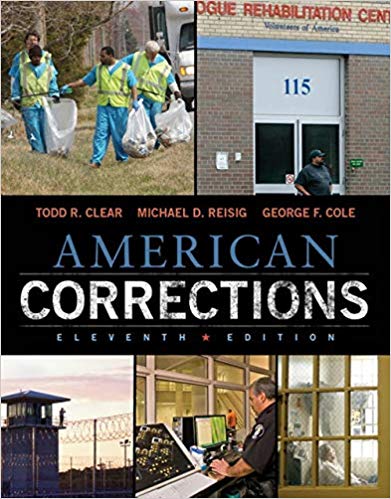
American Corrections 11th Edition by Todd R. Clear - Test Bank

American Corrections 11th Edition by Todd R. Clear - Test Bank   Instant Download - Complete Test Bank With Answers     Sample Questions Are Posted Below   True / False   1. ​Since the inception of the Prison Litigation Reform Act, it has become more difficult for prisoners to file civil rights law suits.   …

$19.99

American Corrections 11th Edition by Todd R. Clear – Test Bank


Instant Download – Complete Test Bank With Answers


Sample Questions Are Posted Below


True / False


1. ​Since the inception of the Prison Litigation Reform Act, it has become more difficult for prisoners to file civil rights law suits.

  a. True
  b. False


ANSWER:   False
REFERENCES:   Correctional Law and the U.S. Supreme Court
LEARNING OBJECTIVES:   ACOR.CLEA.16.05.01 – Discuss the foundations that support the legal rights of prisoners.
KEYWORDS:   Bloom’s: Remember


2. ​The right of habeas corpus for alleged terrorist detainees has been an important issue since 9/11.

  a. True
  b. False


ANSWER:   True
REFERENCES:   Correctional Law and the U.S. Supreme Court
LEARNING OBJECTIVES:   ACOR.CLEA.16.05.02 – Explain the role of the U.S. Supreme Court in interpreting correctional law.
KEYWORDS:   Bloom’s: Remember


3. ​Individual states do not have their own constitutions.

  a. True
  b. False


ANSWER:   False
REFERENCES:   The Foundations of Correctional Law
LEARNING OBJECTIVES:   ACOR.CLEA.16.05.01 – Discuss the foundations that support the legal rights of prisoners.
KEYWORDS:   Bloom’s: Remember


4. ​Experience has shown that successful lawsuits filed under Section 1983 have had a major impact for the grieving prisoner.

  a. True
  b. False


ANSWER:   False
REFERENCES:   Constitutional Rights of Prisoners
LEARNING OBJECTIVES:   ACOR.CLEA.16.05.03 – Understand the constitutional rights of prisoners.
KEYWORDS:   Bloom’s: Remember


5. ​By the end of the 1970s, federal judges had imposed changes on prisons and jails in every state.

  a. True
  b. False


ANSWER:   True
REFERENCES:   Correctional Law and the U.S. Supreme Court
LEARNING OBJECTIVES:   ACOR.CLEA.16.05.02 – Explain the role of the U.S. Supreme Court in interpreting correctional law.
KEYWORDS:   Bloom’s: Remember


6. ​Like inmates in correctional facilities, convicted offenders in the community also have rights.

  a. True
  b. False


ANSWER:   True
REFERENCES:   Law and Community Corrections
LEARNING OBJECTIVES:   ACOR.CLEA.16.05.05 – Explain the rights of offenders under community supervision.
KEYWORDS:   Bloom’s: Remember


7. ​Prisoners have always had constitutional rights.

  a. True
  b. False


ANSWER:   False
REFERENCES:   Correctional Law and the U.S. Supreme Court
LEARNING OBJECTIVES:   ACOR.CLEA.16.05.02 – Explain the role of the U.S. Supreme Court in interpreting correctional law.
KEYWORDS:   Bloom’s: Remember


8. ​In Rhodes v. Chapman, the court required inmates to prove Eighth Amendment violations through showing the punishment was unnecessary.

  a. True
  b. False


ANSWER:   True
REFERENCES:   Constitutional Right of Prisoners
LEARNING OBJECTIVES:   ACOR.CLEA.16.05.03 – Understand the constitutional rights of prisoners.
KEYWORDS:   Bloom’s: Remember


9. ​The case of Wolff v. McDonnell showed that the court was extending the due process rights for prisoners in certain aspects.

  a. True
  b. False


ANSWER:   True
REFERENCES:   Correctional Law and the U.S. Supreme Court
LEARNING OBJECTIVES:   ACOR.CLEA.16.05.01 – Discuss the foundations that support the legal rights of prisoners.
KEYWORDS:   Bloom’s: Remember


10. ​Parolees have the right to be notified of the charges against them.

  a. True
  b. False


ANSWER:   True
REFERENCES:   Law and Community Corrections
LEARNING OBJECTIVES:   ACOR.CLEA.16.05.05 – Explain the rights of offenders under community supervision.
KEYWORDS:   Bloom’s: Remember


11. ​ When convicted of a crime, an offender loses all constitutional rights and liberties.

  a. True
  b. False


ANSWER:   False
REFERENCES:   The Foundations of Correctional Law
LEARNING OBJECTIVES:   ACOR.CLEA.16.05.01 – Discuss the foundations that support the legal rights of prisoners.
KEYWORDS:   Bloom’s: Remember


12. ​ The courts of each state are empowered to declare correctional conditions and practices in violation of either the state or federal constitution.

  a. True
  b. False


ANSWER:   True
REFERENCES:   The Foundations of Correctional Law
LEARNING OBJECTIVES:   ACOR.CLEA.16.05.01 – Discuss the foundations that support the legal rights of prisoners.
KEYWORDS:   Bloom’s: Remember


13. ​Constitutions are written in more specific terms than statutes.

  a. True
  b. False


ANSWER:   False
REFERENCES:   The Foundations of Correctional Law
LEARNING OBJECTIVES:   ACOR.CLEA.16.05.01 – Discuss the foundations that support the legal rights of prisoners.
KEYWORDS:   Bloom’s: Remember


14. ​For most of U.S. history, the Bill of Rights was interpreted as protecting individuals only from acts of the federal government.

  a. True
  b. False


ANSWER:   True
REFERENCES:   Correctional Law and the U.S. Supreme Court
LEARNING OBJECTIVES:   ACOR.CLEA.16.05.02 – Explain the role of the U.S. Supreme Court in interpreting correctional law.
KEYWORDS:   Bloom’s: Remember


15. ​The filing of a writ of habeas corpus is the legal action most commonly used by inmates to challenge prison and jail conditions.

  a. True
  b. False


ANSWER:   False
REFERENCES:   Correctional Law and the U.S. Supreme Court
LEARNING OBJECTIVES:   ACOR.CLEA.16.05.03 – Understand the constitutional rights of prisoners.
KEYWORDS:   Bloom’s: Remember


16. ​There is no right to parole in the United States.

  a. True
  b. False


ANSWER:   True
REFERENCES:   Law and Community Corrections
LEARNING OBJECTIVES:   ACOR.CLEA.16.05.05 – Explain the rights of offenders under community supervision.
KEYWORDS:   Bloom’s: Remember


17. ​In Section 1983 lawsuits filed by inmates, correctional employees may be sued as individuals in their personal capacity, as opposed to their official capacity as a state employee.

  a. True
  b. False


ANSWER:   True
REFERENCES:   Law and Correctional Personnel
LEARNING OBJECTIVES:   ACOR.CLEA.16.05.06 – Discuss how the law affects correctional personnel.
KEYWORDS:   Bloom’s: Remember


Multiple Choice


18. ​A writ of habeas corpus requests an examination of the legality of:

  a. ​conditions.
  b. ​confinement.
  c. ​length of sentence.
  d. ​entence.


ANSWER:   b
REFERENCES:   Correctional Law and the U.S. Supreme Court
LEARNING OBJECTIVES:   ACOR.CLEA.16.05.02 – Explain the role of the U.S. Supreme Court in interpreting correctional law.
KEYWORDS:   Bloom’s: Remember


19. ​Money or other compensation is awarded to a plaintiff in a civil action when the person sued has:

  a. ​ministerial liability.
  b. ​personal liability.
  c. ​civil liability.
  d. ​strict liability.


ANSWER:   c
REFERENCES:   Constitutional Rights of Prisoners
LEARNING OBJECTIVES:   ACOR.CLEA.16.05.03 – Understand the constitutional rights of prisoners.
KEYWORDS:   Bloom’s: Remember


20. ​The Military Commissions Act (MCA) eliminated the ability of “unlawful enemy combatants” to file a writ of:

  a. ​corpus delicti
  b. ​nolle contendere.
  c. ​mens rea.
  d. ​habeas corpus.


ANSWER:   d
REFERENCES:   Correctional Law and the U.S. Supreme Court
LEARNING OBJECTIVES:   ACOR.CLEA.16.05.01 – Discuss the foundations that support the legal rights of prisoners.
KEYWORDS:   Bloom’s: Remember


21. ​Which of the following has not been legally recognized by the Supreme Court as justifying abridgements of an inmate’s constitutional rights?

  a. ​the maintenance of stable prison populations
  b. ​the maintenance of institutional order
  c. ​the maintenance of institutional security
  d. ​the rehabilitation of inmates


ANSWER:   a
REFERENCES:   Correctional Law and the U.S. Supreme Court
LEARNING OBJECTIVES:   ACOR.CLEA.16.05.01 – Discuss the foundations that support the legal rights of prisoners.
KEYWORDS:   Bloom’s: Remember


22. ​In instances when parole supervision is being revoked, offenders possess various      rights.

  a. ​habeas corpus
  b. ​privacy
  c. ​due process
  d. ​administrative


ANSWER:   c
REFERENCES:   Law and Community Corrections
LEARNING OBJECTIVES:   ACOR.CLEA.16.05.05 – Explain the rights of offenders under community supervision.
KEYWORDS:   Bloom’s: Remember


23. ​Which court decision held that the basic elements of procedural due process must be present when decisions are made concerning the disciplining of an inmate?

  a. Wolff v. McDonnell
  b. Estelle v. Gamble
  c. Holt v. Sarver
  d. Pugh v. Locke


ANSWER:   a
REFERENCES:   Correctional Law and the U.S. Supreme Court
LEARNING OBJECTIVES:   ACOR.CLEA.16.05.02 – Explain the role of the U.S. Supreme Court in interpreting correctional law.
KEYWORDS:   Bloom’s: Remember


24. ​Prior to the 1960s courts maintained a(n)        with respect to corrections.

  a. ​invasive policy
  b. ​administrative policy
  c. ​hands-off policy
  d. ​inquisitive policy


ANSWER:   c
REFERENCES:   Correctional Law and the U.S. Supreme Court
LEARNING OBJECTIVES:   ACOR.CLEA.16.05.01 – Discuss the foundations that support the legal rights of prisoners.
KEYWORDS:   Bloom’s: Remember


25. ​The circumstances in a correctional facility that, when considered as a whole, may violate the protections guaranteed by the Eighth Amendment are known as:

  a. ​a rational basis test.
  b. ​totality of the conditions.
  c. ​totality of the circumstances
  d. ​least restrictive means test.


ANSWER:   b
REFERENCES:   Constitutional Rights of Prisoners
LEARNING OBJECTIVES:   ACOR.CLEA.16.05.02 – Explain the role of the U.S. Supreme Court in interpreting correctional law.
ACOR.CLEA.16.05.03 – Understand the constitutional rights of prisoners.
KEYWORDS:   Bloom’s: Remember


26. ​For most of U.S. history, the Bill of Rights was interpreted as protecting individuals from acts of the:

  a. ​federal government.
  b. ​unlawful masses.
  c. ​state legislatures.
  d. ​president.


ANSWER:   a
REFERENCES:   Correctional Law and the U.S. Supreme Court
LEARNING OBJECTIVES:   ACOR.CLEA.16.05.02 – Explain the role of the U.S. Supreme Court in interpreting correctional law.
KEYWORDS:   Bloom’s: Remember


27. ​According to the textbook, the overall results of the turbulent inmate rights period were:

  a. ​positive.
  b. ​negative.
  c. ​problematic.
  d. ​useless.


ANSWER:   a
REFERENCES:   Correctional Law and the U.S. Supreme Court
LEARNING OBJECTIVES:   ACOR.CLEA.16.05.02 – Explain the role of the U.S. Supreme Court in interpreting correctional law.
KEYWORDS:   Bloom’s: Remember


28. ​The Fourteenth Amendment was ratified in:

  a. ​1960.
  b. ​1868.
  c. ​1789.
  d. ​1810.


ANSWER:   b
REFERENCES:   Constitutional Rights of Prisoners
LEARNING OBJECTIVES:   ACOR.CLEA.16.05.03 – Understand the constitutional rights of prisoners.
KEYWORDS:   Bloom’s: Remember


29. ​Which of the following correctional changes can be attributed to the prisoners’ rights movement?

  a. ​improvement in institutional living conditions and administrative practices of many prisons
  b. ​review by correctional officials of many of their procedures and organizational structures
  c. ​both of these
  d. ​neither of these


ANSWER:   c
REFERENCES:   Correctional Law and the U.S. Supreme Court
LEARNING OBJECTIVES:   ACOR.CLEA.16.05.03 – Understand the constitutional rights of prisoners.
KEYWORDS:   Bloom’s: Remember


30. ​The Anti-Terrorism Act imposes          limit to file a federal habeas petition.

  a. ​a five-year
  b. ​a one-year
  c. ​a two-year
  d. ​no


ANSWER:   b
REFERENCES:   Correctional Law and the U.S. Supreme Court
LEARNING OBJECTIVES:   ACOR.CLEA.16.05.03 – Understand the constitutional rights of prisoners.
KEYWORDS:   Bloom’s: Remember


31. ​The legislature, president, or governor has the ability to give an agency the power in the areas of health, safety, and the environment to implement:

  a. ​statutes.
  b. ​case laws.
  c. ​regulations.
  d. ​precedent.


ANSWER:   c
REFERENCES:   Foundations of Correctional Law
LEARNING OBJECTIVES:   ACOR.CLEA.16.05.01 – Discuss the foundations that support the legal rights of prisoners.
KEYWORDS:   Bloom’s: Remember


32. ​Which case allowed inmates to sue state officials for brutality, inadequate medical care and nutrition, theft of personal property, and the denial of basic rights?

  a. Cooper v. Pate
  b. Terry v. Ohio
  c. Carroll v United States
  d. Gregg v. Georgia


ANSWER:   a
REFERENCES:   Correctional Law and the U.S. Supreme Court
LEARNING OBJECTIVES:   ACOR.CLEA.16.05.02 – Explain the role of the U.S. Supreme Court in interpreting correctional law.
KEYWORDS:   Bloom’s: Remember


33. ​In Boumediene v. Bush, the Court ruled that the detainees at Guantanamo Bay are entitled to:

  a. ​a lawyer.
  b. ​challenge the conditions of their confinement.
  c. ​one hour of exercise a day.
  d. ​file writs of habeas corpus.


ANSWER:   d
REFERENCES:   Correctional Law and the U.S. Supreme Court
LEARNING OBJECTIVES:   ACOR.CLEA.16.05.02 – Explain the role of the U.S. Supreme Court in interpreting correctional law.
KEYWORDS:   Bloom’s: Remember


34. ​The first case recognized by the Supreme Court which recognized prisoners’ rights involved a case of:

  a. ​brutality and physical conditions
  b. ​challenges to convictions.
  c. ​due process.
  d. ​ medical treatment.


ANSWER:   a
REFERENCES:   Correctional Law and the U.S. Supreme Court
LEARNING OBJECTIVES:   ACOR.CLEA.16.05.02 – Explain the role of the U.S. Supreme Court in interpreting correctional law.
KEYWORDS:   Bloom’s: Remember


35. ​With the exception of those working for corporate and nonprofit organizations, correctional personnel are:

  a. ​executive personnel
  b. ​public employees.
  c. ​private contractors.
  d. ​management.


ANSWER:   c
REFERENCES:   Law and Correctional Personnel
LEARNING OBJECTIVES:   ACOR.CLEA.16.05.06 – Discuss how the law affects correctional personnel.
KEYWORDS:   Bloom’s: Remember


36. ​During the early 1960s, the U.S. Supreme Court decided to require state governments to        most of the rights listed in the Bill of Rights:

  a. ​respect.
  b. ​reject.
  c. ​regulate.
  d. ​reconstruct.


ANSWER:   a
REFERENCES:   Correctional Law and the U.S. Supreme Court
LEARNING OBJECTIVES:   ACOR.CLEA.16.05.06 – Discuss how the law affects correctional personnel.
KEYWORDS:   Bloom’s: Remember


37. ​The courts have upheld the right of female corrections officers to pat down:

  a. ​only female prisoners.
  b. ​only male prisoners.
  c. ​male prisoners when a male officer is also present.
  d. ​both male and female prisoners.


ANSWER:   d
REFERENCES:   Law and Correctional Personnel
LEARNING OBJECTIVES:   ACOR.CLEA.16.05.06 – Discuss how the law affects correctional personnel.
KEYWORDS:   Bloom’s: Remember


38. ​Some lower courts have upheld rules in conflict with the           Amendment protections because they were the least restrictive method of dealing with an institutional problem.

  a. ​First
  b. ​Fourth
  c. ​Eighth
  d. ​Fourteenth


ANSWER:   a
REFERENCES:   Constitutional Rights of Prisoners
LEARNING OBJECTIVES:   ACOR.CLEA.16.05.03 – Understand the constitutional rights of prisoners.
KEYWORDS:   Bloom’s: Remember


39. ​According to the Supreme Court, the term “totality of conditions” may be legally interpreted as:

  a. ​cruel and unusual punishment.
  b. ​unfair.
  c. ​unreasonable.
  d. ​irrational.


ANSWER:   a
REFERENCES:   Constitutional Rights of Prisoners
LEARNING OBJECTIVES:   ACOR.CLEA.16.05.03 – Understand the constitutional rights of prisoners.
KEYWORDS:   Bloom’s: Remember


40. ​The right to be free from cruel and unusual punishment is found in which Amendment?

  a. ​First
  b. Fourth
  c. ​Eighth
  d. ​Fourteenth


ANSWER:   c
REFERENCES:   Constitutional Rights of Prisoners
LEARNING OBJECTIVES:   ACOR.CLEA.16.05.03 – Understand the constitutional rights of prisoners.
KEYWORDS:   Bloom’s: Remember


41. ​One of the ways a corrections staff member can insulate themselves against civil lawsuits is to:

  a. ​keep good records.
  b. ​get a mentor.
  c. ​follow institutional procedures
  d. ​do all of these.


ANSWER:   d
REFERENCES:   Law and Correctional Personnel
LEARNING OBJECTIVES:   ACOR.CLEA.16.05.06 – Discuss how the law affects correctional personnel.
KEYWORDS:   Bloom’s: Remember


42. ​During the last 25 years the Supreme Court has been             prisoners’ rights.

  a. ​less supportive of
  b. ​more supportive of
  c. ​detached from
  d. ​less indifferent


ANSWER:   a
REFERENCES:   Correctional Law and the U.S. Supreme Court
LEARNING OBJECTIVES:   ACOR.CLEA.16.05.02 – Explain the role of the U.S. Supreme Court in interpreting correctional law.
KEYWORDS:   Bloom’s: Remember


43. ​Which of the following is NOT an alternative to litigation by inmates?

  a. ​ombudsman
  b. ​criminal investigation
  c. ​mediation
  d. ​inmate grievance procedures


ANSWER:   b
REFERENCES:   Alternative to Litigation
LEARNING OBJECTIVES:   ACOR.CLEA.16.05.04 – Be familiar with the alternatives to litigation.
KEYWORDS:   Bloom’s: Remember


44. ​ A(n) __________ is a public official with full authority to investigate citizens’ complaints against government officials.

  a. ​ombudsman
  b. ​detective
  c. ​parole officer
  d. ​internal officer


ANSWER:   a
REFERENCES:   Alternatives to Litigation
LEARNING OBJECTIVES:   ACOR.CLEA.16.05.04 – Be familiar with the alternatives to litigation.
KEYWORDS:   Bloom’s: Remember


45. ​Which Amendment addresses prisoner rights as they pertain to religious practices?

  a. ​Fourteenth
  b. Second
  c. ​Fourth
  d. ​First


ANSWER:   d
REFERENCES:   Constitutional Rights of Prisoners
LEARNING OBJECTIVES:   ACOR.CLEA.16.05.03 – Understand the constitutional rights of prisoners.
KEYWORDS:   Bloom’s: Remember


46. ​Which Amendment helps to ensure procedural due process and equal protection of the law for inmates?

  a. ​Fourteenth
  b. ​Fourth
  c. ​Fifth
  d. ​First


ANSWER:   a
REFERENCES:   Constitutional Rights of Prisoners
LEARNING OBJECTIVES:   ACOR.CLEA.16.05.03 – Understand the constitutional rights of prisoners.
KEYWORDS:   Bloom’s: Remember


Numeric Response


Match each item to the phrase or sentence listed below.

a. Noninterference policy

b. Rules created by judges

c. Legal rules regarding agency policies

d. Rules other judges follow with similar cases

e. Laws created by legislatures

f. Lists individual rights

g. Intervention towards an agreed resolution

h. Responsible for compensation of a plaintiff

i.  Judicial order

j. Investigates public officials


47. ​Constitutions

ANSWER:   ​f
REFERENCES:   See throughout chapter.
LEARNING OBJECTIVES:   ACOR.CLEA.16.05.01 – Discuss the foundations that support the legal rights of prisoners.
ACOR.CLEA.16.05.02 – Explain the role of the U.S. Supreme Court in interpreting correctional law.
ACOR.CLEA.16.05.03 – Understand the constitutional rights of prisoners.
ACOR.CLEA.16.05.04 – Be familiar with the alternatives to litigation.
ACOR.CLEA.16.05.05 – Explain the rights of offenders under community supervision.
ACOR.CLEA.16.05.06 – Discuss how the law affects correctional personnel.
KEYWORDS:   Bloom’s: Remember


48. ​Statutes

ANSWER:   e​
REFERENCES:   See throughout chapter.
LEARNING OBJECTIVES:   ACOR.CLEA.16.05.01 – Discuss the foundations that support the legal rights of prisoners.
ACOR.CLEA.16.05.02 – Explain the role of the U.S. Supreme Court in interpreting correctional law.
ACOR.CLEA.16.05.03 – Understand the constitutional rights of prisoners.
ACOR.CLEA.16.05.04 – Be familiar with the alternatives to litigation.
ACOR.CLEA.16.05.05 – Explain the rights of offenders under community supervision.
ACOR.CLEA.16.05.06 – Discuss how the law affects correctional personnel.
KEYWORDS:   Bloom’s: Remember


49. ​Case law

ANSWER:   ​b
REFERENCES:   See throughout chapter.
LEARNING OBJECTIVES:   ACOR.CLEA.16.05.01 – Discuss the foundations that support the legal rights of prisoners.
ACOR.CLEA.16.05.02 – Explain the role of the U.S. Supreme Court in interpreting correctional law.
ACOR.CLEA.16.05.03 – Understand the constitutional rights of prisoners.
ACOR.CLEA.16.05.04 – Be familiar with the alternatives to litigation.
ACOR.CLEA.16.05.05 – Explain the rights of offenders under community supervision.
ACOR.CLEA.16.05.06 – Discuss how the law affects correctional personnel.
KEYWORDS:   Bloom’s: Remember


50. ​Precedent

ANSWER:   d​
REFERENCES:   See throughout chapter.
LEARNING OBJECTIVES:   ACOR.CLEA.16.05.01 – Discuss the foundations that support the legal rights of prisoners.
ACOR.CLEA.16.05.02 – Explain the role of the U.S. Supreme Court in interpreting correctional law.
ACOR.CLEA.16.05.03 – Understand the constitutional rights of prisoners.
ACOR.CLEA.16.05.04 – Be familiar with the alternatives to litigation.
ACOR.CLEA.16.05.05 – Explain the rights of offenders under community supervision.
ACOR.CLEA.16.05.06 – Discuss how the law affects correctional personnel.
KEYWORDS:   Bloom’s: Remember


51. ​Regulations

ANSWER:   ​c
REFERENCES:   See throughout chapter.
LEARNING OBJECTIVES:   ACOR.CLEA.16.05.01 – Discuss the foundations that support the legal rights of prisoners.
ACOR.CLEA.16.05.02 – Explain the role of the U.S. Supreme Court in interpreting correctional law.
ACOR.CLEA.16.05.03 – Understand the constitutional rights of prisoners.
ACOR.CLEA.16.05.04 – Be familiar with the alternatives to litigation.
ACOR.CLEA.16.05.05 – Explain the rights of offenders under community supervision.
ACOR.CLEA.16.05.06 – Discuss how the law affects correctional personnel.
KEYWORDS:   Bloom’s: Remember


52. ​Hands-off policy

ANSWER:   ​a
REFERENCES:   See throughout chapter.
LEARNING OBJECTIVES:   ACOR.CLEA.16.05.01 – Discuss the foundations that support the legal rights of prisoners.
ACOR.CLEA.16.05.02 – Explain the role of the U.S. Supreme Court in interpreting correctional law.
ACOR.CLEA.16.05.03 – Understand the constitutional rights of prisoners.
ACOR.CLEA.16.05.04 – Be familiar with the alternatives to litigation.
ACOR.CLEA.16.05.05 – Explain the rights of offenders under community supervision.
ACOR.CLEA.16.05.06 – Discuss how the law affects correctional personnel.
KEYWORDS:   Bloom’s: Remember


53. ​Civil liability

ANSWER:   h
REFERENCES:   See throughout chapter.
LEARNING OBJECTIVES:   ACOR.CLEA.16.05.01 – Discuss the foundations that support the legal rights of prisoners.
ACOR.CLEA.16.05.02 – Explain the role of the U.S. Supreme Court in interpreting correctional law.
ACOR.CLEA.16.05.03 – Understand the constitutional rights of prisoners.
ACOR.CLEA.16.05.04 – Be familiar with the alternatives to litigation.
ACOR.CLEA.16.05.05 – Explain the rights of offenders under community supervision.
ACOR.CLEA.16.05.06 – Discuss how the law affects correctional personnel.
KEYWORDS:   Bloom’s: Remember


54. ​Habeus corpus

ANSWER:   ​i
REFERENCES:   See throughout chapter.
LEARNING OBJECTIVES:   ACOR.CLEA.16.05.01 – Discuss the foundations that support the legal rights of prisoners.
ACOR.CLEA.16.05.02 – Explain the role of the U.S. Supreme Court in interpreting correctional law.
ACOR.CLEA.16.05.03 – Understand the constitutional rights of prisoners.
ACOR.CLEA.16.05.04 – Be familiar with the alternatives to litigation.
ACOR.CLEA.16.05.05 – Explain the rights of offenders under community supervision.
ACOR.CLEA.16.05.06 – Discuss how the law affects correctional personnel.
KEYWORDS:   Bloom’s: Remember


55. ​Mediation

ANSWER:   g​
REFERENCES:   See throughout chapter.
LEARNING OBJECTIVES:   ACOR.CLEA.16.05.01 – Discuss the foundations that support the legal rights of prisoners.
ACOR.CLEA.16.05.02 – Explain the role of the U.S. Supreme Court in interpreting correctional law.
ACOR.CLEA.16.05.03 – Understand the constitutional rights of prisoners.
ACOR.CLEA.16.05.04 – Be familiar with the alternatives to litigation.
ACOR.CLEA.16.05.05 – Explain the rights of offenders under community supervision.
ACOR.CLEA.16.05.06 – Discuss how the law affects correctional personnel.
KEYWORDS:   Bloom’s: Remember


56. ​Ombudsman

ANSWER:   ​j
REFERENCES:   See throughout chapter.
LEARNING OBJECTIVES:   ACOR.CLEA.16.05.01 – Discuss the foundations that support the legal rights of prisoners.
ACOR.CLEA.16.05.02 – Explain the role of the U.S. Supreme Court in interpreting correctional law.
ACOR.CLEA.16.05.03 – Understand the constitutional rights of prisoners.
ACOR.CLEA.16.05.04 – Be familiar with the alternatives to litigation.
ACOR.CLEA.16.05.05 – Explain the rights of offenders under community supervision.
ACOR.CLEA.16.05.06 – Discuss how the law affects correctional personnel.
KEYWORDS:   Bloom’s: Remember


Completion


57. ​Laws passed by legislatures at all levels of government are known as           .

ANSWER:   statutes
REFERENCES:   Foundations of Correctional Law
LEARNING OBJECTIVES:   ACOR.CLEA.16.05.01 – Discuss the foundations that support the legal rights of prisoners.
KEYWORDS:   Bloom’s: Remember


58. ​The       Amendment focuses on the right to religious freedom.

ANSWER:   First
REFERENCES:   Constitutional Rights of Prisoners
LEARNING OBJECTIVES:   ACOR.CLEA.16.05.03 – Understand the constitutional rights of prisoners.
KEYWORDS:   Bloom’s: Remember


59. ​Legal rules, usually set by an agency of the executive branch, designed to implement in detail policies of that agency are              .

ANSWER:   regulations
REFERENCES:   Foundations of Correctional Law
LEARNING OBJECTIVES:   ACOR.CLEA.16.05.01 – Discuss the foundations that support the legal rights of prisoners.
KEYWORDS:   Bloom’s: Remember


60. ​             refers to legal rules produced by judges’ decisions.

ANSWER:   Case law
REFERENCES:   Foundations of Correctional Law
LEARNING OBJECTIVES:   ACOR.CLEA.16.05.01 – Discuss the foundations that support the legal rights of prisoners.
KEYWORDS:   Bloom’s: Remember


61. ​Legal rules created in judges’ decisions that serve to guide decisions in similar cases are called      .

ANSWER:   precedents
REFERENCES:   Foundations of Correctional Law
LEARNING OBJECTIVES:   ACOR.CLEA.16.05.01 – Discuss the foundations that support the legal rights of prisoners.
KEYWORDS:   Bloom’s: Remember


62. ​The      Amendment focuses on the protection of privacy within the scope of search and seizure.

ANSWER:   Fourth
REFERENCES:   Constitutional Rights of Prisoners
LEARNING OBJECTIVES:   ACOR.CLEA.16.05.03 – Understand the constitutional rights of prisoners.
KEYWORDS:   Bloom’s: Remember


63. ​The constitutional guarantee that no agent or instrumentality of government will use anything to arrest, prosecute, try, or punish any person other than that prescribed by law is procedural                 .

ANSWER:   due process
REFERENCES:   Constitutional Rights of Prisoners
LEARNING OBJECTIVES:   ACOR.CLEA.16.05.03 – Understand the constitutional rights of prisoners.
KEYWORDS:   Bloom’s: Remember


64. ​             is intervention in a dispute by a third party where those in conflict submit their differences for resolution and the decision (in the correctional setting) is binding on both parties.

ANSWER:   Mediation
REFERENCES:   Alternatives to Prison Litigation
LEARNING OBJECTIVES:   ACOR.CLEA.16.05.04 – Be familiar with the alternatives to litigation.
KEYWORDS:   Bloom’s: Remember


65. ​A public official who investigates complaints against government officials and recommends corrective measures is a(n)                    .

ANSWER:   ombudsman
REFERENCES:   Alternatives to Prison Litigation
LEARNING OBJECTIVES:   ACOR.CLEA.16.05.04 – Be familiar with the alternatives to litigation.
KEYWORDS:   Bloom’s: Remember


66. ​The first recognized U.S. Supreme Court case recognizing the termination of the hands-off policy was the case of                          .

ANSWER:   Cooper v. Pate
REFERENCES:   Correctional Law and the U.S. Supreme Court
LEARNING OBJECTIVES:   ACOR.CLEA.16.05.01 – Discuss the foundations that support the legal rights of prisoners.
KEYWORDS:   Bloom’s: Remember


67. ​_________ refers to the responsibility for the provision of monetary or other compensation awarded to a plaintiff in a civil action.

ANSWER:   Civil liability
REFERENCES:   Correctional Law and the U.S. Supreme Court
LEARNING OBJECTIVES:   ACOR.CLEA.16.05.02 – Explain the role of the U.S. Supreme Court in interpreting correctional law.
KEYWORDS:   Bloom’s: Remember


68. ​ _______________ refers to an interest of the state that must take precedence over rights guaranteed by the First Amendment.

ANSWER:   Compelling state interest 
REFERENCES:   Constitutional Rights of Prisoners
LEARNING OBJECTIVES:   ACOR.CLEA.16.05.03 – Understand the constitutional rights of prisoners.
KEYWORDS:   Bloom’s: Remember


69. ​. ___________ refers to means of ensuring a legitimate state interest (such as security) that impose fewer limits on prisoners’ rights than do alternative means of securing that end.

ANSWER:   Least restrictive methods
REFERENCES:   Constitutional Rights of Prisoners
LEARNING OBJECTIVES:   ACOR.CLEA.16.05.03 – Understand the constitutional rights of prisoners.
KEYWORDS:   Bloom’s: Remember


70. ​Since the 1940s, the Supreme Court has maintained that the ______________ Amendment holds a special position in the Bill of Rights because it guarantees those freedoms essential in a democracy.

ANSWER:   First 
REFERENCES:   Constitutional Rights of Prisoners
LEARNING OBJECTIVES:   ACOR.CLEA.16.05.03 – Understand the constitutional rights of prisoners.
KEYWORDS:   Bloom’s: Remember


71. ​As a result of the Supreme Court decision in ______________, correctional officials may search cells without a warrant and seize any materials found there.

ANSWER:   Hudson v. Palmer (1984)
REFERENCES:   Constitutional Rights of Prisoners
LEARNING OBJECTIVES:   ACOR.CLEA.16.05.01 – Discuss the foundations that support the legal rights of prisoners.
KEYWORDS:   Bloom’s: Remember


Essay


72. ​Define and explain what is meant by a writ of habeas corpus. What is its significance for inmates? Should it be limited? Why or why not? Discuss the changes to habeas corpus post 9/11.

ANSWER:   ​Answers will vary
REFERENCES:   Correctional Law and the U.S. Supreme Court
LEARNING OBJECTIVES:   ACOR.CLEA.16.05.01 – Discuss the foundations that support the legal rights of prisoners.
KEYWORDS:   Bloom’s: Analyze


73. ​List and explain three alternatives to litigation. Discuss the strengths and weaknesses of each. Which one do you think is most effective in maximum security prisons for men? For women? Please fully explain your answers.

ANSWER:   ​Answers will vary.
REFERENCES:   Alternative to Prison Litigation
LEARNING OBJECTIVES:   ACOR.CLEA.16.05.04 – Be familiar with the alternatives to litigation.
KEYWORDS:   Bloom’s: Analyze


74. ​What are the three foundations of correctional law? Describe how each operates and give an example of each. Discuss the strengths and weaknesses of each approach.

ANSWER:   ​Answers will vary.
REFERENCES:   Foundations of Correctional Law
LEARNING OBJECTIVES:   ACOR.CLEA.16.05.01 – Discuss the foundations that support the legal rights of prisoners.
KEYWORDS:   Bloom’s: Analyze


75. ​Discuss the impact of the prisoners’ rights movement that ultimately changed corrections in this country. When answering, be sure to highlight key events, cases, and decisions that can be considered causal and inspirational for the movement.

ANSWER:   ​Answers will vary.
REFERENCES:   Correctional Law and the U.S. Supreme Court.
LEARNING OBJECTIVES:   ACOR.CLEA.16.05.02 – Explain the role of the U.S. Supreme Court in interpreting correctional law.
KEYWORDS:   Bloom’s: Analyze


76. ​What does it mean when we say the courts had a hands-off policy prior to 1960? When did this judicial policy end and why? What followed as this policy came to an end? Do you think the courts should have a role in determining and monitoring correctional policy and practice? Discuss your reasoning.

ANSWER:   ​Answers will vary.
REFERENCES:   Correctional Law and the U.S. Supreme Court.
LEARNING OBJECTIVES:   ACOR.CLEA.16.05.01 – Discuss the foundations that support the legal rights of prisoners.
KEYWORDS:   Bloom’s: Analyze


Additional information

Add Review

Your email address will not be published. Required fields are marked *