No products in the cart.

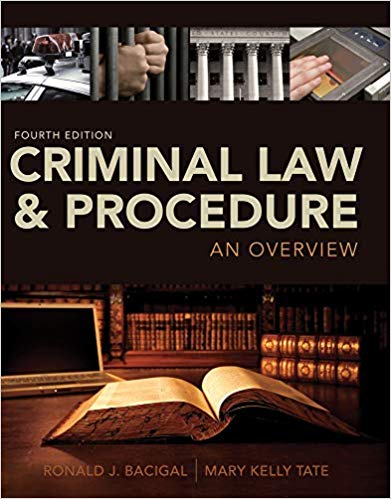
Criminal Law And Procedure An Overview 4th Edition by Ronald J. Bacigal - Study Guide

Criminal Law And Procedure An Overview 4th Edition by Ronald J. Bacigal - Study Guide   Instant Download - Complete Test Bank With Answers     Sample Questions Are Posted Below   CHAPTER 5: CRIMES AGAINST A PERSON This chapter focuses on crimes that are committed against an individual person, beginning with the most serious …

$19.99

Criminal Law And Procedure An Overview 4th Edition by Ronald J. Bacigal – Study Guide


Instant Download – Complete Test Bank With Answers


Sample Questions Are Posted Below


CHAPTER 5: CRIMES AGAINST A PERSON
This chapter focuses on crimes that are committed against an individual person, beginning with the most serious crime: criminal homicide. To distinguish which specific type of criminal homicide has been committed, the courts will look to the intent of the defendant. This becomes very important when distinguishing between murder and manslaughter.
Of a less serious nature are the crimes of assault and battery. This chapter discusses the various types of assault and ends by reviewing robbery, violent sex crimes, kidnapping, and false imprisonment.
LEARNING OBJECTIVES
Once you have finished this chapter, you should be able to:
• Identify and define the types of criminal homicide.
• Distinguish between kidnapping and false imprisonment.
• Outline the different elements of both assault and battery.
• Explain the theory underlying the rape shield law.
• Recognize the different categories of hate crimes.
OUTLINE
I. Criminal Homicide—taking another’s life in a manner proscribed by law; a killing in the absence of justification or excuse
A. Suicide
B. Murder—an unlawful killing with malice aforethought
1. Malice aforethought—distinguishes murder from manslaughter; occurs when the defendant:
a. Forms an intent to kill
b. Forms an intent to inflict grievous bodily harm on another
c. Displays a wanton or extremely reckless disregard for the risk to human life
d. Commits a dangerous felony during the commission of which a death results
2. Capital murder—a killing characterized by the existence of a statutorily defined aggravating circumstance in addition to the other requirements for murder
3. First degree murder—a killing characterized by premeditation
a. Premeditation—careful, prior deliberation of an act committed in cold blood
b. Instantaneous premeditation—a view of forethought to the crime that recognizes that “no time is too short for a wicked man to frame in his mind the scheme of murder”
c. Transferred intent—the act of killing a person while intending to kill someone else
d. Felony-murder rule—applies a first degree murder charge to killing a person intentionally, recklessly, or even accidentally while committing a dangerous felony
4. Second degree murder—a killing with a wanton state of mind or an extremely reckless disregard for the risk to human life
C. Manslaughter—an unlawful killing without malice aforethought
1. Voluntary manslaughter—killing:
a. While in a state of passion (factual determination for the factfinder to make)
b. That was caused by adequate provocation (circumstances that “would naturally tend to arouse the passion of an ordinarily reasonable person”)
c. Without a reasonable opportunity to cool off before killing
2. Involuntary manslaughter—a homicide that results from the defendant’s criminally negligent conduct or the defendant’s commission of an unlawful act
a. Reckless conduct—less serious than extreme recklessness but more serious than simple negligence resulting in civil liability; courts consider both the defendant’s subjective state of mind and objective evidence of the extent to which the defendant’s conduct endangered another
b. Misdemeanor-manslaughter rule—applies a manslaughter charge to a homicide that results from the defendant’s commission of an unlawful act
D. Other forms of homicide—in most jurisdictions, involuntary manslaughter is the lowest degree of criminal homicide; some jurisdictions, however, have enacted statutes creating the crime of negligent homicide
II. Assault and Battery—some jurisdictions have merged assault and battery into a single offense
A. Battery—the unlawful application of force to the person of another (unlawful touching)
1. A person cannot consent to any type of conduct that involves serious injury
2. Unlawful touching may involve direct body-to-body contact or an indirect touching by some instrumentality used by the defendant
3. Mental state—either an intent to strike another or a reckless act that results in a touching
B. Assault
1. Occurs only if the defendant accompanies a threat with some additional physical conduct
2. Two categories of assault
a. Attempted battery form of assault—an act in which the defendant specifically intends to, and comes close to, touching another
b. Offer type of assault—places another in fear of an imminent battery
C. Stalking—following, harassing, threatening, lying in wait, or conducting surveillance of another person
D. Aggravated assault and battery—an attack that results in a more serious injury or creates the potential for serious injury because the attacker used a deadly weapon
1. Mayhem—a common law crime in which the victim was dismembered or disfigured in such a way that the victim was less able to engage in self-defense
2. Malicious wounding—the shooting, stabbing, cutting, or wounding of any person with the intent to maim, disfigure, disable, or kill
III. Robbery—larceny from the victim’s person or presence, by use of either force or threats of force
A. Extortion or blackmail—threats to injure a person’s reputation or to expose a person to shame and ridicule
IV. Violent Sex Crimes
A. Common law rape—sexual intercourse with a woman other than the defendant’s wife by force and without the victim’s consent
1. Most statutes today have made the crime of rape gender neutral
2. Marital rape exception—at common law, a man could not be convicted of raping his wife
a. Based on the theory that a wife was chattel and that when she married her husband, she gave continuing consent to sex with him
b. Most jurisdictions today, even those that retain the marital rape exception, recognize that a man who physically forces his wife to have sex with him is guilty of some form of assault and battery or the newly recognized crime of marital rape
3. Rape shield laws—laws that prohibit the use of evidence of a victim’s prior sexual conduct, except for prior consensual sexual relations with the defendant
V. Kidnapping and False Imprisonment
A. Kidnapping—seizing and carrying away another person by force, threat of force, fraud, or deception (aggravated form of false imprisonment)
1. If the victim is not returned within 24 hours after the taking, it is presumed that the victim was transported across state lines, which makes it a federal offense
2. The carrying away of the victim requires that the forced movement be more than the movement incidental to the commission of another crime
B. False imprisonment—confining a person against the person’s will
VI. Civil Rights and Hate Crimes
A. Civil rights statutes
B. Hate crimes
KEY TERMS

adequate provocation
attempted battery form of assault
battery
blackmail
capital murder
common law rape
criminal homicide
extortion
false imprisonment
felony-murder rule
first degree murder
instantaneous premeditation
involuntary manslaughter
kidnapping
malice aforethought
malicious wounding
mayhem
misdemeanor-manslaughter rule
offer type of assault
premeditation
rape shield laws
robbery
second degree murder
transferred intent
voluntary manslaughter
wanton state of mind

HELPFUL WEB SITES
U.S. DEPARTMENT OF JUSTICE
http://www.usdoj.gov
Includes access to a separate division dealing with violence against women.
NATIONAL COALITION AGAINST DOMESTIC VIOLENCE
http://www.ncadv.org
Access to conferences, proposals, and legislation addressing domestic violence.
NATIONAL CENTER FOR VICTIMS OF CRIME
http://www.ncvc.org
Access to a Stalking Resource Center.

THE OYEZ PROJECT
http://www.oyez.org
Provides a variety of multimedia-based Supreme Court sources as well as audio archives of oral arguments.
REVIEW QUESTIONS
FILL-IN-THE-BLANK
1. ____________________ distinguishes murder from manslaughter.
2. First degree murder is a killing that is most often characterized by ____________________.
3. The Court in People v. Stamp used the ____________________ rule to find the defendant guilty of first degree murder.
4. ____________________ places another in fear of an imminent battery.
5. The crime of ____________________ occurs when the defendant shoots, stabs, cuts, or wounds any person with the intent to maim, disfigure, disable, or kill.
6. The use of evidence of the prior sexual conduct of the victim of a rape, except for prior consensual sexual relations with the defendant, is prohibited by ____________________ laws.
7. ____________________ is an aggravated form of false imprisonment.
8. Larceny from the victim’s person or presence by the use of either force or the threat of force is called a ____________________.
ESSAY
1. Define malice aforethought and explain how it distinguishes murder from manslaughter.
2. Describe some of the factors that the court may look to when determining whether a killing was premeditated.
3. Explain the difference between voluntary and involuntary manslaughter and give an example of each.
4. Explain the marital rape exception, and explain how this exception originated.
Answers are on the following page.
NOTES

ANSWERS
FILL-IN-THE-BLANK
1. Malice aforethought
2. premeditation
3. felony-murder
4. Offer type of assault
5. malicious wounding
6. rape shield
7. Kidnapping
8. robbery
ESSAY
1. Malice aforethought occurs when the defendant forms an intent to kill, forms an intent to inflict bodily harm on another, displays a wanton or extremely reckless disregard for the risk to human life, or commits a dangerous felony during the commission of which a death results. Malice aforethought is an essential element of murder but does not exist in manslaughter.
2. Evidence of planning activity and/or preconceived motives to kill, or the manner of killing, negates the likelihood of a sudden decision to kill.
3. Voluntary manslaughter is a killing while in a state of passion, which is caused by adequate provocation and without a reasonable time to cool off. Involuntary manslaughter is a killing that results from the defendant’s reckless or criminally negligent conduct or the defendant’s commission of an unlawful act.
4. The marital rape exception held that a man could not be convicted of raping his wife. This exception came from the theory that a wife was chattel and that when she married, she gave continuing consent to sex with her husband.


Additional information

Add Review

Your email address will not be published. Required fields are marked *