No products in the cart.

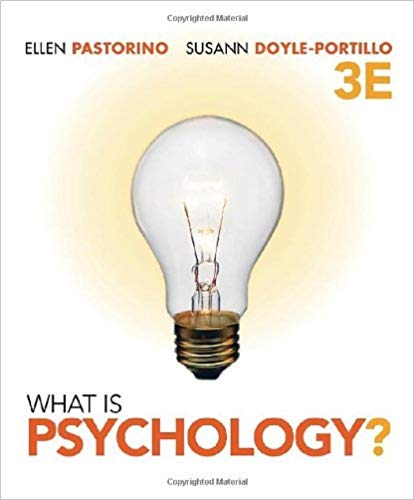
What is Psychology 3rd Edition by By Ellen E. Pastorino - Test Bank

What is Psychology 3rd Edition by By Ellen E. Pastorino - Test Bank   Instant Download - Complete Test Bank With Answers     Sample Questions Are Posted Below     Chapter 5—How Do We Learn?   MULTIPLE CHOICE   Learning is a. the acquisition of a new behavior or piece of information that creates …

$19.99

What is Psychology 3rd Edition by By Ellen E. Pastorino – Test Bank


Instant Download – Complete Test Bank With Answers


Sample Questions Are Posted Below


Chapter 5—How Do We Learn?


MULTIPLE CHOICE


  1. Learning is
a. the acquisition of a new behavior or piece of information that creates a permanent change in the organism.
b. the uniquely human ability to accumulate knowledge and information.
c. a relatively permanent change in behavior, or the potential for behavior, that results from experience.
d. an internalization of facts, information, skills, or behaviors that adds to the knowledge base of the individual.


ANS:  C                    DIF:    Moderate       REF:   177

OBJ:   How Does Learning Help Us?          MSC:  TYPE: Factual


  1. An important aspect of learning is that
a. it only occurs in a few specific types of settings such as school classrooms.
b. it is strictly a human phenomenon due to our advanced cerebral cortex.
c. it only really pertains to changes that remain with the person permanently.
d. many of the principles that apply to human learning also apply to learning in many other species.


ANS:  D                    DIF:    Moderate       REF:   179

OBJ:   How Does Learning Help Us?          MSC:  TYPE: Conceptual


  1. If a child acquires a new skill at the age of 6 but then forgets or loses the skill sometime later in life, it would be most accurate to say that at the age of 6 the new skill was
a. learned.
b. not learned at all since learning only describes permanent changes.
c. not learned but merely acquired.
d. not learned but assimilated.


ANS:  A                    DIF:    Moderate       REF:   177

OBJ:   How Does Learning Help Us?          MSC:  TYPE: Conceptual


  1. Which of the following is the result of learning?
a. Riding a bicycle c. Knitting a sweater
b. Getting an A on your psychology exam d. All of these choices


ANS:  D                    DIF:    Easy               REF:   177

OBJ:   How Does Learning Help Us?          MSC:  TYPE: Applied


  1. The orienting reflex is to ____ as habituation is to ____.
a. learning; forgetting c. simple information; complex information
b. novel experience; repeated experience d. adaptive; maladaptive


ANS:  B                    DIF:    Difficult         REF:   177-178

OBJ:   How Does Learning Help Us?          MSC:  TYPE: Conceptual


  1. When we are presented with a new stimulus that repeats itself, at first we would exhibit ____, and then after awhile, we would exhibit ____.
a. assimilation; accommodation c. the orienting reflex; habituation
b. accommodation; assimilation d. habituation; the orienting response


ANS:  C                    DIF:    Difficult         REF:   177-178

OBJ:   How Does Learning Help Us?          MSC:  TYPE: Conceptual


  1. The orienting reflex describes
a. the attention we give to novel stimuli.
b. the logical thinking processes we go through to figure something out.
c. our sense of direction.
d. our tendency to scan the entire visual field in order to sense the important information.


ANS:  A                    DIF:    Moderate       REF:   177

OBJ:   How Does Learning Help Us?          MSC:  TYPE: Factual


  1. When a parent is talking on a telephone and suddenly hears the baby crying in the other room, ____ will occur.
a. sensory reduction c. an orienting reflex
b. habituation d. classical conditioning


ANS:  C                    DIF:    Moderate       REF:   177

OBJ:   How Does Learning Help Us?          MSC:  TYPE: Applied


  1. The orienting reflex in combination with habituation suggests that we
a. begin to learn only after we have developed the capacity to think.
b. are different from animals in the way that we learn.
c. are capable of learning even without the benefit of sensation.
d. are more sensitive to new stimuli than repeated stimuli.


ANS:  D                    DIF:    Moderate       REF:   177-178

OBJ:   How Does Learning Help Us?          MSC:  TYPE: Conceptual


  1. Habituation describes the
a. increase in attention we give to repeated stimulation.
b. decrease in attention we give to repeated stimulation.
c. process of learning behaviors that will be repeated without thinking in the future.
d. learning process that transforms one habit into another one.


ANS:  B                    DIF:    Moderate       REF:   178

OBJ:   How Does Learning Help Us?          MSC:  TYPE: Factual


  1. Habituation would help you
a. learn a new skill.
b. ignore a repeated stimulus.
c. create a memory for something important.
d. detect a new stimulus.


ANS:  B                    DIF:    Moderate       REF:   178

OBJ:   How Does Learning Help Us?          MSC:  TYPE: Conceptual


  1. When your dog’s continual barking leads you to eventually be able to pay less attention to it, ____ has occurred.
a. sensory reduction c. orienting
b. habituation d. classical conditioning


ANS:  B                    DIF:    Moderate       REF:   178

OBJ:   How Does Learning Help Us?          MSC:  TYPE: Applied


  1. Which of the following is false about habituation?
a. Almost all creatures have this ability. c. It has been observed in plants.
b. It has been observed in human fetuses. d. It has been observed in newborn humans.


ANS:  C                    DIF:    Difficult         REF:   178-179

OBJ:   How Does Learning Help Us?          MSC:  TYPE: Factual


  1. The simplest type of learning seen in living things is
a. the orienting reflex. c. classical conditioning.
b. dishabituation. d. habituation.


ANS:  D                    DIF:    Moderate       REF:   179

OBJ:   How Does Learning Help Us?          MSC:  TYPE: Factual


  1. A physical therapist who attempts to treat a person with chronic motion sickness by repeatedly exposing the person to the stimulation that causes the motion sickness is using
a. dishabituation. c. spontaneous recovery.
b. the orienting response. d. habituation.


ANS:  D                    DIF:    Moderate       REF:   178

OBJ:   How Does Learning Help Us?          MSC:  TYPE: Applied


  1. Which of the following is an example of an orienting reflex?
a. A cat sniffing the air when it detects the odor of a strange animal
b. Looking at the page of your text as you read it
c. Watching television
d. Looking at a person that you are having a conversation with on the bus


ANS:  A                    DIF:    Moderate       REF:   177

OBJ:   How Does Learning Help Us?          MSC:  TYPE: Applied


  1. Which of the following is not an example of an orienting reflex?
a. While standing in line at the cafeteria, you turn around to see who poked you in the back.
b. While watching a movie at the local theater, you reach for another handful of popcorn from your date’s bucket of popcorn.
c. While watching TV, you jump and look up when a crash of lightening hits outside your window.
d. While reading in the library, you look up when you hear someone whispering at the table next to yours.


ANS:  B                    DIF:    Moderate       REF:   177

OBJ:   How Does Learning Help Us?          MSC:  TYPE: Applied


  1. Terry is trying to study in the student center. At first, he finds it hard to concentrate because of all the noise and conversation going on around him. However, after a few minutes, Terry is able to tune out the noise and concentrate on his studies. Terry’s experience is an example of what type of learning?
a. Habituation c. Operant conditioning
b. Classical conditioning d. Social learning


ANS:  A                    DIF:    Moderate       REF:   178

OBJ:   How Does Learning Help Us?          MSC:  TYPE: Applied


  1. Which of the following is an example of habituation?
a. Learning to smoke cigarettes
b. Learning to ride a bike
c. Learning to ignore the sound of trucks on the highway that passes near your house
d. Learning to associate the smell of rose perfume with your beloved grandmother


ANS:  C                    DIF:    Moderate       REF:   178

OBJ:   How Does Learning Help Us?          MSC:  TYPE: Applied


  1. The difference between the orienting reflex and dishabituation is the difference between ____ and ____.
a. an auditory stimulus; a visual stimulus c. learning; conditioning
b. what an infant does; what an adult does d. a new stimulus: an old stimulus


ANS:  D                    DIF:    Difficult         REF:   177, 180

OBJ:   How Does Learning Help Us?          MSC:  TYPE: Conceptual


  1. Which of the following behaviors is the best example of habituation?
a. Playing chess
b. Playing board games like Monopoly or Chinese Checkers
c. Reading a book with a radio playing in the background
d. None of these choices


ANS:  C                    DIF:    Moderate       REF:   178

OBJ:   How Does Learning Help Us?          MSC:  TYPE: Applied


  1. Jolinda, a daycare worker, can normally tune out the screams and shouts of the children as she works. Today, however, Jolinda automatically looks toward the playground when she hears little Melissa screaming in pain after a nasty fall. Jolinda’s attention to the injured Melissa is an example of which learning process?
a. Habituation c. Social learning
b. Dishabituation d. Classical conditioning


ANS:  B                    DIF:    Difficult         REF:   180

OBJ:   How Does Learning Help Us?          MSC:  TYPE: Applied


  1. The fact that Ivan Pavlov noticed the existence of classical conditioning while studying digestion in dogs suggests that scientific principles sometimes are discovered
a. after much effort and planning.
b. by accident.
c. by veterinarians.
d. even if the people involved are not scientists.


ANS:  B                    DIF:    Moderate       REF:   181

OBJ:   Classical Conditioning: Can We Learn Through Association?

MSC:  TYPE: Conceptual


  1. Ivan Pavlov discovered classical conditioning through his research on
a. digestion. c. audition.
b. dishabituation. d. mental illness.


ANS:  A                    DIF:    Easy               REF:   181

OBJ:   Classical Conditioning: Can We Learn Through Association?

MSC:  TYPE: Factual


  1. When Ivan Pavlov noticed that his dogs were salivating even before they were presented with meat, he
a. gathered another group of dogs to determine if they would do the same thing.
b. conducted research showing that his dogs could exhibit other types of behaviors in response to the presentation of meat.
c. attempted to see if the dogs could learn to salivate in response to several different types of stimuli.
d. abandoned his research and began studying operant conditioning.


ANS:  C                    DIF:    Moderate       REF:   181

OBJ:   Classical Conditioning: Can We Learn Through Association?

MSC:  TYPE: Factual


  1. The neutral stimulus in Pavlov’s original studies was
a. the meat. c. digestion.
b. salivation. d. the buzzer.


ANS:  D                    DIF:    Moderate       REF:   182

OBJ:   Classical Conditioning: Can We Learn Through Association?

MSC:  TYPE: Factual


  1. A neutral stimulus is defined as one that
a. does not naturally elicit a particular UR. c. is elicited by the conditioned stimulus.
b. neither punishes nor rewards. d. is not influenced by other stimuli.


ANS:  A                    DIF:    Easy               REF:   182

OBJ:   Classical Conditioning: Can We Learn Through Association?

MSC:  TYPE: Factual


  1. Pavlovian conditioning is same as
a. instrumental conditioning. c. habituation.
b. classical conditioning. d. operant conditioning.


ANS:  B                    DIF:    Easy               REF:   182

OBJ:   Classical Conditioning: Can We Learn Through Association?

MSC:  TYPE: Factual


  1. In Pavlov’s original studies, salivation to meat was a(n) ____, and salivation to a buzzer was a(n) ____.
a. conditioned stimulus; conditioned response
b. unconditioned response; unconditioned stimulus
c. unconditioned response; conditioned response
d. conditioned response; conditioned stimulus


ANS:  C                    DIF:    Moderate       REF:   182

OBJ:   Classical Conditioning: Can We Learn Through Association?

MSC:  TYPE: Conceptual


  1. In classical conditioning, an association is learned between the
a. NS and the US. c. US and the UR.
b. CS and the NS. d. CS and the CR.


ANS:  A                    DIF:    Moderate       REF:   182

OBJ:   Classical Conditioning: Can We Learn Through Association?

MSC:  TYPE: Factual


  1. In Pavlov’s original studies, the unconditioned stimulus was
a. the food. c. the buzzer.
b. salivation. d. digestion.


ANS:  A                    DIF:    Moderate       REF:   182

OBJ:   Classical Conditioning: Can We Learn Through Association?

MSC:  TYPE: Conceptual


  1. Which of the following is an example of classical conditioning?
a. Going to work to earn money
b. Wearing an outfit you saw in a fashion magazine
c. Feeling happy when you smell your grandmother’s perfume
d. Complimenting the interviewer at a job interview to help your chances of getting the position


ANS:  C                    DIF:    Difficult         REF:   182

OBJ:   Classical Conditioning: Can We Learn Through Association?

MSC:  TYPE: Applied


  1. Sam recently lost his grandmother. Now Sam feels sad whenever he smells the perfume his beloved grandmother used to wear. In this example, the loss of his grandmother is the
a. US. c. UR.
b. CS. d. CR.


ANS:  A                    DIF:    Moderate       REF:   182

OBJ:   Classical Conditioning: Can We Learn Through Association?

MSC:  TYPE: Applied


  1. Sam recently lost his grandmother. Now Sam feels sad whenever he smells the perfume his beloved grandmother used to wear. In this example, Sam’s sadness is the
a. US. c. UR.
b. CS. d. NS.


ANS:  C                    DIF:    Moderate       REF:   182

OBJ:   Classical Conditioning: Can We Learn Through Association?

MSC:  TYPE: Applied


  1. Sam recently lost his grandmother. Now Sam feels sad whenever he smells the perfume his beloved grandmother used to wear. In this example, the smell of the perfume is the
a. US. c. UR.
b. CS. d. CR.


ANS:  B                    DIF:    Moderate       REF:   182

OBJ:   Classical Conditioning: Can We Learn Through Association?

MSC:  TYPE: Applied


  1. Freddie used to feed her cat canned cat food. Now every time Freddie uses the can opener, her cat gets very excited and starts meowing. In this example, the US is
a. cat food. c. the sound of the can opener.
b. the cat’s excitement. d. the cat.


ANS:  A                    DIF:    Moderate       REF:   182

OBJ:   Classical Conditioning: Can We Learn Through Association?

MSC:  TYPE: Applied


  1. Freddie used to feed her cat canned cat food. Now every time Freddie uses the can opener, her cat gets very excited and starts meowing. In this example, the CS is
a. cat food. c. the sound of the can opener.
b. the cat’s excitement. d. the cat.


ANS:  C                    DIF:    Moderate       REF:   182

OBJ:   Classical Conditioning: Can We Learn Through Association?

MSC:  TYPE: Applied


  1. Freddie used to feed her cat canned cat food. Now every time Freddie uses the can opener, her cat gets very excited and starts meowing. In this example, the UR is
a. cat food. c. the sound of the can opener.
b. the cat’s excitement. d. the cat.


ANS:  B                    DIF:    Moderate       REF:   182

OBJ:   Classical Conditioning: Can We Learn Through Association?

MSC:  TYPE: Applied


  1. Freddie used to feed her cat canned cat food. Now every time Freddie uses the can opener, her cat gets very excited and starts meowing. In this example, the CR is
a. cat food. c. the sound of the can opener.
b. the cat’s excitement. d. the cat.


ANS:  B                    DIF:    Moderate       REF:   182

OBJ:   Classical Conditioning: Can We Learn Through Association?

MSC:  TYPE: Applied


  1. Yanna used to date a man who wore a lime-scented aftershave. Yanna was very attracted to this man, and now when she smells the scent of lime, she finds herself feeling slightly aroused. In this example, the scent of lime is the
a. US. c. UR.
b. CS. d. CR.


ANS:  B                    DIF:    Moderate       REF:   182

OBJ:   Classical Conditioning: Can We Learn Through Association?

MSC:  TYPE: Applied


  1. Although hunger naturally occurs in response to an empty stomach, we can easily become conditioned to feel hunger at certain times of the day due to classical conditioning. In this case, the US would be the
a. time of day. c. food.
b. hunger. d. the empty stomach.


ANS:  D                    DIF:    Moderate       REF:   182

OBJ:   Classical Conditioning: Can We Learn Through Association?

MSC:  TYPE: Applied


  1. Jake has had several intimate phone conversations with his girlfriend during which he has felt very romantic. He also has assigned a unique ringtone for her on his cell phone so that whenever she calls, he instantly knows it is her. Now just hearing the ringtone causes a flooding of pleasant feelings. In this case, the NS is the
a. pleasant/romantic feelings.
b. his girlfriend.
c. the unique ringtone.
d. the intimate phone conversations in the past.


ANS:  C                    DIF:    Moderate       REF:   182

OBJ:   Classical Conditioning: Can We Learn Through Association?

MSC:  TYPE: Factual


  1. Yanna used to date a man who wore a lime-scented aftershave. Yanna was very attracted to this man, and now when she smells the scent of lime, she finds herself feeling slightly aroused. In this example, the man Yanna used to date is the
a. US. c. UR.
b. CS. d. CR.


ANS:  A                    DIF:    Moderate       REF:   182

OBJ:   Classical Conditioning: Can We Learn Through Association?

MSC:  TYPE: Applied


  1. Yanna used to date a man who wore a lime-scented aftershave. Yanna was very attracted to this man, and now when she smells the scent of lime, she finds herself feeling slightly aroused. In this example, Yanna’s arousal is the
a. US. c. CR.
b. CS. d. NS.


ANS:  C                    DIF:    Moderate       REF:   182

OBJ:   Classical Conditioning: Can We Learn Through Association?

MSC:  TYPE: Applied


  1. Which of the following is a US-UR pair?
a. Swearing in front of your parent leads to a spanking
b. Going to work leads to a paycheck
c. An air puff in the eye elicits an eye blink
d. Earning good grades leads to a college scholarship


ANS:  C                    DIF:    Moderate       REF:   182

OBJ:   Classical Conditioning: Can We Learn Through Association?

MSC:  TYPE: Applied


  1. When a stimulus that originally did not cause a particular response now begins to cause that response, ____ has occurred.
a. operant conditioning c. extinction
b. stimulus discrimination d. classical conditioning


ANS:  D                    DIF:    Moderate       REF:   182

OBJ:   Classical Conditioning: Can We Learn Through Association?

MSC:  TYPE: Conceptual


  1. When a neutral stimulus becomes a conditioned stimulus, ____ has occurred.
a. classical conditioning c. operant conditioning
b. spontaneous recovery d. latent learning


ANS:  A                    DIF:    Moderate       REF:   182

OBJ:   Classical Conditioning: Can We Learn Through Association?

MSC:  TYPE: Conceptual


  1. The underlying process of classical conditioning is basically
a. generalization. c. voluntary action.
b. association. d. conscious thought.


ANS:  B                    DIF:    Difficult         REF:   182

OBJ:   Classical Conditioning: Can We Learn Through Association?

MSC:  TYPE: Conceptual


  1. In classical conditioning, contiguity is to ____ as contingency is to ____.
a. strength and power; time and sequence
b. consistency and reliability; strength and power
c. time and sequence; consistency and reliability
d. strength and power; consistency and reliability


ANS:  C                    DIF:    Difficult         REF:   183-184

OBJ:   Classical Conditioning: Can We Learn Through Association?

MSC:  TYPE: Conceptual


  1. If the neutral stimulus is placed after the unconditioned stimulus, it would be expected that conditioning
a. would not occur. c. may occur but not strongly.
b. would occur but not permanently. d. would occur very strongly.


ANS:  C                    DIF:    Moderate       REF:   182-183

OBJ:   Classical Conditioning: Can We Learn Through Association?

MSC:  TYPE: Conceptual


  1. Classical conditioning is generally strongest when the neutral stimulus is presented ____ the unconditioned stimulus by a few ____.
a. before; seconds c. before; minutes
b. after; minutes d. after; seconds


ANS:  A                    DIF:    Moderate       REF:   182-183

OBJ:   Classical Conditioning: Can We Learn Through Association?

MSC:  TYPE: Conceptual


  1. Two very important factors that influence the strength of classical conditioning are
a. validity and reliability. c. congeniality and conviviality.
b. contiguity and contingency. d. spontaneity and flexibility.


ANS:  B                    DIF:    Moderate       REF:   183-184

OBJ:   Classical Conditioning: Can We Learn Through Association?

MSC:  TYPE: Factual


  1. Which of the following would most likely yield the strongest classical conditioning outcome?
a. A neutral stimulus occasionally presented several minutes after an unconditioned stimulus
b. A neutral stimulus occasionally presented immediately after an unconditioned stimulus
c. A neutral stimulus consistently presented several minutes before an unconditioned stimulus
d. A neutral stimulus consistently presented immediately before an unconditioned stimulus


ANS:  D                    DIF:    Moderate       REF:   183-184

OBJ:   Classical Conditioning: Can We Learn Through Association?

MSC:  TYPE: Conceptual


  1. Dr. Trujillo is conducting studies on classical conditioning and experimenting on the effect of placing the neutral stimulus either before or after the unconditioned stimulus. She is investigating the element of
a. contingency. c. contiguity.
b. habituation. d. instrumentality.


ANS:  C                    DIF:    Moderate       REF:   183

OBJ:   Classical Conditioning: Can We Learn Through Association?

MSC:  TYPE: Applied


  1. Dr. Trujillo is conducting studies on classical conditioning and experimenting on the effect of sometimes presenting the unconditioned stimulus without the neutral stimulus. She is investigating the element of
a. contingency. c. contiguity.
b. habituation. d. instrumentality.


ANS:  A                    DIF:    Moderate       REF:   184

OBJ:   Classical Conditioning: Can We Learn Through Association?

MSC:  TYPE: Applied


  1. All examples of classical conditioning begin with a pre-existing relationship between the
a. unconditioned stimulus and the conditioned stimulus.
b. conditioned stimulus and the neutral stimulus.
c. unconditioned stimulus and the unconditioned response.
d. conditioned stimulus and a conditioned response.


ANS:  C                    DIF:    Moderate       REF:   185

OBJ:   Classical Conditioning: Can We Learn Through Association?

MSC:  TYPE: Factual


  1. Vera wants to classically condition her dog to associate the sight of his leash with going outside. To do this, she must keep in mind that to get the strongest conditioning possible, she will have to
a. show the dog the leash at least 25 minutes before the walk begins.
b. show the dog the leash immediately before the walk begins.
c. hide the leash from the dog until after the walk has begun.
d. give the dog a treat before the walk begins and then show the dog the leash after the walk begins.


ANS:  B                    DIF:    Moderate       REF:   183-184

OBJ:   Classical Conditioning: Can We Learn Through Association?

MSC:  TYPE: Applied


  1. Why would Watson’s studies with “Little Albert” be considered unethical today?
a. Watson deceived “Little Albert” and his mother about the true purposes of the studies.
b. “Little Albert” was a child.
c. Watson did not have the opportunity to undo the negative effects of his studies.
d. The confidentiality of “Little Albert” was not kept.


ANS:  C                    DIF:    Difficult         REF:   187-188

OBJ:   Classical Conditioning: Can We Learn Through Association?

MSC:  TYPE: Conceptual


  1. John Watson and Rosalie Ravner were successful in conditioning ____ in “Little Albert.”
a. fear c. excitement
b. hunger d. anger


ANS:  A                    DIF:    Easy               REF:   186

OBJ:   Classical Conditioning: Can We Learn Through Association?

MSC:  TYPE: Factual


  1. In Watson’s studies with “Little Albert,” the neutral stimulus was a
a. loud noise. c. bee.
b. white rat. d. bee sting.


ANS:  B                    DIF:    Moderate       REF:   186

OBJ:   Classical Conditioning: Can We Learn Through Association?

MSC:  TYPE: Factual


  1. “Little Albert” learned to associate
a. a white rat with a loud noise. c. a loud noise with fear.
b. a white rat with hunger. d. a loud noise with a hammer.


ANS:  A                    DIF:    Moderate       REF:   186

OBJ:   Classical Conditioning: Can We Learn Through Association?

MSC:  TYPE: Factual


  1. After “Little Albert” was conditioned to fear a white rat, he began to fear several other furry things. This is an example of
a. spontaneous recovery. c. stimulus discrimination.
b. stimulus generalization. d. latent learning.


ANS:  B                    DIF:    Moderate       REF:   186

OBJ:   Classical Conditioning: Can We Learn Through Association?5-5

MSC:  TYPE: Factual


  1. If “Little Albert” had developed a fear of large white rats, but not of small white rats, psychologists would label that an example of
a. extinction. c. stimulus generalization.
b. counterconditioning. d. stimulus discrimination.


ANS:  D                    DIF:    Moderate       REF:   188

OBJ:   Classical Conditioning: Can We Learn Through Association?

MSC:  TYPE: Conceptual


  1. Ashley learned to fear clowns after being startled at the age of 3 by the sudden appearance of a particularly loud and gregarious clown. Later, she began to fear anyone in a costume and mask. This would be an example of
a. operant conditioning. c. stimulus discrimination.
b. stimulus generalization. d. counterconditioning.


ANS:  B                    DIF:    Moderate       REF:   186

OBJ:   Classical Conditioning: Can We Learn Through Association?

MSC:  TYPE: Applied


  1. When stimulus generalization occurs,
a. the stimulus begins to cause a wide variety of responses.
b. the elicitation of a response to the original neutral stimulus becomes extinct.
c. a stimulus that has not been associated with the unconditioned stimulus begins to cause the conditioned response.
d. spontaneous recovery of the original stimulus is no longer possible.


ANS:  C                    DIF:    Difficult         REF:   186

OBJ:   Classical Conditioning: Can We Learn Through Association?

MSC:  TYPE: Factual


  1. If “Little Albert” had not been withdrawn from Watson’s research program, he may have been able to benefit from the ____ technique developed by one of Watson’s students, Mary Cover Jones.
a. stimulus generalization c. spontaneous recovery
b. counterconditioning d. instrumental conditioning


ANS:  B                    DIF:    Moderate       REF:   187

OBJ:   Classical Conditioning: Can We Learn Through Association?

MSC:  TYPE: Conceptual


  1. If “Little Albert” had been exposed to the counterconditioning technique developed by Mary Cover Jones, his fears probably would have
a. generalized to other types of stimuli. c. become unconscious.
b. become much more extreme. d. become extinguished.


ANS:  D                    DIF:    Moderate       REF:   190

OBJ:   Classical Conditioning: Can We Learn Through Association?

MSC:  TYPE: Conceptual


  1. Systematic desensitization is a modern version of
a. operant conditioning. c. counterconditioning.
b. observational conditioning. d. instrumental conditioning.


ANS:  C                    DIF:    Difficult         REF:   187

OBJ:   Classical Conditioning: Can We Learn Through Association?

MSC:  TYPE: Factual


  1. If “Little Albert” had been exposed to Mary Cover Jones’s technique of counterconditioning, he may have been presented with a white rat when he
a. was drinking his bottle. c. listening to a different type of loud noise.
b. all alone. d. watching a scary movie.


ANS:  A                    DIF:    Moderate       REF:   187

OBJ:   Classical Conditioning: Can We Learn Through Association?

MSC:  TYPE: Applied


  1. In counterconditioning,
a. a neutral stimulus is associated with an unconditioned stimulus that causes a negative emotion.
b. a conditioned stimulus is associated with an unconditioned stimulus that causes a positive emotion.
c. an unconditioned response is associated with a neutral stimulus that causes a positive emotion.
d. an unconditioned stimulus is associated with a conditioned stimulus that causes a negative emotion.


ANS:  B                    DIF:    Difficult         REF:   187

OBJ:   Classical Conditioning: Can We Learn Through Association?

MSC:  TYPE: Conceptual


  1. Mary Cover Jones is best known for her work on
a. instrumental conditioning. c. counterconditioning.
b. operant conditioning. d. dishabituation.


ANS:  C                    DIF:    Moderate       REF:   187

OBJ:   Classical Conditioning: Can We Learn Through Association?

MSC:  TYPE: Factual


  1. In order to overcome his fear of peanut butter, Rocky is repeatedly shown a jar of peanut butter in the context of something Rocky is comfortable with, such as his family, his girlfriend, and soft music. Rocky is undergoing
a. counterconditioning. c. spontaneous recovery.
b. observational conditioning. d. stimulus generalization.


ANS:  A                    DIF:    Moderate       REF:   187

OBJ:   Classical Conditioning: Can We Learn Through Association?

MSC:  TYPE: Applied


  1. Which of the following are most clearly opposites of each other?
a. Operant conditioning and classical conditioning
b. Spontaneous recovery and acquisition
c. Stimulus generalization and stimulus discrimination
d. Counterconditioning and observational conditioning


ANS:  C                    DIF:    Difficult         REF:   186-188

OBJ:   Classical Conditioning: Can We Learn Through Association?

MSC:  TYPE: Conceptual


  1. Jennifer normally experiences a flood of romantic feelings whenever she smells a particular cologne because it reminds her of her boyfriend. Thankfully, when her younger brother wears the same cologne, she doesn’t experience the same feelings. This is an example of
a. stimulus generalization. c. instrumental conditioning.
b. the orienting reflex. d. stimulus discrimination.


ANS:  D                    DIF:    Moderate       REF:   188

OBJ:   Classical Conditioning: Can We Learn Through Association?

MSC:  TYPE: Applied


  1. Stimulus discrimination should lead to
a. fewer varieties of a stimulus that cause a specific response.
b. more varieties of a stimulus that cause a specific response.
c. fewer varieties of responses from a specific stimulus.
d. more varieties of responses from a specific stimulus.


ANS:  A                    DIF:    Difficult         REF:   188

OBJ:   Classical Conditioning: Can We Learn Through Association?

MSC:  TYPE: Conceptual


  1. Television ads that use beautiful images to sell products are a good example of
a. counterconditioning. c. instrumental conditioning.
b. operant conditioning. d. classical conditioning.


ANS:  D                    DIF:    Easy               REF:   188

OBJ:   Classical Conditioning: Can We Learn Through Association?

MSC:  TYPE: Factual


  1. When advertisers use well-known, attractive people to sell their products, the attractive people are being used as a(n)
a. neutral stimulus. c. conditioned stimulus.
b. unconditioned stimulus. d. conditioned response.


ANS:  B                    DIF:    Moderate       REF:   182, 188

OBJ:   Classical Conditioning: Can We Learn Through Association?

MSC:  TYPE: Applied


  1. The warm and fuzzy feelings you feel about products advertised in association with lovable children or animals are an example of a(n)
a. neutral stimulus. c. conditioned stimulus.
b. unconditioned stimulus. d. conditioned response.


ANS:  D                    DIF:    Moderate       REF:   182, 188

OBJ:   Classical Conditioning: Can We Learn Through Association?

MSC:  TYPE: Applied


  1. If you have developed an extreme negative reaction to chicken because it was associated with a case of the flu in your childhood, you have a(n)
a. observationally conditioned taste sensation.
b. classically conditioned taste aversion.
c. operantly conditioned taste response.
d. instrumentally conditioned nausea aversion.


ANS:  B                    DIF:    Easy               REF:   189

OBJ:   Classical Conditioning: Can We Learn Through Association?

MSC:  TYPE: Applied


  1. Taste aversions provide an “exception to the rule” in classical conditioning because they
a. seem to require the neutral stimulus to immediately precede the unconditioned stimulus.
b. can result from a single pairing of the neutral stimulus and the unconditioned stimulus.
c. result in learning that is usually very temporary.
d. appear to only occur within humans.


ANS:  B                    DIF:    Moderate       REF:   189

OBJ:   Classical Conditioning: Can We Learn Through Association?

MSC:  TYPE: Conceptual

  1. Compared to other classically conditioned responses, taste aversions are unique in that
a. they often occur after only a single pairing of the NS and the US.
b. the time interval between the US and the NS can be very long.
c. they often occur after only a single pairing of the NS and the US and the time interval between the US and the NS can be very long.
d. none of these


ANS:  C                    DIF:    Moderate       REF:   189

OBJ:   Classical Conditioning: Can We Learn Through Association?

MSC:  TYPE: Conceptual


  1. A taste aversion that is learned following a 10-hour gap between the neutral stimulus and the unconditioned stimulus would
a. be very unusual.
b. be somewhat unusual.
c. be typical.
d. technically not be a result of classical conditioning.


ANS:  C                    DIF:    Difficult         REF:   pg. 189

OBJ:   Classical Conditioning: Can We Learn Through Association?

MSC:  TYPE: Conceptual


  1. Classically conditioned taste preferences have been used to
a. keep coyotes away from sheep. c. treat alcoholism.
b. teach children to like healthy foods. d. all of these choices


ANS:  D                    DIF:    Easy               REF:   189-190

OBJ:   Classical Conditioning: Can We Learn Through Association?

MSC:  TYPE: Factual


  1. Aversion therapy is based on the principle of
a. classical conditioning. c. instrumental conditioning.
b. operant conditioning. d. observational conditioning.


ANS:  A                    DIF:    Moderate       REF:   190

OBJ:   Classical Conditioning: Can We Learn Through Association?

MSC:  TYPE: Conceptual


  1. When treating alcoholism with aversion therapy, the drug called Antabuse is used as the
a. conditioned stimulus. c. unconditioned stimulus.
b. unconditioned response. d. neutral stimulus.


ANS:  C                    DIF:    Difficult         REF:   190

OBJ:   Classical Conditioning: Can We Learn Through Association?

MSC:  TYPE: Conceptual


  1. Aversion therapy to treat alcoholism is
a. one of the most successful techniques developed for this problem.
b. only modestly successful.
c. successful only if the drinker has been drinking for many years.
d. not successful at all.


ANS:  B                    DIF:    Moderate       REF:   190

OBJ:   Classical Conditioning: Can We Learn Through Association?

MSC:  TYPE: Factual


  1. When Antabuse is used to treat alcoholism through aversion therapy, the neutral stimulus in this classical conditioning example is
a. Antabuse. c. the drug.
b. nausea. d. alcohol.


ANS:  D                    DIF:    Difficult         REF:   190

OBJ:   Classical Conditioning: Can We Learn Through Association?

MSC:  TYPE: Applied


  1. Which of the following responses cannot be classically conditioned in humans?
a. Becoming nauseous when smelling garlic
b. Feeling happy when you smell cinnamon
c. Experiencing increased heart rate when it is storming outside.
d. Quitting your job because it doesn’t pay enough.


ANS:  D                    DIF:    Moderate       REF:   191

OBJ:   Classical Conditioning: Can We Learn Through Association?

MSC:  TYPE: Applied


  1. Which of the following responses can be classically conditioned in humans?
a. Fear c. Playing the piano
b. Good study skills d. Obeying rules


ANS:  A                    DIF:    Easy               REF:   186, 191

OBJ:   Classical Conditioning: Can We Learn Through Association?

MSC:  TYPE: Applied


  1. When a classically conditioned response is no longer exhibited,
a. acquisition has occurred.
b. the conditioned stimulus goes back to being a neutral stimulus.
c. spontaneous recovery has occurred.
d. the relationship between the conditioned stimulus and the unconditioned stimulus has been broken.


ANS:  D                    DIF:    Difficult         REF:   190

OBJ:   Classical Conditioning: Can We Learn Through Association?

MSC:  TYPE: Conceptual


  1. Ashley grew up fearing clowns because of an incident early in her life. Although it took several years before the fear disappeared completely, she can now enjoy the entertainment that clowns offer. Her fear of clowns has undergone
a. dismissal. c. extinction.
b. dishabituation. d. stimulus generalization.


ANS:  C                    DIF:    Easy               REF:   190

OBJ:   Classical Conditioning: Can We Learn Through Association?

MSC:  TYPE: Applied


  1. Extinction occurs when the
a. neutral stimulus is presented without the conditioned stimulus.
b. unconditioned stimulus is presented without the unconditioned response.
c. conditioned stimulus is presented without the unconditioned stimulus.
d. conditioned stimulus is presented without the conditioned response.


ANS:  C                    DIF:    Moderate       REF:   190

OBJ:   Classical Conditioning: Can We Learn Through Association?

MSC:  TYPE: Factual


  1. How might habituation play a role in the extinction of a classically conditioned behavior?
a. If the behavior is a habit, it may be difficult to extinguish it.
b. A response that occurs some of the time will be noticed whenever it occurs.
c. When the behavior is extinguished, it is no longer a habit.
d. Repeated exposure to the same CS could result in it being ignored.


ANS:  D                    DIF:    Difficult         REF:   190-191

OBJ:   Classical Conditioning: Can We Learn Through Association?

MSC:  TYPE: Conceptual


  1. When a conditioned stimulus no longer produces a conditioned response, ____ has occurred.
a. acquisition c. stimulus generalization
b. extinction d. punishment


ANS:  B                    DIF:    Moderate       REF:   190

OBJ:   Classical Conditioning: Can We Learn Through Association?

MSC:  TYPE: Factual


  1. A conditioned response that has undergone extinction
a. is more difficult to acquire than one that was never conditioned in the first place.
b. will never be exhibited again.
c. may spontaneously recover.
d. will not spontaneously recover temporarily but could be reacquired.


ANS:  C                    DIF:    Moderate       REF:   191

OBJ:   Classical Conditioning: Can We Learn Through Association?

MSC:  TYPE: Factual


  1. Spontaneous recovery describes when
a. a conditioned response becomes a neutral stimulus again.
b. an extinguished conditioned response exhibits a temporary increase.
c. a new conditioned response is learned that is similar to a previously conditioned response.
d. all of these choices


ANS:  B                    DIF:    Moderate       REF:   191

OBJ:   Classical Conditioning: Can We Learn Through Association?

MSC:  TYPE: Factual


  1. Although Shera has not had any alcohol in 25 years, she will occasionally experience a slight craving. This experience, which is somewhat similar to the cravings she experienced when she drank regularly, is called
a. acquisition. c. stimulus revisitation.
b. stimulus discrimination. d. spontaneous recovery.


ANS:  D                    DIF:    Easy               REF:   191

OBJ:   Classical Conditioning: Can We Learn Through Association?

MSC:  TYPE: Applied


  1. Which of the following is true about spontaneous recovery?
a. Spontaneous recovery can happen long after the response has been extinguished.
b. It suggests that the organism has forgotten about the connection between the conditioned stimulus and the unconditioned stimulus.
c. It is the same thing as acquisition.
d. It means that the response has not been extinguished.


ANS:  A                    DIF:    Moderate       REF:   191

OBJ:   Classical Conditioning: Can We Learn Through Association?

MSC:  TYPE: Factual


  1. If a behavior that has been extinguished temporarily exhibits itself again, this would be
a. a common event called negative conditioning.
b. an uncommon event called counterconditioning.
c. a common event called spontaneous recovery.
d. an uncommon event called stimulus generalization.


ANS:  C                    DIF:    Moderate       REF:   191

OBJ:   Classical Conditioning: Can We Learn Through Association?

MSC:  TYPE: Conceptual


  1. Susanna has been classically conditioned to feel anxiety every time she walks through the anti-theft security devices at a local store because in the past she has set off the alarm many times when clerks failed to demagnetize her purchases. How can Susanna best get rid of her classically conditioned anxiety?
a. She should stop going to that store.
b. She should set off the alarm as many times as she can so that she gets used to it.
c. The store should pay Susanna to compensate her for her anxiety.
d. She should repeatedly walk through the devices without setting off the alarm.


ANS:  D                    DIF:    Difficult         REF:   190

OBJ:   Classical Conditioning: Can We Learn Through Association?

MSC:  TYPE: Applied


  1. Tad’s ex-girlfriend used to wear Chanel perfume. Since their bitter break-up, Tad has found that he feels angry whenever he smells Chanel No. 5. What is the best way for Tad to get to the point where smelling Chanel No. 5 will no longer make him feel angry?
a. He should avoid contact with his ex-girlfriend for at least six months.
b. He should frequently go to the local perfume counter and smell Chanel No. 5.
c. He should focus on how angry he is at his ex-girlfriend.
d. He should find a new girlfriend.


ANS:  B                    DIF:    Difficult         REF:   190

OBJ:   Classical Conditioning: Can We Learn Through Association?

MSC:  TYPE: Applied

  1. While on vacation, Juana ate bologna and then suffered an attack of car sickness. Now when Juana even thinks of bologna, she feels sick to her stomach. How can Juana get to the point where she can once again eat bologna without feeling sick?
a. She can’t.
b. She should eat a bologna sandwich right before she rides the rollercoaster at the local amusement park.
c. She should resume eating bologna in situations where she is unlikely to get sick.
d. She should continue to avoid bologna and eventually she will start liking it again.


ANS:  C                    DIF:    Difficult         REF:   190

OBJ:   Classical Conditioning: Can We Learn Through Association?

MSC:  TYPE: Applied


  1. Instrumental and operant conditioning are
a. completely opposite types of conditioning.
b. two different explanations for the same outcomes.
c. both based on observational learning, but with a different emphasis.
d. two interchangeable labels for the same basic explanation of conditioning.


ANS:  D                    DIF:    Easy               REF:   192, 196

OBJ:   Operant Conditioning: What Do We Learn from the Consequences of Our Actions?

MSC:  TYPE: Factual


  1. Thorndike is to ____ as Skinner is to ____.
a. classical conditioning; operant conditioning
b. instrumental conditioning; operant conditioning
c. observational learning; latent learning
d. instrumental conditioning; classical conditioning


ANS:  B                    DIF:    Moderate       REF:   192-193, 196

OBJ:   Operant Conditioning: What Do We Learn from the Consequences of Our Actions?

MSC:  TYPE: Conceptual


  1. Classical conditioning is to ____ as instrumental conditioning is to ____.
a. association of stimuli; consequences of behavior
b. reinforcement of responses; observation of models
c. punishment; reinforcement
d. shaping the environment; shaping the individual


ANS:  A                    DIF:    Moderate       REF:   196

OBJ:   Operant Conditioning: What Do We Learn from the Consequences of Our Actions?

MSC:  TYPE: Conceptual


  1. Thorndike is to ____ as Pavlov is to ____.
a. humans; dogs c. cats; dogs
b. monkeys; humans d. dogs; monkeys


ANS:  C                    DIF:    Easy               REF:   196

OBJ:   Operant Conditioning: What Do We Learn from the Consequences of Our Actions?

MSC:  TYPE: Conceptual


  1. Thorndike is to ____ as Pavlov is to ____.
a. classical conditioning; counterconditioning
b. operant conditioning; observational conditioning
c. instrumental conditioning; classical conditioning
d. observational conditioning; operant conditioning


ANS:  C                    DIF:    Easy               REF:   193, 196

OBJ:   Operant Conditioning: What Do We Learn from the Consequences of Our Actions?

MSC:  TYPE: Conceptual


  1. In Thorndike’s work on instrumental conditioning, he observed
a. dogs salivating to meat and bells.
b. humans learning how to work with electronic equipment.
c. pigeons pecking at round disks.
d. cats learning how to escape a puzzle box.


ANS:  D                    DIF:    Moderate       REF:   193

OBJ:   Operant Conditioning: What Do We Learn from the Consequences of Our Actions?

MSC:  TYPE: Factual


  1. Thorndike concluded that his cats were learning because
a. they ran to the normal feeding spot whenever the can opener was turned on.
b. the amount of fur that they shed decreased after being exposed to conditioning techniques.
c. he would quiz them with simple math questions and they were able to respond with the correct answers by tapping their front paws.
d. across repeated placements in a box, it took them a shorter amount of time to get out of the box.


ANS:  D                    DIF:    Easy               REF:   193

OBJ:   Operant Conditioning: What Do We Learn from the Consequences of Our Actions?

MSC:  TYPE: Factual


  1. An animal trying to solve a new problem will often discover the solution accidentally after emitting many random behaviors. But in subsequent opportunities to solve the same problem, the animal’s behavior becomes less random and is more likely to zero in on the correct solution. This can be explained by the law of
a. pragnanz. c. effect.
b. contiguity. d. instruments.


ANS:  C                    DIF:    Difficult         REF:   193

OBJ:   Operant Conditioning: What Do We Learn from the Consequences of Our Actions?

MSC:  TYPE: Conceptual


  1. Edward Thorndike is best known for his work on
a. negative reinforcement. c. spontaneous recovery.
b. shaping. d. the law of effect.


ANS:  D                    DIF:    Moderate       REF:   193

OBJ:   Operant Conditioning: What Do We Learn from the Consequences of Our Actions?

MSC:  TYPE: Factual


  1. According to the law of effect, if an organism commonly expresses a certain behavior, you can bet that
a. it has been learned through the power of observational learning.
b. it has led to positive consequences in the past.
c. the organism is consciously assuming that the behavior will be reinforced.
d. positive reinforcement has been used to create the behavior.


ANS:  B                    DIF:    Difficult         REF:   193

OBJ:   Operant Conditioning: What Do We Learn from the Consequences of Our Actions?

MSC:  TYPE: Conceptual


  1. Positive reinforcement is to ____ as negative reinforcement is to ____.
a. praise; spanking
b. conditioning to increase a behavior; conditioning to decrease a behavior
c. instrumental; operant
d. addition of something pleasant; removal of something unpleasant


ANS:  D                    DIF:    Difficult         REF:   193-194

OBJ:   Operant Conditioning: What Do We Learn from the Consequences of Our Actions?

MSC:  TYPE: Conceptual


  1. Negative reinforcement leads to
a. a decrease in behavior. c. poor self-esteem.
b. modeling of aggression. d. an increase in behavior.


ANS:  D                    DIF:    Moderate       REF:   194

OBJ:   Operant Conditioning: What Do We Learn from the Consequences of Our Actions?

MSC:  TYPE: Factual


  1. When you break your curfew and your parents take away your car privileges in order stop you from breaking curfew in the future, they are attempting
a. negative reinforcement. c. negative punishment.
b. positive reinforcement. d. positive punishment.


ANS:  C                    DIF:    Moderate       REF:   195

OBJ:   Operant Conditioning: What Do We Learn from the Consequences of Our Actions?

MSC:  TYPE: Applied


  1. Positive punishment
a. is the same thing as negative reinforcement.
b. occurs when something unpleasant is added to an organism’s environment.
c. occurs when something pleasant is taken away from an organism’s environment.
d. exists only in the imagination of some parents.


ANS:  B                    DIF:    Moderate       REF:   195

OBJ:   Operant Conditioning: What Do We Learn from the Consequences of Our Actions?

MSC:  TYPE: Factual


  1. When a parent gives into a child’s tantrum in order to stop the child’s tantrum behavior, this leads to a greater likelihood that when the child throws a tantrum in the future, the parent will give in again. This change in the parent’s behavior is an example of
a. negative reinforcement. c. negative punishment.
b. positive reinforcement. d. positive punishment.


ANS:  A                    DIF:    Difficult         REF:   194

OBJ:   Operant Conditioning: What Do We Learn from the Consequences of Our Actions?

MSC:  TYPE: Applied

  1. Positive reinforcement and negative punishment are
a. two words to describe the same thing.
b. two different ways of increasing a behavior.
c. different in that positive reinforcement involves taking something away and negative punishment involves adding something.
d. different in that positive reinforcement increases a behavior and negative punishment decreases a behavior.


ANS:  D                    DIF:    Moderate       REF:   193, 195

OBJ:   Operant Conditioning: What Do We Learn from the Consequences of Our Actions?

MSC:  TYPE: Conceptual


  1. The Japanese view of reinforcement highlights the concept that
a. instrumental conditioning is largely a western style of learning.
b. while Americans learn mainly through operant conditioning, Japanese learn mainly through instrumental conditioning.
c. although instrumental conditioning principles are universal, what individuals define as reinforcement or punishment varies by culture.
d. while Americans rely more on punishment to change behavior, Japanese rely more on reinforcement.


ANS:  C                    DIF:    Moderate       REF:   194-195

OBJ:   Operant Conditioning: What Do We Learn from the Consequences of Our Actions?

MSC:  TYPE: Conceptual


  1. Because Japanese culture is collectivistic, it shouldn’t be a surprise that the Japanese experience reinforcement when
a. they succeed in school or business. c. negative consequences are experienced.
b. someone else experiences success. d. they feel a sense of pride.


ANS:  B                    DIF:    Moderate       REF:   194-195

OBJ:   Operant Conditioning: What Do We Learn from the Consequences of Our Actions?

MSC:  TYPE: Applied


  1. The fact that you go to work each day in order to have enough money to pay your bills is best explained by
a. habituation. c. classical conditioning.
b. dishabituation. d. the law of effect.


ANS:  D                    DIF:    Difficult         REF:   192

OBJ:   Operant Conditioning: What Do We Learn from the Consequences of Our Actions?

MSC:  TYPE: Applied


  1. Carlotta’s husband took out the trash without being nagged to do so, and Carlotta gave him a big hug. Carlotta seems to be using ____ on her husband.
a. habituation c. the law of effect
b. social learning d. classical conditioning


ANS:  C                    DIF:    Moderate       REF:   192

OBJ:   Operant Conditioning: What Do We Learn from the Consequences of Our Actions?

MSC:  TYPE: Applied


  1. Instrumental conditioning is to ____ as classical conditioning is to ____.
a. temporary; permanent c. association; consequences
b. quick; slow d. active; passive


ANS:  D                    DIF:    Moderate       REF:   195-196

OBJ:   Operant Conditioning: What Do We Learn from the Consequences of Our Actions?

MSC:  TYPE: Conceptual


  1. Classical conditioning is to____ as instrumental conditioning is to ____.
a. active; passive
b. simple behaviors; complex behaviors
c. unimportant behaviors; important behaviors
d. actions; feelings


ANS:  B                    DIF:    Moderate       REF:   196

OBJ:   Operant Conditioning: What Do We Learn from the Consequences of Our Actions?

MSC:  TYPE: Conceptual


  1. Compared to instrumental conditioning, classical conditioning is more likely to result in the learning of ____ responses.
a. voluntary c. emotional
b. temporary d. complex


ANS:  C                    DIF:    Moderate       REF:   196

OBJ:   Operant Conditioning: What Do We Learn from the Consequences of Our Actions?

MSC:  TYPE: Conceptual


  1. Compared to classical conditioning, instrumental conditioning is more likely to result in
a. a variety of responses. c. an adaptive response.
b. a negative response. d. a single response.


ANS:  A                    DIF:    Moderate       REF:   196

OBJ:   Operant Conditioning: What Do We Learn from the Consequences of Our Actions?

MSC:  TYPE: Conceptual


  1. Dr. Taylor is giving a lecture on the differences between classical and operant conditioning. Which of the following points should she include in her lecture?
a. That in operant conditioning, the organism must first emit a response before learning can occur.
b. That in classical conditioning, the organism remains rather passive.
c. That operant but not classical conditioning requires either a reward or a punishment after the response has been emitted.
d. All of these choices


ANS:  D                    DIF:    Moderate       REF:   195-196

OBJ:   Operant Conditioning: What Do We Learn from the Consequences of Our Actions?

MSC:  TYPE: Applied


  1. Joseph told his buddies at work a joke that made fun of women. To his surprise, no one laughed at the joke, and one person even scolded him for telling it. As a result, Joseph decided never again to tell a joke like that at work. Joseph’s experience is an example of what type of learning?
a. Habituation c. Operant conditioning
b. Classical conditioning d. Social learning


ANS:  C                    DIF:    Moderate       REF:   196

OBJ:   Operant Conditioning: What Do We Learn from the Consequences of Our Actions?

MSC:  TYPE: Applied


  1. Joseph told his buddies at work a joke that made fun of women. To his surprise, his friends scolded him. As a result, Joseph decided never again to tell a joke like that at work. Joseph’s experience is an example of what type of consequence?
a. Positive reinforcement c. Negative punishment
b. Negative reinforcement d. Positive punishment


ANS:  D                    DIF:    Moderate       REF:   195

OBJ:   Operant Conditioning: What Do We Learn from the Consequences of Our Actions?

MSC:  TYPE: Applied


  1. Joseph told his buddies at work a joke that made fun of women. To his surprise, his friends ignored him for several days. As a result, Joseph decided never again to tell a joke like that at work. Joseph’s experience is an example of what type of learning?
a. Positive punishment c. Positive reinforcement
b. Negative punishment d. Negative reinforcement


ANS:  B                    DIF:    Moderate       REF:   195

OBJ:   Operant Conditioning: What Do We Learn from the Consequences of Our Actions?

MSC:  TYPE: Applied


  1. Teresa had a bad experience at the dentist’s office when she had a painful root canal. As a result, Teresa hasn’t been to the dentist in 5 years. Which type of learning best explains Teresa’s failure to go to the dentist in the last 5 years?
a. Habituation c. Operant conditioning
b. Classical conditioning d. Social learning


ANS:  C                    DIF:    Moderate       REF:   196

OBJ:   Operant Conditioning: What Do We Learn from the Consequences of Our Actions?

MSC:  TYPE: Applied


  1. Teresa had a bad experience at the dentist’s office when she had a painful root canal. As a result, Teresa is afraid of dentists. Which type of learning best explains Teresa’s fear of dentists?
a. Habituation c. Operant conditioning
b. Classical conditioning d. Social learning


ANS:  B                    DIF:    Difficult         REF:   195-196

OBJ:   Operant Conditioning: What Do We Learn from the Consequences of Our Actions?

MSC:  TYPE: Applied


  1. B.F. Skinner’s name for instrumental conditioning is
a. latent learning. c. operant conditioning.
b. respondent learning. d. observational conditioning.


ANS:  C                    DIF:    Easy               REF:   196

OBJ:   Operant Conditioning: What Do We Learn from the Consequences of Our Actions?

MSC:  TYPE: Factual

  1. A researcher who uses a Skinner box to study behavior is probably studying
a. respondent learning. c. observational conditioning.
b. operant conditioning. d. classical conditioning.


ANS:  B                    DIF:    Easy               REF:   197

OBJ:   Operant Conditioning: What Do We Learn from the Consequences of Our Actions?

MSC:  TYPE: Conceptual


  1. According to Skinner, in classical conditioning behavior is ____, but in instrumental conditioning, behavior is ____.
a. unintelligent; intelligent c. immediate; delayed
b. incomplete; complete d. forced; chosen


ANS:  D                    DIF:    Moderate       REF:   196

OBJ:   Operant Conditioning: What Do We Learn from the Consequences of Our Actions?

MSC:  TYPE: Conceptual


  1. In a Skinner box,
a. humans are observed as they try to learn how to escape.
b. cats are observed as they try to learn how to escape.
c. animals are exposed to different items to see which ones they learn to like the most.
d. animals learn to hit a bar in order to receive a reward.


ANS:  D                    DIF:    Moderate       REF:   197

OBJ:   Operant Conditioning: What Do We Learn from the Consequences of Our Actions?

MSC:  TYPE: Factual


  1. Which of the following is true regarding acquisition and extinction?
a. These terms apply to classical conditioning but not to operant conditioning.
b. These terms apply to operant conditioning but not to classical conditioning.
c. Acquisition applies to operant conditioning and extinction apples to classical conditioning.
d. Both terms apply to both classical and operant conditioning.


ANS:  D                    DIF:    Moderate       REF:   197

OBJ:   Operant Conditioning: What Do We Learn from the Consequences of Our Actions?

MSC:  TYPE: Conceptual


  1. Extinction in operant conditioning occurs when the
a. neutral stimulus does not get reinforced.
b. conditioned stimulus is presented without the unconditioned stimulus.
c. behavior is no longer reinforced.
d. individual consciously chooses not to engage in the behavior.


ANS:  C                    DIF:    Moderate       REF:   197

OBJ:   Operant Conditioning: What Do We Learn from the Consequences of Our Actions?

MSC:  TYPE: Factual


  1. When reinforcement for a behavior is withheld, an extinction burst is common. This extinction burst is
a. a rapid decrease in the behavior.
b. an emotional reaction indicating that the organism is not happy with the situation.
c. a period of time in which the behavior is not exhibited at all followed by a renewal of the behavior.
d. a temporary increase in the behavior.


ANS:  D                    DIF:    Moderate       REF:   199

OBJ:   Operant Conditioning: What Do We Learn from the Consequences of Our Actions?

MSC:  TYPE: Factual


  1. When an extinction burst occurs, it suggests that the organism
a. has learned to expect reinforcement. c. has learned to expect punishment.
b. no longer expects reinforcement. d. no longer expects punishment.


ANS:  A                    DIF:    Moderate       REF:   199

OBJ:   Operant Conditioning: What Do We Learn from the Consequences of Our Actions?

MSC:  TYPE: Conceptual


  1. According to the principles of operant conditioning, when reinforcement for a behavior is stopped,
a. the person will find another source of reinforcement.
b. the behavior will also stop eventually.
c. someone else will begin to reinforce the behavior.
d. someone else will begin to punish the behavior.


ANS:  B                    DIF:    Easy               REF:   197

OBJ:   Operant Conditioning: What Do We Learn from the Consequences of Our Actions?

MSC:  TYPE: Conceptual


  1. According to the views of B.F. Skinner, if a behavior is commonly exhibited, you can be assured that it
a. is a product of conscious thought.
b. has been reinforced.
c. will never be extinguished completely.
d. has been followed by a positive consequence every time is has been exhibited.


ANS:  B                    DIF:    Moderate       REF:   199

OBJ:   Operant Conditioning: What Do We Learn from the Consequences of Our Actions?

MSC:  TYPE: Conceptual


  1. Frank bought his daughter a computerized toy that is teaching her to read. As she reads the text of a book, the computer asks her questions, which she answers by pointing to the answers with a specialized stylus. If she gets the answers correct, the computer applauds. If she gets the answer wrong, the computer beeps. This toy is analogous to
a. the experiment Pavlov did with his dogs.
b. the experiment J.B. Watson did on “Little Albert.”
c. a Skinner box.
d. none of these choices


ANS:  C                    DIF:    Moderate       REF:   197

OBJ:   Operant Conditioning: What Do We Learn from the Consequences of Our Actions?

MSC:  TYPE: Applied


  1. In a continuous reinforcement schedule,
a. a behavior is exhibited constantly.
b. reinforcement is given constantly.
c. reinforcement is given every time a behavior is exhibited.
d. reinforcement is not given in response to a behavior every time but according to some predictable schedule.


ANS:  C                    DIF:    Easy               REF:   200

OBJ:   Operant Conditioning: What Do We Learn from the Consequences of Our Actions?

MSC:  TYPE: Factual


  1. Reinforcement of a behavior only some of the time it occurs is called a ____ reinforcement schedule.
a. partial c. temporary
b. residual d. continuous


ANS:  A                    DIF:    Easy               REF:   200

OBJ:   Operant Conditioning: What Do We Learn from the Consequences of Our Actions?

MSC:  TYPE: Factual


  1. What do fixed interval, fixed ratio, variable interval, and fixed interval schedules of reinforcement all have in common? They are all
a. based on classical conditioning.
b. based on negative reinforcement rather than positive reinforcement.
c. partial schedules of reinforcement.
d. continuous schedules of reinforcement.


ANS:  C                    DIF:    Moderate       REF:   201-202

OBJ:   Operant Conditioning: What Do We Learn from the Consequences of Our Actions?

MSC:  TYPE: Conceptual


  1. Which of the following is true about a continuous schedule of reinforcement?
a. It is often impractical to do.
b. It leads to slower rates of extinction if the reinforcement is stopped.
c. It is part of a partial schedule of reinforcement.
d. It could include giving reinforcement every other time the behavior is exhibited as long as it is consistent.


ANS:  A                    DIF:    Moderate       REF:   200

OBJ:   Operant Conditioning: What Do We Learn from the Consequences of Our Actions?

MSC:  TYPE: Factual


  1. Continuous schedules of reinforcement are to ____ as partial schedules of reinforcement are to ____.
a. slower extinction rates; faster extinction rates
b. internal motivation; external motivation
c. faster extinction rates; slower extinction rates
d. classical conditioning; operant conditioning


ANS:  C                    DIF:    Difficult         REF:   200

OBJ:   Operant Conditioning: What Do We Learn from the Consequences of Our Actions?

MSC:  TYPE: Conceptual


  1. If a behavior continues to be exhibited in spite of the fact that no reinforcement is being given, it is likely that the behavior
a. was created through multiple types of conditioning.
b. has an underlying biological cause.
c. has been previously reinforced every single time it occurred for many years.
d. has been previously conditioned according to a partial schedule of reinforcement.


ANS:  D                    DIF:    Moderate       REF:   200

OBJ:   Operant Conditioning: What Do We Learn from the Consequences of Our Actions?

MSC:  TYPE: Conceptual


  1. Fixed ratio schedules of reinforcement are similar to variable interval schedules of reinforcement in that they are both
a. less effective than variable ratio and fixed interval schedules.
b. more effective than variable ratio and fixed interval schedules.
c. examples of partial reinforcement.
d. examples of continuous reinforcement.


ANS:  C                    DIF:    Moderate       REF:   201-202

OBJ:   Operant Conditioning: What Do We Learn from the Consequences of Our Actions?

MSC:  TYPE: Conceptual


  1. If a teacher wants to change a pattern of student studying that typically increases on the days prior to a test and drops to almost no studying at all in the days following a test, she should try a variable interval schedule such as a system that uses
a. random, unannounced tests. c. no tests at all.
b. self-testing at home. d. quizzes rather than tests.


ANS:  A                    DIF:    Easy               REF:   202

OBJ:   Operant Conditioning: What Do We Learn from the Consequences of Our Actions?

MSC:  TYPE: Applied


  1. If an employer at a cleaning company wants his employees to clean more toilets per shift, he would get the best response when using a ____ schedule of reinforcement.
a. fixed interval c. fixed ratio
b. variable interval d. variable ratio


ANS:  C                    DIF:    Moderate       REF:   201

OBJ:   Operant Conditioning: What Do We Learn from the Consequences of Our Actions?

MSC:  TYPE: Applied


  1. Ratio schedules deliver reinforcement according to
a. the number of responses emitted by the organism.
b. the number of times per hour the behavior is desired.
c. a length of time that varies from day to day.
d. the number of people that are being reinforced.


ANS:  A                    DIF:    Moderate       REF:   201

OBJ:   Operant Conditioning: What Do We Learn from the Consequences of Our Actions?

MSC:  TYPE: Factual


  1. Fixed ratio schedules of reinforcement tend to produce
a. high rates of responding within a short time period.
b. cycles of high response rates followed by lower response rates.
c. the slowest rate of extinction.
d. the fastest rate of generalization.


ANS:  A                    DIF:    Moderate       REF:   201

OBJ:   Operant Conditioning: What Do We Learn from the Consequences of Our Actions?

MSC:  TYPE: Factual


  1. If the desire is to create a response that is most highly resistant to extinction, a ____ schedule of reinforcement should be used.
a. fixed interval c. fixed ratio
b. variable ratio d. variable interval


ANS:  B                    DIF:    Moderate       REF:   201

OBJ:   Operant Conditioning: What Do We Learn from the Consequences of Our Actions?

MSC:  TYPE: Conceptual


  1. Slot machines pay out according to a ____ schedule of reinforcement.
a. fixed ratio c. fixed interval
b. variable ratio d. variable interval


ANS:  B                    DIF:    Moderate       REF:   201

OBJ:   Operant Conditioning: What Do We Learn from the Consequences of Our Actions?

MSC:  TYPE: Applied


  1. It is likely that a behavior that shows cycles of high rates of response followed by low rates of response has been reinforced on a ____ schedule of reinforcement.
a. fixed ratio c. fixed interval
b. variable ratio d. variable interval


ANS:  C                    DIF:    Moderate       REF:   202

OBJ:   Operant Conditioning: What Do We Learn from the Consequences of Our Actions?

MSC:  TYPE: Conceptual


  1. When Terry and Anne go to the theater, Anne has a bad habit of talking and asking Terry questions during the movie. According to the theory of operant conditioning, which of the following would be the best way for Terry to discourage Anne from talking during the movie?
a. Terry should yell at Anne for talking.
b. Terry should hit Anne every time she talks.
c. Terry should ignore Anne when she speaks during the movie.
d. Terry should answer Anne’s questions during the movie with sarcastic answers.


ANS:  C                    DIF:    Moderate       REF:   199

OBJ:   Operant Conditioning: What Do We Learn from the Consequences of Our Actions?

MSC:  TYPE: Applied


  1. At first, Sally thought it was funny when her 5-year-old used bad language, and she would laugh despite herself. However, Sally soon realized that she was encouraging this behavior, and she stopped laughing when her child used inappropriate language. But to her dismay, as soon as Sally decided not to laugh anymore, the child began to cuss more often before she finally stopped using bad language. Which of the following best explains why the child’s inappropriate behavior increased temporarily?
a. Habituation c. An extinction burst
b. Reacquisition of the response d. Spontaneous recovery


ANS:  C                    DIF:    Easy               REF:   199

OBJ:   Operant Conditioning: What Do We Learn from the Consequences of Our Actions?

MSC:  TYPE: Applied


  1. Wilson wants to use operant conditioning to teach his son to take out the trash. Every time his son takes out the trash, Wilson gives him a dollar. Wilson is using
a. positive reinforcement. c. positive punishment.
b. negative reinforcement. d. negative punishment.


ANS:  A                    DIF:    Easy               REF:   193

OBJ:   Operant Conditioning: What Do We Learn from the Consequences of Our Actions?

MSC:  TYPE: Applied


  1. Mayra tells her daughter that she doesn’t have to do the dishes for a week because she did so well on her weekly spelling test at school. Mayra is using
a. positive reinforcement. c. positive punishment.
b. negative reinforcement. d. negative punishment.


ANS:  B                    DIF:    Moderate       REF:   194

OBJ:   Operant Conditioning: What Do We Learn from the Consequences of Our Actions?

MSC:  TYPE: Applied


  1. Thea gets paid at her job every two weeks. Thea is being reinforced for her working on a____ schedule of reinforcement.
a. fixed ratio c. fixed interval
b. variable ratio d. variable interval


ANS:  C                    DIF:    Moderate       REF:   202

OBJ:   Operant Conditioning: What Do We Learn from the Consequences of Our Actions?

MSC:  TYPE: Applied


  1. Chang gets paid a $50 bonus for every 100 pairs of shoes that he sells. Chang is being reinforced on a ____ schedule of reinforcement.
a. fixed ratio c. fixed interval
b. variable ratio d. variable interval


ANS:  A                    DIF:    Moderate       REF:   201

OBJ:   Operant Conditioning: What Do We Learn from the Consequences of Our Actions?

MSC:  TYPE: Applied


  1. In operant conditioning, when a behavior that has been reinforced in one context begins to be exhibited in other contexts and situations, ____ has occurred.
a. shaping c. generalization
b. discrimination d. latent learning


ANS:  C                    DIF:    Moderate       REF:   203

OBJ:   Operant Conditioning: What Do We Learn from the Consequences of Our Actions?

MSC:  TYPE: Factual

  1. In operant conditioning, when a behavior that has been reinforced exhibits itself only in certain situations or contexts, ____ has occurred.
a. shaping c. generalization
b. discrimination d. latent learning


ANS:  B                    DIF:    Moderate       REF:   203

OBJ:   Operant Conditioning: What Do We Learn from the Consequences of Our Actions?

MSC:  TYPE: Factual


  1. Shaping differs from simple reinforcement in that
a. shaping involves the reinforcement of different behaviors until an ultimate behavior is expressed.
b. shaping involves the reinforcement of the same behaviors until they are firmly established.
c. reinforcement takes longer to accomplish than shaping.
d. reinforcement involves only negative consequences and shaping involves only positive consequences.


ANS:  A                    DIF:    Moderate       REF:   199

OBJ:   Operant Conditioning: What Do We Learn from the Consequences of Our Actions?

MSC:  TYPE: Conceptual


  1. Shaping would be used
a. when a passive behavior pattern is desired.
b. when punishment has failed to have any real effects in changing behavior.
c. to create a response that doesn’t exist in the behavior pattern of an organism.
d. to create an increased response rate for a behavior that already exists in the behavior pattern of the organism.


ANS:  C                    DIF:    Moderate       REF:   199

OBJ:   Operant Conditioning: What Do We Learn from the Consequences of Our Actions?

MSC:  TYPE: Conceptual


  1. When animal trainers use operant conditioning techniques to slowly condition a new behavior by reinforcing successive approximations of the new desired behavior, the specific name for this is
a. reinforcement. c. learning.
b. conditioning. d. shaping.


ANS:  D                    DIF:    Easy               REF:   199

OBJ:   Operant Conditioning: What Do We Learn from the Consequences of Our Actions?

MSC:  TYPE: Applied


  1. Shaping occurs when
a. all methods of conditioning, namely positive reinforcement, negative reinforcement, positive punishment, and negative punishment, are used to create a new behavior.
b. animals, as opposed to humans, are taught to do something that they didn’t do before.
c. a novel behavior is slowly conditioned by reinforcing successive approximations of the final desired behavior.
d. a behavior is reinforced repeatedly until it becomes nearly automatic.


ANS:  C                    DIF:    Easy               REF:   199

OBJ:   Operant Conditioning: What Do We Learn from the Consequences of Our Actions?

MSC:  TYPE: Factual


  1. Which of the following is most true?
a. Shaping can be used effectively on animals and people.
b. Shaping can be used effectively only on animals.
c. Shaping can be used effectively only on people.
d. Shaping can be used effectively only on children.


ANS:  A                    DIF:    Easy               REF:   199-200

OBJ:   Operant Conditioning: What Do We Learn from the Consequences of Our Actions?

MSC:  TYPE: Conceptual


  1. Sue is afraid of all snakes. If she is hiking in the woods and sees a black snake, she will run away just as fast as if she had just seen a rattlesnake. Sue’s behavior is an example of
a. discrimination. c. extinction.
b. generalization. d. an extinction burst.


ANS:  B                    DIF:    Easy               REF:   203

OBJ:   Operant Conditioning: What Do We Learn from the Consequences of Our Actions?

MSC:  TYPE: Applied


  1. Vicki, an animal trainer, needs to train a bear to dance for a role in a Hollywood movie. Which technique will Vicki most likely use to accomplish this task?
a. Social learning c. Modeling
b. Shaping d. Classical conditioning


ANS:  B                    DIF:    Easy               REF:   199-200

OBJ:   Operant Conditioning: What Do We Learn from the Consequences of Our Actions?

MSC:  TYPE: Applied


  1. The safest and most effective tool to change behavior is
a. punishment. c. coercion.
b. classical conditioning. d. reinforcement.


ANS:  D                    DIF:    Moderate       REF:   204

OBJ:   Operant Conditioning: What Do We Learn from the Consequences of Our Actions?

MSC:  TYPE: Factual


  1. Which of the following is true regarding punishment compared to reinforcement?
a. Punishment is usually a more effective method of creating desired behavior.
b. Punishment often only has temporary effects.
c. Punishment has the ability to teach correct behavior.
d. Punishment has been shown to be more effective in creating the motivation to exhibit appropriate behavior.


ANS:  B                    DIF:    Moderate       REF:   204

OBJ:   Operant Conditioning: What Do We Learn from the Consequences of Our Actions?

MSC:  TYPE: Factual


  1. Which of the following is false regarding punishment compared to reinforcement?
a. Punishment has been shown to be a powerful model of aggression to those who are punished.
b. Harsh punishment often leads to negative emotional reactions that can get in the way of learning.
c. Punishment can be effective in stopping behavior temporarily.
d. Punishment has the ability to teach appropriate behavior in many cases.


ANS:  D                    DIF:    Moderate       REF:   204

OBJ:   Operant Conditioning: What Do We Learn from the Consequences of Our Actions?

MSC:  TYPE: Factual


  1. Years of research has shown that children who experience physical punishment are
a. better adjusted than children who do not experience physical punishment.
b. unlikely to use physical punishment when they become parents.
c. more likely to be aggressive and experience lower levels of mental health.
d. no different from those who do not experience physical punishment.


ANS:  C                    DIF:    Moderate       REF:   204

OBJ:   Operant Conditioning: What Do We Learn from the Consequences of Our Actions?

MSC:  TYPE: Factual


  1. Which of the following is not a suggestion offered in the textbook to make punishment more effective?
a. Minimize situations that tempt the child to engage in bad behavior.
b. Show anger so your child can see how important it is to behave appropriately.
c. Punish bad behavior immediately.
d. Punish the bad behavior each and every time it occurs.


ANS:  B                    DIF:    Moderate       REF:   205

OBJ:   Operant Conditioning: What Do We Learn from the Consequences of Our Actions?

MSC:  TYPE: Conceptual


  1. Punishing a child’s misbehavior only occasionally when it occurs may mean that the behavior is actually being reinforced on a partial schedule because the child is able to “get away” with doing the behavior some of the time. This program of punishment would then have the result of making the
a. misbehavior more resistant to extinction.
b. misbehavior less resistant to extinction.
c. person doing the punishing do it less often.
d. person doing the punishing do it more often.


ANS:  A                    DIF:    Difficult         REF:   205

OBJ:   Operant Conditioning: What Do We Learn from the Consequences of Our Actions?

MSC:  TYPE: Conceptual


  1. The fact that to be effective, punishment must be aversive and reinforcement must not be trivial, suggests that
a. the best type of consequences are the most extreme ones.
b. punishment is a more effective means of changing behavior.
c. it is important to know the perceptions of the person whose behavior you are trying to change.
d. the same consequences will lead to the same effects in all people.


ANS:  C                    DIF:    Difficult         REF:   205

OBJ:   Operant Conditioning: What Do We Learn from the Consequences of Our Actions?

MSC:  TYPE: Conceptual

  1. Positive reinforcement that is trivial to the person receiving it
a. will be effective in latent learning but not in operant conditioning.
b. will likely have only a weak effect in changing behavior.
c. is about as effective as classical conditioning in changing behavior.
d. may have a greater effect than a more significant positive reinforcement because of its subtle nature.


ANS:  B                    DIF:    Moderate       REF:   205-206

OBJ:   Operant Conditioning: What Do We Learn from the Consequences of Our Actions?

MSC:  TYPE: Factual


  1. Primary reinforcers
a. are directly reinforcing.
b. exert their effects through secondary reinforcers.
c. are not as effective as secondary reinforcers.
d. include such things as money.


ANS:  A                    DIF:    Moderate       REF:   206

OBJ:   Operant Conditioning: What Do We Learn from the Consequences of Our Actions?

MSC:  TYPE: Factual


  1. Secondary reinforcers
a. include food, water, sex, and comfort.
b. involve those things that we gain from other people, rather than from ourselves.
c. involve those things that we gain from ourselves, rather than from other people.
d. are those things that indirectly lead to other things that are directly pleasurable.


ANS:  D                    DIF:    Moderate       REF:   206

OBJ:   Operant Conditioning: What Do We Learn from the Consequences of Our Actions?

MSC:  TYPE: Factual


  1. Primary reinforcers have a more ____ basis than secondary reinforcers.
a. social c. biological
b. trivial d. learned


ANS:  C                    DIF:    Difficult         REF:   206

OBJ:   Operant Conditioning: What Do We Learn from the Consequences of Our Actions?

MSC:  TYPE: Conceptual


  1. The concept of primary and secondary reinforcers is most associated with
a. classical conditioning. c. intellectual conditioning.
b. habituation. d. operant conditioning.


ANS:  D                    DIF:    Easy               REF:   206

OBJ:   Operant Conditioning: What Do We Learn from the Consequences of Our Actions?

MSC:  TYPE: Conceptual


  1. A token economy would make use of a
a. primary reinforcer. c. tertiary reinforcer.
b. secondary reinforcer. d. quaternary reinforcer.


ANS:  B                    DIF:    Moderate       REF:   206

OBJ:   Operant Conditioning: What Do We Learn from the Consequences of Our Actions?

MSC:  TYPE: Factual


  1. Token economies are used as a means of
a. observational learning. c. operant conditioning.
b. classical conditioning. d. latent learning.


ANS:  C                    DIF:    Moderate       REF:   206

OBJ:   Operant Conditioning: What Do We Learn from the Consequences of Our Actions?

MSC:  TYPE: Conceptual


  1. Which of the following is false regarding token economies?
a. They often place the behavior on a continuous schedule of reinforcement.
b. They are effective in developing a number of behaviors in a group of people.
c. They allow for immediate reinforcement through a secondary reinforcer.
d. None of these choices


ANS:  D                    DIF:    Difficult         REF:   206

OBJ:   Operant Conditioning: What Do We Learn from the Consequences of Our Actions?

MSC:  TYPE: Factual


  1. In a token economy,
a. people are rewarded for appropriate behavior with chips or something similar that they can exchange later for a primary reinforcer.
b. money is given in immediate response to behavior that has been clearly identified by those in charge.
c. primary reinforcers, which can be used to earn secondary reinforcers, are given as rewards for appropriate behavior.
d. designated individuals consistently model specific behaviors in a closed institution where modeling of inappropriate behaviors is unlikely.


ANS:  A                    DIF:    Moderate       REF:   206

OBJ:   Operant Conditioning: What Do We Learn from the Consequences of Our Actions?

MSC:  TYPE: Factual


  1. B.F. Skinner and Albert Bandura would have disagreed about the importance of ____ in affecting behavior.
a. reinforcement c. thinking
b. the environment d. punishment


ANS:  C                    DIF:    Moderate       REF:   207, 209

OBJ:   Operant Conditioning: What Do We Learn from the Consequences of Our Actions?

MSC:  TYPE: Conceptual


  1. B.F. Skinner believed that
a. people don’t really have thoughts or feelings.
b. thoughts and feelings cannot be studied scientifically.
c. individuals make choices about how they respond to the environment rather than passively responding to the environment.
d. classical conditioning explains more behavior than does operant conditioning.


ANS:  B                    DIF:    Moderate       REF:   207

OBJ:   Operant Conditioning: What Do We Learn from the Consequences of Our Actions?

MSC:  TYPE: Factual


  1. Strict behaviorism tends to
a. ignore the influence of cognitive processes.
b. be fairly non-scientific.
c. emphasize free will and choice.
d. embrace the idea of social learning.


ANS:  A                    DIF:    Moderate       REF:   207

OBJ:   Operant Conditioning: What Do We Learn from the Consequences of Our Actions?

MSC:  TYPE: Conceptual


  1. Wolfgang Kohler and Edward Tolman both emphasized
a. the biological basis for acquiring new behavior.
b. classical conditioning as a primary factor in human emotional response.
c. operant conditioning as a primary factor in learned behavior.
d. the role of cognitive processes in learning.


ANS:  D                    DIF:    Difficult         REF:   207-208

OBJ:   Operant Conditioning: What Do We Learn from the Consequences of Our Actions?

MSC:  TYPE: Conceptual


  1. If latent learning is occurring, it suggests most directly that
a. learning can sometimes occur very slowly.
b. learning may be strongly influenced by biological factors.
c. behaviors that are conditioned will never be completely forgotten.
d. cognitive processes are influencing the learning process.


ANS:  D                    DIF:    Moderate       REF:   208

OBJ:   Operant Conditioning: What Do We Learn from the Consequences of Our Actions?

MSC:  TYPE: Conceptual


  1. Edward Tolman studied rats running through mazes and found that
a. the rats who were both punished for incorrect choices and rewarded for correct choices learned the maze faster than rats that were only either punished or rewarded.
b. the rats’ ability to cognitively process the maze had no effect on their success in reaching the end.
c. rats that had been allowed to wander through the maze without rewards learned the maze more quickly than normal once they began to be rewarded for reaching the end.
d. primary reinforcers were more effective than secondary reinforcers in teaching the rats to successfully navigate the maze.


ANS:  C                    DIF:    Moderate       REF:   208

OBJ:   Operant Conditioning: What Do We Learn from the Consequences of Our Actions?

MSC:  TYPE: Factual


  1. If an organism has developed a cognitive map of a maze, it is an indication of
a. operant conditioning. c. classical conditioning.
b. latent learning. d. positive reinforcement.


ANS:  B                    DIF:    Difficult         REF:   208

OBJ:   Operant Conditioning: What Do We Learn from the Consequences of Our Actions?

MSC:  TYPE: Conceptual


  1. Tolman’s research showing that rats can learn a maze even when they are not rewarded
a. suggests that cognitive processes can influence learning.
b. is consistent with B.F. Skinner’s view of operant conditioning.
c. is an example of observational learning.
d. shows the value of a continuous schedule of reinforcement.


ANS:  A                    DIF:    Moderate       REF:   208

OBJ:   Operant Conditioning: What Do We Learn from the Consequences of Our Actions?

MSC:  TYPE: Conceptual


  1. Which of the following is a primary reinforcer?
a. Money c. Grades
b. Sex d. The tokens in a token economy


ANS:  B                    DIF:    Moderate       REF:   206

OBJ:   Operant Conditioning: What Do We Learn from the Consequences of Our Actions?

MSC:  TYPE: Applied


  1. Which of the following is a secondary reinforcer?
a. Money c. Water
b. Food d. Sex


ANS:  A                    DIF:    Easy               REF:   206

OBJ:   Operant Conditioning: What Do We Learn from the Consequences of Our Actions?

MSC:  TYPE: Applied


  1. Rick wants his daughter to spend more time studying. Which of the following strategies is most likely to work for Rick?
a. He should spank his daughter when she doesn’t study.
b. He should punish his daughter when she doesn’t study.
c. He should leave his daughter alone and let the problem fix itself.
d. He should reward his daughter when she does study.


ANS:  D                    DIF:    Moderate       REF:   204-206

OBJ:   Operant Conditioning: What Do We Learn from the Consequences of Our Actions?

MSC:  TYPE: Applied


  1. Carmen gives her daughter a gold star for every chore she does during the week. On the weekend, Carmen allows her daughter to cash in her gold stars for toys and candy. Carmen is using
a. a token economy. c. secondary reinforcers.
b. operant conditioning. d. all of these choices


ANS:  D                    DIF:    Moderate       REF:   204-206

OBJ:   Operant Conditioning: What Do We Learn from the Consequences of Our Actions?

MSC:  TYPE: Applied


  1. What lesson should parents take away from Albert Bandura’s Bobo doll experiments?
a. That children are inherently aggressive
b. That children don’t seem to be affected by what they watch on TV
c. That children may learn to be aggressive from watching aggressive TV
d. That children will behave less aggressively if they see aggression on TV


ANS:  C                    DIF:    Difficult         REF:   209-210

OBJ:   Observational Learning or Modeling: Can We Learn by Watching Others?

MSC:  TYPE: Conceptual

  1. Social learning involves
a. receiving reinforcement and punishments from other people.
b. observing the behaviors of others and learning from them.
c. learning that occurs outside of the home environment.
d. the learning of social emotions such as jealousy, love, and anger toward others.


ANS:  B                    DIF:    Easy               REF:   209

OBJ:   Observational Learning or Modeling: Can We Learn by Watching Others?

MSC:  TYPE: Factual


  1. Social learning is often referred to as
a. classical conditioning. c. operant conditioning.
b. observational learning. d. instrumental conditioning.


ANS:  B                    DIF:    Easy               REF:   209

OBJ:   Observational Learning or Modeling: Can We Learn by Watching Others?

MSC:  TYPE: Factual


  1. Behaviorism is to ____ as social learning is to ____.
a. Tolman; Pavlov c. Skinner; Bandura
b. Kohler; Skinner d. Bandura; Pavlov


ANS:  C                    DIF:    Moderate       REF:   209

OBJ:   Observational Learning or Modeling: Can We Learn by Watching Others?

MSC:  TYPE: Conceptual


  1. Social learning theory differs from behaviorism in which of the following ways?
a. Social learning theory acknowledges that learning can occur without any observable change in behavior.
b. Behaviorism acknowledges that thinking is an important factor in learning.
c. Social learning theory emphasizes the methods we use to reinforce or punish others.
d. All of these choices


ANS:  A                    DIF:    Difficult         REF:   209

OBJ:   Observational Learning or Modeling: Can We Learn by Watching Others?

MSC:  TYPE: Conceptual


  1. Albert Bandura is best known for his studies on
a. cats attempting to escape from a puzzle box.
b. pigeons learning to play ping-pong.
c. dogs learning to salivate to a buzzer.
d. children behaving aggressively toward Bobo dolls.


ANS:  D                    DIF:    Easy               REF:   209

OBJ:   Observational Learning or Modeling: Can We Learn by Watching Others?

MSC:  TYPE: Factual


  1. Albert Bandura found that
a. rats who had previously wandered through a maze learned it faster once they began being rewarded for making it to the end.
b. when left on their own, cats would eventually find their way out of a box through a process of trial and error.
c. children will readily imitate the behavior of aggressive adults as long as the adults were not punished.
d. chimpanzees did not need to use trial-and-error to determine how to use a stick to reach a banana, indicating that learning can occur without behaving.


ANS:  C                    DIF:    Moderate       REF:   209-210

OBJ:   Observational Learning or Modeling: Can We Learn by Watching Others?

MSC:  TYPE: Factual


  1. In one of Albert Bandura’s Bobo doll studies, children observed a model behaving aggressively toward the Bobo doll without receiving any positive or negative consequences for the behavior. Later, when these children were given an opportunity to be with the Bobo doll, they tended to
a. ignore the Bobo doll. c. play happily with the Bobo doll.
b. act aggressively toward the Bobo doll. d. show fear of the Bobo doll.


ANS:  B                    DIF:    Easy               REF:   209-210

OBJ:   Observational Learning or Modeling: Can We Learn by Watching Others?

MSC:  TYPE: Factual


  1. In one of Bandura’s Bobo doll studies, three groups of children observed adults acting aggressively toward the doll. The reward group saw the adult being rewarded for her behavior, the punishment group saw the adult being punished, and the no consequences group saw the adult experience no consequences. Which of the following is a result of that study?
a. The three groups of children all showed similar levels of aggression when observed later.
b. The reward group was the only group to show aggression when observed later.
c. The reward group and the no consequences group showed similar levels of aggression when observed later.
d. None of the groups exhibited any aggression when observed later.


ANS:  C                    DIF:    Moderate       REF:   209-210

OBJ:   Observational Learning or Modeling: Can We Learn by Watching Others?

MSC:  TYPE: Factual


  1. Bandura’s Bobo doll studies showed that
a. one doesn’t have to engage in behavior and experience consequences to learn.
b. learning can be latent.
c. aggression is not imitated when the model is punished.
d. all of these choices


ANS:  D                    DIF:    Moderate       REF:   209-210

OBJ:   Observational Learning or Modeling: Can We Learn by Watching Others?

MSC:  TYPE: Conceptual


  1. The research of social learning theorists suggests that viewing violence on TV
a. can be a cause of violence among viewers.
b. is only correlated with violence among viewers, but not a cause of violence.
c. can be a cause of violence among male viewers, but not female viewers.
d. can be a cause of violence among children viewers, but not among adults.


ANS:  A                    DIF:    Difficult         REF:   210

OBJ:   Observational Learning or Modeling: Can We Learn by Watching Others?

MSC:  TYPE: Conceptual


  1. Kim is a daycare worker. She recently decided that the children would no longer be allowed to watch Batman on TV because so many kids were getting into fights on the playground after watching this cartoon. Which of the following best explains why watching Batman would influence the children to fight on the playground?
a. Habituation c. Operant conditioning
b. Classical conditioning d. Social learning


ANS:  D                    DIF:    Easy               REF:   210

OBJ:   Observational Learning or Modeling: Can We Learn by Watching Others?

MSC:  TYPE: Applied


  1. Ginger grew up in a home where both of her parents smoked. When Ginger turned 15, she too began smoking, despite the fact that her parents frequently warned her not to adopt this bad habit. Ginger’s decision to smoke is most likely the result of what type of learning?
a. Habituation c. Social learning
b. Classical conditioning d. Operant conditioning


ANS:  C                    DIF:    Moderate       REF:   209

OBJ:   Observational Learning or Modeling: Can We Learn by Watching Others?

MSC:  TYPE: Applied


  1. Social learning researchers Donna Mumme and Anne Fernald found that 12-month-old children
a. were not influenced by the actions of televised models.
b. disliked toys that televised models reacted negatively toward and liked toys that televised models reacted positively or neutrally toward.
c. mimicked the toy preferences of televised models as long as the models were not strangers.
d. reacted in the same manner toward toys as televised models did, and then very clearly explained that they did so because they were following the models’ example.


ANS:  B                    DIF:    Difficult         REF:   210

OBJ:   Observational Learning or Modeling: Can We Learn by Watching Others?

MSC:  TYPE: Factual


  1. Which of the following is not a step in Bandura’s theory of the process involved in social learning?
a. Retention c. Validation
b. Motivation d. Attention


ANS:  C                    DIF:    Moderate       REF:   210-211

OBJ:   Observational Learning or Modeling: Can We Learn by Watching Others?

MSC:  TYPE: Factual


  1. What do Albert Bandura, Wolfgang Kohler, and Edward Tolman all have in common? They all
a. are strong advocates of the principles involved in operant conditioning.
b. believe strongly in the views of strict behaviorism.
c. have shown that latent learning is not a valid concept.
d. have conducted research demonstrating the importance to cognition in learning.


ANS:  D                    DIF:    Difficult         REF:   208-209

OBJ:   Observational Learning or Modeling: Can We Learn by Watching Others?

MSC:  TYPE: Conceptual


  1. Which of the following represents Bandura’s four-step process in his social learning theory?
a. Sensation, perception, reward, reproduction
b. Attention, retention, reproduction, motivation
c. Example, awareness, imitation, consequences
d. Modeling, internalization, connection, performance


ANS:  B                    DIF:    Moderate       REF:   210-211

OBJ:   Observational Learning or Modeling: Can We Learn by Watching Others?

MSC:  TYPE: Factual


  1. Polly saw her mother baking cookies one day. Two weeks later at kindergarten, Polly and her friends were playing house and Polly began to mimic the steps she saw her mother going through when making the cookies. Polly’s play acting in kindergarten shows that
a. social learning involves the use of memory.
b. social learning is slower than operant conditioning.
c. it takes several weeks to complete social learning.
d. social learning involves the use of memory and social learning is slower than operant conditioning.


ANS:  A                    DIF:    Moderate       REF:   211

OBJ:   Observational Learning or Modeling: Can We Learn by Watching Others?

MSC:  TYPE: Applied


  1. In a debate on the nature of learning, which of the following researchers would be most likely to argue that cognition is essential to learning?
a. Ivan Pavlov c. B.F. Skinner
b. J.B. Watson d. Albert Bandura


ANS:  D                    DIF:    Moderate       REF:   209

OBJ:   Observational Learning or Modeling: Can We Learn by Watching Others?

MSC:  TYPE: Applied


TRUE/FALSE


  1. Both animals and humans exhibit orienting reflexes when repeated stimuli are presented.


ANS:  F                    DIF:    Easy               REF:   177

OBJ:   How Does Learning Help Us?          MSC:  TYPE: Factual


  1. Classical conditioning can explain a lover’s romantic feelings when sensing the smell of a familiar odor.


ANS:  T                    DIF:    Easy               REF:   185-186

OBJ:   Classical Conditioning: Can We Learn Through Association?

MSC:  TYPE: Conceptual


  1. Taste aversions are an example of classical conditioning.


ANS:  T                    DIF:    Moderate       REF:   189

OBJ:   Classical Conditioning: Can We Learn Through Association?

MSC:  TYPE: Conceptual


  1. Classical conditioning involves different processes in humans in comparison to other animals.


ANS:  F                    DIF:    Moderate       REF:   181-182

OBJ:   Classical Conditioning: Can We Learn Through Association?

MSC:  TYPE: Conceptual


  1. Extinction of a conditioned stimulus occurs when it no longer is associated with the neutral stimulus.


ANS:  F                    DIF:    Moderate       REF:   190

OBJ:   Classical Conditioning: Can We Learn Through Association?

MSC:  TYPE: Factual


  1. B.F. Skinner would probably agree with the basic concepts involved in the law of effect.


ANS:  T                    DIF:    Moderate       REF:   196

OBJ:   Operant Conditioning: What Do We Learn from the Consequences of Our Actions?

MSC:  TYPE: Conceptual


  1. Negative reinforcement is a type of punishment.


ANS:  F                    DIF:    Moderate       REF:   194-195

OBJ:   Operant Conditioning: What Do We Learn from the Consequences of Our Actions?

MSC:  TYPE: Conceptual


  1. E.L. Thorndike developed the theory of instrumental conditioning.


ANS:  T                    DIF:    Easy               REF:   192-193

OBJ:   Operant Conditioning: What Do We Learn from the Consequences of Our Actions?

MSC:  TYPE: Factual


  1. A variable ratio schedule of reinforcement would not be very useful for parents who are trying to condition a behavior that will last in their child long after the parents are no longer a day-to-day influence in the child’s life.


ANS:  F                    DIF:    Moderate       REF:   201

OBJ:   Operant Conditioning: What Do We Learn from the Consequences of Our Actions?

MSC:  TYPE: Conceptual


  1. Circus animal trains primarily use classical conditioning to teach animals to perform complex tricks.


ANS:  F                    DIF:    Moderate       REF:   199

OBJ:   Operant Conditioning: What Do We Learn from the Consequences of Our Actions?

MSC:  TYPE: Conceptual


  1. Shaping can be used with humans but not with other animals.


ANS:  F                    DIF:    Easy               REF:   199

OBJ:   Operant Conditioning: What Do We Learn from the Consequences of Our Actions?

MSC:  TYPE: Factual


  1. Albert Bandura believes that thinking plays an important role in learning.


ANS:  T                    DIF:    Moderate       REF:   209

OBJ:   Observational Learning or Modeling: Can We Learn by Watching Others?

MSC:  TYPE: Conceptual


  1. Social learning theory is less effective in explaining human behavior than operant conditioning.


ANS:  F                    DIF:    Moderate       REF:   209-210

OBJ:   Observational Learning or Modeling: Can We Learn by Watching Others?

MSC:  TYPE: Conceptual


  1. An important consideration in social learning theory is whether or not the organism has the capability to reproduce the behavior that has been modeled.


ANS:  T                    DIF:    Moderate       REF:   211

OBJ:   Observational Learning or Modeling: Can We Learn by Watching Others?

MSC:  TYPE: Factual


SHORT ANSWER


  1. Describe an orienting reflex, habituation, and dishabituation, and provide an example of each.


ANS:  Answer not provided.


  1. Describe how Ivan Pavlov discovered classical conditioning, including the labels he gave to the stimuli and responses he included in his basic model.


ANS:  Answer not provided.


  1. Describe John Watson’s research with “Little Albert,” identifying as many of the important terms and concepts as you can.  Comment briefly on the ethical dilemmas in this research.


ANS:  Answer not provided.


  1. Describe how operant conditioning is similar to and different from classical conditioning.


ANS:  Answer not provided.


  1. Identify the four different types of partial reinforcement and provide an example of each.


ANS:  Answer not provided.


  1. Describe how social learning theory is similar to and different from behaviorism as conceived by B.F. Skinner.


ANS:  Answer not provided.


  1. Define shaping and describe an example of how it might be used to create a specific behavior.


ANS:  Answer not provided.


  1. From your understanding of learning principles, describe evidence suggesting that thinking is not really important in certain types of learning.


ANS:  Answer not provided.


  1. From your understanding of learning principles, describe evidence suggesting that thinking has an important influence on learning.


ANS:  Answer not provided.


  1. Describe Albert Bandura’s Bobo doll studies and their implications.


ANS:  Answer not provided.


Making Connections Chapter 5—How Do We Learn?


MULTIPLE CHOICE


  1. Charles Darwin would have believed that habituation is a result of
a. repression.
b. creation.
c. good parenting.
d. natural selection.


ANS:  D                    DIF:    Easy               REF:   178-179

OBJ:   How Does Learning Help Us?          MSC:  TYPE: Conceptual


  1. In relation to one of the classic debates in psychology, the material in chapter 5 is all about
a. nature.
b. nurture.
c. the mind.
d. the body.


ANS:  B                    DIF:    Easy               REF:   177

OBJ:   How Does Learning Help Us?          MSC:  TYPE: Conceptual


  1. Which type of learning would be most typical of a newborn infant?
a. Habituation
b. Instrumental conditioning
c. Operant conditioning
d. Observational learning


ANS:  A                    DIF:    Moderate       REF:   178

OBJ:   How Does Learning Help Us?          MSC:  TYPE: Conceptual


  1. In therapy, a person with an anxious reaction to snakes may learn to habituate to snakes through gradual exposure. This special form of habituation is called
a. implosion.
b. systematic desensitization.
c. aversive conditioning.
d. latent learning.


ANS:  B                    DIF:    Moderate       REF:   187

OBJ:   Classical Conditioning: Can We Learn through Association?

MSC:  TYPE: Conceptual


  1. A person who has developed a specific phobia for flying in an airplane may experience extreme panic whenever near an airplane. This panic feeling is most likely due to
a. classical conditioning.
b. operant conditioning.
c. instrumental conditioning.
d. observational conditioning.


ANS:  A                    DIF:    Moderate       REF:   186

OBJ:   Classical Conditioning: Can We Learn through Association?

MSC:  TYPE: Conceptual


  1. Token economies are a specific application of
a. classical conditioning.
b. operant conditioning.
c. habituation.
d. observational conditioning.


ANS:  B                    DIF:    Moderate       REF:   206

OBJ:   Operant Conditioning: What Do We Learn from the Consequences of Our Actions?

MSC:  TYPE: Conceptual


  1. Advertisements that attempt to create a positive association between the product and something you already like are making use of the ____ route to persuasion.
a. traditional
b. classical
c. peripheral
d. central


ANS:  C                    DIF:    Moderate       REF:   188

OBJ:   Classical Conditioning: Can We Learn through Association?

MSC:  TYPE: Conceptual


  1. The fact that coyotes can be conditioned to avoid sheep through allowing them to eat a sheep carcass that has been chemically treated implies that classical conditioning involves some
a. type of motivational drive.
b. degree of cortical activity.
c. degree of observational learning.
d. type of memory.


ANS:  D                    DIF:    Moderate       REF:   189

OBJ:   Classical Conditioning: Can We Learn through Association?

MSC:  TYPE: Conceptual


  1. Edward Thorndike’s law of effect seems to be most similar to
a. Sigmund Freud’s theory of the unconscious.
b. Charles Darwin’s theory of natural selection.
c. Elizabeth Loftus’s theory of memory reconstruction.
d. Carl Rogers’s theory of unconditional positive regard.


ANS:  B                    DIF:    Moderate       REF:   193

OBJ:   Operant Conditioning: What Do We Learn from the Consequences of Our Actions?

MSC:  TYPE: Factual


TRUE/FALSE


  1. As part of the nature-nurture debate, scientists have determined that nature plays no role in what humans are capable of learning.


ANS:  F                    DIF:    Moderate       REF:   175-177

OBJ:   How Does Learning Help Us?          MSC:  TYPE: Factual


  1. Although B.F. Skinner contributed greatly to the science of behaviorism beginning in the 1920s, Sigmund Freud’s psychoanalytic theory was more popular among American psychologists at that time.


ANS:  F                    DIF:    Moderate       REF:   196

OBJ:   Operant Conditioning: What Do We Learn from the Consequences of Our Actions?

MSC:  TYPE: Factual


  1. Thinking does not influence the outcomes of operant conditioning.


ANS:  F                    DIF:    Moderate       REF:   207-208

OBJ:   Operant Conditioning: What Do We Learn from the Consequences of Our Actions?

MSC:  TYPE: Conceptual


SHORT ANSWER


  1. Describe how reinforcement and punishment strategies might vary according to whether or not a parent is authoritarian, permissive, or authoritative.


ANS:  Answer not provided.


  1. Describe how a cognitive psychologist would view Pavlov’s classical conditioning studies.


ANS:  Answer not provided.


  1. Describe how observational learning by watching TV can influence the development of prejudice.


ANS:  Answer not provided.


Additional information

Add Review

Your email address will not be published. Required fields are marked *