No products in the cart.

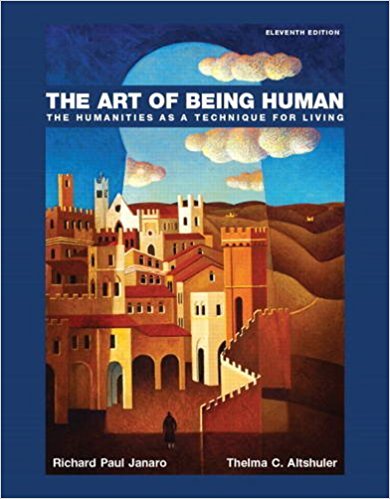
ART OF BEING HUMAN THE 11TH EDITION RICHARD JANARO THELMA ALTSHULER - TEST BANK

ART OF BEING HUMAN THE 11TH EDITION RICHARD JANARO THELMA ALTSHULER - TEST BANK   Instant Download - Complete Test Bank With Answers     Sample Questions Are Posted Below   Test Bank Chapter 1   MULTIPLE CHOICE   Heraclitus demonstrates the artistry of language when he offers a shorthand way of stating that life …

$19.99

ART OF BEING HUMAN THE 11TH EDITION RICHARD JANARO THELMA ALTSHULER – TEST BANK


Instant Download – Complete Test Bank With Answers


Sample Questions Are Posted Below


Test Bank Chapter 1


MULTIPLE CHOICE


  1. Heraclitus demonstrates the artistry of language when he offers a shorthand way of stating that life constantly changes in the phrase


  1. “A man cannot step into the same river twice.”
  2. “And yet he seemed busier than he was.”
  3. “There is a crack in everything. That’s how the light gets in.”
  4. “To be or not to be—that is the question.”


Answer: a

Question Title: TB_01_01_Gifts of the Humanities_Understand_LO 1.2

Learning Objective: LO 1.2 Summarize the gifts of the humanities.

Topic: Gifts of the Humanities

Skill Level: Understand the Concepts

Difficulty Level: Medium

Page number: 9


  1. Concerning humanism, Renaissance scholars believed that people could become fully human only if they


  1. looked beyond Europe to the works of Asia and Africa.
  2. combatted the social injustices of the time.
  3. developed skills in critical thinking.
  4. studied the best works of classical Greece and Rome.


Answer: d

Question Title: TB_01_02_Being Fully Human_Remember_LO 1.1

Learning Objective: LO 1.1 Define “the humanities.”

Topic: Being Fully Human

Skill Level: Remember the Facts

Difficulty Level: Easy

Page number: 3


  1. Redefining the humanities for the wider world means


  1. learning about the great works of Greek and Roman culture.
  2. maximizing the number of years one can stay alive.
  3. being open-minded and receptive to ideas from around the globe.
  4. understanding that true beauty lies within us, not outside us.


Answer: c

Question Title: TB_01_03_Being Fully Human_Remember_LO 1.1

Learning Objective: LO 1.1 Define “the humanities.”

Topic: Being Fully Human

Skill Level: Remember the Facts

Difficulty Level: Easy

Page number: 3-4


  1. Studying the humanities—especially poetry and literature—allows us to


  1. follow the rapid shifts that are part of everyday talk.
  2. acquire models for how to say things that prompt others to notice.
  3. memorize long passages from the works of great authors such as Shakespeare and Oscar Wilde.
  4. use social media and communicate casually.


Answer: b

Question Title: TB_01_04_Gifts of the Humanities_Remember_LO 1.2

Learning Objective: LO 1.2 Summarize the gifts of the humanities.

Topic: Gifts of the Humanities

Skill Level: Remember the Facts

Difficulty Level: Easy

Page number: 8


  1. Using the Socratic method means teaching by


  1. asking questions.
  2. delivering lectures.
  3. reciting witty sayings.
  4. studying classical models.


Answer: a

Question Title: TB_01_05_Gifts of the Humanities_Remember_LO1.2

Learning Objective: LO 1.2 Summarize the gifts of the humanities.

Topic: Gifts of the Humanities

Skill Level: Remember the Facts

Difficulty Level: Easy

Page number: 11


  1. One of the goals of thinking about the humanities is to become


  1. a classicist.
  2. a leader of a Socrates café.
  3. a Renaissance man.
  4. an infinite person.


Answer: d

Question Title: TB_01_06_Becoming an “Infinite” Person_Remember_LO 1.3

Learning Objective: LO 1.3 Explain why Leonardo da Vinci is considered the perfect model of the “infinite” person.

Topic: Becoming an “Infinite” Person

Skill Level: Understand the Concepts

Difficulty Level: Easy

Page number: 12


  1. Which poet wrote his poetry using informal language?
  2. Edgar Degas
  3. Geoffrey Chaucer
  4. Oscar Wilde
  5. Taylor Mali


Answer: d

Question Title: TB_01_07_Gifts of the Humanities_Remember_LO 1.2

Learning Objective: LO 1.2 Summarize the gifts of the humanities.

Topic: Gifts of the Humanities

Skill Level: Remember the Facts

Difficulty Level: Easy

Page number: 10


  1. By beauty, we refer to artworks or other objects that are


  1. adorned or decorated lavishly.
  2. naturally shining in ways other objects are not.
  3. pleasing and right in the arrangements of their parts.
  4. surprising, arresting, and bizarre.


Answer: c

Question Title: TB_01_08_Gifts of the Humanities_Remember_LO 1.2

Learning Objective: LO 1.2 Summarize the gifts of the humanities.

Topic: Gifts of the Humanities

Skill Level: Remember the Facts

Difficulty Level: Easy

Page number: 5


  1. The process by which scholars analyze and interpret the works of others is known as


  1. humanism.
  2. critical thinking.
  3. scholarly discipline.
  4. the Socratic Method.


Answer: b

Question Title: TB_01_09_Being Fully_Remember_LO 1.1

Learning Objective: LO 1.1 What are the humanities?

Topic: Being Fully Human

Skill Level: Understand the Concepts

Difficulty Level: easy

Page number: 4


  1. Concerning beauty, it may be said that


  1. a work portraying the grotesque or ugly cannot give pleasure.
  2. people might disagree about whether a particular work is beautiful.
  3. the arrangement of a work can be seriously flawed yet still be beautiful.
  4. the universal popularity of the Mona Lisa proves that culture does not play a role in beauty.


Answer: b

Question Title: TB_01_10_Gifts of the Humanities_Understand_LO 1.2

Learning Objective: LO 1.3 Summarize the gifts of the humanities.

Topic: Gifts of the Humanities

Skill Level: Understand the Concepts

Difficulty Level: Moderate

Page number: 5


  1. The pleasure that we have in response to beauty is said to be


  1. aesthetic.
  2. critical.
  3. humanistic.
  4. impersonal.


Answer: a

Question Title: TB_01_11_Gifts of the Humanities_Remember_LO 1.2

Learning Objective: LO 1.1 Summarize the gifts of the humanities.

Topic: Gifts of the Humanities

Skill Level: Remember the Facts

Difficulty Level: Easy

Page number: 6


  1. The humanities are important to the process of critical thinking because they


  1. offer a window into understanding how people thought long ago.
  2. show us the few models of excellence that are worthy of study and reflection.
  3. allow us to reflect on and consider what we read, see, and hear.
  4. show us the right way to think about life and art.


Answer: c

Question Title: TB_01_12_Being Fully Human_Understand_LO 1.2

Learning Objective: LO 1.2 What are the humanities?

Topic: Being fully human

Skill Level: Understand the Concepts

Difficulty Level: Moderate

Page number: 4


  1. Leonardo da Vinci is considered a creative genius mainly because he


  1. discovered the circulation of the blood long before William Harvey.
  2. excelled in and combined different artistic and scientific disciplines.
  3. painted the Mona Lisa, the most famous painting in the world.
  4. was the first to draw the human form using realistic proportions.


Answer: b

Question Title: TB_01_13_Becoming an “Infinite” Person­_Understand_LO 1.3

Learning Objective: LO 1.3 Explain why Leonardo da Vinci is considered the perfect model of the “infinite” person.

Topic: Becoming an “Infinite” Person

Skill Level: Understand the Concepts

Difficulty Level: Moderate

Page number: 12


  1. Understanding the persistence of issues or the change of ideas over time is associated with which gift of the humanities?


  1. beauty
  2. a deeper sense of the past
  3. ideas
  4. language


Answer: b

Question Title: TB_01_14_Gifts of the Humanities_Understand_LO 1.2

Learning Objective: LO 1.2 Summarize the gifts of the humanities.

Topic: Gifts of the Humanities

Skill Level: Understand the Concepts

Difficulty Level: Moderate

Page number: 11


  1. The gift of the humanities that can be seen as offering a release from the structured pattern of meeting deadlines is


  1. beauty.
  2. ideas.
  3. beautiful movement.
  4. language.


Answer: c

Question Title: TB_01_15_Gifts of the Humanities_Understand_LO 1.2

Learning Objective: LO 1.2 Summarize the gifts of the humanities.

Topic: Gifts of the Humanities

Skill Level: Understand the Concepts

Difficulty Level: Moderate

Page number: 7


  1. Geoffrey Chaucer and Oscar Wilde are noteworthy because they contributed to which gift of the humanities?


  1. beautiful movement
  2. beauty
  3. ideas
  4. language


Answer: d

Question Title: TB_01_16_Gifts of the Humanities_Apply_LO 1.2

Learning Objective: LO 1.2 Summarize the gifts of the humanities.

Topic: Gifts of the Humanities

Skill Level: Apply What You Know

Difficulty Level: Difficult

Page number: 8-9


  1. Studying the arrangement of colors on a canvas or the appeal of a face is a part of which gift of the humanities?


  1. beautiful movement
  2. beauty
  3. ideas
  4. language


Answer: b

Question Title: TB_01_17_Gifts of the Humanities_Apply_LO 1.2

Learning Objective: LO 1.2 Summarize the gifts of the humanities.

Topic: Gifts of the Humanities

Skill Level: Apply What You Know

Difficulty Level: Difficult

Page number: 5-6


  1. When people debate puzzling questions such why an object gives pleasure, or of the nature of justice, which gift of the humanities are they partaking in?


  1. beauty
  2. a deep sense of the past
  3. ideas
  4. language


Answer: c

Question Title: TB_01_18_Gifts of the Humanities_Apply_LO 1.2

Learning Objective: LO 1.2 Summarize the gifts of the humanities.

Topic: Gifts of the Humanities

Skill Level: Apply What You Know

Difficulty Level: Difficult

Page number: 10


  1. Being an “infinite” person can best be described as


  1. expanding our knowledge and our capacity for understanding ourselves and others.
  2. immersing ourselves in the experiences of those who came before us.
  3. increasing our aesthetic pleasure by experiencing many viewpoints of the beautiful.
  4. transforming intuitions into exciting ideas to develop our own thinking skills.


Answer: a

Question Title: TB_01_19_Becoming an “Infinite” Person_Apply_LO 1.3

Learning Objective: LO 1.3 Explain why Leonardo da Vinci is considered the perfect model of the “infinite” person.

Topic: Becoming an “Infinite” Person

Skill Level: Apply What You Know

Difficulty Level: Difficult

Page number: 12


  1. Which statement best paraphrases Socrates’s definition of justice?


  1. Absolute power corrupts absolutely.
  2. In a just society, justice must be accepted and adhered to by all.
  3. It is the burden of the ruling party to make laws that are in its own best interest.
  4. People can break the law if they feel it isn’t a just law.


Answer: b

Question Title: TB_01_20_Gifts of the Humanities_ Apply_LO 1.2

Learning Objective: LO 1.2 Summarize the gifts of the humanities.

Topic: Gifts of the Humanities

Skill Level: Apply What You Know

Difficulty Level: Difficult

Page number: 11


SHORT ANSWER


  1. How is dance an expression of “beautiful movement”?


Dance gives pleasure or enjoyment because it is movement “done right” or arranged properly.


Question Title: TB_01_21_Gifts of the Humanities_Understand_LO 1.2

Learning Objective: LO 1.2 Summarize the gifts of the humanities.

Topic: Gifts of the Humanities

Skill level: Understand the Concepts

Difficulty level: Moderate

Page number: 7


  1. Define the term “humanism.”


Beginning in the early Renaissance, humanism initially stated that one could become fully human only by studying the achievements of Greek and Roman culture. The meaning of the term has now expanded to include the creative and intellectual contributions of all cultures.


Question Title: TB_01_22_Being Fully Human_Understand_LO 1.1

Learning Objective: LO 1.1 Define ‘the humanities.”

Topic: Being Fully Human

Skill level: Understand the Concepts

Difficulty level: Moderate

Page number: 3


  1. Briefly explain why the humanities are unlimited or “infinite.”


The humanities are unlimited because they encompass all the creative and intellectual contributions of all the men and women from all the cultures across the past, present, and future.


Question Title: TB_01_23_ Becoming an “Infinite Person”_Understand_LO 1.3

Learning Objective: LO 1.3 Explain why Leonardo da Vinci is considered the perfect model of the “infinite” person.

Topic: Becoming an “Infinite Person”

Skill level: Understand the Concepts

Difficulty level: Moderate

Page number: 12-13


  1. Why were the humanities disciplines expanded during the Renaissance?


The humanities disciplines were expanded because more cultures (for example, those of Italy, France, Spain, and England) were included and more art forms (music, theater, and dance) began to flourish.


Question Title: TB_01_24_ Being Fully Human­_Understand_LO 1.1

Learning Objective: LO 1.1 Define “the humanities.”

Topic: Being Fully Human

Skill level: Understand the Concepts

Difficulty level: Moderate

Page number: 3


  1. Explain how the humanities offer us a “deeper sense of the past.”


Humans are themselves an accumulation of what has gone before; who we are in the present is still informed by the lives and works of people from the past.


Question Title: TB_01_25_ Gifts of the Humanities_Understand_LO 1.2

Learning Objective: LO 1.2 Summarize the gifts of the humanities.

Topic: Gifts of the Humanities

Skill level: Understand the Concepts

Difficulty level: Moderate

Page number: 11-12


ESSAY QUESTIONS


  1. Look carefully at Isamu Noguchi’s Water Stone (Fig. 1.2). How does such a work evoke the questions or issue of “beauty” as defined in the chapter? In your answer, list three elements of the painting that might engage or repel viewers aesthetically in determining whether it is beautiful or not.


  1. Respond to personal preference of beauty.
  2. Include the idea that beauty is the result of an arrangement of elements.

III. List at least three of these aesthetic elements: color, texture, medium, movement, and representation.


Question Title: TB_01_26_ Gifts of the Humanities_Analyze_LO 1.2

Learning Objective: LO 1.2 Summarize the gifts of the humanities.

Topic: Gifts of the Humanities

Skill level: Analyze it

Difficulty level: Difficult


  1. Reread the discussion of the Society for Philosophical Inquiry movement’s concept of the Socrates café. If you were to attend a Socrates café, what puzzling question of past or present would you like to hear discussed and why, based on the purpose of this café?


  1. Present a question or topic appropriate for Socrates café.
  2. Explain the question or topic.

III. Describe why the topic is puzzling and appropriate.


Question Title: TB 01.27_Gifts of the Humanities_Analyze_LO 1.2

Learning Objective: LO 1.2 Summarize the gifts of the humanities.

Topic: Gifts of the Humanities

Skill level: Analyze it

Difficulty level: Difficult


  1. The section on a deeper sense of the past suggests that there is a relationship between the works of other ages and those of the present day. The chapter presents a number of artworks from the past. Choose one and talk about the extent to which the issues or the standards of beauty in the work persist in works of today with which you are familiar.


  1. Choose a work.
  2. Describe the issues or features of that work.

III. Describe how the same issues or standards are applicable in a modern work.


Question Title: TB 01.28_Gifts of the Humanities_Analyze_LO 1.2

Learning Objective: LO 1.2 Summarize the gifts of the humanities.

Topic: Gifts of the Humanities

Skill level: Analyze it

Difficulty level: Difficult


  1. Think about the section entitled “Becoming an ‘Infinite Person.’” Describe in your own words what it means to be a Renaissance person. Based on your knowledge of your culture in the present day, define what disciplines or skills a modern “Renaissance person” might need to master, and explain why you picked those particular disciplines or skills.


  1. Describe a Renaissance man or woman
  2. diverse range of interests
  3. broad achievements
  4. List the attributes of a modern person that would make her or him a modern equivalent of a Renaissance man or woman.

III. Explain why these attributes are important features of modern society.


Question Title: TB_01.29_Becoming an “Infinite Person”_Analyze_LO 1.3

Learning Objective: LO 1.3 Explain why Leonardo da Vinci is considered the perfect model of the “infinite” person.

Topic: Becoming an “Infinite Person”

Skill level: Analyze it.

Difficulty level: Difficult


  1. Name a work of the humanities that offers one of the greatest gifts to humanity. Consider the classifications within the section entitled “Gifts of the Humanities” and explain how it offers such a gift.


  1. Identify a significant work of art or culture.
  2. Choose a classification from the gifts of the humanities.

III. Explain how the work exhibits or embodies that feature.


Question Title: TB 01.30_Gifts of the Humanities_Analyze_LO 1.2

Learning Objective: LO 1.2 Summarize the gifts of the humanities.

Topic: Gifts of the Humanities

Skill level: Analyze it

Difficulty level: Difficult


Additional information

Add Review

Your email address will not be published. Required fields are marked *