No products in the cart.

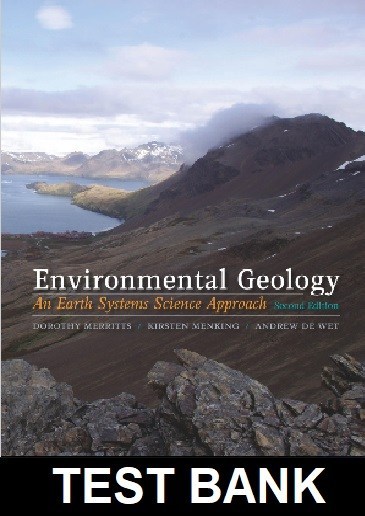
Environmental Geology An Earth Systems Approach 2nd Edition by Merritts - Test Bank

Environmental Geology An Earth Systems Approach 2nd Edition by Merritts - Test Bank   Instant Download - Complete Test Bank With Answers     Sample Questions Are Posted Below   Merritts Environmental Geology 2e Chapter 5: Volcanoes   The volcanic eruption of which mountain killed David Johnston? Mount Unzen Mount Rainier Mount St. Helens Mount …

$19.99

Environmental Geology An Earth Systems Approach 2nd Edition by Merritts – Test Bank


Instant Download – Complete Test Bank With Answers


Sample Questions Are Posted Below


Merritts Environmental Geology 2e

Chapter 5: Volcanoes


  1. The volcanic eruption of which mountain killed David Johnston?
    1. Mount Unzen
    2. Mount Rainier
    3. Mount St. Helens
    4. Mount Pinatubo

Answer: c

Section 1: Introduction

Bloom’s Taxonomy Level: Knowledge

Format: Multiple Choice


  1. Which gas was monitored at Mount Saint Helens to indicate that magma was moving?
    1. Nitrogen
    2. Carbon Dioxide
    3. Sulfur dioxide
    4. Ozone

Answer: c

Section 1: Introduction

Bloom’s Taxonomy Level: Knowledge

Format: Multiple Choice


  1. Which instrument was used at Mount St. Helens to determine if the magma was moving upward and causing the mountain to swell?
    1. Tiltmeters
    2. Seismographs
    3. Inverse modeling
    4. Stethoscopes

Answer: a

Section 1: Introduction

Bloom’s Taxonomy Level: Knowledge

Format: Multiple Choice


  1. In which geologic setting are the majority of above sea level volcanoes found?
    1. Divergent margins
    2. Continental-continental collision
    3. Convergent margins
    4. Mid-oceanic spreading ridges

Answer: c

Section 2: Volcanic Eruptions

Bloom’s Taxonomy Level: Knowledge

Format: Multiple Choice


  1. Which kind of magma is associated with partial melting of the asthenosphere along mid-oceanic ridges?
    1. Andesitic
    2. Rhyolitic
    3. Basaltic
    4. Granitic

Answer: c

Section 2: Volcanic Eruptions

Bloom’s Taxonomy Level: Knowledge

Format: Multiple Choice


  1. Which kind of lava is more commonly discharged on a worldwide volume basis?
    1. Granitic
    2. Andesitic
    3. Rhyolitic
    4. Basaltic

Answer: d

Section 2: Volcanic Eruptions

Bloom’s Taxonomy Level: Comprehension

Format: Multiple Choice


  1. Which feature can be found under every volcano?
    1. Magma chamber
    2. Caldera
    3. Crater
    4. Flood basalts

Answer: a

Section 2: Volcanic Eruptions

Bloom’s Taxonomy Level: Knowledge

Format: Multiple Choice


  1. Which type of compounds in magma are the sources of gas bubbles during volcanic eruptions?
    1. Incandescent
    2. Non-volatile
    3. Volatile
    4. Undissolved

Answer: c

Section 2: Volcanic Eruptions

Bloom’s Taxonomy Level: Knowledge

Format: Multiple Choice


  1. Which happens when the gas pressure in magma exceeds the confining pressure of the molten rock?
    1. The pressure on the remaining magma is decreased, which inhibits the eruption.
    2. The gas bubbles are reabsorbed by the magma and the magma cools.
    3. The pressure on the remaining magma is increased, which inhibits the eruption.
    4. The pressure on the remaining magma is decreased, which drives the eruption forward.

Answer: d

Section 2: Volcanic Eruptions

Bloom’s Taxonomy Level: Analysis

Format: Multiple Choice


  1. When does the major eruption phase of a volcano end?
    1. When the magma is degassed
    2. When the gas in the magma goes back into solution
    3. When the magma chamber is emptied
    4. When the silica percent fall below 50%

Answer: a

Section 2: Volcanic Eruptions

Bloom’s Taxonomy Level: Knowledge

Format: Multiple Choice


  1. Where would you find magma with the highest viscosity?
    1. Hawaii
    2. Yellowstone
    3. Alaska
    4. Philippines

Answer: b

Section 2: Volcanic Eruptions

Bloom’s Taxonomy Level: Application

Format: Multiple Choice


  1. Which is the largest component of volcanic gases?
    1. Sulfur dioxide
    2. Carbon dioxide
    3. Water vapor
    4. Hydrogen sulfide

Answer: c

Section 2: Volcanic Eruptions

Bloom’s Taxonomy Level: Knowledge

Format: Multiple Choice


  1. Which type of magma degasses easily and is thus less explosive?
    1. Rhyolitic
    2. Andesitic
    3. Granitic
    4. Basaltic

Answer: d

Section 2: Volcanic Eruptions

Bloom’s Taxonomy Level: Comprehension

Format: Multiple Choice


  1. Which area is prone to the most explosive eruptions?
    1. Long Valley, California
    2. Hawaii
    3. Indonesia
    4. Washington State

Answer: a

Section 2: Volcanic Eruptions

Bloom’s Taxonomy Level: Evaluation

Format: Multiple Choice


  1. You are in Hawaii watching an active eruption. The lava is slow moving and advancing in lobes. Some of the lava encounters a steep slope and the lava breaks into blobs that cool and break off. Which kind of texture is being formed on the steep slope?
    1. A’a
    2. Ropy
    3. Pahoehoe
    4. Smooth

Answer: a

Section 2: Volcanic Eruptions

Bloom’s Taxonomy Level: Comprehension

Format: Multiple Choice


  1. Which of the following statements is correct?
    1. Basaltic lava has low viscosity because of relatively low silica content.
    2. Basaltic lava has low viscosity because of relatively low melting temperatures.
    3. Felsic lava has high viscosity because of relatively low silica content.
    4. Felsic lava has low viscosity because of relatively high melting temperatures.

Answer: a

Section 2: Volcanic Eruptions

Bloom’s Taxonomy Level: Analysis

Format: Multiple Choice


  1. Where would you most likely encounter a pyroclastic flow?
    1. Hawaii
    2. Yellowstone
    3. Alaska (Aleutian Islands)
    4. Iceland

Answer: c

Section 2: Volcanic Eruptions

Bloom’s Taxonomy Level: Application

Format: Multiple Choice


  1. Which of the following is a form of tephra?
    1. Lava
    2. Ash
    3. Pahoehoe
    4. A’a

Answer: b

Section 2: Volcanic Eruptions

Bloom’s Taxonomy Level: Knowledge

Format: Multiple Choice


  1. In what geologic setting would you typically find andesite magmas?
    1. Continental-continental collisions
    2. Mid-oceanic ridges
    3. Seafloor spreading ridges
    4. Oceanic-continental subduction zones

Answer: d

Section 2: Volcanic Eruptions

Bloom’s Taxonomy Level: Evaluation

Format: Multiple Choice


  1. Which kind of magmatic eruption would have the highest probability of producing ashfall deposits?
    1. Basaltic
    2. Andesitic
    3. Rhyolitic
    4. Nephritic

Answer: c

Section 2: Volcanic Eruptions

Bloom’s Taxonomy Level: Comprehension

Format: Multiple Choice


  1. Which of the following hazards would be hard to outrun and would kill you immediately if it caught you?
    1. Basaltic lava
    2. Pyroclastic flow
    3. Ashfall
    4. Pahoehoe

Answer: b

Section 2: Volcanic Eruptions

Bloom’s Taxonomy Level: Comprehension

Format: Multiple Choice


  1. Which volcanic hazard killed the residents of Pompeii in 79 CE?
    1. Poisonous gases
    2. Volcanic bombs
    3. Ashfalls
    4. Pyroclastic flows

Answer: d

Section 2: Volcanic Eruptions

Bloom’s Taxonomy Level: Knowledge

Format: Multiple Choice


  1. Which type of volcano typically produces the least explosive eruptions?
    1. Composite
    2. Stratovolcano
    3. Shield
    4. Caldera

Answer: c

Section 2: Volcanic Eruptions

Bloom’s Taxonomy Level: Comprehension

Format: Multiple Choice


  1. Which type of volcano typically produces the steepest slopes?
    1. Composite
    2. Stratocaster
    3. Shield
    4. Caldera

Answer: a

Section 2: Volcanic Eruptions

Bloom’s Taxonomy Level: Knowledge

Format: Multiple Choice


  1. What is the main reason that stratovolcanoes have such steep slopes?
    1. Thick ashfall deposits
    2. High-viscosity lava flows
    3. Irregular cinder buildup
    4. Scoria pyroclasts

Answer: b

Section 2: Volcanic Eruptions

Bloom’s Taxonomy Level: Knowledge

Format: Multiple Choice


  1. Which material comprises cinder cones?
    1. Thick ashfall deposits
    2. High-viscosity lava flows
    3. Irregular pahoehoe buildup
    4. Scoria pyroclasts

Answer: d

Section 2: Volcanic Eruptions

Bloom’s Taxonomy Level: Knowledge

Format: Multiple Choice


  1. Which kind of lava is produced at large scale fissure eruptions?
    1. Basaltic
    2. Andesitic
    3. Rhyolitic
    4. High-viscosity

Answer: a

Section 2: Volcanic Eruptions

Bloom’s Taxonomy Level: Knowledge

Format: Multiple Choice


  1. Which location is associated with a caldera eruption?
    1. Mount St. Helens
    2. Crater Lake
    3. Mauna Loa
    4. Columbia River flood basalts

Answer: b

Section 2: Volcanic Eruptions

Bloom’s Taxonomy Level: Knowledge

Format: Multiple Choice


  1. Which material emitted from volcanoes can cool Earth’s atmosphere?
    1. Volcanic bombs
    2. Carbon dioxide
    3. Sulfur dioxide
    4. Hydrogen sulfide

Answer: c

Section 2: Volcanic Eruptions

Bloom’s Taxonomy Level: Knowledge

Format: Multiple Choice


  1. Which location has the highest potential to disrupt the way of life in North America if it erupted?
    1. Mount Rainier
    2. Yellowstone
    3. Lake Nyos
    4. Mount Pinatubo

Answer: b

Section 2: Volcanic Eruptions

Bloom’s Taxonomy Level: Comprehension

Format: Multiple Choice


  1. Which method have scientists used to determine the extent of atmospheric change due to particles placed in the air by the eruption of Tambora in 1815?
    1. Change in beaver pelt thickness
    2. Ratio of argon and potassium in the ice of Canadian lakes
    3. Concentration of sulfur in marsh deposits
    4. Ratio of red and green in landscape paintings

Answer: d

Section 2: Volcanic Eruptions

Bloom’s Taxonomy Level: Comprehension

Format: Multiple Choice


  1. Which volcanic hazard causes airplanes to lose engine power?
    1. Lava flows
    2. Volcanic bombs
    3. Tephra
    4. Hydrogen sulfide

Answer: c

Section 3: Volcanic Hazards

Bloom’s Taxonomy Level: Knowledge

Format: Multiple Choice


  1. Which was the location of a volcano that disrupted airplane travel over Europe in 2010?
    1. Azores
    2. Iceland
    3. Russia
    4. Indonesia

Answer: b

Section 3: Volcanic Hazards

Bloom’s Taxonomy Level: Knowledge

Format: Multiple Choice


  1. What volcanic hazard killed over 1000 people in Cameroon in 1986?
    1. Nuee ardente
    2. Lahar
    3. Ashflow
    4. Carbon dioxide

Answer: d

Section 3: Volcanic Hazards

Bloom’s Taxonomy Level: Comprehension

Format: Multiple Choice


  1. Which term is used to classify the longer period vibrations recorded by a seismogram due to crustal responses to upward moving magma?
    1. Harmonic jump
    2. Passive tremor
    3. Harmonic tremor
    4. Frequency cycling

Answer: c

Section 3: Volcanic Hazards

Bloom’s Taxonomy Level: Comprehension

Format: Multiple Choice


  1. Which of the Cascadia Range volcanoes has been found to be the most active over the last 4500 years?
    1. Mount St. Helens
    2. Mount Rainier
    3. Lassen Peak
    4. Mount Hood

Answer: a

Section 3: Volcanic Hazards

Bloom’s Taxonomy Level: Knowledge

Format: Multiple Choice


  1. Which aspect of the volcano named Nevado del Ruiz in Columbia made it so dangerous to the town of Armero when it erupted in 1985?
    1. The volcano produces pyroclastic flows.
    2. The volcano had not erupted for over 100 years.
    3. The mountain is only 40 miles away.
    4. The mountain is covered in glaciers.

Answer: d

Section 3: Volcanic Hazards

Bloom’s Taxonomy Level: Knowledge

Format: Multiple Choice


  1. Which is the main concern of Mount Rainier erupting with regard to endangering the lives of the greatest number of people?
    1. Ashfalls
    2. Lava flows
    3. Lahars
    4. Pyroclastic flows

Answer: c

Section 4: Minimizing the Risks from Volcanic Eruptions

Bloom’s Taxonomy Level: Knowledge

Format: Multiple Choice


  1. Which is the current volcanic threat from Mount Etna in Italy?
    1. Ashfalls
    2. Lava flows
    3. Lahars
    4. Pyroclastic flows

Answer: b

Section 4: Minimizing the Risks from Volcanic Eruptions

Bloom’s Taxonomy Level: Comprehension

Format: Multiple Choice


  1. Which event surprised scientists the most during the eruption of Mount St. Helens?
    1. Lateral blast from the volcano’s northern flank
    2. Distance of ash deposits away from the mountain
    3. Amount of snow that melted when it erupted
    4. Viscosity of magma generated

Answer: a

Section 4: Minimizing the Risks from Volcanic Eruptions

Bloom’s Taxonomy Level: Analysis

Format: Multiple Choice


True or False


  1. Volcanic bombs get their name because they blow up when they hit Earth.

Answer: False

Section 2: Volcanic Eruptions

Bloom’s Taxonomy Level: Comprehension

Format: True/False


  1. Basaltic magmas have such low viscosity that they never produce steep-sided volcanic cones.

Answer: False

Section 2: Volcanic Eruptions

Bloom’s Taxonomy Level: Knowledge

Format: True/False


  1. Much of the recent building boom that has occurred in the Puget Lowland region of Washington State has occurred on lahar deposits.

Answer: True

Section 4: Minimizing the Risks from Volcanic Eruptions

Bloom’s Taxonomy Level: Knowledge

Format: True/False


  1. The Long Valley Caldera is an extinct volcano.

Answer: False

Section 3: Volcanic Hazards

Bloom’s Taxonomy Level: Comprehension

Format: True/False


  1. The Aleutian Island volcanoes are part of the Ring of Fire.

Answer: True

Section 1: Introduction

Bloom’s Taxonomy Level: Comprehension

Format: True/False


Essay


  1. Examine Figure 5.14 showing basaltic magma moving down a flat road. Explain why the photographer is not in danger.


Answer: The photographer is not in danger because the lava in the photo is moving very slowly. The slow movement is mainly the result of flat ground. Basaltic lava has a low viscosity, which allows it to flow long distances, but the flat ground prevents it from moving very fast.

Section 2: Volcanic Eruptions

Bloom’s Taxonomy Level: Application

Format: Essay


  1. Explain the formation of stratovolcanoes and relate their formation to the chemical composition and properties of the magma.


Answer: Stratovolcanoes are composed of alternating layers of andesitic lava and pyroclastic flows. They form steeper slopes than basaltic volcanoes because of their relatively high-viscosity magma. The higher-viscosity andesitic magma is also responsible for the pyroclastic flows. The magma does not allow rapid escape of dissolved gases, and instead the gas expands and explodes as the magma reaches the surface producing the pyroclastic flows.

Section 2: The Concept of Systems

Bloom’s Taxonomy Level: Analysis

Format: Essay


  1. Explain how volcanic eruptions can affect people who live far away from the actual eruption. In particular, identify the vulnerability of people living along a coastline.


Answer: Violent volcanic eruptions that occur in ocean settings have the potential to produce large tsunamis that travel large distance across ocean basins and destroy coastal towns.

Section 3: Volcanic Hazards

Bloom’s Taxonomy Level: Evaluation

Format: Essay


  1. Explain the difference between an active, dormant, and extinct volcano. Discuss the implications of these distinctions for those living in the Pacific Northwest region of the United States.


Answer: An active volcano is one that has erupted within historic time, which means since people started keeping records—oral or written. An extinct volcano has not erupted in thousands to tens of thousands of years and has no activity. A dormant volcano is one that is still active but has not erupted for 100+ years. An example of a dormant volcano is Mount Rainier in Washington State.

Section 3: Volcanic Hazards

Bloom’s Taxonomy Level: Application

Format: Essay


  1. Why are scientists so concerned about Mount Rainier erupting? What evidence do they have to justify their concerns?


Answer: Geologists mapping volcanic deposits around the Mount Rainier area have found evidence that it erupts every few hundred years. They are concerned because the major threat of a Rainier eruption would be the production of lahars that would travel far from the mountain and threaten heavily populated areas.

Section 4: Minimizing the Risks from Volcanic Eruptions

Bloom’s Taxonomy Level: Application

Format: Essay


Additional information

Add Review

Your email address will not be published. Required fields are marked *