No products in the cart.

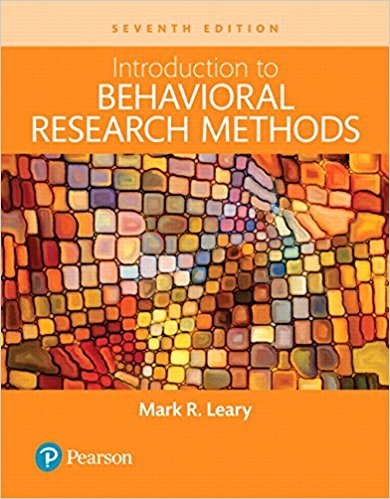
Introduction to Behavioral Research Methods 7th Edition By Mark R. Leary - Test Bank

Introduction to Behavioral Research Methods 7th Edition By Mark R. Leary - Test Bank   Instant Download - Complete Test Bank With Answers     Sample Questions Are Posted Below   TB_Leary_Chapter 5     Key: Answer, Type, Learning Objective, Level   Type A=Applied C=Conceptual F=Factual Level (1)=Easy; (2)=Moderate; (3)=Difficult   TB_Leary_Chapter 5     …

$19.99

Introduction to Behavioral Research Methods 7th Edition By Mark R. Leary – Test Bank


Instant Download – Complete Test Bank With Answers


Sample Questions Are Posted Below


TB_Leary_Chapter 5


Key: Answer, Type, Learning Objective, Level


Type

A=Applied

C=Conceptual

F=Factual

Level

(1)=Easy; (2)=Moderate; (3)=Difficult


TB_Leary_Chapter 5


Multiple Choice Single Select


M/C Question 1
Sample is to population as __________ is to

  1. a)  systematic; unsystematic.
  2. b)  some; all.
  3. c)  whole; part.
  4. d)  probability; nonprobability.

ANS: b


M/C Question 2
A sample from which a researcher can draw accurate inferences about the population is a

  1. a)  systematic sample.
  2. b)  sampling frame.
  3. c)  quota sample.
  4. d)  representative sample.

ANS: d


M/C Question 3
Sampling error

  1. a)  is lower with small samples than with large.
  2. b)  reflects mistakes in selecting which sample to use in a study.
  3. c)  reflects differences between a population and a sample from that population.
  4. d)  is greater when representative samples are used.

ANS: c


M/C Question 4
If the results of a survey are accurate within 3.5 percentage points, 3.5 is the

  1. a)  significance level.
  2. b)  power.
  3. c)  probability.
  4. d)  error of estimation.

ANS: d


M/C Question 5
When researchers use a probability sample, they know

  1. a)  the results are valid.
  2. b)  the sampling error is zero.
  3. c)  the probability that any individual in the population will be in the sample.
  4. d)  the error of estimation is small.

ANS: c


M/C Question 6
When determining the size of a sample, researchers typically

  1. a)  choose 3% of the population for the sample.
  2. b)  select an economic sample.
  3. c)  recruit as large a sample as they can.
  4. d)  use samples of at least 100 individuals.

ANS: b


M/C Question 7
What characteristic defines a simple random sample?

  1. a)  Every individual in the population has an equal chance of being selected for the sample.
  2. b)  Individuals selected for the sample are in the same geographical location.
  3. c)  Every individual’s score falls within the error of estimation.
  4. d)  Every possible sample of the desired size has an equal chance of being chosen.

ANS: d


M/C Question 8
A researcher separated the people in a population into three political categories: Democrat, Republican, or Independent. She then selected a random sample from each of these three groups. What kind of sample did she select?

  1. a)  Cluster sample
  2. b)  Quota sample
  3. c)  Systematic sample
  4. d)  Stratified random sample

ANS: d


M/C Question 9
A researcher numbered all of the people in a population from 1 to n, then chose a sample by using a random numbers table. What kind of sample did he select?

  1. a)  Stratified random sample
  2. b)  Cluster random sample
  3. c)  Systematic sample
  4. d)  Simple random sample

ANS: d


M/C Question 10
Which of the following is not a probability sample?

  1. a)  Stratified random sample
  2. b)  Simple random sample
  3. c)  Cluster sample
  4. d)  Quota sample

ANS: d


M/C Question 11
Which of the following sampling methods is recommended when a researcher finds it difficult to obtain a list of the individuals in a large population?

  1. a)  Cluster sampling
  2. b)  Stratified random sampling
  3. c)  Simple random sampling
  4. d)  Purposive sampling

ANS: a


M/C Question 12
Why might a researcher decide to use cluster sampling rather than simple random sampling?

  1. a)  The error of estimation is lower.
  2. b)  The respondents may be located closer together geographically.
  3. c)  It is more representative of the population.
  4. d)  The required sample size is smaller.

ANS: b


M/C Question 13
Nonresponse is a problem in survey research because it

  1. a)  indicates that participants are not motivated to participate.
  2. b)  increases the margin of error.
  3. c)  makes the sample less representative of the population.
  4. d)  makes the sample less economical.

ANS: c


M/C Question 14
The Literary Digest election survey of 1936 led to an incorrect prediction because

  1. a)  the sample size was too small.
  2. b)  the sample was not representative of U.S. voters.
  3. c)  the error of estimation was too high.
  4. d)  a stratified random sample was used.

ANS: b


M/C Question 15
The error of estimation is affected by

  1. a)  sample size.
  2. b)  population size.
  3. c)  the variance of the data.
  4. d)  all of these answers are correct.

ANS: d


M/C Question 16
An economic sample

  1. a)  can be obtained inexpensively.
  2. b)  is small.
  3. c)  gives a good estimation of the population at reasonable cost.
  4. d)  is used by economists to forecast financial trends.

ANS: c


M/C Question 17
What kind of samples do most psychological experiments use?

  1. a)  Simple random
  2. b)  Systematic
  3. c)  Convenience
  4. d)  Purposive

ANS: c


M/C Question 18
Researchers question Kinsey’s data regarding sexual behavior because

  1. a)  people usually lie about their sexual behavior.
  2. b)  Kinsey’s samples were not representative.
  3. c)  the error of estimation was large.
  4. d)  his sample size was small.

ANS: b


M/C Question 19
Which of the following is a nonprobability sample?

  1. a)  Quota
  2. b)  Simple random
  3. c)  Stratified random
  4. d)  Cluster

ANS: a


M/C Question 20
When a nonprobability sample is used, the error of estimation

  1. a)  reflects the likelihood that an individual from the population will be selected.
  2. b)  is underestimated.
  3. c)  is unacceptably large.
  4. d)  cannot be calculated.

ANS: d


M/C Question 21
Researchers stop every third pedestrian on a busy street and ask about his or her attitude toward gun control. This is an example of

  1. a)  purposive sampling.
  2. b)  quota sampling.
  3. c)  simple random sampling.
  4. d)  systematic sampling.

ANS: d


M/C Question 22
A subset of a population that shares a particular characteristic is called a

  1. a)  representative group.
  2. b)  stratum.
  3. c)  sampling frame.
  4. d)  quota.

ANS: b


M/C Question 23
The problem that occurs when a researcher generalizes results to a population that differs from the one from which the sample was drawn is called

  1. a)  misgeneralization.
  2. b)  error of estimation.
  3. c)  nonprobable generalization.
  4. d)  misstratification.

ANS: a


M/C Question 24
When researchers want to ensure that a certain kinds of participants in a convenience sample are obtained in particular proportions, they use

  1. a)  quota sampling.
  2. b)  representative sampling.
  3. c)  probability sampling.
  4. d)  purposive sampling.

ANS: a


M/C Question 25
When researchers use past research findings or their judgment to decide which participants to include in a sample, they are using

  1. a)  quota sampling.
  2. b)  representative sampling.
  3. c)  probability sampling.
  4. d)  purposive sampling.

ANS: d


M/C Question 26
The ability of a research design to detect any effects that exist in the data is called its

  1. a)  estimation.
  2. b)  reliability.
  3. c)  power.
  4. d)  generalization.

ANS: c


M/C Question 27
One way to increase power is to

  1. a)  increase the sample size.
  2. b)  use multistage cluster sampling.
  3. c)  select a proportionate sample.
  4. d)  use an economic sample.

ANS: a


Essay


Essay Question 28
Discuss the advantages and disadvantages of using probability versus nonprobability samples.


Essay Question 29
What is sampling error?


Essay Question 30
Under what set of conditions is the error of estimation lowest?


Essay Question 31
Distinguish among simple random samples, stratified random samples, and cluster samples.


Essay Question 32
Explain how you would use a table of random numbers to select a random sample.


Essay Question 33
Explain how you would use a multistage cluster sampling procedure to obtain a sample of children with learning disabilities in your state.


Essay Question 34
Why do experts believe that sampling would improve the quality of the U. S. Census?


Essay Question 35
Why did Literary Digest erroneously predict that Landon would defeat Roosevelt in the presidential election of 1936?


Essay Question 36
Discuss the pros and cons of using convenience samples in behavioral research.


Essay Question 37
Explain why systematic sampling is not random.


Essay Question 38
Explain why nonresponse is a problem in survey research.


Essay Question 39
What is misgeneralization, and why is it a problem?


Essay Question 40
Why should purposive sampling be avoided in general?


Essay Question 41
Describe power and how it relates to sample size.

Additional information

Add Review

Your email address will not be published. Required fields are marked *