No products in the cart.

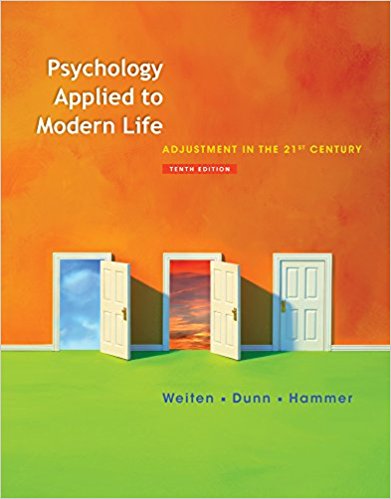
Psychology Applied To Modern Life Adjustment In the 21st Century By Weiten - Dunn - Test Bank

Psychology Applied To Modern Life Adjustment In the 21st Century By Weiten - Dunn - Test Bank   Instant Download - Complete Test Bank With Answers     Sample Questions Are Posted Below   Chapter 5 PSYCHOLOGY and physical Health     LEARNING OBJECTIVES   Stress, Personality, and Illness Describe the Type A personality and …

$19.99

Psychology Applied To Modern Life Adjustment In the 21st Century By Weiten – Dunn – Test Bank


Instant Download – Complete Test Bank With Answers


Sample Questions Are Posted Below


Chapter 5

PSYCHOLOGY and physical Health


LEARNING OBJECTIVES


Stress, Personality, and Illness

  1. Describe the Type A personality and evidence regarding its most toxic element.
  2. Understand possible explanations for the link between hostility and heart disease.

3    Summarize evidence relating emotional reactions and depression to heart disease.

  1. Discuss the evidence linking stress and personality to cancer.
  2. Summarize evidence linking stress to a variety of diseases and immune functioning.
  3. Evaluate the strength of the relationship between stress and illness.


Habits, Lifestyles, and Health

  1. Identify some reasons for why people develop health-impairing habits.
  2. Discuss the health effects of smoking and the dynamics of giving up smoking.
  3. Summarize data on patterns of alcohol use and social costs of drinking.
  4. Discuss the health risks and determinants of obesity.
  5. Outline the key elements in effective weight-loss efforts.
  6. Provide examples of links between nutrition and health and three general goals to foster sound nutrition.
  7. Assess benefits and risks of exercise.
  8. List four guidelines for embarking on an effective exercise program.
  9. Describe AIDS and summarize evidence on the transmission of the HIV virus.


Reactions to Illness

  1. Summarize evidence on patterns of treatment-seeking behavior.
  2. Explain the appeal of the “sick role.”
  3. Identify the factors that tend to undermine doctor-patient communication and how to improve it.
  4. Discuss the prevalence of nonadherence to medical advice and its causes.


APPLICATION: Understanding the Effects of Drugs

  1. Explain the concepts of drug tolerance, physical and psychological dependence, and overdose.
  2. Summarize the main effects and risks of narcotics and sedatives.
  3. Describe the main effects and risks of stimulant drugs and hallucinogens.
  4. Outline the main effects and risks of marijuana and ecstasy (MDMA).


LEARNING OBJECTIVES

Item Number

1.   Describe the Type A personality and evidence regarding its most toxic element. 1, 2, 3, 4, 5, 6, 7, 8, 9, 10, TF1, TF2
2.   Understand possible explanations for the link between hostility and heart disease. 11, 12, 13, 14, 15, 16, 17, SG1, TF3, SA1
3    Summarize evidence relating emotional reactions and depression to heart disease. 18, 19, TF4
4.   Discuss the evidence linking stress and personality to cancer. 20, 21
5.   Summarize evidence linking stress to a variety of diseases and immune functioning. 22, 23, 24, 25, 26
6.   Evaluate the strength of the relationship between stress and illness. 27, 28, 29, SG2, TF5
7.   Identify some reasons for why people develop health-impairing habits. 30, 31
8.   Discuss the health effects of smoking and the dynamics of giving up smoking. 32, 33, 34, 35, 36, 37, SG3, TF6, TF7, SA2
9.   Summarize data on patterns of alcohol use and the health risks and social costs of drinking. 38, 39, 40, 41, SA3
10. Discuss the health risks and determinants of obesity.  42, 43, 44, SG4, SA4, SA5
11. Outline the key elements in effective weight-loss efforts. 45, 46
12. Provide examples of links between nutrition and health and outline three general goals to foster nutrition. 47, 48, 49, 50, 51, 52, 53, 54, 55, 56, SG5, SA6
13. Assess the benefits and risks of exercise. 57, 58, 59
14. List four guidelines for embarking on an effective exercise program. 60, 61, SA7
15. Describe AIDS and summarize evidence on the transmission of the HIV virus. 62, 63, 64, 65, 66, 67, 68, 69, SG6, TF8, TF9, SA8
16. Summarize evidence on patterns of treatment-seeking behavior. 70, 71
17. Explain the appeal of the “sick role.” 72, 73
18. Identify the factors that tend to undermine doctor-patient communication and how to improve it. 74, 75, SG7, SA9
19. Discuss the prevalence of nonadherence to medical advice and its causes. 76, 77, SG8
20. Explain the concepts of drug tolerance, physical and psychological dependence, and overdose. 78, 79, 80, 81, 82, 83, SG9, TF10
21. Summarize the main effects and risks of narcotics and sedatives. 84, 85, 86, 87, 88, 89, 90, SG10
22. Describe the main effects and risks of stimulant drugs and hallucinogens. 91, 92, 93, 94, 95, 96, 97, SA10
23. Outline the main effects and risks of marijuana and ecstasy (MDMA). 98, 99, 100, 101, 105

Key: Multiple-Choice question numbers appear first, followed by Study Guide question numbers (SG), True/False (TF), and Short Answer (SA).


MULTIPLE CHOICE


  1. Before the 20th century, the principal threats to health in our society were
  2. farm accidents.
  3. heart diseases.
  4. contagious diseases.
  5. various forms of cancer.


ANS: c             REF: 139

OBJ: 1              KEY: Factual               DIF: Moderate


  1. ______ play a larger role in chronic diseases than contagious diseases.
  2. Lifestyles
  3. Viruses
  4. Infections and viruses
  5. Lifestyles and stress


ANS: d             REF: 138

OBJ: 1              KEY: Factual               DIF: Moderate


  1. The greatest threat to health in our society today is posed by
  2. homicide.
  3. chronic diseases.
  4. contagious diseases.
  5. environmental toxins.


ANS: b             REF: 138                     MSC: WWW

OBJ: 1              KEY: Factual               DIF: Difficult


  1. Which of the following is NOT considered a chronic disease?
  2. Cancer
  3. Stroke
  4. Influenza
  5. Heart disease


ANS: c             REF: 139                     MSC: WWW

OBJ: 1              KEY: Factual               DIF: Moderate


  1. Which of the following is known to be the principal cause of coronary heart disease?
  2. Diabetes
  3. Atherosclerosis
  4. Alzheimer’s disease
  5. Posttraumatic stress disorder


ANS: b             REF: 141

OBJ: 1              KEY: Factual               DIF: Easy


  1. ________ psychology is the area concerned with how psychosocial factors relate to the promotion and maintenance of health.
  2. Health
  3. Clinical
  4. Community
  5. Psychosociology


ANS: a             REF: 140

OBJ: 1              KEY: Factual               DIF: Moderate


  1. ______ is the gradual narrowing of the coronary arteries.
  2. Cancer
  3. Influenza
  4. Atherosclerosis
  5. Acquired immune deficiency syndrome


ANS: c             REF: 141

OBJ: 1              KEY: Factual               DIF: Easy


  1. The name of the condition when the heart is temporarily deprived of adequate blood flow is
  2. atherosclerosis.
  3. coronary heart disease.
  4. myocardial ischemia.
  5. myocardial infarction.


ANS: c             REF: 141

OBJ: 1              KEY: Factual               DIF: Difficult


  1. A heart attack is called
  2. atherosclerosis.
  3. coronary heart disease.
  4. a myocardial ischemia.
  5. a myocardial infarction.


ANS: d             REF: 141

OBJ: 1              KEY: Factual               DIF: Moderate


  1. Angina is
  2. a psychosomatic condition.
  3. chest pain.
  4. a mild heart attack.
  5. a heart attack.


ANS: b             REF: 141

OBJ: 1              KEY: Factual               DIF: Moderate


  1. The Type A behavior pattern is most closely linked to which of the following physical ailments?
  2. Cancer
  3. Asthma
  4. Alzheimer’s disease
  5. Coronary heart disease


ANS: d             REF: 142

OBJ: 2              KEY: Factual               DIF: Easy


  1. Hank continually loses his temper when waiting in lines. He has very little patience for other people and is driven to be highly successful. Hank’s personality is called
  2. Type A
  3. Type AeH
  4. Hostile subtype
  5. Domineering subtype


ANS: a             REF: 142

OBJ: 2              KEY: Conceptual         DIF: Moderate


  1. Which of the following characteristics is most closely associated with the Type A personality?
  2. Hostile
  3. Patient
  4. Permissive
  5. Cooperative


ANS: a             REF: 142

OBJ: 2              KEY: Conceptual         DIF: Easy


  1. Which of the following characteristics is most closely associated with the Type B personality?
  2. Impatient
  3. Easy-going
  4. Competitive
  5. Time-conscious


ANS: b             REF: 142

OBJ: 2              KEY: Factual               DIF: Moderate


  1. Which of the following characteristics is least closely associated with the Type B personality?
  2. Patient
  3. Easy-going
  4. Competitive
  5. Relatively relaxed


ANS: c             REF: 142

OBJ: 2              KEY: Factual               DIF: Easy


  1. Which component of Type A behavior seems to be most responsible for the increased rate of heart attacks?
  2. Anger and hostility
  3. Highly driven work goals
  4. Competitiveness
  5. Impatience and time urgency


ANS: a             REF: 142                     NOT: New

OBJ: 2              KEY: Conceptual         DIF: Moderate


  1. Living alone following a cardiac event _____ a person’s risk for a subsequent heart attack.
  2. decreases
  3. increases
  4. is unrelated to
  5. is equal to


ANS: b             REF: 143                     NOT: New

OBJ: 2              KEY: Factual               DIF: Moderate


  1. Bobby tends to suppress his feelings. He is more likely to _____ about events.
  2. ruminate
  3. have heightened negative feelings
  4. be depressed
  5. all of these


ANS: d             REF: 144                     NOT: New

OBJ: 3              KEY: Conceptual         DIF: Moderate


  1. Depression _____ one’s chance of developing heart disease.
  2. increases slightly
  3. doubles
  4. decreases
  5. is unrelated to


ANS: b             REF: 144                     NOT: New

OBJ: 3              KEY: Factual               DIF: Moderate


  1. ______ refers to malignant cell growth, which may occur in many organ systems in the body.
  2. Cancer
  3. Atherosclerosis
  4. Myocardial ischemia
  5. Coronary heart disease


ANS: a             REF: 144

OBJ: 4              KEY: Factual               DIF: Easy


  1. The evidence linking psychological factors to the onset of cancer is
  2. strong.
  3. moderate.
  4. extremely weak.
  5. non-existent; little research has been done.


ANS: c             REF: 145                     NOT: New

OBJ: 4              KEY: Factual               DIF: Moderate


  1. The immune response is
  2. a series of steps taken by Type A personalities.
  3. the body’s defensive reaction to invasion.
  4. one of the isolation effects of depression.
  5. none of the these.


ANS: b             REF: 146

OBJ: 5              KEY: Factual               DIF: Easy


  1. Which of the following has been found to impair immune functioning in animals?
  2. Shock
  3. Restraint
  4. Crowding
  5. All of these


ANS: d             REF: 146

OBJ: 5              KEY: Factual               DIF: Easy


  1. Studies of the immune system in humans have found that stress
  2. has very little effect on immune activity.
  3. can lead to the destruction of lymphocytes.
  4. is related to increased levels of immune activity.
  5. is related to decreased levels of immune activity.


ANS: d             REF: 147                     MSC: WWW

OBJ: 5              KEY: Factual               DIF: Moderate


  1. Researchers have found a correlation between reduced immune activity and scores on
  2. Weschler Intelligence Scale.
  3. Somatic Rating Scale.
  4. several occupational interest inventories.
  5. the Social Readjustment Rating Scale.


ANS: d             REF: 147

OBJ: 5              KEY: Factual               DIF: Easy


  1. Who is most likely to have an impact on their immune function?
  2. Ray, whose wife died
  3. Janet, whose house burned down
  4. George, who totaled his car
  5. Beatrice, who cares for her child with cerebral palsy


ANS: d             REF: 147

OBJ: 5              KEY: Conceptual         DIF: Moderate


  1. Virtually all of the research on stress and physical health in humans is
  2. anecdotal.
  3. correlational.
  4. experimental.
  5. observational.


ANS: b             REF: 147                     MSC: WWW

OBJ: 6              KEY: Factual               DIF: Moderate


  1. The strength of the relationship between stress and health is
  2. very weak.
  3. weak.
  4. modest.
  5. strong.


ANS: c             REF: 147

OBJ: 6              KEY: Factual               DIF: Difficult


  1. Dr. VanGundy is researching the relationship between stress and subsequent health in normal individuals. He is likely to find a correlation around
  2. .10.
  3. .25.
  4. .40.
  5. .60.


ANS: b             REF: 147

OBJ: 6              KEY: Conceptual         DIF: Moderate


  1. The most likely explanation for people’s tendency to act in self-destructive ways is that
  2. people have an innate desire for sensation-seeking.
  3. most people tend to believe that bad things happen to bad people.
  4. many health-impairing habits involve activities that are quite pleasant at the time.
  5. people engage in health-impairing behavior “on the spur of the moment,” without giving much thought to the consequences.


ANS: c             REF: 148

OBJ: 7              KEY: Factual               DIF: Difficult


  1. People have a tendency to ______ the risk of their own health-impairing habits, and ______ the risks associated with others’ self-destructive behaviors.
  2. overestimate; underestimate
  3. underestimate; overestimate
  4. accurately view; overestimate
  5. underestimate; accurately view


ANS: d             REF: 148

OBJ: 7              KEY: Conceptual         DIF: Difficult


  1. In the U.S., about _________ % of females and ________ % of males smoke.
  2. 18; 24
  3. 26; 21
  4. 15; 30
  5. 30; 30


ANS: a             REF: 149

OBJ: 8              KEY: Factual               DIF: Difficult               NOT: New


  1. In the U.S., college students smoke __________ compared to the general population.
  2. more for males; less for females
  3. less for males; more for females
  4. less for males and females
  5. more for males and females


ANS: d             REF: 149

OBJ: 8              KEY: Factual               DIF: Moderate


  1. Research shows that smoking increases the likelihood of developing
  2. cancer.
  3. heart disease.
  4. arteriosclerosis.
  5. all of these.


ANS: d             REF: 150

OBJ: 8              KEY: Factual               DIF: Easy


  1. Which of the following has been shown to increase the risk of such diseases as lung cancer, arteriosclerosis, and emphysema?
  2. Obesity
  3. Smoking
  4. Poor nutrition
  5. Lack of exercise


ANS: b             REF: 150                     MSC: WWW

OBJ: 8              KEY: Factual               DIF: Easy


  1. Health risks after quitting smoking decline until they reach a normal level after about
  2. 1 year.
  3. 5 years.
  4. 10 years.
  5. 15 years.


ANS: d             REF: 150                     MSC: WWW

OBJ: 8              KEY: Factual               DIF: Moderate


  1. Research shows that long-term success rates for efforts to quit smoking are about
  2. 10%.
  3. 25%.
  4. 50%.
  5. 80%.


ANS: b             REF: 151

OBJ: 8              KEY: Factual               DIF: Moderate


  1. On college campuses, alcohol appears to contribute to about ______ of student rapes.
  2. 20%
  3. 50%
  4. 75%
  5. 90%


ANS: d             REF: 153

OBJ: 9              KEY: Factual               DIF: Moderate


  1. In our society, alcohol is associated with which of the following crimes?
  2. Murder
  3. Child abuse
  4. Spouse abuse
  5. All of these


ANS: d             REF: 153

OBJ: 9              KEY: Factual               DIF: Easy


  1. Which of the following is considered one of the common warning signs of alcoholism?
  2. Serving alcoholic drinks to close relatives
  3. Drinking to modify uncomfortable feelings
  4. Having several drinks at a social gathering
  5. Drinking alcohol openly


ANS: b             REF: 153                     NOT: New

OBJ: 9              KEY: Conceptual         DIF: Easy


  1. Excessive drinking is correlated with which of the following?
  2. Heart disease
  3. Stomach cancer
  4. Cirrhosis of the liver
  5. All of these


ANS: d             REF: 154

OBJ: 9              KEY: Factual               DIF: Easy


  1. Typically, people are considered obese if their weight exceeds their ideal body weight by
  2. 20%.
  3. 40%.
  4. 60%.
  5. 80%.


ANS: a             REF: 154                     MSC: WWW

OBJ: 10            KEY: Factual               DIF: Easy


  1. Researchers have found that in terms of their weight, adult adoptees tend to resemble their______ more than their ______.
  2. adoptive parents; biological parents
  3. biological parents; adoptive parents
  4. adoptive siblings; biological siblings
  5. biological siblings; adoptive siblings


ANS: b             REF: 153

OBJ: 10            KEY: Factual               DIF: Moderate


  1. Weight tends to remain stable as long as there are no long-term factors that influence it. This theory is called
  2. wishful thinking.
  3. settling-point.
  4. inertia.
  5. durability.


ANS: b             REF: 156                     NOT: New

OBJ: 10            KEY: Factual               DIF: Moderate


  1. In order to lose one pound, you need to burn up ______ more calories than you consume.
  2. 500
  3. 1,000
  4. 3,500
  5. 5,000


ANS: c             REF: 156

OBJ: 11            KEY: Factual               DIF: Moderate


  1. Harry wants to lose 50 pounds. He should
  2. sharply increase his exercise.
  3. sharply reduce his food intake.
  4. decrease his food intake and increase his exercise, both in moderate ways.
  5. sharply increase his exercise while simultaneously reducing his food intake dramatically.


ANS: c             REF: 156

OBJ: 11            KEY: Conceptual         DIF: Moderate


  1. Ahmed maintains a diet high in serum cholesterol, eating an abundance of eggs, cheese, butter, and shellfish. Ahmed may well be increasing his risk of
  2. arthritis.
  3. emphysema.
  4. heart disease.
  5. all of these.


ANS: c             REF: 157

OBJ: 12            KEY: Conceptual         DIF: Moderate


  1. High caffeine consumption is likely to elevate one’s risk for
  2. depression.
  3. hypertension.
  4. prostate cancer.
  5. all of these.


ANS: b             REF: 158

OBJ: 12            KEY: Factual               DIF: Moderate


  1. ______ may increase one’s risk for cardiovascular disease.
  2. Eating fish
  3. Consuming omega 3 fatty acids
  4. Avoiding processed meats
  5. Eating a low-fiber diet


ANS: d             REF: 157

OBJ: 12            KEY: Factual               DIF: Moderate


  1. Which of the following nutritional habits can increase susceptibility to a variety of diseases and health problems?
  2. Obesity
  3. High-fat diets
  4. Low-fiber diets
  5. All of these


ANS: d             REF: 157-158

OBJ: 12            KEY: Factual               DIF: Difficult


  1. Nutritional deficiencies among Americans are most likely a result of
  2. low income.
  3. lack of knowledge about nutrition.
  4. inability to find appropriate foods.
  5. emphasis in the media on “convenience” foods.


ANS: b             REF: 158

OBJ: 12            KEY: Factual               DIF: Moderate


  1. Which of the following is NOT considered a nutrient essential for physical well-being?
  2. Fats
  3. Starchoglycens
  4. Proteins
  5. Carbohydrates


ANS: b             REF: 158

OBJ: 12            KEY: Factual               DIF: Easy


  1. _____ is a collection of processes through which an organism utilizes the materials required for survival and growth.
  2. Biopsychology
  3. Nutrition
  4. Acculturation
  5. Mitochondria


ANS b              REF: 157                     NOT: New

OBJ: 12            KEY: Factual               DIF: Easy


  1. The main function of vitamins and minerals is to
  2. strengthen the immune system.
  3. provide energy sources for the body.
  4. help release energy from other foods.
  5. provide roughage to facilitate digestion.


ANS: c             REF: 158                     MSC: WWW

OBJ: 12            KEY: Factual               DIF: Moderate


  1. ______ provide(s) roughage that facilitates digestion.
  2. Fiber
  3. Protein
  4. Vitamins
  5. Minerals


ANS: a             REF: 158

OBJ: 12            KEY: Factual               DIF: Easy


  1. It’s a good idea to increase consumption of healthy carbohydrates, natural sugars, and ample fiber. You can do this by eating more food from which of the following groups?
  2. Breads and cereals
  3. Fish, chicken, turkey
  4. Milk and milk products
  5. Fruits, vegetables, whole grains


ANS: d             REF: 160

OBJ: 12            KEY: Factual               DIF: Difficult               NOT: New


  1. Recent studies suggest that physical fitness is associated with a decreased risk for which of the following?
  2. Colon cancer in men
  3. Breast cancer in women
  4. Reproductive cancer in women
  5. All of these


ANS: d             REF: 160

OBJ: 13            KEY: Factual               DIF: Difficult


  1. To affect mortality rates, people need to exercise
  2. strenuously on a regular basis.
  3. with a brisk half-hour walk daily.
  4. strenuously three times a week.
  5. carefully for the first year.


ANS: b             REF: 160                     NOT: New

OBJ: 13            KEY: Conceptual         DIF: Moderate


  1. Eric has been feeling depressed and has a lot of tension and anxiety while he looks for a new job. He wonders if regular exercise will be of benefit. Given the research, what would you tell him?
  2. He’s right. Research supports his assumptions.
  3. He’s right. He needs to get in better shape to get a job.
  4. He’s wrong. People who are depressed can only be helped by medication.
  5. He’s wrong. Exercise has nothing to do with improving moods.


ANS: a             REF: 160-161               NOT: New

OBJ: 13            KEY: Conceptual         DIF: Difficult


  1. An exercise activity that you find enjoyable
  2. is likely to increase the physical benefits of exercise.
  3. makes it easier to follow through and exercise regularly.
  4. tends to detract from the psychological benefits of exercise.
  5. reduces the likelihood that you’ll get caught in the “competition trap.”


ANS: b             REF: 161

OBJ: 14            KEY: Factual               DIF: Moderate


  1. Which of the following is NOT good advice for devising an exercise program?
  2. Increase your participation gradually.
  3. Exercise regularly without overdoing it.
  4. Look for an activity that you will find enjoyable.
  5. You should try to “exercise through” any minor injuries.


ANS: d             REF: 162                     MSC: WWW

OBJ: 14            KEY: Factual               DIF: Difficult


  1. ______ is a disorder in which the immune system is gradually weakened and eventually disabled by the human immunodeficiency virus.
  2. HIV
  3. Hemophilia
  4. Myocardial ischemia
  5. Acquired immune deficiency syndrome


ANS: d             REF: 162

OBJ: 15            KEY: Factual               DIF: Moderate


  1. AIDS is the final stage of the HIV infection process, which typically manifests itself about ______ years after the original infection.
  2. 1
  3. 5
  4. 8
  5. 15


ANS: c             REF: 162

OBJ: 15            KEY: Factual               DIF: Difficult


  1. Treatment with which of the following has recently been found to hold promise for substantially longer survival for AIDS victims?
  2. Prozac
  3. Exhibitory retrovirus therapy
  4. Intease inhibitors
  5. Highly active antiretroviral therapy


ANS: d             REF: 162

OBJ: 15            KEY: Factual               DIF: Moderate


  1. HIV infection transmission is _____ in male to female compared with female to male.
  2. equally likely
  3. about eight times more likely
  4. rare
  5. about eight times less likely


ANS: b             REF: 162                     NOT: New

OBJ: 15            KEY: Factual               DIF: Difficult


  1. Highly active antiretroviral therapy treatment for AIDS
  2. is highly effective in lengthening survival.
  3. has undetermined long-term efficacy.
  4. has adverse side effects.
  5. is all of these.


ANS: d             REF: 162                     NOT: New

OBJ: 15            KEY: Factual               DIF: Moderate


  1. Worldwide, which of the following is the most common mode of transmission of the HIV virus?
  2. Sharing food
  3. Heterosexual relations
  4. Sexual contact among homosexual men
  5. The sharing of needles by intravenous drug users


ANS: b             REF: 162

OBJ: 15            KEY: Factual               DIF: Moderate


  1. Which of the following statements about AIDS is accurate?
  2. Having AIDS and being infected with HIV are basically the same thing.
  3. People who donate blood on a regular basis are in danger of contracting AIDS.
  4. AIDS can be readily transmitted through casual contact with infected individuals.
  5. HIV carriers often remain healthy and symptom-free for many years after they are infected.


ANS: d             REF: 163                     MSC: WWW

OBJ: 15            KEY: Factual               DIF: Moderate


  1. Which of the following is good advice for minimizing the risk of developing AIDS?
  2. You should have sexual contact with fewer partners.
  3. You should use condoms to control semen exchange.
  4. You should curtail sexual behaviors that increase the probability of mixing semen and blood.
  5. All of these statements constitute good advice.


ANS: d             REF: 163                     NOT: New

OBJ: 15            KEY: Conceptual         DIF: Easy


  1. People who are eager to seek medical care are most likely to be which of the following?
  2. Highly psychotic
  3. High in extroversion
  4. High in neuroticism
  5. High in sensation-seeking


ANS: c             REF: 164                     NOT: New

OBJ: 16            KEY: Factual               DIF: Easy


  1. George has decided to seek medical treatment for a severe rash that has remained for three days. His decision involves
  2. identifying symptoms as an indication of illness.
  3. deciding it warrants medical attention.
  4. arranging the care appointment and time.
  5. all of these.


ANS: d             REF: 164-165               NOT: New

OBJ: 16            KEY: Conceptual         DIF: Easy


  1. For which of the following reasons is someone most likely to play the sick role?
  2. To escape the demands of others
  3. To deflect attention from themselves
  4. To establish the basis for a malpractice lawsuit
  5. To continue to receive medical insurance payments


ANS: a             REF: 165

OBJ: 17            KEY: Conceptual         DIF: Easy


  1. Which of the following is least likely to be a consequence of playing the “sick role”?
  2. Decreased demands from others
  3. Delayed professional care
  4. Increased concern from others
  5. Increased affection from others


ANS: b             REF: 165

OBJ: 17            KEY: Conceptual         DIF: Moderate


  1. Which of the following is NOT considered a common barrier to effective provider-patient communication?
  2. Many providers use too much medical jargon.
  3. Medical visits are usually very brief, allowing little time for discussion.
  4. Some patients are evasive about their real concerns because they fear a serious diagnosis.
  5. Some providers are reluctant to challenge their patients’ subjective interpretation of their own symptoms.


ANS: d             REF: 166                     MSC: WWW

OBJ: 18            KEY: Conceptual         DIF: Moderate


  1. Doctors and nurses often
  2. believe their explanations are clear.
  3. like to speak in technical terms to show their knowledge.
  4. underestimate their patients’ understanding.
  5. do not care if instructions are followed properly.


ANS: a             REF: 166                     NOT: New

OBJ: 18            KEY: Conceptual         DIF: Moderate


  1. People are most likely to follow the instructions they receive from healthcare professionals when
  2. the instructions are punctuated with impressive medical jargon.
  3. they like, respect, and understand the health care professional.
  4. they don’t fully understand the instructions, but feel the need to do something.
  5. all of these.


ANS: b             REF: 166

OBJ: 19            KEY: Conceptual         DIF: Easy


  1. Which of the following factors is likely to be the most important in increasing patients’ adherence to medical advice?
  2. More detailed instructions from the practitioner
  3. A larger number of practitioners from which to choose
  4. The dissemination of literature about common medical problems
  5. The communication process between the practitioner and the patient


ANS: d             REF: 166

OBJ: 19            KEY: Conceptual         DIF: Difficult


  1. Tolerance involves
  2. physical dependence on a drug.
  3. psychological dependence on a drug
  4. gradual increase in responsiveness to a drug with continued use.
  5. progressive decrease in responsiveness to a drug with continued use.


ANS: d             REF: 168                     MSC: WWW

OBJ: 20            KEY: Factual               DIF: Easy


  1. When a person must continue to take a drug in order to avoid withdrawal illness, the person has developed
  2. abuse.
  3. tolerance.
  4. physical dependence.
  5. psychological dependence.


ANS: c             REF: 168

OBJ: 20            KEY: Factual               DIF: Moderate


  1. When a person must continue to take a drug in order to satisfy an intense emotional and mental craving the person has developed
  2. abuse.
  3. tolerance.
  4. physical dependence.
  5. psychological dependence.


ANS: d             REF: 168

OBJ: 20            KEY: Factual               DIF: Moderate


  1. Physical distress caused by the termination of drug use is called
  2. extinction.
  3. tolerance.
  4. withdrawal illness.
  5. reverse tolerance.


ANS: c             REF: 168

OBJ: 20            KEY: Factual               DIF: Easy


  1. Abstinence syndrome is another term for
  2. abuse.
  3. withdrawal illness.
  4. physical dependence.
  5. psychological dependence.


ANS: b             REF: 168

OBJ: 20            KEY: Factual               DIF: Moderate


  1. Drugs from which of the following groups carry the greatest risk of overdose?
  2. Narcotics
  3. Cannabis
  4. Stimulants
  5. Hallucinogens


ANS: a             REF: 169                     MSC: WWW

OBJ: 20            KEY: Factual               DIF: Moderate


  1. Narcotics are
  2. drugs derived from opium that are capable of relieving pain.
  3. drugs that tend to increase activity in the central nervous system.
  4. drugs that are notable for distorting sensory and perceptual experience.
  5. sleep-inducing drugs that decrease activity in the peripheral nervous system.


ANS: a             REF: 169

OBJ: 21            KEY: Factual               DIF: Moderate


  1. One of heroin’s main effects is that it creates ________ in the user.
  2. a sense of invulnerability
  3. revelatory hallucinations
  4. unbounded energy
  5. euphoria


ANS: d             REF: 169

OBJ: 21            KEY: Factual               DIF: Difficult


  1. Which of the following drugs is NOT considered a narcotic?
  2. Heroin
  3. Cocaine
  4. Codeine
  5. Morphine


ANS: b             REF: 169

OBJ: 21            KEY: Factual               DIF: Moderate


  1. The most significant narcotics problem in modern Western society is the use of
  2. heroin.
  3. cocaine.
  4. codeine.
  5. morphine.


ANS: a             REF: 169                     MSC: WWW

OBJ: 21            KEY: Factual               DIF: Moderate


  1. Which of the following risks is NOT typically associated with narcotics use?
  2. Overdose
  3. Flashbacks
  4. Infectious diseases
  5. Physical dependence


ANS: b             REF: 169

OBJ: 21            KEY: Conceptual         DIF: Moderate


  1. Drugs that induce sleep and decrease central nervous system activation are usually classified as
  2. sedatives.
  3. stimulants.
  4. hallucinogens.
  5. amphetamines.


ANS: a             REF: 170

OBJ: 21            KEY: Factual               DIF: Easy


  1. The use of sedatives may result in personal injury because they
  2. trigger hallucinations such as flying.
  3. produce a strong physical dependence.
  4. cause motor coordination to deteriorate.
  5. suppress pain warnings of physical harm.


ANS: c             REF: 170

OBJ: 21            KEY: Factual               DIF: Moderate


  1. Which of the following groups of drugs tends to increase central nervous system activation and behavioral activity?
  2. Narcotics
  3. Sedatives
  4. Stimulants
  5. Barbiturates


ANS: c             REF: 170

OBJ: 22            KEY: Factual               DIF: Moderate


  1. Which of the following drugs is considered a stimulant?
  2. Heroin
  3. Cocaine
  4. Morphine
  5. Marijuana


ANS: b             REF: 170

OBJ: 22            KEY: Factual               DIF: Easy


  1. Which of the following is a risk associated with the use of stimulants?
  2. Drug-induced psychosis
  3. Deterioration of physical health
  4. Strong psychological dependence
  5. All of these


ANS: d             REF: 170

OBJ: 22            KEY: Factual               DIF: Easy


  1. Use of which of the following groups of drugs is most likely to result in distortions in sensory and perceptual experience?
  2. Sedatives
  3. Stimulants
  4. Hallucinogens
  5. All of these


ANS: c             REF: 171                     MSC: WWW

OBJ: 22            KEY: Factual               DIF: Easy


  1. Which of the following drugs is NOT considered a hallucinogen?
  2. LSD
  3. Hashish
  4. Psilocybin
  5. Mescaline


ANS: b             REF: 171

OBJ: 22            KEY: Factual               DIF: Moderate


  1. A spontaneous, vivid recurrence of a previous drug-induced experience is called a(n)
  2. overdose.
  3. flashback.
  4. hallucination.
  5. psychotic episode.


ANS: b             REF: 171

OBJ: 22            KEY: Factual               DIF: Moderate


  1. Which of the following is least likely to be a risk associated with the use of hallucinogens?
  2. Flashbacks
  3. Death from overdose
  4. Acute panic during a “bad trip”
  5. Precipitation of psychological disorders


ANS: b             REF: 171

OBJ: 22            KEY: Factual               DIF: Moderate


  1. Marijuana, hashish, and THC are all derived from
  2. opium.
  3. cannabis.
  4. the peyote cactus.
  5. Central American mushrooms.


ANS: b             REF: 171

OBJ: 23            KEY: Factual               DIF: Moderate


  1. Which of the following is NOT a cannabis derivative?
  2. THC
  3. MDMA
  4. Hashish
  5. Marijuana


ANS: b             REF: 171

OBJ: 23            KEY: Factual               DIF: Easy


  1. Which of the following is a risk associated with the use of cannabis?
  2. Overdose
  3. Chromosome damage
  4. Physical dependence
  5. Psychological dependence


ANS: d             REF: 171

OBJ: 23            KEY: Factual               DIF: Moderate


  1. The drug formulated in 1912 but not widely used until the 1990s is
  2. LSD.
  3. THC.
  4. MDMA.
  5. heroin.


ANS: c             REF: 172                     NOT: New

OBJ: 23            KEY: Factual               DIF: Moderate


  1. A problem with MDMA is
  2. it can affect the immune system.
  3. it contains toxic by-products.
  4. it has long-term negative cognitive effects.
  5. all of these.


ANS: d             REF: 173                     NOT: New

OBJ: 23            KEY: Factual               DIF: Moderate


MULTIPLE CHOICE QUESTIONS FROM STUDY GUIDE


  1. Recent studies suggest that ______ may be more important for coronary risk than other elements of the Type A personality.
  2. ambition
  3. anger and hostility
  4. strong competitive orientation
  5. impatience and time urgency


ANS: b             REF: 142                     NOT: New

OBJ: 2              KEY: Factual               DIF: Moderate


  1. Research consistently indicates that the strength of the relationship between stress and health is
  2. weak.
  3. modest.
  4. strong.
  5. negligible.


ANS: 2             REF: 147                     NOT: New

OBJ: 6              KEY: Factual               DIF: Moderate


  1. The percentage of people who smoke has ______ since the mid-1960s.
  2. remained stable
  3. declined noticeably
  4. increased slightly
  5. increased dramatically


ANS: b             REF: 149                     NOT: New

OBJ: 8              KEY: Factual               DIF: Easy


  1. That there may be a genetic vulnerability to obesity is supported by the finding that
  2. some people burn off calories faster than others.
  3. people who lose weight tend to gain back the weight they lost.
  4. adoptees resemble their biological parents more than their adoptive parents.
  5. obese people have more fat cells than other people.


ANS: c             REF: 155                     NOT: New

OBJ: 10            KEY: Factual               DIF: Moderate


  1. In order to foster sound nutrition, one should increase consumption of all but which of the following?
  2. Saturated fats
  3. Foods with fiber
  4. Whole-grain carbohydrates
  5. Polyunsaturated fats


ANS: a             REF: 160                     NOT: New

OBJ: 12            KEY: Factual               DIF: Easy


  1. HIV can be transmitted
  2. through the exchange of bodily fluids, especially semen and blood.
  3. by the sharing of needles by intravenous drug users.
  4. through unprotected sexual contact with affected individuals.
  5. through all of the above means.


ANS: d             REF: 162                     NOT: New

OBJ: 15            KEY: Factual               DIF: Easy


  1. Noncompliance with instructions received from physicians
  2. accounts for the vast majority of serious illnesses in our society.
  3. may be due to the patients’ failure to understand the instruc­tions.
  4. is generally caused by lack of confidence in the medical delivery system.
  5. is not a major factor in the medical care system.


ANS: b             REF: 166                     NOT: New

OBJ: 18            KEY: Factual               DIF: Moderate


  1. Patients are more likely to follow prescribed treatments when their physicians
  2. do follow-ups.
  3. are the same sex as they are.
  4. hold degrees in the relevant area of medicine.
  5. provide them with written instructions.


ANS: a             REF: 166                     NOT: New

OBJ: 19            KEY: Factual               DIF: Moderate


  1. When people need to consume larger and larger doses of a drug to obtain the desired effect, they have developed ______ on/for the drug.
  2. physical dependence
  3. tolerance
  4. psychological dependence
  5. all of these


ANS: b             REF: 168-169               NOT: New

OBJ: 20            KEY: Factual               DIF: Easy


  1. Which of the following statements about hallucinogenic drugs is NOT accurate?
  2. Psychological dependence is a common problem.
  3. They have no potential for physical dependence.
  4. They temporarily impair intellectual functioning.
  5. Repetitious, frightening flashbacks can be troublesome.


ANS: a             REF: 171                     NOT: New

OBJ: 22            KEY: Factual               DIF: Difficult


TRUE/FALSE


  1. Atherosclerosis is sometimes called a heart attack.


ANS: False       REF: 141

OBJ: 1              KEY: Factual               DIF: Easy


  1. Cardiovascular diseases cause equal deaths in men and women.


ANS: True        REF: 141                     NOT: New

OBJ: 1              KEY: Factual               DIF: Moderate


  1. Type B personalities tend to be patient and easy-going.


ANS: True        REF: 142

OBJ: 2              KEY: Factual               DIF: Easy


  1. Depression is associated with heart disease.


ANS: True        REF: 144

OBJ: 3              KEY: Factual               DIF: Easy


  1. Research has shown that stress causes illness.


ANS: False       REF: 147                     NOT: New

OBJ: 6              KEY: Factual               DIF: Easy


  1. In the U.S., female college students smoke less than the general population but male college students smoke more.


ANS: False       REF: 149

OBJ: 8              KEY: Factual               DIF: Moderate


  1. On average, smoking decreases life expectancy by a little over 13 years.


ANS: True        REF: 149

OBJ: 8              KEY: Factual               DIF: Moderate


  1. It is nearly impossible to transmit HIV through casual contact.


ANS: True        REF: 162                     NOT: New

OBJ: 15            KEY: Factual               DIF: Moderate


  1. In heterosexual relations, the transmission rate of HIV is about eight times higher in male-to-female than female-to-male.


ANS: True        REF: 162

OBJ: 15            KEY: Factual               DIF: Moderate


  1. Abstinence syndrome occurs after a person withdraws from a psychologically dependent drug.


ANS: False       REF: 168

OBJ: 20            KEY: Factual               DIF: Moderate


SHORT ANSWER


  1. Compare and contrast the Type A and Type B personalities, and discuss the health risks that are associated with Type A behavior.


ANS: Answer not provided       REF: 142         OBJ: 2


  1. Briefly discuss several reasons why people who smoke are reluctant to give it up.


ANS: Answer not provided       REF: 150-151   OBJ: 8


  1. Identify and briefly describe some of the chief warning signs associated with problem drinking.


ANS: Answer not provided       REF: 153         OBJ: 9


  1. Briefly explain the settling-point theory of obesity.


ANS: Answer not provided       REF: 156         NOT: New       OBJ: 10


  1. Briefly discuss the notion of dietary restraint as a contribution to obesity.


ANS: Answer not provided       REF: 156         OBJ: 10


  1. Briefly explain why it’s a good idea to consume a balanced variety of foods.


ANS: Answer not provided       REF: 158         OBJ: 12


  1. Describe several points of devising an exercise program.


ANS: Answer not provided       REF: 161-162   OBJ: 14


  1. Explain why heterosexuals are at risk for HIV infection.


ANS: Answer not provided       REF: 162         OBJ: 15


  1. Discuss the problems that arise in clear doctor-patient communication and ways to ensure better patient assertiveness and treatment compliance.


ANS: Answer not provided       REF: 165-166   OBJ: 18


  1. Briefly describe several controversial aspects of marijuana use.


ANS: Answer not provided       REF: 171-172   OBJ: 23


Additional information

Add Review

Your email address will not be published. Required fields are marked *