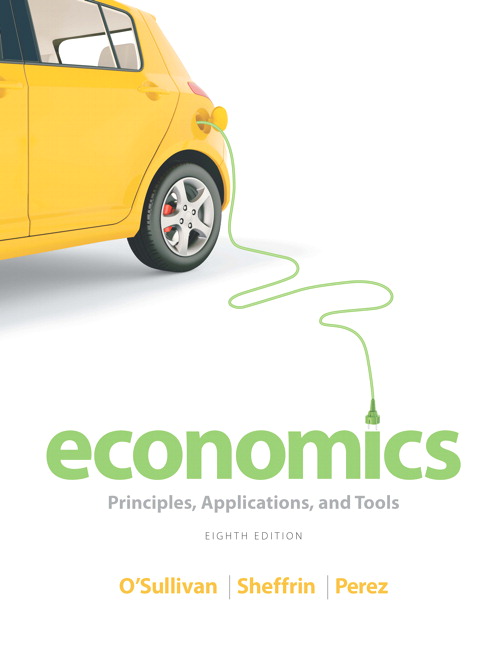
Economics Principles, Applications And Tools 8th Edition by Arthur O’Sullivan - Test Bank

Economics Principles, Applications And Tools 8th Edition by Arthur O’Sullivan - Test Bank   Instant Download - Complete Test Bank With Answers     Sample Questions Are Posted Below   Macroeconomics: Prin., Apps, & Tools, 8e (O'Sullivan) TB2 Chapter 5   Measuring a Nation's Production and Income   5.1   The "Flip" Sides of Macroeconomic Activity: Production …

$19.99

Economics Principles, Applications And Tools 8th Edition by Arthur O’Sullivan – Test Bank


Instant Download – Complete Test Bank With Answers


Sample Questions Are Posted Below


Macroeconomics: Prin., Apps, & Tools, 8e (O’Sullivan) TB2

Chapter 5   Measuring a Nation’s Production and Income


5.1   The “Flip” Sides of Macroeconomic Activity: Production and Income


1) Macroeconomics is the study of the:

  1. A) purchase decisions of individual consumers.
  2. B) national economy taken as a whole.
  3. C) economic choices of laboratory animals.
  4. D) effects of patents upon product innovation.

Answer:  B

Diff: 1

Topic:  Measuring a Nation’s Production and Income

Skill:  Definition

AACSB:  Reflective Thinking

Learning Outcome:  Define macroeconomics and identify its basic concerns.


2) Macroeconomics is concerned with:

  1. A) only long-run trends in economic activity.
  2. B) only short-run fluctuations in the business cycle.
  3. C) both long-run trends and short-term fluctuations in aggregate economic activity.
  4. D) only with changes in the overall price level.

Answer:  C

Diff: 1

Topic:  Measuring a Nation’s Production and Income

Skill:  Conceptual

AACSB:  Reflective Thinking

Learning Outcome:  Define macroeconomics and identify its basic concerns.


3) Which of the following is not a topic studied in macroeconomics?

  1. A) Gross Domestic Product
  2. B) the unemployment rate
  3. C) the relative price of IBM computers
  4. D) the inflation rate

Answer:  C

Diff: 1

Topic:  Measuring a Nation’s Production and Income

Skill:  Conceptual

AACSB:  Reflective Thinking

Learning Outcome:  Define macroeconomics and identify its basic concerns.


4) The concerns of macroeconomics include all of the following except:

  1. A) consumer prices.
  2. B) gross domestic output.
  3. C) the structure of the U.S. steel industry.
  4. D) the unemployment rate.

Answer:  C

Diff: 1

Topic:  Measuring a Nation’s Production and Income

Skill:  Definition

AACSB:  Reflective Thinking

Learning Outcome:  Define macroeconomics and identify its basic concerns.

5) Inflation is:

  1. A) sustained increases in the average prices of all goods and services.
  2. B) sustained decreases in the average prices of all goods and services.
  3. C) sustained increases in the total prices of all goods and services.
  4. D) sustained decreases in the total prices of all goods and services.

Answer:  A

Diff: 1

Topic:  Measuring a Nation’s Production and Income

Skill:  Definition

AACSB:  Reflective Thinking

Learning Outcome:  Identify and interpret key macroeconomic measures.


6) The diagram that shows the flow of income, spending, goods and services between markets is called the:

  1. A) aggregate demand-aggregate supply diagram.
  2. B) circular flow diagram.
  3. C) income flow diagram.
  4. D) income-production diagram.

Answer:  B

Diff: 1

Topic:  The Circular Flow of Production and Income

Skill:  Definition

AACSB:  Reflective Thinking

Learning Outcome:  Explain the relationship between expenditure and income.


7) In the circular flow diagram, the different payments made by firms to households are:

  1. A) wages and salaries.
  2. B) interest on borrowed money.
  3. C) rent on office and factory buildings.
  4. D) all of the above.

Answer:  D

Diff: 1

Topic:  The Circular Flow of Production and Income

Skill:  Conceptual

AACSB:  Reflective Thinking

Learning Outcome:  Explain the relationship between expenditure and income.


8) In the product market of the circular flow diagram, households:

  1. A) pay for goods and services supplied to these markets.
  2. B) pay for goods and services demanded from these markets.
  3. C) earn income for goods and services supplied to these markets.
  4. D) earn income for goods and services demanded from these markets.

Answer:  B

Diff: 2

Topic:  The Circular Flow of Production and Income

Skill:  Conceptual

AACSB:  Reflective Thinking

Learning Outcome:  Explain the relationship between expenditure and income.

9) In the circular flow diagram, firms ________ inputs and households ________ goods and services.

  1. A) demand; supply
  2. B) demand; demand
  3. C) supply; demand
  4. D) supply; supply

Answer:  B

Diff: 2

Topic:  The Circular Flow of Production and Income

Skill:  Conceptual

AACSB:  Reflective Thinking

Learning Outcome:  Explain the relationship between expenditure and income.


10) In the circular flow diagram, firms ________ goods and services and households ________ inputs.

  1. A) demand; supply
  2. B) demand; demand
  3. C) supply; demand
  4. D) supply; supply

Answer:  D

Diff: 2

Topic:  The Circular Flow of Production and Income

Skill:  Conceptual

AACSB:  Reflective Thinking

Learning Outcome:  Explain the relationship between expenditure and income.


11) In the circular flow diagram, households demand ________ and supply ________.

  1. A) inputs; inputs
  2. B) goods and services; goods and services
  3. C) goods and services; inputs
  4. D) inputs; goods and services

Answer:  C

Diff: 2

Topic:  The Circular Flow of Production and Income

Skill:  Conceptual

AACSB:  Reflective Thinking

Learning Outcome:  Explain the relationship between expenditure and income.


12) In the circular flow diagram, firms:

  1. A) supply the goods and services that households demand in product markets.
  2. B) demand the inputs that households supply in product markets.
  3. C) demand the goods and services that households supply in product markets.
  4. D) supply the inputs that households demand in factor markets.

Answer:  A

Diff: 2

Topic:  The Circular Flow of Production and Income

Skill:  Conceptual

AACSB:  Reflective Thinking

Learning Outcome:  Explain the relationship between expenditure and income.

13) In factor markets:

  1. A) households demand inputs, which firms supply.
  2. B) households supply inputs, which firms demand.
  3. C) households supply goods and services, which businesses demand.
  4. D) firms supply products, which households demand.

Answer:  B

Diff: 2

Topic:  The Circular Flow of Production and Income

Skill:  Conceptual

AACSB:  Reflective Thinking

Learning Outcome:  Explain the relationship between expenditure and income.


14) One major lesson that we learn from the circular flow diagram is that:

  1. A) saving must always be less than investment.
  2. B) taxes must always be greater than government expenditures.
  3. C) total income in the economy must always equal total spending.
  4. D) all of the above.

Answer:  C

Diff: 2

Topic:  The Circular Flow of Production and Income

Skill:  Conceptual

AACSB:  Reflective Thinking

Learning Outcome:  Explain the relationship between expenditure and income.


15) Because production generates income which, in turn, generates expenditure, it is true that:

  1. A) corporate profits can not be larger than the income paid to households for the rental of their capital.
  2. B) the magnitude of government budget deficits is equal to the magnitude of trade deficits, albeit with the opposite sign.
  3. C) both the income and production approaches to measuring macroeconomic activity should yield the same results.
  4. D) it is not possible to charge taxes on either expenditure or income without disrupting macroeconomic equilibrium.

Answer:  C

Diff: 2

Topic:  The Circular Flow of Production and Income

Skill:  Conceptual

AACSB:  Reflective Thinking

Learning Outcome:  Explain the relationship between expenditure and income.


16) Studies that focus on why oil prices go up and down fall under the realm of macroeconomics.

Answer:  FALSE

Diff: 1

Topic:  The Flip Sides of Macroeconomic Activity: Production and Income

Skill:  Conceptual

AACSB:  Reflective Thinking

Learning Outcome:  Define macroeconomics and identify its basic concerns.

17) In the most simple model of the circular flow diagram, the two main entities are households and the government.

Answer:  FALSE

Diff: 1

Topic:  The Circular Flow of Production and Income

Skill:  Conceptual

AACSB:  Reflective Thinking

Learning Outcome:  Explain the relationship between expenditure and income.


18) In the circular flow diagram, households and the firms interact in two markets: the product and the factor markets.

Answer:  TRUE

Diff: 1

Topic:  The Circular Flow of Production and Income

Skill:  Conceptual

AACSB:  Reflective Thinking

Learning Outcome:  Explain the relationship between expenditure and income.


19) Explain the two approaches that can be used to compute GDP. Why do these two approaches lead to the same value for GDP?

Answer:  The two approaches are the income approach and the expenditure approach. The income approach adds all sources of income, and the expenditure approach adds all expenditures for goods and services. The two approaches yield the same result because every expenditure by one individual leads to an income received by someone else.

Diff: 2

Topic:  The Circular Flow of Production and Income

Skill:  Conceptual

AACSB:  Reflective Thinking

Learning Outcome:  Explain the relationship between expenditure and income.


5.2   The Production Approach: Measuring a Nation’s Macroeconomic Activity Using Gross Domestic Product


1) The total market value of all final goods and services produced within a country in a given year is the:

  1. A) gross domestic product.
  2. B) gross national product.
  3. C) net national product.
  4. D) national income.

Answer:  A

Diff: 1

Topic:  The Production Approach: Measuring a Nation’s Macroeconomic Activity Using GDP

Skill:  Definition

AACSB:  Reflective Thinking

Learning Outcome:  Identify and interpret key macroeconomic measures.

2) Gross domestic product measures:

  1. A) the total spending on currently-produced final goods and services in the country.
  2. B) the total market value of all currently-produced final output in the country.
  3. C) the total income earned from current production of final goods and services in the country.
  4. D) all of the above.

Answer:  D

Diff: 2

Topic:  The Production Approach: Measuring a Nation’s Macroeconomic Activity Using GDP

Skill:  Conceptual

AACSB:  Reflective Thinking

Learning Outcome:  Identify and interpret key macroeconomic measures.


3) Which of the following is an example of a final good or service?

  1. A) wheat a bakery purchases to make bread
  2. B) coffee beans Starbucks purchases to make coffee
  3. C) lumber purchased by a construction company to be used in building houses
  4. D) a tractor purchased by a farmer to cultivate his farm

Answer:  D

Diff: 2

Topic:  The Production Approach: Measuring a Nation’s Macroeconomic Activity Using GDP

Skill:  Conceptual

AACSB:  Reflective Thinking

Learning Outcome:  Identify and interpret key macroeconomic measures.


4) Which of the following is not an example of a final good or service?

  1. A) coffee beans Starbucks purchases to make coffee
  2. B) the gasoline you bought at the pump
  3. C) the economics class that you are taking to complete your degree
  4. D) the popcorn you bought before watching the new Harry Potter movie

Answer:  A

Diff: 2

Topic:  The Production Approach: Measuring a Nation’s Macroeconomic Activity Using GDP

Skill:  Conceptual

AACSB:  Reflective Thinking

Learning Outcome:  Identify and interpret key macroeconomic measures.


5) Final goods and services include:

  1. A) raw materials.
  2. B) intermediate goods.
  3. C) goods and services produced for final use by households and firms.
  4. D) those produced by one firm for use in further processing by another firm.

Answer:  C

Diff: 1

Topic:  The Production Approach: Measuring a Nation’s Macroeconomic Activity Using GDP

Skill:  Definition

AACSB:  Reflective Thinking

Learning Outcome:  Identify and interpret key macroeconomic measures.

6) GDP is:

  1. A) a measure of all spending in the economy on foreign and domestic goods and services.
  2. B) the total market value of all final goods and services produced within a country in a given year.
  3. C) the value of all monetary transactions within a country in a given year.
  4. D) all of the above.

Answer:  B

Diff: 1

Topic:  The Production Approach: Measuring a Nation’s Macroeconomic Activity Using GDP

Skill:  Definition

AACSB:  Reflective Thinking

Learning Outcome:  Identify and interpret key macroeconomic measures.


7) Gross Domestic Product (GDP):

  1. A) includes all goods and services sold in a given period.
  2. B) excludes sales of all final goods and services.
  3. C) includes sales of raw materials.
  4. D) excludes used car sales because no new production takes place.

Answer:  D

Diff: 1

Topic:  The Production Approach: Measuring a Nation’s Macroeconomic Activity Using GDP

Skill:  Conceptual

AACSB:  Reflective Thinking

Learning Outcome:  Identify and interpret key macroeconomic measures.


8) The measurement of Gross Domestic Product (GDP) according to the production approach:

  1. A) includes the value of intermediate goods minus depreciation.
  2. B) includes sales of stocks and bonds.
  3. C) excludes services.
  4. D) excludes the value of intermediate goods.

Answer:  D

Diff: 2

Topic:  The Production Approach: Measuring a Nation’s Macroeconomic Activity Using GDP

Skill:  Conceptual

AACSB:  Reflective Thinking

Learning Outcome:  Identify and interpret key macroeconomic measures.


9) Which of the following would not be included in GDP?

  1. A) the purchase of a used car
  2. B) the sale of stocks
  3. C) the sale of Firestone tires to Ford Motor company
  4. D) None of the above would be included in GDP.

Answer:  D

Diff: 1

Topic:  The Production Approach: Measuring a Nation’s Macroeconomic Activity Using GDP

Skill:  Conceptual

AACSB:  Reflective Thinking

Learning Outcome:  Identify and interpret key macroeconomic measures.

10) Which of the following would be included in GDP?

  1. A) the purchase of a used car
  2. B) the broker’s fee one pays when purchasing stocks
  3. C) the sale of Firestone tires to Ford Motor company
  4. D) none of the above

Answer:  B

Diff: 1

Topic:  The Production Approach: Measuring a Nation’s Macroeconomic Activity Using GDP

Skill:  Conceptual

AACSB:  Reflective Thinking

Learning Outcome:  Identify and interpret key macroeconomic measures.


11) Which of the following is an example of an intermediate good?

  1. A) the dough that you buy to fix yourself a pizza for dinner
  2. B) the chocolate that you buy to make yourself some cookies
  3. C) the pizza sauce that you purchase to make pizzas to sell for a fund-raiser for an organization that you belong to
  4. D) None of the above are examples of intermediate goods.

Answer:  C

Diff: 2

Topic:  The Production Approach: Measuring a Nation’s Macroeconomic Activity Using GDP

Skill:  Conceptual

AACSB:  Reflective Thinking

Learning Outcome:  Identify and interpret key macroeconomic measures.


12) Double counting can be avoided by:

  1. A) including the value of intermediate goods in the current year.
  2. B) not counting the value of intermediate goods in GDP.
  3. C) including the value of intermediate goods in the GNP but not in the GDP.
  4. D) including the value of intermediate goods in the production year but not in the selling year of those goods.

Answer:  B

Diff: 2

Topic:  The Production Approach: Measuring a Nation’s Macroeconomic Activity Using GDP

Skill:  Conceptual

AACSB:  Reflective Thinking

Learning Outcome:  Identify and interpret key macroeconomic measures.


13) The equation for GDP using the expenditure approach is:

  1. A) GDP = Consumption + Investment + Government Purchases + Exports – Imports.
  2. B) GDP = Consumption + Investment + Government Purchases + Imports – Exports.
  3. C) GDP = Consumption + Investment + Government Purchases + Imports + Exports.
  4. D) GDP = Consumption + Investment + Government Purchases – Imports – Exports.

Answer:  A

Diff: 1

Topic:  The Components of GDP

Skill:  Definition

AACSB:  Reflective Thinking

Learning Outcome:  Identify and interpret key macroeconomic measures.


14) The single largest expenditure component in GDP is:

  1. A) government purchases.
  2. B) private investment expenditures.
  3. C) consumption expenditures.
  4. D) net exports.

Answer:  C

Diff: 1

Topic:  The Components of GDP

Skill:  Fact

AACSB:  Reflective Thinking

Learning Outcome:  Identify and interpret key macroeconomic measures.


15) Which of the following statements is correct?

  1. A) Investment represents household purchases of assets.
  2. B) Consumption is spending by firms and households on new capital.
  3. C) Net exports are imports minus exports.
  4. D) The purchase of a new home is treated as investment.

Answer:  D

Diff: 1

Topic:  The Components of GDP

Skill:  Conceptual

AACSB:  Reflective Thinking

Learning Outcome:  Identify and interpret key macroeconomic measures.


16) Consumer expenditures on household appliances represent which of the following components of Consumption Expenditures?

  1. A) services
  2. B) nondurable goods
  3. C) durable goods
  4. D) inventory investment

Answer:  C

Diff: 1

Topic:  Consumption Expenditures

Skill:  Conceptual

AACSB:  Reflective Thinking

Learning Outcome:  Identify and interpret key macroeconomic measures.


17) Which of the following is not a durable good?

  1. A) furniture
  2. B) automobiles
  3. C) clothing
  4. D) household appliances

Answer:  C

Diff: 1

Topic:  Consumption Expenditures

Skill:  Conceptual

AACSB:  Reflective Thinking

Learning Outcome:  Identify and interpret key macroeconomic measures.

18) Consumption expenditures can be broken down into three categories:

  1. A) durable goods, nondurable goods and services.
  2. B) land, labor and capital.
  3. C) food, shelter and appliances.
  4. D) luxury goods, normal goods and inferior goods.

Answer:  A

Diff: 1

Topic:  Consumption Expenditures

Skill:  Definition

AACSB:  Reflective Thinking

Learning Outcome:  Identify and interpret key macroeconomic measures.


19) Which of the following is a nondurable good?

  1. A) laptop computer
  2. B) truck
  3. C) food
  4. D) washing machine

Answer:  C

Diff: 1

Topic:  Consumption Expenditures

Skill:  Conceptual

AACSB:  Reflective Thinking

Learning Outcome:  Identify and interpret key macroeconomic measures.


20) Expenditures on which of the following would not be counted in private investment expenditure?

  1. A) new housing
  2. B) new factories
  3. C) stocks and bonds
  4. D) inventory changes

Answer:  C

Diff: 2

Topic:  Private Investment Expenditures

Skill:  Conceptual

AACSB:  Reflective Thinking

Learning Outcome:  Identify and interpret key macroeconomic measures.


21) If net investment is negative, the capital stock has ________; if net investment is positive, the capital stock has ________.

  1. A) decreased; decreased
  2. B) increased; decreased
  3. C) decreased; increased
  4. D) increased; increased

Answer:  C

Diff: 2

Topic:  Private Investment Expenditures

Skill:  Conceptual

AACSB:  Reflective Thinking

Learning Outcome:  Identify and interpret key macroeconomic measures.

22) If net investment is negative, then:

  1. A) gross investment is less than depreciation.
  2. B) gross investment is less than zero.
  3. C) gross investment is greater than depreciation.
  4. D) depreciation is less than zero.

Answer:  A

Diff: 2

Topic:  Private Investment Expenditures

Skill:  Conceptual

AACSB:  Reflective Thinking

Learning Outcome:  Identify and interpret key macroeconomic measures.


23) Which of the following is not included in private investment expenditure?

  1. A) changes in business inventories
  2. B) the purchase of a newly built factory
  3. C) the purchase of a newly built home
  4. D) the purchase of common stock

Answer:  D

Diff: 1

Topic:  Private Investment Expenditures

Skill:  Conceptual

AACSB:  Reflective Thinking

Learning Outcome:  Identify and interpret key macroeconomic measures.


24) A company produced 10 dishwasher machines in 2011. The company sold 8 in 2011 and added 2 to its inventories. The market value of the dishwasher machines in 2011 was $200 per unit. What is the value of this company’s output that will be included in the 2011 GDP?

  1. A) $1,600
  2. B) $400
  3. C) $2,000
  4. D) $1,800

Answer:  C

Diff: 2

Topic:  Private Investment Expenditures

Skill:  Analytical

AACSB:  Analytic Skills

Learning Outcome:  Identify and interpret key macroeconomic measures.


25) If a farmer buys a new tractor from John Deere for use on her cotton farm, it is included in GDP as:

  1. A) part of private investment.
  2. B) a durable consumption good.
  3. C) a service.
  4. D) a nondurable consumption good.

Answer:  A

Diff: 1

Topic:  Private Investment Expenditures

Skill:  Conceptual

AACSB:  Reflective Thinking

Learning Outcome:  Identify and interpret key macroeconomic measures.

26) Net investment equals:

  1. A) GDP minus final sales.
  2. B) gross investment minus final sales.
  3. C) gross investment minus depreciation.
  4. D) depreciation plus GDP.

Answer:  C

Diff: 1

Topic:  Private Investment Expenditures

Skill:  Conceptual

AACSB:  Reflective Thinking

Learning Outcome:  Identify and interpret key macroeconomic measures.


27) If net investment is zero, then:

  1. A) gross investment is greater than depreciation.
  2. B) gross investment is less than depreciation.
  3. C) gross investment equals depreciation.
  4. D) depreciation is zero.

Answer:  C

Diff: 1

Topic:  Private Investment Expenditures

Skill:  Conceptual

AACSB:  Reflective Thinking

Learning Outcome:  Identify and interpret key macroeconomic measures.


28) Suppose that net investment in 2009 was $360 billion and depreciation was $30 billion. Gross investment in 2009 was:

  1. A) -$30 billion.
  2. B) $300 billion.
  3. C) $330 billion.
  4. D) $390 billion.

Answer:  D

Diff: 2

Topic:  Private Investment Expenditures

Skill:  Analytical

AACSB:  Analytic Skills

Learning Outcome:  Identify and interpret key macroeconomic measures.


29) Actual investment purchases in a given period are measured by:

  1. A) the change in business inventories.
  2. B) depreciation.
  3. C) net investment.
  4. D) gross investment.

Answer:  D

Diff: 1

Topic:  Private Investment Expenditures

Skill:  Definition

AACSB:  Reflective Thinking

Learning Outcome:  Identify and interpret key macroeconomic measures.

30) Depreciation is:

  1. A) the decrease in the overall price level.
  2. B) the additional capital stock in a year.
  3. C) the wear and tear of capital as it is used in production.
  4. D) the amount of decline in business inventories.

Answer:  C

Diff: 1

Topic:  Private Investment Expenditures

Skill:  Definition

AACSB:  Reflective Thinking

Learning Outcome:  Identify and interpret key macroeconomic measures.


31) If net investment in 2012 is $400 billion and gross investment in 2012 is $440 billion, depreciation in 2012 is:

  1. A) $40 billion.
  2. B) $400 billion.
  3. C) $440 billion.
  4. D) $840 billion.

Answer:  A

Diff: 2

Topic:  Private Investment Expenditures

Skill:  Analytical

AACSB:  Analytic Skills

Learning Outcome:  Identify and interpret key macroeconomic measures.


32) If gross investment in 2009 is $600 billion and depreciation in 2012 is $50 billion, net investment in 2012 is:

  1. A) $50 billion.
  2. B) $550 billion.
  3. C) $600 billion.
  4. D) none of the above.

Answer:  B

Diff: 2

Topic:  Private Investment Expenditures

Skill:  Analytical

AACSB:  Analytic Skills

Learning Outcome:  Identify and interpret key macroeconomic measures.


33) Which of the following is not a transfer payment?

  1. A) Social Security benefits
  2. B) corporate dividends
  3. C) Medicaid
  4. D) government welfare payments

Answer:  B

Diff: 1

Topic:  Government Purchases

Skill:  Conceptual

AACSB:  Reflective Thinking

Learning Outcome:  Identify and interpret key macroeconomic measures.


34) Which of the following is a transfer payment and is not counted as part of government purchases?

  1. A) government welfare payments
  2. B) defense spending
  3. C) government worker salaries
  4. D) government spending on federal prisons

Answer:  A

Diff: 2

Topic:  Government Purchases

Skill:  Conceptual

AACSB:  Reflective Thinking

Learning Outcome:  Identify and interpret key macroeconomic measures.


35) Which of the following is not included as part of government purchases?

  1. A) transfer payments
  2. B) benefits of airport security personnel
  3. C) salaries of US postal employees
  4. D) military spending

Answer:  A

Diff: 2

Topic:  Government Purchases

Skill:  Conceptual

AACSB:  Reflective Thinking

Learning Outcome:  Identify and interpret key macroeconomic measures.


36) When calculating GDP, exports are ________ and imports are ________.

  1. A) added; added
  2. B) added; subtracted
  3. C) subtracted; added
  4. D) subtracted; subtracted

Answer:  B

Diff: 1

Topic:  Net Exports

Skill:  Conceptual

AACSB:  Reflective Thinking

Learning Outcome:  Identify and interpret key macroeconomic measures.


37) BMW sells cars fully assembled in Germany to the United States. In GDP accounts, BMW cars are included in U.S. ________ and Germany’s ________.

  1. A) imports, exports
  2. B) exports, imports
  3. C) exports, exports
  4. D) imports, imports.

Answer:  A

Diff: 2

Topic:  Net Exports

Skill:  Conceptual

AACSB:  Reflective Thinking

Learning Outcome:  Identify and interpret key macroeconomic measures.

38) If a country’s exports equal $500 billion, while its imports equal $750 billion, then the country’s net exports equal ________ and the economy is experiencing a trade ________.

  1. A) -$250 billion, deficit
  2. B) 250 billion, deficit
  3. C) -250 billion, surplus.
  4. D) 250 billion, balance

Answer:  A

Diff: 2

Topic:  Net Exports

Skill:  Conceptual

AACSB:  Reflective Thinking

Learning Outcome:  Identify and interpret key macroeconomic measures.


39) If the value of net exports is negative, then:

  1. A) exports exceed imports.
  2. B) imports exceed exports.
  3. C) exports equal imports.
  4. D) imports are zero.

Answer:  B

Diff: 2

Topic:  Net Exports

Skill:  Conceptual

AACSB:  Reflective Thinking

Learning Outcome:  Identify and interpret key macroeconomic measures.


40) Suppose that GDP is 65 billion in 2012 and consumption expenditures is 30 billion. If the government purchases are 20 billion and the net exports are neither in surplus or deficit, then how much is investment expenditures?

  1. A) 15 billion
  2. B) zero
  3. C) 80 billion
  4. D) 35 billion

Answer:  A

Diff: 1

Topic:  Putting It All Together: The GDP Equation

Skill:  Analytical

AACSB:  Reflective Thinking

Learning Outcome:  Identify and interpret key macroeconomic measures.


41) Suppose that consumption expenditures, investment expenditures, and government purchases are 75 billion, 25 billion and 20 billion, respectively. If the GDP is 90 billion, what is the net export?

  1. A) -30 billion
  2. B) zero
  3. C) 20 billion
  4. D) -25 billion

Answer:  A

Diff: 1

Topic:  Putting It All Together: The GDP Equation

Skill:  Analytical

AACSB:  Reflective Thinking

Learning Outcome:  Identify and interpret key macroeconomic measures.

42) Suppose that consumption expenditures, investment expenditures, and government purchases are 75 billion, 25 billion and 20 billion, respectively. How large should the GDP be so that the net exports is zero?

  1. A) 120 billion
  2. B) 70 billion
  3. C) -100 billion
  4. D) -25 billion

Answer:  A

Diff: 1

Topic:  Putting It All Together: The GDP Equation

Skill:  Analytical

AACSB:  Reflective Thinking

Learning Outcome:  Identify and interpret key macroeconomic measures.


43) GDP is the value of all goods purchased each year by the citizens of a country.

Answer:  FALSE

Diff: 1

Topic:  The Production Approach: Measuring a Nation’s Macroeconomic Activity Using GDP

Skill:  Definition

AACSB:  Reflective Thinking

Learning Outcome:  Identify and interpret key macroeconomic measures.


44) Nominal GDP is calculated using a constant set of prices from a base year.

Answer:  FALSE

Diff: 1

Topic:  The Production Approach: Measuring a Nation’s Macroeconomic Activity Using GDP

Skill:  Conceptual

AACSB:  Reflective Thinking

Learning Outcome:  Identify and interpret key macroeconomic measures.


45) If a country is experiencing inflation, nominal GDP is always greater than real GDP.

Answer:  FALSE

Diff: 2

Topic:  The Production Approach: Measuring a Nation’s Macroeconomic Activity Using GDP

Skill:  Conceptual

AACSB:  Reflective Thinking

Learning Outcome:  Identify and interpret key macroeconomic measures.


46) GDP measures the total income of all of the citizens of a country.

Answer:  FALSE

Diff: 1

Topic:  The Flip Sides of Macroeconomic Activity: Production and Income

Skill:  Definition

AACSB:  Reflective Thinking

Learning Outcome:  Identify and interpret key macroeconomic measures.


47) The expenditure approach calculates GDP by summing final consumption, investment expenditures, government expenditures and net exports.

Answer:  TRUE

Diff: 1

Topic:  The Production Approach: Measuring a Nation’s Macroeconomic Activity Using GDP

Skill:  Conceptual

AACSB:  Reflective Thinking

Learning Outcome:  Identify and interpret key macroeconomic measures.


48) The largest component of GDP based on the expenditures approach is government spending (at all levels: federal, state, and local).

Answer:  FALSE

Diff: 1

Topic:  Government Purchases

Skill:  Fact

AACSB:  Reflective Thinking

Learning Outcome:  Identify and interpret key macroeconomic measures.


49) The largest component of aggregate expenditure is consumption expenditure.

Answer:  TRUE

Diff: 1

Topic:  Consumption Expenditures

Skill:  Definition

AACSB:  Reflective Thinking

Learning Outcome:  Identify and interpret key macroeconomic measures.


50) Identify which of the following item(s) would be included in U.S. GDP:

(a)  the salary of an American consultant hired by a British firm to go to Europe and analyze their operations there.

(b) the output of a U.S.-owned family farm in Kansas.

(c)  food stamp payments.

(d) welfare checks.

(e)  the wages of a field worker in Louisiana.

Answer:  The output of a U.S.-owned family farm in Kansas (b) and the wages of a field worker in Louisiana (e) would be included in U.S. GDP. Wages are counted because they represent a payment for the use of a productive resource. Transfers (e.g., food stamps and welfare checks) are not included because they do not represent the value of a productive resource. The consultant’s services are excluded because they would be provided outside the United States.

Diff: 2

Topic:  The Production Approach: Measuring a Nation’s Macroeconomic Activity Using GDP

Skill:  Conceptual

AACSB:  Reflective Thinking

Learning Outcome:  Identify and interpret key macroeconomic measures.


51) Explain why each of the following items is excluded from GDP:

(a)  profits from the stock and bond market

(b)  transfer payments

(c)  sale of used goods

(d) goods and services produced in the home

Answer:

(a)  Profits from the sale of stocks and bonds have nothing to do with current production, so they are not included in GDP.

(b)  Transfer payments are not included because they do not represent payments for current production.

(c)  Used goods were counted in GDP in the year they were produced. They are not counted again when they are resold.

(d)  Goods and services produced in the home are not sold in markets and are not counted as part of GDP.

Diff: 2

Topic:  The Production Approach: Measuring a Nation’s Macroeconomic Activity Using GDP

Skill:  Conceptual

AACSB:  Reflective Thinking

Learning Outcome:  Identify and interpret key macroeconomic measures.


52) Explain why the following items are included in GDP:

(a)  depreciation

(b) change in business inventories

(c)  indirect taxes

Answer:

(a)  Depreciation is included in GDP because GDP is a measure of all income, including the income that results from the replacement of existing plant and equipment.

(b)  Change in business inventories is included because GDP is a measure of production, not sales. The change in inventories is necessary so that all current production is included, even if it is not sold, and production from previous years that is finally sold is not included.

(c)  Indirect taxes are included because they represent income to the government.

Diff: 2

Topic:  The Production Approach: Measuring a Nation’s Macroeconomic Activity Using GDP

Skill:  Conceptual

AACSB:  Reflective Thinking

Learning Outcome:  Identify and interpret key macroeconomic measures.


53) Based on the expenditure approach, discuss and explain each of the components of GDP.

Answer:  Personal consumption expenditures represent the purchase of final goods and services by the household sector. Private investment represents spending by firms and households on new capital, changes in business inventories, and new residential structures. Government purchases are the purchases of goods and services by the government at the federal, state, and local levels. And finally, net exports (exports – imports) represent the net sale of final goods and services to the rest of the world.

Diff: 2

Topic:  Consumption Expenditures

Skill:  Conceptual

AACSB:  Reflective Thinking

Learning Outcome:  Identify and interpret key macroeconomic measures.

54) Identify the four main categories of expenditures used in calculating GDP.

Answer:  The four main expenditure categories are consumption, investment, government purchases, and net exports.

Diff: 1

Topic:  The Production Approach: Measuring a Nation’s Macroeconomic Activity Using GDP

Skill:  Conceptual

AACSB:  Reflective Thinking

Learning Outcome:  Identify and interpret key macroeconomic measures.


55) Explain why we must take into account changes in business inventories when calculating GDP.

Answer:  Changes in business inventories can be positive, negative, or zero. If they are positive, some goods produced in a given period were not purchased. Because GDP measures the value of the goods and services produced in a given period, we must take into account these goods that were produced but not sold. When the changes in business inventories is negative, some of the goods sold in a given period were produced in a previous period. For the same reason, we need to take this into account to obtain an accurate measure of economic activity for a GIVEN period.

Diff: 2

Topic:  Private Investment Expenditures

Skill:  Conceptual

AACSB:  Reflective Thinking

Learning Outcome:  Identify and interpret key macroeconomic measures.


56) Briefly explain under what condition, if any, net investment can be negative. If so, explain what this implies about the capital stock.

Answer:  Net investment equals gross investment minus depreciation. If depreciation is greater than gross investment, net investment will be negative. In such a situation, there is insufficient gross investment to offset the effects of the depreciation of the capital stock. In this case, the capital stock would diminish in size during that period.

Diff: 2

Topic:  Private Investment Expenditures

Skill:  Conceptual

AACSB:  Reflective Thinking

Learning Outcome:  Identify and interpret key macroeconomic measures.


57) Explain the relationship among gross investment, net investment, and depreciation.

Answer:  Gross investment is the total value of all newly produced capital goods produced in a given period. Depreciation represents the amount of the capital stock that wears out in a given period. Net investment, which is equal to gross investment minus depreciation, represents the extent to which the stock of capital changes in a given period.

Diff: 2

Topic:  The Production Approach: Measuring a Nation’s Macroeconomic Activity Using GDP

Skill:  Conceptual

AACSB:  Reflective Thinking

Learning Outcome:  Identify and interpret key macroeconomic measures.

58) Suppose you buy a $40,000 BMW from your local dealership. The car was built completely in Germany. Assuming no dealer mark-up on the car, how would your purchase be recorded in U.S. GDP accounts? By how much would U.S. GDP increase as a result of your purchase?

Answer:  Your purchase increases Consumption Expenditures by $40,000. Because the car was imported from Germany, it will be recorded as a -$40,000 entry in Net Exports. The two entries cancel out, and US GDP does not increase or decrease from your BMW purchase.

Diff: 2

Topic:  The Production Approach: Measuring a Nation’s Macroeconomic Activity Using GDP

Skill:  Analytical

AACSB:  Analytic Skills

Learning Outcome:  Identify and interpret key macroeconomic measures.


59) Suppose you buy paid $40,000 for a new BMW from your local dealership. The car was built completely in Germany. Suppose that the dealer paid $25,000 for the car, how would your purchase be recorded in U.S. GDP accounts? By how much would U.S. GDP increase as a result of your purchase?

Answer:  Your purchase increases Consumption Expenditures by $40,000. Because the car was imported from Germany, it will be recorded ass a -$25,000 entry in Net Exports. US GDP does increases by $15,000 from your BMW purchase.

Diff: 2

Topic:  The Production Approach: Measuring a Nation’s Macroeconomic Activity Using GDP

Skill:  Analytical

AACSB:  Analytic Skills

Learning Outcome:  Identify and interpret key macroeconomic measures.


5.3   The Income Approach: Measuring a Nation’s Macroeconomic Activity Using National Income


1) If no foreign companies produce in a country, but many of the country’s companies produce abroad, then it is probably true:

  1. A) the country’s GNP exceeds its GDP.
  2. B) the country’s GDP exceeds its GNP.
  3. C) the country’s GNP and GDP are equal.
  4. D) the country’s GDP equals its domestic income.

Answer:  A

Diff: 2

Topic:  Measuring National Income

Skill:  Conceptual

AACSB:  Reflective Thinking

Learning Outcome:  Explain the relationship between expenditure and income.


2) Which of the following is included in both the U.S. GDP and GNP?

  1. A) the value of all cars produced by Ford in Mexico
  2. B) the value of all cars produced by General Motors in the U.S.
  3. C) the value of all cars produced by Toyota in the U.S.
  4. D) the value of cars produced by Nissan in Japan and the U.S.

Answer:  B

Diff: 2

Topic:  Measuring National Income

Skill:  Conceptual

AACSB:  Reflective Thinking

Learning Outcome:  Explain the relationship between expenditure and income.

3) Which of the following is not counted in the GNP of the United States?

  1. A) the wage of a U.S. citizen who works in a foreign country for a foreign firm
  2. B) the interest earned by a U.S. bank on loans to a business firm located in Brazil
  3. C) the profit earned by a restaurant located in the United States but owned by a Mexican company
  4. D) the value of services that are produced by state and local governments in the United States

Answer:  C

Diff: 3

Topic:  Measuring National Income

Skill:  Conceptual

AACSB:  Reflective Thinking

Learning Outcome:  Explain the relationship between expenditure and income.


4) The profit from IBM’s production in Italy is included in the U.S. ________ and in the Italian ________.

  1. A) GDP; GDP
  2. B) GNP; GNP
  3. C) GNP; GDP
  4. D) GDP; GNP

Answer:  C

Diff: 2

Topic:  Measuring National Income

Skill:  Conceptual

AACSB:  Reflective Thinking

Learning Outcome:  Explain the relationship between expenditure and income.


5) The profit from British Airways production in the U.S. is included in the British ________ and in the U.S. ________.

  1. A) GDP; GDP
  2. B) GNP; GNP
  3. C) GNP; GDP
  4. D) GDP; GNP

Answer:  C

Diff: 2

Topic:  Measuring National Income

Skill:  Conceptual

AACSB:  Reflective Thinking

Learning Outcome:  Explain the relationship between expenditure and income.


6) Profits earned in the United States by foreign-owned companies are included in the U.S.:

  1. A) GDP but not GNP.
  2. B) neither GDP nor GNP.
  3. C) GNP but not GDP.
  4. D) both GDP and GNP.

Answer:  A

Diff: 2

Topic:  Measuring National Income

Skill:  Conceptual

AACSB:  Reflective Thinking

Learning Outcome:  Explain the relationship between expenditure and income.


7) For large industrialized countries like the United States, we know that:

  1. A) GDP will always exceed GNP.
  2. B) GNP will always exceed GDP.
  3. C) GDP will always equal GNP.
  4. D) the difference between GDP and GNP will be relatively small.

Answer:  D

Diff: 2

Topic:  Measuring National Income

Skill:  Conceptual

AACSB:  Reflective Thinking

Learning Outcome:  Explain the relationship between expenditure and income.


8) The fact that the Nigerian oil industry is managed by large foreign corporations tends to make Nigeria’s:

  1. A) GDP exceed its GNP.
  2. B) GNP exceed its GDP.
  3. C) GDP equal its GNP.
  4. D) GDP equal its NDP.

Answer:  A

Diff: 2

Topic:  Measuring National Income

Skill:  Conceptual

AACSB:  Reflective Thinking

Learning Outcome:  Explain the relationship between expenditure and income.


9) For a country like Mexico, where a relatively large fraction of the population works abroad and sends home part of their salaries, we would expect that:

  1. A) GDP will exceed GNP.
  2. B) GNP will exceed GDP.
  3. C) GDP will equal GNP.
  4. D) the difference between GDP and GNP will be small.

Answer:  B

Diff: 2

Topic:  Measuring National Income

Skill:  Conceptual

AACSB:  Reflective Thinking

Learning Outcome:  Explain the relationship between expenditure and income.


10) Net national product (NNP) is equal to:

  1. A) GDP minus depreciation.
  2. B) GNP plus depreciation.
  3. C) GNP minus depreciation.
  4. D) GNP minus net investment.

Answer:  C

Diff: 1

Topic:  Measuring National Income

Skill:  Definition

AACSB:  Reflective Thinking

Learning Outcome:  Explain the relationship between expenditure and income.

11) If national income is $645 billion, indirect taxes are $20 billion, and subsidies are $15 billion, then net national product is:

  1. A) $167 billion.
  2. B) $645 billion.
  3. C) $650 billion.
  4. D) $685 billion.

Answer:  C

Diff: 2

Topic:  Measuring National Income

Skill:  Analytical

AACSB:  Analytic Skills

Learning Outcome:  Explain the relationship between expenditure and income.


12) If net national product is $250 billion and indirect taxes are $5 billion, then national income is:

  1. A) $405 billion.
  2. B) $255 billion.
  3. C) $245 billion.
  4. D) $285 billion.

Answer:  C

Diff: 2

Topic:  Measuring National Income

Skill:  Analytical

AACSB:  Analytic Skills

Learning Outcome:  Explain the relationship between expenditure and income.


13) The largest component of national income is:

  1. A) corporate profits.
  2. B) rental income.
  3. C) compensation of employees.
  4. D) proprietor’s income.

Answer:  C

Diff: 1

Topic:  Measuring National Income

Skill:  Fact

AACSB:  Reflective Thinking

Learning Outcome:  Explain the relationship between expenditure and income.


14) Personal income measures the amount of:

  1. A) income that flows to households.
  2. B) income that flows to households, less social security benefits.
  3. C) income households retain after paying taxes.
  4. D) income of households, less all transfer payments.

Answer:  A

Diff: 1

Topic:  Measuring National Income

Skill:  Definition

AACSB:  Reflective Thinking

Learning Outcome:  Explain the relationship between expenditure and income.

Refer to Application 1, “Using Value Added to Measure the True Size of Wal-Mart,” to answer the following questions:


15) If we try to estimate what Wal-Mart produces, we must measure its “value added,” which is defined as the:

  1. A) value of total sales.
  2. B) cost of sales.
  3. C) value of sales – cost of sales.
  4. D) value of sales + cost of sales.

Answer:  C

Diff: 2

Topic:  Application 1, Using Value Added to Measure the True Size of Wal-Mart

Skill:  Conceptual

AACSB:  Reflective Thinking

Learning Outcome:  Explain the relationship between expenditure and income.


16) From Application 1, Wal-Mart’s 2008 sales were roughly equal to the GDP of ________, the ________ largest economy in the world.

  1. A) China; 3rd
  2. B) Belgium; 28th
  3. C) Ukraine; 53rd
  4. D) Japan; 2nd

Answer:  B

Diff: 1

Topic:  Application 1, Using Value Added to Measure the True Size of Wal-Mart

Skill:  Fact

AACSB:  Reflective Thinking

Learning Outcome:  Explain the relationship between expenditure and income.


17) From Application 1, Wal-Mart’s 2008 value added was roughly equal to the GDP of ________, the ________ largest economy in the world.

  1. A) Japan; 2nd
  2. B) Belgium; 28th
  3. C) Indonesia; 23rd
  4. D) Bulgaria; 56th

Answer:  D

Diff: 1

Topic:  Application 1, Using Value Added to Measure the True Size of Wal-Mart

Skill:  Fact

AACSB:  Reflective Thinking

Learning Outcome:  Explain the relationship between expenditure and income.


18) The largest component of national income is compensation of employees.

Answer:  TRUE

Diff: 1

Topic:  Measuring National Income

Skill:  Fact

AACSB:  Reflective Thinking

Learning Outcome:  Explain the relationship between expenditure and income.

19) Gross National Product (GNP) is equal to GDP minus net exports.

Answer:  FALSE

Diff: 1

Topic:  Measuring National Income

Skill:  Definition

AACSB:  Reflective Thinking

Learning Outcome:  Explain the relationship between expenditure and income.


20) A U.S. fast-food chain opens a branch in Spain. The sales of the restaurant is counted as part of the U.S. GDP and the Spanish GNP.

Answer:  FALSE

Diff: 1

Topic:  Measuring National Income

Skill:  Conceptual

AACSB:  Reflective Thinking

Learning Outcome:  Explain the relationship between expenditure and income.


21) GDP is equal to GNP plus depreciation.

Answer:  FALSE

Diff: 1

Topic:  Measuring National Income

Skill:  Definition

AACSB:  Reflective Thinking

Learning Outcome:  Explain the relationship between expenditure and income.


22) For developed countries like the United States, GDP will always exceed GNP.

Answer:  FALSE

Diff: 2

Topic:  Measuring National Income

Skill:  Conceptual

AACSB:  Reflective Thinking

Learning Outcome:  Explain the relationship between expenditure and income.


23) If a country experiences a trade deficit (net exports are negative), we know that GDP will be less than GNP.

Answer:  FALSE

Diff: 2

Topic:  Measuring National Income

Skill:  Conceptual

AACSB:  Reflective Thinking

Learning Outcome:  Explain the relationship between expenditure and income.


24) Depreciation is included in Gross National Product (GNP), but is excluded from Net National Product (NNP).

Answer:  TRUE

Diff: 1

Topic:  Measuring National Income

Skill:  Definition

AACSB:  Reflective Thinking

Learning Outcome:  Explain the relationship between expenditure and income.


25) Transfer payments are subtracted from national income to get to personal income.

Answer:  FALSE

Diff: 1

Topic:  Measuring National Income

Skill:  Definition

AACSB:  Reflective Thinking

Learning Outcome:  Explain the relationship between expenditure and income.


26) The Bahamas is a chain of islands whose economy relies heavily on tourism. The majority of the hotels and resorts in the island are owned by foreign countries. Which do you think is larger, Bahamas’ GDP or GNP? Explain.

Answer:  Bahamas’ GDP will exceed its GNP because GNP measures production by a nation’s resources, regardless of location, whereas GDP measures output within the nation’s boundaries. Much of the Bahamas’ economic activities take place in the islands. However, those activities are owned by foreign countries.

Diff: 2

Topic:  Measuring National Income

Skill:  Analytical

AACSB:  Analytic Skills

Learning Outcome:  Explain the relationship between expenditure and income.


27) What is the difference between GDP and GNP?

Answer:  GDP represents the market value of all final goods and services produced in a country during a given period. GNP represents the market value of all final goods and services produced by domestically owned factors of production in a given period. Goods produced, for example, by a U.S. citizen living outside the United States would not be included in GDP but would be included in GNP. Goods produced in the United States, regardless of who produces them, would be included in GDP.

Diff: 1

Topic:  Measuring National Income

Skill:  Definition

AACSB:  Reflective Thinking

Learning Outcome:  Explain the relationship between expenditure and income.


28) Suppose Mexico does not allow multinational companies to put up factories within its borders, but has a lot of Mexican companies with factories in Brazil and Argentina. In this example, is GDP or GNP larger for Mexico? Explain.

Answer:  GNP = GDP + income of nationals abroad – domestic income of foreign nationals.

Because Mexico does not allow foreign multinational companies within its borders, then domestic income of foreign nationals is zero. Further, the presence of Mexican companies in Brazil and Argentina makes the income of Mexicans abroad a positive number. As a result, the GNP would be larger than GDP in this example.

Diff: 1

Topic:  Measuring National Income

Skill:  Analytical

AACSB:  Analytic Skills

Learning Outcome:  Explain the relationship between expenditure and income.

Refer to Application 1, “Using Value Added to Measure the True Size of Wal-Mart,” to answer the following questions:


29) Using information from Application 1, explain how you would calculate Wal-Mart’s “value added” for the year 2008?

Answer:  Wal-Mart’s 2008 value added was calculated as the difference between total sales equal to $374 billion and cost of sales equal to $286 billion, implying a value added of $88 billion. Compared to total sales, value added is a more meaningful measure of what Wal-Mart’s produces because it excludes the value of (“intermediate”) goods purchased by Wal-Mart from its suppliers.

Diff: 2

Topic:  Application 1, Using Value Added to Measure the True Size of Wal-Mart

Skill:  Analytical

AACSB:  Analytic Skills

Learning Outcome:  Explain the relationship between expenditure and income.


5.4   A Closer Examination of Nominal and Real GDP


1) Nominal GDP is not an accurate measure of the real level of economic activity in a country because:

  1. A) the GDP deflator constantly underestimates the real cost of living.
  2. B) inflation distorts the real value of all the goods and services produced.
  3. C) base year prices are likely to experience substitution bias.
  4. D) taxes distort the real value of all the goods and services produced.

Answer:  B

Diff: 2

Topic:  Measuring Real vs. Nominal GDP

Skill:  Conceptual

AACSB:  Reflective Thinking

Learning Outcome:  Identify and interpret key macroeconomic measures.


2) Nominal GDP measures the value of all goods and services:

  1. A) in constant dollars.
  2. B) in current dollars.
  3. C) in fixed dollars.
  4. D) without inflation.

Answer:  B

Diff: 1

Topic:  Measuring Real vs. Nominal GDP

Skill:  Definition

AACSB:  Reflective Thinking

Learning Outcome:  Identify and interpret key macroeconomic measures.


3) Suppose that an economy is experiencing continuously rising prices. If 2000 is the base year, then the real GDP in 2009 is ________ the nominal GDP.

  1. A) less than
  2. B) equal to
  3. C) greater than
  4. D) There is insufficient information to answer this question.

Answer:  A

Diff: 1

Topic:  Measuring Real vs. Nominal GDP

Skill:  Analytical

AACSB:  Analytic Skills

Learning Outcome:  Identify and interpret key macroeconomic measures.


4) Suppose that an economy is experiencing continuously rising prices. If 2000 is the base year, then the real GDP in 2000 is ________ the nominal GDP.

  1. A) less than
  2. B) equal to
  3. C) greater than
  4. D) There is insufficient information to answer this question.

Answer:  B

Diff: 1

Topic:  Measuring Real vs. Nominal GDP

Skill:  Analytical

AACSB:  Analytic Skills

Learning Outcome:  Identify and interpret key macroeconomic measures.


5) Suppose that an economy is experiencing continuously rising prices. If 2000 is the base year, then the real GDP in 1990 is ________ the nominal GDP.

  1. A) less than
  2. B) equal to
  3. C) greater than
  4. D) There is insufficient information to answer this question.

Answer:  C

Diff: 1

Topic:  Measuring Real vs. Nominal GDP

Skill:  Analytical

AACSB:  Analytic Skills

Learning Outcome:  Identify and interpret key macroeconomic measures.


6) Real GDP equals nominal GDP when:

  1. A) the current year is earlier than the base year.
  2. B) the current year is later than the base year.
  3. C) the current year and the base year are the same.
  4. D) the current year and the base year are not the same.

Answer:  C

Diff: 1

Topic:  Measuring Real vs. Nominal GDP

Skill:  Conceptual

AACSB:  Reflective Thinking

Learning Outcome:  Identify and interpret key macroeconomic measures.

7) Gross domestic product measured in terms of the prices of a fixed, or base, year is called:

  1. A) current GDP.
  2. B) base GDP.
  3. C) real GDP.
  4. D) nominal GDP.

Answer:  C

Diff: 1

Topic:  Measuring Real vs. Nominal GDP

Skill:  Definition

AACSB:  Reflective Thinking

Learning Outcome:  Identify and interpret key macroeconomic measures.


8) Real GDP is gross domestic product measured:

  1. A) at a constant output level but at current prices.
  2. B) in current dollars.
  3. C) using the prices of a specified base year.
  4. D) as the difference between the current year’s GDP and last year’s GDP.

Answer:  C

Diff: 1

Topic:  Measuring Real vs. Nominal GDP

Skill:  Definition

AACSB:  Reflective Thinking

Learning Outcome:  Identify and interpret key macroeconomic measures.


9) When we calculate the percent change in the real GDP between 2008 and 2009, we:

  1. A) subtract 2008 real GDP from 2009 real GDP, and express the difference as a proportion of 2008 real GDP.
  2. B) subtract 2008 real GDP from 2009 real GDP.
  3. C) divide 2008 real GDP with 2009 real GDP.
  4. D) take the average of 2008 and 2009 real GDP.

Answer:  A

Diff: 1

Topic:  Measuring Real vs. Nominal GDP

Skill:  Conceptual

AACSB:  Reflective Thinking

Learning Outcome:  Identify and interpret key macroeconomic measures.


10) When a country is experiencing persistent inflation, then:

  1. A) real GDP is greater than nominal GDP before the base year.
  2. B) real GDP is greater than nominal GDP after the base year.
  3. C) real GDP is less than nominal GDP before the base year.
  4. D) both B and C are correct.

Answer:  A

Diff: 1

Topic:  Measuring Real vs. Nominal GDP

Skill:  Conceptual

AACSB:  Reflective Thinking

Learning Outcome:  Identify and interpret key macroeconomic measures.

11) When a country is experiencing persistent deflation, then:

  1. A) real GDP is greater than nominal GDP before the base year.
  2. B) real GDP is greater than nominal GDP after the base year.
  3. C) real GDP is less than nominal GDP before the base year.
  4. D) both B and C are correct.

Answer:  D

Diff: 1

Topic:  Measuring Real vs. Nominal GDP

Skill:  Conceptual

AACSB:  Reflective Thinking

Learning Outcome:  Identify and interpret key macroeconomic measures.


Table 5.1


12) Refer to Table 5.1. Assume that this economy produces only two goods: Good X and Good Y. The value for this economy’s nominal GDP in year 1:

  1. A) is $110.
  2. B) is $146.
  3. C) is $200.
  4. D) cannot be determined from this information.

Answer:  A

Diff: 2

Topic:  Measuring Real vs. Nominal GDP

Skill:  Analytical

AACSB:  Analytic Skills

Learning Outcome:  Identify and interpret key macroeconomic measures.


13) Refer to Table 5.1. Assume that this economy produces only two goods: Good X and Good Y. The value for this economy’s nominal GDP in year 3:

  1. A) is $120.
  2. B) is $200.
  3. C) is $282.
  4. D) cannot be determined from this information.

Answer:  C

Diff: 2

Topic:  Measuring Real vs. Nominal GDP

Skill:  Analytical

AACSB:  Analytic Skills

Learning Outcome:  Identify and interpret key macroeconomic measures.

14) Refer to Table 5.1. Assume that this economy produces only two goods: Good X and Good Y. The value for this economy’s nominal GDP in year 2 is:

  1. A) $120.
  2. B) $176.
  3. C) $200.
  4. D) $296.

Answer:  B

Diff: 2

Topic:  Measuring Real vs. Nominal GDP

Skill:  Analytical

AACSB:  Analytic Skills

Learning Outcome:  Identify and interpret key macroeconomic measures.


15) Refer to Table 5.1. Assume that this economy produces only two goods: Good X and Good Y. If year 1 is the base year, the value for this economy’s real GDP in year 1 is:

  1. A) $110.
  2. B) $200.
  3. C) $146.
  4. D) $241.

Answer:  A

Diff: 2

Topic:  Measuring Real vs. Nominal GDP

Skill:  Analytical

AACSB:  Analytic Skills

Learning Outcome:  Identify and interpret key macroeconomic measures.


16) Refer to Table 5.1. Assume that this economy produces only two goods: Good X and Good Y. If year 1 is the base year, the value for this economy’s real GDP in year 2 is:

  1. A) $120.
  2. B) $146.
  3. C) $176.
  4. D) none of the above.

Answer:  B

Diff: 2

Topic:  Measuring Real vs. Nominal GDP

Skill:  Analytical

AACSB:  Analytic Skills

Learning Outcome:  Identify and interpret key macroeconomic measures.


17) Refer to Table 5.1. Assume that this economy produces only two goods: Good X and Good Y. If year 1 is the base year, then the percentage growth rate of real GDP between year 1 and year 2 is:

  1. A) about 33 percent.
  2. B) about 27 percent.
  3. C) about 45 percent.
  4. D) about 36 percent.

Answer:  A

Diff: 2

Topic:  Measuring Real vs. Nominal GDP

Skill:  Analytical

AACSB:  Analytic Skills

Learning Outcome:  Identify and interpret key macroeconomic measures.

18) Refer to Table 5.1. Assume that this economy produces only two goods: Good X and Good Y. If year 1 is the base year, the value for this economy’s real GDP in year 3 is:

  1. A) $110.
  2. B) $146.
  3. C) $200.
  4. D) indeterminate given this information.

Answer:  C

Diff: 2

Topic:  Measuring Real vs. Nominal GDP

Skill:  Analytical

AACSB:  Analytic Skills

Learning Outcome:  Identify and interpret key macroeconomic measures.


19) Refer to Table 5.1. Assume that this economy produces only two goods: Good X and Good Y. If year 1 is the base year, then the percentage growth rate of real GDP between year 2 and year 3 is:

  1. A) about 37 percent.
  2. B) about 27 percent.
  3. C) about 45 percent.
  4. D) about 54 percent.

Answer:  A

Diff: 2

Topic:  Measuring Real vs. Nominal GDP

Skill:  Analytical

AACSB:  Analytic Skills

Learning Outcome:  Identify and interpret key macroeconomic measures.


20) Refer to Table 5.1. Assume that this economy produces only two goods: Good X and Good Y. If year 1 is the base year, the value for this economy’s GDP Deflator in year 1 is:

  1. A) 100.0.
  2. B) 119.3.
  3. C) 133.3.
  4. D) 150.0.

Answer:  A

Diff: 3

Topic:  How to Use the GDP Deflator

Skill:  Analytical

AACSB:  Analytic Skills

Learning Outcome:  Identify and interpret key macroeconomic measures.


21) Refer to Table 5.1. Assume that this economy produces only two goods: Good X and Good Y. If year 1 is the base year, the value for this economy’s GDP Deflator in year 2 is:

  1. A) 100.0.
  2. B) 112.8.
  3. C) 120.6.
  4. D) 133.3.

Answer:  C

Diff: 3

Topic:  How to Use the GDP Deflator

Skill:  Analytical

AACSB:  Analytic Skills

Learning Outcome:  Identify and interpret key macroeconomic measures.


22) Refer to Table 5.1. Assume that this economy produces only two goods: Good X and Good Y. If year 1 is the base year, the value for this economy’s GDP Deflator in year 3 is:

  1. A) 100.0.
  2. B) 128.8.
  3. C) 141.0.
  4. D) 158.2.

Answer:  C

Diff: 3

Topic:  How to Use the GDP Deflator

Skill:  Analytical

AACSB:  Analytic Skills

Learning Outcome:  Identify and interpret key macroeconomic measures.


23) Refer to Table 5.1. Assume that this economy produces only two goods: Good X and Good Y. If year 2 is the base year, the value for this economy’s real GDP in year 2 is:

  1. A) $100.
  2. B) $120.
  3. C) $176.
  4. D) $200.

Answer:  C

Diff: 2

Topic:  Measuring Real vs. Nominal GDP

Skill:  Analytical

AACSB:  Analytic Skills

Learning Outcome:  Identify and interpret key macroeconomic measures.


24) Refer to Table 5.1. Assume that this economy produces only two goods: Good X and Good Y. If year 2 is the base year, the value for this economy’s real GDP in year 3 is:

  1. A) $100.
  2. B) $176.
  3. C) $200.
  4. D) $241.

Answer:  D

Diff: 2

Topic:  Measuring Real vs. Nominal GDP

Skill:  Analytical

AACSB:  Analytic Skills

Learning Outcome:  Identify and interpret key macroeconomic measures.


25) Refer to Table 5.1. Assume that this economy produces only two goods: Good X and Good Y. If year 2 is the base year, then the percentage growth rate of real GDP between year 2 and year 3 is:

  1. A) about 37 percent.
  2. B) about 27 percent.
  3. C) about 45 percent.
  4. D) about 54 percent.

Answer:  A

Diff: 2

Topic:  Measuring Real vs. Nominal GDP

Skill:  Analytical

AACSB:  Analytic Skills

Learning Outcome:  Identify and interpret key macroeconomic measures.

26) Gross Domestic Product measured in current dollars is called ________ GDP.

  1. A) natural
  2. B) real
  3. C) weighted
  4. D) nominal

Answer:  D

Diff: 1

Topic:  Measuring Real vs. Nominal GDP

Skill:  Definition

AACSB:  Reflective Thinking

Learning Outcome:  Identify and interpret key macroeconomic measures.


Table 5.2


27) Refer to Table 5.2. Suppose this economy produces only the three goods A, B, and C. If we use year 1 as the base year, then real GDP in year 1 is:

  1. A) $6.20.
  2. B) $7.80.
  3. C) $8.50.
  4. D) none of the above.

Answer:  A

Diff: 2

Topic:  Measuring Real vs. Nominal GDP

Skill:  Analytical

AACSB:  Analytic Skills

Learning Outcome:  Identify and interpret key macroeconomic measures.


28) Refer to Table 5.2. Suppose this economy produces only the three goods A, B, and C. If we use year 1 as the base year, then real GDP in year 2 is:

  1. A) $6.20.
  2. B) $7.80.
  3. C) $8.50.
  4. D) $9.70.

Answer:  B

Diff: 2

Topic:  Measuring Real vs. Nominal GDP

Skill:  Analytical

AACSB:  Analytic Skills

Learning Outcome:  Identify and interpret key macroeconomic measures.

29) Refer to Table 5.2. Suppose this economy produces only the three goods A, B, and C. If we use year 2 as the base year, then real GDP in year 1 is:

  1. A) $6.20.
  2. B) $7.80.
  3. C) $8.50.
  4. D) $9.70.

Answer:  C

Diff: 2

Topic:  Measuring Real vs. Nominal GDP

Skill:  Analytical

AACSB:  Analytic Skills

Learning Outcome:  Identify and interpret key macroeconomic measures.


30) Refer to Table 5.2. Suppose this economy produces only the three goods A, B, and C. If we use year 2 as the base year, then real GDP in year 2 is:

  1. A) $6.20.
  2. B) $7.80.
  3. C) $8.50.
  4. D) $9.70.

Answer:  D

Diff: 2

Topic:  Measuring Real vs. Nominal GDP

Skill:  Analytical

AACSB:  Analytic Skills

Learning Outcome:  Identify and interpret key macroeconomic measures.


31) Refer to Table 5.2. Suppose this economy produces only the three goods A, B, and C. If we use year 2 as the base year, nominal GDP in year 2 is:

  1. A) $6.20.
  2. B) $7.80.
  3. C) $8.50.
  4. D) $9.70.

Answer:  D

Diff: 2

Topic:  Measuring Real vs. Nominal GDP

Skill:  Analytical

AACSB:  Analytic Skills

Learning Outcome:  Identify and interpret key macroeconomic measures.


32) Refer to Table 5.2. Suppose this economy produces only the three goods A, B, and C. If we use year 2 as the base year, nominal GDP in year 1 is:

  1. A) $6.20.
  2. B) $7.80.
  3. C) $8.50.
  4. D) $9.70.

Answer:  A

Diff: 2

Topic:  Measuring Real vs. Nominal GDP

Skill:  Analytical

AACSB:  Analytic Skills

Learning Outcome:  Identify and interpret key macroeconomic measures.


Table 5.3


33) Refer to Table 5.3. Suppose this economy produces only the two goods:X and Y. Nominal GDP in year 1 is:

  1. A) $100.
  2. B) $160.
  3. C) $200.
  4. D) $280.

Answer:  C

Diff: 2

Topic:  Measuring Real vs. Nominal GDP

Skill:  Analytical

AACSB:  Analytic Skills

Learning Outcome:  Identify and interpret key macroeconomic measures.


34) Refer to Table 5.3. Suppose this economy produces only the two goods X and Y. Nominal GDP in year 2 is:

  1. A) $130.
  2. B) $250.
  3. C) $280.
  4. D) $330.

Answer:  D

Diff: 2

Topic:  Measuring Real vs. Nominal GDP

Skill:  Analytical

AACSB:  Analytic Skills

Learning Outcome:  Identify and interpret key macroeconomic measures.


35) Refer to Table 5.3. Suppose this economy produces only the two goods X and Y. Nominal GDP in year 3 is:

  1. A) $208.
  2. B) $350.
  3. C) $404.
  4. D) $510.

Answer:  C

Diff: 2

Topic:  Measuring Real vs. Nominal GDP

Skill:  Analytical

AACSB:  Analytic Skills

Learning Outcome:  Identify and interpret key macroeconomic measures.

36) Refer to Table 5.3. Suppose this economy produces only the two goods X and Y. If year 1 is the base year, Real GDP in year 1 is:

  1. A) $150.
  2. B) $200.
  3. C) $290.
  4. D) $324.

Answer:  B

Diff: 2

Topic:  Measuring Real vs. Nominal GDP

Skill:  Analytical

AACSB:  Analytic Skills

Learning Outcome:  Identify and interpret key macroeconomic measures.


37) Refer to Table 5.3. Suppose this economy produces only the two goods X and Y. If year 1 is the base year, Real GDP in year 2 is:

  1. A) $180.
  2. B) $222.
  3. C) $290.
  4. D) $356.

Answer:  C

Diff: 2

Topic:  Measuring Real vs. Nominal GDP

Skill:  Analytical

AACSB:  Analytic Skills

Learning Outcome:  Identify and interpret key macroeconomic measures.


38) Refer to Table 5.3. Suppose this economy produces only the two goods X and Y. If year 1 is the base year, Real GDP in year 3 is:

  1. A) $340.
  2. B) $404.
  3. C) $490.
  4. D) $528.

Answer:  A

Diff: 2

Topic:  Measuring Real vs. Nominal GDP

Skill:  Analytical

AACSB:  Analytic Skills

Learning Outcome:  Identify and interpret key macroeconomic measures.


39) Refer to Table 5.3. Suppose this economy produces only the two goods X and Y. If year 1 is the base year, the percentage growth rate in Real GDP between year 1 and year 2 is:

  1. A) about 45 percent.
  2. B) about 90 percent.
  3. C) about 30 percent.
  4. D) about 2 percent.

Answer:  A

Diff: 2

Topic:  Measuring Real vs. Nominal GDP

Skill:  Analytical

AACSB:  Analytic Skills

Learning Outcome:  Identify and interpret key macroeconomic measures.


40) Refer to Table 5.3. Suppose this economy produces only the two goods X and Y. If year 1 is the base year, the percentage growth rate in Real GDP between year 2 and year 3 is:

  1. A) about 17 percent.
  2. B) about 90 percent.
  3. C) about 52 percent.
  4. D) about 2 percent.

Answer:  A

Diff: 2

Topic:  Measuring Real vs. Nominal GDP

Skill:  Analytical

AACSB:  Analytic Skills

Learning Outcome:  Identify and interpret key macroeconomic measures.


41) Refer to Table 5.3. Assume that this economy produces only two goods: Good X and Good Y. If year 1 is the base year, the value for this economy’s GDP Deflator in year 1 is:

  1. A) 88.0.
  2. B) 100.0.
  3. C) 125.0.
  4. D) 139.3.

Answer:  B

Diff: 3

Topic:  How to Use the GDP Deflator

Skill:  Analytical

AACSB:  Analytic Skills

Learning Outcome:  Identify and interpret key macroeconomic measures.


42) Refer to Table 5.3. Assume that this economy produces only two goods: Good X and Good Y. If year 1 is the base year, the value for this economy’s GDP Deflator in year 2 is:

  1. A) 113.8.
  2. B) 133.3.
  3. C) 152.0.
  4. D) 184.5.

Answer:  A

Diff: 3

Topic:  How to Use the GDP Deflator

Skill:  Analytical

AACSB:  Analytic Skills

Learning Outcome:  Identify and interpret key macroeconomic measures.


43) Refer to Table 5.3. Assume that this economy produces only two goods: Good X and Good Y. If year 1 is the base year, the value for this economy’s GDP Deflator in year 3 is:

  1. A) 100.0.
  2. B) 118.8.
  3. C) 133.3.
  4. D) 152.0.

Answer:  B

Diff: 3

Topic:  How to Use the GDP Deflator

Skill:  Analytical

AACSB:  Analytic Skills

Learning Outcome:  Identify and interpret key macroeconomic measures.

44) Refer to Table 5.3. Suppose this economy produces only the two goods X and Y. If year 2 is the base year, Real GDP in year 3 is:

  1. A) $290.
  2. B) $390.
  3. C) $404.
  4. D) $490.

Answer:  B

Diff: 2

Topic:  Measuring Real vs. Nominal GDP

Skill:  Analytical

AACSB:  Analytic Skills

Learning Outcome:  Identify and interpret key macroeconomic measures.


Table 5.4


45) Refer to Table 5.4. Suppose this economy produces only the two goods X and Y. Nominal GDP in year 1 is:

  1. A) $230.
  2. B) $296.
  3. C) $360.
  4. D) $448.

Answer:  A

Diff: 2

Topic:  Measuring Real vs. Nominal GDP

Skill:  Analytical

AACSB:  Analytic Skills

Learning Outcome:  Identify and interpret key macroeconomic measures.


46) Refer to Table 5.4. Suppose this economy produces only the two goods X and Y. Nominal GDP in year 2 is:

  1. A) $296.
  2. B) $360.
  3. C) $448.
  4. D) $497.

Answer:  B

Diff: 2

Topic:  Measuring Real vs. Nominal GDP

Skill:  Analytical

AACSB:  Analytic Skills

Learning Outcome:  Identify and interpret key macroeconomic measures.

47) Refer to Table 5.4. Suppose this economy produces only the two goods X and Y. Nominal GDP in year 3 is:

  1. A) $250.
  2. B) $296.
  3. C) $497.
  4. D) $528.

Answer:  C

Diff: 2

Topic:  Measuring Real vs. Nominal GDP

Skill:  Analytical

AACSB:  Analytic Skills

Learning Outcome:  Identify and interpret key macroeconomic measures.


48) Refer to Table 5.4. Suppose this economy produces only the two goods X and Y. If year 1 is the base year, Real GDP in year 2 is:

  1. A) $296.
  2. B) $328.
  3. C) $404.
  4. D) $528.

Answer:  A

Diff: 2

Topic:  Measuring Real vs. Nominal GDP

Skill:  Analytical

AACSB:  Analytic Skills

Learning Outcome:  Identify and interpret key macroeconomic measures.


49) Refer to Table 5.4. Suppose this economy produces only the two goods X and Y. If year 1 is the base year, Real GDP in year 3 is:

  1. A) $296.
  2. B) $328.
  3. C) $374.
  4. D) $404.

Answer:  C

Diff: 2

Topic:  Measuring Real vs. Nominal GDP

Skill:  Analytical

AACSB:  Analytic Skills

Learning Outcome:  Identify and interpret key macroeconomic measures.


50) Refer to Table 5.4. Assume that this economy produces only two goods: Good X and Good Y. If year 1 is the base year, the value for this economy’s GDP Deflator in year 3 is:

  1. A) 100.0.
  2. B) 118.2.
  3. C) 126.3.
  4. D) 132.9.

Answer:  D

Diff: 2

Topic:  How to Use the GDP Deflator

Skill:  Analytical

AACSB:  Analytic Skills

Learning Outcome:  Identify and interpret key macroeconomic measures.

51) Refer to Table 5.4. Suppose this economy produces only the two goods X and Y. If year 2 is the base year, Real GDP in year 1 is:

  1. A) $280.
  2. B) $360.
  3. C) $404.
  4. D) $520.

Answer:  A

Diff: 2

Topic:  Measuring Real vs. Nominal GDP

Skill:  Analytical

AACSB:  Analytic Skills

Learning Outcome:  Identify and interpret key macroeconomic measures.


52) Refer to Table 5.4. Suppose this economy produces only the two goods X and Y. If year 2 is the base year, Real GDP in year 2 is:

  1. A) $250.
  2. B) $360.
  3. C) $404.
  4. D) $520.

Answer:  B

Diff: 2

Topic:  Measuring Real vs. Nominal GDP

Skill:  Analytical

AACSB:  Analytic Skills

Learning Outcome:  Identify and interpret key macroeconomic measures.


53) Refer to Table 5.4. Suppose this economy produces only the two goods X and Y. If year 2 is the base year, Real GDP in year 3 is:

  1. A) $230.
  2. B) $300.
  3. C) $387.
  4. D) $456.

Answer:  D

Diff: 2

Topic:  Measuring Real vs. Nominal GDP

Skill:  Analytical

AACSB:  Analytic Skills

Learning Outcome:  Identify and interpret key macroeconomic measures.


54) Refer to Table 5.4. Suppose this economy produces only the two goods X and Y. If year 2 is the base year, then the percentage growth rate in Real GDP between year 1 and year 2 is approximately:

  1. A) 29 percent.
  2. B) 60 percent.
  3. C) 3 percent.
  4. D) 1.3 percent.

Answer:  A

Diff: 2

Topic:  Measuring Real vs. Nominal GDP

Skill:  Analytical

AACSB:  Analytic Skills

Learning Outcome:  Identify and interpret key macroeconomic measures.


55) Refer to Table 5.4. Suppose this economy produces only the two goods X and Y. If year 2 is the base year, then the percentage growth rate in Real GDP between year 2 and year 3 is approximately:

  1. A) 27 percent.
  2. B) 96 percent.
  3. C) 32 percent.
  4. D) 1.3 percent.

Answer:  A

Diff: 2

Topic:  Measuring Real vs. Nominal GDP

Skill:  Analytical

AACSB:  Reflective Thinking

Learning Outcome:  Identify and interpret key macroeconomic measures.


56) If nominal GDP increased during a year, then output must have increased.

Answer:  FALSE

Diff: 1

Topic:  Measuring Real vs. Nominal GDP

Skill:  Conceptual

AACSB:  Reflective Thinking

Learning Outcome:  Identify and interpret key macroeconomic measures.


57) This year’s nominal GDP is this year’s output of final goods and services evaluated in base year dollars.

Answer:  FALSE

Diff: 1

Topic:  Measuring Real vs. Nominal GDP

Skill:  Definition

AACSB:  Reflective Thinking

Learning Outcome:  Identify and interpret key macroeconomic measures.


58) If the economy is experiencing inflation, then nominal GDP is always greater than real GDP.

Answer:  FALSE

Diff: 1

Topic:  Measuring Real vs. Nominal GDP

Skill:  Conceptual

AACSB:  Reflective Thinking

Learning Outcome:  Identify and interpret key macroeconomic measures.


59) If the economy is experiencing inflation, then nominal GDP is greater than real GDP after the base year.

Answer:  TRUE

Diff: 1

Topic:  Measuring Real vs. Nominal GDP

Skill:  Conceptual

AACSB:  Reflective Thinking

Learning Outcome:  Identify and interpret key macroeconomic measures.

60) If output of each good or service doubles and all prices remain the unchanged, nominal GDP doubles.

Answer:  TRUE

Diff: 2

Topic:  Measuring Real vs. Nominal GDP

Skill:  Conceptual

AACSB:  Reflective Thinking

Learning Outcome:  Identify and interpret key macroeconomic measures.


Table 5.5


61) Answer Parts (a) and (b) below using the information contained in Table 5.5. Assume this economy only produces corn and steel and that Year 1 is used as the base year.

(a)  Calculate nominal GDP for Year 1 and Year 2.

(b) Calculate real GDP for Year 1 and Year 2.

(c)  Calculate the growth rate of the real GDP between Year 1 and Year 2, using Year 1 as the base year.

(d)  Calculate the GDP Deflator for Year 1 and Year 2.

Answer:

(a)  Nominal GDP for Year 1 = (2,000 x $1.00) + (100 x $6.00) = $2,600.

Nominal GDP for Year 2 = (2,200 x $1.50) + (80 x $7.00) = $3,860.

(b) Real GDP for Year 1 = (2,000 x $1.00) + (100 x $6.00) = $2,600.

Real GDP for Year 2 = (2,200 x $1.00) + (80 x $6.00) = $2,680.

(c)  Percentage growth rate in real GDP = $80/$2600 = 3.07%

(d) GDP Deflator for Year 1 = ($2,600/$2,600) x 100 = 100.0

GDP Deflator for Year 2 = ($3,860/$2,680) x 100 = 144.0

Diff: 3

Topic:  Measuring Real vs. Nominal GDP

Skill:  Analytical

AACSB:  Analytic Skills

Learning Outcome:  Identify and interpret key macroeconomic measures.


62) Explain why real GDP is a more reliable estimate of economic growth than nominal gdp.

Answer:  Growth in nominal GDP can be a result of higher prices, higher output, or both. Growth in real GDP calculates growth in output (production), which is what the economy needs. Growth in nominal GDP calculates growth in production and in prices.

Diff: 2

Topic:  Measuring Real vs. Nominal GDP

Skill:  Conceptual

AACSB:  Reflective Thinking

Learning Outcome:  Identify and interpret key macroeconomic measures.


5.5   Fluctuations in GDP


1) The traditional definition of a recession is a decline in real GDP lasting for:

  1. A) at least one month.
  2. B) at least two consecutive quarters.
  3. C) at least one year.
  4. D) at least two consecutive years.

Answer:  B

Diff: 1

Topic:  Fluctuations in GDP

Skill:  Definition

AACSB:  Reflective Thinking

Learning Outcome:  Identify and interpret key macroeconomic measures.


2) ________ is commonly defined as six consecutive months of declining real GDP.

  1. A) A recession
  2. B) A trough
  3. C) An expansion
  4. D) A peak

Answer:  A

Diff: 1

Topic:  Fluctuations in GDP

Skill:  Definition

AACSB:  Reflective Thinking

Learning Outcome:  Identify and interpret key macroeconomic measures.


3) In 1929-1933, the U.S. experienced unemployment rates exceeding 25 percent and the U.S. real GDP contracted over 33 percent. During this period, the U.S. economy experienced:

  1. A) a depression.
  2. B) a trough.
  3. C) an expansion.
  4. D) a peak.

Answer:  A

Diff: 1

Topic:  Fluctuations in GDP

Skill:  Conceptual

AACSB:  Reflective Thinking

Learning Outcome:  Identify and interpret key macroeconomic measures.


4) In 1929-1933, the U.S. experienced unemployment rates exceeding ________.

  1. A) 25 percent
  2. B) 33 percent
  3. C) 50 percent
  4. D) 90 percent

Answer:  A

Diff: 1

Topic:  Fluctuations in GDP

Skill:  Fact

AACSB:  Reflective Thinking

Learning Outcome:  Identify and interpret key macroeconomic measures.

5) In 1929-1933, the U.S. real GDP contracted by more than:

  1. A) 65 percent.
  2. B) 33 percent.
  3. C) 50 percent.
  4. D) 90 percent.

Answer:  B

Diff: 1

Topic:  Fluctuations in GDP

Skill:  Fact

AACSB:  Reflective Thinking

Learning Outcome:  Identify and interpret key macroeconomic measures.


6) ________ is commonly defined as a severe recession.

  1. A) A depression
  2. B) A trough
  3. C) An expansion
  4. D) A peak

Answer:  A

Diff: 1

Topic:  Fluctuations in GDP

Skill:  Definition

AACSB:  Reflective Thinking

Learning Outcome:  Identify and interpret key macroeconomic measures.


7) The U.S. experienced a severe depression during:

  1. A) the 1973-1975 period.
  2. B) the 1929-1933 period.
  3. C) the March 2001 to November 2001 period.
  4. D) all of the above.

Answer:  B

Diff: 2

Topic:  Fluctuations in GDP

Skill:  Fact

AACSB:  Reflective Thinking

Learning Outcome:  Identify and interpret key macroeconomic measures.


8) The U.S. experienced a recession in 2001 and 2007. During the period 2002-2006, the U.S. economy was in a:

  1. A) period of expansion.
  2. B) peak.
  3. C) trough.
  4. D) recession.

Answer:  A

Diff: 1

Topic:  Fluctuations in GDP

Skill:  Conceptual

AACSB:  Reflective Thinking

Learning Outcome:  Identify and interpret key macroeconomic measures.

9) The U.S. experienced a recession that ended in November 2001. In December 2001, the U.S. was in a:

  1. A) period of expansion.
  2. B) peak.
  3. C) trough.
  4. D) recession.

Answer:  A

Diff: 1

Topic:  Fluctuations in GDP

Skill:  Conceptual

AACSB:  Reflective Thinking

Learning Outcome:  Identify and interpret key macroeconomic measures.


10) The most recent recession that the U.S. experienced started in:

  1. A) December 2007.
  2. B) November 2001.
  3. C) March 2001.
  4. D) December 2008.

Answer:  A

Diff: 2

Topic:  Fluctuations in GDP

Skill:  Fact

AACSB:  Reflective Thinking

Learning Outcome:  Identify and interpret key macroeconomic measures.


11) The most severe decline in output in U.S. history took place during:

  1. A) the 1973-1975 period.
  2. B) the 1929-1933 period.
  3. C) the September 2001 to November 2001 period.
  4. D) the July 1981 to November 1982 period.

Answer:  B

Diff: 2

Topic:  Fluctuations in GDP

Skill:  Fact

AACSB:  Reflective Thinking

Learning Outcome:  Identify and interpret key macroeconomic measures.


12) From World War II until 2011, the U.S. has experienced:

  1. A) ten recessions.
  2. B) eleven recessions.
  3. C) nine recessions and one depression.
  4. D) a continuous period of economic growth.

Answer:  B

Diff: 2

Topic:  Fluctuations in GDP

Skill:  Fact

AACSB:  Reflective Thinking

Learning Outcome:  Identify and interpret key macroeconomic measures.

13) From World War II until 2011, the U.S. has experienced:

  1. A) one depression.
  2. B) no depressions.
  3. C) four depressions.
  4. D) 10 depressions.

Answer:  B

Diff: 1

Topic:  Fluctuations in GDP

Skill:  Fact

AACSB:  Reflective Thinking

Learning Outcome:  Identify and interpret key macroeconomic measures.


14) Over the last 20 years, which Asian country has experienced a depression?

  1. A) China
  2. B) Malaysia
  3. C) Japan
  4. D) Thailand

Answer:  D

Diff: 1

Topic:  Fluctuations in GDP

Skill:  Fact

AACSB:  Reflective Thinking

Learning Outcome:  Identify and interpret key macroeconomic measures.


Refer to Application 2, “Recovering From a Recession,” to answer the following questions:


15) As per the Application, what is the best way to measure how long an economy to recover from a recession?

  1. A) from the peak before the recession to the peak after a recession
  2. B) from the peak before a recession to the trough after a recession
  3. C) from the trough after a recession to the peak after the recession
  4. D) from the trough before a recession to the trough after a recession

Answer:  A

Diff: 1

Topic:  Application 2, Recovering From a Recession

Skill:  Conceptual

AACSB:  Reflective Thinking

Learning Outcome:  Identify and interpret key macroeconomic measures.


16) What does the Application say about why the recession in in 2007-2009 lasted very long?

  1. A) Recessions from financial crises usually take longer to recover from.
  2. B) The Federal Reserve and its policies caused it to be longer.
  3. C) The President and his policies caused it to last longer.
  4. D) China’s emergence as an economic superpower caused it to last longer.

Answer:  A

Diff: 1

Topic:  Application 2, Recovering From a Recession

Skill:  Conceptual

AACSB:  Reflective Thinking

Learning Outcome:  Identify and interpret key macroeconomic measures.

17) According to the application, the recession that started in 2007 took ________ to recover to its previous peak.

  1. A) 2 years
  2. B) 18 months
  3. C) 3.5 years
  4. D) 6 months

Answer:  C

Diff: 1

Topic:  Application 2, Recovering From a Recession

Skill:  Conceptual

AACSB:  Reflective Thinking

Learning Outcome:  Identify and interpret key macroeconomic measures.


18) According to the application, the recession that started in 1973 took ________ to recover to its previous peak.

  1. A) 2 years
  2. B) 18 months
  3. C) 3.5 years
  4. D) 6 months

Answer:  A

Diff: 1

Topic:  Application 2, Recovering From a Recession

Skill:  Conceptual

AACSB:  Reflective Thinking

Learning Outcome:  Identify and interpret key macroeconomic measures.


19) Which of the following must be true before a recession is considered a depression?

  1. A) The unemployment rate must at least be 10 percent.
  2. B) The recession must last at least 2 years.
  3. C) The recovery from the recession must be at least 5 years.
  4. D) None of the above need to be true before an economy is considered a recession.

Answer:  D

Diff: 1

Topic:  Fluctuations in GDP

Skill:  Definition

AACSB:  Reflective Thinking

Learning Outcome:  Identify and interpret key macroeconomic measures.


Refer to Application 2, “Recovering From a Recession,” to answer the following questions:


20) After reading the application, you can infer that the recession in 1973 was also caused by a financial crisis.

Answer:  FALSE

Diff: 1

Topic:  Application 2, Recovering From a Recession

Skill:  Conceptual

AACSB:  Reflective Thinking

Learning Outcome:  Identify and interpret key macroeconomic measures.


5.6   GDP as a Measure of Welfare


1) GDP is not a perfect measure of social welfare and the society’s economic well-being because:

  1. A) it does not say anything about the distribution of income.
  2. B) GDP accounting rules do not adjust for production that causes negative spillovers.
  3. C) it does not include all economic activities in the economy.
  4. D) all of the above.

Answer:  D

Diff: 2

Topic:  The Shortcomings of GDP as a Measure of Welfare

Skill:  Conceptual

AACSB:  Reflective Thinking

Learning Outcome:  Identify and interpret key macroeconomic measures.


2) Other things unchanged, legalization of previously illegal activities:

  1. A) reduced GDP.
  2. B) reduces the size of the underground economy and increases GDP.
  3. C) reduces both the underground economy and GDP.
  4. D) increases the size of the underground economy and lowers GDP.

Answer:  B

Diff: 2

Topic:  The Shortcomings of GDP as a Measure of Welfare

Skill:  Conceptual

AACSB:  Reflective Thinking

Learning Outcome:  Identify and interpret key macroeconomic measures.


3) More abundant leisure time increases ________, but it ________ real GDP.

  1. A) social welfare; decreases
  2. B) economic welfare; decreases
  3. C) nominal GDP; decreases
  4. D) nominal GDP; leaves unchanged

Answer:  A

Diff: 1

Topic:  The Shortcomings of GDP as a Measure of Welfare

Skill:  Conceptual

AACSB:  Reflective Thinking

Learning Outcome:  Identify and interpret key macroeconomic measures.


4) If you take a walk in the park during your coffee break, this activity ________ the measurement of real GDP and ________ social welfare.

  1. A) has no effect on; increases
  2. B) decreases; increases.
  3. C) increases; decreases
  4. D) decreases; has no effect on

Answer:  A

Diff: 2

Topic:  The Shortcomings of GDP as a Measure of Welfare

Skill:  Conceptual

AACSB:  Reflective Thinking

Learning Outcome:  Identify and interpret key macroeconomic measures.

5) If a power plant that pollutes the air produces $10 million in electricity. It the pollution causes a decline of $100 million to the value of the air we breathe, then this activity will cause a(n) ________ in real GDP and a(n) ________ in social welfare.

  1. A) increase; decrease
  2. B) decrease; decrease
  3. C) decrease; increase
  4. D) increase; increase

Answer:  A

Diff: 2

Topic:  The Shortcomings of GDP as a Measure of Welfare

Skill:  Conceptual

AACSB:  Reflective Thinking

Learning Outcome:  Identify and interpret key macroeconomic measures.


6) In macroeconomics, underground activities include:

  1. A) illegal activities.
  2. B) mining.
  3. C) non-market transactions.
  4. D) A and C are correct.

Answer:  D

Diff: 2

Topic:  The Shortcomings of GDP as a Measure of Welfare

Skill:  Conceptual

AACSB:  Reflective Thinking

Learning Outcome:  Identify and interpret key macroeconomic measures.


Recall Application 3, “The Links Between Self-Reported Happiness and GDP,” to answer the following questions:


7) According to the Application 3, at any point in time both income and a stable marriage tend to increase self-reported happiness, with research indicating that a stable marriage is equivalent to income of:

  1. A) $5,000.
  2. B) $25,000.
  3. C) $58,000.
  4. D) $100,000.

Answer:  D

Diff: 1

Topic:  Application 3, The Links Between Self-Reported Happiness and GDP

Skill:  Fact

AACSB:  Reflective Thinking

Learning Outcome:  Identify and interpret key macroeconomic measures.

8) According to the Application 3, over the past 30 years in the U.S., as income per capita has increased significantly, self-reported levels of happiness among individuals have:

  1. A) increased.
  2. B) declined.
  3. C) remained constant.
  4. D) exactly doubled.

Answer:  B

Diff: 1

Topic:  Application 3, The Links Between Self-Reported Happiness and GDP

Skill:  Fact

AACSB:  Reflective Thinking

Learning Outcome:  Identify and interpret key macroeconomic measures.


9) According to the Application 3, self-reported levels of happiness among individuals in the U.S. have:

  1. A) increased with increasing per capita incomes over the past 30 years.
  2. B) tended to decrease incomes increased at any point in time.
  3. C) been higher among African Americans than among whites.
  4. D) decreased with increasing per capita incomes over the past 30 years.

Answer:  D

Diff: 2

Topic:  Application 3, The Links Between Self-Reported Happiness and GDP

Skill:  Fact

AACSB:  Reflective Thinking

Learning Outcome:  Identify and interpret key macroeconomic measures.


10) According to the Application 3, self-reported levels of happiness in the U.S. and the U.K. increased over the last 30 years as per capita incomes in those countries increased.

Answer:  FALSE

Diff: 1

Topic:  Application 3, The Links Between Self-Reported Happiness and GDP

Skill:  Fact

AACSB:  Reflective Thinking

Learning Outcome:  Identify and interpret key macroeconomic measures.


11) All economic activities are included in the GDP.

Answer:  FALSE

Diff: 1

Topic:  The Shortcomings of GDP as a Measure of Welfare

Skill:  Conceptual

AACSB:  Reflective Thinking

Learning Outcome:  Identify and interpret key macroeconomic measures.


12) Underground activities pertain to all illegal activities in the economy.

Answer:  FALSE

Diff: 1

Topic:  The Shortcomings of GDP as a Measure of Welfare

Skill:  Definition

AACSB:  Reflective Thinking

Learning Outcome:  Identify and interpret key macroeconomic measures.

13) Underground activities pertain to all unreported economic activity in the economy.

Answer:  TRUE

Diff: 1

Topic:  The Shortcomings of GDP as a Measure of Welfare

Skill:  Definition

AACSB:  Reflective Thinking

Learning Outcome:  Identify and interpret key macroeconomic measures.


14) Because GDP ignores most transactions that do not take place in organized markets it probably led us to underestimate the true growth in real output in recent years.

Answer:  TRUE

Diff: 1

Topic:  The Shortcomings of GDP as a Measure of Welfare

Skill:  Conceptual

AACSB:  Reflective Thinking

Learning Outcome:  Identify and interpret key macroeconomic measures.


15) List some limitations of GDP as a measurement of social welfare.

Answer:  GDP is not necessarily a good measure of social welfare because it doesn’t adjust production for negative externalities, home production is not included, all activity produced in the underground economy is excluded, and it tells us nothing about how the output is distributed.

Diff: 1

Topic:  The Shortcomings of GDP as a Measure of Welfare

Skill:  Conceptual

AACSB:  Reflective Thinking

Learning Outcome:  Identify and interpret key macroeconomic measures.


16) Explain how real GDP could be increased without using additional inputs.

Answer:  Real GDP could be increased even though there is no more output produced if output that is currently produced in the home or in the underground economy is included. If activities that are currently illegal are declared legal, real GDP could increase.

Diff: 2

Topic:  The Shortcomings of GDP as a Measure of Welfare

Skill:  Conceptual

AACSB:  Reflective Thinking

Learning Outcome:  Identify and interpret key macroeconomic measures.


17) Suppose economists find a way to include all economic activity (underground or otherwise) in GDP. How will this affect the GDP of rich and poor countries? Will the new GDP per capita exhibit more income inequality across countries? Explain.

Answer:  If underground economies were measured and included in GDP, then the GDP of all countries will increase, as all countries have some level of underground activities that are currently not included in GDP. However, because poorer countries usually have more underground activities than richer, industrialized countries, then the increase experienced by the poor countries will exceed the increase experienced by the rich countries. As a result, GDP per capita across countries will exhibit more income equality.

Diff: 2

Topic:  The Shortcomings of GDP as a Measure of Welfare

Skill:  Analytical

AACSB:  Analytic Skills

Learning Outcome:  Identify and interpret key macroeconomic measures.

Additional information

Add Review

Your email address will not be published. Required fields are marked *