No products in the cart.

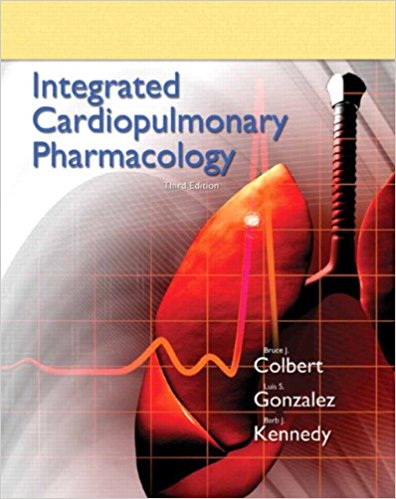
Integrated Cardiopulmonary Pharmacology 3rd Edition by Bruce J. Colbert - Test Bank

Integrated Cardiopulmonary Pharmacology 3rd Edition by Bruce J. Colbert - Test Bank   Instant Download - Complete Test Bank With Answers     Sample Questions Are Posted Below   Colbert_icp3_TestBank_questionsPage 2 of 148d. Phase IV.5. What organization is officially responsible for establishing publicstandards that approved drugs must continue to meet?a. The Physicians’ Desk Reference (PDR)b. …

$19.99

Integrated Cardiopulmonary Pharmacology 3rd Edition by Bruce J. Colbert – Test Bank


Instant Download – Complete Test Bank With Answers


Sample Questions Are Posted Below


Colbert_icp3_TestBank_questions
Page 2 of 148

d. Phase IV.

5. What organization is officially responsible for establishing public
standards that approved drugs must continue to meet?

a. The Physicians’ Desk Reference (PDR)

b. The American Hospital Formulary Service (AHFS)

c. The United States Pharmacopeia (USP)

d. The Food and Drug Administration (FDA)

6. The name given to a drug that is considered the nonproprietary name
and is not owned by any particular pharmaceutical company is the:

a. Chemical name.

b. Generic name.

c. Trade name.

d. Brand name.

.

7. A 21-year-old pregnant female has been exposed to the drug Virazole,
which has been reported to cause damage to the fetus. This type of drug
exposure is referred to as:

a. An adverse drug reaction (ADR).

b. A life-threatening reaction.

c. Hypersensitivity.

d. Teratogenicity.

8. Drugs that do not go directly into the systemic circulation after being
absorbed and are metabolized through the liver describes a:

a. Steady state.

b. First-pass effect.

c. Therapeutic range.
Colbert_icp3_TestBank_questions
Page 3 of 148

d. Half-life.

9. A physician would like a patient to receive acetaminophen via the
enteral route. Your choice of administration may include:

I. Oral.

II. Nasogastric.

III. Rectal.

a. I

b. I and II

c. I and III

d. I, II, and III

10. Administration of 80 mg propranolol given orally (PO) produces the
same response as 1 mg intravenously (IV). The difference in dosage is
explained by:

a. The first-pass effect.

b. Bioavailability.

c. Protein binding.

d. Metabolism.

11. The most common and convenient route of drug administration is:

a. Oral.

b. Inhalation.

c. Sublingual.

d. Transdermal.

12. A malnourished patient is susceptible to an increase in drug response
because of all except which of the following?

a. A malnourished patient has less serum albumin.
Colbert_icp3_TestBank_questions
Page 4 of 148

b. The free, unbound drug is an active drug and will lead to greater
drug response.

c. Less drug is absorbed systemically.

d. Much of the drug will be free within the bloodstream.

13. The effect of administering a water-soluble drug to an infant, who has a
higher percentage of total body water compared to an adult, would be:

a. Decreased effect.

b. The same effect.

c. Increased effect.

d. An additive effect.

14. The mechanisms responsible for metabolism of rifampin in the liver
include:

I. Drug oxidation.

II. Enzyme inhibition.

III. The cytochrome P-450 system.

a. I and II

b. I and III

c. II and III

d. I, II, and III

15. After drugs are metabolized, they can be eliminated from the body
through the:

a. Skin.

b. Lungs.

c. Feces and urine.

d. All of the above.

16. The potency of a drug is best described as:
Colbert_icp3_TestBank_questions
Page 5 of 148

a. An affinity of the drug for a particular receptor site.

b. The degree in which the drug can be cleared from the body.

c. The route of the drug.

d. The amount of drug required to produce the response desired.

17. Excretion of drugs through the kidneys is affected by all except which of
the following?

a. Glomerular filtration

b. Drug oxidation

c. Impaired renal function

d. Tubular secretion and reabsorption

18. When a drug binds to a receptor site, all except which of the following
can occur?

a. An ion channel can be opened or closed.

b. Biochemical messengers that initiate chemical reactions can be
activated.

c. A normal cellular function can be turned on or off.

d. The therapeutic response produced is directly proportional to the
number of sites occupied.

19. A drug that does not elicit a response:

a. Is an agonist.

b. Increases drug action.

c. Is an antagonist.

d. Activates the receptor.

20. A cell that becomes less responsive to a drug after exposure over time
is a condition called:

a. Tolerance.
Colbert_icp3_TestBank_questions
Page 6 of 148

b. Desensitization.

c. Dependence.

d. Low therapeutic index.

21. You note that a physician has made a new entry on a patient’s chart.
The entry reads “500 mg acetaminophen PO QID.” What does this order
mean?

a. 500 mg acetaminophen by mouth, four times daily

b. 500 mg acetaminophen per order, six times daily

c. 500 mg acetaminophen preop, then daily

d. 500 mg acetaminophen postop, then every 4 hours

22. Which of the following routes of drug administration completely
bypasses the absorption step before entering the bloodstream?

a. Oral

b. Rectal

c. Intravenous

d. Intramuscular

23. To maintain a steady state of drug concentration in the plasma, a drug
should be administered by which of the following methods?

a. Intramuscular injection

b. Continuous IV infusion

c. Intravenous bolus

d. Transdermally

24. Which of the following terms explains why a patient may require an
increased amount of a drug after repeated use to produce the same
therapeutic effect?

a. Dependence
Colbert_icp3_TestBank_questions
Page 7 of 148

b. Selectivity

c. Tachyphylaxis

d. Tolerance

25. Treatment for drug overdoses and poisoning includes all of the
following except the:

a. Administration of antidotes.

b. Use of an adsorbent.

c. Administration of emetics.

d. Use of a metabolite.

TRUE/FALSE

Write ‘T’ if the statement is true and ‘F’ if the statement is false.

______ 1. The FDA considers herbals the same as drugs because they
are derived from plants that were forerunners of many current medications.

______ 2. An interaction between two drugs that causes one drug to
have no direct effect but increases the response of the other drug is referred
to as the drug’s potency.

______ 3. Administration of a drug directly to the lungs is a form of
topical delivery.

______ 4. Continuous infusion gives a regulated, consistent dosage
over time, referred to as a steady state. On the other hand, a bolus dose
causes fluctuations in the plasma drug concentration.

______ 5. As a drug increases in selectivity to a particular cell or
tissue, the less useful it becomes.

______ 6. Fat-soluble drugs have a decreased effect in patients who are
obese.
Colbert_icp3_TestBank_questions
Page 8 of 148

______ 7. For a drug to be excreted from the body, it has to be metabolized
so that it is water soluble.

______ 8. Liver function tests should be conducted to determine if a patient
can metabolize a prescribed drug.

______ 9. Emetics are agents that are administered to induce vomiting in
the event of poisoning.

______10. A formulary is a list of drugs that a particular health care system
stocks and dispenses.

FILL-IN-THE-BLANK

Write the word or phrase that best completes each statement.

1. A severe, life-threatening allergic reaction can result in
________________.

2. Drugs administered directly to the lungs are given via the
____________ route.

3. Drugs given parenterally go directly to the ________________ and
result in rapid absorption.

4. Repeated use of the same drug may result in a decreased response,
requiring an increased amount of the drug to produce the same effect. This
phenomenon is known as ________________.

5. In order for digoxin to be effective, an appropriate amount of the drug
must be present in the blood. This blood level is known as the
________________.

6. The _______________ name of a drug is the name assigned by the
United States Adopted Name (USAN) Council.

7. Drugs that are released slowly once administered are referred to as
_______________
Colbert_icp3_TestBank_questions
Page 9 of 148

formulations.

8. Patients who are ordered nothing by mouth but are prescribed a
medication to be given enterally may be administered the drug
_____________.

9. Biotransformation occurs when drugs are converted to a ____________
form for elimination.

10. In order for drugs to be effective without causing toxicity, they must be
maintained within the ____________.

SHORT ANSWER

Answer the following questions or statements.

1. What is the difference between an endogenous and exogenous
chemical?

2. Explain the difference in how agonist and antagonist drugs react once
combined with a receptor.

3. Why are patients with liver disease likely to have greater than expected
effects from prescribed drugs?

4. What is the purpose of a “do not use” list of common abbreviations?

5. What basic safeguards should be followed in order to reduce
medication administration errors?

Additional information

Add Review

Your email address will not be published. Required fields are marked *