No products in the cart.

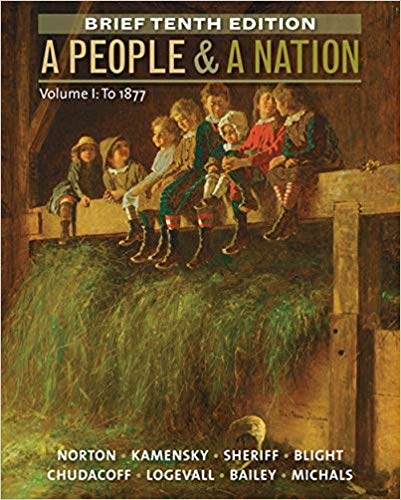
A People and a Nation, Volume I To 1877, Brief Edition 10th Edition by Mary Beth Norton - Test Bank

A People and a Nation, Volume I To 1877, Brief Edition 10th Edition by Mary Beth Norton - Test Bank   Instant Download - Complete Test Bank With Answers     Sample Questions Are Posted Below   Instructions: ∙ Identify each item. Give an explanation or description of the item. Answer the questions who, what, …

$19.99

A People and a Nation, Volume I To 1877, Brief Edition 10th Edition by Mary Beth Norton – Test Bank


Instant Download – Complete Test Bank With Answers


Sample Questions Are Posted Below


Instructions:
∙ Identify each item. Give an explanation or description of the item. Answer the questions who,
what, where, and when.

Explain the historical significance of each item. Establish the historical context in which the
item exists. Establish the item as the result of or as the cause of other factors existing in the
society under study. Answer this question: What were the political, social, economic,
and/or cultural consequences of this item?
1. The Iroquois policy of neutrality
ANSWER: Answer not provided.
POINTS: 1
REFERENCES: p. 112
2. the “Ohio Country”
ANSWER: Answer not provided.
POINTS: 1
REFERENCES: p. 111-113
3. the Albany Congress
ANSWER: Answer not provided.
POINTS: 1
REFERENCES: p, 112
4. Tanaghrisson
ANSWER: Answer not provided.
POINTS: 1
REFERENCES: p. 113
5. the Seven Years War
ANSWER: Answer not provided.
POINTS: 1
REFERENCES: p. 113
6. Acadian deportation
ANSWER: Answer not provided.
POINTS: 1
REFERENCES: p. 113Powered by Cognero Page 1Name: Class: Date:
Chapter 05: The Ends of Empire, 1754–1774
7. William Pitt
ANSWER: Answer not provided.
POINTS: 1
REFERENCES: p. 113
8. the Battle of Quebec (1759)
ANSWER: Answer not provided.
POINTS: 1
REFERENCES: p. 113; 115
9. the Treaty of Paris of 1763
ANSWER: Answer not provided.
POINTS: 1
REFERENCES: p. 115
10. Neolin and Chief Pontiac
ANSWER: Answer not provided.
POINTS: 1
REFERENCES: p. 116
11. the Paxton Boys
ANSWER: Answer not provided.
POINTS: 1
REFERENCES: p. 116
12. the Proclamation of 1763
ANSWER: Answer not provided.
POINTS: 1
REFERENCES: p. 116
13. the 1768 treaty conference at Fort Stanwix, New York
ANSWER: Answer not provided.
POINTS: 1
REFERENCES: p. 116
14. King George III
ANSWER: Answer not provided.
POINTS: 1
REFERENCES: p. 117Powered by Cognero Page 2Name: Class: Date:
Chapter 05: The Ends of Empire, 1754–1774
15. George Grenville
ANSWER: Answer not provided.
POINTS: 1
REFERENCES: p. 117
16. Great Britain’s financial crisis, 1760s-1770s
ANSWER: Answer not provided.
POINTS: 1
REFERENCES: p. 117
17. American concepts of representation
ANSWER: Answer not provided.
POINTS: 1
REFERENCES: p. 117
18. virtual representation
ANSWER: Answer not provided.
POINTS: 1
REFERENCES: p. 117
19. the Real Whigs
ANSWER: Answer not provided.
POINTS: 1
REFERENCES: p. 117
20. the Sugar Act
ANSWER: Answer not provided.
POINTS: 1
REFERENCES: p. 118
21. the Currency Act
ANSWER: Answer not provided.
POINTS: 1
REFERENCES: p. 118
22. the Stamp Act
ANSWER: Answer not provided.
POINTS: 1
REFERENCES: p. 118Powered by Cognero Page 3Name: Class: Date:
Chapter 05: The Ends of Empire, 1754–1774
23. The Rights of the British Colonies Asserted and Proved
ANSWER: Answer not provided.
POINTS: 1
REFERENCES: p. 118
24. Patrick Henry
ANSWER: Answer not provided.
POINTS: 1
REFERENCES: p. 119
25. the Virginia Stamp Act Resolves
ANSWER: Answer not provided.
POINTS: 1
REFERENCES: p. 119
26. the Loyal Nine
ANSWER: Answer not provided.
POINTS: 1
REFERENCES: p. 120
27. Andrew Oliver
ANSWER: Answer not provided.
POINTS: 1
REFERENCES: p. 120
28. Thomas Hutchinson
ANSWER: Answer not provided.
POINTS: 1
REFERENCES: p. 120
29. the Sons of Liberty
ANSWER: Answer not provided.
POINTS: 1
REFERENCES: p. 121
30. Charleston demonstrations of October 1765 and January 1766
ANSWER: Answer not provided.
POINTS: 1
REFERENCES: p. 121-122Powered by Cognero Page 4Name: Class: Date:
Chapter 05: The Ends of Empire, 1754–1774
31. the Stamp Act Congress
ANSWER: Answer not provided.
POINTS: 1
REFERENCES: p. 122
32. nonimportation associations of 1765
ANSWER: Answer not provided.
POINTS: 1
REFERENCES: p. 122
33. Lord Rockingham
ANSWER: Answer not provided.
POINTS: 1
REFERENCES: p. 122
34. the Declaratory Act
ANSWER: Answer not provided.
POINTS: 1
REFERENCES: p. 122
35. Charles Townshend
ANSWER: Answer not provided.
POINTS: 1
REFERENCES: p. 122
36. Letters from a Farmer in Pennsylvania
ANSWER: Answer not provided.
POINTS: 1
REFERENCES: p. 124
37. the Massachusetts circular letter
ANSWER: Answer not provided.
POINTS: 1
REFERENCES: p. 124
38. the numbers 45 and 92
ANSWER: Answer not provided.
POINTS: 1
REFERENCES: p. 124Powered by Cognero Page 5Name: Class: Date:
Chapter 05: The Ends of Empire, 1754–1774
39. public rituals of resistance
ANSWER: Answer not provided.
POINTS: 1
REFERENCES: p. 124-125
40. the Daughters of Liberty
ANSWER: Answer not provided.
POINTS: 1
REFERENCES: p. 125
41. Edenton Ladies Tea Party
ANSWER: Answer not provided.
POINTS: 1
REFERENCES: p. 125
42. the nonimportation (boycott) movement of 1768-1770
ANSWER: Answer not provided.
POINTS: 1
REFERENCES: p. 125
43. Lord North
ANSWER: Answer not provided.
POINTS: 1
REFERENCES: p. 125
44. the Liberty riot
ANSWER: Answer not provided.
POINTS: 1
REFERENCES: p. 127
45. the Boston Massacre
ANSWER: Answer not provided.
POINTS: 1
REFERENCES: p. 127
46. Paul Revere’s engraving of the Boston Massacre
ANSWER: Answer not provided.
POINTS: 1
REFERENCES: p. 128Powered by Cognero Page 6Name: Class: Date:
Chapter 05: The Ends of Empire, 1754–1774
47. Samuel Adams
ANSWER: Answer not provided.
POINTS: 1
REFERENCES: p. 127-128
48. Committees of Correspondence
ANSWER: Answer not provided.
POINTS: 1
REFERENCES: p. 127
49. The Boston statement of rights and grievances
ANSWER: Answer not provided.
POINTS: 1
REFERENCES: p. 128
50. the Tea Act
ANSWER: Answer not provided.
POINTS: 1
REFERENCES: p. 129
51. the Boston Tea Party
ANSWER: Answer not provided.
POINTS: 1
REFERENCES: p. 129
52. the Coercive (Intolerable) Acts
ANSWER: Answer not provided.
POINTS: 1
REFERENCES: p. 129-130
53. the Quebec Act
ANSWER: Answer not provided.
POINTS: 1
REFERENCES: p. 129-130Powered by Cognero Page 7Name: Class: Date:
Chapter 05: The Ends of Empire, 1754–1774
Instructions:
∙ Identify each item. Give an explanation or description of the item. Answer the questions who,
what, where, and when.

Explain the historical significance of each item. Establish the historical context in which the
item exists. Establish the item as the result of or as the cause of other factors existing in the
society under study. Answer this question: What were the political, social, economic,
and/or cultural consequences of this item?
54. Lord Dunmore’s war
ANSWER: Answer not provided.
POINTS: 1
REFERENCES: p. 131
55. the First Continental Congress
ANSWER: Answer not provided.
POINTS: 1
REFERENCES: p. 131-132
56. Joseph Galloway
ANSWER: Answer not provided.
POINTS: 1
REFERENCES: p. 132
57. the Declaration of Rights and Grievances
ANSWER: Answer not provided.
POINTS: 1
REFERENCES: p. 132
58. the Continental Association
ANSWER: Answer not provided.
POINTS: 1
REFERENCES: p. 132
59. committees of observation and inspection
ANSWER: Answer not provided.
POINTS: 1
REFERENCES: p. 132-133Powered by Cognero Page 8Name: Class: Date:
Chapter 05: The Ends of Empire, 1754–1774
60. emergence of popularly elected provincial conventions
ANSWER: Answer not provided.
POINTS: 1
REFERENCES: p. 133-134
61. Which of the following posed the greatest threat to the British colonies in North America in the early eighteenth
century?
a. The Dutch
b. The French
c. The Iroquois Confederacy
d. The Spanish
ANSWER: b
POINTS: 1
REFERENCES: p. 110; 111
62. The Iroquois Confederacy responded to appeals to forge an alliance with British colonists by
a. agreeing to ally with the British against the French.
b. following a policy of diplomatic isolation.
c. allying with the Catabaws, the Shawnees, and the Delawares against the French and the British.
d. adhering to a policy of neutrality.
ANSWER: d
POINTS: 1
REFERENCES: p. 112
63. The colonies rejected the Plan of Union adopted by the delegates to the Albany Congress because they
a. disagreed with the plan’s extension of rights to Indians.
b. felt the plan was the work of a group of anti-British radicals.
c. were afraid they would lose their autonomy.
d. disliked the fact that delegates to the intercolonial legislature were appointed by Parliament.
ANSWER: c
POINTS: 1
REFERENCES: p. 112Powered by Cognero Page 9Name: Class: Date:
Chapter 05: The Ends of Empire, 1754–1774
64. Which of the following led the British formally to declare war against France in 1756?
a. The pirating of British ships by French privateers
b. The French assault against Nova Scotia
c. The killing of General Edward Braddock and the devastating defeat of his forces in July 1755 by a combined
force of French and Indians
d. The capture of Colonel George Washington by French forces
ANSWER: c
POINTS: 1
REFERENCES: p. 113
65. Which of the following is true of William Pitt’s policies toward the colonies during the Seven Years War?
a. Pitt’s policies called for the quartering of troops in private homes.
b. Pitt’s policies allowed Americans to have battlefront command positions.
c. Pitt’s policies placed recruitment of troops from the colonies in local hands.
d. Pitt’s policies encouraged British army personnel to confiscate supplies from colonists.
ANSWER: c
POINTS: 1
REFERENCES: p. 113
66. As a result of the Treaty of Paris of 1763,
a. France was allowed to maintain its control over the North American fur trade.
b. France ceded its major North American possessions to Great Britain.
c. France was allowed to keep Louisiana.
d. Spain was stripped of all land holdings in North America.
ANSWER: b
POINTS: 1
REFERENCES: p. 115
67. Which of the following was a reason for an attack by the Cherokees on the Carolina and Virginia frontiers in 1760?
a. The British abrogated their trade agreements with the Cherokees.
b. Both colonies had been capturing and enslaving Cherokees.
c. They were retaliating for British atrocities and the Cherokees realized that after Britain gained the upper
hand, they would no longer be able to force concessions from the British by threatening to ally with France
or Spain.
d. The governors of both colonies had declared war against the Cherokees.
ANSWER: c
POINTS: 1
REFERENCES: p. 115Powered by Cognero Page 10Name: Class: Date:
Chapter 05: The Ends of Empire, 1754–1774
68. Which of the following British actions angered Native Americans in the Ohio Country and eventually led to
Pontiac’s uprising?
a. The British raised the price of goods traded to Indian tribes in the Ohio Country.
b. Chief Pontiac was angered by British attacks against the tribal villages of the Delawares.
c. The British embarked on a program to destroy and eliminate tribes in the Ohio country.
d. Chief Pontiac learned that the British were supplying his tribal enemies with arms and ammunition.
ANSWER: a
POINTS: 1
REFERENCES: p. 116
69. Great Britain issued the Proclamation of 1763 to
a. prevent the French from re-establishing themselves in North America.
b. maintain the dominance of the large colonial landholders.
c. restrict the power of colonial assemblies.
d. prevent clashes between colonists and Indians.
ANSWER: d
POINTS: 1
REFERENCES: p. 116
70. Which of the following was the most pressing problem facing Great Britain at the end of the Seven Years War?
a. Hostile Indian tribes in the Ohio country
b. The government’s war debt
c. Economic hard times and unemployment in England
d. Establishing legal authority over French settlers along the St. Lawrence
ANSWER: b
POINTS: 1
REFERENCES: p. 115
71. In light of the major problem confronting the British government in 1763, what decision did Prime Minister George
Grenville make concerning Britain’s North American colonies?
a. He decided that the colonies should assume a greater share of the cost of running the empire.
b. He decided that the aim of British policies should be to encourage the development of colonial
manufacturing.
c. He decided that colonial militia units should be permanently stationed along the crest of the Appalachians.
d. He decided that representative assemblies in the colonies should be disbanded.
ANSWER: a
POINTS: 1
REFERENCES: p. 117Powered by Cognero Page 11Name: Class: Date:
Chapter 05: The Ends of Empire, 1754–1774
72. Which of the following statements is most consistent with the concept of representative government held by
colonial Americans in 1763?
a. An assembly is not representative unless all people twenty-one years of age and over have the right to vote.
b. A person elected to a colonial assembly represents only the people from the region in which eligible voters
had a chance to vote for him directly.
c. A person elected to a colonial assembly represents the whole colony, not just the people from his district.
d. The population must be approximately equal in each district from which an assembly’s representatives are
chosen.
ANSWER: b
POINTS: 1
REFERENCES: p. 117
73. Which of the following statements is most consistent with the political thought of the Real Whigs?
a. Human beings will be free only when they decide to discard organized government.
b. There is a constant threat to liberty within monarchical government.
c. The only way to preserve order and stability is to put power into the hands of an enlightened monarch.
d. Government should act in a positive manner to aid the poor, the destitute, and the aged.
ANSWER: b
POINTS: 1
REFERENCES: p. 117
74. The primary intent of the Sugar Act was to
a. regulate colonial manufacturing.
b. regulate trade.
c. regulate colonial shipping.
d. raise a revenue.
ANSWER: d
POINTS: 1
REFERENCES: p. 118
75. Why did the American colonists protest Parliament’s passage of the Sugar and Currency Acts?
a. The colonists did not believe that Parliament had the power to regulate trade.
b. These acts placed a financial burden on many colonists who were already suffering from the effects of a
depressed colonial economy.
c. These acts placed restrictions on the type of legislation that could be enacted by colonial assemblies.
d. The colonists contended that Parliament had no legislative power in the colonies.
ANSWER: b
POINTS: 1
REFERENCES: p. 118Powered by Cognero Page 12Name: Class: Date:
Chapter 05: The Ends of Empire, 1754–1774
76. The primary reason for Parliament’s passage of the Stamp Act was to
a. force the colonists to recognize Parliament’s right to tax them.
b. raise revenue to help ease the debt burden of the British government.
c. finance the system for distributing mail and publications throughout the colonies.
d. establish parliamentary control over newspapers and pamphlets published in the colonies.
ANSWER: b
POINTS: 1
REFERENCES: p. 118
77. Which of the following was true of the Stamp Act?
a. It subjected violators to a trial without a jury.
b. It had little or no impact on ordinary colonists.
c. It had to be approved by the colonial assemblies before it went into effect.
d. It applied only to legal documents such as contracts, deeds, and wills.
ANSWER: a
POINTS: 1
REFERENCES: p. 118
78. Which of the following questions best expresses the ideological dilemma that faced the colonists from 1765 to
1774?
a. How can we justify our resistance to unpopular acts of Parliament when we do not resist unpopular acts of
our own assemblies?
b. How can we claim that Parliament has limited power over us when each colonial charter was issued by
Parliament?
c. How can we justify our opposition to certain acts of Parliament without questioning Parliament’s authority
over us?
d. How can we challenge the authority of Parliament without also challenging the authority of our colonial
assemblies?
ANSWER: c
POINTS: 1
REFERENCES: p. 118-119Powered by Cognero Page 13Name: Class: Date:
Chapter 05: The Ends of Empire, 1754–1774
79. Which of the following statements best expresses the argument presented by James Otis in his 1764 pamphlet
protesting the Sugar Act and the proposed Stamp Act?
a. Although Parliament may regulate trade, only the colonial assemblies have the power to enact laws
pertaining to domestic affairs in their respective colonies.
b. Because the colonists live some three thousand miles from the mother country, it is understood that they do
not enjoy all of the rights of Englishmen.
c. Even though the colonists believe an act of Parliament to be unconstitutional, they must obey that act until it
is repealed.
d. A colonial assembly has power equal to that of the British Parliament.
ANSWER: c
POINTS: 1
REFERENCES: p. 119
80. The final decision made by the House of Burgesses regarding the Stamp Act Resolves leads to which of the
following conclusions?
a. The burgesses denied Parliament the right to pass any legislation affecting the colonies.
b. The burgesses felt they owed no obedience to Parliament.
c. The burgesses believed George III to be a tyrant.
d. The burgesses did not seek independence from England.
ANSWER: d
POINTS: 1
REFERENCES: p. 119
81. Which of the following ideas was considered by Parliament to be basic to the British theory of government?
a. The wisdom of governmental policies may not be questioned.
b. Parliament may exercise absolute authority over all colonial possessions.
c. The king’s power is absolute.
d. All British subjects are entitled to individual representation in Parliament.
ANSWER: b
POINTS: 1
REFERENCES: p. 119Powered by Cognero Page 14Name: Class: Date:
Chapter 05: The Ends of Empire, 1754–1774
82. What was the main reason that resistance leaders wanted workers from rival labor groups to participate in anti-
Stamp Act demonstrations?
a. If the demonstrations caused adverse consequences, they would fall on gang members rather than on
resistance leaders.
b. Their participation would show that people of all social classes opposed the act.
c. Gang members were much more experienced in leading demonstrations to protest British actions.
d. Gang members were adept at avoiding arrest.
ANSWER: b
POINTS: 1
REFERENCES: p. 120
83. Which of the following is an accurate description of the Sons of Liberty, created in 1765?
a. The organization was founded by colonists who opposed the colonial resistance movement.
b. This intercolonial association was created by the elite in an attempt to channel crowd action into acceptable
forms of resistance.
c. This intercolonial association was founded by a group of newspaper editors who composed a series of
essays on the subject of liberty.
d. The organization was strongest in the South and was composed of radicals who demanded separation from
Great Britain.
ANSWER: b
POINTS: 1
REFERENCES: p. 121
84. To protest the Stamp Act, colonial merchants
a. refused to sell any British-made products in the American colonies.
b. created nonexportation associations to help stop the flow of raw materials to England.
c. hired privateers to harass British merchant ships in the Atlantic and Caribbean.
d. created nonimportation associations to put pressure on British exporters.
ANSWER: d
POINTS: 1
REFERENCES: p. 122Powered by Cognero Page 15Name: Class: Date:
Chapter 05: The Ends of Empire, 1754–1774
85. By 1766, American merchants hoped wealthy London merchants would ally with the American colonies because
a. they believed an independent America would be to their advantage.
b. they had protested Parliament’s unfair tax policies for years and felt such an alliance would bolster their
cause.
c. the nonimportation movement in the colonies hurt them financially.
d. the Sugar Act threatened their economic rights.
ANSWER: c
POINTS: 1
REFERENCES: p. 122
86. The most important reason for repeal of the Stamp Act was the
a. formal protests made by colonial assemblies.
b. replacement of Grenville as prime minister by Lord Rockingham.
c. nonimportation movement.
d. threat of even more violent and destructive mob action.
ANSWER: b
POINTS: 1
REFERENCES: p. 122
87. How did the Townshend duties differ from previous customs taxes?
a. They attempted to implement the new economic policy of mercantilism.
b. Their enforcement was left to the colonial assemblies.
c. The revenue collected from the duties could be used only to pay off the British national debt.
d. They applied to goods imported into the colonies from Great Britain, not from foreign countries.
ANSWER: d
POINTS: 1
REFERENCES: p. 122
88. Which of the following statements best expresses the argument presented by John Dickinson in Letters from a
Farmer in Pennsylvania?
a. Parliament may regulate colonial trade only with the concurrence of the colonial legislatures.
b. Parliament has no authority over the colonies.
c. Parliament does not have the power to regulate colonial trade.
d. Parliament may not use its power to regulate colonial trade for the purpose of raising revenue.
ANSWER: d
POINTS: 1
REFERENCES: p. 124Powered by Cognero Page 16Name: Class: Date:
Chapter 05: The Ends of Empire, 1754–1774
89. The Massachusetts assembly was dissolved in late 1768 because
a. the Massachusetts governor decided to govern the colony without such an assembly.
b. it supported the recent protest petition adopted by the Virginia House of Burgesses.
c. it called for open resistance to the Townshend Acts.
d. it refused to recall the Massachusetts circular letter.
ANSWER: d
POINTS: 1
REFERENCES: p. 124
90. Public rituals were important to the resistance movement because they
a. ensured that the dominant elite in the colonies could maintain control over the movement.
b. conveyed to commoners the ideas on which the movement was based.
c. diverted the minds of the colonists from problems within their colonies.
d. intimidated people into joining the movement.
ANSWER: b
POINTS: 1
REFERENCES: p. 125
91. Well-to-do women helped enlist people’s support for the resistance movement by
a. conducting door-to-door recruiting campaigns.
b. engaging in public spinning and weaving of homespun.
c. organizing fund-raising events.
d. giving street lectures on virtue.
ANSWER: b
POINTS: 1
REFERENCES: p. 125
92. How did the boycott movement of 1765-1766 differ from the boycott movement of 1768-1769?
a. The earlier movement created an economic recession throughout the colonies.
b. Colonial merchants had no financial incentive to support the boycott of 1768-1769.
c. In 1768-1769 the economy was so depressed that the boycott threatened merchants with bankruptcy.
d. The boycott of 1768-1769 helped revive a seriously depressed colonial economy.
ANSWER: b
POINTS: 1
REFERENCES: p. 125Powered by Cognero Page 17Name: Class: Date:
Chapter 05: The Ends of Empire, 1754–1774
93. The movement that was called to protest the Townshend duties was
a. endorsed by most of the colonial assemblies.
b. inspired by colonial merchants who sought economic gain.
c. supported by all colonists from all classes.
d. effective in reducing colonial imports from England.
ANSWER: d
POINTS: 1
REFERENCES: p. 125
94. Lord North convinced Parliament to repeal the Townshend duties, except the tax on tea, because of his conviction
that
a. such a concession would lead to meaningful negotiation between Parliament and the colonies.
b. the duties were detrimental to the economic well-being of the colonies.
c. only colonial assemblies had the power to impose taxes in the colonies.
d. it was bad policy to impose duties on trade within the empire.
ANSWER: d
POINTS: 1
REFERENCES: p. 125
95. The decision to send British troops to Boston was largely due to
a. Lord North’s desire to precipitate a crisis in Massachusetts.
b. Indian raids against Massachusetts colonists.
c. the riot that followed the seizure of the Liberty by customs officials.
d. the decision by the North ministry to use force to suspend the Massachusetts assembly.
ANSWER: c
POINTS: 1
REFERENCES: p. 127
96. Which of the following is true of the Boston Massacre?
a. A group of Boston citizens was attacked by British soldiers without provocation.
b. A group of off-duty British soldiers took revenge against several Boston laborers who had insulted them.
c. A Boston mob goaded British soldiers who defied orders by firing into a crowd.
d. Several leading resistance leaders in Boston were taken into custody and summarily executed.
ANSWER: c
POINTS: 1
REFERENCES: p. 127Powered by Cognero Page 18Name: Class: Date:
Chapter 05: The Ends of Empire, 1754–1774
97. After all but one of the Townshend duties were repealed, patriots
a. continued to speak of impending tyranny and of a deliberate plot against American liberties.
b. called for negotiations with George III to prevent future problems.
c. praised Parliament for having the political courage to admit its mistakes.
d. called for the election of representatives to an intercolonial legislature.
ANSWER: a
POINTS: 1
REFERENCES: p. 127
98. Which of the following best describes the function of the committees of correspondence?
a. They provided legal counsel to patriots whose rights had been abridged by British authorities.
b. They provided daily reports on the movement of British troops.
c. They assumed the primary responsibility of writing anti-British essays for colonial newspapers.
d. They provided a communications network designed to involve more colonists in the resistance movement by
widening the movement’s geographic scope.
ANSWER: d
POINTS: 1
REFERENCES: p. 128
99. The purpose of the pamphlet that was drafted and distributed by the Boston Committee of Correspondence in 1772
was to
a. involve residents from all Massachusetts towns in the resistance movement.
b. collect funds to defray expenses incurred by the Sons of Liberty.
c. encourage the formation of local militia units.
d. gain support for negotiations with the British.
ANSWER: a
POINTS: 1
REFERENCES: p. 128
100. The Boston statement of rights and grievances, drafted by the Boston Committee of Correspondence in 1772,
differed from previous patriot pamphlets in that it
a. did not mention the necessity of obedience to Parliament.
b. did not profess allegiance to the king.
c. attempted to define the precise limits of parliamentary authority.
d. claimed that colonial assemblies had the right to judge the constitutionality of acts of Parliament.
ANSWER: a
POINTS: 1
REFERENCES: p. 128Powered by Cognero Page 19Name: Class: Date:
Chapter 05: The Ends of Empire, 1754–1774
101. As a result of the passage of the Tea Act,
a. the British East India Company was given a monopoly on the sale of tea in the American colonies.
b. the tax on tea imported into the American colonies was repealed.
c. Parliament indicated a willingness to allow the American colonies to have more of a voice in the regulation of
trade.
d. tea sold in the American colonies became so expensive that it was affordable only to the upper classes.
ANSWER: a
POINTS: 1
REFERENCES: p. 129
102. Parliament’s intent in passing the Coercive Acts was to
a. do away with the right of a trial by jury in the American colonies.
b. punish Boston and the colony of Massachusetts for the Boston Tea Party.
c. dissolve self-government in the British colonies in North America.
d. make the Catholic Church the established church in the American colonies.
ANSWER: b
POINTS: 1
REFERENCES: p. 129
103. Some leaders of the American resistance movement viewed passage of the Tea Act as
a. a sign that Parliament was willing to compromise on the major issues of disagreement between itself and the
American colonies.
b. an indication that Parliament eventually intended to establish an East India Company monopoly on all colonial
trade.
c. an indication that Parliament eventually intended to prohibit the sale of all tea in the American colonies.
d. proof that Parliament would respond positively to colonial assemblies if they presented their grievances in a
respectful way
ANSWER: b
POINTS: 1
REFERENCES: p. 129
104. Parliament’s intent in passing the Quebec Act was to
a. provide governmental reforms for the former French colony of Quebec.
b. strip the inland colonies of land and power.
c. create a model of colonial government in Quebec that eventually would be imposed on all the colonies.
d. warn that eventually the Catholic Church would be given favored status in all the colonies.
ANSWER: a
POINTS: 1
REFERENCES: p. 130Powered by Cognero Page 20Name: Class: Date:
Chapter 05: The Ends of Empire, 1754–1774
105. Which of the following is true of the patriots’ perception of the Coercive and Quebec Acts?
a. They viewed them as just punishment for the wrongs committed by Boston citizens in the Boston Tea Party.
b. Because of divisions within their ranks, the patriots had no unified view of these acts.
c. They viewed the Coercive Acts as repressive but cared little about the Quebec Act because it applied to
Canada.
d. They viewed both as a deliberate plot by the British to destroy their rights.
ANSWER: d
POINTS: 1
REFERENCES: p. 130
106. In the immediate aftermath of the passage of the Coercive and Quebec Acts, the colonies
a. decided that reconciliation with Great Britain was not possible.
b. were confused and disorganized, and could not agree on an appropriate response.
c. agreed to an immediate boycott of British goods.
d. agreed to send delegates to an intercolonial congress which would meet in Philadelphia.
ANSWER: d
POINTS: 1
REFERENCES: p. 130
107. What caused the Regulator movements of the late 1760s and early 1770s?
a. Tobacco growers were angry over high commissions charged by tobacco factors.
b. Backcountry farmers were angry that the rights of local Indian tribes were officially recognized.
c. Merchants believed that British economic policies were harmful to the import business.
d. Backcountry farmers believed that they did not have an adequate voice in colonial politics.
ANSWER: d
POINTS: 1
REFERENCES: p. 131
108. The Continental Association called for the
a. nonimportation and nonconsumption of British goods.
b. election of representatives to an American legislature.
c. formation of a Continental Army.
d. enactment of laws designed to create a virtuous republic.
ANSWER: a
POINTS: 1
REFERENCES: p. 132Powered by Cognero Page 21Name: Class: Date:
Chapter 05: The Ends of Empire, 1754–1774
109. In the Declaration of Rights and Grievances adopted by the First Continental Congress, the delegates made it clear
that the American colonists
a. were most concerned about the arbitrary use of power by King George III.
b. owed no allegiance to Parliament.
c. would only voluntarily obey Parliament.
d. believed that independence from England was the only way to protect their rights and liberties.
ANSWER: c
POINTS: 1
REFERENCES: p. 132
110. Which of the following accurately identifies Joseph Galloway’s plan?
a. Galloway proposed a distinction between taxation and legislation, with the assemblies having authority over
the former and Parliament over the latter.
b. Galloway proposed a formal plan of union that required the joint consent of Parliament and a new American
legislature to all laws pertaining to the colonies.
c. Galloway proposed that each colony negotiate its own separate agreement with Parliament concerning
parliamentary power.
d. Galloway proposed the acceptance of the concept of virtual representation.
ANSWER: b
POINTS: 1
REFERENCES: p. 132
111. Did the committees of observation and inspection enjoy widespread popular support? Why or why not?
a. No, because the election of many radicals to these committees caused further divisions within the resistance
movement.
b. No, because the method of election ensured that only members of the elite would be elected to these
committees.
c. Yes, because all men eligible to vote for delegates of the lower house of the colonial assemblies were
allowed to elect committee members at the local level.
d. Yes, because only well-known men who had previously been elected to positions of authority were chosen
as committee members.
ANSWER: c
POINTS: 1
REFERENCES: p. 132Powered by Cognero Page 22Name: Class: Date:
Chapter 05: The Ends of Empire, 1754–1774
112. Committees of observation and inspection were officially charged with enforcing the Continental Association, and
they also
a. took over the task of training and outfitting local militia groups.
b. encouraged open debate between loyalists and patriots.
c. established revolutionary tribunals that tried and executed dissidents.
d. established elaborate spy networks to identify opponents of the resistance movement.
ANSWER: d
POINTS: 1
REFERENCES: p. 133
113. Explain the impact of the French and Indian War on interior Indian tribes, the American colonists, and the colonists’
relationship with Great Britain.
ANSWER: Answer not provided.
POINTS: 1
REFERENCES: p. 111-113; 115-117
114. Discuss the similarities and differences between the British and American concepts of representative government.
How did the differences in their concepts contribute to the coming of the American Revolution?
ANSWER: Answer not provided.
POINTS: 1
REFERENCES: p. 117-119
115. Trace the changes in the constitutional arguments presented by the colonists against the actions of Parliament from
1764 to 1774. Why did these changes occur? Why are the changes significant?
ANSWER: Answer not provided.
POINTS: 1
REFERENCES: p. 117-120; 124; 128; 130; 131-134
116. Defend the following statement: “Britain’s attempts to tighten the reins of government and raise revenues from the
colonies in the 1760s and early 1770s convinced many Americans that the Real Whigs’ reasoning applied to their
circumstances….They began to interpret British measures in light of the Real Whigs’ warnings and to see evil
designs behind the actions of Grenville and his successors.”
ANSWER: Answer not provided.
POINTS: 1
REFERENCES: p. 117-120; 124; 127; 130Powered by Cognero Page 23Name: Class: Date:
Chapter 05: The Ends of Empire, 1754–1774
117. Explain the constitutional arguments presented against the Sugar and Stamp Acts by James Otis in his 1764
pamphlet The Rights of the British Colonies Asserted and Proved. What constitutional arguments were
presented in subsequent pamphlets between 1764 and the Tea Act’s passage in 1773? How did these arguments
differ from Otis’s? Why were they different?
ANSWER: Answer not provided.
POINTS: 1
REFERENCES: p. 118-119; 124; 127; 128;
118. Discuss the actions taken by Boston’s colonists in their efforts to prevent implementation of the Stamp Act. What
were the consequences of their actions?
ANSWER: Answer not provided.
POINTS: 1
REFERENCES: p. 120; 122
119. Detail the provisions of the Stamp Act. Why was the act passed by Parliament? How did the colonists react to its
passage? Why?
ANSWER: Answer not provided.
POINTS: 1
REFERENCES: p. 118-122
120. Discuss the nature of colonial protests against the Stamp Act outside the colony of Massachusetts, paying particular
attention to Patrick Henry’s proposals before the Virginia House of Burgesses. What were the consequences of
these actions?
ANSWER: Answer not provided.
POINTS: 1
REFERENCES: p. 119-122
121. During the years from 1765 to 1774, why did skilled craftsmen, professionals, and members of the “educated elite”
in the colonies encourage the participation of “disfranchised” or “ordinary” colonists in crowd action (street protests
and public rituals) associated with the American resistance movement?
Why, at the same time, were these leaders of the resistance movement also apprehensive about the participation of
“disfranchised” or “ordinary” colonists in crowd action?
∙ Cite at least two specific instances in which the elite men who led the resistance movement
welcomed the involvement of “ordinary” colonists in crowd action.
∙ Cite at least two specific instances in which such men were apprehensive about the
involvement of “ordinary” colonists in crowd action.
ANSWER: Answer not provided.
POINTS: 1
REFERENCES: p. 120-122; 124-125; 127; 129;Powered by Cognero Page 24Name: Class: Date:
Chapter 05: The Ends of Empire, 1754–1774
122. Examine the events of 1767 and 1768 that culminated in the dissolution of the Massachusetts assembly.
ANSWER: Answer not provided.
POINTS: 1
REFERENCES: p. 124
123. Discuss the importance of public rituals as part of the colonial resistance movement.
ANSWER: Answer not provided.
POINTS: 1
REFERENCES: p. 124-125
124. Discuss the role of women in the colonial resistance movement. What was the significance of the “Daughters of
Liberty”?
ANSWER: Answer not provided.
POINTS: 1
REFERENCES: p. 125; 133-134
125. Discuss the use of economic boycotts as a means of protest against British policies between 1764 and 1774. Were
such boycotts effective? Why or why not? Were the colonists united in using boycotts as a means of protest?
Explain.
ANSWER: Answer not provided.
POINTS: 1
REFERENCES: p. 122; 125; 129-130; 132-133;
126. Beginning with the passage of the Townshend Acts in 1767, examine the colonial events that led to the Boston
Massacre. Was it truly a “massacre”? Explain. Did Paul Revere’s engraving of the Boston Massacre portray what
actually happened? Explain. What were the consequences of the “massacre”?
ANSWER: Answer not provided.
POINTS: 1
REFERENCES: p. 122; 124-125; 128
127. Beginning with passage of the Tea Act in 1773, discuss the events that led to the Boston Tea Party. Was patriot
behavior justified, or should it be considered an intemperate act of lawlessness? Explain.
ANSWER: Answer not provided.
POINTS: 1
REFERENCES: p. 129-130Powered by Cognero Page 25Name: Class: Date:
Chapter 05: The Ends of Empire, 1754–1774
128. Look at the Coercive Acts and the Quebec Act as an impartial outside observer, and explain whether or not the
perception of the patriots, that Great Britain had embarked on a deliberate plan to oppress them, was accurate.
ANSWER: Answer not provided.
POINTS: 1
REFERENCES: p. 129-130
129. Discuss the causes, consequences, and significance of the New Jersey (1746) and Hudson Valley (1765-1766) land
riots.
ANSWER: Answer not provided.
POINTS: 1
REFERENCES: p. 130-131
130. Discuss the causes, consequences, and significance of the Regulator movements of the late 1760s (South Carolina)
and early 1770s (North Carolina).
ANSWER: Answer not provided.
POINTS: 1
REFERENCES: p. 130-131
131. John Galloway and John Adams held different positions on the constitutional relationship between England and its
colonies. Using Galloway’s plan of union and the crucial clauses proposed by John Adams and contained in the
Declaration of Rights and Grievances, contrast their positions.
ANSWER: Answer not provided.
POINTS: 1
REFERENCES: p. 131-132
132. Discuss the purpose, makeup, tactics, and ultimate effectiveness of the committees of observation and inspection.
ANSWER: Answer not provided.
POINTS: 1
REFERENCES: p. 132-133
133. Examine the process by which British political authority in the colonies came to an end and was replaced by
American political authority.
ANSWER: Answer not provided.
POINTS: 1
REFERENCES: p. 117; 118-119; 124; 127-128; 131-134Powered by Cognero Page 26Name: Class: Date:
Chapter 05: The Ends of Empire, 1754–1774


Additional information

Add Review

Your email address will not be published. Required fields are marked *