No products in the cart.

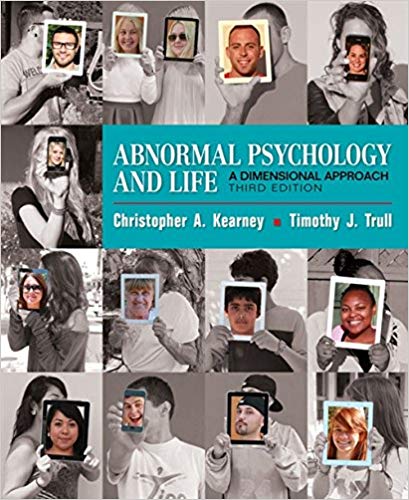
Abnormal Psychology and Life A Dimensional Approach 3rd Edition by Chris Kearney - Test Bank

Abnormal Psychology and Life A Dimensional Approach 3rd Edition by Chris Kearney - Test Bank   Instant Download - Complete Test Bank With Answers     Sample Questions Are Posted Below   1. People who worry tend to think about   a. things that happened in the past.   b. the bad things that might happen …

$19.99

Abnormal Psychology and Life A Dimensional Approach 3rd Edition by Chris Kearney – Test Bank


Instant Download – Complete Test Bank With Answers


Sample Questions Are Posted Below


1. People who worry tend to think about

  a. things that happened in the past.
  b. the bad things that might happen in the future.
  c. anxiety.
  d. fear.


ANSWER:   b
DIFFICULTY:   easy
REFERENCES:   Worry, Anxiety, Fear, and Anxiety, Obsessive-Compulsive, and Trauma-Related Disorders: What Are They?
OTHER:   TYPE: conceptual


2. The emotional state of anxiety includes

  a. pre-event, the event itself, and post-event arousal.
  b. cognitive dread, avoidance, and recovery.
  c. autonomic, sympathetic, and parasympathetic activity.
  d. physical feelings, thoughts, and behaviors.


ANSWER:   d
DIFFICULTY:   moderate
REFERENCES:   Worry, Anxiety, Fear, and Anxiety, Obsessive-Compulsive, and Trauma-Related Disorders: What Are They?
OTHER:   TYPE: factual


3. Worry, anxiety, and fear are different constructs. Which of the following is FALSE regarding worry, anxiety, and fear?

  a. Fear is a largely cognitive concept referring to concerns about future threat.
  b. Anxiety is an emotional state that occurs as a threatening situation draws close.
  c. Worry helps people prepare for future events and solve problems.
  d. Fear that is very intense and severe is panic.


ANSWER:   a
DIFFICULTY:   easy
REFERENCES:   Worry, Anxiety, Fear, and Anxiety, Obsessive-Compulsive, and Trauma-Related Disorders: What Are They?
OTHER:   TYPE: factual


4. The intense emotional state that occurs when a threat is imminent or actually occurring is most accurately termed

  a. fear.
  b. anxiety.
  c. worry.
  d. stress.


ANSWER:   a
DIFFICULTY:   easy
REFERENCES:   Worry, Anxiety, Fear, and Anxiety, Obsessive-Compulsive, and Trauma-Related Disorders: What Are They?
OTHER:   TYPE: factual


5. As an individual gets closer to object or event that is feared, his or her internal arousal level will

  a. become more severe.
  b. level off as the fight-or-flight decision is made.
  c. become ultimately less and less severe.
  d. be unrelated to the danger level.


ANSWER:   a
DIFFICULTY:   easy
REFERENCES:   Worry, Anxiety, Fear, and Anxiety, Obsessive-Compulsive, and Trauma-Related Disorders: What Are They?
OTHER:   TYPE: conceptual


6. When a client has symptoms of ____, he/she experiences feelings of imminent threat, severe arousal, scarce cognition, and high levels of focus and reaction.

  a. worry
  b. anxiety
  c. fear
  d. apprehension


ANSWER:   c
DIFFICULTY:   easy
REFERENCES:   Worry, Anxiety, Fear, and Anxiety, Obsessive-Compulsive, and Trauma-Related Disorders: What Are They?
OTHER:   TYPE: conceptual


7. Differences between worry, anxiety, and fear can be illustrated along a continuum that includes

  a. potential threat.
  b. approaching threat.
  c. imminent threat.
  d. all of these.


ANSWER:   d
DIFFICULTY:   moderate
REFERENCES:   Worry, Anxiety, Fear, and Anxiety, Obsessive-Compulsive, and Trauma-Related Disorders: What Are They?
OTHER:   TYPE: conceptual


8. Worry, anxiety, and fear are often viewed along a dimension of

  a. anger.
  b. stress.
  c. severity.
  d. cause.


ANSWER:   c
DIFFICULTY:   easy
REFERENCES:   Worry, Anxiety, Fear, and Anxiety, Obsessive-Compulsive, and Trauma-Related Disorders: What Are They?
OTHER:   TYPE: factual


9. When worry, anxiety, and fear become severe and create trouble for a person, he/she may be experiencing a(n)

  a. panic attack.
  b. anxiety-related disorder.
  c. fear reaction.
  d. somatoform disorder.


ANSWER:   b
DIFFICULTY:   easy
REFERENCES:   Worry, Anxiety, Fear, and Anxiety, Obsessive-Compulsive, and Trauma-Related Disorders: What Are They?
OTHER:   TYPE: factual


10. Eliana is at a party and begins to feel uncomfortable that she is not safe there. Several of the guys have been trying to get her to go upstairs with them alone, and keep offering her more drinks. As she discerns that her safety is at risk in this situation, her heart rate increases, she finds she cannot concentrate on conversations, and she simply leaves as quickly as she possibly can. Eliana is best described as experiencing

  a. fear.
  b. panic.
  c. anxiety.
  d. worry.


ANSWER:   a
DIFFICULTY:   moderate
REFERENCES:   Worry, Anxiety, Fear, and Anxiety, Obsessive-Compulsive, and Trauma-Related Disorders: What Are They?
OTHER:   TYPE: application


11. ​When a person experiences severe levels of anxiety, fear, and worry, he/she may have a(n)

  a. mood disorder.
  b. phobia.
  c. anxiety-related disorder.
  d. debilitating panic.


ANSWER:   c
DIFFICULTY:   easy
REFERENCES:   Worry, Anxiety, Fear, and Anxiety, Obsessive-Compulsive, and Trauma-Related Disorders: What Are They?
OTHER:   TYPE: factual


12. Angelina reported experiencing intense feelings of fear, apprehension, and physical symptoms that lasted around 10 minutes or so. Her experience is most consistent with a

  a. panic attack.
  b. phobia.
  c. phobic attack.
  d. generalized anxiety attack.


ANSWER:   a
DIFFICULTY:   easy
REFERENCES:   Anxiety, Obsessive-Compulsive, and Trauma-Related Disorders: Features and Epidemiology
OTHER:   TYPE: application


13. Common physical symptoms associated with a panic attack include

  a. dizziness.
  b. worry about losing control.
  c. worry about dying.
  d. all of these choices.


ANSWER:   a
DIFFICULTY:   moderate
REFERENCES:   Anxiety, Obsessive-Compulsive, and Trauma-Related Disorders: Features and Epidemiology
OTHER:   TYPE: conceptual


14. Malcolm is in the middle of a panic attack. As part of the experience, he feels like this situation cannot quite be real. This particular symptom is known as

  a. depersonalization.
  b. derealization.
  c. dissociation.
  d. cognitive distortion.


ANSWER:   b
DIFFICULTY:   easy
REFERENCES:   Anxiety, Obsessive-Compulsive, and Trauma-Related Disorders: Features and Epidemiology
OTHER:   TYPE: application


15. If a person experiences severe panic symptoms only when speaking in public he/she is said to have ____ attacks.

  a. depersonalized
  b. disordered
  c. expected
  d. unexpected


ANSWER:   c
DIFFICULTY:   easy
REFERENCES:   Anxiety, Obsessive-Compulsive, and Trauma-Related Disorders: Features and Epidemiology
OTHER:   TYPE: conceptual


16. People who regularly experience unexpected panic attacks may be diagnosed with

  a. panic disorder.
  b. panic attack disorder.
  c. anxiety attacks.
  d. anxiety attack disorder.


ANSWER:   a
DIFFICULTY:   easy
REFERENCES:   Anxiety, Obsessive-Compulsive, and Trauma-Related Disorders: Features and Epidemiology
OTHER:   TYPE: factual


17. People who have panic disorder have panic attacks. At least one of these attacks must be followed by

  a. a week of concern about having another attack.
  b. demonstrable delusions about what the panic attack might mean.
  c. a month or more of concern about having another attack, worry about what the attack might mean, or change in behavior.
  d. 2 to 3 months of concern, worry, and behavioral change.


ANSWER:   c
DIFFICULTY:   moderate
REFERENCES:   Anxiety, Obsessive-Compulsive, and Trauma-Related Disorders: Features and Epidemiology
OTHER:   TYPE: factual


18. A symptom of panic disorder is

  a. unexpected panic attacks.
  b. at least one month or more of concern or worry about having future panic attacks.
  c. significant maladaptive behavior change related to the panic attacks.
  d. all of these choices.


ANSWER:   d
DIFFICULTY:   easy
REFERENCES:   Anxiety, Obsessive-Compulsive, and Trauma-Related Disorders: Features and Epidemiology
OTHER:   TYPE: factual


19. Anxiety about being in places where panic attacks may occur, especially places where escape might be difficult, is most accurately termed

  a. limited anxiety.
  b. agoraphobia.
  c. panic disorder.
  d. social phobia.


ANSWER:   b
DIFFICULTY:   easy
REFERENCES:   Anxiety, Obsessive-Compulsive, and Trauma-Related Disorders: Features and Epidemiology
OTHER:   TYPE: factual


20. According to the textbook, which anxiety disorder is most likely to be associated with agoraphobia?

  a. social anxiety disorder
  b. generalized anxiety disorder
  c. panic disorder
  d. obsessive-compulsive disorder


ANSWER:   c
DIFFICULTY:   moderate
REFERENCES:   Anxiety, Obsessive-Compulsive, and Trauma-Related Disorders: Features and Epidemiology
OTHER:   TYPE: conceptual


21. Jonas is extremely anxious about speaking in public. This anxiety does not simply apply to giving speeches, but even to speaking in a conversation with another person, ordering a meal from another person, making a doctor’s appointment, and so forth. Because of his extreme anxiety, he rarely does these activities, and finds ways around them. For example, he will not eat out at all, and his sister makes most of his doctor’s appointments for him when necessary. Jonas’s strategies for not engaging in these activities illustrate a key feature of anxiety known as

  a. behavioral avoidance.
  b. worry.
  c. physical arousal.
  d. catastrophizing.


ANSWER:   a
DIFFICULTY:   difficult
REFERENCES:   Anxiety, Obsessive-Compulsive, and Trauma-Related Disorders: Features and Epidemiology
OTHER:   TYPE: application


22. Social phobia is also sometimes referred to as

  a. social performance anxiety.
  b. phobia-social subtype.
  c. social anxiety disorder.
  d. agoraphobia.


ANSWER:   c
DIFFICULTY:   easy
REFERENCES:   Anxiety, Obsessive-Compulsive, and Trauma-Related Disorders: Features and Epidemiology
OTHER:   TYPE: factual


23. Intense and ongoing fear of potentially embarrassing interpersonal or performance situations is characteristic of

  a. panic disorder.
  b. panic attack.
  c. social phobia.
  d. agoraphobia.


ANSWER:   c
DIFFICULTY:   easy
REFERENCES:   Anxiety, Obsessive-Compulsive, and Trauma-Related Disorders: Features and Epidemiology
OTHER:   TYPE: factual


24. People with social phobia often have

  a. expected panic attacks in stressful situations.
  b. expected panic attacks in performance situations.
  c. unexpected panic attacks.
  d. physical symptoms like headaches when in social settings.


ANSWER:   b
DIFFICULTY:   moderate
REFERENCES:   Anxiety, Obsessive-Compulsive, and Trauma-Related Disorders: Features and Epidemiology
OTHER:   TYPE: factual


25. Many people with social phobia believe they will do something to make themselves appear foolish before others, such as

  a. stuttering.
  b. fainting.
  c. freezing.
  d. all of these choices.


ANSWER:   d
DIFFICULTY:   easy
REFERENCES:   Anxiety, Obsessive-Compulsive, and Trauma-Related Disorders: Features and Epidemiology
OTHER:   TYPE: factual


26. One characteristic of social phobia that will interfere with one’s ability to live a normal life is

  a. intense fear of being in situations where one could be negatively evaluated.
  b. shopping when people are not around.
  c. working in jobs where one can be alone.
  d. none of these choices.


ANSWER:   a
DIFFICULTY:   moderate
REFERENCES:   Anxiety, Obsessive-Compulsive, and Trauma-Related Disorders: Features and Epidemiology
OTHER:   TYPE: conceptual


27. If someone with social phobia mainly experiences fear and anxiety around giving speeches publicly, the disorder is specified as

  a. socialized.
  b. generalized.
  c. performance only.
  d. specific.


ANSWER:   c
DIFFICULTY:   easy
REFERENCES:   Anxiety, Obsessive-Compulsive, and Trauma-Related Disorders: Features and Epidemiology
OTHER:   TYPE: factual


28. Which of the following is a situation that might cause a person with social phobia high levels of anxiety?

  a. ordering dinner in a restaurant
  b. working on a programming project
  c. learning a foreign language through an Internet-based program
  d. all of these choices


ANSWER:   a
DIFFICULTY:   moderate
REFERENCES:   Anxiety, Obsessive-Compulsive, and Trauma-Related Disorders: Features and Epidemiology
OTHER:   TYPE: application


29. Kyla is terrified of small spaces like elevators and closets. Kyla is experiencing symptoms characteristic of a(n) ____ phobia.

  a. social
  b. blood-injection-injury
  c. situational
  d. natural environment


ANSWER:   c
DIFFICULTY:   easy
REFERENCES:   Anxiety, Obsessive-Compulsive, and Trauma-Related Disorders: Features and Epidemiology
OTHER:   TYPE: application


30. Fears of specific areas such as enclosed spaces in airplanes and elevators is referred to as

  a. natural environment phobia.
  b. levophobia.
  c. specific phobia.
  d. blood-injection-injury phobia


ANSWER:   c
DIFFICULTY:   easy
REFERENCES:   Anxiety, Obsessive-Compulsive, and Trauma-Related Disorders: Features and Epidemiology
OTHER:   TYPE: factual


31. An excessive, unreasonable fear of a certain object or situation is a(n)

  a. precise phobia.
  b. specific phobia.
  c. specific anxiety.
  d. limited intense phobia.


ANSWER:   b
DIFFICULTY:   easy
REFERENCES:   Anxiety, Obsessive-Compulsive, and Trauma-Related Disorders: Features and Epidemiology
OTHER:   TYPE: factual


32. Nancy has extreme levels of worry about a wide assortment of different activities and events. Within the anxiety disorder category, she is experiencing symptoms most consistent with

  a. specific phobia.
  b. generalized anxiety disorder.
  c. social anxiety disorder.
  d. obsessive-compulsive disorder.


ANSWER:   b
DIFFICULTY:   easy
REFERENCES:   Anxiety, Obsessive-Compulsive, and Trauma-Related Disorders: Features and Epidemiology
OTHER:   TYPE: application


33. Early onset of generalized anxiety disorder is ____; late onset of generalized anxiety disorder is ____.

  a. not associated with a specific life event; associated with a specific life event
  b. associated with a specific life event; not associated with a specific life event
  c. the most reliably diagnosed anxiety-related disorder; the least reliably diagnosed anxiety-related disorder
  d. the least reliably diagnosed anxiety-related disorder; the most reliably diagnosed anxiety-related disorder


ANSWER:   a
DIFFICULTY:   difficult
REFERENCES:   Anxiety, Obsessive-Compulsive, and Trauma-Related Disorders: Features and Epidemiology
OTHER:   TYPE: conceptual


34. Extreme levels of worry about many different events or activities are common to

  a. panic disorder.
  b. mood disorder.
  c. generalized anxiety disorder.
  d. cognitive disorders.


ANSWER:   c
DIFFICULTY:   easy
REFERENCES:   Anxiety, Obsessive-Compulsive, and Trauma-Related Disorders: Features and Epidemiology
OTHER:   TYPE: factual


35. The key aspect of generalized anxiety disorder that separates it from other anxiety disorders is

  a. panic attacks.
  b. intense fear.
  c. overwhelming dread.
  d. uncontrollable worry.


ANSWER:   d
DIFFICULTY:   easy
REFERENCES:   Anxiety, Obsessive-Compulsive, and Trauma-Related Disorders: Features and Epidemiology
OTHER:   TYPE: conceptual


36. Generalized anxiety disorder and worry are largely ____ concepts.

  a. cognitive
  b. physical
  c. behavioral
  d. psychosocial


ANSWER:   a
DIFFICULTY:   moderate
REFERENCES:   Anxiety, Obsessive-Compulsive, and Trauma-Related Disorders: Features and Epidemiology
OTHER:   TYPE: conceptual


37. The key aspect of generalized anxiety disorder, worry, is reported by many people with the disorder to be

  a. lifelong.
  b. situational.
  c. temporary.
  d. short-term.


ANSWER:   a
DIFFICULTY:   easy
REFERENCES:   Anxiety, Obsessive-Compulsive, and Trauma-Related Disorders: Features and Epidemiology
OTHER:   TYPE: factual


38. In obsessive-compulsive disorder, obsessions are ____, and the compulsions are ____.

  a. behaviors; thoughts
  b. distinctly abstract; distinctly concrete
  c. worrisome but harmless; harmless but unusual
  d. troublesome repetitive thoughts; repetitive ritualistic behaviors


ANSWER:   d
DIFFICULTY:   difficult
REFERENCES:   Anxiety, Obsessive-Compulsive, and Trauma-Related Disorders: Features and Epidemiology
OTHER:   TYPE: conceptual


39. Common obsessions include

  a. checking locks, washing hands, double takes, and trembling.
  b. doubt, need for order, sexual imagery, and aggressive impulses.
  c. counting things, rearranging things, and imagining things.
  d. removing debris and nail biting.


ANSWER:   b
DIFFICULTY:   moderate
REFERENCES:   Anxiety, Obsessive-Compulsive, and Trauma-Related Disorders: Features and Epidemiology
OTHER:   TYPE: factual


40. Rituals or habits that are performed in response to recurrent, persistent thoughts are known as

  a. obsessions.
  b. compulsions.
  c. anxiety.
  d. psychosomatic illness.


ANSWER:   b
DIFFICULTY:   easy
REFERENCES:   Anxiety, Obsessive-Compulsive, and Trauma-Related Disorders: Features and Epidemiology
OTHER:   TYPE: factual


41. Jackson is constantly worried about germs. To deal with this worry, he often washes his hands, cleans his kitchen, scrubs doorknobs, and so forth. The cleaning behavior does provide some relief from the worry for a few moments, but the worries always return. Jackson would be most likely to be diagnosed with

  a. agoraphobia.
  b. panic disorder.
  c. specific phobia.
  d. obsessive-compulsive disorder.


ANSWER:   d
DIFFICULTY:   easy
REFERENCES:   Anxiety, Obsessive-Compulsive, and Trauma-Related Disorders: Features and Epidemiology
OTHER:   TYPE: factual


42. Intolerable thoughts about harming an infant would be considered an obsession of

  a. doubt.
  b. need for order.
  c. impulses toward aggression.
  d. sexual imagery.


ANSWER:   c
DIFFICULTY:   moderate
REFERENCES:   Anxiety, Obsessive-Compulsive, and Trauma-Related Disorders: Features and Epidemiology
OTHER:   TYPE: application


43. To be categorized as an actual compulsion for the purposes of diagnosis, a behavior must take place at least

  a. one hour per day.
  b. six hours per day.
  c. two weeks per month.
  d. six months per year.


ANSWER:   a
DIFFICULTY:   moderate
REFERENCES:   Anxiety, Obsessive-Compulsive, and Trauma-Related Disorders: Features and Epidemiology
OTHER:   TYPE: conceptual


44. Many people with rituals are not disturbed by their behavior, but people with obsessive-compulsive disorder find their obsessions and compulsions to be

  a. mildly distressing.
  b. moderately distressing.
  c. extremely distressing.
  d. tolerable.


ANSWER:   c
DIFFICULTY:   easy
REFERENCES:   Anxiety, Obsessive-Compulsive, and Trauma-Related Disorders: Features and Epidemiology
OTHER:   TYPE: factual


45. Body dysmorphic disorder is now believed to be most closely related to ____ disorder.

  a. panic
  b. generalized anxiety
  c. phobic
  d. obsessive-compulsive


ANSWER:   d
DIFFICULTY:   difficult
REFERENCES:   Anxiety, Obsessive-Compulsive, and Trauma-Related Disorders: Features and Epidemiology
OTHER:   TYPE: conceptual


46. Caitlin is certain that her nose is too large, that her face is beginning to wrinkle, and that her eyes are set too far apart. She pursues many cosmetic surgeries in an effort to “correct” these flaws, which most people cannot even see in the first place. Caitlin is experiencing symptoms most consistent with

  a. trichotillomania.
  b. hoarding disorder.
  c. obsessive-compulsive disorder.
  d. body dysmorphic disorder.


ANSWER:   d
DIFFICULTY:   moderate
REFERENCES:   Anxiety, Obsessive-Compulsive, and Trauma-Related Disorders: Features and Epidemiology
OTHER:   TYPE: application


47. Posttraumatic stress and acute stress disorder follow

  a. regular events.
  b. specific traumatic events.
  c. social events.
  d. contact with specific animals.


ANSWER:   b
DIFFICULTY:   easy
REFERENCES:   Anxiety, Obsessive-Compulsive, and Trauma-Related Disorders: Features and Epidemiology
OTHER:   TYPE: conceptual


48. Which disorder typically develops within 3 to 6 months of a devastating event?

  a. acute stress disorder
  b. posttraumatic stress disorder
  c. chronic specific event disorder
  d. trauma-focused disorder


ANSWER:   b
DIFFICULTY:   easy
REFERENCES:   Anxiety, Obsessive-Compulsive, and Trauma-Related Disorders: Features and Epidemiology
OTHER:   TYPE: factual


49. Which of the following is a key reexperiencing symptom in posttraumatic stress disorder?

  a. flashbacks
  b. trouble remembering important aspects of the trauma
  c. trouble concentrating
  d. hypervigilance


ANSWER:   a
DIFFICULTY:   easy
REFERENCES:   Anxiety, Obsessive-Compulsive, and Trauma-Related Disorders: Features and Epidemiology
OTHER:   TYPE: conceptual


50. Symptoms of posttraumatic stress disorder must last at least ____ for a diagnosis to be made.

  a. one month
  b. three months
  c. six months
  d. one year


ANSWER:   a
DIFFICULTY:   easy
REFERENCES:   Anxiety, Obsessive-Compulsive, and Trauma-Related Disorders: Features and Epidemiology
OTHER:   TYPE: factual


51. If distressing memories, dreams, dissociation, and avoidance associated with a trauma last from three days to one month following the event, a person is most likely to be diagnosed with ____ stress disorder.

  a. chronic
  b. posttraumatic
  c. acute
  d. permanent


ANSWER:   c
DIFFICULTY:   easy
REFERENCES:   Anxiety, Obsessive-Compulsive, and Trauma-Related Disorders: Features and Epidemiology
OTHER:   TYPE: factual


52. ​Hispanic culture places a great emphasis on physical symptoms to express distress or anxiety. This may explain the concept

  a. ​ataques de nervios.
  b. ​emotionales physical.
  c. ​latah.
  d. ​cultura de emotionales.


ANSWER:   a
DIFFICULTY:   moderate
REFERENCES:   Anxiety, Obsessive-Compulsive, and Trauma-Related Disorders: Features and Epidemiology
OTHER:   TYPE: factual


53. When symptoms of posttraumatic stress disorder do not occur until 6 months after the trauma or later, ____ expression is said to have occurred.

  a. delayed
  b. chronic
  c. acute
  d. immediate


ANSWER:   a
DIFFICULTY:   easy
REFERENCES:   Anxiety, Obsessive-Compulsive, and Trauma-Related Disorders: Features and Epidemiology
OTHER:   TYPE: factual


54. Mala is a survivor of the typhoon in the Philippines. Nearly a year after the typhoon, she begins to experience flashbacks of the storm itself, has nightmares about the days following the storm when food and water were unavailable, and other symptoms. Mala likely has

  a. posttraumatic stress disorder, immediate expression.
  b. acute stress disorder, immediate expression.
  c. posttraumatic stress disorder, delayed expression.
  d. acute stress disorder, delayed expression.


ANSWER:   c
DIFFICULTY:   moderate
REFERENCES:   Anxiety, Obsessive-Compulsive, and Trauma-Related Disorders: Features and Epidemiology
OTHER:   TYPE: application


55. If people with a stress disorder have symptoms that continue longer than one month, they may be diagnosed with

  a. prolonged acute stress disorder.
  b. chronic stress disorder.
  c. posttraumatic stress disorder.
  d. post-chronic distress disorder.


ANSWER:   c
DIFFICULTY:   moderate
REFERENCES:   Anxiety, Obsessive-Compulsive, and Trauma-Related Disorders: Features and Epidemiology
OTHER:   TYPE: factual


56. ​In order to be diagnosed with obsessive-compulsive disorder, a person must

  a. ​have obsessions, compulsions, or both.
  b. ​have both obsessions and compulsions.
  c. ​engage in compulsions for at least 10 hours a day.
  d. ​demonstrate preoccupation with germs.


ANSWER:   a
DIFFICULTY:   moderate
REFERENCES:   Anxiety, Obsessive-Compulsive, and Trauma-Related Disorders: Features and Epidemiology
OTHER:   TYPE: factual


57. Individuals who are diagnosed with acute stress disorder or PTSD often experience feelings of ____ about the event.

  a. outrage
  b. lack of focus
  c. unworthiness
  d. helplessness


ANSWER:   d
DIFFICULTY:   difficult
REFERENCES:   Anxiety, Obsessive-Compulsive, and Trauma-Related Disorders: Features and Epidemiology
OTHER:   TYPE: conceptual


58. ​People with social phobia

  a. ​are more likely to have expected panic attacks compared to unexpected panic attacks.
  b. ​are more likely to have unexpected panic attacks compared to expected panic attacks.
  c. ​typically do not experience panic attacks.
  d. ​have panic attacks that last approximately 2-3 hours.


ANSWER:   a
DIFFICULTY:   moderate
REFERENCES:   Anxiety, Obsessive-Compulsive, and Trauma-Related Disorders: Features and Epidemiology
OTHER:   TYPE: factual


59. One diagnostic criteria of posttraumatic stress disorder is

  a. exposure to traumatic events where a person experienced, witnessed, or confronted an event involving actual or threatened death or serious injury to oneself or someone else.
  b. an abrupt surge of intense fear or intense discomfort that reaches a peak  within minutes and may include symptoms such as palpitations, sweating, trembling or shaking and sensations of shortness of breath or smothering.
  c. marked fear or anxiety about one or more social situations in which the individual is exposed to possible scrutiny by others.
  d. excessive anxiety and worry (apprehensive expectation), occurring more days than not for at least 6 months, about a number of events or activities.


ANSWER:   a
DIFFICULTY:   easy
REFERENCES:   Anxiety, Obsessive-Compulsive, and Trauma-Related Disorders: Features and Epidemiology
OTHER:   TYPE: conceptual


60. Substantial distress when separation from a major attachment figure occurs or is expected to occur is characteristic of

  a. PTSD.
  b. acute stress disorder.
  c. separation anxiety disorder.
  d. obsessive-compulsive disorder.


ANSWER:   c
DIFFICULTY:   easy
REFERENCES:   Anxiety, Obsessive-Compulsive, and Trauma-Related Disorders: Features and Epidemiology
OTHER:   TYPE: factual


61. Separation anxiety disorder is marked by substantial distress that must last at least ____ in children and adolescents.

  a. one week
  b. four weeks
  c. three months
  d. six months


ANSWER:   b
DIFFICULTY:   moderate
REFERENCES:   Anxiety, Obsessive-Compulsive, and Trauma-Related Disorders: Features and Epidemiology
OTHER:   TYPE: factual


62. School refusal behavior may occur

  a. to avoid something related to school that causes great distress.
  b. to escape uncomfortable social or performance situations.
  c. to get attention from parents.
  d. due to any of these choices.


ANSWER:   d
DIFFICULTY:   easy
REFERENCES:   Anxiety, Obsessive-Compulsive, and Trauma-Related Disorders: Features and Epidemiology
OTHER:   TYPE: factual


63. Ongoing or chronic absences from school can lead to long-term problems such as

  a. delinquency.
  b. dropping out.
  c. occupational problems in adulthood.
  d. all of these choices.


ANSWER:   d
DIFFICULTY:   easy
REFERENCES:   Anxiety, Obsessive-Compulsive, and Trauma-Related Disorders: Features and Epidemiology
OTHER:   TYPE: factual


64. Which statement about anxiety and anxiety disorders is most accurate?

  a. Nearly half of the general population will have symptoms consistent with the diagnosis of an anxiety disorder at some point in their lives.
  b. Because the symptoms of anxiety disorder are so distressing, most people seek treatment within a few days of the onset.
  c. Many people experience symptoms of anxiety- related disorders that do not necessarily rise to the level of a formal diagnosis.
  d. Social anxiety disorder has, by far, the lowest 12-month and lifetime prevalence rates of any of the anxiety disorders.


ANSWER:   c
DIFFICULTY:   moderate
REFERENCES:   Anxiety, Obsessive-Compulsive, and Trauma-Related Disorders: Features and Epidemiology
OTHER:   TYPE: factual


65. Of the anxiety disorders, the disorder with the highest 12 month and lifetime prevalence rate is

  a. generalized anxiety disorder.
  b. posttraumatic stress disorder.
  c. social anxiety disorder.
  d. specific phobia.


ANSWER:   d
DIFFICULTY:   difficult
REFERENCES:   Anxiety, Obsessive-Compulsive, and Trauma-Related Disorders: Features and Epidemiology
OTHER:   TYPE: factual


66. Strong fears of specific items such as snakes and other animals, heights, flying in planes, enclosed spaces, illness or injury, blood, water, death, medical procedures, and being alone are ____ in the general population.

  a. common
  b. rare
  c. indicative of disorder
  d. diagnostic criteria


ANSWER:   a
DIFFICULTY:   easy
REFERENCES:   Anxiety, Obsessive-Compulsive, and Trauma-Related Disorders: Features and Epidemiology
OTHER:   TYPE: conceptual


67. Anxiety disorders in general tend to be more common among ____ than ____.

  a. males; females
  b. females; males
  c. heterosexuals; homosexuals
  d. homosexuals; heterosexuals


ANSWER:   b
DIFFICULTY:   moderate
REFERENCES:   Anxiety, Obsessive-Compulsive, and Trauma-Related Disorders: Features and Epidemiology
OTHER:   TYPE: factual


68. ____ racial differences have been found with respect to anxiety disorders among European Americans, African Americans, and Hispanics within the United States.

  a. Many
  b. Few
  c. Major
  d. Striking


ANSWER:   b
DIFFICULTY:   easy
REFERENCES:   Anxiety, Obsessive-Compulsive, and Trauma-Related Disorders: Features and Epidemiology
OTHER:   TYPE: factual


69. In South and East Asia, an intense fear of one’s penis or nipples retracting into the body and shrinking in size is known as

  a. pa-leng.
  b. koro.
  c. dhat.
  d. latah.


ANSWER:   b
DIFFICULTY:   moderate
REFERENCES:   Anxiety, Obsessive-Compulsive, and Trauma-Related Disorders: Features and Epidemiology
OTHER:   TYPE: factual


70. ​Physical symptoms of panic attack include

  a. ​heart palpitations.
  b. ​shortness of breath.
  c. ​sweating.
  d. ​all of these choices.


ANSWER:   d
DIFFICULTY:   easy
REFERENCES:   Anxiety, Obsessive-Compulsive, and Trauma-Related Disorders: Features and Epidemiology
OTHER:   TYPE: factual


71. In Malaysia, an exaggerated startle response mixed with shouting obscenities is known as

  a. pa-leng.
  b. koro.
  c. dhat.
  d. latah.


ANSWER:   d
DIFFICULTY:   moderate
REFERENCES:   Anxiety, Obsessive-Compulsive, and Trauma-Related Disorders: Features and Epidemiology
OTHER:   TYPE: factual


72. Anxiety disorders and ____ are commonly comorbid.

  a. personality disorders
  b. bipolar disorder
  c. substance abuse
  d. delinquency


ANSWER:   c
DIFFICULTY:   moderate
REFERENCES:   Anxiety, Obsessive-Compulsive, and Trauma-Related Disorders: Features and Epidemiology
OTHER:   TYPE: factual


73. The Taoists believe that semen is as a source of strength, so any perceived threat to ejaculation, such as genital shrinkage, may provoke

  a. depression.
  b. anxiety.
  c. panic.
  d. hallucinations.


ANSWER:   b
DIFFICULTY:   moderate
REFERENCES:   Anxiety, Obsessive-Compulsive, and Trauma-Related Disorders: Features and Epidemiology
OTHER:   TYPE: factual


74. People exposed to earthquakes, volcanic eruptions, typhoons, and other natural disasters also commonly develop symptoms of posttraumatic stress and

  a. personality disorders.
  b. somatic symptom disorder.
  c. depression.
  d. neurocognitive disorder.


ANSWER:   c
DIFFICULTY:   difficult
REFERENCES:   Anxiety, Obsessive-Compulsive, and Trauma-Related Disorders: Features and Epidemiology
OTHER:   TYPE: factual


75. Anxiety-related disorders are associated with

  a. eating disorders.
  b. avoidance personality disorder.
  c. dependent personality disorder.
  d. all of these choices.


ANSWER:   d
DIFFICULTY:   moderate
REFERENCES:   Anxiety, Obsessive-Compulsive, and Trauma-Related Disorders: Features and Epidemiology
OTHER:   TYPE: conceptual


76. A compulsion to pull out one’s hair, eyelashes, eyebrows, and other body hair is called

  a. anxiety disorder.
  b. panic disorder.
  c. trichotillomania.
  d. pa-leng.


ANSWER:   c
DIFFICULTY:   moderate
REFERENCES:   Anxiety, Obsessive-Compulsive, and Trauma-Related Disorders: Features and Epidemiology
OTHER:   TYPE: factual


77. How does stigma affect treatment-seeking behavior for individuals with anxiety-related disorders?

  a. It increases the probability of seeking treatment so as to avoid stigma.
  b. It delays but does not prevent a person from seeking treatment.
  c. It makes a person less likely to seek treatment.
  d. It makes a person more likely to seek treatment, and to seek it more quickly than if there is no stigma.


ANSWER:   c
DIFFICULTY:   moderate
REFERENCES:   Stigma Associated with Anxiety, Obsessive-Compulsive, and Trauma-Related Disorders
OTHER:   TYPE: conceptual


78. ​Military personnel may avoid treatment for PTSD because

  a. ​of low rates of PTSD among military personnel.
  b. ​military personnel are psychologically immune to PTSD.
  c. ​of stigma associated with seeking treatment.
  d. ​military regulations prevent military personnel from seeking treatment.


ANSWER:   c
DIFFICULTY:   moderate
REFERENCES:   Stigma Associated with Anxiety, Obsessive-Compulsive, and Trauma-Related Disorders
OTHER:   TYPE: conceptual


79. Genetic researchers often rely on ____ studies, in which a certain disorder is examined in people and their close relatives.

  a. neuroimaging
  b. family studies
  c. comorbidity studies
  d. longitudinal studies


ANSWER:   b
DIFFICULTY:   easy
REFERENCES:   Stigma Associated with Anxiety, Obsessive-Compulsive, and Trauma-Related Disorders
OTHER:   TYPE: factual


80. Identical twins and non-identical or fraternal twins are compared in ____ studies.

  a. longitudinal
  b. twin
  c. cofactorial
  d. first degree


ANSWER:   b
DIFFICULTY:   easy
REFERENCES:   Anxiety, Obsessive-Compulsive, and Trauma-Related Disorders: Causes and Prevention
OTHER:   TYPE: factual


81. Family and twin studies indicate that anxiety disorders appear to have ____ genetic basis.

  a. negligible
  b. slight
  c. moderate
  d. almost total


ANSWER:   a
DIFFICULTY:   easy
REFERENCES:   Anxiety, Obsessive-Compulsive, and Trauma-Related Disorders: Causes and Prevention
OTHER:   TYPE: factual


82. Studies reveal that social phobia is more common in ____ compared to ____.

  a. controls; close family relatives
  b. close family relatives; controls
  c. communities; cultures
  d. cultures; communities


ANSWER:   b
DIFFICULTY:   easy
REFERENCES:   Anxiety, Obsessive-Compulsive, and Trauma-Related Disorders: Causes and Prevention
OTHER:   TYPE: factual


83. Family and twin studies indicate that anxiety disorders

  a. have some moderate genetic basis.
  b. are controlled by genetics.
  c. have no relation to environmental factors.
  d. are controlled by the environment.


ANSWER:   a
DIFFICULTY:   moderate
REFERENCES:   Anxiety, Obsessive-Compulsive, and Trauma-Related Disorders: Causes and Prevention
OTHER:   TYPE: factual


84. The ____ refers to the percentage of cases in which each twin has a specific disorder.

  a. family rate
  b. concordance rate
  c. sociability factor
  d. reliability rate


ANSWER:   b
DIFFICULTY:   moderate
REFERENCES:   Anxiety, Obsessive-Compulsive, and Trauma-Related Disorders: Causes and Prevention
OTHER:   TYPE: factual


85. The contribution of genetics to anxiety-related disorders is

  a. greater than other major mental disorders.
  b. less than other major mental disorders.
  c. greater than schizophrenia, but less than depression.
  d. very limited, like most major mental disorders.


ANSWER:   b
DIFFICULTY:   moderate
REFERENCES:   Anxiety, Obsessive-Compulsive, and Trauma-Related Disorders: Causes and Prevention
OTHER:   TYPE: conceptual


86. The amygdala is a brain area long associated with

  a. fearful responses.
  b. delusions and hallucinations.
  c. depression.
  d. obsessions.


ANSWER:   a
DIFFICULTY:   moderate
REFERENCES:   Anxiety, Obsessive-Compulsive, and Trauma-Related Disorders: Causes and Prevention
OTHER:   TYPE: factual


87. Which brain structure is activated by fearful stimuli and helps produce symptoms such as fast heart rate and emotional states of anxious apprehension to help a person cope with threat?

  a. septal-hippocampus
  b. bed nucleus
  c. amygdala
  d. thalamus


ANSWER:   c
DIFFICULTY:   difficult
REFERENCES:   Anxiety, Obsessive-Compulsive, and Trauma-Related Disorders: Causes and Prevention
OTHER:   TYPE: factual


88. Altered functioning of the orbitofrontal cortex, basal ganglia, caudate nucleus, anterior cingulate, and thalamus are seen in

  a. phobic responses.
  b. schizophrenia.
  c. obsessive-compulsive disorder.
  d. somatoform disorders.


ANSWER:   c
DIFFICULTY:   difficult
REFERENCES:   Anxiety, Obsessive-Compulsive, and Trauma-Related Disorders: Causes and Prevention
OTHER:   TYPE: factual


89. Astrid has posttraumatic stress disorder following a traumatic event. She tends to see threats everywhere, even when none are present. Which part of Astrid’s brain may be activated so that she perceives a threat even in the absence of one actually being present?

  a. septal-hippocampal area
  b. hypothalamus
  c. temporal lobe
  d. thalamus


ANSWER:   a
DIFFICULTY:   moderate
REFERENCES:   Anxiety, Obsessive-Compulsive, and Trauma-Related Disorders: Causes and Prevention
OTHER:   TYPE: application


90. The neurotransmitter that is most closely related to mood and motor behavior is

  a. norepinephrine.
  b. serotonin.
  c. GABA.
  d. endorphins.


ANSWER:   b
DIFFICULTY:   easy
REFERENCES:   Anxiety, Obsessive-Compulsive, and Trauma-Related Disorders: Causes and Prevention
OTHER:   TYPE: factual


91. The neurotransmitter that is most closely related to excessive physical symptoms of anxiety is

  a. norepinephrine.
  b. serotonin.
  c. GABA.
  d. endorphins.


ANSWER:   a
DIFFICULTY:   easy
REFERENCES:   Anxiety, Obsessive-Compulsive, and Trauma-Related Disorders: Causes and Prevention
OTHER:   TYPE: factual


92. Ellen’s instructor walks in the classroom and announces there will be a pop quiz. Ellen feels her heart rate increase, her breathing becomes rapid, and other signs of physical arousal as she responds to this stressor. Which of the following is responsible for activating this response in Ellen?

  a. endorphin
  b. serotonin
  c. cortisol
  d. HPA axis


ANSWER:   d
DIFFICULTY:   difficult
REFERENCES:   Anxiety, Obsessive-Compulsive, and Trauma-Related Disorders: Causes and Prevention
OTHER:   TYPE: application


93. People who, by their nature, strongly prefer familiarity and are fearful of new things are most accurately described as having

  a. withdrawal syndrome.
  b. introvert tendencies.
  c. extroversion.
  d. behavioral inhibition.


ANSWER:   d
DIFFICULTY:   easy
REFERENCES:   Anxiety, Obsessive-Compulsive, and Trauma-Related Disorders: Causes and Prevention
OTHER:   TYPE: factual


94. Which neurotransmitter appears to inhibit nerve cells related to anxiety and may be deficient in people with anxiety disorders?​

  a. ​norepinephrine
  b. ​serotonin
  c. ​GABA
  d. ​endorphins


ANSWER:   c
DIFFICULTY:   easy
REFERENCES:   Anxiety, Obsessive-Compulsive, and Trauma-Related Disorders: Causes and Prevention
OTHER:   TYPE: factual


95. Long-term studies reveal children with behavioral inhibition to be more likely than control participants to develop anxiety-related disorders, especially ____ than children without behavioral inhibition.

  a. social phobia
  b. obsessive-compulsive disorder
  c. PTSD
  d. body dysmorphic disorder


ANSWER:   a
DIFFICULTY:   moderate
REFERENCES:   Anxiety, Obsessive-Compulsive, and Trauma-Related Disorders: Causes and Prevention
OTHER:   TYPE: factual


96. The idea that humans are biologically predisposed to fear certain stimuli more so than others is known as

  a. evolution.
  b. preparedness.
  c. stigma.
  d. hardiness.


ANSWER:   b
DIFFICULTY:   easy
REFERENCES:   Anxiety, Obsessive-Compulsive, and Trauma-Related Disorders: Causes and Prevention
OTHER:   TYPE: factual


97. What evolutionary purpose could social anxiety serve, according to your textbook?

  a. increasing individualism and achievement
  b. promoting conformity and avoiding conflict
  c. helping us avoid dangerous stimuli
  d. minimizing exposure to disease transmission


ANSWER:   b
DIFFICULTY:   difficult
REFERENCES:   Anxiety, Obsessive-Compulsive, and Trauma-Related Disorders: Causes and Prevention
OTHER:   TYPE: conceptual


98. Negative thought patterns are referred to as

  a. pervasive thought patterns.
  b. irrational logic.
  c. rationalization.
  d. cognitive distortions.


ANSWER:   d
DIFFICULTY:   easy
REFERENCES:   Anxiety, Obsessive-Compulsive, and Trauma-Related Disorders: Causes and Prevention
OTHER:   TYPE: factual


99. Thought patterns that are negative and ongoing that contribute to anxiety disorders are called

  a. inward thinking.
  b. pervasive hopelessness.
  c. incumbent depression.
  d. cognitive distortions.


ANSWER:   d
DIFFICULTY:   easy
REFERENCES:   Anxiety, Obsessive-Compulsive, and Trauma-Related Disorders: Causes and Prevention
OTHER:   TYPE: factual


100. When Sally believes her physical feelings reflect how things truly are, she is engaging in

  a. catastrophizing.
  b. emotionalizing.
  c. cognitive distortions.
  d. emotional reasoning.


ANSWER:   d
DIFFICULTY:   easy
REFERENCES:   Anxiety, Obsessive-Compulsive, and Trauma-Related Disorders: Causes and Prevention
OTHER:   TYPE: application


101. Cognitive theories of anxiety disorders focus on ____, or a person’s ability to think about a past anxiety-provoking event without significant anxiety.

  a. anxiety sensitivity
  b. emotional processing
  c. thought-action fusion
  d. cognitive restructuring


ANSWER:   b
DIFFICULTY:   easy
REFERENCES:   Anxiety, Obsessive-Compulsive, and Trauma-Related Disorders: Causes and Prevention
OTHER:   TYPE: factual


102. Fear of the potential dangerousness of internal sensations is a potent risk factor for anxiety disorders and specifically refers to

  a. cognitive distortion.
  b. anxiety predisposition.
  c. cognitive rigidity.
  d. anxiety sensitivity.


ANSWER:   d
DIFFICULTY:   easy
REFERENCES:   Anxiety, Obsessive-Compulsive, and Trauma-Related Disorders: Causes and Prevention
OTHER:   TYPE: factual


103. ​Tiffany has been worried about her grades for about two months since failing her first exam. After hearing about the diagnosis of generalized anxiety disorder, she is convinced that this is what she has. After seeing a counselor at her university clinic, what is she told?

  a. ​She meets criteria for panic disorder.
  b. ​She meets criteria for academic adjustment disorder.
  c. ​She meets criteria for generalized anxiety disorder.
  d. ​She does not meet criteria for generalized anxiety disorder.


ANSWER:   d
DIFFICULTY:   easy
REFERENCES:   Anxiety, Obsessive-Compulsive, and Trauma-Related Disorders: Causes and Prevention
OTHER:   TYPE: application


104. Jason has a strong tendency to be fearful and overreact to minor physical changes within his body. This problem may be classified as

  a. maximus reactions.
  b. catastrophizing.
  c. anxiety sensitivity.
  d. anxious ambivalence.


ANSWER:   c
DIFFICULTY:   moderate
REFERENCES:   Anxiety, Obsessive-Compulsive, and Trauma-Related Disorders: Causes and Prevention
OTHER:   TYPE: application


105. Which of the following parental characteristics is LEAST likely to be associated with a child of that parent developing anxiety?

  a. overcontrolling
  b. overly affectionate
  c. excessively demanding
  d. overprotecting


ANSWER:   b
DIFFICULTY:   easy
REFERENCES:   Anxiety, Obsessive-Compulsive, and Trauma-Related Disorders: Causes and Prevention
OTHER:   TYPE: factual


106. In learning-based accounts of anxiety disorders,

  a. classical and operant conditioning are important.
  b. observational learning dominates.
  c. classical conditioning is only involved.
  d. operant conditioning is only involved.


ANSWER:   a
DIFFICULTY:   moderate
REFERENCES:   Anxiety, Obsessive-Compulsive, and Trauma-Related Disorders: Causes and Prevention
OTHER:   TYPE: conceptual


107. If learning experiences are disappointing or undermine one’s confidence, they can produce a feeling of

  a. lack of control.
  b. learned failure.
  c. self-efficacy and reciprocal determinism.
  d. intermittent high and low expectations.


ANSWER:   a
DIFFICULTY:   moderate
REFERENCES:   Anxiety, Obsessive-Compulsive, and Trauma-Related Disorders: Causes and Prevention
OTHER:   TYPE: conceptual


108. Marnie is playing in the neighborhood when she feels pain in her leg and looks down to see a dog clamped on her in a vicious bite. Marnie quite naturally felt fear in response to the pain of the bite, but now also finds that she is terrified of dogs, too. In this example, the dog is the

  a. unconditioned response.
  b. conditioned response.
  c. unconditioned stimulus.
  d. conditioned stimulus.


ANSWER:   d
DIFFICULTY:   easy
REFERENCES:   Anxiety, Obsessive-Compulsive, and Trauma-Related Disorders: Causes and Prevention
OTHER:   TYPE: application


109. Researchers now believe that certain people are born with ____ to experience anxiety and also develop a ____ toward anxiety disorders.

  a. psychological vulnerability; biological vulnerability
  b. biological vulnerability; psychological vulnerability
  c. inherited predisposition; situational trauma
  d. situational trauma; inherited predisposition


ANSWER:   b
DIFFICULTY:   moderate
REFERENCES:   Anxiety, Obsessive-Compulsive, and Trauma-Related Disorders: Causes and Prevention
OTHER:   TYPE: conceptual


110. Which of the following is a psychological vulnerability for an anxiety-related disorder?

  a. exposure to a traumatic situation
  b. behavioral inhibition
  c. familial reinforcement of anxious behavior
  d. tendency for amygdala to be overactive


ANSWER:   c
DIFFICULTY:   moderate
REFERENCES:   Anxiety, Obsessive-Compulsive, and Trauma-Related Disorders: Causes and Prevention
OTHER:   TYPE: application


111. Jason is attempting to see how close he can get to his feared situation. His therapist is using a(n)

  a. behavioral avoidance test.
  b. anxiety sensitivity index.
  c. anxiety disorders interview schedule.
  d. therapeutic intervention modality.


ANSWER:   a
DIFFICULTY:   easy
REFERENCES:   Anxiety, Obsessive-Compulsive, and Trauma-Related Disorders: Assessment and Treatment
OTHER:   TYPE: application


112. Popular methods used to assess anxiety disorders include

  a. the TAT and free association.
  b. analysis of resistance and symbolism.
  c. self-report questionnaires, self-monitoring, and observations.
  d. scaling methods, both objective and subjective.


ANSWER:   c
DIFFICULTY:   moderate
REFERENCES:   Anxiety, Obsessive-Compulsive, and Trauma-Related Disorders: Assessment and Treatment
OTHER:   TYPE: conceptual


113. Measuring physical symptoms that accompany anxiety is called

  a. direct observation.
  b. archival research.
  c. psychophysiological measurement.
  d. physiological assessment.


ANSWER:   d
DIFFICULTY:   easy
REFERENCES:   Anxiety, Obsessive-Compulsive, and Trauma-Related Disorders: Assessment and Treatment
OTHER:   TYPE: factual


114. Which class of drugs enhances the GABA system to produce a more inhibiting effect on anxiety and thus greater sedation?

  a. benzodiazepines
  b. antidepressants
  c. stimulants
  d. neuroleptics


ANSWER:   a
DIFFICULTY:   difficult
REFERENCES:   Anxiety, Obsessive-Compulsive, and Trauma-Related Disorders: Assessment and Treatment
OTHER:   TYPE: factual


115. Teaching a person about the three components of anxiety and how these components relate to them is a form of

  a. psychoanalysis.
  b. psychobiology.
  c. psychoeducation.
  d. psychosomatic.


ANSWER:   c
DIFFICULTY:   easy
REFERENCES:   Anxiety, Obsessive-Compulsive, and Trauma-Related Disorders: Assessment and Treatment
OTHER:   TYPE: factual


116. Relaxation training is an example of a(n)

  a. somatic control exercise.
  b. breathing retraining.
  c. cognitive therapy.
  d. exposure-based practice.


ANSWER:   a
DIFFICULTY:   moderate
REFERENCES:   Anxiety, Obsessive-Compulsive, and Trauma-Related Disorders: Assessment and Treatment
OTHER:   TYPE: conceptual


117. Sam is being taught to tense and release different muscle groups to defuse tension. He is undergoing

  a. breathing retraining.
  b. cognitive therapy.
  c. relaxation training.
  d. somatic control exercises.


ANSWER:   c
DIFFICULTY:   easy
REFERENCES:   Anxiety, Obsessive-Compulsive, and Trauma-Related Disorders: Assessment and Treatment
OTHER:   TYPE: application


118. Therapists often use ____ to change negative thought patterns.

  a. behavior modification
  b. psychoanalysis
  c. cognitive therapy
  d. humanism


ANSWER:   c
DIFFICULTY:   easy
REFERENCES:   Anxiety, Obsessive-Compulsive, and Trauma-Related Disorders: Assessment and Treatment
OTHER:   TYPE: factual


119. Susan was asked to examine the worst-case scenario for what could happen if she was exposed to something she feared, such as a snake. Exploring the realistic probabilities of unlikely scenarios such as being attacked by the snake would be involved in cognitive therapy for

  a. social phobia.
  b. panic disorder.
  c. specific phobia.
  d. obsessive-compulsive disorder.


ANSWER:   c
DIFFICULTY:   moderate
REFERENCES:   Anxiety, Obsessive-Compulsive, and Trauma-Related Disorders: Assessment and Treatment
OTHER:   TYPE: application


120. Cognitive therapy for ____ would include encouraging an older child or adolescent to consider alternative explanations for a parent being late to pick him/her up from school, such as traffic congestion and unexpected errands.

  a. social phobia
  b. panic disorder
  c. specific phobia
  d. separation anxiety disorder


ANSWER:   d
DIFFICULTY:   moderate
REFERENCES:   Anxiety, Obsessive-Compulsive, and Trauma-Related Disorders: Assessment and Treatment
OTHER:   TYPE: conceptual


121. Gradual exposure to a feared stimulus may occur during

  a. behavior modification.
  b. systematic desensitization.
  c. cognitive therapy.
  d. psychoanalytic therapy.


ANSWER:   b
DIFFICULTY:   easy
REFERENCES:   Anxiety, Obsessive-Compulsive, and Trauma-Related Disorders: Assessment and Treatment
OTHER:   TYPE: factual


122. Carol fears dogs. She was placed in a room with a dog until her panic subsided and could approach the dog. The procedure she underwent was

  a. interoceptive exposure.
  b. worry exposure.
  c. response prevention.
  d. flooding.


ANSWER:   d
DIFFICULTY:   easy
REFERENCES:   Anxiety, Obsessive-Compulsive, and Trauma-Related Disorders: Assessment and Treatment
OTHER:   TYPE: application


123. Prognosis refers to​

  a. the long-term picture of one’s mental disorder.
  b. ​the short-term picture of one’s mental disorder.
  c. ​one’s genetic vulnerability to mental disorders.
  d. ​one’s psychological vulnerability to mental disorders.


ANSWER:   a
DIFFICULTY:   easy
REFERENCES:   Anxiety, Obsessive-Compulsive, and Trauma-Related Disorders: Assessment and Treatment
OTHER:   TYPE: factual


124. Jackson has been working on thinking of many harmless alternate possibilities in each situation where he worries that something will go wrong. His therapist has been guiding him through

  a. counterintuitive thought.
  b. worry exposure.
  c. cognitive diversion.
  d. distraction cantation.


ANSWER:   b
DIFFICULTY:   moderate
REFERENCES:   Anxiety, Obsessive-Compulsive, and Trauma-Related Disorders: Assessment and Treatment
OTHER:   TYPE: application


125. Sasha has been treated for an anxiety disorder. Her therapist has helped her gain greater awareness and acceptance of her symptoms and helped her see how her symptoms can be experienced without severe avoidance or other impairment. Sasha’s therapist has utilized which type of therapy?

  a. psychoeducation
  b. somatic control
  c. exposure-based practice
  d. mindfulness


ANSWER:   d
DIFFICULTY:   moderate
REFERENCES:   Anxiety, Obsessive-Compulsive, and Trauma-Related Disorders: Assessment and Treatment
OTHER:   TYPE: application


126. ​Mindfulness encourages clients to ____ their anxiety.

  a. ​rationalize
  b. ​control
  c. ​accept
  d. ​judge


ANSWER:   c
DIFFICULTY:   moderate
REFERENCES:   Anxiety, Obsessive-Compulsive, and Trauma-Related Disorders: Assessment and Treatment
OTHER:   TYPE: f


127. Interoceptive exposure and is most useful for those with​

  a. ​generalized anxiety disorder.
  b. ​social phobia.
  c. ​posttraumatic stress disorder.
  d. ​panic attacks.


ANSWER:   d
DIFFICULTY:   easy
REFERENCES:   Anxiety, Obsessive-Compulsive, and Trauma-Related Disorders: Assessment and Treatment
OTHER:   TYPE: factual


128. Some childhood fears, such as a monster in the closet or under the bed, are normal and temporary. More persistent and stable problems, inhibition, and shyness are

  a. also normal but less temporary.
  b. atypical but non-problematic.
  c. more related to anxiety and future problems.
  d. less detrimental unless reinforced by parents.


ANSWER:   c
DIFFICULTY:   moderate
REFERENCES:   Anxiety, Obsessive-Compulsive, and Trauma-Related Disorders: Assessment and Treatment
OTHER:   TYPE: conceptual


129. Childhood disorders such as separation anxiety and school refusal

  a. are completely normal and expected.
  b. are created and maintained by parents.
  c. can become long-term problems if left untreated.
  d. have equal remission whether treated or not.


ANSWER:   c
DIFFICULTY:   easy
REFERENCES:   Anxiety, Obsessive-Compulsive, and Trauma-Related Disorders: Assessment and Treatment
OTHER:   TYPE: conceptual


130. Before starting therapy, John was given all information about potential risks and benefits of therapy, meaning he was given

  a. informed consent.
  b. a prognosis.
  c. a diagnosis.
  d. a therapeutic intervention.


ANSWER:   a
DIFFICULTY:   easy
REFERENCES:   Anxiety, Obsessive-Compulsive, and Trauma-Related Disorders: Assessment and Treatment
OTHER:   TYPE: application


131. When people entering therapy are fully informed about all potential risks and benefits of therapy, they are given

  a. psychoanalysis.
  b. treatment guidelines.
  c. prognosis.
  d. informed consent.


ANSWER:   d
DIFFICULTY:   easy
REFERENCES:   Anxiety, Obsessive-Compulsive, and Trauma-Related Disorders: Assessment and Treatment
OTHER:   TYPE: factual


132. To simplify a complex issue, the BEST approach for addressing anxiety disorders at any age is

  a. to see if they bother the person, then go from there.
  b. to pursue early and complete treatment.
  c. to follow complete and intensive medication intervention.
  d. to use a limited trial approach.


ANSWER:   b
DIFFICULTY:   moderate
REFERENCES:   Anxiety, Obsessive-Compulsive, and Trauma-Related Disorders: Assessment and Treatment
OTHER:   TYPE: factual


133. Choose any three anxiety disorders and compare and contrast them.

ANSWER:   Student responses should include at least three of the following, noting their similarities and differences:

  • anxiety disorders involve excessive worry, anxiety, or fear
  • panic attacks involve intense physical feelings and thoughts that one will lose control
  • panic disorder refers to regular unexpected panic attacks and worry about the consequences of these attacks
  • social phobia refers to intense and ongoing fear of potentially embarrassing situations, often in the form of expected panic attacks
  • specific phobias refer to excessive, unreasonable fear of an object or situation
  • generalized anxiety disorder refers to extreme levels of persistence, uncontrollable worry
  • obsessive-compulsive disorder refers to the presence of obsessions,  troublesome and recurrent thoughts, and compulsions, or physical or mental acts performed in a response to the obsession to lessen distress
  • posttraumatic stress disorder refers to constantly experiencing a traumatic event images, memories, nightmares, flashbacks, illusions, or other ways
  • acute stress disorder refers to short-term anxiety and associated symptoms following trauma
  • separation anxiety disorder refers to children with excessive worry about being away from home or from close family members​


134. Identify the characteristics common across different types of anxiety-related disorders.

ANSWER:   Student responses should include these aspects:

  • anxiety disorders involve excessive worry, anxiety, or fear
  • anxiety is composed of three parts: physical feelings, thoughts, and behaviors
  • anxiety disorders are common to the general population and especially females
  • many anxiety disorders develop at age 19 to 31 years
  • anxiety disorders are often associated with other anxiety disorders, particularly depression and substance abuse​


135. Identify and describe the various causes of anxiety disorders.

ANSWER:   Student responses should include these aspects:

  • family and twin studies indicate a moderate genetic basis for many anxiety disorders
  • several brain areas have been implicated in anxiety disorders, especially the amygdala
  • neurotransmitters most implicated in anxiety disorders include serotonin, norepinephrine, and GABA
  • anxiety may be influenced by evolutionary processes in that some avoidance behavior seems adaptive in certain contexts
  • cognitive risk factors include distorted thinking about the dangerousness of various stimuli, assumptions that something bad will happen, assumptions of terrible consequences, or an assumption that others can easily notice one’s anxiety​


136. Identify and describe methods to prevent anxiety disorders.

ANSWER:   Student responses should include

  • family factors may contribute to anxiety disorders, especially overcontrolling, perfectionist, overprotective, rejecting, and demanding parents
  • parents may also model anxiety-based responses or induce anxiety by maltreating their children
  • people can learn aspects of fear and anxiety through direct experience, information transfer, or reinforcement of fear of strangers or other stimuli
  • preventing anxiety involves building ability to control situations that might lead to anxiety, education about dangerous and non-dangerous situations, changing negative thoughts, coping better with stress, and practicing skills in real-life situations​


137. ​Identify and describe what separates “normal” anxiety from “abnormal” anxiety.

ANSWER:   ​Student responses should include

  • Anxiety is a normal human emotion.
  • They differ in terms of severity, such that individuals with normal anxiety may not experience impairments or disruptions in functioning or intense distress.


138. ​Describe the advantages of family and twin studies.

ANSWER:   Student responses should include

  • commonly used by genetic researchers.
  • allows researchers to assess if disorders “run in families.”
  • can be used to determine heritability rates.


139. Identify and describe exposure and response prevention therapy.​

ANSWER:   ​Student responses should include

  • commonly used to treat obsessive-compulsive disorder.
  • person is exposed to his/her obsession and not allowed to engage in the compulsion.


140. Describe how cognitive therapy can be used to treat anxiety disorders.

ANSWER:   ​Student responses should include

  • psychological treatments for people with anxiety disorders often begin with psychoeducation and somatic control exercises
  • cognitive therapy can involve techniques such as examining the evidence, hypothesis testing, and decatastrophizing


141. Describe now mindfulness can be used to treat anxiety disorders.​

ANSWER:   ​Student responses should include

  • psychological treatments for people with anxiety disorders often begin with psychoeducation and somatic control exercises
  • mindfulness involves greater daily awareness and acceptance of one’s symptoms with an eye to how they can be experienced without severe impairment


Additional information

Add Review

Your email address will not be published. Required fields are marked *