No products in the cart.

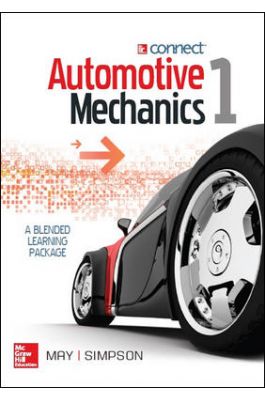
Automotive Mechanics 1 Ed By May - Test Bank

Automotive Mechanics 1 Ed By May - Test Bank   Instant Download - Complete Test Bank With Answers     Sample Questions Are Posted Below   Chapter 05 Testbank Student: ___________________________________________________________________________ What are feeler gauges and what are they used for? Feeler gauges are strips or blades of hardened steel that are ground or rolled …

$19.99

Automotive Mechanics 1 Ed By May – Test Bank


Instant Download – Complete Test Bank With Answers


Sample Questions Are Posted Below


Chapter 05 Testbank

Student: ___________________________________________________________________________

What are feeler gauges and what are they used for?

Feeler gauges are strips or blades of hardened steel that are ground or rolled to an accurate thickness. They are usually supplied in sets with a number of blades. Each blade is marked with its thickness in millimetres. They can be used singly, or two or more blades can be used together to obtain the required thickness. Feeler gauges are used to measure small clearances, such as tappet clearances. With the correct clearance, the feeler gauge should slide between the two parts with a slight resistance.

Feeler gauges are strips or blades of hardened steel that are forged to an accurate thickness. They are usually supplied in sets with a number of blades. Each blade is marked with its thickness in millimetres. They can be used singly, or two or more blades can be used together to obtain the required thickness. Feeler gauges are used to measure larger clearances, such as brake pedal free travel and disc rotor runout.

Feeler gauges are strips or blades of hardened steel that are ground or rolled to an accurate thickness. They are usually supplied in sets with no number on the blades. Each blade has to be measured using a micrometer to determine its thickness. They can only be used singly to obtain the required thickness. Feeler gauges are used to measure small clearances, such as tappet clearances.

All Answers are correct.


What are outside calipers, and what is the correct way to use them?

All answers are correct.

When the calipers have been adjusted to size, they are held against a steel rule to read the measurement.

Calipers can also be used to compare the sizes of two parts.

Outside calipers are normally used to measure the diameter of a shaft.

The calipers should be adjusted to slip over the shaft with a slight resistance. They should not be forced because this would spring the legs and prevent an accurate reading.


Are the three steps to reading a metric micrometer listed correctly below?

Step 1 – From the sleeve, read the number of whole-millimetre divisions that are visible on the main scale above the datum line.

Step 2 – Add to this a half-millimetre division if one is visible on the main scale below the datum line.

Step 3 – From the thimble, note the division that coincides with the datum line and add this to the previous readings.

True    False


  1. Feeler gauges may be used to accurately measure length.
    True    False


  1. Inside and outside calipers are used in conjunction with a steel rule.
    True    False


  1. Micrometers are used for measuring accurately.
    True    False


  1. Types of micrometers do not include depth micrometers.
    True    False


  1. When reading a micrometer, the datum line is read last.
    True    False


A scriber is a piece of round, hard steel about 3 mm in diameter with a long sharp point. It is used to draw lines or marks on the surface of the work.

True    False


Surfaces such as the face of a cylinder head are checked along their length and also diagonally using a straightedge.

True    False


If a surface is warped, a feeler gauge will slide under a straightedge without resistance. Different thicknesses of feeler gauges can be used to determine the amount by which the component is warped.

True    False


Plastigage is used in conjunction with a micrometer to achieve an accurate measurement.

True    False


Specifications for components are provided in service manuals.

True    False


A steel rule is the basic measuring instrument. When used on its edge, a steel rule can be used to check the flatness of a surface.

True    False


  1. A vernier micrometer:
    A.  is more accurate than a normal micrometer
    B.  is as accurate as a vernier caliper
    C.  is less accurate than a normal micrometer
    D.  is able to slide open


Which statement is NOT correct?

  1. Micrometers should be handled carefully.
    B. Micrometers should be left with a gap when not in use.
    C. Micrometers need to be checked for accuracy.
    D. Micrometers should be closed tightly.


  1. A dial gauge is:
    A.

a vernier caliper with a dial attached

  1. a tool for repairing gauges
    C. an accurate tool for measuring gauges
    D. an accurate gauge for measuring variations


  1. A dial gauge cannot measure:
    A. piston position
    B. valve clearance
    C. shaft endplay
    D. flywheel runout


  1. A depth gauge could be used for:
    A. measuring remaining tyre tread depth
    B. zeroing a micrometer
    C. calculating the depth of remaining fuel in a tank
    D. measuring the distance between two rockers


  1. Try-squares are sometimes assisted by:
    A. using them with light
    B. dial gauges
    C.

Jennie calipers

  1. using a protractor


  1. A combination set would consist of which of the following?
    A. A protractor
    B. All of the options given here are correct.
    C. A square head
    D. A ‘V’ head


  1. A straight edge is:
    A. another name for a surface plate
    B. the perimeter of a picture frame
    C. a wooden ruler used with light
    D. a special tool requiring the use of a feeler gauge for accuracy


  1. A surface plate is made of:
    A. flat steel plate with laminated shims
    B. a round steel turntable
    C. cast aluminium with wheels
    D. cast iron with strengthening ribs


  1. To check a cylindrical bar for runout, we would use:
    A. a plumb bob and ‘V’ blocks
    B. a surface plate and feeler gauges
    C. ‘V’ blocks and a dial gauge
    D. a dial gauge and feeler gauges


  1. Plastigage is a:
    A. plastic vernier
    B. flexible depth gauge
    C. recyclable measuring tool
    D.

plastic material that is used to check the clearance of engine bearings


Checking a part against its specifications will determine whether it is?

unserviceable and should be renewed

suitable for further use

all of these answers

serviceable


An inside micrometer can be used to measure:

a brake disc rotor

a warped cylinder head

a valve guide

a cylinder bore


When using an inside micrometer to measure a cylinder bore, what are the two parts that come in contact with the bore?

Anvil and spindle.

Anvil and thimble.

Needle and thimble.

Spindle and thimble.


Chapter 05 Testbank Key

  1. (p.  )

What are feeler gauges and what are they used for?

Feeler gauges are strips or blades of hardened steel that are ground or rolled to an accurate thickness. They are usually supplied in sets with a number of blades. Each blade is marked with its thickness in millimetres. They can be used singly, or two or more blades can be used together to obtain the required thickness. Feeler gauges are used to measure small clearances, such as tappet clearances. With the correct clearance, the feeler gauge should slide between the two parts with a slight resistance.

Feeler gauges are strips or blades of hardened steel that are forged to an accurate thickness. They are usually supplied in sets with a number of blades. Each blade is marked with its thickness in millimetres. They can be used singly, or two or more blades can be used together to obtain the required thickness. Feeler gauges are used to measure larger clearances, such as brake pedal free travel and disc rotor runout.

Feeler gauges are strips or blades of hardened steel that are ground or rolled to an accurate thickness. They are usually supplied in sets with no number on the blades. Each blade has to be measured using a micrometer to determine its thickness. They can only be used singly to obtain the required thickness. Feeler gauges are used to measure small clearances, such as tappet clearances.

All Answers are correct.


Competency: AURTTK2001 Use and maintain measuring equipment in an automotive workplace
Difficulty: Hard
Section: Measuring and checking

  1. (p.  )

What are outside calipers, and what is the correct way to use them?

All answers are correct.

When the calipers have been adjusted to size, they are held against a steel rule to read the measurement.

Calipers can also be used to compare the sizes of two parts.

Outside calipers are normally used to measure the diameter of a shaft.

The calipers should be adjusted to slip over the shaft with a slight resistance. They should not be forced because this would spring the legs and prevent an accurate reading.


Competency: AURTTK2001 Use and maintain measuring equipment in an automotive workplace
Difficulty: Medium
Section: Measuring and checking

Are the three steps to reading a metric micrometer listed correctly below?

Step 1 – From the sleeve, read the number of whole-millimetre divisions that are visible on the main scale above the datum line.

Step 2 – Add to this a half-millimetre division if one is visible on the main scale below the datum line.

Step 3 – From the thimble, note the division that coincides with the datum line and add this to the previous readings.

TRUE


Competency: AURTTK2001 Use and maintain measuring equipment in an automotive workplace
Difficulty: Medium
Section: Measuring and checking

  1. (p.  )Feeler gauges may be used to accurately measure length.
    FALSE


Competency: AURTTK2001 Use and maintain measuring equipment in an automotive workplace
Difficulty: Medium
Section: Measuring and checking

  1. (p.  )Inside and outside calipers are used in conjunction with a steel rule.
    TRUE


Competency: AURTTK2001 Use and maintain measuring equipment in an automotive workplace
Difficulty: Easy
Section: Measuring and checking

  1. (p.  )Micrometers are used for measuring accurately.
    TRUE


Competency: AURTTK2001 Use and maintain measuring equipment in an automotive workplace
Difficulty: Medium
Section: Measuring and checking

  1. (p.  )Types of micrometers do not include depth micrometers.
    FALSE


Competency: AURTTK2001 Use and maintain measuring equipment in an automotive workplace
Difficulty: Medium
Section: Measuring and checking

  1. (p.  )When reading a micrometer, the datum line is read last.
    FALSE


Competency: AURTTK2001 Use and maintain measuring equipment in an automotive workplace
Difficulty: Medium
Section: Measuring and checking

  1. (p.  )

A scriber is a piece of round, hard steel about 3 mm in diameter with a long sharp point. It is used to draw lines or marks on the surface of the work.

TRUE


Competency: AURTTK2001 Use and maintain measuring equipment in an automotive workplace
Difficulty: Easy
Section: Measuring and checking

  1. (p.  )

Surfaces such as the face of a cylinder head are checked along their length and also diagonally using a straightedge.

TRUE


Competency: AURTTK2001 Use and maintain measuring equipment in an automotive workplace
Difficulty: Easy
Section: Measuring and checking

  1. (p.  )

If a surface is warped, a feeler gauge will slide under a straightedge without resistance. Different thicknesses of feeler gauges can be used to determine the amount by which the component is warped.

TRUE


Competency: AURTTK2001 Use and maintain measuring equipment in an automotive workplace
Difficulty: Easy
Section: Measuring and checking

  1. (p.  )

Plastigage is used in conjunction with a micrometer to achieve an accurate measurement.

FALSE


Competency: AURTTK2001 Use and maintain measuring equipment in an automotive workplace
Difficulty: Easy
Section: Measuring and checking

  1. (p.  )

Specifications for components are provided in service manuals.

TRUE


Competency: AURTTK2001 Use and maintain measuring equipment in an automotive workplace
Difficulty: Easy
Section: Measuring and checking

  1. (p.  )

A steel rule is the basic measuring instrument. When used on its edge, a steel rule can be used to check the flatness of a surface.

TRUE


Competency: AURTTK2001 Use and maintain measuring equipment in an automotive workplace
Difficulty: Easy
Section: Measuring and checking

  1. (p.  ) A vernier micrometer:
    A.  is more accurate than a normal micrometer
    B.  is as accurate as a vernier caliper
    C.  is less accurate than a normal micrometer
    D.  is able to slide open


Competency: AURTTK2001 Use and maintain measuring equipment in an automotive workplace
Difficulty: Hard
Section: Measuring and checking

  1. (p.  )

Which statement is NOT correct?

  1. Micrometers should be handled carefully.
    B. Micrometers should be left with a gap when not in use.
    C. Micrometers need to be checked for accuracy.
    D. Micrometers should be closed tightly.


Competency: AURTTK2001 Use and maintain measuring equipment in an automotive workplace
Difficulty: Medium
Section: Measuring and checking

  1. (p.  )A dial gauge is:
    A.

a vernier caliper with a dial attached

  1. a tool for repairing gauges
    C.an accurate tool for measuring gauges
    D. an accurate gauge for measuring variations


Competency: AURTTK2001 Use and maintain measuring equipment in an automotive workplace
Difficulty: Medium
Section: Measuring and checking

  1. (p.  )A dial gauge cannot measure:
    A. piston position
    B. valve clearance
    C. shaft endplay
    D. flywheel runout


Competency: AURTTK2001 Use and maintain measuring equipment in an automotive workplace
Difficulty: Medium
Section: Measuring and checking

  1. (p.  )A depth gauge could be used for:
    A. measuring remaining tyre tread depth
    B. zeroing a micrometer
    C. calculating the depth of remaining fuel in a tank
    D. measuring the distance between two rockers


Competency: AURTTK2001 Use and maintain measuring equipment in an automotive workplace
Difficulty: Easy
Section: Measuring and checking

  1. (p.  )Try-squares are sometimes assisted by:
    A. using them with light
    B. dial gauges
    C.

Jennie calipers

  1. using a protractor


Competency: AURTTK2001 Use and maintain measuring equipment in an automotive workplace
Difficulty: Hard
Section: Measuring and checking

  1. (p.  )A combination set would consist of which of the following?
    A. A protractor
    B. All of the options given here are correct.
    C. A square head
    D. A ‘V’ head


Competency: AURTTK2001 Use and maintain measuring equipment in an automotive workplace
Difficulty: Medium
Section: Measuring and checking

  1. (p.  )A straight edge is:
    A. another name for a surface plate
    B. the perimeter of a picture frame
    C. a wooden ruler used with light
    D. a special tool requiring the use of a feeler gauge for accuracy


Competency: AURTTK2001 Use and maintain measuring equipment in an automotive workplace
Difficulty: Easy
Section: Measuring and checking

  1. (p.  )A surface plate is made of:
    A. flat steel plate with laminated shims
    B. a round steel turntable
    C. cast aluminium with wheels
    D. cast iron with strengthening ribs


Competency: AURTTK2001 Use and maintain measuring equipment in an automotive workplace
Difficulty: Medium
Section: Measuring and checking

  1. (p.  )To check a cylindrical bar for runout, we would use:
    A. a plumb bob and ‘V’ blocks
    B. a surface plate and feeler gauges
    C. ‘V’ blocks and a dial gauge
    D. a dial gauge and feeler gauges


Competency: AURTTK2001 Use and maintain measuring equipment in an automotive workplace
Difficulty: Medium
Section: Measuring and checking

  1. (p.  )Plastigage is a:
    A. plastic vernier
    B. flexible depth gauge
    C. recyclable measuring tool
    D.

plastic material that is used to check the clearance of engine bearings


Competency: AURTTK2001 Use and maintain measuring equipment in an automotive workplace
Difficulty: Medium
Section: Measuring and checking

  1. (p.  )

Checking a part against its specifications will determine whether it is?

unserviceable and should be renewed

suitable for further use

all of these answers

serviceable


Competency: AURTTK2001 Use and maintain measuring equipment in an automotive workplace
Difficulty: Medium
Section: Measuring and checking

  1. (p.  )

An inside micrometer can be used to measure:

a brake disc rotor

a warped cylinder head

a valve guide

a cylinder bore


Competency: AURTTK2001 Use and maintain measuring equipment in an automotive workplace
Difficulty: Medium
Section: Measuring and checking

  1. (p.  )

When using an inside micrometer to measure a cylinder bore, what are the two parts that come in contact with the bore?

Anvil and spindle.

Anvil and thimble.

Needle and thimble.

Spindle and thimble.


Competency: AURTTK2001 Use and maintain measuring equipment in an automotive workplace
Difficulty: Hard
Section: Measuring and checking


Chapter 05 Testbank Summary

Category # of Questions
Competency: AURTTK2001 Use and maintain measuring equipment in an automotive workplace 28
Difficulty: Easy 9
Difficulty: Hard 4
Difficulty: Medium 15
Section: Measuring and checking 28


Additional information

Add Review

Your email address will not be published. Required fields are marked *