No products in the cart.

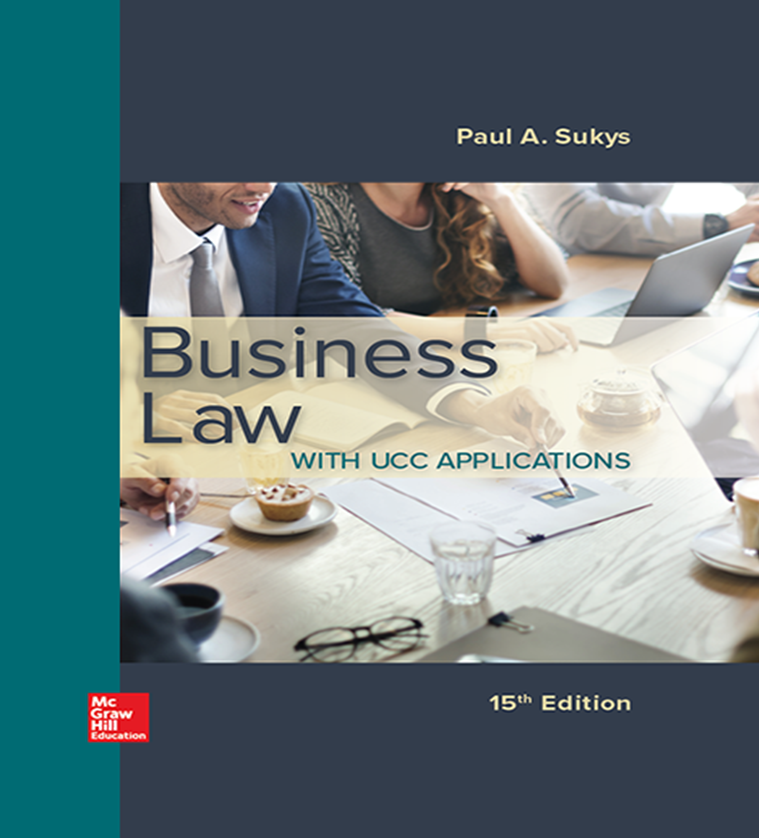
Business Law with UCC Applications Paul Sukys 15e - Test Bank

Business Law with UCC Applications Paul Sukys 15e - Test Bank   Instant Download - Complete Test Bank With Answers     Sample Questions Are Posted Below   Business Law with UCC Applications, 15e (Sukys) Chapter 5   Criminal Law and Cybercrimes   1) The U.S. Constitution grants the federal government express authority to enact criminal …

$19.99

Business Law with UCC Applications Paul Sukys 15e – Test Bank


Instant Download – Complete Test Bank With Answers


Sample Questions Are Posted Below


Business Law with UCC Applications, 15e (Sukys)

Chapter 5   Criminal Law and Cybercrimes


1) The U.S. Constitution grants the federal government express authority to enact criminal law statutes.


Answer:  FALSE

Explanation:  While the constitution does not give express authority, the federal government does enact criminal law and has set up the Federal Bureau of Investigation (FBI) as a national police force. The President also has cabinet-level criminal enforcement via the U.S. Attorney General and the Department of Homeland Security.

Difficulty: 2 Medium

Topic:  Definition and Classes of Crimes

Learning Objective:  05-01 Explain the purpose of criminal law.

Bloom’s:  Understand

AACSB:  Reflective Thinking

Accessibility:  Keyboard Navigation


2) A misdemeanor is a crime punishable by death/imprisonment in a federal/state prison for a term exceeding one year.


Answer:  FALSE

Explanation:  No, a felony (not a misdemeanor) is a crime punishable by death or imprisonment in a federal or a state prison for a term exceeding one year. Some felonies are also punishable by fines.

Difficulty: 2 Medium

Topic:  Definition and Classes of Crimes

Learning Objective:  05-02 Enumerate the various categories and classes of crimes.

Bloom’s:  Understand

AACSB:  Reflective Thinking

Accessibility:  Keyboard Navigation


3) Under American law, a crime can be committed regardless of whether an act has occurred.


Answer:  FALSE

Explanation:  Under American law, a crime cannot be committed unless some act has occurred. In other words, an individual cannot be charged with a crime for merely thinking of a criminal act.

Difficulty: 2 Medium

Topic:  Definition and Classes of Crimes

Learning Objective:  05-01 Explain the purpose of criminal law.

Bloom’s:  Understand

AACSB:  Reflective Thinking

Accessibility:  Keyboard Navigation


4) A person who cleans a hunting rifle without checking to see if it is loaded is acting with recklessness because that person has not bothered to look for any possible negative consequences that could result from those actions.


Answer:  FALSE

Explanation:  This is an example of criminal negligence. Recklessness involves a perverse disregard of a known risk of negative consequences. People act recklessly when they are indifferent to a serious risk that they know exists.

Difficulty: 3 Hard

Topic:  Elements of a Crime

Learning Objective:  05-04 Identify the four mental states to be found in the criminal code.

Bloom’s:  Apply

AACSB:  Analytical Thinking

Accessibility:  Keyboard Navigation


5) An individual can be convicted for a criminal act even if the prosecutor cannot prove the defendant had an evil motive for committing the crime.


Answer:  TRUE

Explanation:  Establishing motive may help the prosecution persuade the jury that the accused is guilty, but proving an evil motive is not necessary for a criminal conviction.

Difficulty: 3 Hard

Topic:  Elements of a Crime

Learning Objective:  05-03 Describe the nature of an act within the concept of criminal liability.

Bloom’s:  Evaluate

AACSB:  Analytical Thinking

Accessibility:  Keyboard Navigation


6) Experts who believe in deterrence say that the criminal process should be presented in a public way, so that the public will learn the difference between acceptable and unacceptable behavior.


Answer:  FALSE

Explanation:  Those experts who believe in deterrence advocate long and difficult prison sentences, so that other people in society are dissuaded from committing similar offenses and thus suffering the same fate.

Difficulty: 2 Medium

Topic:  Elements of a Crime

Learning Objective:  05-06 Explain the various theories of punishment within criminal law.

Bloom’s:  Understand

AACSB:  Analytical Thinking

Accessibility:  Keyboard Navigation


7) Alfred drives his car very fast in a school zone when the school is releasing students at the end of the school day. A student dies when he is hit by Alfred’s car. Alfred has committed manslaughter with premeditation.


Answer:  FALSE

Explanation:  Some states specifically define premeditation as an action that results from the criminal defendant’s “prior calculation and design.” That does not appear to be the case here. Rather Alfred is most likely culpable of involuntary manslaughter which occurs when a killing results from negligence.

Difficulty: 3 Hard

Topic:  Specific Crimes

Learning Objective:  05-07 Enumerate and explain the elements of several key crimes.

Bloom’s:  Apply

AACSB:  Analytical Thinking

Accessibility:  Keyboard Navigation


8) A doctor who injects an antibiotic into a patient’s arm without the patient’s consent may be liable for assault.


Answer:  FALSE

Explanation:  This is not an assault, but rather a battery. An assault is the threat of harm to a person. A battery is a crime in which the offender causes actual physical harm to the victim.

Difficulty: 2 Medium

Topic:  Specific Crimes

Learning Objective:  05-07 Enumerate and explain the elements of several key crimes.

Bloom’s:  Understand

AACSB:  Analytical Thinking

Accessibility:  Keyboard Navigation


9) Gabriel points a gun at a store clerk to frighten the clerk. This is an example of assault and battery.


Answer:  FALSE

Explanation:  Pointing the gun is only an assault, not an assault and battery. Assault is the threat of harm to the victim, in this case pointing the gun. Although some states , however, altered the actual language of the law and have completely eliminated the term battery and replaced it with the word assault.

Difficulty: 3 Hard

Topic:  Specific Crimes

Learning Objective:  05-07 Enumerate and explain the elements of several key crimes.

Bloom’s:  Apply

AACSB:  Analytical Thinking

Accessibility:  Keyboard Navigation


10) George’s forced entry through a window along with his intention to rob a safe establishes the act of aggravated burglary.


Answer:  FALSE

Explanation:  Aggravated burglary includes everything that burglary includes but adds the use of a deadly weapon, the infliction of harm, the threat of harm, or the attempt to harm another person.

Difficulty: 2 Medium

Topic:  Specific Crimes

Learning Objective:  05-07 Enumerate and explain the elements of several key crimes.

Bloom’s:  Understand

AACSB:  Reflective Thinking

Accessibility:  Keyboard Navigation


11) In the Opening Case Round 3, United States v. Hearst, the authors state that Hearst’s attorney, F. Lee Bailey, argued that Hearst was not guilty of armed (or aggravated) robbery because no one was injured in the bank holdup.


Answer:  FALSE

Explanation:  Hearst engaged in the elements of armed robbery: (1) the robbery was photographed on the bank’s security cameras, (2) Hearst and her accomplices were seen carrying automatic weapons and were heard shouting commands at customers and bank employees, (3) on their way out of the bank, the robbers shot two people, and (4) the net amount stolen from the bank was $10,960.

Difficulty: 3 Hard

Topic:  Specific Crimes

Learning Objective:  05-07 Enumerate and explain the elements of several key crimes.

Bloom’s:  Evaluate

AACSB:  Analytical Thinking

Accessibility:  Keyboard Navigation


12) The RICO Act covers only serious crimes, such as arson and robbery.


Answer:  FALSE

Explanation:  To prevent a criminal invasion of legitimate businesses, Congress enacted the Racketeer Influenced and Corrupt Organizations (RICO) Act. Many of the offenses that fall within the scope of “racketeering activity”—such as arson and robbery—are serious crimes. Others, however, are less sinister. For example, both mail fraud and wire fraud fall within the definition of racketeering activities.

Difficulty: 2 Medium

Topic:  Specific Crimes

Learning Objective:  05-07 Enumerate and explain the elements of several key crimes.

Bloom’s:  Understand

AACSB:  Reflective Thinking

Accessibility:  Keyboard Navigation


13) Stan threatens to use his computer skills to shut down the computers of the U.S. air traffic control system unless he is paid money. Stan is likely committing cyber-stalking.


Answer:  FALSE

Explanation:  Stan is most likely committing the crime of cyber-terrorism which involves using a computer to disrupt or destroy one of the critical elements of the nation’s cyber-infrastructure, such as the power grid, the air traffic control system, water and sanitation plants, the ground transportation system, a harbor traffic-control network, a cell tower network, the nation’s stock exchange, the banking system, hospital back-up generator systems, or the national defense system.

Difficulty: 3 Hard

Topic:  Cybercrimes

Learning Objective:  05-08 Define and explain the nature of cybercrimes.

Bloom’s:  Analyze

AACSB:  Analytical Thinking

Accessibility:  Keyboard Navigation


14) The Economic Espionage Act (EEA) is designed to protect against electronic- vandalism.


Answer:  FALSE

Explanation:  The Economic Espionage Act (EEA) is designed to protect trade secrets. A trade secret is a plan, process, or device that is used in a business and is known only to those employees who need to know the secret to carry out their work. Examples of trade secrets include customer lists, chemical formulas, manufacturing processes, marketing techniques, pricing methods, and food or beverage recipes. The EEA outlaws the downloading of trade secrets.

Difficulty: 2 Medium

Topic:  Cybercrimes

Learning Objective:  05-07 Enumerate and explain the elements of several key crimes.

Bloom’s:  Understand

AACSB:  Reflective Thinking

Accessibility:  Keyboard Navigation

15) Under the irresistible impulse test a defendant can be found not guilty by reason of insanity if, at the time the criminal act was committed, he or she was suffering from a mental disease that was so serious that the defendant did not know the nature of the act or did not know that act was wrong.


Answer:  FALSE

Explanation:  This is a statement of the M’Naughten Rule. The irresistible impulse test, on the other hand, holds that criminal defendants can be found not guilty by reason of insanity if, at the time of the offense, they were stricken with a mental disease that prevented them from knowing right from wrong or that compelled them to commit the crime.

Difficulty: 2 Medium

Topic:  Defenses to Criminal Liability

Learning Objective:  05-09 Explain the standards for the insanity defense in criminal law.

Bloom’s:  Understand

AACSB:  Reflective Thinking

Accessibility:  Keyboard Navigation


16) Under the Coercive Persuasion test, a victim manifests an affection and emotional sympathy for the kidnapper.


Answer:  FALSE

Explanation:  No, this is the Stockholm Syndrome which is generally manifested by a victim’s identification with, and emotional affection for, a kidnapper that leads the victim to commit particular acts. The coercive persuasion test involves a perverse relationship between a dominant party and a victim that transforms the personality of the victim so that the victim’s identity undergoes a radical change.

Difficulty: 2 Medium

Topic:  Defenses to Criminal Liability

Learning Objective:  05-09 Explain the standards for the insanity defense in criminal law.

Bloom’s:  Understand

AACSB:  Analytical Thinking

Accessibility:  Keyboard Navigation

17) If a law enforcement officer induces a law-abiding citizen to commit a crime that he or she would not otherwise commit, the defendant may have the right to use self-defense.


Answer:  FALSE

Explanation:  If a law enforcement officer induces a law-abiding citizen to commit a crime, entrapment—not self-defense—may be used as a defense. The person using the entrapment defense must show that the crime would not have been committed had it not been for the inducement of the officer.

Difficulty: 2 Medium

Topic:  Defenses to Criminal Liability

Learning Objective:  05-10 Outline the requirements of entrapment as a defense in criminal law.

Bloom’s:  Understand

AACSB:  Reflective Thinking

Accessibility:  Keyboard Navigation


18) A person has a duty to retreat before using force, even if the attack occurs in her own home.


Answer:  FALSE

Explanation:  In some states, the person claiming self-defense must retreat, if possible, before resorting to force. However, a person does not have a duty to retreat before using force if the attack occurs in his or her own home. Some states have stand-your-ground provisions within their common law tradition. A stand-your-ground statute extends self-defense by eliminating any requirement to retreat, even outside one’s home or vehicle. Therefore, as long as an individual is in a place that he or she has the legal right to be, then no retreat is necessary under the law.

Difficulty: 2 Medium

Topic:  Defenses to Criminal Liability

Learning Objective:  05-10 Outline the requirements of entrapment as a defense in criminal law.

Bloom’s:  Understand

AACSB:  Analytical Thinking

Accessibility:  Keyboard Navigation

19) Patricia believes she could not be personally charged for gambling if she creates a lottery to raise money for her favorite charity. This could be used as a defense to being prosecuted for unlawful gambling.


Answer:  FALSE

Explanation:  It is not a defense for an accused to say that he or she did not know this particular conduct was prohibited by law. Nor is it a defense to a gambling charge for the defendant to argue that he or she did not know that the gambling law applied to him or her.

Difficulty: 3 Hard

Topic:  Defenses to Criminal Liability

Learning Objective:  05-10 Outline the requirements of entrapment as a defense in criminal law.

Bloom’s:  Apply

AACSB:  Analytical Thinking

Accessibility:  Keyboard Navigation


20) If a spouse had no idea that she was in danger of death or severe bodily injury, she may use the battered spouse syndrome as a form of self-defense in some courts.


Answer:  FALSE

Explanation:  No. The battered spouse syndrome can be used only if the spouse had good reason to believe she/he was in danger of death or severe injury.

Difficulty: 3 Hard

Topic:  Defenses to Criminal Liability

Learning Objective:  05-10 Outline the requirements of entrapment as a defense in criminal law.

Bloom’s:  Apply

AACSB:  Reflective Thinking

Accessibility:  Keyboard Navigation


21) Which of the following is true of criminal law under the American law system?

  1. A) When a crime is committed, the victim has a cause of action against the accused and is permitted to recover money as compensation from the defendant.
  2. B) In a criminal case, the prosecutor or district attorney is required to prove the criminal defendant guilty by a preponderance of the evidence.
  3. C) Defendants are protected from being tried for a criminal offense and then being sued under tort law for that same wrongful act.
  4. D) If a defendant is accused of an offense that can be designated as two different crimes, he or she can be tried in two different courts.


Answer:  D

Explanation:  A single offense may trigger two prosecutions if the offense can be designated as two different crimes and can be tried in two different courts. This does not violate the double jeopardy described in the U.S. Constitution. Thus, it is possible, for example, for a police officer to be tried in a state court for assaulting a suspect and be tried in federal court for depriving that same suspect of his civil rights.

Difficulty: 3 Hard

Topic:  Definition and Classes of Crimes

Learning Objective:  05-01 Explain the purpose of criminal law.

Bloom’s:  Evaluate

AACSB:  Reflective Thinking

Accessibility:  Keyboard Navigation


22) A city ordinance allowed the police to arrest young men who were loitering in any public place with no apparent purpose and failed to disperse when requested to do so by the police. William was arrested under the ordinance. What is William’s best legal challenge to his arrest?

  1. A) The ordinance has no connection to public safety.
  2. B) The ordinance is void for vagueness.
  3. C) The ordinance gives power to the police.
  4. D) The ordinance contains no reference to a state of mind.


Answer:  B

Explanation:  Courts have frequently held statutes that outlaw a status, such as drug addiction or vagrancy, to be void for vagueness. The language of a criminal statute is overbroad if the courts cannot determine what specific activity the legislature intended to outlaw.

Difficulty: 3 Hard

Topic:  Elements of a Crime

Learning Objective:  05-03 Describe the nature of an act within the concept of criminal liability.

Bloom’s:  Apply

AACSB:  Analytical Thinking

Accessibility:  Keyboard Navigation


23) Which of the following would be considered a criminal act?

  1. A) Martin had a heart attack while driving his semitrailer on a highway, causing a head-on collision with another trailer, and resulting in a 40-car pileup and 17 deaths.
  2. B) Last summer, Sam made and sold crack cocaine and marijuana to teenagers in his neighborhood, leading to drug network and addiction amongst teenagers of that locale.
  3. C) Karen, obsessed with thoughts of her husband’s affair with his colleague, wrote in her diary detailed plots of how to kill the woman.
  4. D) Helen thinks she cannot get through each day without taking LSD, a psychedelic drug.


Answer:  B

Explanation:  The two elements necessary to create criminal liability are a criminal act and the required state of mind. Even a small act that appears by itself to be innocent can, in the proper context, become an illegal act.

Difficulty: 3 Hard

Topic:  Definition and Classes of Crimes

Learning Objective:  05-03 Describe the nature of an act within the concept of criminal liability.

Bloom’s:  Evaluate

AACSB:  Analytical Thinking

Accessibility:  Keyboard Navigation


24) Two drivers challenge each other to a drag race on a public highway. This is an example of acting with:

  1. A) a purpose.
  2. B) knowledge
  3. C) recklessness.
  4. D) negligence.


Answer:  C

Explanation:  Recklessness involves a perverse disregard of a known risk of negative consequences. The drivers have disregarded the possible serious consequences of their decision to engage in an illegal drag race.

Difficulty: 3 Hard

Topic:  Elements of a Crime

Learning Objective:  05-04 Identify the four mental states to be found in the criminal code.

Bloom’s:  Analyze

AACSB:  Analytical Thinking

Accessibility:  Keyboard Navigation


25) A child is killed by the violent behavior of his mother’s boyfriend. The mother was aware of the possible danger her boyfriend posed to her son, yet failed to take steps to prevent or reduce the risk of harm to her son. She can be convicted of a crime due to which of the following requisite states of mind?

  1. A) She acted with negligence.
  2. B) She acted with knowledge.
  3. C) She acted with recklessness.
  4. D) She acted with purpose.


Answer:  A

Explanation:  People act with negligence when they fail to see the possible negative consequences of their actions. A person who cleans a hunting rifle without checking to see if it is loaded is acting with negligence, because that person has not bothered to look for any possible negative consequences that could result from those actions.

Difficulty: 3 Hard

Topic:  Elements of a Crime

Learning Objective:  05-04 Identify the four mental states to be found in the criminal code.

Bloom’s:  Analyze

AACSB:  Analytical Thinking

Accessibility:  Keyboard Navigation


26) Which of the following types of criminal homicide involves killing someone with premeditation, killing in a cruel way such as with torture, or killing while committing a major crime?

  1. A) Second-degree murder
  2. B) Involuntary manslaughter
  3. C) First-degree murder
  4. D) Voluntary manslaughter


Answer:  C

Explanation:  Individuals act with purpose when they intend to cause the result that, in fact, occurs. However, intent should not be confused with premeditation, which is often an added condition in the case of aggravated or first-degree murder. Some states specifically define premeditation as an action that results from the criminal defendant’s “prior calculation and design.”

Difficulty: 3 Hard

Topic:  Specific Crimes

Learning Objective:  05-07 Enumerate and explain the elements of several key crimes.

Bloom’s:  Analyze

AACSB:  Analytical Thinking

Accessibility:  Keyboard Navigation


27) A robber kills a convenience store clerk and escapes with just $5. Which of the following types of homicide best fits the facts?

  1. A) Second-degree murder
  2. B) First-degree murder
  3. C) Voluntary manslaughter
  4. D) Involuntary manslaughter


Answer:  B

Explanation:  In general, most states define first-degree murder to include one of the following circumstances: killing someone with premeditation (thinking about it and planning the homicide in advance with “prior calculation and design”) and/or killing someone while committing a major crime, such as rape, robbery, or kidnapping.

Difficulty: 3 Hard

Topic:  Specific Crimes

Learning Objective:  05-07 Enumerate and explain the elements of several key crimes.

Bloom’s:  Analyze

AACSB:  Analytical Thinking

Accessibility:  Keyboard Navigation


28) Joe, driving while intoxicated, caused a traffic accident that killed a passenger in his car. Joe may be charged with:

  1. A) involuntary manslaughter.
  2. B) first-degree murder.
  3. C) second-degree murder.
  4. D) aggravated murder.


Answer:  A

Explanation:  A killing that results when a person is in a state of extreme fright, terror, anger, or blind rage that destroys the ability to reason is known as voluntary manslaughter. When the killing results from negligence, it is usually called involuntary manslaughter.

Difficulty: 3 Hard

Topic:  Specific Crimes

Learning Objective:  05-07 Enumerate and explain the elements of several key crimes.

Bloom’s:  Evaluate

AACSB:  Analytical Thinking

Accessibility:  Keyboard Navigation


29) The term ________ has been used to describe a crime in which the offender causes actual physical harm to the victim.

  1. A) arson
  2. B) aggravated menacing
  3. C) violence
  4. D) battery


Answer:  D

Explanation:  Throughout most of English and American history, the term battery has been used to describe a crime in which the offender causes actual physical harm to the victim.

Difficulty: 2 Medium

Topic:  Specific Crimes

Learning Objective:  05-07 Enumerate and explain the elements of several key crimes.

Bloom’s:  Understand

AACSB:  Reflective Thinking

Accessibility:  Keyboard Navigation


30) A statute that made burning a cross to cause fear a criminal offence would be an example of what type of crime?

  1. A) Assault
  2. B) Hate speech
  3. C) Arson
  4. D) Terrorism


Answer:  B

Explanation:  Many legislative bodies have attempted to criminalize the use of certain symbols, writings, and speech intended to provoke outrage or fear on the basis of race, religion, color, or gender. These statutes and ordinances are frequently referred to as laws against hate speech.

Difficulty: 3 Hard

Topic:  Specific Crimes

Learning Objective:  05-07 Enumerate and explain the elements of several key crimes.

Bloom’s:  Analyze

AACSB:  Reflective Thinking

Accessibility:  Keyboard Navigation


31) A shoplifter steals a can of soda and tries to escape. He threatens and fights the clerk when confronted. This is an example of:

  1. A) burglary.
  2. B) extortion.
  3. C) embezzlement.
  4. D) robbery.


Answer:  D

Explanation:  Robbery can involve attempting to commit or actually committing a theft by inflicting, or attempting to inflict, physical harm on another person.

Difficulty: 2 Medium

Topic:  Specific Crimes

Learning Objective:  05-07 Enumerate and explain the elements of several key crimes.

Bloom’s:  Understand

AACSB:  Analytical Thinking

Accessibility:  Keyboard Navigation


32) Myra, the assistant accountant at Multibusiness, Inc., decides to transfer $5,000 from a Multibusiness account to her personal account in order to pay some personal medical expenses. Myra plans to repay the money as soon as she receives reimbursement from her health insurance. Myra has committed:

  1. A) larceny.
  2. B) forgery.
  3. C) embezzlement.


Answer:  C

Explanation:  In many jurisdictions, embezzlement is defined as wrongfully taking property or funds that have been entrusted to the care of the offender. Unlike similar offenses such as theft, robbery, and burglary, a fundamental element of embezzlement is that the embezzler had control over the property or the funds that were wrongfully taken.

Difficulty: 3 Hard

Topic:  Specific Crimes

Learning Objective:  05-07 Enumerate and explain the elements of several key crimes.

Bloom’s:  Analyze

AACSB:  Analytical Thinking

Accessibility:  Keyboard Navigation


33) ________ is analogous to forgery because it also involves the alteration or falsification of an object or a document with intent to defraud.

  1. A) Embezzlement
  2. B) Criminal simulation
  3. C) Passing bad checks
  4. D) Defrauding creditors


Answer:  B

Explanation:  Criminal simulation is analogous to forgery because it also involves the alteration or falsification of a document with intent to defraud. However, criminal simulation involves altering or falsifying art objects, antiques, photographs, films, tapes, recordings, and/or antiquities with the intent to defraud.

Difficulty: 2 Medium

Topic:  Specific Crimes

Learning Objective:  05-07 Enumerate and explain the elements of several key crimes.

Bloom’s:  Understand

AACSB:  Reflective Thinking

Accessibility:  Keyboard Navigation


34) Agnes, a convenience store cashier, takes $5 out of the register for every $100 she rings up and keeps it. Agnes could be arrested for:

  1. A) extortion.
  2. B) embezzlement.
  3. C) burglary.
  4. D) robbery.


Answer:  B

Explanation:  Embezzlement is defined as wrongfully taking property or funds that have been entrusted to the care of the offender. A fundamental element of embezzlement is that the embezzler had control over the property or the funds that were wrongfully taken. Thus, embezzlement often occurs in a business setting and frequently involves the employees of the victim.

Difficulty: 3 Hard

Topic:  Specific Crimes

Learning Objective:  05-07 Enumerate and explain the elements of several key crimes.

Bloom’s:  Analyze

AACSB:  Analytical Thinking

Accessibility:  Keyboard Navigation


35) Alvin has discovered how to duplicate subway fare cards, and has made several hundreds of them with the intention of defrauding people. Which of the following crimes has Alvin committed?

  1. A) Larceny by false pretenses
  2. B) Forgery
  3. C) Embezzlement
  4. D) Bribery


Answer:  B

Explanation:  It is forgery to possess or sell an altered or false writing with the intent to defraud. Some states have expressly added identity cards to their forgery statutes to emphasize the criminal nature of forged IDs. These states generally make it a crime to create, sell, use, or possess a false ID.

Difficulty: 3 Hard

Topic:  Specific Crimes

Learning Objective:  05-07 Enumerate and explain the elements of several key crimes.

Bloom’s:  Apply

AACSB:  Analytical Thinking

Accessibility:  Keyboard Navigation


36) ________ is the making of a false statement under oath.

  1. A) Perjury
  2. B) Dereliction of duty
  3. C) Intimidation
  4. D) Tampering with evidence


Answer:  A

Explanation:  Generally, perjury is defined as making a false statement under oath. In most cases, the fact that the perjured testimony is inadmissible as evidence makes no difference; the false statement is still perjury. However, a person cannot be convicted of perjury by a single witness.

Difficulty: 2 Medium

Topic:  Specific Crimes

Learning Objective:  05-07 Enumerate and explain the elements of several key crimes.

Bloom’s:  Understand

AACSB:  Analytical Thinking

Accessibility:  Keyboard Navigation


37) Tom enters a computer chat room attempting to contact children online with the intention of taking illegal advantage of them. This e-crime is known as:

  1. A) cyber-extortion.
  2. B) cyber-spoofing.
  3. C) cyber-stalking.
  4. D) cyber-fraud.


Answer:  C

Explanation:  Cyber-stalking, e-stalking, or electronic stalking involves targeting individuals for exploitation using computer connections.

Difficulty: 3 Hard

Topic:  Cybercrimes

Learning Objective:  05-08 Define and explain the nature of cybercrimes.

Bloom’s:  Evaluate

AACSB:  Analytical Thinking

Accessibility:  Keyboard Navigation


38) Mark enjoys hacking into the computer databases of companies, but never takes or damages any data. Mark has violated which of the following statutes?

  1. A) Access Device Fraud Act
  2. B) Computer Fraud and Abuse Act
  3. C) Wiretap Act
  4. D) Mark has not violated any statute, since there is no damage.


Answer:  B

Explanation:  The Computer Fraud and Abuse Act outlaws the following activities: obtaining national security information, compromising the confidentiality of a computer, trespassing in a government computer, accessing a computer to defraud, damaging a computer, damaging computer information, trafficking in passwords, and threatening to damage a computer.

Difficulty: 3 Hard

Topic:  Cybercrimes

Learning Objective:  05-08 Define and explain the nature of cybercrimes.

Bloom’s:  Apply

AACSB:  Analytical Thinking

Accessibility:  Keyboard Navigation


39) A criminal defendant is found to be suffering from a mental disease that is so serious she does not know the nature of her actions or the fact that the acts she commits are wrong. This describes which of the following tests?

  1. A) M’Naughten Rule
  2. B) Irresistible impulse test
  3. C) American Law Institute test
  4. D) The Durham test


Answer:  A

Explanation:  The oldest test of insanity is the M’Naughten Rule. Under this rule, a defendant can be found not guilty by reason of insanity (NGRI) if, at the time the criminal act was committed, he or she was suffering from a mental disease that was so serious that the defendant did not know the nature of the act or did not know that act was wrong.

Difficulty: 3 Hard

Topic:  Defenses to Criminal Liability

Learning Objective:  05-09 Explain the standards for the insanity defense in criminal law.

Bloom’s:  Evaluate

AACSB:  Analytical Thinking

Accessibility:  Keyboard Navigation


40) ________ is only a defense to charges of criminal liability if it destroys one of the elements necessary to that crime.

  1. A) Self-defense
  2. B) Mistake
  3. C) Battered spouse syndrome
  4. D) Defense of others


Answer:  B

Explanation:  Mistake is a defense to charges of criminal liability, as long as the mistake destroys one of the elements necessary to that crime.

Difficulty: 2 Medium

Topic:  Defenses to Criminal Liability

Learning Objective:  05-10 Outline the requirements of entrapment as a defense in criminal law.

Bloom’s:  Understand

AACSB:  Reflective Thinking

Accessibility:  Keyboard Navigation


41) Sue is in her apartment complex when she hears screams and what sound like gunshots. However, she fails to call 911. Has Sue committed a crime due to her failure to call the police? Explain.


Answer:  The failure to act, an omission, or the outright refusal to act may be considered criminal. Generally, however, an omission must be coupled with a legally imposed duty. In the absence of a legally imposed duty, Sue’s failure to act is not a crime.

Difficulty: 3 Hard

Topic:  Elements of a Crime

Learning Objective:  05-03 Describe the nature of an act within the concept of criminal liability.

Bloom’s:  Analyze

AACSB:  Analytical Thinking

Accessibility:  Keyboard Navigation


42) While sleepwalking during his stay in a hotel, Boterus ran into Selan, another guest at the hotel, knocking Selan down the stairs. Selan called the police and demanded that Boterus be arrested. Will Boterus likely be convicted of a crime? Explain.


Answer:  Many states specifically exclude involuntary movement and behavior from their general definition of a criminal act. Convulsions, reflexes, movements during sleep or unconsciousness, or behavior during a seizure are all considered involuntary movement or behavior falling outside the limits of criminal liability. Hence, Boterus cannot be arrested on grounds of a criminal offense.

Difficulty: 3 Hard

Topic:  Elements of a Crime

Learning Objective:  05-03 Describe the nature of an act within the concept of criminal liability.

Bloom’s:  Analyze

AACSB:  Analytical Thinking

Accessibility:  Keyboard Navigation

43) A gasoline tanker truck is speeding around a curve in the road and overturns on the shoulder of the highway. The truck catches fire due to a spark igniting the gasoline and the fire spreads through a field where it burns a house and barn. The driver is arrested and accused of a criminal act. Analyze the situation.


Answer:  While the driver did not engage in the willful and malicious burning of the homeowner’s property, he has acted with recklessness as he was indifferent to a serious risk he knew existed when driving a gasoline tanker truck at a high speed. He also acted with negligence as he failed to see the possible negative consequences of his actions. The driver can be convicted of criminal negligence, which is concerned with punishing the wrongdoer and protecting the public at large.

Difficulty: 3 Hard

Topic:  Elements of a Crime

Learning Objective:  05-04 Identify the four mental states to be found in the criminal code.

Bloom’s:  Analyze

AACSB:  Analytical Thinking

Accessibility:  Keyboard Navigation


44) The police have the DNA and fingerprint evidence to connect Amy, the CEO of BIGCORP, to a particular crime of murder involving the CEO of a major competitor, but they still have not found enough evidence of a motive for Amy to kill the victim. Would the lack of a motive prevent Amy from being convicted? And, would BIGCORP be criminally liable for Amy’s actions?


Answer:  The two elements necessary to create criminal liability are a criminal act and the required state of mind. Establishing motive may help the prosecution persuade the jury that Amy is personally guilty, but proving an evil motive is not necessary for a criminal conviction. Further, courts today can hold corporations liable for the criminal acts of their employees using the doctrine of vicarious liability, a theory which is also called respondeat superior. Under this approach, courts can decide that a corporation could be declared criminally responsible if one of its employees committed a crime while on the job, working for the benefit of the corporation.

Difficulty: 3 Hard

Topic:  Elements of a Crime

Learning Objective:  05-05 Explain the nature of corporate criminal liability.

Bloom’s:  Evaluate

AACSB:  Analytical Thinking

Accessibility:  Keyboard Navigation

45) Zach sells art pieces that are altered and falsified, but convinces his customers that they are buying original artifacts. Explain the kind of crime committed by Zach.


Answer:  Criminal simulation is analogous to forgery because it also involves the alteration or falsification of an object or a document with intent to defraud. Criminal simulation involves altering or falsifying art objects, antiques, photographs, films, tapes, recordings, and/or antiquities with the intent to defraud.

Difficulty: 3 Hard

Topic:  Specific Crimes

Learning Objective:  05-07 Enumerate and explain the elements of several key crimes.

Bloom’s:  Analyze

AACSB:  Analytical Thinking

Accessibility:  Keyboard Navigation


46) Lane offered the mayor of Ontario $12,000 to award Lane’s firm a building contract. The mayor refused the bribe. When Lane was arrested, he claimed that he was innocent of the charge of bribery because the mayor never took the money. Discuss the possibility of Lane’s actions to be qualified as crime.


Answer:  Lane has committed a crime against justice. Bribery involves offering, promising, or actually giving something of value to a public official with the goal of influencing that official in the discharge of his or her public duties. The law does not state a condition that bribery can take place only if the official has accepted the bribe. Hence, Lane is guilty of a crime and can be tried in a criminal court.

Difficulty: 3 Hard

Topic:  Specific Crimes

Learning Objective:  05-07 Enumerate and explain the elements of several key crimes.

Bloom’s:  Evaluate

AACSB:  Analytical Thinking

Accessibility:  Keyboard Navigation

47) Jackson’s wallet is stolen. The thief makes use of the identification items in the wallet to pass himself off as Jackson in order to establish fraudulent credit card accounts and in general, disrupt Jackson’s financial life. Analyze the crimes and the law violations for which the thief can be convicted.


Answer:  The thief can be convicted of theft-defined as knowingly taking or obtaining control over the property of another individual without consent, using deceit, threats or coercion. The thief can also be convicted for violating the Identity Theft and Assumption Deterrence Act, which outlaws the unauthorized transfer, possession, or use of a means of identifying another person to violate federal law. The amendment adds a new crime, called aggravated identity theft to the original statute.

Difficulty: 3 Hard

Topic:  Specific Crimes; Cybercrimes

Learning Objective:  05-07 Enumerate and explain the elements of several key crimes.; 05-08 Define and explain the nature of cybercrimes.

Bloom’s:  Analyze

AACSB:  Analytical Thinking

Accessibility:  Keyboard Navigation


48) Brooke sends e-mails to customers of a local bank, directing them to a website that she has created, which appears to be the website of the bank. The customers are directed to update their banking information by entering their credit and personal information. Analyze the crime for which Brooke can be convicted.


Answer:  Brooke has committed cyber-spoofing—where a person has falsely adopted the identity of another computer user or created a false identity on a website to commit fraud. Whether or not Brooke uses the information to commit fraud, she has created a phony website to divert the users from legitimate websites to obtain credit card numbers, debit card numbers, PINs, passwords, or other confidential information—an act that is likely to violate the Computer Fraud and Abuse Act.

Difficulty: 3 Hard

Topic:  Cybercrimes

Learning Objective:  05-08 Define and explain the nature of cybercrimes.

Bloom’s:  Analyze

AACSB:  Analytical Thinking

Accessibility:  Keyboard Navigation

49) A hacker threatens to shut down a company’s computer system unless the company pays him $10 million. Discuss the crime and federal statutes involved in the case.


Answer:  The hacker has committed the crime of cyber-extortion or electronic extortion. The hacker can also be tried for the violation of the Computer Fraud and Abuse Act.

Difficulty: 3 Hard

Topic:  Cybercrimes

Learning Objective:  05-08 Define and explain the nature of cybercrimes.

Bloom’s:  Evaluate

AACSB:  Analytical Thinking

Accessibility:  Keyboard Navigation


50) An undercover police investigator logs into a computer chat room posing as a 15-year-old girl. An older man, knowing the asserted age of the “girl”, suggests that they meet at a local motel and expresses his intentions. The man checks into the motel at the pre-arranged time, and is arrested for attempted statutory rape under a state Internet enticement law. Discuss the case in brief.


Answer:  The question raises an issue of intent. There might be proof that there were substantial acts in furtherance of the crime and intent to commit it. Entrapment might be raised, but is not likely to be successful unless the defendant proves that the crime would not have been committed had it not been for the inducement of the officer.

Difficulty: 3 Hard

Topic:  Defenses to Criminal Liability

Learning Objective:  05-10 Outline the requirements of entrapment as a defense in criminal law.

Bloom’s:  Evaluate

AACSB:  Analytical Thinking

Accessibility:  Keyboard Navigation

Additional information

Add Review

Your email address will not be published. Required fields are marked *