No products in the cart.

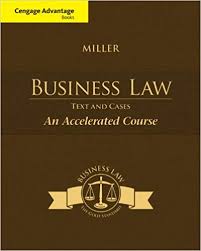
Cengage Advantage Books Business Law Text & Cases An Accelerated Course 13th Edition - Test Bank

Cengage Advantage Books Business Law Text & Cases An Accelerated Course 13th Edition - Test Bank   Instant Download - Complete Test Bank With Answers     Sample Questions Are Posted Below   Chapter 5     Intellectual Property Rights       TRUE/FALSE QUESTIONS   By using another’s trademark, a business could lead consumers …

$19.99

Cengage Advantage Books Business Law Text & Cases An Accelerated Course 13th Edition – Test Bank


Instant Download – Complete Test Bank With Answers


Sample Questions Are Posted Below


Chapter 5


Intellectual Property Rights


TRUE/FALSE QUESTIONS


  1. By using another’s trademark, a business could lead consumers to believe that its goods were made by the other business


ANSWER:     T                               PAGES:   Section 1

BUSPROG: Reflective                             AICPA: BB-Legal


  1. State and federal governments provide for the registration of trademarks.


ANSWER:     T                               PAGES:   Section 1

BUSPROG: Reflective                             AICPA: BB-Legal


  1. To succeed in a lawsuit alleging trademark dilution, the plaintiff must prove that consumers are likely to be confused by the unauthorized use of a mark.


ANSWER:     F                               PAGES:   Section 1                                  BUSPROG: Analytic                        AICPA: BB-Legal


  1. An applicant cannot register a trademark on the basis of an intention to use the mark in commerce.


answer:     F                               PAGES:   Section 1

BUSPROG: Analytic                                AICPA: BB-Legal


  1. An arbitrary use of ordinary words may not be trademarked.


answer:     F                               PAGES:   Section 1

BUSPROG: Reflective                             AICPA: BB-Legal


  1. A personal name is protected under trademark law if it acquires a secondary meaning.


ANSWER:     T                               PAGES:   Section 1

BUSPROG: Reflective                             AICPA: BB-Legal


  1. A generic term is not protected under trademark law unless it acquires a secondary meaning.


ANSWER:     F                               PAGES:   Section 1

BUSPROG: Reflective                             AICPA: BB-Legal


  1. Trade dress is subject to the same legal protection as trademarks.


answer:     t                               PAGES:   Section 1

BUSPROG: Reflective                             AICPA: BB-Legal


  1. A certification mark distinguishes products approved, or “certified,” by the government.


answer:     F                               PAGES:   Section 1

BUSPROG: Reflective                             AICPA: BB-Legal


  1. A trade name cannot be registered with the federal government unless it is also used as a trademark or a service mark.


answer:     T                               PAGES:   Section 1

BUSPROG: Reflective                             AICPA: BB-Legal


  1. Patent protection begins on the date that a patent application is filed.


ANSWER:     T                               PAGES:   Section 2

BUSPROG: Reflective                             AICPA: BB-Legal


  1. Patent infringement occurs only if all features or parts of a product are copied.


answer:     f                               PAGES:   Section 2

BUSPROG: Reflective                             AICPA: BB-Legal


  1. Copyright protection is automatic—registration is not required.


answer:     T                               PAGES:   Section 3

BUSPROG: Analytic                                AICPA: BB-Critical Thinking


  1. It is possible to copyright an idea.


answer:     F                               PAGES:   Section 3

BUSPROG: Reflective                             AICPA: BB-Critical Thinking


  1. A person can reproduce copyrighted material for purposes such as teaching, including multiple copies for classroom use, without paying royalties.


answer:     t                               PAGES:   Section 3                                  BUSPROG: Reflective                                       AICPA: BB-Legal


  1. A person who buys a copyrighted work cannot sell it to someone else.


answer:     F                               PAGES:   Section 3

BUSPROG: Analytic                                AICPA: BB-Legal


  1. A marketing method can be a trade secret.


ANSWER:     T                               PAGES:   Section 4

BUSPROG: Reflective                             AICPA: BB-Legal


  1. Theft of confidential data by industrial espionage is a theft of trade secrets.


answer:     T                               PAGES:   Section 4

BUSPROG: Reflective                             AICPA: BB-Legal


  1. The TRIPS agreement established standards for the international protection of intellectual property rights for computer programs.


answer:     t                               PAGES:   Section 5

BUSPROG: Reflective                             AICPA: BB-Legal


  1. The Anti-Counterfeiting Trade Agreement applies to counterfeit physical goods and to pirated copyrighted works being distributed via the Internet.


answer:     T                               PAGES:   Section 5

BUSPROG: Analytic                                AICPA: BB-Legal


multiple-choice questions


  1. iMiMine Inc. develops a new mobile phone that the company names “Call Mi.” The firm also issues an operating manual for the phone. iMiMine can obtain trademark protection for


  1. the phone.
  2. the “newness” of the device.
  3. the name “Call Mi.”
  4. the operating manual.


ANSWER:     C                              PAGES:   Section 1

BUSPROG: Reflective                             AICPA: BB-Legal


  1. In its ads for athletic shoes, Sleek Feet LLC uses a trademark that is similar, but not identical, to the famous, registered mark of Thor, Inc. Sleek Feet’s unauthorized use of the mark constitutes trademark dilution, provided that


  1. consumers are confused.
  2. Sleek Feet and Thor are competitors.
  3. Sleek Feet’s use is intentional.
  4. Sleek Feet’s use is likely to impair the distinctiveness of Thor’s mark or harm its reputation.


ANSWER:     D                              PAGES:   Section 1

BUSPROG: Reflective                             AICPA: BB-Legal


  1. Moving Advanced Technology Corporation can not claim a trademark in the phrase “Moving to the Market” if the phrase


  1. has a secondary meaning.
  2. is descriptive.
  3. is generic.
  4. is memorable.


ANSWER:     C                              PAGES:   Section 1

BUSPROG: Reflective                             AICPA: BB-Legal


  1. From Southeast Asia, Tai Ltd. exports genuine trademarked goods to the United States. Tai also makes labels and packaging bearing another firm’s trademark, ships the labels to another location, and then affixes them to an inferior product to deceive buyers. Tai sells these goods to retailers who are unaware that the marks are counterfeit. Under the Stop Counterfeiting in Manufactured Goods Act, it is a crime to


  1. import genuine trademarked goods.
  2. traffic in counterfeit labels, stickers, and packaging.
  3. sell counterfeit versions of brand-name products in foreign countries.
  4. unknowingly use a counterfeit mark on goods.


answer:     B                              PAGES:   Section 1

BUSPROG: Reflective                             AICPA: BB-Legal


  1. Constellation Research Inc. uses a mark associated with its name to distin­guish its services from those of other tech firms. This mark is


  1. a certification mark.
  2. a collective mark.
  3. a service mark.
  4. trade dress.


answer:     C                              PAGES:   Section 1

BUSPROG: Reflective                             AICPA: BB-Legal


  1. Radiant Corporation owns the intellectual property rights to the Starry Night Bistros, a small chain of restaurants identified by a famous trademark and trade name. Twinkle Inc. wants to make use of the mark and name and avoid litigation. This is possible


  1. under a license agreement with Radiant.
  2. without Radiant’s permission if Twinkle is located in a different city.
  3. without Radiant’s permission if Radiant does not use the mark or name on the Internet.
  4. all of the choices.


answer:     A                              PAGES:   Section 1

BUSPROG: Reflective                             AICPA: BB-Legal


  1. Chris operates the Devil’s Brew chain of coffee stands. “Devil’s Brew” is a


  1. certification mark.
  2. collective mark.
  3. service mark.
  4. trade name.


ANSWER:     D                              PAGES:   Section 1

BUSPROG: Reflective                             AICPA: BB-Legal


  1. Resurgent Corporation designs a new tablet that the firm names “SyFye.” Resurgent also issues the operating manual to be included with each device. The company can obtain patent protection for


  1. the tablet.
  2. the “newness” of the device.
  3. the name “SyFye.”
  4. the operating manual.


answer:     A                              PAGES:   Section 2

BUSPROG: Reflective                             AICPA: BB-Legal


  1. Sui Generis, Inc. (SGI), designs and sells solar energy cells to research laboratories, commercial businesses, and individual consumers. Later, without SGI’s permission, Mimic Company begins to sell cells of identical design to the same markets. This is most likely


  1. copyright infringement.
  2. patent infringement.
  3. trademark infringement.
  4. none of the choices.


ANSWER:     B                              PAGES:   Section 2

BUSPROG: Reflective                             AICPA: BB-Legal


  1. Zoe applies nano technology to invent a device that reduces the half-life of spent plutonium rods used in nuclear-fuel reactors. She names the device “Halftime.” She also writes Nano Nukes, a book about this invention and other uses for nano technology. Zoe can obtain copyright protection for


  1. the device.
  2. nano technology.
  3. the name “Halftime.”
  4. the book Nano Nukes.


ANSWER:     D                              PAGES:   Section 3

BUSPROG: Reflective                             AICPA: BB-Legal


  1. In his new recording “Nothing Nu 4U,” O’Reilly uses the melody of a song written by Pete. O’Reilly did not obtain Pete’s permission. This is


  1. copyright infringement.
  2. patent infringement.
  3. trademark infringement.
  4. none of the choices.


ANSWER:     A                              PAGES:   Section 3

BUSPROG: Reflective                             AICPA: BB-Legal


  1. Trade Publishing Inc. owns the rights to the Aura series of paranormal-themed novels, and publishes and sells copies in bookstores and online. Sydney buys and reads a copy of each book in the series. With regard to these copies, Sydney can


  1. sell them to someone else.
  2. only sell them back to the publisher.
  3. only return them to the place of purchase for a refund.
  4. not sell or return them.


ANSWER:     A                              PAGES:   Section 3                                  BUSPROG: Reflective                                       AICPA: BB-Legal


  1. Garrett makes and distributes copies of Here We Go Again, a movie copyrighted by Indie Motion Pictures, Inc. Garrett does this without Indie’s permission. He may be liable for


  1. damages, fines, or imprisonment.
  2. damages only.
  3. fines or imprisonment only.
  4. nothing.


ANSWER:     A                              PAGES:   Section 3

BUSPROG: Reflective                             AICPA: BB-Legal


  1. Creation Worx, Inc., develops, makes, and markets new computer programs for businesses and consumers. Generally, copyright protection extends to


  1. all aspects of the software.
  2. the “look and feel” of the software.
  3. those parts of the software that can be read by humans.
  4. all of the choices.


ANSWER:     C                              PAGES:   Section 3

BUSPROG: Reflective                             AICPA: BB-Legal


  1. Marcus is Nations Market Corporation’s (NMC) most productive employee. He is dissatisfied with NMC’s commission structure, however, so he quits to work for Opportunity Partners, Inc. (OPI). When he leaves, he takes a list of NMC clients so that he can induce them to switch to OPI. The list is most likely protected by


  1. copyright law.
  2. patent law.
  3. trademark law.
  4. trade secrets law.


answer:     D                              PAGES:   Section 4

BUSPROG: Reflective                             AICPA: BB-Legal


  1. The process behind the production of “AccountForIt,” a suite of business accounting and inventory software, is protected by


  1. copyright law.
  2. patent law.
  3. trademark law.
  4. trade secrets law.


answer:     D                              PAGES:   Section 4

BUSPROG: Reflective                             AICPA: BB-Legal


  1. France and the United States are signatories of the Berne Convention. Alain, a citizen of France, publishes a book first in France and then in the United States. Alain’s copyright must be recognized by


  1. France only.
  2. France and the United States only.
  3. all of the signatories of the Berne Convention.
  4. none of the choices.


answer:     C                              PAGES:   Section 5

BUSPROG: Reflective                             AICPA: BB-Legal


  1. Reprise Entertainment, Inc., a U.S. television and movie production company, files a suit against Substantivo TV, Ltd., a Mexican production firm, for infringement of intellectual property rights under Mexico’s national laws. Under the TRIPS agreement, Reprise is entitled to receive


  1. better treatment than Substantivo.
  2. the same treatment as Substantivo.
  3. worse treatment than Substantivo.
  4. nothing.


answer:     B                              PAGES:   Section 5

BUSPROG: Reflective                             AICPA: BB-Legal


  1. Chic & Fab Inc. owns the trademark to a style of clothing that it wishes to market globally. Chic & Fab wants to register its trademark in a single application and designate the countries in which it would like to register that mark. This is possible under


  1. the Berne Convention.
  2. the Madrid Protocol.
  3. the TRIPS agreement.
  4. no law.


answer:     B                              PAGES:   Section 5

BUSPROG: Reflective                             AICPA: BB-Legal


  1. New Technologies, Inc. (NTI), develops, makes, and sells computer software. NTI is based in the United States, but sells its products in some foreign nations. NTI can obtain patent protection in


  1. no foreign nation.
  2. foreign nations where NTI sells its goods.
  3. any foreign nation, even those in which NTI does not sell its goods.
  4. only in foreign nations.


answer:     B                              PAGES:   Section 5

BUSPROG: Reflective                             AICPA: BB-Legal


Essay Questions


  1. For five years, clothing makers and marketers Style-One Corporation and Trend Now, Inc., both use the phrase “Looks Great” on their labels. Style-One files a suit against Trend Now, claiming trademark infringement. Trend Now argues that the phrase generally is not associated with any particu­lar firm and that other companies use the same phrase on their labels and in their ads. In whose favor is the court most likely to rule, and why?


ANSWER:     The court is most likely to rule in favor of the defendant Trend Now because the phrase “Looks Great” is generic and therefore cannot be owned by the plaintiff Style-One. That the phrase is generic is indicated by its use by other companies on their labels and in their ads. Also, that both clothing makers have used the phrase on their labels for the same pe­riod of time supports a finding that the phrase is generic. The court might also consider the words of the phrase, “looks” and “great,” and reason that there is nothing distinctive about the words or their combination. In addition, the phrase has not developed a secondary meaning or any other attrib­utes that would support a conclusion in the plaintiff’s favor.


PAGES:         Section 1                                                                   type:       =

BUSPROG: Reflective                             AICPA: BB-Decision Modeling


  1. Duplos College Bookstore compiles, copies, and sells reading materials to students. The compilations are prepared on the instructions of professors, who indicate which parts of which publications should be included for their students. The copied materials include texts published by Ebooks, Inc. Duplos does not obtain the permission of Ebooks, or any of the other original publishers of the copied materials, and does not pay royalties on the sales of the compilations. Ebooks and others file a suit against Duplos, alleging infringement of their intellectual property rights. Which type of intellectual property is involved in this situation? What is Duplos’s likely defense? How is a court most likely to rule? Explain.


ANSWER:     The intellectual property at issue in this situation is copyright—specifically, of course, the copyrights of the publishers of the materials that Duplos copies and sells without permission.

Duplos is likely to assert the “fair use” doctrine in its defense. This doctrine allow exceptions to the general requirement that an owner’s permission be obtained before copyrighted material can be copied. Duplos is likely to argue that its compilations are excepted because they are dedicated to “educational” uses.

A court is most likely to conclude, however, that Duplos’s copying and selling of the materials is not a fair use, because Duplos profits from the sales, which undercut the potential market for the copyrighted publications from which the copies are made. In determining fair use, a court considers four factors: the purpose and character of the use, the nature of the copyrighted work, the amount and substantiality of the portion used in relation to the copyrighted work as a whole, and the effect of the use on the potential market for or value of the copyrighted work. In this situation, the fourth factor is most significant and supports the conclusion that Duplos’s use of the materials is not a fair use.


PAGE:            Section 3

BUSPROG: Reflective                             AICPA: BB-Decision Modeling


Additional information

Add Review

Your email address will not be published. Required fields are marked *