No products in the cart.

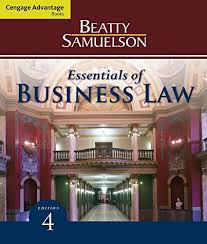
Cengage Advantage Books Essentials of Business Law 4th Edition - Test Bank

Cengage Advantage Books Essentials of Business Law 4th Edition - Test Bank   Instant Download - Complete Test Bank With Answers     Sample Questions Are Posted Below   CHAPTER 5 - CONSTITUTIONAL LAW   TRUE/FALSE   By creating three independent and equal branches of the federal government, the U.S. Constitution limited the federal government’s …

$19.99

Cengage Advantage Books Essentials of Business Law 4th Edition – Test Bank


Instant Download – Complete Test Bank With Answers


Sample Questions Are Posted Below


CHAPTER 5 – CONSTITUTIONAL LAW


TRUE/FALSE


  1. By creating three independent and equal branches of the federal government, the U.S. Constitution limited the federal government’s power.


ANS:  T                    PTS:   1                    MSC:  AACSB Analytic


  1. The Framers of our Constitution, a true cross section of the population at the time, created the Constitution by drafting a new document rather than amending the Articles of Confederation, which had been the governing document of the colonists.


ANS:  T                    PTS:   1                    MSC:  AACSB Analytic


  1. The Fifth Amendment to the Constitution provides Robert, an employee of Mattax Paper Co., due process protection from being fired without a hearing by a neutral fact finder.


ANS:  F                    PTS:   1                    MSC:  AACSB Analytic


  1. Hall was arrested for burning the United States’ flag in a protest of governmental policy. His action is protected under the First Amendment’s guarantee of free speech because the flag burning is considered symbolic speech.


ANS:  T                    PTS:   1                    MSC:  AACSB Analytic


  1. The power to create laws regulating international commerce is given to Congress and the states concurrently under the U.S Constitution.


ANS:  F                    PTS:   1                    MSC:  AACSB Analytic


  1. The “commerce clause” prevents the federal government from regulating interstate commerce.


ANS:  F                    PTS:   1                    MSC:  AACSB Analytic


  1. Cromwell lives in a condominium complex. He will be spending a year overseas, and he would like to rent out his unit while he is away.  The Homeowner Association informs him that, according to their bylaws, he does not have the right to lease his unit without prior approval by the Association’s Board of Directors. The Association has made an unconstitutional restriction of the property rights of residents of the condominium complex.


ANS:  F                    PTS:   1                    MSC:  AACSB Reflective Thinking


  1. Obscene speech is protected by the First Amendment.


ANS:  F                    PTS:   1                    MSC:  AACSB Analytic


  1. The Pines, a small motel in central Georgia, may be subject to federal regulation even though it is not close enough to the state borders to have many guests from other states.


ANS:  T                    PTS:   1                    MSC:  AACSB Reflective Thinking


  1. The First Amendment to the U.S. Constitution explicitly protects citizens from abridgment of the right of free speech by any level of government.


ANS:  F                    PTS:   1                    MSC:  AACSB Analytic


  1. Misleading commercial speech may be outlawed altogether without violating the Constitution.


ANS:  T                    PTS:   1                    MSC:  AACSB Analytic


  1. Professor Rifkin accused Helena, a senior at a large state university, of cheating on an final test. The Professor claimed that Helena had to prove to him that she did not cheat. She failed to convince him, she was expelled from college. Helena was denied her due process rights.


ANS:  T                    PTS:   1                    MSC:  AACSB Analytic


  1. Congress passed the federal OSHA establishing job safety standards. Illinois passed its own statute, seeking to protect the general public and workers from hazardous wastes. The Illinois statute did not violate the Commerce Clause because it imposed no restriction on interstate commerce. Local workers were obligated to obey both the federal and the state regulations.


ANS:  F                    PTS:   1                    MSC:  AACSB Analytic


  1. Judicial review is the power of the federal courts to declare a statute or governmental action unconstitutional.


ANS:  T                    PTS:   1                    MSC:  AACSB Analytic


  1. A governmental classification based on gender would be subject to strict scrutiny.


ANS:  F                    PTS:   1                    MSC:  AACSB Analytic


MULTIPLE CHOICE


  1. If there is a conflict between a state and federal law, generally the federal law will prevail because of the:
a. Due Process Clause
b. Equal Protection Clause.
c. Supremacy Clause.
d. federalism doctrine.


ANS:  C                    PTS:   1                    MSC:  AACSB Analytic


  1. The primary source of federal power to regulate business is the:
a. Supremacy Clause.
b. Commerce Clause.
c. Fifth Amendment
d. Privilege and Immunities Clause.


ANS:  B                    PTS:   1                    MSC:  AACSB Analytic


  1. The 14th Amendment’s Equal Protection Clause “strict scrutiny” test will be used when the legislation:
a. affects an economic interest.
b. affects a person’s right to drive.
c. differentiates on the basis of race.
d. affects a person’s right to drink alcoholic beverages.


ANS:  C                    PTS:   1                    MSC:  AACSB Analytic


  1. The Bill of Rights refers to:
a. the inalienable rights found at the beginning of the Constitution.
b. the first ten amendments to the Constitution.
c. a specific listing of individual rights found in the original text of the Constitution.
d. a grouping of individual rights set forth by the United States Supreme Court shortly after the Constitution was ratified by the states.


ANS:  B                    PTS:   1                    MSC:  AACSB Analytic


  1. The United States v. Lopez case demonstrates which of the following?
a. There are no limitations on the federal government’s power pursuant to the Interstate Commerce Clause.
b. The extensive power of the states to regulate interstate commerce.
c. Limitations on federal power.
d. Gun ownership cannot be regulated.


ANS:  C                    PTS:   1                    MSC:  AACSB Reflective Thinking


  1. Nevada passed a law banning all commercial billboards along state highways to rid the state highways of billboards, which are offensive to citizens. If this law were to be challenged, which of the following would a court examine to determine if the law is constitutional?
a. It would have to be established that the law furthers an interest of the state of Nevada to create a more aesthetically pleasing environment.
b. It would have to be shown that the law directly and materially advances the state’s goal of a more aesthetically pleasing environment.
c. It would have to be shown that the law reaches no further than necessary to promote the state goal.
d. All of the above.


ANS:  D                    PTS:   1                    MSC:  AACSB Reflective Thinking


  1. The states may not enact laws that affect interstate commerce. This concept is called:
a. the dormant aspect of the Commerce Clause.
b. the negative aspect of the Supremacy Clause.
c. the substantial effect rule.
d. federalism.


ANS:  A                    PTS:   1                    MSC:  AACSB Analytic


  1. West Virginia passed a statute regulating working conditions in its mines. If the statute is challenged in court on substantive due process grounds:
a. it would be presumed invalid and would be struck down since it involves a fundamental right to work.
b. it would be presumed invalid but would be struck down only if it is not necessary to achieve a compelling government interest.
c. it would be presumed valid since it regulates economic or social conditions.
d. it carries no presumptions, but must be evaluated based on the procedures involved.


ANS:  C                    PTS:   1                    MSC:  AACSB Reflective Thinking


  1. When Congress passed a criminal statute called the “Gun-Free School Zones Act,” the Supreme Court ruled that:
a. the law was valid as a proper exercise of the power to regulate interstate commerce.
b. the law was void for vagueness; thus, it was not valid.
c. the law was not valid since Congress exceeded its power under the Commerce Clause.
d. although the law was not a proper exercise of the power to regulate interstate commerce, Congress had the power to create such legislation on other grounds. Therefore, the statute was valid.


ANS:  C                    PTS:   1                    MSC:  AACSB Analytic


  1. O’Neil raised 80 acres of corn, most of which he used to feed his own cattle. He locally sold what he did not use. Based on the Supreme Court’s ruling in Wickard v. Filburn:
a. Congress has no authority over Thompson’s activity based on the negative aspect of the Commerce Clause.
b. Congress may regulate Thompson’s farming activity because it has a substantial economic effect on interstate commerce.
c. Thompson’s farming activity may not be regulated.
d. only Thompson’s state government can regulate his farming activity.


ANS:  B                    PTS:   1                    MSC:  AACSB Reflective Thinking


  1. The doctrine of preemption is based on the Constitution’s:
a. Commerce Clause.
b. Due Process Clause.
c. Equal Protection Clause.
d. Supremacy Clause.


ANS:  D                    PTS:   1                    MSC:  AACSB Analytic


  1. Ikerd was entering the United States from a trip abroad when the Customs Service confiscated some goods she had purchased and brought back with her. The determination of whether the government is attempting to take property and what type of hearing the Customs Service must offer Ikerd, is an analysis of:
a. substantive due process.
b. procedural due process.
c. the Takings Clause.
d. eminent domain.


ANS:  B                    PTS:   1                    MSC:  AACSB Reflective Thinking


  1. Every year the U.S. Supreme Court receives about 8,000 requests to review cases. Of this number, the Court will hear about:
a. 30.
b. 100.
c. 1,000.
d. 8,000.


ANS:  B                    PTS:   1                    MSC:  AACSB Analytic


  1. If Oregon passed a statute that prohibited liquor stores from engaging in any kind of advertising, that statute would be:
a. valid as an exercise of police power.
b. valid, as alcohol is illegal for minors.
c. invalid as a violation of the Commerce Clause.
d. invalid as an unreasonable restriction of free speech.


ANS:  D                    PTS:   1                    MSC:  AACSB Reflective Thinking


  1. Smalltown, located in a border state, seemed to favor Caucasians over Latinos in their hiring practices. The courts will review the practice using:
a. minimal scrutiny.
b. intermediate scrutiny.
c. strict scrutiny.
d. Supremacy Clause scrutiny.


ANS:  C                    PTS:   1                    MSC:  AACSB Reflective Thinking


  1. If there is a conflict between federal and state statutes, the federal law controls the issue. This is the application of:
a. the Due Process Clause.
b. the doctrine of preemption.
c. the doctrine of federalism.
d. the doctrine of federal superiority.


ANS:  B                    PTS:   1                    MSC:  AACSB Analytic


  1. Judicial review can best be described as the power of federal courts to:
a. review state court decisions.
b. review state executive action.
c. review state and federal legislative and executive action.
d. none of the above.


ANS:  C                    PTS:   1                    MSC:  AACSB Analytic


  1. The issue of the constitutional protections afforded flag burning was addressed in:
a. Texas v. Johnson.
b. United States v. Lopez.
c. Marbury v. Madison.
d. Palmore v. Sidoti.


ANS:  A                    PTS:   1                    MSC:  AACSB Analytic


  1. The “dormant” aspect of the Commerce Clause:
a. is also known as the “negative” aspect.
b. means that there are many unused powers still available to the government to regulate trade between the states.
c. guarantees that Congress has the power to regulate trade with foreign countries that have not yet developed trade practices with the United States.
d. guarantees that the states have the power, even if unused, to impose regulations affecting interstate commerce.


ANS:  A                    PTS:   1                    MSC:  AACSB Analytic


  1. Which of the following limitations does not apply to the government in civil proceedings to take a person’s liberty or property?
a. Procedural Due Process.
b. The Takings Clause.
c. Substantive Due Process.
d. The Equal Protection Clause.


ANS:  D                    PTS:   1                    MSC:  AACSB Analytic


  1. The Supreme Court’s approach during the period from the 1950s through the 1970s in deciding cases on constitutional grounds is described as:
a. judicial restraint.
b. judicial activism.
c. judicial review.
d. the dormant aspect of its judicial power.


ANS:  B                    PTS:   1                    MSC:  AACSB Analytic


  1. Generally, constitutional protections do NOT apply to:
a. acts of the federal government.
b. acts of state government.
c. acts of administrative agencies.
d. acts of privately owned businesses.


ANS:  D                    PTS:   1                    MSC:  AACSB Analytic


  1. Jamie and her friends burn an American flag as an act of political protest. Jamie is arrested for violating a state law that prohibits flag burning. The Supreme Court has ruled that laws making it illegal to burn an American flag:
a. are valid because states have the power to regulate such actions.
b. are void because a state court has no power to prosecute a person for burning the federal flag.
c. are void because they violate a person’s right to freedom of speech.
d. the Supreme Court has never addressed the issue.


ANS:  C                    PTS:   1                    MSC:  AACSB Reflective Thinking


  1. A woman wishes to attend an all-male, publicly supported college. She claims the college is violating the Equal Protection Clause of the Constitution. What level of scrutiny will the court use when deciding this case?
a. Minimal scrutiny
b. Intermediate scrutiny
c. Strict scrutiny
d. Compelling interest scrutiny


ANS:  B                    PTS:   1                    MSC:  AACSB Reflective Thinking


  1. Edwin moved into an apartment complex. The rules of the complex prohibit unmarried men and women from living together in the same apartment. When Edwin’s friend, Barbara, moved into the apartment he was served with eviction papers. Edwin claims the apartment complex is violating his constitutional rights since it allows married couples to live together. Is Edwin right?
a. Yes. His equal protection rights have been violated.
b. No. His rights under the Due Process Clause have not been violated.
c. Yes. His First Amendment rights have been violated.
d. No. Constitutional protections do not extend to privately owned apartment complexes.


ANS:  D                    PTS:   1                    MSC:  AACSB Reflective Thinking


ESSAY


  1. Discuss the Miller test to determine if a creative work is obscene.


ANS:

In Miller v. California, the court developed a three-part test:

· whether the average person, applying contemporary community standards, would find the work taken as a whole appeals to a prurient interest.
· whether the work depicts or describes, in a patently offensive way, sexual conduct specifically defined by applicable state law.
· whether the work taken as a whole lacks serious literary, artistic, political, or scientific value.

If all three tests are met, the work may be considered obscene and may be prohibited.


PTS:   1                    MSC:  AACSB Communication


  1. Assume that the state of Wisconsin passed a statute seeking to protect the general public and workers against asbestos. The state statute did not violate the Commerce Clause because it imposed no restriction on interstate commerce. Both the state statute and the federal Occupational Safety and Health Act established job safety standards and specified worker training and employer licensing, but the requirements differed. Discuss which statute(s) Wisconsin corporations had to obey, and identify the source of the answer.


ANS:

Article VI of the Constitution provides the answer to this question. The Supremacy Clause states that the Constitution, and federal statutes and treaties, shall be the supreme law of the land. If there is a conflict between federal and state statutes, the federal law preempts the field, meaning that federal law controls the issue. The state law is void. Even in cases where there is no conflict, if Congress demonstrates that it intends to exercise exclusive control over an issue, federal law preempts. Thus, state law controls only when there is no conflicting federal law and Congress has not intended to dominate the issue. In a similar Illinois case discussed in the textbook, the Supreme Court concluded that Congress intended to regulate the issue exclusively. Federal law therefore preempted the field, and local employers were obligated to obey only the federal regulations.


PTS:   1                    MSC:  AACSB Communication | AACSB Reflective Thinking


  1. Identify the basic job of a President of the United States, the source of executive power, and three key powers associated with the position of President.


ANS:

The basic job of a President is to enforce the nation’s laws. Article II of the Constitution created the office of President and defines the executive power. Three key powers of a President concern appointment, legislation, and foreign policy. The President nominates the heads of most administrative agencies, and such agencies play a powerful role in business regulation and other facets of national life. As far as legislative power, a President and his advisers propose bills to Congress. A President also has veto power over bills and can issue executive orders. The President conducts the nation’s foreign affairs, coordinates international efforts, and negotiates treaties. He is commander in chief of the armed forces, but does not have the right to declare war.


PTS:   1                    MSC:  AACSB Communication


  1. Tim received a letter from his state college stating he had been expelled from the school. The letter stated his finance professor reported him to the Dean’s office for cheating and that a committee had decided to expel him. He was reminded in the letter he had been disciplined earlier that same year for plagiarizing a term paper. Tim believes his due process rights have been violated by the college. Discuss what factors should be considered to determine the validity of Tim’s claim.


ANS:

The Constitution’s Fifth Amendment addresses “due process.” This due process guarantee is made applicable to state governments via the Fourteenth Amendment.


In the case of a student’s being expelled from college, a property interest is involved. The property is the student’s education. The important question is always how much due process a person is entitled to receive in a given situation.


A person must receive notice of the action being taken and be given an opportunity to present any challenges to a neutral fact finder. In the case of a school expulsion, the student needs to be allowed to present his case to an individual or group who can demonstrate impartiality and lack of bias. Additionally, due process usually requires that the student be allowed to appeal the initial decision to a higher body.


In due process cases, the importance of the property or liberty interest involved will determine the extent of inquiry, notice, opportunity for discovery, etc. that constitutes an appropriate level of due process.


In Tim’s case, the college should provide him with notice of the intended action, an opportunity to personally confront the professor before the fact finder, an opportunity to see both his test and the test he allegedly cheated off, and other such considerations. If he loses his case, he should be allowed at least one right of appeal to a higher authority within the college or university. The college will have a strong case to expel Tim if it proves he cheated on the exam since he appears to have been on a probationary status given his earlier problems with the school.


PTS:   1                    MSC:  AACSB Communication | AACSB Reflective Thinking


  1. Molly purchased a condominium. When she bought it, she realized the homeowner’s association had a variety of rules and regulations that she would need to follow. One regulation was that no pets were allowed to live in the complex. Two years after buying the condominium, Molly purchased a puppy. She was immediately served with papers notifying her to move out of the complex. Discuss the constitutionality of the homeowner association’s action.


ANS:

Constitutional protections only extend to governmental action, not to private parties. A condominium complex is private property, and the action of a homeowner’s association is not governmental activity; therefore, Molly can probably be forced to move unless she gives away her pet.


PTS:   1                    MSC:  AACSB Communication | AACSB Reflective Thinking

Additional information

Add Review

Your email address will not be published. Required fields are marked *