No products in the cart.

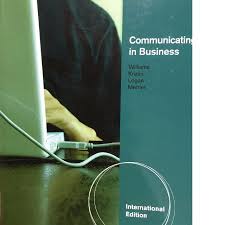
Communicating in Business International Edition 8th Edition by Karen Schneiter Williams - Test Bank

Communicating in Business International Edition 8th Edition by Karen Schneiter Williams - Test Bank   Instant Download - Complete Test Bank With Answers     Sample Questions Are Posted Below   Chapter 5—Print and Electronic Messages   TRUE/FALSE   An advantage of oral messages is that they can be transmitted quickly.   ANS:  T                    PTS:   …

$19.99

Communicating in Business International Edition 8th Edition by Karen Schneiter Williams – Test Bank


Instant Download – Complete Test Bank With Answers


Sample Questions Are Posted Below


Chapter 5—Print and Electronic Messages


TRUE/FALSE


  1. An advantage of oral messages is that they can be transmitted quickly.


ANS:  T                    PTS:   1


  1. An advantage of a written message is that it is a permanent record that may have legal value.


ANS:  T                    PTS:   1


  1. Secondary purposes support the main idea in a written message.


ANS:  T                    PTS:   1


  1. Memos may have an internal or external audience.


ANS:  F                    PTS:   1


  1. The traditional outline method works well when generating ideas and determining how they relate to one another.


ANS:  F                    PTS:   1


  1. Changing writing methods can help overcome writer’s block.


ANS:  T                    PTS:   1


  1. Research represents the most common Internet application.


ANS:  F                    PTS:   1


  1. A distribution list may be used when multiple receivers are sent the same e-mail message.


ANS:  T                    PTS:   1


  1. Blogs are more conversational in tone than a business letter.


ANS:  T                    PTS:   1


  1. A user-friendly web design and effective navigation enhance the credibility of a website.


ANS:  T                    PTS:   1


  1. The first step in developing a business message is to draft the message.


ANS:  F                    PTS:   1


  1. Message purposes should be established within the framework of the four business communication goals.


ANS:  T                    PTS:   1


  1. Writers should use the “more is better” principle when selecting the number and variety of word processing emphasis techniques to use in print and e-mail messages.


ANS:  F                    PTS:   1


  1. Revising and editing are different names for the same process.


ANS:  F                    PTS:   1


  1. Grammar and spelling errors need not be corrected in business messages sent via e-mail.


ANS:  F                    PTS:   1


  1. Proofreading is done before and after revising and editing.


ANS:  T                    PTS:   1


  1. Business e-mail should be developed using the same three-step plan as other messages.


ANS:  T                    PTS:   1


  1. E-mail is so popular because it affords a high degree of privacy.


ANS:  F                    PTS:   1


  1. A grammar checker detects and corrects grammar and punctuation errors.


ANS:  F                    PTS:   1


  1. A message with long words and sentences may have a high readability level even if the words are familiar and the sentences are easy to understand.


ANS:  T                    PTS:   1


  1. All computer programs are not compatible when it comes to attachments, and some e-mail programs don’t support multiple attachments.


ANS:  T                    PTS:   1


  1. Use emoticons in business e-mail to give personality to your messages.


ANS:  F                    PTS:   1


  1. The most important information in an e-mail should be the opening sentence or paragraph.


ANS:  T                    PTS:   1


  1. If you inadvertently send an e-mail before you are ready, it is easy to retrieve or cancel the e-mail.


ANS:  F                    PTS:   1


  1. Format and style of a message vary with the audience.


ANS:  F                    PTS:   1


  1. The revision stage allows the writer to make changes that add strength and distinctiveness to the message.


ANS:  T                    PTS:   1


  1. A thesaurus suggests alternatives or antonyms for words in a message.


ANS:  F                    PTS:   1


  1. Readability formulas assess the sentence length, complexity of sentence structure, and the number of syllables or characters in words.


ANS:  T                    PTS:   1


  1. The “cc” feature of e-mail is used to ensure receivers’ e-mail addresses are not made public.


ANS:  F                    PTS:   1


  1. Websites need regular maintenance; at a minimum, semi-annual updates to a website should be made.


ANS:  F                    PTS:   1


MULTIPLE CHOICE


  1. The four areas in which you analyze the receiver of a message are
a. knowledge, interests, attitudes, and emotional reaction.
b. knowledge, interests, attitudes, and gender.
c. knowledge, interests, emotional reaction, and age.
d. knowledge, interests, emotional reaction, and culture.


ANS:  A                    PTS:   1


  1. Which of the following is the three-step process for developing business messages?
a. Analyze receiver and situation, select organizational plan, and compose message content.
b. Determine purposes, analyze receiver and situation, and compose message content.
c. Plan, compose, proofread.
d. Plan, draft, finalize.


ANS:  D                    PTS:   1


  1. Which of the following is NOT part of the planning process?
a. Apply the principles of business communication.
b. Establish purposes.
c. Outline the message content.
d. Select the organizational plan.


ANS:  A                    PTS:   1


  1. The best organizational plan and best type of message for persuading someone to donate to a community project that feeds the homeless is a(n)
a. direct, oral message.
b. direct, written message.
c. indirect, oral message.
d. indirect, written message.


ANS:  D                    PTS:   1


  1. Which of the following is NOT a step in the proofreading process?
a. Pay special attention to names, numbers, and unusual words.
b. Read the material once for content, once for mechanics.
c. Read the material to a colleague bottom to top.
d. Use your word processing software spell checker to check for spelling errors.


ANS:  C                    PTS:   1


  1. The revising process includes all but which one of the following?
a. Checking to see that business communication principles have been applied
b. Determining whether the message is mechanically correct
c. Thinking about the visual image the message creates
d. Verifying the content for accuracy and completeness


ANS:  B                    PTS:   1


  1. Which of the following is an appropriate situation in which to use e-mail?
a. Cancellation of a meeting scheduled for this afternoon
b. Discussion of a job performance evaluation
c. Negotiation of a salary increase
d. Reminder of an upcoming deadline for budget submissions


ANS:  D                    PTS:   1


  1. An advantage of an oral message is that it
a. accommodates lengthy and complex content.
b. allows for immediate feedback.
c. can have legal value.
d. provides a permanent record.


ANS:  B                    PTS:   1


  1. Which of the following is the best subject line for an e-mail message?
a. Budget Request
b. Budget Request and Performance Appraisal Due
c. Budget Request Due February 15
d. FW:  RE:  FW:  FW:  Budget Request


ANS:  C                    PTS:   1


  1. Which of the following statements about instant messaging is NOT true?
a. A professional tone with no slang is a hallmark of instant messaging.
b. The content of an instant message should be limited to one or two thoughts.
c. The message length is limited.
d. The most-used feature of instant messaging is the “away” message alert.


ANS:  A                    PTS:   1


ESSAY


  1. Describe how to analyze a communication situation.


ANS:

When analyzing a communication situation, ask yourself the following questions:

  • Who is my receiver? Is he or she internal or external to my organization?
  • Is the receiver the final reader or an intermediate reader?
  • Under what constraints am I operating?
  • What history do I and/or my organization have with the receiver?
  • What does the receiver need to know? Has he or she asked any questions?
  • What do I want the receiver to do?


PTS:   1


  1. What organizational plans are available for messages? Explain the features of each and when each should be used.


ANS:

Messages may be organized by either of two plans—direct or indirect.  In the direct plan, the main idea is presented first and followed by supporting details.  This plan works well for positive and neutral messages.  With the indirect plan, the message opens on neutral ground or on a point of agreement.  It then progresses to the supporting details which lead to the main idea.  This organizational plan works best for persuasive or negative messages.


PTS:   1


  1. List writing guidelines can you follow to ensure the web audience finds what they want quickly.


ANS:

To help readers find what they want, use

  • short and specific headings (4-8 words),
  • short sentences (15-20 words),
  • short paragraphs (4-5 lines), and
  • short summaries (30-40 words).


PTS:   1


  1. How does writing for the Web differ from writing a business document such as a memo, a letter, or a report?


ANS:

When you write for the Web you need to write for the skim-reader.  Most web audience members scan to find material of interest to them; receivers of business documents read for main ideas and details for a specific purpose or situation.  When writing for the Web, you need to remember that you don’t know exactly who your audience is. You may have readers from all parts of the world, you may have readers who are just “surfing” the Internet and come upon your website, and you may have readers who are looking specifically for the topic of your website.  It is also critical that any writing for a website be accessible to everyone, regardless of their technological or physical disadvantage.  Another goal writers for the Web have is to get their website ranked high in search results.  High search ranking equates to heavy traffic in the website.


PTS:   1


  1. How does a blog differ from a standard web page?


ANS:

Differences between a blog and a standard web page include:

  • Blogs are created for particular interest areas
  • Blogs are “real time” events (dynamic)
  • They may contain the originator’s opinion, which is referred to as the “voice”
  • Readers of a blog are invited to share their comments, which can be read by all viewers
  • Information for a blog is entered into a simple form and then submitted for publication to the Web


PTS:   1

Additional information

Add Review

Your email address will not be published. Required fields are marked *