No products in the cart.

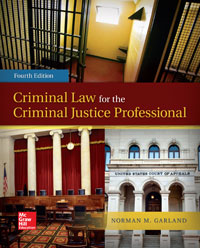
Criminal Law for the Criminal Justice Professional Norman Garland 4e - Test Bank

Criminal Law for the Criminal Justice Professional Norman Garland 4e - Test Bank   Instant Download - Complete Test Bank With Answers     Sample Questions Are Posted Below   Chapter 05 Incomplete Crimes   Multiple Choice Questions _____ are criminal acts that are detected and punished before the ultimate or intended crime actually occurs. …

$19.99

Criminal Law for the Criminal Justice Professional Norman Garland 4e – Test Bank


Instant Download – Complete Test Bank With Answers


Sample Questions Are Posted Below


Chapter 05

Incomplete Crimes


Multiple Choice Questions

  1. _____ are criminal acts that are detected and punished before the ultimate or intended crime actually occurs.
    A.Inchoate crimes
    B. Misdemeanors
    C. Completed crimes
    D. Felonies


  1. Only after the _____ of committing a crime is a person liable for criminal punishment under Anglo-American law.
    A.second stage
    B. third stage
    C. fourth stage
    D. sixth stage


  1. In 1784, the English court first recognized the crime of attempt in the
    A.Rex v. Higgins case.
    B. People v. Orndorff case.
    C. Regina v. Eagleton case.
    D. Rex v. Scofield case.


  1. Identify a true statement about abandonment as a defense to the crime of attempt.
    A.Abandonment is a valid defense when the defendant ceases his or her actions out of fear for his or her life.
    B. Abandonment as a defense exists when the goal that an actor intended to achieve is not defined as criminal by law.
    C. Abandonment is a valid defense because the defendant was unable to carry out the attempt because of some logistical or technical reason.
    D. An argument against this defense is that it allows an actor to undo criminal plans by renunciation and avoid punishment.


  1. The crime of attempt requires a _____ that, if carried out, would result in the commission of the substantive crime.
    A.general intent to commit an act
    B. general hope of initiating a criminal act
    C. specific intent to commit an act
    D. specific intent to aid and abet


  1. Under the MPC, the intent requirement can be met even though a defendant may not have desired or wanted a particular result, if it can be shown that the defendant acted with
    A.a substantial certainty that a certain result would occur.
    B.the mens rea of recklessness, which essentially holds that “anything goes.”
    C. the mens rea of negligence, which implies that the defendant was deliberately careless.
    D. a desire that a certain result would occur but was willing to accept an alternate outcome, even arrest.


  1. The _____, established in the English case of Regina v. Eagleton, is no longer utilized because most lawmakers believe that a person does not have to take the very last step to be criminally culpable.
    A. indispensable element test
    B. last act test
    C. physical proximity test
    D. unequivocality test


  1. Which of the following tests for attempt liability requires that a perpetrator perform all of the steps that he or she believed necessary to commit an intended offense?
    A.the indispensable element test
    B. the unequivocality test
    C. the last act test
    D. the substantial step test


  1. Under the _____, the perpetrator need not have advanced so far as the last act and an attempt has not been committed unless the accused has the immediate power to actually carry through with the crime at the time the police intervene.
    A.indispensable element test
    B. last act test
    C. physical proximity test
    D. dangerous proximity test


  1. Which of the following statements is true of the indispensable element test?
    A.The focus is on whether an actor has the needed instruments to carry out an offense.
    B.The test requires that a perpetrator advance so far as the last act.
    C. The factors used for the test are closeness of a danger and significance of the harm.
    D. The test looks at whether a defendant’s conduct was indicative of his or her criminal intent.


  1. Under the _____, a person is guilty of attempt when his or her conduct is very close to succeeding at a crime.
    A.substantial step test
    B. unequivocality test
    C. physical proximity test
    D. dangerous proximity test


  1. Under the _____, a suspect who has not yet gained control over a necessary instrumentality of a criminal plan cannot be guilty of attempt.
    A.indispensable element test
    B. last act test
    C. physical proximity test
    D. dangerous proximity test


  1. The _____ is defined as a test that determines that an attempt has occurred when a person’s conduct, standing alone, unambiguously manifests his or her criminal intent.
    A.substantial step test
    B. unequivocality test
    C. last act test
    D. physical proximity test


  1. The MPC uses the _____, which requires that a suspect must have done or omitted to do something that constitutes an important and sizable stage in the commission of a substantive offense.
    A.substantial step test
    B. unequivocality test
    C. physical proximity test
    D. dangerous proximity test


  1. Which of the following is a defense used when a person’s intended end result constitutes a crime, but the actor does not complete the act that would have been a crime because of circumstances unknown to him or her or beyond his or her control?
    A.pure legal impossibility
    B. factual impossibility
    C. genuine legal impossibility
    D. legal impossibility


  1. Cases of “hybrid” legal impossibility occur when
    A.the distinction between legal and factual impossibility fails.
    B. the reasons for punishing unsuccessful attempts apply to neither category.
    C. the distinction between legal and factual impossibility succeeds.
    D. a suspect acts without the intent to commit an offense.


  1. In the context of defenses to attempt, _____ exists when the law does not define the goal a defendant sought to achieve as criminal.
    A.”hybrid” legal impossibility
    B. pure legal impossibility
    C. factual impossibility
    D. legal impossibility


  1. Abandonment is a valid defense when
    A.the defendant has had a change of heart on his or her own because of a sincere belief that furtherance of the act is wrong.
    B. the defendant abandons the criminal plan because he or she was unable to carry out the attempt due to some logistical or technical reason.
    C. the defendant postpones the project until a better time arises to carry out the crime.
    D. the defendant abandons the criminal plan because law enforcement intervened.


  1. An argument against the abandonment defense is that it
    A.allows a defendant who sincerely renounces crime to escape liability.
    B. should regard timing as irrelevant, and people should be guilty at any stage of the criminal plan regardless of whether or not actions were taken to further that plan.
    C. currently applies only to involuntary renunciations.
    D. allows an actor to undo criminal plans by renunciation and avoid punishment, a possibility that may encourage persons to take preliminary steps toward a crime.


  1. Solicitation exists only if the crime solicited has been
    A.inquired about.
    B. attempted.
    C. completed.
    D. agreed to.


  1. Which of the following statements is true of the crime of solicitation?
    A.Solicitation exists only if the crime solicited has not been completed, attempted, or agreed to.
    B. Solicitation was a general intent crime under common law and is still one under current statutes.
    C. If the person solicited attempts to commit a crime, then the solicitor alone is held criminally liable for the conspiracy.
    D. If the person solicited agrees to commit a crime, then the party solicited alone is held criminally liable for the conspiracy.


  1. Which of the following terms can be defined as an agreement between two or more people to commit an unlawful act or acts or to do a lawful act unlawfully?
    A.solicitation
    B. conspiracy
    C. facilitation
    D. tying arrangement


  1. The crime of _____ is said to exist as a necessary and important aid to law enforcement because secret enterprises threaten society and are extremely difficult to detect.
    A.solicitation
    B. conspiracy
    C. abandonment
    D. attempt


True/False Questions

  1. Inchoate crimes also have actus reus and mens rea requirements.
    TRUE


  1. Under modern law, an attempt to commit a substantive crime is classified as a lesser crime than the target or object offense.
    TRUE


  1. The general intent requirement for attempted crimes makes sense because the concept of attempt encompasses the idea that a person is trying to commit a specific act.
    FALSE


  1. One of the basic principles of Anglo-American criminal law is that the law does not punish people for their actions.
    FALSE


  1. The salient issue in the impossibility defense is whether the law should punish a person who has attempted to do what was not possible under the existing circumstances.
    TRUE


  1. Under common law, the physical impossibility of accomplishing a crime frequently prevents conviction.
    FALSE


  1. Factual impossibility is not a defense to the crime of attempt.
  2. If an accused argues that he or she had abandoned the criminal enterprise and had not intended to actually commit the crime, he or can still be charged with and found guilty of attempt.
    FALSE


  1. Abandonment is a valid defense, in those jurisdictions that recognize it as such, only when the accused has a genuine change of heart about committing the crime and clearly manifests the desire to abandon the criminal enterprise entirely.
    TRUE


  1. Solicitation exists if the crime solicited has not been completed, attempted, or agreed to.
    TRUE


  1. The mens rea of conspiracy is the act of reaching an agreement.
    FALSE


  1. Conspiracy, also known as renunciation, is an affirmative defense to the crime of attempt.
    FALSE


Matching Questions

  1. Match the following impossibility tests with the characteristics listed below.
1. Under this test, a suspect who has not yet gained control over a necessary instrumentality of the criminal plan cannot be guilty of attempt.      The unequivocality test   11
2. The factors which are used in this test to decide whether an attempt was accomplished are the closeness of a danger, the significance of the harm, and the level of apprehension felt by a potential victim.      The physical proximity test   9
3. According to this test, an attempted murder would not occur until the trigger had been pulled; an attempted arson would not occur until the fire had been set.      The indispensable element test   6
4. Under this test, a person is guilty of attempt when his or her conduct is extremely close to success, or when an act is so near to the result that the probability of success is very great.      The last act test   7
5. This test requires that a suspect must have done or omitted to do something that constitutes a needed act toward the commission of the substantive offense.      The substantial step test   5
6. Under this test, a person planning a killing by shooting who has not obtained a gun, or a person planning arson who has not yet acquired the incendiary material necessary to start a fire, could not be held guilty for attempted arson.      The dangerous proximity test   2
7. Under this test, an attempt occurs when a person has performed all of the acts that he or she believed were necessary to carry out the action that would constitute an underlying offense.      The dangerous proximity test   4
8. Under this test, a person who purchases flammable materials and soaks rags in them could be convicted of attempted arson without his doing anything else, because the purchase, coupled with the act of soaking the rags, may be deemed sufficient to prove attempted arson.      The unequivocality test   12
9. Under this approach, an attempt has not been committed unless the accused has the immediate power to actually carry through with the crime at the time of the intervention of the police.      The last act test   3
10. Under this test, the perpetrator need not have advanced to the final step of a crime, but the conduct must be very close to the completed crime.      The substantial step test   8
11. This test does not look at how close the defendant came to succeeding but at whether his or her conduct was indicative of his criminal intent.      The indispensable element test   1
12. Under this test, an attempt occurs when a person’s conduct alone unambiguously manifests his or her criminal intent.      The physical proximity test   10


Short Answer Questions

  1. Name four of the six steps of the crime of intent.

Answers should include any of the following. The actor

· conceives of the idea of committing the crime.
· evaluates the idea, considering whether or not to proceed.
· forms the intention to go forward.
· prepares to commit the crime, for example, by obtaining a gun.
· commences commission of the offense.
· completes his or her actions, achieving the goal.


  1. Name and define three of the tests that have been used or are used to define a crime of intent.

Answers can include any of the following:

· Under the last act test, established in England in the case of Regina v. Eagleton, an attempt occurs when a person has performed all of the acts that he or she believed were necessary to carry out the action that would constitute the underlying offense.
· Under the physical proximity test, the perpetrator need not have advanced so far as the last act, but the conduct must be “proximate” to the completed crime.
· The dangerous proximity test incorporates the physical proximity test but is somewhat more flexible. Under this test, a person is guilty of attempt when his or her conduct is in dangerous proximity to success or when an act is so near to the result that the danger of success is very great.
· Under the indispensable element test, a suspect who has not yet gained control over an indispensable instrumentality of the criminal plan cannot be guilty of attempt.
· Under the unequivocality test, an attempt occurs when a person’s conduct alone unambiguously manifests his or her criminal intent.
· The substantial step test requires that a suspect must do or omit to do something that constitutes a substantial step in a course of conduct planned to culminate in the commission of a substantive offense.


  1. The MPC gives several examples of conduct in your textbook that would be considered a substantial step toward the commission of a crime. Name four of these.

Answers could include any of the following:

· Lying in wait, searching for, or following the contemplated victim of a crime
· Enticing or seeking to entice the contemplated victim of a crime to go to a place being contemplated for its commission
· Reconnoitering a place being contemplated for the commission of a crime
· Unlawful entry of a structure, vehicle or enclosure in which it is contemplated that the crime will be committed
· Possession of materials that are to be employed in the commission of the crime and that are specially designed for such unlawful use or that can serve no lawful purpose of the actor under the circumstances
· Possession, collection, or fabrication of materials to be employed in the commission of the crime, at or near the place contemplated for its commission, if such possession, collection, or fabrication serves no lawful purpose of the actor under the circumstances
· Soliciting an innocent agent to engage in conduct constituting an element of the crime


  1. Name three of the four types of impossibility that a defendant can use as a defense to the crime of attempt.

Answers can include any of the following:

· Factual impossibility
· Legal impossibility
· “Hybrid” legal impossibility
· Genuine legal impossibility or pure legal impossibility


  1. Define abandonment as a defense to the crime of attempt.

Abandonment, also called renunciation by the Model Penal Code (MPC), is an affirmative defense to the crime of attempt. It exists only if the defendant voluntarily and completely renounces his or her criminal purpose.


Additional information

Add Review

Your email address will not be published. Required fields are marked *