No products in the cart.

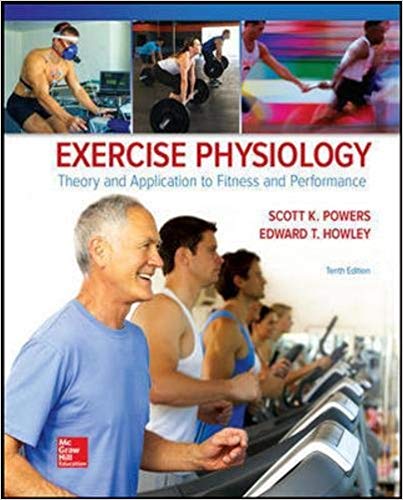
Exercise Physiology Theory and Application to Fitness and Performance 10Th Edition by Scott Powers - Test Bank

Exercise Physiology Theory and Application to Fitness and Performance 10Th Edition by Scott Powers - Test Bank   Instant Download - Complete Test Bank With Answers     Sample Questions Are Posted Below   TEST BANK Chapter 5 Cell Signaling and the Hormonal Responses to Exercise   Multiple Choice Questions Level 1 questions-Lowest level of …

$19.99

Exercise Physiology Theory and Application to Fitness and Performance 10Th Edition by Scott Powers – Test Bank


Instant Download – Complete Test Bank With Answers


Sample Questions Are Posted Below


TEST BANK

Chapter 5

Cell Signaling and the Hormonal Responses to Exercise


Multiple Choice Questions

Level 1 questions-Lowest level of difficulty questions (correct response requires remembering key information)

  1. Steroid hormones exert their primary effect by
    A. activating adenylate cyclase.
    B.regulating  gene expression.
    C. blocking the effect of cyclic AMP.
    D. causing an inflammation response.


  1. Hormones are defined as
  2. chemical messengers located inside of muscle cells.
  3. chemical messengers located within the central nervous system.
  4. chemical messengers released into the blood
  5. None of the above answers are correct


  1. Which of the following hormones is secreted by the thyroid gland and plays a role in the regulation of plasma calcium levels?
    A. thyroxine
    B. triiodothyronine
    C.calcitonin
    D. parathyroid hormone


  1. Which of the following hormones are secreted by the adrenal medulla?
    A.epinephrine
    B. aldosterone
    C. cortisol
    D. angiotensin II


  1. Which of the following hormones may be related to changes in mood and pain perception during endurance exercise?
    A. catecholamines
    B. glucocorticoids
    C. somatomedins
    D.endorphins


  1. Given the importance of maintaining plasma glucose levels constant during exercise, insulin secretion would be expected to ______________ during exercise.
    A. increase
    B.decrease
    C. remain the same
  2. decrease initially, followed by a rapid increase


  1. A hormone that is released from the pancreas at a higher rate during exercise to mobilize liver glucose and adipose tissue fatty acids is
    A.glucagon.
    B. somatostatin.
    C. insulin.
    D. none of the above.


  1. The term describing the cessation of the menstrual cycle resulting from lower estrogen levels in some female athletes is
    A. dysmenorrhea.
    B. eumenorrhea.
    C.amenorrhea.
    D. menarche.


  1. Muscle glycogen breakdown is under dual control by both
  2. catecholamines (e.g., epinephrine) and Ca++/calmodulin.
    B.thyroid hormone and calmodulin
    C. catecholamines and thyroid hormone
  3. none of the above answers are correct.


  1. Which of the following hormones is believed to exert a “permissive” effect on the mobilization of glucose from the liver and FFA from adipose tissue?
    A. epinephrine
    B.T3 and T4
    C. insulin
    D. glucagon


  1. During exercise of about 40% VO2 max, the concentration of plasma cortisol
    A.is lower than at rest.
    B. is higher than at rest.
    C. remains the same as at rest.
  2. None of the above answers are correct


  1. As a result of training, the sympathetic nervous system’s response to a fixed submaximal work rate
    A. is increased.
    B.is decreased.
    C. remains the same.
  2. None of the above answers are correct


  1. The mobilization of free fatty acids from adipose tissue and glucose from liver glycogen would be stimulated by
    A. an increase in insulin and an increase in glucagon.
    B.a decrease in insulin and an increase in glucagon.
    C. an increase in insulin and a decrease in glucagon.
    D. a decrease in insulin and a decrease in glucagon.


  1. Which of the following hormones is part of the General Adaptive Syndrome and is called the “stress” hormone?
    A. epinephrine
    B. renin
    C.cortisol
    D. insulin


  1. Which of the following hormones is secreted from adipose tissue?
    A. leptin
    B. adiponectin
    C.both A and B are correct
    D. none of the above answers are correct


Level 2 questions-Moderate level of difficulty (correct response requires understanding and comprehending information)


  1. While hormones circulate to all tissues, some affect only a few tissues. This is due to the
    A. plasma concentration of the hormone.
    B. training state of the subject.
    C.type of receptor at the tissue.
    D. concentration of the hormone.


  1. Plasma concentrations of growth hormone are elevated following bouts of short-duration, high intensity exercise. The primary effect of an increase in plasma concentrations of growth hormone is to
    A.promote the increase in protein synthesis.
    B. promote long bone growth.
    C. increase the mobilization of FFA and reduce tissue use of blood glucose.
    D. none of the above answers are correct.


  1. When adenylate cyclase is activated by a hormone, the concentration of cyclic AMP increases in the cell even though the hormone does not enter the cell. This is an example of the __________________ mechanism of hormone action.
    A. altering membrane transport
    B. altering activity of DNA
    C.second messenger
    D. all of the above answers are correct


  1. If the thyroid gland does not produce a sufficient amount of T3 or T4, the resting metabolic rate will
    A. increase.
    B.decrease.
    C. remain the same.
  2. None of the above answers are correct


  1. The decrease in plasma volume and the increase in the osmolality of the plasma during prolonged exercise results in _________________ in antidiuretic hormone.
    A.an increase
    B. a decrease
    C. no change
  2. None of the above answers are correct


  1. During exercise, epinephrine and norepinephrine stimulate liver glycogenolysis indirectly by
    A.increasing glucagon secretion from the pancreas.
    B. increasing insulin secretion from the pancreas.
    C. increasing the uptake of FFA by muscle.
    D. lowering plasma cortisol concentration.


Level 3 questions -Highest level of difficulty (correct response requires applying and analyzing information)


  1. Growth hormone
    A. is released from the anterior pituitary.
    B.spares plasma glucose during exercise.
    C. increases gluconeogenesis in the liver.
    D. All of the above are true.


  1. Insulin secretion would be highest
    A. during prolonged exercise.
    B. as exercise intensity increases.
    C.after a meal high in carbohydrates.
    D. It would be equally high after all of the above.


  1. During exercise, blood glucose concentration is maintained fairly constant by all of the following factors EXCEPT ONE.
    A. elevated mobilization of FFA from adipose tissue.
    B.increased rate of gluconeogenesis.
    C. blocking entry of glucose into cells.
    D. elevated concentration of insulin.


  1. The concentration of a hormone can be increased by
    A.decreasing the rate at which it is metabolized and removed from the body.
    B. increasing the number of receptors.
    C. decreasing plasma volume.
    D. both A and C are correct.


  1. During a bout of high intensity exercise (i.e., 10 minutes at 80%VO2 max), the plasma concentration of hormones that stimulate fatty acid mobilization from adipose tissue increase significantly. The plasma-free fatty acid concentration, however, actually decreases. Why does this occur?
    A. Fatty acid supply is depleted.
    B. Hormones are ineffective in maximal work.
    C.Lactic acid interferes with fatty acid mobilization.
    D. High insulin levels secreted during maximal exercise interfere with fatty acid mobilization.


All true/false questions are rated as Level 1 questions-Lowest level of difficulty questions (correct response requires remembering key information)

True / False Questions

  1. When a drug is given to block the adrenergic receptors during exercise, muscle glycogen utilization is reduced.
    FALSE
  2. Chronic exposure to high levels of a hormone results in “up regulation” of receptors.
    FALSE
  3. Blood epinephrine levels increase as exercise intensity increases, but decrease as exercise duration increases.
    FALSE
  4. Glucagon secretion increases during exercise, which decreases liver glycogen stores in order to maintain blood glucose concentration.
    TRUE


  1. Growth hormone secretion increases during exercise and decreases during sleep.
    FALSE


  1. Even though the concentration of insulin decreases during exercise, the muscle can still take up large quantities of plasma glucose. This is due, in part, to the recruitment of more glucose transporters.
    TRUE


Additional information

Add Review

Your email address will not be published. Required fields are marked *