No products in the cart.

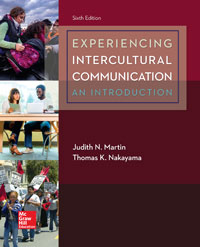
Experiencing Intercultural Communication An Introduction Judith Martin 6e - Test Bank

Experiencing Intercultural Communication An Introduction Judith Martin 6e - Test Bank   Instant Download - Complete Test Bank With Answers     Sample Questions Are Posted Below   CHAPTER FIVE   Multiple Choice Questions   Which of the following statements is true about the study of phonology? *a. It includes studying how the words of …

$19.99

Experiencing Intercultural Communication An Introduction Judith Martin 6e – Test Bank


Instant Download – Complete Test Bank With Answers


Sample Questions Are Posted Below


CHAPTER FIVE


Multiple Choice Questions


  1. Which of the following statements is true about the study of phonology?

*a. It includes studying how the words of a language are pronounced and which units of sounds are meaningful for a specific language.

  1. It includes studying how the words of a language communicate the meaning that one intends to get across in his or her communication.
  2. It includes studying the rules for combining the words of a language into meaningful sentences.
  3. It includes the study of how a language is actually used in particular contexts and focuses on specific purposes of language use.


  1. Which of the following is best defined as the study of meaning, or how words communicate the meaning we intend to get across in our communication?
  2. phonology

*b. semantics

  1. syntactics
  2. pragmatics


  1. Which of the following is best defined as the study of the structure of a language, or the rules for combining words into meaningful sentences?

*a. syntactics

  1. semantics
  2. pragmatics
  3. phonology


  1. Which of the following is best defined as the study of how a language is actually used in particular contexts?
  2. phonology
  3. semantics

*c. pragmatics

  1. syntactics


  1. Which of the following is a salient feature of slang?
  2. It is less creative than standard language.
  3. It fails to establish a sense of community identity among its users.
  4. It is particularly unimportant for youth cultures.

*d. It is created more quickly due to social media.


  1. Communication which is indirect because most of the meaning is internalized in a person is known as _____ communication.
  2. understated
  3. low-context

*c. high-context

  1. elaborate


  1. When the majority of a message is in the spoken word, a speaker is probably using the _____ communication style.
  2. indirect

*b. low-context

  1. high-context
  2. affective


  1. Which of the following statements is true about high-context communication?
  2. It places the majority of meaning and information in the verbal message.
  3. It emphasizes explicit verbal statements.

*c. It is often used by people in long-term relationships.

  1. It ensures that most of the information is in the coded part of the message.


  1. The _____ communication style emphasizes verbal messages that reveal a speaker’s true intentions, needs, wants, or desires.

*a. direct

  1. elaborate
  2. indirect
  3. understated


  1. Denise wants a new coat. Instead of asking her mother outright (which would be improper in her family), she openly admires the coats of others. Denise is using a(n) _____ style of communication.
  2. direct
  3. personal

*c. indirect

  1. instrumental


  1. Many Arabic speakers use rich, expressive language in everyday talk. They probably are using a(n) _____ style of communication.

*a. elaborate

  1. succinct
  2. indirect
  3. understated


  1. In the _____ style of communication, simple assertions and silence are valued.
  2. elaborate
  3. instrumental
  4. indirect

*d. understated


  1. The _____ style of communication, which emphasizes being explicit, is highly valued in many cultures where people feel it is better to get to the point, be explicit, and not leave things unstated.

*a. low-context

  1. high-context
  2. elaborate
  3. indirect


  1. Howard thinks that relationships are the most important aspect of life, so if he has information that might upset the other person, he may not share it completely. Howard probably prefers the _____ style of communication.

*a. indirect

  1. direct
  2. understated
  3. elaborate


  1. Ramona believes in “telling it like it is” with her roommates, even though sometimes that means saying negative things. Ramona is probably using the _____ style of communication.
  2. understated
  3. elaborate
  4. indirect

*d. direct


  1. Changing our communication style so that we can be more effective communicators in another culture is known as _____.
  2. language acquisition
  3. translation

*c. code switching

  1. semantics


  1. Darrel is gay, and a few of his colleagues are aware of this. At work, he uses communication strategies that emphasize trying to fit in and be accepted by a dominant group. He talks about his nephews when his colleagues talk about their kids and he laughs at some homophobic jokes he does not really feel are funny. In this scenario, Darrel is using _____ strategies in order to assimilate.
  2. assertive
  3. aggressive

*c. nonassertive

  1. elaborate


  1. Eduardo, a student who uses a wheel chair, goes to great lengths to prove that he is like the other students. He separates himself as much as possible from other people with disabilities and engages in self-ridicule to show that he is humble. In this scenario, Eduardo is using a(n)_____ assimilation strategy.
  2. assertive

*b. aggressive

  1. nonassertive
  2. instrumental


  1. Which of the following statements is true about assertive accommodation strategies?
  2. These strategies portray cocultural members who use them as highly confrontational and self-promoting.

*b. These strategies are used commonly and involve trying to strike a balance between the concerns of cocultural and dominant group members.

  1. These strategies enable cocultural members to influence group decision making while still showing loyalty to larger organizational goals.
  2. These strategies involve becoming a part of dominant structures and then working from within to promote significant changes, even if the personal costs are high.


  1. Which of the following statements is true about nonassertive accommodation strategies?

*a. These strategies emphasize blending in with the dominant group and also tactfully challenging the dominant structure to recognize cocultural practices.

  1. These strategies prevent cocultural members from influencing group decision making while still showing loyalty to larger organizational goals.
  2. These strategies involve communicating self, doing intragroup networking, using liaisons, and educating others.
  3. These strategies involve becoming a part of dominant structures and then working from within to promote significant changes, no matter how high the personal cost.


  1. Sankaran immigrated to the United States from India as a child. Although he speaks fluent English, he prefers to live, work, and socialize with people who look like him. Sankaran has chosen to use a(n) _____ separation strategy.
  2. assertive
  3. aggressive
  4. instrumental

*d. nonassertive


  1. _____ separation strategies (e.g., attacking and sabotaging others) are used by those for whom cocultural segregation is an important priority.
  2. Elaborate

*b. Aggressive

  1. Assertive
  2. Nonassertive


  1. People who speak more than two languages are considered _____.
  2. bilingual

*b. multilingual

  1. multicultural
  2. translators


  1. Which of the following is best defined as the process of verbally expressing what is said or written in another languages?
  2. translation

*b. interpretation

  1. equivalency
  2. discourse


  1. Cliff is in the process of producing an English target text that refers to an article written in Portuguese (source text). Cliff is engaged in _____.

*a. translation

  1. discourse
  2. equivalency
  3. interpretation


  1. John, a White American, wasn’t sure what to do when he was called on to make a toast at his Filipino friend’s engagement party. He “winged it,” patterning his remarks after the last toast by the groom’s father, and it was well received. Which of the following statements is true of John, considering he did not know exactly what to say?

*a. John engaged in an improvised performance.

  1. John engaged in a third culture style of communication.
  2. John engaged in translating what the groom’s father said.
  3. John engaged in interpreting what the groom’s father said.


  1. In German, the modifier goes before the verb instead of after. Jorg, a native German speaker, says “Interesting this is.” In this scenario, which of the following statements is true of Jorg?
  2. He is improvising his performance.
  3. He is using a third culture style of communication.
  4. He is translating.

*d. He is using interlanguage.


  1. Cocultural groups sometimes develop a language that is designed largely to be understood only by insiders and to keep certain communications from outsiders. What is this language called?
  2. verlan
  3. third culture style

*c. argot

  1. interlanguage


  1. Verlan is a special form of _____, used by French cocultural groups, in which words are reversed to keep their meaning secret.
  2. equivalency
  3. third culture style

*c. argot

  1. interlanguage


True or False


  1. Groups with the most power in a society use a communication system that supports their perception of the world.

*a. True

  1. False


  1. Nonassertive separation strategies are used by people who assume that segregation is a part of everyday life.

*a. True

  1. False


  1. Learning a new language involves only learning new words and their meaning.
  2. True

*b. False


  1. Most bilinguals speak both languages at the same level of fluency.
  2. True

*b. False


  1. One of the benefits of assertive separation strategies, like the nonassertive strategies, is that they promote cocultural unity and self-determination.

*a. True

  1. False


  1. Learning the language of a group a person dislikes is pretty much the same as learning the language of a more favored group.
  2. True

*b. False


  1. A law stating that English is the only language to be used in educational settings would be a language policy.

*a. True

  1. False


  1. Trying to use humor in a foreign language can be really challenging because the basis of humor is so often linked to particular cultural experiences.

*a. True

  1. False


  1. The direct style of communication is often used when individuals wish to preserve the harmony of a relationship.
  2. True

*b. False


Essay Questions


  1. Discuss the power effects of labels.


  1. Identify and discuss the issues of equivalency and accuracy in interpretation and translation.


  1. Compare and contrast the high-context communication style with the understated communication style.


  1. What might the benefits of the nonassertive assimilation style be for a Muslim American working in an organization run by Protestant Americans? What might be the costs of using this approach?


  1. Compare and contrast third culture style with improvised performance. In what situations would each be most beneficial?


  1. Explain the Sapir-Whorf hypothesis.


  1. Under what circumstances might silence be a primary mode of communication in the United States of America?


  1. Why are differences in social positions central to understanding communication?


Additional information

Add Review

Your email address will not be published. Required fields are marked *