No products in the cart.

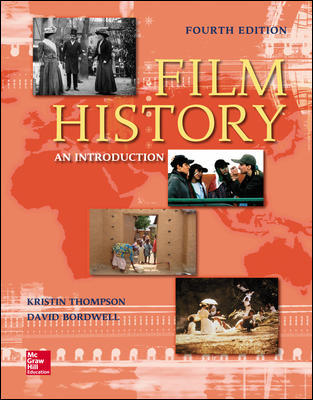
Film History An Introduction 4Th Edition By Kristin Thompson - Test Bank

Film History An Introduction 4Th Edition By Kristin Thompson - Test Bank   Instant Download - Complete Test Bank With Answers     Sample Questions Are Posted Below   Film History: An Introduction, 4e (Thompson) Chapter 5   Germany in the 1920s   1) Which of the following is NOT a reason for the growth of …

$19.99

Film History An Introduction 4Th Edition By Kristin Thompson – Test Bank


Instant Download – Complete Test Bank With Answers


Sample Questions Are Posted Below


Film History: An Introduction, 4e (Thompson)

Chapter 5   Germany in the 1920s


1) Which of the following is NOT a reason for the growth of the German film industry after World War I?

  1. A) the diminishing of anti-German sentiment in enemy countries
  2. B) a government ban on imported films
  3. C) a robust post-war economy
  4. D) exchange rates unfavorable to the German mark


Answer:  C

Accessibility:  Keyboard Navigation


2) Directly after World War I, the leftist political climate in Germany led to:

  1. A) a brief abolition of censorship.
  2. B) the liberal government’s nationalization of the film industry.
  3. C) the introduction of street films.
  4. D) a talent and technology exchange with the Soviet Union.


Answer:  A

Accessibility:  Keyboard Navigation


3) Which of the following is NOT true of The Cabinet of Dr. Caligari, the first German Expressionist film?

  1. A) The actors exhibited jerky or dancelike movements.
  2. B) The film used stylized sets, with strange, distorted buildings painted on canvas backdrops and flats in a theatrical manner.
  3. C) The actors made little attempt at realistic performance.
  4. D) The film exploited the Kuleshov effect by combining newsreel and staged footage.


Answer:  D

Accessibility:  Keyboard Navigation


4) Which of the following is true of the characteristics of German Expressionist films?

  1. A) Expressionist acting was deliberately exaggerated to match the style of the settings.
  2. B) Performances in Expressionist films consisted of carefully controlled physical movements rather than the expression of emotions.
  3. C) They downplayed individual characters as central causal agents and often made social forces the source of causes and effects.
  4. D) They used camera movements to convey character subjectivity and enhance photogénie.


Answer:  A

Accessibility:  Keyboard Navigation


5) Which narrative technique of German Expressionist literature was adopted by scriptwriters for Expressionist films?

  1. A) the alienation effect
  2. B) the frame story
  3. C) the dangling cause
  4. D) the lying flashback


Answer:  B

Accessibility:  Keyboard Navigation


6) During the 1920s, descriptions of German Expressionist films often referred to the sets as:

  1. A) “invisible.”
  2. B) “threadbare.”
  3. C) “acting.”
  4. D) “fake.”


Answer:  C

Accessibility:  Keyboard Navigation


7) In German Expressionist films, the narrative often pauses or slows briefly when:

  1. A) sets are torn down and assembled in real time, as in the theater.
  2. B) elements of mise-en-scène align into eye-catching compositions.
  3. C) characters tell stories or describe troubling dreams.
  4. D) an unfastened moving camera replicates the perceptual subjectivity of characters.


Answer:  B

Accessibility:  Keyboard Navigation


8) Which was NOT a common tactic for blending the elements of mise-en-scène in a German Expressionist film?

  1. A) the use of elaborate tracking shots
  2. B) the juxtaposition of similar shapes
  3. C) the use of stylized surfaces
  4. D) the use of symmetry


Answer:  A

Accessibility:  Keyboard Navigation


9) German Expressionism is distinctive primarily for its:

  1. A) montage cutting.
  2. B) camerawork.
  3. C) use of mise-en-scène.
  4. D) use of natural lighting.


Answer:  C

Accessibility:  Keyboard Navigation


10) Camera movements and high or low angles were relatively rare in German Expressionist films because:

  1. A) most German studios were not technically equipped to handle these demands.
  2. B) many directors had started their careers in German Expressionist theater and were accustomed to arranging the action in a single location.
  3. C) during the war, German filmmakers had access only to Swedish and Danish movies and they were influenced by the static compositions that dominated the style of those films.
  4. D) many Expressionist sets used false perspective to form an ideal composition when seen from a specific vantage point.


Answer:  D

Accessibility:  Keyboard Navigation


11) Which of the following was NOT typically true of German Expressionist narratives?

  1. A) They were set in exotic locales.
  2. B) They were told from the viewpoint of a mad narrator.
  3. C) They involved elements of horror or fantasy.
  4. D) They were set in the past.


Answer:  B

Accessibility:  Keyboard Navigation


12) Which Fritz Lang film is set in the present and uses Expressionist style to satirize the decadence of modern German society?

  1. A) Madame Butterfly
  2. B) Mabuse, the Gambler
  3. C) Metropolis
  4. D) Kriemhild’s Revenge


Answer:  B

Accessibility:  Keyboard Navigation


13) German scenarist Carl Mayer is considered the main force behind:

  1. A) the Kammerspiel genre.
  2. B) the “New Objectivity” trend.
  3. C) the German historical spectacle.
  4. D) the street film.


Answer:  A

Accessibility:  Keyboard Navigation


14) Which of the following traits is NOT typically found in Kammerspiel films?

  1. A) a limited number of settings
  2. B) a heavy reliance on intertitles
  3. C) an unhappy ending
  4. D) a story that takes place in a short span of time


Answer:  B

Accessibility:  Keyboard Navigation


15) During the 1920s, Hollywood cinematographers and designers visited German studios to pick up tips on the use of:

  1. A) color processes.
  2. B) zoom lenses.
  3. C) models.
  4. D) artificial lighting.


Answer:  C

Accessibility:  Keyboard Navigation


16) The Last Laugh (1924) and Variety (1925) were both internationally renowned for their:

  1. A) spectacular camera movements.
  2. B) rapid montage sequences.
  3. C) highly stylized performances.
  4. D) tragic endings.


Answer:  A

Accessibility:  Keyboard Navigation


17) Which of the following production groups was NOT part of the German distribution company Parufamet?

  1. A) Metro-Goldwyn-Mayer (MGM)
  2. B) Paramount
  3. C) Universum Film Aktien Gesellschaft (Ufa)
  4. D) Universal


Answer:  D

Accessibility:  Keyboard Navigation


18) One of the significant factors in the decline of German Expressionist cinema was:

  1. A) the onset of World War II.
  2. B) the departure of Expressionist filmmakers to Hollywood.
  3. C) an unofficial ban on German imports by exhibitors in England and France.
  4. D) the failure of Expressionist filmmakers to keep pace with the increased budgets of mainstream German cinema.


Answer:  B

Accessibility:  Keyboard Navigation


19) The German avant-garde theater of the mid-1920s became less concerned with the depiction of extreme emotions (as exemplified by German Expressionism) and more interested in:

  1. A) the ironies of the social situation.
  2. B) the purely pictorial quality of artworks.
  3. C) American popular culture.
  4. D) theories of human perception.


Answer:  A

Accessibility:  Keyboard Navigation


20) In order to export their films to major markets outside Germany, the big German production companies made films in the mid- to late 1920s that:

  1. A) featured performers who looked and acted like certain American movie stars such as Charlie Chaplin and William S. Hart.
  2. B) contained no intertitles.
  3. C) emphasized their “Germanness” via the adaptation of classic German literature and the use of famed German monuments and landmarks as settings.
  4. D) were stylistically indistinguishable from Hollywood pictures.


Answer:  D

Accessibility:  Keyboard Navigation


21) Over the course of World War I, the number of active German film production companies decreased by almost 80 percent.


Answer:  FALSE

Accessibility:  Keyboard Navigation


22) During the inflationary period of the early 1920s, the larger German production companies found it relatively easy to finance historical epics.


Answer:  TRUE

Accessibility:  Keyboard Navigation


23) German Expressionists favored extreme distortion to express an inner emotional reality rather than surface appearances.


Answer:  TRUE

Accessibility:  Keyboard Navigation


24) German Expressionist films emphasize the composition of individual shots to an exceptional degree.


Answer:  TRUE

Accessibility:  Keyboard Navigation


25) The return to a stable German currency in 1924 made it cheaper for companies to finance a new film in Germany than to buy a film from abroad.


Answer:  FALSE

Accessibility:  Keyboard Navigation


26) The coming of sound combined with greater control over the film industry by conservative forces created an emphasis on light entertainment in German cinema during the late 1920s.


Answer:  TRUE

Accessibility:  Keyboard Navigation


27) Explain how Germany’s film industry was able to thrive during the early 1920s, a period of severe economic hardship and hyperinflation. How did the film industry flourish while other industries were devastated?


Answer:  Answer may vary.

Accessibility:  Keyboard Navigation


28) German Expressionism in the cinema debuted with The Cabinet of Dr. Caligari in 1920, years after Expressionism was well established in other art forms. What techniques used in painting and theatrical design were adapted by Expressionist filmmakers?


Answer:  Answer may vary.

Accessibility:  Keyboard Navigation


29) How were the elements of mise-en-scène used in German Expressionist cinema? Identify the important characteristics of costume, setting, and figure behavior in these films, and explain how these elements worked together; cite from the movies discussed in the text or from a film screened in class.


Answer:  Answer may vary.

Accessibility:  Keyboard Navigation


30) How did advances in technological resources—as implemented by German studios after the war—influence the development of German film style over the course of the 1920s?


Answer:  Answer may vary.

Accessibility:  Keyboard Navigation


31) Identify the primary formal concerns of the “New Objectivity” trend, and explain how the films of G. W. Pabst demonstrate those concerns.


Answer:  Answer may vary.

Accessibility:  Keyboard Navigation

Additional information

Add Review

Your email address will not be published. Required fields are marked *