No products in the cart.

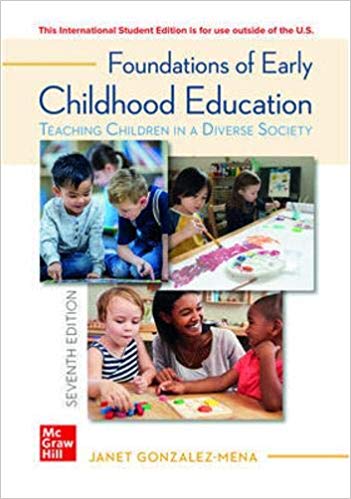
Foundations of Early Childhood Education Teaching Children in a Diverse Society 7Th Edition By Janet - Test Bank

Foundations of Early Childhood Education Teaching Children in a Diverse Society 7Th Edition By Janet - Test Bank   Instant Download - Complete Test Bank With Answers     Sample Questions Are Posted Below   Chapter 05 Guiding Young Children's Behavior     Multiple Choice Questions Regarding behavioral expectations for children at different ages and …

$19.99

Foundations of Early Childhood Education Teaching Children in a Diverse Society 7Th Edition By Janet – Test Bank


Instant Download – Complete Test Bank With Answers


Sample Questions Are Posted Below


Chapter 05

Guiding Young Children’s Behavior


Multiple Choice Questions

  1. Regarding behavioral expectations for children at different ages and stages, which of the following statements is FALSE?
    A.Since they are still learning to distinguish fantasy from reality, it is common for three-year-old children to tell untruths.
    B. Two-year-old children are naturally defiant as they struggle to experience their own autonomy.
    C. When four-year-old children steal items, it may reflect that they are in an early stage of moral development.
    D. When school-age children are argumentative, it is a signal that they lack socialization.


Accessibility: Keyboard Navigation
Accessibility: Screen Reader Compatible

  1. Early childhood guidance includes all but which of the following?
    A.attempting to control children’s behavior period.
    B. focusing on preventing children’s misbehavior period.
    C. teaching children alternative ways to behave and control themselves period.
    D. understanding that children are born with the need for attachment and often require teaching on how best to relate with others period.


Accessibility: Keyboard Navigation
Accessibility: Screen Reader Compatible

  1. The guidance methods presented in the textbook are most consistent with which view of authority?
    A.Children should be taught to be obedient to adults.
    B. Children should be independent thinkers.
    C. Children should learn to conform to proper standards for behavior.
    D. Children should learn the rituals and traditions important in society.


Accessibility: Keyboard Navigation
Accessibility: Screen Reader Compatible

  1. A child’s behavior is influenced by which of the following factors:
    A.The environment, including the setup and the availability/accessibility of materials and other affordances
    B. How the adults, parents and teachers alike, respond to children’s unacceptable behaviors
    C. How the adults, parents and teachers alike, behave and speak to the children
    D. The curriculum
    E. All of the above


Accessibility: Keyboard Navigation
Accessibility: Screen Reader Compatible

  1. Four-year-old Suzie has just bitten her younger brother. At which point will Suzie be most open to learning from her misbehavior?
    A.right after having bitten her brother period
    B. after she has had a “time-out” and time to think about her misbehavior period
    C. whenever her caregiver has the time to sit down and discuss the consequences of Suzie’s behavior period
    D. after she gets a spanking for such unacceptable behavior period


Accessibility: Keyboard Navigation
Accessibility: Screen Reader Compatible

  1. The primary problem with spanking and other forms of physical punishment is that its use
    A.encourages children to be obedient and never question authority.
    B. makes it difficult for children to develop the skills they need to think for themselves.
    C. teaches children that using force is an acceptable way to solve problems.
    D. makes children more susceptible to peer pressure in adolescence.


Accessibility: Keyboard Navigation
Accessibility: Screen Reader Compatible

  1. Regarding the side effects of punishment, which of the following statements is FALSE?
    A.The most aggressive children in early childhood programs are often the ones whose parents use spanking or other forms of severe punishment.
    B. Children can become immune to punishment, forcing adults to increase the degree of force to make their point.
    C. Children who spend time around punishing adults become more empathetic and are less likely to use punishment to control other children.
    D. Spanking humiliates children, leaving them hurt and angry.


Accessibility: Keyboard Navigation
Accessibility: Screen Reader Compatible

  1. Review the following statements regarding “time-out” as a guidance tool. Which of the following statements are TRUE?
    A.Compared to the other guidance tools, time-out is one of the most useful alternatives
    B. When placing a child in time-out, the adult should determine the amount of time and set a timer so the child knows when s/he can leave time-out
    C. Time-out is a nonviolent alternative to spanking when the child is truly out of control
    D. All of these


Accessibility: Keyboard Navigation
Accessibility: Screen Reader Compatible

  1. First grade teacher Ajit Patel has a student, Noel, who refuses to hang up her coat. Each morning, Noel just throws her jacket anywhere it happens to land. To provide guidance, Patel does not immediately do anything. Instead, when Noel wants to go out for recess and cannot find her jacket, Patel tells her that she cannot go to recess. Which guidance tool is Ajit Patel using?
    A.experiencing consequences of one’s actions
    B. time-out
    C. redirecting inappropriate behavior
    D. physical punishment


Accessibility: Keyboard Navigation
Accessibility: Screen Reader Compatible

  1. Regarding limits, which of the following statements is FALSE?
    A.Limits are different from rules in that limits are restrictions, not regulations.
    B. Physical limits are tangible, while adult limits are intangible.
    C. Children only come to understand physical limits through words and adult modeling.
    D. Good, firm physical limits provide a sense of safety for the child.


Accessibility: Keyboard Navigation
Accessibility: Screen Reader Compatible

  1. As an early childhood professional, you will sometimes be in a situation where you feel you have to set limits. According to the text, you should ask yourself all but which of the following questions when thinking about setting a limit?
    A.Has the child outgrown the limit?
    B. Will setting the limit make it easier to carry out my job?
    C. Is there a valid reason for the limit?
    D. Can I rearrange the environment to eliminate the restriction?


Accessibility: Keyboard Navigation
Accessibility: Screen Reader Compatible

  1. In order to teach respect for animals, kindergarten teacher Jeffrey Roberts occasionally brings pets into class. Jeffrey brings the children together and demonstrates how to hold and touch an animal. As he gently strokes the animal, Jeffrey will say, “See, this is the way she likes to be touched. You have to do it very gently and show that you care.” Which guidance tool is Jeffrey using?
    A.teaching children to express their feelings
    B. modeling prosocial behavior
    C. redirection
    D. allowing children to experience the consequences of their actions


Accessibility: Keyboard Navigation
Accessibility: Screen Reader Compatible

  1. Effect methods for managing a child’s anger include:
    A.Accepting and acknowledging a child’s anger
    B. Teaching the child the difference between emotions and behavior
    C. Adults modeling appropriate responses to their own frustrations and/or to the child expressing anger
    D. All of the above


Accessibility: Keyboard Navigation
Accessibility: Screen Reader Compatible

  1. The current approach to tantrums in early childhood education includes all but which of the following?
    A.keeping a child safe during a tantrum
    B. prevention of tantrums by paying attention to children’s stress and frustration levels
    C. encouraging the expression of feelings, but not through tantrums
    D. not making a big fuss over tantrums in order to avoid “rewarding” them


Accessibility: Keyboard Navigation
Accessibility: Screen Reader Compatible

  1. When it comes to handling children with special needs who do not respond to ordinary guidance strategies, an early childhood professional may have to do all but which of the following?
    A.re-design the environment and activities to prevent children’s challenging behaviors
    B. seek external consultation and technical assistance
    C. modify the curriculum to help children learn appropriate behaviors
    D. use positive behavioral interventions that address the form, but not the function, of the behavior


Accessibility: Keyboard Navigation
Accessibility: Screen Reader Compatible

  1. Each day, preschool teacher Andrea has a “time in” with at least one student. During these periods, Andrea gets down on the floor with the student and is fully available and responsive to that child. Andrea’s technique is a proactive way to deal with which cause of misbehavior?
    A.misbehavior due to a lack of understanding the behavior is inappropriate
    B. misbehavior as result of mismatch between child and environment
    C. misbehavior as a response to feeling powerless
    D. misbehavior as a cry for attention


Accessibility: Keyboard Navigation
Accessibility: Screen Reader Compatible

  1. To deal with the universal toddler problem of biting, your text recommends all but which of the following?
    A.Supervise toddlers closely, especially when one is known to be a biter.
    B. Teach toddlers to defend themselves physically by pushing the biting child away or running away when they see a biter coming at them.
    C. Provide props for toddlers to act out their aggressions symbolically.
    D. Help toddlers develop a feeling of power by giving them choices and offering them challenges that require strength.


Accessibility: Keyboard Navigation
Accessibility: Screen Reader Compatible

  1. According to the article by Udell and Glasenapp focusing on management and prevention of difficult behaviors, the authors suggest all but which of the following?
    A.Be specific and positive in correcting behavior.
    B. Ask questions when giving directions.
    C. Avoid competitions and comparisons among children.
    D. Be sure to make more comments about positive behavior than inappropriate behavior.


Accessibility: Keyboard Navigation
Accessibility: Screen Reader Compatible

  1. Child care provider Emory Russell cares for a child, Kyle, who has a pattern of throwing tantrums any time Emory asks him to do something. Emory eventually decides that Kyle will have to be retrained to not feel rewarded for his tantrums. Emory tries not to pay so much attention to Kyle’s defiance and, instead, reward him when he cooperates. What strategy is Emory Russell using?
    A.prosocialization
    B. time-out
    C. behavior modification
    D. redirection


Accessibility: Keyboard Navigation
Accessibility: Screen Reader Compatible


True / False Questions

  1. Understanding the behavioral norms for each age and stage of development is important for interpreting behaviors and the correct application of guidance strategies.
    TRUE


Accessibility: Keyboard Navigation
Accessibility: Screen Reader Compatible

  1. The book asserts that a person’s approach to guidance and discipline is often driven by their perception of human nature.
    TRUE


Accessibility: Keyboard Navigation
Accessibility: Screen Reader Compatible

  1. Corporal punishment is legal for parents in all states as long as they do not leave physical marks and many states still permit corporal punishment in public schools.
    TRUE


Accessibility: Keyboard Navigation
Accessibility: Screen Reader Compatible

  1. Spanking, or corporal punishment in general, has no place in early childhood guidance systems because it can encourage maladaptive behaviors.
    TRUE


Accessibility: Keyboard Navigation
Accessibility: Screen Reader Compatible

  1. Daycare provider Carlene cares for a 3-year-old child who lies quite regularly. When Carlene “catches” the child in a misdeed, her best strategy to deal with the child’s lying is to ask, “Who did this?” in order to give the child a chance to be honest.
    FALSE


Accessibility: Keyboard Navigation
Accessibility: Screen Reader Compatible

  1. The “teachable moment” often occurs right after a child has misbehaved.
    TRUE


Accessibility: Keyboard Navigation
Accessibility: Screen Reader Compatible

  1. “Time-out” as a guidance strategy is more likely to be effective in cultures that stress individual needs and de-emphasize interdependence.
    TRUE


Accessibility: Keyboard Navigation
Accessibility: Screen Reader Compatible

  1. “Time-out” as a guidance strategy is more likely to be effective when used in a non-punitive manner, allowing the child calm down and resume play when he or she feels ready
    TRUE


Accessibility: Keyboard Navigation
Accessibility: Screen Reader Compatible

  1. In general, children spend more time testing adult (verbal/intangible) limits than they spend testing physical limits.
    TRUE


Accessibility: Keyboard Navigation
Accessibility: Screen Reader Compatible

  1. Redirection is a sharp change of focus designed to get a child’s mind off of whatever s/he was feeling or doing.
    FALSE


Accessibility: Keyboard Navigation
Accessibility: Screen Reader Compatible

  1. Redirection is a good alternative to limits, which can encourage power struggles
    TRUE


Accessibility: Keyboard Navigation
Accessibility: Screen Reader Compatible

  1. When faced with a child’s anger, an early childhood professional should ignore the anger and then model an appropriate expression of anger.
    FALSE


Accessibility: Keyboard Navigation
Accessibility: Screen Reader Compatible

  1. According to the Council for Exceptional Children, many young children engage in challenging behavior, and the majority of these children respond to developmentally appropriate management techniques.
    TRUE


Accessibility: Keyboard Navigation
Accessibility: Screen Reader Compatible

  1. Toddler biting is best understood as an attempt for the toddler to express him/herself and to gain power when s/he does not have the words to do so.
    TRUE


Accessibility: Keyboard Navigation
Accessibility: Screen Reader Compatible

  1. Thoughtful use of time-out can be one of the most effective alternatives to punishment.
    FALSE


Accessibility: Keyboard Navigation
Accessibility: Screen Reader Compatible

  1. Childhood squabbles, although occasionally requiring guidance, are generally positive since they help children learn the give-and-take of social relationships.
    TRUE


Accessibility: Keyboard Navigation
Accessibility: Screen Reader Compatible


Essay Questions

  1. Discuss why spanking and other forms of physical punishment are not considered appropriate in the early childhood setting.

First, these forms of punishment teach the lesson that using force is okay to solve one’s problems. These methods also over-emphasize obedience. When children over-conform and never question authority, they are less likely to develop the critical thinking skills necessary to help them solve their own problems. In addition, those children who are more oriented toward external authority may be more prone to bow to peer pressure in adolescence. Finally, these forms of punishment can have unintended side effects including: humiliation and damage to self-esteem; greater physical aggression in the child; immunity that can lead to harsher punishment, even child abuse; and, erosion of the adult/child relationship.


Accessibility: Keyboard Navigation
Accessibility: Screen Reader Compatible

  1. Describe the six tools for early childhood guidance discussed in your text.

One nonviolent alternative to spanking and other types of physical punishment is time-out, in which the child is removed from a scene in which s/he has misbehaved. Although effective in certain circumstances, time-out is considered one of the least effective tools. Another approach is to allow children to learn from the consequences of their actions. For example, a child who does not clean up at the art table can lose the privilege of playing at the art table for the day. The remaining four guidance tools are more proactive; they focus on preventing misbehavior, as opposed to dealing with misbehavior. One approach is to set limits – either physical or adult (intangible) limits. Another approach is redirection, where the child’s attention is shifted into a direction or activity that is more acceptable, while respecting their feelings. Early childhood professionals can also teach children how to express their feelings, since blocked feelings often lead to misbehavior. Finally, one can model prosocial behaviors and provide constructive responses for misbehaviors, such as being positive and specific in giving corrective feedback, avoiding comparison or questions that give a false sense of choice, and, most importantly, making sure that positive comments outweigh comments given to correct inappropriate behavior.


Accessibility: Keyboard Navigation
Accessibility: Screen Reader Compatible

  1. When a child is misbehaving, what are the six questions that you should ask in order to effectively interpret the behavior?

The first question to ask is, “Are the child’s basic needs met?” Unmet needs often play a part in misbehavior. A second question is, “Does the environment fit the child?” When a child is bored with her/his environment, s/he may misbehave. Third, you can ask, “Is the child’s behavior a cry for attention?” A proactive way to address misbehavior is to have “time in” or “floor time” with the child, so that he/she feels he/she has received attention. A fourth question is, “Is the child’s behavior a response to feeling powerless?” You can help children can gain power by giving them responsibilities and teaching them to express themselves. The fifth question is, “Did the child learn this behavior by being rewarded for it in the past?” In such cases, you might want to set up a behavior modification system. Finally, you can ask, “Does this child clearly understand why the behavior is inappropriate?”


Accessibility: Keyboard Navigation
Accessibility: Screen Reader Compatible

Additional information

Add Review

Your email address will not be published. Required fields are marked *