No products in the cart.

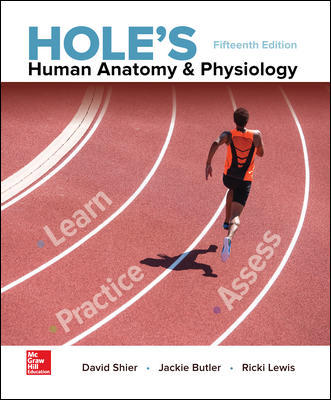
Hole's Human Anatomy & Physiology 15Th Edition By David Shier - Test Bank

Hole's Human Anatomy & Physiology 15Th Edition By David Shier - Test Bank   Instant Download - Complete Test Bank With Answers     Sample Questions Are Posted Below   Hole's Human Anatomy & Physiology, 15e (Shier) Chapter 5   Tissues   1) Which of the following is not one of the four basic types of …

$19.99

Hole’s Human Anatomy & Physiology 15Th Edition By David Shier – Test Bank


Instant Download – Complete Test Bank With Answers


Sample Questions Are Posted Below


Hole’s Human Anatomy & Physiology, 15e (Shier)

Chapter 5   Tissues


1) Which of the following is not one of the four basic types of body tissues?

  1. A) Epithelial tissue
  2. B) Connective tissue
  3. C) Eye tissue
  4. D) Muscle tissue


Answer:  C

Section:  05.01

Topic:  Overview of histology and tissue types

Bloom’s:  1. Remember

Learning Outcome:  05.01 List the four major tissue types in the body, then indicate locations and functions of each type.

Accessibility:  Keyboard Navigation


2) Which of the following characteristics is used to name tissue types?

  1. A) Location of cells in the body
  2. B) Number of inclusions
  3. C) Organization of cells
  4. D) Number of mitochondria


Answer:  C

Section:  05.01

Topic:  Overview of histology and tissue types

Bloom’s:  2. Understand

Learning Outcome:  05.02 Identify the intercellular junctions in tissues.

Accessibility:  Keyboard Navigation


3) Histology is the study of

  1. A) organ function.
  2. B) molecules.
  3. C) cells.
  4. D) tissues.


Answer:  D

Section:  05.01

Topic:  Overview of histology and tissue types

Bloom’s:  1. Remember

Learning Outcome:  05.01 List the four major tissue types in the body, then indicate locations and functions of each type.

Accessibility:  Keyboard Navigation


4) The epidermis (outer layer of the skin) needs to be tough and resistant to shearing and stretching. The type of intercellular junction best suited for this need is a(n) ________.

  1. A) desmosome
  2. B) gap junction
  3. C) tight junction
  4. D) ion channel


Answer:  A

Section:  05.01

Topic:  Overview of histology and tissue types

Bloom’s:  3. Apply

Learning Outcome:  05.02 Identify the intercellular junctions in tissues.

Accessibility:  Keyboard Navigation


5) The smooth muscle cells of the digestive tract need to send electrical signals between each other to contract in unison. The type of intercellular junction best suited for this need is ________.

  1. A) a desmosome
  2. B) a gap junction
  3. C) a tight junction
  4. D) found in the blood-brain barrier


Answer:  B

Section:  05.01

Topic:  Overview of histology and tissue types

Bloom’s:  3. Apply

Learning Outcome:  05.02 Identify the intercellular junctions in tissues.

Accessibility:  Keyboard Navigation


6) The membranes of the blood-brain barrier need to be fused, preventing any substances from entering and/or escaping between cells. The type of intercellular junction best suited for this need is a ________.

  1. A) desmosome
  2. B) gap junction
  3. C) tight junction
  4. D) ion channel


Answer:  C

Section:  05.01

Topic:  Overview of histology and tissue types

Bloom’s:  3. Apply

Learning Outcome:  05.02 Identify the intercellular junctions in tissues.

Accessibility:  Keyboard Navigation


7) What do intercellular junctions connect?

  1. A) Cell membranes
  2. B) Cell nuclei
  3. C) Blood cells
  4. D) Microtubules


Answer:  A

Section:  05.01

Topic:  Overview of histology and tissue types

Bloom’s:  1. Remember

Learning Outcome:  05.02 Identify the intercellular junctions in tissues.

Accessibility:  Keyboard Navigation


8) The skin is composed of an outer layer of epithelial tissue, the epidermis, and an inner layer of connective tissue, the dermis. Between the lowest layer of the epidermis and the top layer of the dermis lies an anchor layer called the ________.

  1. A) serous membrane
  2. B) basement membrane
  3. C) simple cuboidal epithelium
  4. D) synovial membrane


Answer:  B

Section:  05.02

Topic:  Microscopic anatomy, location, and function of epithelial tissue

Bloom’s:  3. Apply

Learning Outcome:  05.04 Describe the general characteristics and functions of epithelial tissue.

Accessibility:  Keyboard Navigation


9) Epithelial tissue functions in

  1. A) secretion, absorption, and protection.
  2. B) contraction, movement, and reflexes.
  3. C) reacting to stimuli, thinking, and remembering.
  4. D) nourishing and hydrating tissues.


Answer:  A

Section:  05.02

Topic:  Microscopic anatomy, location, and function of epithelial tissue

Bloom’s:  1. Remember

Learning Outcome:  05.04 Describe the general characteristics and functions of epithelial tissue.

Accessibility:  Keyboard Navigation


10) The tissue through which gases are exchanged between the blood and the air in the lungs is

  1. A) stratified squamous epithelium.
  2. B) simple squamous epithelium.
  3. C) simple cuboidal epithelium.
  4. D) simple columnar epithelium.


Answer:  B

Section:  05.02

Topic:  Microscopic anatomy, location, and function of epithelial tissue

Bloom’s:  2. Understand

Learning Outcome:  05.04 Describe the general characteristics and functions of epithelial tissue.

Accessibility:  Keyboard Navigation


11) The tissue that forms the inner lining of the respiratory passages is

  1. A) mucus-secreting and transitional.
  2. B) stratified, sputum-secreting, and non-ciliated.
  3. C) mucus-secreting, ciliated, and pseudostratified.
  4. D) serous fluid-secreting, simple, and columnar.


Answer:  C

Section:  05.02

Topic:  Microscopic anatomy, location, and function of epithelial tissue

Bloom’s:  2. Understand

Learning Outcome:  05.04 Describe the general characteristics and functions of epithelial tissue.

Accessibility:  Keyboard Navigation


12) The type of epithelium that lines the urinary bladder and many of the urinary passageways is

  1. A) cuboidal.
  2. B) transitional.
  3. C) pseudostratified.
  4. D) columnar.


Answer:  B

Section:  05.02

Topic:  Microscopic anatomy, location, and function of epithelial tissue

Bloom’s:  2. Understand

Learning Outcome:  05.04 Describe the general characteristics and functions of epithelial tissue.

Accessibility:  Keyboard Navigation


13) The merocrine, apocrine, and holocrine secretions differ in the

  1. A) locations of the glands that produce them.
  2. B) number of cells that secrete.
  3. C) amount of cytoplasm secreted along with the glandular product.
  4. D) amount of glycoprotein secreted with the glandular product.


Answer:  C

Section:  05.02

Topic:  Glands (exocrine vs. endocrine)

Bloom’s:  2. Understand

Learning Outcome:  05.06 Explain how glands are classified.

Accessibility:  Keyboard Navigation


14) Which type of tissue lines the follicles of the thyroid glands?

  1. A) Simple squamous epithelium
  2. B) Simple cuboidal epithelium
  3. C) Stratified cuboidal epithelium
  4. D) Glandular epithelium


Answer:  B

Section:  05.02

Topic:  Microscopic anatomy, location, and function of epithelial tissue

Bloom’s:  2. Understand

Learning Outcome:  05.04 Describe the general characteristics and functions of epithelial tissue.; 05.05 Name the types of epithelium, and identify an organ in which each is found.

Accessibility:  Keyboard Navigation


15) The pituitary gland is a structure in the brain that secretes hormones into the bloodstream. What epithelium lines this structure and produces the secretion?

  1. A) Simple squamous epithelium
  2. B) Transitional epithelium
  3. C) Stratified cuboidal epithelium
  4. D) Glandular epithelium


Answer:  D

Section:  05.02

Topic:  Microscopic anatomy, location, and function of epithelial tissue

Bloom’s:  3. Apply

Learning Outcome:  05.04 Describe the general characteristics and functions of epithelial tissue.

Accessibility:  Keyboard Navigation


16) The pyloric glands of the stomach release hydrochloric acid and other digestive juices during digestion. These glands have very short ducts and the tubes are branched. These glands are ________.

  1. A) simple branched tubular
  2. B) simple coiled tubular
  3. C) simple branched alveolar
  4. D) unicellular


Answer:  A

Section:  05.02

Topic:  Glands (exocrine vs. endocrine)

Bloom’s:  3. Apply

Learning Outcome:  05.06 Explain how glands are classified.

Accessibility:  Keyboard Navigation


17) A(n) ________ gland branches repeatedly before reaching the glandular cells or secretory part.

  1. A) simple
  2. B) compound
  3. C) tubular
  4. D) alveolar


Answer:  B

Section:  05.02

Topic:  Glands (exocrine vs. endocrine)

Bloom’s:  1. Remember

Learning Outcome:  05.06 Explain how glands are classified.

Accessibility:  Keyboard Navigation


18) Areolar tissue contains

  1. A) many adipocytes filled with fat.
  2. B) collagenous fibers, elastic fibers, and gel-like ground substance.
  3. C) chondrocytes and lacunae.
  4. D) osteocytes, osteoblasts, and canaliculi.


Answer:  B

Section:  05.02

Topic:  Microscopic anatomy, location, and function of epithelial tissue

Bloom’s:  1. Remember

Learning Outcome:  05.04 Describe the general characteristics and functions of epithelial tissue.

Accessibility:  Keyboard Navigation


19) Tendons and ligaments are composed primarily of

  1. A) dense irregular tissue.
  2. B) reticular connective tissue.
  3. C) muscle tissue.
  4. D) dense regular connective tissue.


Answer:  D

Section:  05.03

Topic:  Microscopic anatomy, location, and function of connective tissue

Bloom’s:  2. Understand

Learning Outcome:  05.08 Compare and contrast the ground substance, cells, and fibers in different types of connective tissue.; 05.07 Describe the general characteristics of connective tissue.

Accessibility:  Keyboard Navigation


20) Cartilage tissues are likely to be slow in healing following an injury because

  1. A) chondrocytes cannot divide.
  2. B) chondrocytes do not have direct blood supplies.
  3. C) the intercellular material is semisolid.
  4. D) cartilage cells are immersed in fluids.


Answer:  B

Section:  05.03

Topic:  Microscopic anatomy, location, and function of connective tissue

Bloom’s:  2. Understand

Learning Outcome:  05.08 Compare and contrast the ground substance, cells, and fibers in different types of connective tissue.; 05.07 Describe the general characteristics of connective tissue.; 05.09 Describe the major functions of each type of connective tissue, and identify where each type of connective tissue is found.

Accessibility:  Keyboard Navigation


21) Bone cells form concentric circles around longitudinal tubes called

  1. A) osteons.
  2. B) central canals.
  3. C) lacunae.
  4. D) canaliculi.


Answer:  B

Section:  05.03

Topic:  Microscopic anatomy, location, and function of connective tissue

Bloom’s:  1. Remember

Learning Outcome:  05.08 Compare and contrast the ground substance, cells, and fibers in different types of connective tissue.; 05.09 Describe the major functions of each type of connective tissue, and identify where each type of connective tissue is found.

Accessibility:  Keyboard Navigation

22) Which of the following are cellular fragments?

  1. A) Red blood cells
  2. B) White blood cells
  3. C) Lymphocytes
  4. D) Blood platelets


Answer:  D

Section:  05.03

Topic:  Microscopic anatomy, location, and function of connective tissue

Bloom’s:  1. Remember

Learning Outcome:  05.08 Compare and contrast the ground substance, cells, and fibers in different types of connective tissue.

Accessibility:  Keyboard Navigation


23) What type of cell produces connective tissue fibers?

  1. A) Macrophages
  2. B) Mast cells
  3. C) Fibroblasts
  4. D) Osteoclasts


Answer:  C

Section:  05.03

Topic:  Microscopic anatomy, location, and function of connective tissue

Bloom’s:  1. Remember

Learning Outcome:  05.08 Compare and contrast the ground substance, cells, and fibers in different types of connective tissue.; 05.09 Describe the major functions of each type of connective tissue, and identify where each type of connective tissue is found.

Accessibility:  Keyboard Navigation


24) Elastic connective tissue forms ________.

  1. A) bones
  2. B) branching networks or parallel strands
  3. C) cartilage
  4. D) ligaments and tendons


Answer:  B

Section:  05.03

Topic:  Microscopic anatomy, location, and function of connective tissue

Bloom’s:  1. Remember

Learning Outcome:  05.08 Compare and contrast the ground substance, cells, and fibers in different types of connective tissue.

Accessibility:  Keyboard Navigation


25) A general characteristic of connective tissue is that it

  1. A) consists of cells within extracellular material.
  2. B) has no blood supply.
  3. C) covers the outside of organs.
  4. D) lines organs.


Answer:  A

Section:  05.03

Topic:  Microscopic anatomy, location, and function of connective tissue

Bloom’s:  2. Understand

Learning Outcome:  05.07 Describe the general characteristics of connective tissue.

Accessibility:  Keyboard Navigation


26) What type of tissue is adipose tissue?

  1. A) Epithelia tisuse
  2. B) Muscle tissue
  3. C) Nervous tissue
  4. D) Connective tissue


Answer:  D

Section:  05.03

Topic:  Microscopic anatomy, location, and function of connective tissue

Bloom’s:  1. Remember

Learning Outcome:  05.08 Compare and contrast the ground substance, cells, and fibers in different types of connective tissue.

Accessibility:  Keyboard Navigation


27) Cells that reside in a specific connective tissue type for an extended period of time are called

  1. A) wandering cells.
  2. B) transitional cells.
  3. C) fixed cells.
  4. D) stem cells.


Answer:  C

Section:  05.03

Topic:  Microscopic anatomy, location, and function of connective tissue

Bloom’s:  1. Remember

Learning Outcome:  05.08 Compare and contrast the ground substance, cells, and fibers in different types of connective tissue.

Accessibility:  Keyboard Navigation


28) Which of the following structures would be affected the most by a deficiency in collagen?

  1. A) The liver and spleen
  2. B) The epidermis of the skin
  3. C) The lining of the small intestine
  4. D) The bones


Answer:  D

Section:  05.03

Topic:  Microscopic anatomy, location, and function of connective tissue

Bloom’s:  3. Apply

Learning Outcome:  05.09 Describe the major functions of each type of connective tissue, and identify where each type of connective tissue is found.

Accessibility:  Keyboard Navigation


29) Extracellular matrix consists of

  1. A) ground substance and protein fibers.
  2. B) fixed cells and wandering cells.
  3. C) heparin and keratin.
  4. D) lacunae and lamellae.


Answer:  A

Section:  05.03

Topic:  Microscopic anatomy, location, and function of connective tissue

Bloom’s:  1. Remember

Learning Outcome:  05.08 Compare and contrast the ground substance, cells, and fibers in different types of connective tissue.

Accessibility:  Keyboard Navigation


30) Epithelial membranes are typically composed of

  1. A) connective tissue and underlying muscle tissue.
  2. B) epithelium and underlying connective tissue.
  3. C) connective tissue and underlying epithelium.
  4. D) epithelium and underlying muscle tissue.


Answer:  B

Section:  05.04

Topic:  Membranes (mucous, serous, cutaneous, and synovial)

Bloom’s:  2. Understand

Learning Outcome:  05.10 Describe and locate each of the four types of membranes.

Accessibility:  Keyboard Navigation


31) A ________ membrane lines tubes and cavities that open to the outside of the body.

  1. A) serous
  2. B) cutaneous
  3. C) synovial
  4. D) mucous


Answer:  D

Section:  05.04

Topic:  Membranes (mucous, serous, cutaneous, and synovial)

Bloom’s:  1. Remember

Learning Outcome:  05.10 Describe and locate each of the four types of membranes.

Accessibility:  Keyboard Navigation


32) A serous membrane consists of a

  1. A) layer of simple squamous epithelium and a thin layer of areolar tissue.
  2. B) layer of pseudostratified epithelium and a thick layer of areolar tissue.
  3. C) layer of simple squamous epithelium and a thick layer of dense connective tissue.
  4. D) layer of simple squamous epithelium and a thick layer of cartilage.


Answer:  A

Section:  05.04

Topic:  Membranes (mucous, serous, cutaneous, and synovial)

Bloom’s:  1. Remember

Learning Outcome:  05.10 Describe and locate each of the four types of membranes.

Accessibility:  Keyboard Navigation


33) “Cutaneous membrane” refers to ________.

  1. A) skin
  2. B) bones
  3. C) cartilage
  4. D) mucus


Answer:  A

Section:  05.04

Topic:  Membranes (mucous, serous, cutaneous, and synovial)

Bloom’s:  1. Remember

Learning Outcome:  05.10 Describe and locate each of the four types of membranes.

Accessibility:  Keyboard Navigation


34) Embryonic stem cells growing in a lab dish are bathed in a “cocktail” of chemicals that cause them to specialize into branching networks of single-nucleated cells that pulsate in unison. This tissue is most likely

  1. A) smooth muscle.
  2. B) skeletal muscle.
  3. C) cardiac muscle.
  4. D) epithelial tissue.


Answer:  C

Section:  05.05

Topic:  Microscopic anatomy, location, and function of muscular tissue

Bloom’s:  3. Apply

Learning Outcome:  05.11 Distinguish among the three types of muscle tissue.

Accessibility:  Keyboard Navigation


35) A mutation occurs that prevents the formation of intercalated disks. Which of the following muscular structures will be directly affected?

  1. A) The legs
  2. B) The heart
  3. C) The stomach and intestines
  4. D) The tongue


Answer:  B

Section:  05.05

Topic:  Microscopic anatomy, location, and function of muscular tissue

Bloom’s:  3. Apply

Learning Outcome:  05.11 Distinguish among the three types of muscle tissue.

Accessibility:  Keyboard Navigation


36) Involuntary muscle tissues are

  1. A) smooth muscle tissue and skeletal muscle tissue.
  2. B) cardiac muscle tissue and skeletal muscle tissue.
  3. C) smooth muscle tissue and cardiac muscle tissue.
  4. D) smooth muscle tissue, skeletal muscle tissue, and cardiac muscle tissue.


Answer:  C

Section:  05.05

Topic:  Microscopic anatomy, location, and function of muscular tissue

Bloom’s:  1. Remember

Learning Outcome:  05.11 Distinguish among the three types of muscle tissue.

Accessibility:  Keyboard Navigation


37) What type of muscle cell(s) have more than one nucleus?

  1. A) Smooth muscle cells and skeletal muscle cells
  2. B) Cardiac muscle cells and smooth muscle cells
  3. C) Skeletal muscle cells only
  4. D) Smooth muscle cells only


Answer:  C

Section:  05.05

Topic:  Microscopic anatomy, location, and function of muscular tissue

Bloom’s:  1. Remember

Learning Outcome:  05.11 Distinguish among the three types of muscle tissue.

Accessibility:  Keyboard Navigation


38) The muscle tissue that can be consciously controlled is

  1. A) smooth muscle tissue.
  2. B) skeletal muscle tissue.
  3. C) intestinal muscle tissue.
  4. D) cardiac muscle tissue.


Answer:  B

Section:  05.05

Topic:  Microscopic anatomy, location, and function of muscular tissue

Bloom’s:  1. Remember

Learning Outcome:  05.11 Distinguish among the three types of muscle tissue.

Accessibility:  Keyboard Navigation


39) Cardiac muscle is found in the wall of the

  1. A) stomach.
  2. B) intestine.
  3. C) heart.
  4. D) blood vessels.


Answer:  C

Section:  05.05

Topic:  Microscopic anatomy, location, and function of muscular tissue

Bloom’s:  1. Remember

Learning Outcome:  05.11 Distinguish among the three types of muscle tissue.

Accessibility:  Keyboard Navigation


40) Smooth muscle is found in the wall of the

  1. A) heart.
  2. B) bone.
  3. C) stomach.
  4. D) liver.


Answer:  C

Section:  05.05

Topic:  Microscopic anatomy, location, and function of muscular tissue

Bloom’s:  2. Understand

Learning Outcome:  05.11 Distinguish among the three types of muscle tissue.

Accessibility:  Keyboard Navigation


41) The type of muscle tissue in blood vessels is

  1. A) cardiac muscle tissue.
  2. B) smooth muscle tissue.
  3. C) skeletal muscle tissue.
  4. D) voluntary muscle tissue.


Answer:  B

Section:  05.05

Topic:  Microscopic anatomy, location, and function of muscular tissue

Bloom’s:  2. Understand

Learning Outcome:  05.11 Distinguish among the three types of muscle tissue.

Accessibility:  Keyboard Navigation


42) Knowing the structure of the neuron, when a signal travels from a motor neuron to a skeletal muscle, the nerve signal must travel from

  1. A) the dendrites of the motor neuron down the axon, and then from the axon of the neuron to the muscle.
  2. B) the neuroglia of the motor neuron down the axon, and then from the axon of the neuron to the muscle.
  3. C) the axon of the motor neuron down to the dendrites, and then from the dendrites of the neuron to the muscle.
  4. D) the axon of the motor neuron down to the neuroglia, and then from the neuroglia to the dendrites of the muscle.


Answer:  A

Section:  05.06

Topic:  Microscopic anatomy, location, and function of nervous tissue

Bloom’s:  3. Apply

Learning Outcome:  05.12 Describe the general characteristics and functions of nervous tissue.

Accessibility:  Keyboard Navigation


43) Functions of neuroglia include which of the following?

  1. A) They guide neurons to muscles, then pass neurotransmitters to the muscle cells.
  2. B) They serve as glue and scaffolding for neurons but have no physiological role.
  3. C) They sense changes in the environment and respond by sending electrical impulses.
  4. D) They support and bind nervous tissue and provide nutrients and growth factors to neurons by connecting them to blood vessels.


Answer:  D

Section:  05.06

Topic:  Microscopic anatomy, location, and function of nervous tissue

Bloom’s:  2. Understand

Learning Outcome:  05.12 Describe the general characteristics and functions of nervous tissue.

Accessibility:  Keyboard Navigation


44) Which of the following best describes a characteristic of nervous tissue?

  1. A) It provides cushioning and protection from shearing forces.
  2. B) Some of its cells send electrochemical messages.
  3. C) Its intercellular space is filled with collagen.
  4. D) It contracts to perform movements.


Answer:  B

Section:  05.06

Topic:  Microscopic anatomy, location, and function of nervous tissue

Bloom’s:  2. Understand

Learning Outcome:  05.12 Describe the general characteristics and functions of nervous tissue.

Accessibility:  Keyboard Navigation


45) Which of the following is not true about the extracellular matrix?

  1. A) It is the same in all tissues.
  2. B) In epithelium it consists of a basement membrane and interstitial matrix.
  3. C) In many body parts it includes various glycoproteins.
  4. D) It may include integrins.


Answer:  A

Section:  05.01

Topic:  Overview of histology and tissue types

Bloom’s:  2. Understand

Learning Outcome:  05.02 Identify the intercellular junctions in tissues.

Accessibility:  Keyboard Navigation


46) Mutations usually disrupt collagen’s function because

  1. A) there are many types of collagen and this protein is widespread in the body.
  2. B) collagen has a variable structure.
  3. C) collagen has a very precise structure.
  4. D) collagen is used as a cosmetic.


Answer:  C

Section:  05.03

Topic:  Microscopic anatomy, location, and function of connective tissue

Bloom’s:  2. Understand

Learning Outcome:  05.08 Compare and contrast the ground substance, cells, and fibers in different types of connective tissue.; 05.07 Describe the general characteristics of connective tissue.

Accessibility:  Keyboard Navigation


47) A human embryo develops with a mutation that prevents smooth muscle from developing in the body. Which bodily functions will be most heavily affected by this mutation if it survives to birth?

  1. A) Heart functions
  2. B) Digestive system functions
  3. C) Muscular movement
  4. D) Bone functions


Answer:  B

Section:  05.05

Topic:  Overview of histology and tissue types; Microscopic anatomy, location, and function of muscular tissue

Bloom’s:  3. Apply

Learning Outcome:  05.11 Distinguish among the three types of muscle tissue.

Accessibility:  Keyboard Navigation


48) A researcher genetically modifies an organism so it is paralyzed because its motor neurons can send signals to muscles, but none of the motor neurons can receive signals sent from the brain through other neurons. What is wrong with these motor neurons?

  1. A) The motor neurons lack dendrites.
  2. B) The motor neurons lack axons.
  3. C) The motor neurons cannot reach the muscles.
  4. D) The other neurons lack nuclei.


Answer:  A

Section:  05.06

Topic:  Microscopic anatomy, location, and function of nervous tissue

Bloom’s:  3. Apply

Learning Outcome:  05.12 Describe the general characteristics and functions of nervous tissue.

Accessibility:  Keyboard Navigation

49) The greater omentum is a structure that exists in the abdomen and hangs over the digestive tract, behind the abdominal muscles. A cross section viewed under a microscope reveals that it contains a connective tissue composed of large cells, or droplets. The cell walls are very thin and there is no collagen. The tissue looks like it might be good for cushioning. What type of connective tissue is this?

  1. A) Areolar tissue
  2. B) Dense regular connective tissue
  3. C) Elastic connective tissue
  4. D) Adipose tissue


Answer:  D

Section:  05.03

Topic:  Microscopic anatomy, location, and function of connective tissue

Bloom’s:  3. Apply

Learning Outcome:  05.08 Compare and contrast the ground substance, cells, and fibers in different types of connective tissue.

Accessibility:  Keyboard Navigation


50) Spicy foods irritate the membrane of your mouth, which triggers goblet cells to produce a protective layer of a thick substance called mucus. What membrane must be lining the mouth?

  1. A) Serous membrane
  2. B) Synovial membrane
  3. C) Mucus membrane
  4. D) Cutaneous membrane


Answer:  C

Section:  05.04

Topic:  Membranes (mucous, serous, cutaneous, and synovial)

Bloom’s:  3. Apply

Learning Outcome:  05.01 List the four major tissue types in the body, then indicate locations and functions of each type.; 05.10 Describe and locate each of the four types of membranes.

Accessibility:  Keyboard Navigation


51) The vocal cords work via constant movement during sound production, requiring the ability to be resilient and springy, stretching and moving without losing their shape. Knowing this, the vocal cords must be rich in elastin.


Answer:  TRUE

Section:  05.03

Topic:  Microscopic anatomy, location, and function of connective tissue

Bloom’s:  3. Apply

Learning Outcome:  05.09 Describe the major functions of each type of connective tissue, and identify where each type of connective tissue is found.

Accessibility:  Keyboard Navigation


52) Sickle cell anemia is a disease that causes red blood cells to become crescent-shaped and become lodged in capillaries. This disease directly affects a connective tissue.


Answer:  TRUE

Section:  05.03

Topic:  Microscopic anatomy, location, and function of connective tissue

Bloom’s:  3. Apply

Learning Outcome:  05.07 Describe the general characteristics of connective tissue.

Accessibility:  Keyboard Navigation


53) Researchers bred a generation of rats that were sterile. When investigating the root of this change, they noticed that the sterility came from the inner tissues of the uterine tubes missing their normal cilia, which guide the egg into the uterus. The tissue that was hindered was simple squamous epithelium.


Answer:  FALSE

Section:  05.02

Topic:  Microscopic anatomy, location, and function of epithelial tissue

Bloom’s:  3. Apply

Learning Outcome:  05.05 Name the types of epithelium, and identify an organ in which each is found.

Accessibility:  Keyboard Navigation


54) The parotid gland produces serous fluids (saliva) and dumps them into the nearby oral cavity. This makes the parotid gland an exocrine gland.


Answer:  TRUE

Section:  05.02

Topic:  Glands (exocrine vs. endocrine)

Bloom’s:  3. Apply

Learning Outcome:  05.06 Explain how glands are classified.

Accessibility:  Keyboard Navigation


55) Blood isn’t a connective tissue because it wander around the body and is never in a fixed location.


Answer:  FALSE

Section:  05.03

Topic:  Microscopic anatomy, location, and function of connective tissue

Bloom’s:  3. Apply

Learning Outcome:  05.07 Describe the general characteristics of connective tissue.

Accessibility:  Keyboard Navigation


56) You are examining a sample of epithelial tissue. The tissue itself is from an area where the cells form multiple stacked layers. The cells rapidly divide and push older ones away from the basement membrane and up toward the free surface, similarly to skin. This type of epithelial tissue is called stratified squamous epithelium.


Answer:  TRUE

Section:  05.02

Topic:  Microscopic anatomy, location, and function of epithelial tissue

Bloom’s:  3. Apply

Learning Outcome:  05.04 Describe the general characteristics and functions of epithelial tissue.

Accessibility:  Keyboard Navigation


57) Tissues are groups of cells that have a common overall function, yet are distinctive in their characteristic cell types and the molecules that the cells produce.


Answer:  TRUE

Section:  05.01

Topic:  Overview of histology and tissue types

Bloom’s:  2. Understand

Learning Outcome:  05.01 Describe how cells are organized into tissues.

Accessibility:  Keyboard Navigation


58) The wall of the heart is made up of three layers, including the middle layer responsible for the heart’s pumping action. These layers are all the same tissue type, epithelium.


Answer:  FALSE

Section:  05.01

Topic:  Overview of histology and tissue types

Bloom’s:  3. Apply

Learning Outcome:  05.01 List the four major tissue types in the body, then indicate locations and functions of each type.; 05.01 Describe how cells are organized into tissues.

Accessibility:  Keyboard Navigation


59) All tissue types are tightly packed, built of cells attached by intercellular junctions.


Answer:  FALSE

Section:  05.01

Topic:  Overview of histology and tissue types

Bloom’s:  2. Understand

Learning Outcome:  05.01 List the four major tissue types in the body, then indicate locations and functions of each type.; 05.01 Describe how cells are organized into tissues.

Accessibility:  Keyboard Navigation


60) A tissue’s function is to direct flow of a substance to an organ without losing any of the substance or letting any other substances contact it. Tight junctions are most likely to be found between the cells of this tissue.


Answer:  TRUE

Section:  05.01

Topic:  Overview of histology and tissue types

Bloom’s:  3. Apply

Learning Outcome:  05.02 Identify the intercellular junctions in tissues.

Accessibility:  Keyboard Navigation


61) Histology is the study of the history of anatomy and physiology.


Answer:  FALSE

Section:  05.01

Topic:  Overview of histology and tissue types

Bloom’s:  1. Remember

Learning Outcome:  05.01 Describe how cells are organized into tissues.

Accessibility:  Keyboard Navigation


62) Usually epithelial tissues do not have blood vessels.


Answer:  TRUE

Section:  05.02

Topic:  Microscopic anatomy, location, and function of epithelial tissue

Bloom’s:  2. Understand

Learning Outcome:  05.04 Describe the general characteristics and functions of epithelial tissue.

Accessibility:  Keyboard Navigation


63) A mucus-secreting goblet cell is a unicellular gland.


Answer:  TRUE

Section:  05.02

Topic:  Glands (exocrine vs. endocrine)

Bloom’s:  2. Understand

Learning Outcome:  05.06 Explain how glands are classified.

Accessibility:  Keyboard Navigation


64) The tissue that forms the outermost layer of the skin is a type of connective tissue.


Answer:  FALSE

Section:  05.02

Topic:  Microscopic anatomy, location, and function of epithelial tissue

Bloom’s:  2. Understand

Learning Outcome:  05.04 Describe the general characteristics and functions of epithelial tissue.

Accessibility:  Keyboard Navigation

65) The soft part of the nose and the supporting rings of the respiratory passages are composed of fibrocartilage.


Answer:  FALSE

Section:  05.03

Topic:  Microscopic anatomy, location, and function of connective tissue

Bloom’s:  2. Understand

Learning Outcome:  05.09 Describe the major functions of each type of connective tissue, and identify where each type of connective tissue is found.

Accessibility:  Keyboard Navigation


66) White blood cells may become macrophages.


Answer:  TRUE

Section:  05.03

Topic:  Microscopic anatomy, location, and function of connective tissue

Bloom’s:  1. Remember

Learning Outcome:  05.08 Compare and contrast the ground substance, cells, and fibers in different types of connective tissue.

Accessibility:  Keyboard Navigation


67) Osteocytes release histamine and heparin.


Answer:  FALSE

Section:  05.03

Topic:  Microscopic anatomy, location, and function of connective tissue

Bloom’s:  1. Remember

Learning Outcome:  05.08 Compare and contrast the ground substance, cells, and fibers in different types of connective tissue.; 05.09 Describe the major functions of each type of connective tissue, and identify where each type of connective tissue is found.

Accessibility:  Keyboard Navigation


68) Osteoblasts become osteocytes.


Answer:  TRUE

Section:  05.03

Topic:  Microscopic anatomy, location, and function of connective tissue

Bloom’s:  1. Remember

Learning Outcome:  05.08 Compare and contrast the ground substance, cells, and fibers in different types of connective tissue.; 05.09 Describe the major functions of each type of connective tissue, and identify where each type of connective tissue is found.

Accessibility:  Keyboard Navigation


69) Bone cells (osteocytes) are in concentric circles around central canals.


Answer:  TRUE

Section:  05.03

Topic:  Microscopic anatomy, location, and function of connective tissue

Bloom’s:  1. Remember

Learning Outcome:  05.08 Compare and contrast the ground substance, cells, and fibers in different types of connective tissue.

Accessibility:  Keyboard Navigation


70) Blood is composed of red blood cells, white blood cells, and platelets suspended in a fluid extracellular matrix called plasma.


Answer:  TRUE

Section:  05.03

Topic:  Microscopic anatomy, location, and function of connective tissue

Bloom’s:  1. Remember

Learning Outcome:  05.08 Compare and contrast the ground substance, cells, and fibers in different types of connective tissue.

Accessibility:  Keyboard Navigation


71) Serous and mucous membranes consist of epithelial and connective tissues.


Answer:  TRUE

Section:  05.04

Topic:  Membranes (mucous, serous, cutaneous, and synovial)

Bloom’s:  2. Understand

Learning Outcome:  05.10 Describe and locate each of the four types of membranes.

Accessibility:  Keyboard Navigation


72) The lubricating secretions of the walls of the thoracic cavity and the outsides of the lungs come from goblet cells.


Answer:  FALSE

Section:  05.04

Topic:  Membranes (mucous, serous, cutaneous, and synovial)

Bloom’s:  3. Apply

Learning Outcome:  05.10 Describe and locate each of the four types of membranes.

Accessibility:  Keyboard Navigation


73) A synovial membrane is entirely connective tissue.


Answer:  TRUE

Section:  05.04

Topic:  Membranes (mucous, serous, cutaneous, and synovial)

Bloom’s:  1. Remember

Learning Outcome:  05.10 Describe and locate each of the four types of membranes.

Accessibility:  Keyboard Navigation

74) Smooth muscle tissue actions are voluntary.


Answer:  FALSE

Section:  05.05

Topic:  Microscopic anatomy, location, and function of muscular tissue

Bloom’s:  1. Remember

Learning Outcome:  05.11 Distinguish among the three types of muscle tissue.

Accessibility:  Keyboard Navigation


75) Peristalsis is the involuntary contraction and relaxation of the muscles of the digestive tract that assist in moving food and waste through. The muscles controlling peristalsis must be skeletal muscle.


Answer:  FALSE

Section:  05.05

Topic:  Microscopic anatomy, location, and function of connective tissue

Bloom’s:  3. Apply

Learning Outcome:  05.11 Distinguish among the three types of muscle tissue.

Accessibility:  Keyboard Navigation


76) Cardiac muscle can function without nervous stimulation but skeletal muscle cannot.


Answer:  TRUE

Section:  05.06

Topic:  Microscopic anatomy, location, and function of nervous tissue

Bloom’s:  2. Understand

Learning Outcome:  05.12 Describe the general characteristics and functions of nervous tissue.

Accessibility:  Keyboard Navigation


77) A skeletal muscle fiber contains many nuclei.


Answer:  TRUE

Section:  05.05

Topic:  Microscopic anatomy, location, and function of muscular tissue

Bloom’s:  2. Understand

Learning Outcome:  05.11 Distinguish among the three types of muscle tissue.

Accessibility:  Keyboard Navigation

78) Muscle tissue conducts electrical impulses from one neuron to another and coordinates body activities.


Answer:  FALSE

Section:  05.05

Topic:  Microscopic anatomy, location, and function of muscular tissue

Bloom’s:  2. Understand

Learning Outcome:  05.11 Distinguish among the three types of muscle tissue.

Accessibility:  Keyboard Navigation

79) A Schwann cell is a structure that is attached to a neuron and is crucial to its function. It assists in the neuron’s function by speeding up the rate of signal transduction. Schwann cells are neuroglia.


Answer:  TRUE

Section:  05.06

Topic:  Microscopic anatomy, location, and function of nervous tissue

Bloom’s:  3. Apply

Learning Outcome:  05.12 Describe the general characteristics and functions of nervous tissue.

Accessibility:  Keyboard Navigation


80) Cells within a tissue are joined together by ________.


Answer:  intercellular junctions

Section:  05.01

Topic:  Overview of histology and tissue types

Bloom’s:  1. Remember

Learning Outcome:  05.02 Identify the intercellular junctions in tissues.

Accessibility:  Keyboard Navigation


81) A structure that “spot welds” skin cells is a(n) ________.


Answer:  desmosome

Section:  05.01

Topic:  Overview of histology and tissue types

Bloom’s:  1. Remember

Learning Outcome:  05.02 Identify the intercellular junctions in tissues.

Accessibility:  Keyboard Navigation


82) The study of tissues is called ________.


Answer:  histology

Section:  05.01

Topic:  Overview of histology and tissue types

Bloom’s:  1. Remember

Learning Outcome:  05.01 Describe how cells are organized into tissues.

Accessibility:  Keyboard Navigation


83) The four tissue types are muscle tissue, nervous tissue, connective tissue, and ________ tissue.


Answer:  epithelial

Section:  05.01

Topic:  Overview of histology and tissue types

Bloom’s:  1. Remember

Learning Outcome:  05.01 Describe how cells are organized into tissues.

Accessibility:  Keyboard Navigation

84) The tissue that covers all body surfaces is ________ tissue.


Answer:  epithelial

Section:  05.02

Topic:  Microscopic anatomy, location, and function of epithelial tissue

Bloom’s:  1. Remember

Learning Outcome:  05.04 Describe the general characteristics and functions of epithelial tissue.

Accessibility:  Keyboard Navigation


85) A single layer of flattened epithelium forms a tissue called ________.


Answer:  simple squamous epithelium

Section:  05.02

Topic:  Microscopic anatomy, location, and function of epithelial tissue

Bloom’s:  2. Understand

Learning Outcome:  05.04 Describe the general characteristics and functions of epithelial tissue.

Accessibility:  Keyboard Navigation


86) The inner linings of most organs of the digestive system are composed of ________.


Answer:  simple columnar epithelium

Section:  05.02

Topic:  Microscopic anatomy, location, and function of epithelial tissue

Bloom’s:  1. Remember

Learning Outcome:  05.04 Describe the general characteristics and functions of epithelial tissue.

Accessibility:  Keyboard Navigation


87) Sebaceous glands secrete a substance called sebum, which coats the skin and protects it from water. The glands secrete this substance as the cells lining the inside rupture and release their contents, along with the disintegrated cell. Sebaceous glands are ________  glands.


Answer:  holocrine

Section:  05.02

Topic:  Microscopic anatomy, location, and function of epithelial tissue

Bloom’s:  1. Remember

Learning Outcome:  05.06 Explain how glands are classified.

Accessibility:  Keyboard Navigation

88) The most abundant cells in dense connective tissue are ________.


Answer:  fibroblasts

Section:  05.03

Topic:  Microscopic anatomy, location, and function of connective tissue

Bloom’s:  1. Remember

Learning Outcome:  05.08 Compare and contrast the ground substance, cells, and fibers in different types of connective tissue.

Accessibility:  Keyboard Navigation


89) Cartilage cells occupy small chambers called ________.


Answer:  lacunae

Section:  05.03

Topic:  Microscopic anatomy, location, and function of connective tissue

Bloom’s:  1. Remember

Learning Outcome:  05.08 Compare and contrast the ground substance, cells, and fibers in different types of connective tissue.

Accessibility:  Keyboard Navigation


90) The intervertebral discs that separate parts of the backbone are composed of ________.


Answer:  fibrocartilage

Section:  05.03

Topic:  Microscopic anatomy, location, and function of connective tissue

Bloom’s:  1. Remember

Learning Outcome:  05.08 Compare and contrast the ground substance, cells, and fibers in different types of connective tissue.

Accessibility:  Keyboard Navigation


91) The ________ ________  ________  function to transport oxygen and carbon dioxide in the body.


Answer:  red blood cells

Section:  05.03

Topic:  Microscopic anatomy, location, and function of connective tissue

Bloom’s:  2. Understand

Learning Outcome:  05.08 Compare and contrast the ground substance, cells, and fibers in different types of connective tissue.

Accessibility:  Keyboard Navigation

92) The inner lining of the abdomen is a ________  membrane.


Answer:  serous

Section:  05.04

Topic:  Membranes (mucous, serous, cutaneous, and synovial)

Bloom’s:  1. Remember

Learning Outcome:  05.10 Describe and locate each of the four types of membranes.

Accessibility:  Keyboard Navigation


93) The lining of the nose consists of ________ membrane.


Answer:  mucous

Section:  05.04

Topic:  Membranes (mucous, serous, cutaneous, and synovial)

Bloom’s:  2. Understand

Learning Outcome:  05.10 Describe and locate each of the four types of membranes.

Accessibility:  Keyboard Navigation


94) Cutaneous membrane is synonymous with ________.


Answer:  skin

Section:  05.04

Topic:  Membranes (mucous, serous, cutaneous, and synovial)

Bloom’s:  2. Understand

Learning Outcome:  05.10 Describe and locate each of the four types of membranes.

Accessibility:  Keyboard Navigation


95) Cells of muscle tissue are called ________ ________.


Answer:  muscle fibers

Section:  05.05

Topic:  Microscopic anatomy, location, and function of muscular tissue

Bloom’s:  1. Remember

Learning Outcome:  05.11 Distinguish among the three types of muscle tissue.

Accessibility:  Keyboard Navigation

96) Striations, but not intercalated discs, are seen in ________  muscle tissue.


Answer:  skeletal

Section:  05.05

Topic:  Microscopic anatomy, location, and function of muscular tissue

Bloom’s:  2. Understand

Learning Outcome:  05.11 Distinguish among the three types of muscle tissue.

Accessibility:  Keyboard Navigation

97) Muscle tissue that is involuntary and has striations is found in ________ muscle.


Answer:  cardiac

Section:  05.05

Topic:  Microscopic anatomy, location, and function of muscular tissue

Bloom’s:  1. Remember

Learning Outcome:  05.11 Distinguish among the three types of muscle tissue.

Accessibility:  Keyboard Navigation


98) The primary characteristic of muscle tissues is their ability to ________.


Answer:  contract

Section:  05.05

Topic:  Microscopic anatomy, location, and function of muscular tissue

Bloom’s:  2. Understand

Learning Outcome:  05.11 Distinguish among the three types of muscle tissue.

Accessibility:  Keyboard Navigation


99) The band between cardiac muscle cells is called a(n) ________ ________.


Answer:  intercalated disc

Section:  05.05

Topic:  Microscopic anatomy, location, and function of muscular tissue

Bloom’s:  1. Remember

Learning Outcome:  05.11 Distinguish among the three types of muscle tissue.

Accessibility:  Keyboard Navigation


100) Cells that support neurons are ________.


Answer:  neuroglia

Section:  05.06

Topic:  Microscopic anatomy, location, and function of nervous tissue

Bloom’s:  1. Remember

Learning Outcome:  05.12 Describe the general characteristics and functions of nervous tissue.

Accessibility:  Keyboard Navigation


101) The cells that respond to environmental stimuli are ________.


Answer:  neurons

Section:  05.06

Topic:  Microscopic anatomy, location, and function of nervous tissue

Bloom’s:  2. Understand

Learning Outcome:  05.12 Describe the general characteristics and functions of nervous tissue.

Accessibility:  Keyboard Navigation

102) Axons of neurons transmit electrical impulses to other neurons, glands, and ________.


Answer:           muscles

muscle

Section:  05.06

Topic:  Microscopic anatomy, location, and function of nervous tissue

Bloom’s:  1. Remember

Learning Outcome:  05.12 Describe the general characteristics and functions of nervous tissue.

Accessibility:  Keyboard Navigation


103) A biomedical engineer is tasked with creating epithelial tissue to be placed in a test animal. This tissue requires mucus secretions to create a protective layer on top of the tissue. The engineer needs to place ________  in the tissue to accomplish this function.


Answer:  goblet cells

Section:  05.02

Topic:  Microscopic anatomy, location, and function of connective tissue

Bloom’s:  3. Apply

Learning Outcome:  05.04 Describe the general characteristics and functions of epithelial tissue.

Accessibility:  Keyboard Navigation


104) Cystic fibrosis is a deadly disease that causes mucus secretions in the body to become abnormally thick. The respiratory system struggles to clear out bacteria caught in this mucus because a certain epithelial tissue lining the lungs cannot “sweep” it away, causing frequent infections. This type of epithelium is called ________.


Answer:  pseudostratfied columnar epithelium

Section:  05.02

Topic:  Microscopic anatomy, location, and function of epithelial tissue

Bloom’s:  3. Apply

Learning Outcome:  05.04 Describe the general characteristics and functions of epithelial tissue.; 05.05 Name the types of epithelium, and identify an organ in which each is found.

Accessibility:  Keyboard Navigation

Additional information

Add Review

Your email address will not be published. Required fields are marked *