No products in the cart.

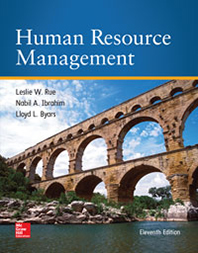
Human Resource Management Leslie Rue 11e - Test Bank

Human Resource Management Leslie Rue 11e - Test Bank   Instant Download - Complete Test Bank With Answers     Sample Questions Are Posted Below   Chapter 05 Human Resource Planning   True / False Questions 1. The long-term success of any organization ultimately depends on having the right people in the right jobs at …

$19.99

Human Resource Management Leslie Rue 11e – Test Bank


Instant Download – Complete Test Bank With Answers


Sample Questions Are Posted Below


Chapter 05

Human Resource Planning


True / False Questions

1. The long-term success of any organization ultimately depends on having the right people in the right jobs at the right time.

True    False


2. A clear statement of an organization’s mission is one of the prerequisites for human resource planning.

True    False


3. Human resource planning must be conducted independent of an organization’s strategic plan to ensure its effectiveness.

True    False


4. The first challenge of human resource planning (HRP) is to devise plans for securing the necessary employees.

True    False


5. Short-range human resource planning is two to five years.

True    False


6. Most managers view human resource planning (HRP) as one of their most important job responsibilities.

True    False


7. Under strategy-linked human resource planning (HRP), line managers have a responsibility to respond to the business implications of human resource objectives and strategies.

True    False


8. The objective-setting process in an organization begins at the top of the organization.

True    False


9. Short-term performance objectives generally have a time schedule and are expressed quantitatively.

True    False


10. The cascade approach to objective setting is a form of top-down planning, whereby objectives are passed down to lower levels of an organization.

True    False


11. Changes in workforce refer not only to the workforce composition but also to its work habits.

True    False


12. The Delphi technique and management estimates method are both statistical methods for forecasting human resource.

True    False


13. Scenario analysis involves thoroughly examining internal practices and procedures of an organization and measuring them against the ways other successful organizations operate.

True    False


14. In time-series analysis, past levels of various workload indicators, such as sales or production levels, are examined for statistical relationships with staffing levels.

True    False


15. Changes such as retirements within an organization can be forecasted with reasonable accuracy from information in the skills inventory.

True    False


16. A layoff is synonymous with termination.

True    False


17. One problem with many succession plans is the “crowned prince” syndrome.

True    False


18. A human resource information system (HRIS) gets rid of many of the paper files human resource people and other areas of an organization maintain.

True    False


19. e-HRM systems are an example of an intranet.

True    False


20. “On-demand software” involves users accessing standard business applications over the Internet.

True    False


Multiple Choice Questions

21. Getting the right number of qualified people into the right job at the right time is known as:

A. downsizing.


B. crowdsourcing.


C. human resource planning.


D. enterprise resource planning.


22. The first challenge of human resource planning (HRP) is to:

A. devise plans for securing the necessary employees.


B. help other departments devise their strategic objectives.


C. translate an organization’s plans and objectives into a timed schedule of employee requirements.


D. ensure that all the decisions made within an organization are ethical in nature and consistent with its mission statement.


23. Which of the following is true about strategy-linked human resource planning (HRP)?

A. This concept holds that HRP should be handled solely by human resource personnel.


B. This concept requires HR managers to serve as consultants to line managers concerning the people-management implications of business objectives and strategies.


C. The process requires individual managers to work in isolation from human resource personnel.


D. The commitment of top management is irrelevant in strategy-linked HRP.


24. Intermediate-range organizational plans are frequently set to reflect a time span of:

A. six months to one year.


B. two to five years.


C. three to six months.


D. five to eight years.


25. Which of the following statements about human resource planning (HRP) is NOT true?

A. HRP has been shown to positively affect the effectiveness and efficiency of organizations.


B. Many managers view HRP as something to do only after everything else has been done.


C. Line managers should view HRP as one of their most important job responsibilities.


D. HRP should be handled solely by human resource personnel.


26. Bravoz Autos Inc. wants to determine the short-range net needs for its human resource. Which of the following factors will reflect this?

A. The vacancies expected from individual promotability data


B. The management expectations of future conditions affecting immediate decisions


C. The numbers and kinds of employees needed


D. The operating needs from budgets and plans


27. According to D. Quinn Mills, companies at stage 5 on the human resource planning (HRP) continuum:

A. treat HRP as an important and vital part of their long-term business plan.


B. have no long-term business plan.


C. engage in some aspects of HRP apart from the long-term business plan.


D. have a long-term business plan, but tend to be skeptical of HRP.


28. According to D. Quinn Mills, companies at ____ along the human resource planning (HRP) continuum have a long-term business plan, but tend to be skeptical of HRP.

A. stage 1


B. stage 2


C. stage 3


D. stage 4


29. Organizational objectives should do all of the following EXCEPT:

A. be stated in terms of expected results.


B. become the basis upon which the corporate mission is defined.


C. enhance the sense of purpose for members of an organization.


D. provide direction to an organization.


30. In the context of the cascade approach to objective setting, an organization’s long-term objectives and strategies are formulated based on its:

A. short-term performance objectives.


B. divisional and departmental objectives.


C. mission statement.


D. human resource objectives.


31. A(n) ____ defines an organization’s current and future business.

A. short-term performance objective


B. operational strategy


C. code of conduct


D. statement of mission


32. With reference to the cascade approach to setting objectives, an organization’s divisional and departmental objectives are immediately derived from its:

A. short-term performance objectives.


B. subunit objectives.


C. statement of vision.


D. code of conduct.


33. The aim of the cascade approach to objective setting is to:

A. form a top-down planning mechanism.


B. involve all levels of management in planning.


C. limit the flow of information during planning.


D. exclude operating managers from the objective-setting process.


34. In which of the following ways of forecasting human resource needs is evaluations made either by top-level managers and passed down, or by lower-level managers and passed up for further revision, or by some combination of upper- and lower-level managers?

A. Benchmarking


B. The Delphi technique


C. The managerial estimates method


D. Scenario analysis


35. ____ is a judgmental method of forecasting human resource needs in which each member of a panel of experts independently first estimates future demand. An intermediary then presents each expert’s forecast and assumptions to the others, so that the experts can revise their positions if they so desire.

A. Scenario analysis


B. The Delphi technique


C. The snowball technique


D. Benchmarking


36. Scenario analysis and the Delphi technique can both be classified as ____ of forecasting human resource needs.

A. mathematical methods


B. judgmental methods


C. modeling methods


D. statistical methods


37. Scenario analysis primarily involves the use of:

A. minutes of shareholder meetings.


B. workforce environmental scanning data.


C. revenue reports of the past two quarters.


D. focus group tallies on product innovations.


38. Which of the following steps is involved in scenario analysis?

A. An intermediary presents each expert’s forecast and assumptions to the others and allows the experts to revise their positions if they desire.


B. Internal practices and procedures are examined and measured against the ways other successful organizations operate.


C. Top-level managers estimate the human resource needs, and this information is then passed down to the lower-level managers.


D. Once the forecast for future workforce needs is crystallized, line managers and human resource managers then work backward to identify key change points.


39. Which of the following methods involves the use of past staffing levels, instead of workload levels, to project future human resource requirements?

A. SWOT analysis


B. Regression analysis


C. Time-series analysis


D. Gap analysis


40. ____ involves examining past personnel data to determine historical relationships among the number of employees in various jobs or job categories.

A. Job analysis


B. Personnel ratios


C. Productivity ratios


D. Regression analysis


41. A brief assessment of a manager’s past performance, strengths, weaknesses, and potential for advancement is included in a:

A. job specification.


B. job description.


C. management representation letter.


D. management inventory.


42. Which of the following approaches for reducing human resource costs involves demoting an employee, downgrading job responsibilities, or a combination of the two?

A. Reclassification


B. Job rotation


C. Crowdsourcing


D. Voluntary resignation inducement


43. Which of the following approaches for reducing human resource costs results in employees being forced to leave an organization?

A. Reclassification


B. Transfer


C. Termination


D. Work sharing


44. ____ seeks to limit layoffs and terminations within an organization through the proportional reduction of hours among employees.

A. Reclassification


B. Work sharing


C. Job rotation


D. Flextime


45. The difference between succession planning and replacement planning is that succession planning:

A. focuses on identifying a “backup” to fill a job only when it becomes vacant.


B. focuses solely on an employee’s past performance.


C. fails to anticipate changing organization needs.


D. considers the future potential of individuals.


46. The ____ occurs when the management of an organization considers for advancement only those who have managed to become visible to senior management.

A. “black swan” effect


B. glass ceiling syndrome


C. “crowned prince” syndrome


D. halo effect


47. A ____ enables specific groups such as business partners, customers, or vendors to access an organization’s intranet.

A. blog


B. web log


C. web portal


D. wiki


48. A ____ is a knowledge base developed over time by users with access to create and edit text on a site.

A. blog


B. cloud


C. web portal


D. wiki


49. ____ is the second generation of Internet use with a focus on user content control, online collaboration, and sharing between users.

A. Fax


B. Web 2.0


C. Telegraphy


D. USB 2.0


50. ____ involves users accessing standard business applications over the Internet on a pay-as-you-go basis, usually for a monthly subscription fee.

A. Blogging


B. Software as a service (SaaS)


C. Infrastructure as a service (IaaS)


D. Crowdsourcing


Essay Questions

51. Pine Systems Inc. has restricted human resource planning (HRP) within the organization to the human resource department. No operating managers are involved in the process. Is this an effective way to manage HRP within an organization? Explain.


52. Discuss strategy-linked human resource planning (HRP).


53. Discuss the basic steps in the human resource planning (HRP) process in an organization.


54. Explain the cascade approach to setting objectives.


55. Write a short note on skills inventory. What are its advantages?


56. What are the various advantages of employing contingent workers?


57. Differentiate between replacement planning and succession planning. What are the problems with succession plans?


58. List the various areas that represent specific potential applications for a human resource information system (HRIS).


59. Explain Web 2.0.


60. What is cloud computing? List the major types of cloud computing services.


Chapter 05 Human Resource Planning Answer Key

True / False Questions

1. The long-term success of any organization ultimately depends on having the right people in the right jobs at the right time.

TRUE

Human resource planning (HRP) has been shown to positively affect the effectiveness and efficiency of organizations. The long-term success of any organization ultimately depends on having the right people in the right jobs at the right time.


AACSB: Analytical Thinking
Accessibility: Keyboard Navigation
Blooms: Remember
Learning Objective: 05-01 Define human resource planning (HRP).
Level of Difficulty: 1 Easy
Topic: Human Resource Planning


2. A clear statement of an organization’s mission is one of the prerequisites for human resource planning.

TRUE

Strategic business planning seeks to identify various factors critical to the success of an organization. It also focuses on how the organization can become better positioned and equipped to compete in its industry. To accomplish this, the planning process should provide a clear statement of the organization’s mission.


AACSB: Analytical Thinking
Accessibility: Keyboard Navigation
Blooms: Remember
Learning Objective: 05-02 Summarize the relationship between HRP and organizational planning.
Level of Difficulty: 1 Easy
Topic: How HRP Relates to Organizational Planning


3. Human resource planning must be conducted independent of an organization’s strategic plan to ensure its effectiveness.

FALSE

Human resource planning contributes significantly to the strategic management process by providing the means to accomplish the outcomes desired from the planning process. In essence, the human resource demands and needs are derived from the strategic and operating planning and then compared with human resource availability.


AACSB: Analytical Thinking
Accessibility: Keyboard Navigation
Blooms: Understand
Learning Objective: 05-02 Summarize the relationship between HRP and organizational planning.
Level of Difficulty: 2 Medium
Topic: How HRP Relates to Organizational Planning


4. The first challenge of human resource planning (HRP) is to devise plans for securing the necessary employees.

FALSE

The first challenge of HRP is to translate an organization’s plans and objectives into a timed schedule of employee requirements. Once the employee requirements have been determined, HRP must devise plans for securing the necessary employees.


AACSB: Analytical Thinking
Accessibility: Keyboard Navigation
Blooms: Remember
Learning Objective: 05-01 Define human resource planning (HRP).
Level of Difficulty: 1 Easy
Topic: Human Resource Planning


5. Short-range human resource planning is two to five years.

FALSE

Because HRP is so closely tied to the organizational planning process, the time frames human resource plans cover should correspond with those covered by the organizational plans. Organizational plans are frequently classified as short-range (zero to two years), intermediate range (two to five years), or long-range (beyond five years).


AACSB: Analytical Thinking
Accessibility: Keyboard Navigation
Blooms: Remember
Learning Objective: 05-02 Summarize the relationship between HRP and organizational planning.
Level of Difficulty: 1 Easy
Topic: Time Frame of HRP


6. Most managers view human resource planning (HRP) as one of their most important job responsibilities.

FALSE

All managers, especially line managers, should view human resource planning as one of their most important job responsibilities. Unfortunately, this is not often the case.


AACSB: Analytical Thinking
Accessibility: Keyboard Navigation
Blooms: Remember
Learning Objective: 05-02 Summarize the relationship between HRP and organizational planning.
Level of Difficulty: 1 Easy
Topic: How HRP Relates to Organizational Planning


7. Under strategy-linked human resource planning (HRP), line managers have a responsibility to respond to the business implications of human resource objectives and strategies.

TRUE

Strategy-linked HRP is based on a close working relationship between human resource staff and line managers. Human resource managers serve as consultants to line managers concerning the people-management implications of business objectives and strategies. Line managers, in turn, have a responsibility to respond to the business implications of human resource objectives and strategies.


AACSB: Analytical Thinking
Accessibility: Keyboard Navigation
Blooms: Understand
Learning Objective: 05-03 Explain strategy-linked HRP.
Level of Difficulty: 2 Medium
Topic: How HRP Relates to Organizational Planning


8. The objective-setting process in an organization begins at the top of the organization.

TRUE

The objective-setting process begins at the top of the organization with a statement of mission, which defines the organization’s current and future business.


AACSB: Analytical Thinking
Accessibility: Keyboard Navigation
Blooms: Remember
Learning Objective: 05-04 Identify the steps in the HRP process.
Level of Difficulty: 1 Easy
Topic: Steps in the HRP Process


9. Short-term performance objectives generally have a time schedule and are expressed quantitatively.

TRUE

Long-term objectives and strategies can be used to establish short-term performance objectives. Short-term performance objectives generally have a time schedule and are expressed quantitatively.


AACSB: Analytical Thinking
Accessibility: Keyboard Navigation
Blooms: Remember
Learning Objective: 05-04 Identify the steps in the HRP process.
Level of Difficulty: 1 Easy
Topic: Steps in the HRP Process


10. The cascade approach to objective setting is a form of top-down planning, whereby objectives are passed down to lower levels of an organization.

FALSE

The cascade approach is not a form of top-down planning, whereby objectives are passed down to lower levels of the organization. The idea is to involve all levels of management in the planning process.


AACSB: Analytical Thinking
Accessibility: Keyboard Navigation
Blooms: Remember
Learning Objective: 05-04 Identify the steps in the HRP process.
Level of Difficulty: 1 Easy
Topic: Steps in the HRP Process


11. Changes in workforce refer not only to the workforce composition but also to its work habits.

TRUE

Changes in workforce refer not only to the workforce composition but also to its work habits. The impact of changes in technology can vary from insignificant to devastating to extremely positive. For example, consider how cell phone technology has impacted the demand for pay phone booths.


AACSB: Analytical Thinking
Accessibility: Keyboard Navigation
Blooms: Remember
Learning Objective: 05-04 Identify the steps in the HRP process.
Level of Difficulty: 1 Easy
Topic: Steps in the HRP Process


12. The Delphi technique and management estimates method are both statistical methods for forecasting human resource.

FALSE

Judgmental methods for forecasting human resource needs include managerial estimates, the Delphi technique, and scenario analysis.


AACSB: Analytical Thinking
Accessibility: Keyboard Navigation
Blooms: Remember
Learning Objective: 05-05 Describe the different methods used for forecasting human resource needs.
Level of Difficulty: 1 Easy
Topic: Steps in the HRP Process


13. Scenario analysis involves thoroughly examining internal practices and procedures of an organization and measuring them against the ways other successful organizations operate.

FALSE

Scenario analysis involves using workforce environmental scanning data to develop alternative workforce scenarios. Benchmarking involves thoroughly examining internal practices and procedures and measuring them against the ways other successful organizations operate.


AACSB: Analytical Thinking
Accessibility: Keyboard Navigation
Blooms: Remember
Learning Objective: 05-05 Describe the different methods used for forecasting human resource needs.
Level of Difficulty: 1 Easy
Topic: Steps in the HRP Process


14. In time-series analysis, past levels of various workload indicators, such as sales or production levels, are examined for statistical relationships with staffing levels.

FALSE

In regression analysis, past levels of various workload indicators, such as sales, production levels, and value added, are examined for statistical relationships with staffing levels.


AACSB: Analytical Thinking
Accessibility: Keyboard Navigation
Blooms: Understand
Learning Objective: 05-05 Describe the different methods used for forecasting human resource needs.
Level of Difficulty: 2 Medium
Topic: Steps in the HRP Process


15. Changes such as retirements within an organization can be forecasted with reasonable accuracy from information in the skills inventory.

TRUE

Changes such as retirements can be forecasted with reasonable accuracy from information in the skills inventory. Other changes, such as transfers and promotions, can be estimated by taking into account such factors as the ages of individuals in specific jobs and the requirements of an organization.


AACSB: Analytical Thinking
Accessibility: Keyboard Navigation
Blooms: Remember
Learning Objective: 05-06 Discuss the purpose of a skills inventory.
Level of Difficulty: 1 Easy
Topic: Steps in the HRP Process


16. A layoff is synonymous with termination.

FALSE

A layoff, as opposed to a termination, assumes it is likely that the employee will be recalled at some later date.


AACSB: Analytical Thinking
Accessibility: Keyboard Navigation
Blooms: Remember
Learning Objective: 05-04 Identify the steps in the HRP process.
Level of Difficulty: 1 Easy
Topic: Steps in the HRP Process


17. One problem with many succession plans is the “crowned prince” syndrome.

TRUE

One problem with many succession plans, especially informal plans and those for large organizations, is the “crowned prince” syndrome. This occurs when management considers for advancement only those who have managed to become visible to senior management.


AACSB: Analytical Thinking
Accessibility: Keyboard Navigation
Blooms: Remember
Learning Objective: 05-07 Describe succession planning.
Level of Difficulty: 1 Easy
Topic: Succession Planning


18. A human resource information system (HRIS) gets rid of many of the paper files human resource people and other areas of an organization maintain.

TRUE

A major advantage of an HRIS is its potential for producing more accurate and more timely information for operating, controlling, and planning purposes than manual or payroll-based systems can produce. An HRIS also gets rid of many of the paper files human resource people and other areas of the organization maintain.


AACSB: Analytical Thinking
Accessibility: Keyboard Navigation
Blooms: Remember
Learning Objective: 05-08 Define a human resource information system (HRIS).
Level of Difficulty: 1 Easy
Topic: Human Resource Information Systems (HRIS)


19. e-HRM systems are an example of an intranet.

TRUE

An intranet is a private computer network that uses Internet products and technologies to provide multimedia applications within organizations. The e-HRM systems are an example of an intranet.


AACSB: Analytical Thinking
Accessibility: Keyboard Navigation
Blooms: Remember
Learning Objective: 05-09 Differentiate between the Internet and an intranet.
Level of Difficulty: 1 Easy
Topic: Human Resource Information Systems (HRIS)


20. “On-demand software” involves users accessing standard business applications over the Internet.

TRUE

Software as a service (SaaS) or “on-demand software” is a relatively new approach to software delivery that involves users accessing standard business applications over the Internet.


AACSB: Analytical Thinking
Accessibility: Keyboard Navigation
Blooms: Remember
Learning Objective: 05-12 Distinguish among “software as a service,” “platform as a service,” and “infrastructure as a service.”
Level of Difficulty: 1 Easy
Topic: Human Resource Information Systems (HRIS)


Multiple Choice Questions

21. Getting the right number of qualified people into the right job at the right time is known as:

A. downsizing.


B. crowdsourcing.


C. human resource planning.


D. enterprise resource planning.

Human resource planning (HRP), also referred to as workforce planning or personnel planning, has been defined as the process of “getting the right number of qualified people into the right job at the right time.”


AACSB: Analytical Thinking
Accessibility: Keyboard Navigation
Blooms: Remember
Learning Objective: 05-01 Define human resource planning (HRP).
Level of Difficulty: 1 Easy
Topic: Human Resource Planning


22. The first challenge of human resource planning (HRP) is to:

A. devise plans for securing the necessary employees.


B. help other departments devise their strategic objectives.


C. translate an organization’s plans and objectives into a timed schedule of employee requirements.


D. ensure that all the decisions made within an organization are ethical in nature and consistent with its mission statement.

The first challenge of HRP is to translate the organization’s plans and objectives into a timed schedule of employee requirements. Once the employee requirements have been determined, HRP must devise plans for securing the necessary employees.


AACSB: Analytical Thinking
Accessibility: Keyboard Navigation
Blooms: Understand
Learning Objective: 05-01 Define human resource planning (HRP).
Level of Difficulty: 2 Medium
Topic: Human Resource Planning


23. Which of the following is true about strategy-linked human resource planning (HRP)?

A. This concept holds that HRP should be handled solely by human resource personnel.


B. This concept requires HR managers to serve as consultants to line managers concerning the people-management implications of business objectives and strategies.


C. The process requires individual managers to work in isolation from human resource personnel.


D. The commitment of top management is irrelevant in strategy-linked HRP.

Strategy-linked HRP is based on a close working relationship between human resource staff and line managers. Human resource managers serve as consultants to line managers concerning the people-management implications of business objectives and strategies. Line managers, in turn, have a responsibility to respond to the business implications of human resource objectives and strategies.


AACSB: Analytical Thinking
Accessibility: Keyboard Navigation
Blooms: Understand
Learning Objective: 05-03 Explain strategy-linked HRP.
Level of Difficulty: 2 Medium
Topic: How HRP Relates to Organizational Planning


24. Intermediate-range organizational plans are frequently set to reflect a time span of:

A. six months to one year.


B. two to five years.


C. three to six months.


D. five to eight years.

Organizational plans are frequently classified as short-range (zero to two years), intermediate range (two to five years), or long-range (beyond five years).


AACSB: Analytical Thinking
Accessibility: Keyboard Navigation
Blooms: Remember
Learning Objective: 05-02 Summarize the relationship between HRP and organizational planning.
Level of Difficulty: 1 Easy
Topic: Time Frame of HRP


25. Which of the following statements about human resource planning (HRP) is NOT true?

A. HRP has been shown to positively affect the effectiveness and efficiency of organizations.


B. Many managers view HRP as something to do only after everything else has been done.


C. Line managers should view HRP as one of their most important job responsibilities.


D. HRP should be handled solely by human resource personnel.

Managers often think HRP should be handled solely by human resource personnel. But HRP is not strictly a human resource function.


AACSB: Analytical Thinking
Accessibility: Keyboard Navigation
Blooms: Understand
Learning Objective: 05-01 Define human resource planning (HRP).
Level of Difficulty: 2 Medium
Topic: How HRP Relates to Organizational Planning


26. Bravoz Autos Inc. wants to determine the short-range net needs for its human resource. Which of the following factors will reflect this?

A. The vacancies expected from individual promotability data


B. The management expectations of future conditions affecting immediate decisions


C. The numbers and kinds of employees needed


D. The operating needs from budgets and plans

Organizational plans are frequently classified as short-range (zero to two years), intermediate range (two to five years), or long-range (beyond five years). Ideally, an organization prepares a plan for each of these horizons. Bravoz Autos Inc. can plan the short-range net needs for its human resource by determining the numbers and kinds of employees needed.


AACSB: Reflective Thinking
Accessibility: Keyboard Navigation
Blooms: Apply
Learning Objective: 05-02 Summarize the relationship between HRP and organizational planning.
Level of Difficulty: 3 Hard
Topic: Time Frame of HRP


27. According to D. Quinn Mills, companies at stage 5 on the human resource planning (HRP) continuum:

A. treat HRP as an important and vital part of their long-term business plan.


B. have no long-term business plan.


C. engage in some aspects of HRP apart from the long-term business plan.


D. have a long-term business plan, but tend to be skeptical of HRP.

According to D. Quinn Mills, stage 5 companies treat human resource planning as an important and vital part of their long-term business plan. Naturally, companies at stage 5 are highly enthusiastic about HRP.


AACSB: Analytical Thinking
Accessibility: Keyboard Navigation
Blooms: Understand
Learning Objective: 05-02 Summarize the relationship between HRP and organizational planning.
Level of Difficulty: 2 Medium
Topic: HRP: An Evolving Process


28. According to D. Quinn Mills, companies at ____ along the human resource planning (HRP) continuum have a long-term business plan, but tend to be skeptical of HRP.

A. stage 1


B. stage 2


C. stage 3


D. stage 4

According to D. Quinn Mills, companies at stage 2 have a long-term business plan, but tend to be skeptical of HRP. At the same time, such companies do realize to some degree that human resource planning is important.


AACSB: Analytical Thinking
Accessibility: Keyboard Navigation
Blooms: Understand
Learning Objective: 05-02 Summarize the relationship between HRP and organizational planning.
Level of Difficulty: 2 Medium
Topic: HRP: An Evolving Process


29. Organizational objectives should do all of the following EXCEPT:

A. be stated in terms of expected results.


B. become the basis upon which the corporate mission is defined.


C. enhance the sense of purpose for members of an organization.


D. provide direction to an organization.

Organizational objectives, which give the organization and its members direction and purpose, should be stated in terms of expected results. The objective-setting process begins at the top of the organization with a statement of mission, which defines the organization’s current and future business. Long-term objectives and strategies are formulated based on the organization’s mission statement.


AACSB: Analytical Thinking
Accessibility: Keyboard Navigation
Blooms: Remember
Learning Objective: 05-04 Identify the steps in the HRP process.
Level of Difficulty: 1 Easy
Topic: Steps in the HRP Process


30. In the context of the cascade approach to objective setting, an organization’s long-term objectives and strategies are formulated based on its:

A. short-term performance objectives.


B. divisional and departmental objectives.


C. mission statement.


D. human resource objectives.

Long-term objectives and strategies are formulated based on the organization’s mission statement. These can then be used to establish short-term performance objectives. Short-term performance objectives generally have a time schedule and are expressed quantitatively. Divisional and departmental objectives are then derived from the organization’s short-term performance objectives. Establishing organizational, divisional, and departmental objectives in this manner has been called the cascade approach to objective setting.


AACSB: Analytical Thinking
Accessibility: Keyboard Navigation
Blooms: Remember
Learning Objective: 05-04 Identify the steps in the HRP process.
Level of Difficulty: 1 Easy
Topic: Steps in the HRP Process


31. A(n) ____ defines an organization’s current and future business.

A. short-term performance objective


B. operational strategy


C. code of conduct


D. statement of mission

The objective-setting process begins at the top of the organization with a statement of mission, which defines the organization’s current and future business.


AACSB: Analytical Thinking
Accessibility: Keyboard Navigation
Blooms: Remember
Learning Objective: 05-04 Identify the steps in the HRP process.
Level of Difficulty: 1 Easy
Topic: Steps in the HRP Process


32. With reference to the cascade approach to setting objectives, an organization’s divisional and departmental objectives are immediately derived from its:

A. short-term performance objectives.


B. subunit objectives.


C. statement of vision.


D. code of conduct.

Long-term objectives and strategies are formulated based on the organization’s mission statement. These can then be used to establish short-term performance objectives. Divisional and departmental objectives are then derived from the organization’s short-term performance objectives.


AACSB: Analytical Thinking
Accessibility: Keyboard Navigation
Blooms: Remember
Learning Objective: 05-04 Identify the steps in the HRP process.
Level of Difficulty: 1 Easy
Topic: Steps in the HRP Process


33. The aim of the cascade approach to objective setting is to:

A. form a top-down planning mechanism.


B. involve all levels of management in planning.


C. limit the flow of information during planning.


D. exclude operating managers from the objective-setting process.

The cascade approach is not a form of top-down planning, whereby objectives are passed down to lower levels of the organization. The idea is to involve all levels of management in the planning process.


AACSB: Analytical Thinking
Accessibility: Keyboard Navigation
Blooms: Understand
Learning Objective: 05-04 Identify the steps in the HRP process.
Level of Difficulty: 2 Medium
Topic: Steps in the HRP Process


34. In which of the following ways of forecasting human resource needs is evaluations made either by top-level managers and passed down, or by lower-level managers and passed up for further revision, or by some combination of upper- and lower-level managers?

A. Benchmarking


B. The Delphi technique


C. The managerial estimates method


D. Scenario analysis

Under the managerial estimates method of forecasting human resource needs, managers estimate future staffing needs based primarily on past experience. These estimates can be made by top-level managers and passed down, by lower-level managers and passed up for further revision, or by some combination of upper- and lower-level managers.


AACSB: Analytical Thinking
Accessibility: Keyboard Navigation
Blooms: Understand
Learning Objective: 05-05 Describe the different methods used for forecasting human resource needs.
Level of Difficulty: 2 Medium
Topic: Steps in the HRP Process


35. ____ is a judgmental method of forecasting human resource needs in which each member of a panel of experts independently first estimates future demand. An intermediary then presents each expert’s forecast and assumptions to the others, so that the experts can revise their positions if they so desire.

A. Scenario analysis


B. The Delphi technique


C. The snowball technique


D. Benchmarking

With the Delphi technique, each member of a panel of experts independently estimates future demand, specifying any underlying assumptions. An intermediary then presents each expert’s forecast and assumptions to the others and allows the experts to revise their positions if they desire.


AACSB: Analytical Thinking
Accessibility: Keyboard Navigation
Blooms: Remember
Learning Objective: 05-05 Describe the different methods used for forecasting human resource needs.
Level of Difficulty: 1 Easy
Topic: Steps in the HRP Process


36. Scenario analysis and the Delphi technique can both be classified as ____ of forecasting human resource needs.

A. mathematical methods


B. judgmental methods


C. modeling methods


D. statistical methods

Methods for forecasting human resource needs can be either judgmentally or mathematically based. Judgmental methods include managerial estimates, the Delphi technique, and scenario analysis.


AACSB: Analytical Thinking
Accessibility: Keyboard Navigation
Blooms: Remember
Learning Objective: 05-05 Describe the different methods used for forecasting human resource needs.
Level of Difficulty: 1 Easy
Topic: Steps in the HRP Process


37. Scenario analysis primarily involves the use of:

A. minutes of shareholder meetings.


B. workforce environmental scanning data.


C. revenue reports of the past two quarters.


D. focus group tallies on product innovations.

Scenario analysis involves using workforce environmental scanning data to develop alternative workforce scenarios.


AACSB: Analytical Thinking
Accessibility: Keyboard Navigation
Blooms: Remember
Learning Objective: 05-05 Describe the different methods used for forecasting human resource needs.
Level of Difficulty: 1 Easy
Topic: Steps in the HRP Process


38. Which of the following steps is involved in scenario analysis?

A. An intermediary presents each expert’s forecast and assumptions to the others and allows the experts to revise their positions if they desire.


B. Internal practices and procedures are examined and measured against the ways other successful organizations operate.


C. Top-level managers estimate the human resource needs, and this information is then passed down to the lower-level managers.


D. Once the forecast for future workforce needs is crystallized, line managers and human resource managers then work backward to identify key change points.

Scenario analysis involves using workforce environmental scanning data to develop alternative workforce scenarios. These scenarios are developed in brainstorming sessions with line managers and human resource managers, who forecast what they think their workforce will look like five or more years into the future. Once these forecasts have been crystalized, the managers then work backward to identify key change points.


AACSB: Analytical Thinking
Accessibility: Keyboard Navigation
Blooms: Understand
Learning Objective: 05-05 Describe the different methods used for forecasting human resource needs.
Level of Difficulty: 2 Medium
Topic: Steps in the HRP Process


39. Which of the following methods involves the use of past staffing levels, instead of workload levels, to project future human resource requirements?

A. SWOT analysis


B. Regression analysis


C. Time-series analysis


D. Gap analysis

In time-series analysis, past staffing levels (instead of workload indicators) are used to project future human resource requirements. Past staffing levels are examined to isolate seasonal and cyclical variations, long-term trends, and random movements.


AACSB: Analytical Thinking
Accessibility: Keyboard Navigation
Blooms: Remember
Learning Objective: 05-05 Describe the different methods used for forecasting human resource needs.
Level of Difficulty: 1 Easy
Topic: Steps in the HRP Process


40. ____ involves examining past personnel data to determine historical relationships among the number of employees in various jobs or job categories.

A. Job analysis


B. Personnel ratios


C. Productivity ratios


D. Regression analysis

In a particular statistical method used to forecast human resource needs, past personnel data are examined to determine historical relationships among the number of employees in various jobs or job categories. Regression analysis or productivity ratios are then used to project either total or key group human resource requirements, and personnel ratios are used to allocate total requirements to various job categories or to estimate requirements for nonkey groups.


AACSB: Analytical Thinking
Accessibility: Keyboard Navigation
Blooms: Remember
Learning Objective: 05-05 Describe the different methods used for forecasting human resource needs.
Level of Difficulty: 1 Easy
Topic: Steps in the HRP Process


41. A brief assessment of a manager’s past performance, strengths, weaknesses, and potential for advancement is included in a:

A. job specification.


B. job description.


C. management representation letter.


D. management inventory.

A management inventory often contains brief assessments of the manager’s past performance, strengths, weaknesses, and potential for advancement. In essence, a management inventory is a specialized type of skills inventory just for management.


AACSB: Analytical Thinking
Accessibility: Keyboard Navigation
Blooms: Remember
Learning Objective: 05-06 Discuss the purpose of a skills inventory.
Level of Difficulty: 1 Easy
Topic: Steps in the HRP Process


42. Which of the following approaches for reducing human resource costs involves demoting an employee, downgrading job responsibilities, or a combination of the two?

A. Reclassification


B. Job rotation


C. Crowdsourcing


D. Voluntary resignation inducement

Reclassification involves demoting an employee, downgrading job responsibilities, or a combination of the two. Usually reclassification is accompanied by a reduction in pay.


AACSB: Analytical Thinking
Accessibility: Keyboard Navigation
Blooms: Remember
Learning Objective: 05-04 Identify the steps in the HRP process.
Level of Difficulty: 1 Easy
Topic: Steps in the HRP Process


43. Which of the following approaches for reducing human resource costs results in employees being forced to leave an organization?

A. Reclassification


B. Transfer


C. Termination


D. Work sharing

Termination results in employees being forced to leave an organization. The process of reducing the total number of employees is referred to as downsizing. There are four basic ways to downsize: (1) layoffs, (2) terminations, (3) early retirement inducements, and (4) voluntary resignation inducements.


AACSB: Analytical Thinking
Accessibility: Keyboard Navigation
Blooms: Remember
Learning Objective: 05-04 Identify the steps in the HRP process.
Level of Difficulty: 1 Easy
Topic: Steps in the HRP Process


44. ____ seeks to limit layoffs and terminations within an organization through the proportional reduction of hours among employees.

A. Reclassification


B. Work sharing


C. Job rotation


D. Flextime

Work sharing seeks to limit layoffs and terminations through the proportional reduction of hours among employees (i.e., all employees in a department could be cut back to 35 hours per week instead of 40).


AACSB: Analytical Thinking
Accessibility: Keyboard Navigation
Blooms: Remember
Learning Objective: 05-04 Identify the steps in the HRP process.
Level of Difficulty: 1 Easy
Topic: Steps in the HRP Process


45. The difference between succession planning and replacement planning is that succession planning:

A. focuses on identifying a “backup” to fill a job only when it becomes vacant.


B. focuses solely on an employee’s past performance.


C. fails to anticipate changing organization needs.


D. considers the future potential of individuals.

Succession planning identifies a “talent pool” that can be developed in preparation for future responsibilities. Succession planning considers not only past performance but also the future potential of individuals.


AACSB: Analytical Thinking
Accessibility: Keyboard Navigation
Blooms: Understand
Learning Objective: 05-07 Describe succession planning.
Level of Difficulty: 2 Medium
Topic: Succession Planning


46. The ____ occurs when the management of an organization considers for advancement only those who have managed to become visible to senior management.

A. “black swan” effect


B. glass ceiling syndrome


C. “crowned prince” syndrome


D. halo effect

One problem with many succession plans, especially informal plans and those for large organizations, is the “crowned prince” syndrome. This occurs when management considers for advancement only those who have managed to become visible to senior management.


AACSB: Analytical Thinking
Accessibility: Keyboard Navigation
Blooms: Remember
Learning Objective: 05-07 Describe succession planning.
Level of Difficulty: 1 Easy
Topic: Succession Planning


47. A ____ enables specific groups such as business partners, customers, or vendors to access an organization’s intranet.

A. blog


B. web log


C. web portal


D. wiki

A web portal is similar to an intranet except that portals enable other specific groups such as business partners, customers, or vendors to access an organization’s intranet.


AACSB: Analytical Thinking
Accessibility: Keyboard Navigation
Blooms: Remember
Learning Objective: 05-09 Differentiate between the Internet and an intranet.
Level of Difficulty: 1 Easy
Topic: Human Resource Information Systems (HRIS)


48. A ____ is a knowledge base developed over time by users with access to create and edit text on a site.

A. blog


B. cloud


C. web portal


D. wiki

A wiki is “a knowledge base developed over time by users with access to create and edit text on the site.” Web 2.0 technologies use web-based communities and hosted services such as social networking sites, blogs, and wikis.


AACSB: Analytical Thinking
Accessibility: Keyboard Navigation
Blooms: Remember
Learning Objective: 05-09 Differentiate between the Internet and an intranet.
Level of Difficulty: 1 Easy
Topic: Human Resource Information Systems (HRIS)


49. ____ is the second generation of Internet use with a focus on user content control, online collaboration, and sharing between users.

A. Fax


B. Web 2.0


C. Telegraphy


D. USB 2.0

Web 2.0 is the second generation of Internet use with a focus on user content control, online collaboration, and sharing between users. Web 2.0 technologies use web-based communities and hosted services such as social networking sites, blogs, and wikis.


AACSB: Analytical Thinking
Accessibility: Keyboard Navigation
Blooms: Remember
Learning Objective: 05-10 Explain what Web 2.0 is.
Level of Difficulty: 1 Easy
Topic: Human Resource Information Systems (HRIS)


50. ____ involves users accessing standard business applications over the Internet on a pay-as-you-go basis, usually for a monthly subscription fee.

A. Blogging


B. Software as a service (SaaS)


C. Infrastructure as a service (IaaS)


D. Crowdsourcing

Software as a service (SaaS) or “on-demand software” is a relatively new approach to software delivery that involves users accessing standard business applications over the Internet. With SaaS, software makers provide their products over the Internet on a pay-as-you-go basis, usually for a monthly subscription fee.


AACSB: Analytical Thinking
Accessibility: Keyboard Navigation
Blooms: Remember
Learning Objective: 05-12 Distinguish among “software as a service,” “platform as a service,” and “infrastructure as a service.”
Level of Difficulty: 1 Easy
Topic: Human Resource Information Systems (HRIS)


Essay Questions

51. Pine Systems Inc. has restricted human resource planning (HRP) within the organization to the human resource department. No operating managers are involved in the process. Is this an effective way to manage HRP within an organization? Explain.

Managers often think HRP should be handled solely by human resource personnel. But HRP is not strictly a human resource function. The role of human resource personnel is to assist operating managers in developing their individual plans and integrating those different plans into an overall scheme. The individual managers must, however, provide the basic data on which the plan is built. The process requires a joint effort by the individual managers and human resource personnel. In general, human resource personnel provide the structure, impetus, and assistance. However, individual managers must be actively involved in the process.


AACSB: Reflective Thinking
Blooms: Apply
Learning Objective: 05-02 Summarize the relationship between HRP and organizational planning.
Level of Difficulty: 3 Hard
Topic: How HRP Relates to Organizational Planning


52. Discuss strategy-linked human resource planning (HRP).

All managers, especially line managers, should view human resource planning as one of their most important job responsibilities. Unfortunately, this is not often the case. Far too many managers view HRP as something to do only after everything else has been done. One of the best ways to encourage genuine cooperation between HR managers and line managers is to use strategy-linked HRP. This is based on a close working relationship between HR staff and line managers. HR managers serve as consultants to line managers concerning the people-management implications of business objectives and strategies. Line managers, in turn, have a responsibility to respond to the business implications of HR objectives and strategies. Another important ingredient is the commitment of top management, which should be evident to other managers and employees.


AACSB: Analytical Thinking
Blooms: Understand
Learning Objective: 05-03 Explain strategy-linked HRP.
Level of Difficulty: 2 Medium
Topic: How HRP Relates to Organizational Planning


53. Discuss the basic steps in the human resource planning (HRP) process in an organization.

HRP consists of four basic steps:

1. Determining the impact of the organization’s objectives on specific organizational units.
2. Defining the skills, expertise, and total number of employees required to achieve the organizational and departmental objectives.
3. Determining the additional human resource requirements in light of the organization’s current human resources.
4. Developing action plans to meet the anticipated human resource needs.


AACSB: Analytical Thinking
Blooms: Remember
Learning Objective: 05-04 Identify the steps in the HRP process.
Level of Difficulty: 1 Easy
Topic: Steps in the HRP Process


54. Explain the cascade approach to setting objectives.

The cascade approach is not a form of top-down planning, whereby objectives are passed down to lower levels of the organization. The idea is to involve all levels of management in the planning process. Such an approach leads to an upward and downward flow of information during planning. This also ensures that the objectives are communicated and coordinated through all levels of the organization.
When properly used, the cascade approach involves both operating managers and human resource personnel in the overall planning process.


AACSB: Analytical Thinking
Blooms: Understand
Learning Objective: 05-04 Identify the steps in the HRP process.
Level of Difficulty: 2 Medium
Topic: Steps in the HRP Process


55. Write a short note on skills inventory. What are its advantages?

A skills inventory consolidates information about an organization’s human resources. It provides basic information on all employees, including, in its simplest form, a list of the names, certain characteristics, and skills of employees. Because the information from a skills inventory is used as input into promotion and transfer decisions, it should contain information about each employee’s portfolio of skills, not just those relevant to the employee’s current job.
The primary advantage of a skills inventory is that it furnishes a means to quickly and accurately evaluate the skills available within the organization. In addition to helping determine promotion and transfer decisions, this information is often necessary for making other decisions, such as whether to bid on a new contract or introduce a new product. A skills inventory also aids in planning future employee training and management development programs and in recruiting and selecting new employees.


AACSB: Analytical Thinking
Blooms: Understand
Learning Objective: 05-06 Discuss the purpose of a skills inventory.
Level of Difficulty: 2 Medium
Topic: Steps in the HRP Process


56. What are the various advantages of employing contingent workers?

Contingent workers have the advantage of allowing the organization to easily accommodate swings in demand for human resources. Contingent workers often do not have the same benefits as permanent employees, and hence, the cost of employment can be less. Other potential advantages of using contingent employees and, specifically, temporary agencies, are that the agencies often provide both testing and training for employees before they are hired. A final potential advantage of contingent workers is that, because of their varied experiences, they can bring a new perspective to the organization.


AACSB: Analytical Thinking
Blooms: Understand
Learning Objective: 05-04 Identify the steps in the HRP process.
Level of Difficulty: 2 Medium
Topic: Steps in the HRP Process


57. Differentiate between replacement planning and succession planning. What are the problems with succession plans?

Succession planning identifies a “talent pool” that can be developed in preparation for future responsibilities; it considers not only past performance but also the future potential of individuals. Many organizations are engaged in a process closer to replacement planning than true succession planning. The goal of replacement planning is to identify a “backup” to fill a job when it becomes vacant. The focus is on past performance and demonstrating the skills necessary to perform the job in question. In addition to considering the future potential of individuals, succession planning anticipates changing organization needs and prepares the talent pool to meet those future needs. The emphasis of succession planning is on developing people rather than naming replacements.
One problem with many succession plans, especially informal plans and those for large organizations, is the “crowned prince” syndrome. This occurs when management considers for advancement only those who have managed to become visible to senior management. A second problem with succession planning in many organizations is that it is focused on just the senior-most levels in the organizations. Organizations should identify critical positions throughout the organization and develop talent pools for each of these positions. At the same time succession planning is not necessary for all positions; but rather the most important positions, which may not always be the most obvious.


AACSB: Analytical Thinking
Blooms: Understand
Learning Objective: 05-07 Describe succession planning.
Level of Difficulty: 2 Medium
Topic: Succession Planning


58. List the various areas that represent specific potential applications for a human resource information system (HRIS).

The following areas represent some specific potential applications for an HRIS:

• Clerical applications
• Applicant search expenditures
• Risk management
• Training management
• Training experiences
• Financial planning
• Turnover analysis
• Succession planning
• Flexible-benefits administration
• Compliance with government regulations
• Attendance reporting and analysis
• Accident reporting and prevention
• Strategic planning
• Human resource planning


AACSB: Analytical Thinking
Blooms: Remember
Learning Objective: 05-08 Define a human resource information system (HRIS).
Level of Difficulty: 1 Easy
Topic: Human Resource Information Systems (HRIS)


59. Explain Web 2.0.

Web 2.0 is the second generation of Internet use with a focus on user content control, online collaboration, and sharing between users. Web 2.0 technologies use Web-based communities and hosted services such as social networking sites, blogs, and wikis. Web 2.0 technologies foster sharing and collaboration, which lend themselves to numerous human resource (HR) applications. Web 2.0 technologies can be used to perform background checks and to screen job applicants by looking them up on various social networking sites. Internal blogs and social networks can be used to keep different employees, teams and other subgroups in touch. These technologies can also be used in many aspects of formal and informal training. An emerging use for HR of Web 2.0 is on the recruitment front by blogging about the organization as a great place to work.


AACSB: Analytical Thinking
Blooms: Understand
Learning Objective: 05-10 Explain what Web 2.0 is.
Level of Difficulty: 2 Medium
Topic: Human Resource Information Systems (HRIS)


60. What is cloud computing? List the major types of cloud computing services.

Cloud computing is a phrase used to describe a variety of competing concepts that involve several computers connected through a real-time communication network such as the Internet. In common usage, cloud computing or in the cloud refers to software platforms and infrastructures that are sold as a service remotely via the Internet. Typically, the seller has servers that host products and services from a remote location, thus allowing end users to log onto the network without installing anything.
The major types of cloud computing services are: (1) software as a service (SaaS), (2) platform as a service (PaaS), and (3) infrastructure as a service (IaaS).


AACSB: Analytical Thinking
Blooms: Remember
Learning Objective: 05-11 Define the concept “cloud computing.”
Level of Difficulty: 1 Easy
Topic: Human Resource Information Systems (HRIS)


Additional information

Add Review

Your email address will not be published. Required fields are marked *