No products in the cart.

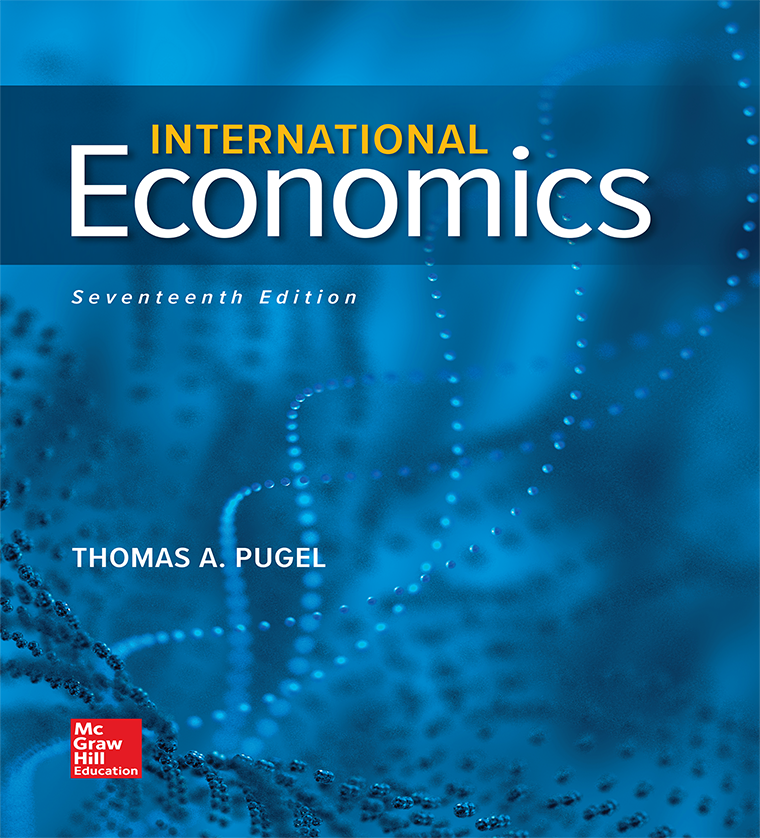
International Economics Thomas Pugel 17e - Test Bank

International Economics Thomas Pugel 17e - Test Bank   Instant Download - Complete Test Bank With Answers     Sample Questions Are Posted Below   International Economics, 17e (Pugel) Chapter 5   Who Gains and Who Loses from Trade?   1) Which of the following statements is true? A) Free trade causes contraction of the export-oriented …

$19.99

International Economics Thomas Pugel 17e – Test Bank


Instant Download – Complete Test Bank With Answers


Sample Questions Are Posted Below


International Economics, 17e (Pugel)

Chapter 5   Who Gains and Who Loses from Trade?


1) Which of the following statements is true?

  1. A) Free trade causes contraction of the export-oriented sector.
  2. B) Free trade causes contraction in the import-competing sector.
  3. C) Free trade restricts consumption choices of domestic consumers.
  4. D) All domestic producers benefit when a country engages in free trade.


Answer:  B

Difficulty: 1 Easy

Topic:  Who Gains and Who Loses within a Country

Bloom’s:  Remember

AACSB:  Reflective Thinking

Accessibility:  Keyboard Navigation


2) In the short-run, following the opening of trade

  1. A) workers in the country can change jobs but will receive the same wage.
  2. B) workers will suffer from lower wages, but landowners will benefit from higher rents.
  3. C) groups tied to declining sectors of the economy will suffer from lower returns.
  4. D) gross output remains constant.


Answer:  C

Difficulty: 2 Medium

Topic:  Who Gains and Who Loses within a Country

Bloom’s:  Understand

AACSB:  Reflective Thinking

Accessibility:  Keyboard Navigation


3) In the short-run, following the opening of trade

  1. A) inputs move across sectors, but input returns remain constant.
  2. B) factor payments in the import-competing sectors will decline.
  3. C) the supply of resources to the export-oriented sectors will decline.
  4. D) workers in all sectors will receive lower wages due to cheap imports.


Answer:  B

Difficulty: 1 Easy

Topic:  Who Gains and Who Loses within a Country

Bloom’s:  Remember

AACSB:  Reflective Thinking

Accessibility:  Keyboard Navigation


4) The theory which predicts that trade occurs because of differences in the availability of factor inputs across countries and the differences in the proportions in which the inputs are used in producing different products is called

  1. A) the Stolper-Samuelson theory.
  2. B) the Heckscher-Ohlin theory.
  3. C) the theory of comparative advantage.
  4. D) the theory of factor price equalization.


Answer:  B

Difficulty: 1 Easy

Topic:  Who Gains and Who Loses within a Country

Bloom’s:  Remember

AACSB:  Reflective Thinking

Accessibility:  Keyboard Navigation


5) If trade corresponds to the Heckscher-Ohlin theory, which of the following is most likely to happen in the long run after a labor-abundant country engages in free trade?

  1. A) The rate of unemployment in the country is most likely to increase.
  2. B) The total output in the economy will decline.
  3. C) The capital to labor ratio used in production in the export sector will increase.
  4. D) The rental rates of capital will increase but the wage rates will decline.


Answer:  C

Difficulty: 2 Medium

Topic:  Who Gains and Who Loses within a Country

Bloom’s:  Understand

AACSB:  Reflective Thinking

Accessibility:  Keyboard Navigation


6) The Heckscher-Ohlin theory predicts that the opening of trade between a land-abundant country and a labor-abundant country should result in

  1. A) higher rents and wages in both countries.
  2. B) lower rents and wages in both countries.
  3. C) higher rents in the labor-abundant country and higher wages in the land-abundant country.
  4. D) higher wages in the labor-abundant country and higher rents in the land-abundant country.


Answer:  D

Difficulty: 1 Easy

Topic:  Who Gains and Who Loses within a Country

Bloom’s:  Remember

AACSB:  Reflective Thinking

Accessibility:  Keyboard Navigation


7) Country A is relatively land-abundant, and wheat is relatively land-intensive. Given the assumptions of the Heckscher-Ohlin model, the opening of trade by this country will cause the domestic price of wheat to

  1. A) fall.
  2. B) rise.
  3. C) remain unaffected.
  4. D) rise at first, but then fall back to its original level.


Answer:  B

Difficulty: 2 Medium

Topic:  Who Gains and Who Loses within a Country

Bloom’s:  Understand

AACSB:  Reflective Thinking

Accessibility:  Keyboard Navigation


8) The Stolper-Samuelson theorem indicates that, after a country shifts to free trade

  1. A) the real return to the factor used intensively in the import-competing industry will rise in the long run.
  2. B) the real return to the factor used intensively in the export industry will fluctuate around a long-run trend.
  3. C) the real return to all the resources in an economy will increase.
  4. D) the real return to the factor used intensively in the export industry will rise in the long run.


Answer:  D

Difficulty: 1 Easy

Topic:  Three Implications of the H-O Theory

Bloom’s:  Remember

AACSB:  Reflective Thinking

Accessibility:  Keyboard Navigation


9) Let’s assume that cloth-making (labor-intensive) and farming (land-intensive) are the only two sectors of production in a country. If this country is labor-abundant, and if trade corresponds to the Heckscher-Ohlin theory, which of the following groups will gain in the short run, but lose in the long run, from the opening of trade?

  1. A) Domestic landowners in the domestic farming sector
  2. B) Domestic landowners in the domestic cloth-making sector
  3. C) Foreign landowners in the foreign farming sector
  4. D) Foreign workers in the foreign cloth-making sector


Answer:  B

Difficulty: 3 Hard

Topic:  Three Implications of the H-O Theory

Bloom’s:  Analyze

AACSB:  Analytical Thinking

Accessibility:  Keyboard Navigation


10) The Stolper-Samuelson theorem predicts that free trade between the United States, a capital-abundant country, and Mexico, a labor-abundant country, would ultimately result in

  1. A) higher wages in both countries.
  2. B) lower wages in both countries.
  3. C) higher wages in Mexico and lower wages in the United States.
  4. D) lower wages in Mexico and higher wages in the United States.


Answer:  C

Difficulty: 1 Easy

Topic:  Three Implications of the H-O Theory

Bloom’s:  Remember

AACSB:  Reflective Thinking

Accessibility:  Keyboard Navigation


11) According to the factor-price equalization theorem, free trade between any two countries equalizes

  1. A) product prices as well as the prices of individual factors of production between the countries.
  2. B) product prices between the countries but not the prices of individual factors of production.
  3. C) product prices between the countries and factor prices within each country but not between the countries.
  4. D) average national income per person in the countries.


Answer:  A

Difficulty: 1 Easy

Topic:  Three Implications of the H-O Theory

Bloom’s:  Remember

AACSB:  Reflective Thinking

Accessibility:  Keyboard Navigation


12) The factor-price equalization theorem tells us that free trade between two countries should result in

  1. A) all workers in the two countries earning the same wage rate.
  2. B) all workers in the two countries having the same skill level.
  3. C) all workers of the same skill level earning the same wage rate in the two countries.
  4. D) all input prices being equal within each country.


Answer:  C

Difficulty: 1 Easy

Topic:  Three Implications of the H-O Theory

Bloom’s:  Remember

AACSB:  Reflective Thinking

Accessibility:  Keyboard Navigation


13) According to the Stolper-Samuelson theorem, an increase in the price of a country’s imports will

  1. A) have no impact on the returns to factors of production within the country.
  2. B) raise the returns to all factors of production within the country.
  3. C) reduce the returns to the factor of production used relatively intensively in the import-competing industry.
  4. D) raise the returns to the factor of production used intensively in the import-competing industry.


Answer:  D

Difficulty: 1 Easy

Topic:  Three Implications of the H-O Theory

Bloom’s:  Remember

AACSB:  Reflective Thinking

Accessibility:  Keyboard Navigation


14) According to the Stolper-Samuelson theorem, a price change that reduces a country’s production of its exportable product would

  1. A) reduce the returns to all factors of production within the country.
  2. B) raise the returns to all factors of production within the country.
  3. C) reduce the returns to the factor of production used intensively in the export industry.
  4. D) reduce the returns to the factor of production used intensively in the import-competing industry.


Answer:  C

Difficulty: 1 Easy

Topic:  Three Implications of the H-O Theory

Bloom’s:  Remember

AACSB:  Reflective Thinking

Accessibility:  Keyboard Navigation


15) With a shift from no trade to free trade, if Country X is relatively labor-abundant and relatively land-scarce and Country Y is relatively labor-scarce and relatively land-abundant, the factor-price equalization theorem predicts that

  1. A) rents will rise in Country X and fall in Country Y until they equalize.
  2. B) wages will rise in Country X and fall in Country Y until they equalize.
  3. C) rents will fall in Country Y but will remain unchanged in Country X.
  4. D) wages will increase in Country Y but will remain unchanged in Country X.


Answer:  B

Difficulty: 2 Medium

Topic:  Three Implications of the H-O Theory

Bloom’s:  Understand

AACSB:  Reflective Thinking

Accessibility:  Keyboard Navigation


16) The following input-requirements data are for Country A, a capital-abundant country that produces nothing but bread and wine using only capital and labor as inputs. Based on this information, which of the following statements is true?


  1 Pound of Bread 1 Gallon of Wine
Capital Input 5 units 2 units
Labor Input 4 units 1 unit


  1. A) The inputs are used in the same proportion in the production of both the goods.
  2. B) Bread is a relatively capital-intensive good.
  3. C) Wine is a relatively capital-intensive good.
  4. D) In the absence of trade, the wage rate is lower than the rental rate of capital in this country.


Answer:  C

Difficulty: 2 Medium

Topic:  Does Heckscher-Ohlin Explain Actual Trade Patterns?

Bloom’s:  Understand

AACSB:  Reflective Thinking

Accessibility:  Keyboard Navigation


17) The following input-requirements data are for Country A, a capital-abundant country that produces nothing but bread and wine using only capital and labor as inputs. According to the H-O theory, Country A has a comparative advantage in the production of


  1 Pound of Bread 1 Gallon of Wine
Capital Input 5 units 20 units
Labor Input 4 units 10 units


  1. A) both bread and wine.
  2. B) neither bread nor wine.
  3. C) wine.
  4. D) bread.


Answer:  C

Difficulty: 2 Medium

Topic:  Does Heckscher-Ohlin Explain Actual Trade Patterns?

Bloom’s:  Understand

AACSB:  Reflective Thinking

Accessibility:  Keyboard Navigation


18) The following input-requirements data are for Country A, a capital-abundant country that produces nothing but bread and wine using only capital and labor as inputs.


  1 Pound of Bread 1 Gallon of Wine
Capital Input 5 units 2 units
Labor Input 4 units 1 unit


Which of the following is most likely to happen if Country A engages in free trade with other countries?

  1. A) The prices of both bread and wine will fall in the domestic market.
  2. B) The price of bread will fall but the price of wine will rise in the domestic market.
  3. C) The prices of both bread and wine will rise in the domestic market.
  4. D) The price of bread will rise but the price of wine will fall in the domestic market.


Answer:  B

Difficulty: 2 Medium

Topic:  Does Heckscher-Ohlin Explain Actual Trade Patterns?

Bloom’s:  Understand

AACSB:  Reflective Thinking

Accessibility:  Keyboard Navigation


19) The following input-requirements data are for Country A, a capital-abundant country that produces nothing but bread and wine using only capital and labor as inputs.


  1 Pound of Bread 1 Gallon of Wine
Capital Input 5 units 20 units
Labor Input 4 units 10 units


Following the opening of trade, Country A would probably

  1. A) export both bread and wine.
  2. B) export wine and import bread.
  3. C) import both goods.
  4. D) export bread and import wine.


Answer:  B

Difficulty: 2 Medium

Topic:  Does Heckscher-Ohlin Explain Actual Trade Patterns?

Bloom’s:  Understand

AACSB:  Reflective Thinking

Accessibility:  Keyboard Navigation


20) The following input-requirements data are for Country A, a capital-abundant country that produces nothing but bread and wine using only capital and labor as inputs.


  1 Pound of Bread 1 Gallon of Wine
Capital Input 5 units 2 units
Labor Input 4 units 1 unit


Which of the following can most reasonably be inferred for the short run after this country opens to free trade?

  1. A) The wage rates in all sectors of the country will increase.
  2. B) The rental rates of capital in all sectors of the economy will decline.
  3. C) The wage rates and rental rates of capital will rise in the bread industry but will fall in the wine industry.
  4. D) The wage rates and rental rates of capital will rise in the wine industry but will fall in the bread industry.


Answer:  D

Difficulty: 2 Medium

Topic:  Does Heckscher-Ohlin Explain Actual Trade Patterns?

Bloom’s:  Understand

AACSB:  Reflective Thinking

Accessibility:  Keyboard Navigation


21) The following input-requirements data are for Country A, a capital-abundant country that produces nothing but bread and wine using only capital and labor as inputs.


  1 Pound of Bread 1 Gallon of Wine
Capital Input 5 units 20 units
Labor Input 4 units 10 units


In the long run, which of the following can most reasonably be inferred after this country engages in free trade?

  1. A) The wage rates will decline but the returns to capital will increase.
  2. B) The returns to capital will decline but the wage rates will increase.
  3. C) The wage rates will increase in the wine industry and will decline in the bread industry.
  4. D) The returns to capital will rise in the wine industry and will fall in the bread industry.


Answer:  A

Difficulty: 2 Medium

Topic:  Does Heckscher-Ohlin Explain Actual Trade Patterns?

Bloom’s:  Understand

AACSB:  Reflective Thinking

Accessibility:  Keyboard Navigation


22) When Wassily Leontief tested the predictions of the Heckscher-Ohlin theory, he found that in 1947 the United States was exporting relatively labor-intensive goods and importing relatively capital-intensive goods. His findings

  1. A) contradicted the Heckscher-Ohlin theory, because the United States was relatively capital-abundant.
  2. B) contradicted the Heckscher-Ohlin theory, because the United States was relatively labor-abundant.
  3. C) were never supported by other studies and have thus been labeled a paradox.
  4. D) were consistent with the predictions of the Heckscher-Ohlin theory.


Answer:  A

Difficulty: 2 Medium

Topic:  Does Heckscher-Ohlin Explain Actual Trade Patterns?

Bloom’s:  Understand

AACSB:  Reflective Thinking

Accessibility:  Keyboard Navigation


23) Considering the United States to be a capital-abundant country, which of the following facts would contradict the predictions of the Heckscher-Ohlin theory?

  1. A) The United States is a net importer of labor-intensive products.
  2. B) The United States is a net importer of products that use farmland intensively.
  3. C) The United States is a net importer of certain natural resources such as petroleum.
  4. D) The United States is a net importer of capital-intensive products.


Answer:  D

Difficulty: 2 Medium

Topic:  Does Heckscher-Ohlin Explain Actual Trade Patterns?

Bloom’s:  Understand

AACSB:  Reflective Thinking

Accessibility:  Keyboard Navigation


24) Which of the following is most likely to be predicted by the Heckscher-Ohlin theory?

  1. A) The industrialized nations will mainly export labor-intensive goods.
  2. B) The developing countries will mainly export labor-intensive goods.
  3. C) The wage rate of the low-skilled workers will be higher in the developing countries than in the developed countries.
  4. D) Countries like China will completely specialize in the production of primary products.


Answer:  B

Difficulty: 1 Easy

Topic:  Does Heckscher-Ohlin Explain Actual Trade Patterns?

Bloom’s:  Remember

AACSB:  Reflective Thinking

Accessibility:  Keyboard Navigation


25) Assume the standard trade model with two countries (Alpha and Beta), two goods (food and drink), and two factors of production (land and labor). Further assume that Alpha is relatively labor-abundant and food is relatively land-intensive. The no-trade wage rate relative to land rents in Alpha is ________ the relative wage rate in Beta.

  1. A) greater than
  2. B) less than
  3. C) equal to
  4. D) double


Answer:  B

Difficulty: 2 Medium

Topic:  Does Heckscher-Ohlin Explain Actual Trade Patterns?

Bloom’s:  Understand

AACSB:  Reflective Thinking

Accessibility:  Keyboard Navigation


26) Assume the standard trade model with two countries (Alpha and Beta), two goods (food and drink), and two factors of production (land and labor). Further assume that Alpha is relatively labor-abundant and food is relatively land-intensive. According to the Heckscher-Ohlin theory, Alpha has a comparative advantage in the production of

  1. A) drink.
  2. B) food.
  3. C) both goods.
  4. D) neither good.


Answer:  A

Difficulty: 2 Medium

Topic:  Does Heckscher-Ohlin Explain Actual Trade Patterns?

Bloom’s:  Understand

AACSB:  Reflective Thinking

Accessibility:  Keyboard Navigation


27) Assume the standard trade model with two countries (Alpha and Beta), two goods (food and drink), and two factors of production (land and labor). Further assume that Alpha is relatively labor-abundant and food is relatively land-intensive. According to the Heckscher-Ohlin theory, Beta has a comparative advantage in the production of

  1. A) drink.
  2. B) food.
  3. C) both goods.
  4. D) neither good.


Answer:  B

Difficulty: 2 Medium

Topic:  Does Heckscher-Ohlin Explain Actual Trade Patterns?

Bloom’s:  Understand

AACSB:  Reflective Thinking

Accessibility:  Keyboard Navigation


28) Assume the standard trade model with two countries (Alpha and Beta), two goods (food and drink), and two factors of production (land and labor). Further assume that Alpha is relatively labor-abundant and food is relatively land-intensive. If the countries engage in free trade, Alpha will

  1. A) export both food and drink.
  2. B) export drink and import food.
  3. C) import both goods.
  4. D) export food and import drink.


Answer:  B

Difficulty: 2 Medium

Topic:  Does Heckscher-Ohlin Explain Actual Trade Patterns?

Bloom’s:  Understand

AACSB:  Reflective Thinking

Accessibility:  Keyboard Navigation


29) Assume the standard trade model with two countries (Alpha and Beta), two goods (food and drink), and two factors of production (land and labor). Further assume that Alpha is relatively labor-abundant and food is relatively land-intensive. If the countries engage in free trade, Beta will

  1. A) import both food and drink.
  2. B) import drink and export food.
  3. C) export both food and drink.
  4. D) export drink and import food.


Answer:  B

Difficulty: 2 Medium

Topic:  Does Heckscher-Ohlin Explain Actual Trade Patterns?

Bloom’s:  Understand

AACSB:  Reflective Thinking

Accessibility:  Keyboard Navigation


30) Assume the standard trade model with two countries (Alpha and Beta), two goods (food and drink), and two factors of production (land and labor). Further assume that Alpha is relatively labor-abundant and drink is relatively labor-intensive. If the countries engage in free trade, the price of food will

  1. A) rise in Alpha and fall in Beta.
  2. B) rise in both countries.
  3. C) fall in both countries.
  4. D) fall in Alpha and rise in Beta.


Answer:  D

Difficulty: 2 Medium

Topic:  Does Heckscher-Ohlin Explain Actual Trade Patterns?

Bloom’s:  Understand

AACSB:  Reflective Thinking

Accessibility:  Keyboard Navigation


31) Assume the standard trade model with two countries (Alpha and Beta), two goods (food and drink), and two factors of production (land and labor). Further assume that Alpha is relatively labor-abundant and drink is relatively labor-intensive. Which of the following is most likely to happen in the short run following the opening of free trade between the countries?

  1. A) All workers in both countries will gain while all the land owners in both countries will lose.
  2. B) All workers in both countries will lose while all the land owners in both countries will gain.
  3. C) The workers and landowners in the food industry in Beta will gain while the workers and the landowners in the drink industry will lose.
  4. D) The workers and the landowners in the food industry in Alpha will gain while the workers and the landowners in the drink industry will lose.


Answer:  C

Difficulty: 2 Medium

Topic:  Does Heckscher-Ohlin Explain Actual Trade Patterns?

Bloom’s:  Understand

AACSB:  Reflective Thinking

Accessibility:  Keyboard Navigation


32) Assume the standard trade model with two countries (Alpha and Beta), two goods (food and drink), and two factors of production (land and labor). Further assume that Alpha is relatively labor-abundant and drink is relatively labor-intensive. Which of the following is most likely to happen in the long run following the opening of free trade between the countries?

  1. A) The workers in Alpha will be better off but the landowners will be worse off.
  2. B) The workers in Beta will be better off while the landowners will be worse off.
  3. C) The workers and landowners in the food industry in Beta will be better off while the workers and landowners in the drink industry will be worse off.
  4. D) The workers and landowners in the food industry in Alpha will be better off while the workers and landowners in the drink industry will be worse off.


Answer:  A

Difficulty: 2 Medium

Topic:  Does Heckscher-Ohlin Explain Actual Trade Patterns?

Bloom’s:  Understand

AACSB:  Reflective Thinking

Accessibility:  Keyboard Navigation


33) Suppose Country Y produces only corn and clothing using only two inputs-land and labor. Production of corn requires an intensive use of land whereas clothing is a labor-intensive good. If the price of corn increases by 15 percent and the price of clothing remains constant, the Stolper-Samuelson theorem predicts that in the long run

  1. A) the rental rate of land will increase by 15 percent.
  2. B) the rental rate of land will increase by more than 15 percent.
  3. C) the wage rate will increase by more than 15 percent.
  4. D) the wage rate will remain unchanged.


Answer:  B

Difficulty: 3 Hard

Topic:  Three Implications of the H-O Theory

Bloom’s:  Apply

AACSB:  Analytical Thinking

Accessibility:  Keyboard Navigation


34) Suppose Country A, a labor-abundant country, produces only drink and furniture. The following equations illustrate the prices and costs of drink and furniture in the country, where the numbers indicate the amounts of labor and land needed to produce a unit of drink and furniture. ‘W’ is the wage rate and ‘r’ is the rental rate of land.


Price of drink = 1w + 2r


Price of furniture = 2w + 1r


According to this information, which of the following statements is true?

  1. A) Labor is used relatively intensively in the production of furniture.
  2. B) The inputs are used in the same proportion in producing both commodities.
  3. C) The land to labor ratio in the production of furniture is higher than that in the production of drink.
  4. D) The opportunity cost of producing furniture is higher than the opportunity cost of producing drink in Country A.


Answer:  A

Difficulty: 2 Medium

Topic:  Three Implications of the H-O Theory

Bloom’s:  Understand

AACSB:  Reflective Thinking

Accessibility:  Keyboard Navigation


35) Suppose Country A, a labor-abundant country, produces only wheat and cloth. The following equations illustrate the prices and costs of wheat and cloth in the country. The numbers indicate the amounts of labor and land needed to produce a unit of wheat and cloth. ‘W’ is the wage rate and ‘r’ is the rental rate of land.


Price of wheat = 1w + 2r


Price of cloth = 2w + 1r


If the initial prices of wheat and cloth are $3 per unit then

  1. A) both the wage rate and the rental rate are equal to $1.
  2. B) the wage rate and the rental rate are $1 and $2, respectively.
  3. C) the wage rate and the rental rate are $2 and $3, respectively.
  4. D) both the wage rate and the rental rate are equal to $2.


Answer:  A

Difficulty: 2 Medium

Topic:  Three Implications of the H-O Theory

Bloom’s:  Understand

AACSB:  Reflective Thinking

Accessibility:  Keyboard Navigation


36) Suppose Country A, a labor-abundant country, produces only wheat and cloth. The following equations illustrate the prices and costs of wheat and cloth in the country. The numbers indicate the amounts of labor and land needed to produce a unit of wheat and cloth. ‘W’ is the wage rate and ‘r’ is the rental rate of land.


Price of wheat = 1w + 2r


Price of cloth = 2w + 1r


If the initial prices of wheat and cloth are $3 per unit, the labor cost per unit of cloth output is ________ and the rental cost per unit of cloth output is

  1. A) $3; $1.
  2. B) $1; $2.
  3. C) $2; $1.
  4. D) $1; $3.


Answer:  C

Difficulty: 2 Medium

Topic:  Three Implications of the H-O Theory

Bloom’s:  Understand

AACSB:  Reflective Thinking

Accessibility:  Keyboard Navigation


37) Suppose Country A, a labor-abundant country, produces only wheat and cloth. The following equations illustrate the prices and costs of wheat and cloth in the country. The numbers indicate the amounts of labor and land needed to produce a unit of wheat and cloth. ‘W’ is the wage rate and ‘r’ is the rental rate of land.


Price of wheat = 1w + 2r


Price of cloth = 2w + 1r


If the initial prices of wheat and cloth are $3 per unit, the labor cost per unit of wheat output is ________ and the rental cost per unit of wheat output is

  1. A) $2; $3.
  2. B) $1; $2.
  3. C) $3; $2.
  4. D) $2; $1.


Answer:  B

Difficulty: 2 Medium

Topic:  Three Implications of the H-O Theory

Bloom’s:  Understand

AACSB:  Reflective Thinking

Accessibility:  Keyboard Navigation


38) Suppose Country A, a labor-abundant country, produces only wheat and cloth. The following equations illustrate the prices and costs of wheat and cloth in the country. The numbers indicate the amounts of labor and land needed to produce a unit of wheat and cloth. ‘W’ is the wage rate and ‘r’ is the rental rate of land.


Price of wheat = 1w + 2r


Price of cloth = 2w + 1r


Suppose Country A engages in free trade and the price of cloth increases from $3 per unit to $4 per unit. The price of wheat remains unchanged at $3 per unit. The wage rate and the rental rate change to ________ and ________, respectively.

  1. A) $3/2; $1
  2. B) $1; $5/3
  3. C) $5/3; $2/3
  4. D) $4/7; $5/7


Answer:  C

Difficulty: 2 Medium

Topic:  Three Implications of the H-O Theory

Bloom’s:  Understand

AACSB:  Reflective Thinking

Accessibility:  Keyboard Navigation


39) Suppose Country A, a labor-abundant country, produces only wheat and cloth. The following equations illustrate the prices and costs of wheat and cloth in the country. The numbers indicate the amounts of labor and land needed to produce a unit of wheat and cloth. ‘W’ is the wage rate and ‘r’ is the rental rate of land.


Price of wheat = 1w + 2r


Price of cloth = 2w + 1r


Suppose Country A engages in free trade and the price of cloth increases to $4 per unit. However, the price of wheat remains unchanged. Under such a situation, the Stolper-Samuelson theorem will predict that

  1. A) the real income of the landowners will increase but that of the laborers will remain unchanged.
  2. B) the purchasing power of the laborers will increase but that of the landowners will decline.
  3. C) the real income of both the landowners and the laborers will decline.
  4. D) the purchasing power of both the landowners and the laborers will increase.


Answer:  B

Difficulty: 2 Medium

Topic:  Three Implications of the H-O Theory

Bloom’s:  Understand

AACSB:  Reflective Thinking

Accessibility:  Keyboard Navigation


40) Suppose Country A, a labor-abundant country, produces only wheat and cloth. The following equations illustrate the prices and costs of wheat and cloth in the country. The numbers indicate the amounts of labor and land needed to produce a unit of wheat and cloth. ‘W’ is the wage rate and ‘r’ is the rental rate of land.


Price of wheat = 1w + 2r


Price of cloth = 2w + 1r


Suppose Country A engages in free trade and the price of cloth increases to $4 per unit. However, the price of wheat remains unchanged. As a result of the change in the price of cloth, the landowners are most likely to be able to

  1. A) purchase more of both cloth and wheat than in the absence of trade.
  2. B) purchase more wheat but less cloth than in the absence of trade.
  3. C) purchase less of both cloth and wheat than in the absence of trade.
  4. D) purchase more cloth but less wheat than in the absence of trade.


Answer:  C

Difficulty: 2 Medium

Topic:  Three Implications of the H-O Theory

Bloom’s:  Understand

AACSB:  Reflective Thinking

Accessibility:  Keyboard Navigation


41) The Heckscher-Ohlin theory explains comparative advantage enjoyed by countries in the production of certain goods in terms of underlying differences in consumer tastes and preferences.


Answer:  FALSE

Difficulty: 1 Easy

Topic:  Who Gains and Who Loses within a Country

Bloom’s:  Remember

AACSB:  Reflective Thinking

Accessibility:  Keyboard Navigation


42) When factors of production move to better-paying sectors of the economy in the long run after the opening of trade in the country, wages and rents will be bid back to their pre-trade levels.


Answer:  FALSE

Difficulty: 1 Easy

Topic:  Does Heckscher-Ohlin Explain Actual Trade Patterns?

Bloom’s:  Remember

AACSB:  Reflective Thinking

Accessibility:  Keyboard Navigation


43) According to the Stolper-Samuelson theorem and the Heckscher-Ohlin theory, the opening of trade will ultimately lead to lower real wages in a land-abundant country.


Answer:  TRUE

Difficulty: 1 Easy

Topic:  Three Implications of the H-O Theory

Bloom’s:  Remember

AACSB:  Reflective Thinking

Accessibility:  Keyboard Navigation


44) Trade makes some people absolutely better off and others absolutely worse off in each of the trading countries. However, the gainers and losers in the short run are somewhat different from those in the long run, because more adjustment can occur in the long run.


Answer:  TRUE

Difficulty: 1 Easy

Topic:  Who Gains and Who Loses within a Country

Bloom’s:  Remember

AACSB:  Reflective Thinking

Accessibility:  Keyboard Navigation


45) The factor-price equalization theorem indicates that laborers will end up earning the same wage rate in all countries only if the laborers are allowed to migrate between countries.


Answer:  FALSE

Difficulty: 1 Easy

Topic:  Does Heckscher-Ohlin Explain Actual Trade Patterns?

Bloom’s:  Remember

AACSB:  Reflective Thinking

Accessibility:  Keyboard Navigation


46) International trade patterns are broadly consistent with the Heckscher-Ohlin prediction that nations tend to export the products that use their abundant factors intensively.


Answer:  TRUE

Difficulty: 1 Easy

Topic:  Who Gains and Who Loses within a Country

Bloom’s:  Remember

AACSB:  Reflective Thinking

Accessibility:  Keyboard Navigation


47) While China’s exports are consistent with the predictions of the Heckscher-Ohlin theory, China’s imports are not.


Answer:  FALSE

Difficulty: 1 Easy

Topic:  Does Heckscher-Ohlin Explain Actual Trade Patterns?

Bloom’s:  Remember

AACSB:  Reflective Thinking

Accessibility:  Keyboard Navigation


48) In the short run after a country engages in free trade, wages and land rents can be expected to rise in the expanding sector of the country.


Answer:  TRUE

Difficulty: 1 Easy

Topic:  Who Gains and Who Loses within a Country

Bloom’s:  Remember

AACSB:  Reflective Thinking

Accessibility:  Keyboard Navigation


49) Free trade can be expected to cause a decrease in the real incomes of the owners of the factor used intensively in the import-competing industry.


Answer:  TRUE

Difficulty: 1 Easy

Topic:  Who Gains and Who Loses within a Country

Bloom’s:  Remember

AACSB:  Reflective Thinking

Accessibility:  Keyboard Navigation


50) Factor-price equalization theory predicts that with free trade the input prices within a country will become the same.


Answer:  FALSE

Difficulty: 1 Easy

Topic:  Three Implications of the H-O Theory

Bloom’s:  Remember

AACSB:  Reflective Thinking

Accessibility:  Keyboard Navigation


51) The Leontief paradox arose because Leontief’s results indicated that in the United States physical capital was an export-oriented input.


Answer:  FALSE

Difficulty: 1 Easy

Topic:  Does Heckscher-Ohlin Explain Actual Trade Patterns?

Bloom’s:  Remember

AACSB:  Reflective Thinking

Accessibility:  Keyboard Navigation


52) According to the specialized-factor pattern, the more a factor is concentrated in the production of a product, the more it stands to gain from an increase in the price of this product.


Answer:  TRUE

Difficulty: 2 Medium

Topic:  Three Implications of the H-O Theory

Bloom’s:  Understand

AACSB:  Reflective Thinking

Accessibility:  Keyboard Navigation


53) What is the Stolper-Samuelson theorem? What are the underlying conditions and assumptions for the theorem


Answer:  POSSIBLE RESPONSE: The Stopler-Samuelson theorem concludes that opening trade splits a country into specific gainers and losers in the long run. Any event that changes relative product prices in a country raises the real return to the factor used intensively in the rising-price industry and lowers the real return to the factor used intensively in the falling-price industry. Four important conditions and assumptions are needed for the Stolper-Samuelson theorem: (1) the country produces positive amounts of two goods with two factors of production used in producing each good. One good is relatively land-intensive; the other is relatively labor-intensive. (2) Factors are mobile between sectors and fully employed overall in the economy. In addition, it is often assumed that total factor supplies (factor endowment sizes) are fixed. (3) Competition prevails in all markets. (4) Production technology involves constant returns to scale (e.g., if all factors used in producing a product double, then output of the product doubles).

Difficulty: 1 Easy

Topic:  Three Implications of the H-O Theory

Bloom’s:  Remember

AACSB:  Reflective Thinking

Accessibility:  Keyboard Navigation


54) Describe Leontief’s paradox.


Answer:  POSSIBLE RESPONSE: In 1953, Wassily Leontief tested the Heckscher–Ohlin (H-O) theory that a country will export products whose production requires more of the country’s abundant factors and import products whose production relies more on the country’s scarce factors. As the United States in 1947 had relatively abundant capital resources and scarce labor resources, Leontief predicted that the results of his test would show that the United States was exporting relatively capital-intensive goods and importing relatively labor-intensive goods. Leontief found that the United States exported commodities that were more labor intensive than capital intensive, contrary to the H-O theory. Leontief’s conclusion the United States specialized in labor-intensive rather than capital-intensive goods contradicted the widely accepted view derived from the H-O theory.

Difficulty: 1 Easy

Topic:  Who Gains and Who Loses within a Country

Bloom’s:  Remember

AACSB:  Reflective Thinking

Accessibility:  Keyboard Navigation


55) Hollywoodland, being self-sufficient in most products, trades only two goods with the Rest of the World (ROW), movies and automobiles. Both of these goods are produced using skilled labor (L) and capital (K) with the returns to capital being the interest rate (r) and the returns to skilled labor being the wage rate (w). The production of automobiles is capital intensive relative to the production of movies, and Hollywoodland is skilled-labor abundant relative to the ROW.


  1. State the Heckscher-Ohlin theorem and use it to predict the pattern of trade between Hollywoodland and the ROW.


  1. If the price of Hollywoodland’s imports rises, while the price of its exports remain unchanged, what would happen to the factor returns in Hollywoodland in the long run? State the theorem used to explain the answer, and briefly state the intuition behind the theorem.


Answer:

  1. POSSIBLE RESPONSE: The Heckscher-Ohlin theorem is that a country will export the product that uses its abundant factor relatively intensively and import the product that uses its scarce factor intensively. Therefore, the Heckscher-Ohlin theorem predicts that Hollywoodland, being relatively skilled-labor abundant, will export movies, the relatively skilled-labor intensive product, and will import automobiles, the relatively capital-intensive product.


  1. POSSIBLE RESPONSE: The effects of the rising price of imports in the long-run are described by the Stolper-Samuelson theorem. The Stolper-Samuelson theorem states that, given certain conditions and assumptions—including full adjustment to a long-run equilibrium—an increase in the price of a product will raise the real return to the factor used intensively to produce that product and will decrease the real return to the factor used intensively to produce the other product. Thus, when the price of automobiles rises, in the long run, the real return to the factor used intensively (in this case capital) in the rising-price industry will increase, and the real return to the other factor (skilled labor) will fall. Here are two ways to see the intuition behind the theorem. First as the price of automobiles rises, this will bid up the returns to at least one of the factors employed in the automobile industry. It is likely to raise the interest rate because capital is used intensively in the production of cars. On the other hand, the price of movies remains unchanged, and since the price reflects the returns to capital and skilled labor, the wage must decrease. Second, an increase in the price of a good in relation to another will result in a relative expansion of this industry and a contraction of the other industry. As the demands for the two factors change, the return to the factor used intensively in the expanding industry will increase and the return to the other factor will decline.

Difficulty: 2 Medium

Topic:  Who Gains and Who Loses within a Country; Three Implications of the H-O Theory

Bloom’s:  Understand

AACSB:  Reflective Thinking

Accessibility:  Keyboard Navigation


56) As a result of a new Japan-United States Free Trade Agreement (JUSFTA), the United States has shifted to free trade with Japan. Assume that the two major products are A-goods (agricultural products), which are relatively land-intensive, and M-goods (manufactured products), which are relatively skilled-labor intensive. According to the Stolper-Samuelson theorem, how will this shift affect the real returns to landowners in Japan and the real returns to landowners in the United States? Also explain the impact on the real wage of skilled labor in Japan and the real wage of skilled labor in the United States.


Answer:  POSSIBLE RESPONSE: This Japan-United States Free Trade Agreement will remove the trade barriers between Japan and the United States. The shift to free trade leads to an equalization of product prices in these countries. The change in product prices leads to changes in the input prices. Each country will shift toward exporting goods which intensively use its abundant factors of production and toward importing goods which use its scarce factors of production. In this particular case, Japan is clearly relatively land-scarce and the United States is relatively land-abundant, so Japan will increase its imports of A-goods, which require the intensive use of land, and the United States will increase its exports of A-goods. Compared to the pre-FTA situation, the price of A-goods relative to the price of M-goods will go down in Japan, and this relative price will go up in the United States. In the long run this will cause an adjustment in the real returns to the different factors of production. The Stolper-Samuelson theorem asserts that the real return to land will decrease in Japan, and the real return to land will increase in the United States. The Stolper-Samuelson theorem also predicts that the real wage of skilled labor in Japan will increase, and real wage of skilled labor in the United States will decrease.

Difficulty: 3 Hard

Topic:  Three Implications of the H-O Theory

Bloom’s:  Understand

AACSB:  Reflective Thinking

Accessibility:  Keyboard Navigation


57) The following equations describe the prices and marginal costs of producing corn and toys in a country. The numbers in the equations indicate the amounts of labor and land needed to produce a unit of corn and a unit of toys. In the equations, the wage rate and the rental rate are denoted by ‘w’ and ‘r,’ respectively.


Pcorn = 80w + 40r


Ptoys = 100w + 30r


  1. If the price per unit of corn and the price per unit of toys are initially $200, calculate the wage rate and the rental rate. Calculate the labor cost per unit of corn and per unit of toys. What is the rental cost per unit of corn and per unit of toys?


  1. Suppose post-trade the price of corn increases to $240. The price of toys remains unchanged. What are the new values for ‘w’ and ‘r’ after adjustment to the new long-run situation?


  1. What is the change in the real wage with respect to each good? What is the change in the real rental rate with respect to each good?


  1. Relate your conclusions in Part C. to the Stolper-Samuelson theorem.


Answer:

  1. POSSIBLE RESPONSE: To answer this question we need to solve the equations simultaneously:


200 = 80w + 40r


200 = 100w + 30r


The solution is w = $1.25 and r = $2.50. The labor cost per unit of corn output is (80 × 1.25) = $100, and the labor cost per unit of toys is (100 × 1.25) = $125. The rental cost per unit of corn is (40 × 2.5) = $100, and the rental cost per unit of toys is (30 × 2.5) = $75.


  1. POSSIBLE RESPONSE: To answer this question we need now to simultaneously solve the equations after putting in the post-trade price of corn:


240 = 80w + 40r


200 = 100w + 30r


The solution is w = $0.50 and r = $5.


  1. POSSIBLE RESPONSE: When the initial price of the two goods is $200, the real wage with respect to corn is (1.25/200) = 0.00625, and with respect to toys is (1.25/200) = 0.00625. As the price of corn rises to $240, the real wage with respect to corn is (0.5/240) = 0.00208 and with respect to toys is (0.5/200) = 0.0025. The purchasing power of labor income decreases in terms of both goods.


When the initial value of the two goods is $200, the real rental rates are (2.5/200) = 0.0125 units of corn and (2.5/200) = 0.0125 units of toys. As the price of corn rises to $240, the real rental rates are (5/240) = 0.0208 units of corn and (5/200) = 0.025 units of toys. The purchasing power of landowners has increased with respect to both goods.


  1. POSSIBLE RESPONSE: Our findings are consistent with the Stolper-Samuelson theorem. In the context of this problem, the theorem asserts that, as the price of corn increases, the real return (rent) to the factor used intensively in the production of corn (land) increases, and the real return (wage) to the factor used intensively in the production of toys (labor) falls.

Difficulty: 3 Hard

Topic:  Three Implications of the H-O Theory

Bloom’s:  Understand; Analyze; Apply

AACSB:  Reflective Thinking; Analytical Thinking

Accessibility:  Keyboard Navigation


58) International outsourcing—the shifting of service activities from one country to another—was not an issue when the factor-price equalization theory was developed. Does the existence of outsourcing change the implications of the theory? Justify your answer.


Answer:  POSSIBLE RESPONSE: The Heckscher-Ohlin theory can explain trade in services in the same way it explains trade in physical goods. The factor price equalization theorem demonstrates that factor prices (in particular, wages) will equalize across countries even if factors of production do not migrate from one country to another. Free trade alone is capable of generating this effect of factor-price equalization.


The new phenomenon of international outsourcing reinforces rather than contradicts this theory. International outsourcing, which is a process of shifting business service activities abroad, can be considered a form of international trade whereby industrialized countries import services such as bookkeeping, call centers, and software development from countries such as India and China. These countries are abundant in factors which are intensively used in the production of these services (workers with particular skills). The Stolper-Samuelson theory predicts that the real wages of workers employed by those sectors in the United States will decrease, and the real wage of workers in China and India will increase. This is the type of trend observed since international outsourcing leapt into prominence in the early 21st century.

Difficulty: 3 Hard

Topic:  Three Implications of the H-O Theory

Bloom’s:  Analyze

AACSB:  Analytical Thinking

Accessibility:  Keyboard Navigation


59) Suppose Country X is relatively labor-abundant and relatively land-scarce. Country Y is relatively labor-scarce and relatively land-abundant. The production of corn is relatively land-intensive while the production of shoes is relatively labor-intensive. Explain the short- and long-run effects of opening to free trade between these countries on the incomes of: workers employed in the production of corn in each country; workers employed in the production of shoes in each country; land used in the production of corn in each country; and land used in the production of shoes in each country.


Answer:  POSSIBLE RESPONSE: As the countries engage in free trade, the product prices will be equal in the two countries. Once product prices have responded to free trade, the production in the two countries will respond to the new prices. Country X will expand its production of shoes reduce and its production of corn. Country Y will expand its production of corn and reduce its production of shoes. In the short run, the resources in Country X involved in the production of shoes will gain, and the resources involved in the production of corn will lose. In Country Y the reverse trend is observed. The resources involved in the production of shoes lose, and the resources involved in the production of corn gain.


In the long run, resources can shift employment between industries within each country, so the difference between the returns to the same resource in different industries in a country disappears. Country X exports shoes, and the production of shoes is labor intensive, so wages in Country X will rise and rents will fall. In Country Y, again, the reverse trend is observed: wages will fall and rents will go up.

Difficulty: 2 Medium

Topic:  Who Gains and Who Loses within a Country

Bloom’s:  Understand

AACSB:  Reflective Thinking

Accessibility:  Keyboard Navigation


60) Explain the weak and the strong forms of the factor-price equalization theorem and discuss their real-world relevance.


Answer:  POSSIBLE RESPONSE: According to the strong form of the theorem, the prices of a single factor in different countries will equalize across countries as a result of free trade. There is little evidence in the world of this strong form of factor-price equality. The reason is that many assumptions of this model are not satisfied in the real world. Countries use different production technologies, trade is not completely free, e.g., countries impose different barriers to free trade (tariffs, quotas, etc.), and not all goods and services are traded internationally (e.g. haircuts, health care, etc.).


The weak form of this theorem states that, as a result of free trade, the prices of a single factor will tend to become less unequal across countries. There is more evidence for this form of factor-price convergence. For instance, wage rates in the industrialized countries of Asia (e.g. Singapore, South Korea) are approaching the ones in the Western countries for comparable types of worker skills.

Difficulty: 2 Medium

Topic:  Who Gains and Who Loses within a Country

Bloom’s:  Understand

AACSB:  Reflective Thinking

Accessibility:  Keyboard Navigation

Additional information

Add Review

Your email address will not be published. Required fields are marked *