No products in the cart.

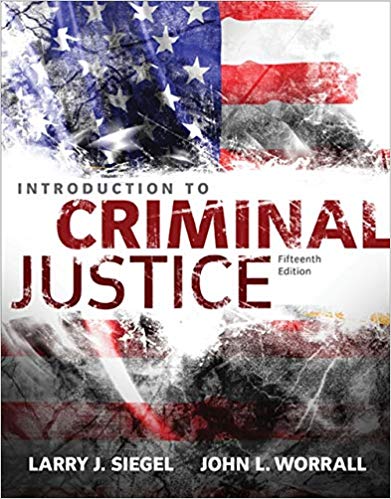
Introduction To Criminal Justice 15th Edition by Larry J. Siegel - Test Bank

Introduction To Criminal Justice 15th Edition by Larry J. Siegel - Test Bank   Instant Download - Complete Test Bank With Answers     Sample Questions Are Posted Below   1. ​Which arrangement in early English society required that every person in a village be responsible for protecting the settlement from thieves?   a. ​The runner system …

$19.99

Introduction To Criminal Justice 15th Edition by Larry J. Siegel – Test Bank


Instant Download – Complete Test Bank With Answers


Sample Questions Are Posted Below


1. ​Which arrangement in early English society required that every person in a village be responsible for protecting the settlement from thieves?

  a. ​The runner system
  b. ​Community policing
  c. ​The pledge system
  d. ​The watch system


ANSWER:   c
REFERENCES:   The History of the Police
LEARNING OBJECTIVES:   ITCJ.SIWO.16.5.1 – Recount the early development of the police in England.
KEYWORDS:   Bloom’s: Remember


2. The _____ was created in 1326 under the watch system of policing to assist the shire reeve in controlling the county.​

  a. ​Deputy position
  b. ​Constable position
  c. ​Bobbie position
  d. ​Justice of the peace


ANSWER:   d
REFERENCES:   The History of the Police
LEARNING OBJECTIVES:   ITCJ.SIWO.16.5.1 – Recount the early development of the police in England.
KEYWORDS:   Bloom’s: Remember


3. What was the name of the organized private police that patrolled in eighteenth-century England?​

  a. ​Constables
  b. ​Shire reeves
  c. ​Bobbies
  d. ​Thief takers


ANSWER:   d
REFERENCES:   The History of the Police
LEARNING OBJECTIVES:   ITCJ.SIWO.16.5.1 – Recount the early development of the police in England.
KEYWORDS:   Bloom’s: Remember


4. English police officers are known as bobbies because:​

  a. ​The tails of the horses they rode were cut short (bobbed).
  b. ​Sir Robert (Bobbie) Peel was responsible for their creation.
  c. ​The first name Robert and its accompanying nickname Bobbie were extremely common among the first generation of English police.
  d. ​They were paid in shillings, for which the slang term was “bob.”


ANSWER:   b
REFERENCES:   The History of the Police
LEARNING OBJECTIVES:   ITCJ.SIWO.16.5.1 – Recount the early development of the police in England.
KEYWORDS:   Bloom’s: Remember


5. Which of the following was not one of Sir Robert Peel’s nine principles of policing?​

  a. ​The basic mission for which the police exist is to make arrests and aid in convictions.
  b. ​The ability of the police to perform their duties is dependent on public approval of police actions.
  c. ​Police must secure the willing cooperation of the public in voluntary observance of the law in order to secure and maintain public respect.
  d. ​Police preserve public favor by constantly demonstrating absolute impartial service to the law.


ANSWER:   a
REFERENCES:   The History of the Police
LEARNING OBJECTIVES:   ITCJ.SIWO.16.5.1 – Recount the early development of the police in England.
KEYWORDS:   Bloom’s: Remember


6. How did police reformer August Vollmer contribute to police professionalism?​

  a. ​Instituting university training for young officers
  b. ​Establishing the first formal police academy in the United States
  c. ​Becoming the first president of the IACP
  d. ​Creating the first SWAT team


ANSWER:   a
REFERENCES:   Creating the first SWAT team
LEARNING OBJECTIVES:   ITCJ.SIWO.16.5.3 – Discuss the emergence of police professionalism.
KEYWORDS:   Bloom’s: Remember


7. ​The _______________ was created in 1929 by President Herbert Hoover to study the U.S. criminal justice system and make recommendations for improvement.

  a. ​Criminal Justice Institute
  b. ​National Institute of Justice
  c. ​Law Enforcement Assistance Administration
  d. ​Wickersham Commission


ANSWER:   d
REFERENCES:   The History of the Police
LEARNING OBJECTIVES:   ITCJ.SIWO.16.5.3 – Discuss the emergence of police professionalism.
KEYWORDS:   Bloom’s: Remember


8. ​The defining event that helped shape police reforms in the 1990s was the:

  a. ​Creation of the International Association of Chiefs of Police.
  b. ​Creation of the Law Enforcement Assistance Administration.
  c. ​Growth of police unions.
  d. ​Beating of Rodney King.


ANSWER:   d
REFERENCES:   Policing from the 1960s to Present
LEARNING OBJECTIVES:   ITCJ.SIWO.16.5.4 – Identify the main events in policing between 1960 and the present.
KEYWORDS:   Bloom’s: Remember


9. Who heads the U.S. Department of Justice?​

  a. ​U.S. Attorney General
  b. ​Secretary of the Treasury
  c. ​Chief Justice of the Supreme Court
  d. ​Secretary of State


ANSWER:   a
REFERENCES:   The Agencies of Law Enforcement
LEARNING OBJECTIVES:   ITCJ.SIWO.16.5.6 – Identify the most prominent federal law enforcement agencies.
KEYWORDS:   Bloom’s: Remember


10. Which of the following is false regarding the FBI?​

  a. ​It maintains liaison offices in other countries.
  b. ​It is an investigative agency rather than a police agency.
  c. ​It has jurisdiction over all federal and state laws.
  d. ​It was under the direction of J. Edgar Hoover from 1924 until his death in 1972.


ANSWER:   c
REFERENCES:   The Agencies of Law Enforcement
LEARNING OBJECTIVES:   ITCJ.SIWO.16.5.6 – Identify the most prominent federal law enforcement agencies.
KEYWORDS:   Bloom’s: Remember


11. Under its reformulated priorities, the FBI’s primary objective is to protect the:​

  a. ​Civil rights of those residing in the United States.
  b. ​Businesses in the United States from infiltration by organized crime.
  c. ​U.S. against espionage.
  d. ​U.S. from terrorist attacks.


ANSWER:   d
REFERENCES:   The Agencies of Law Enforcement
LEARNING OBJECTIVES:   ITCJ.SIWO.16.5.6 – Identify the most prominent federal law enforcement agencies.
KEYWORDS:   Bloom’s: Remember


12. Which federal agency is responsible for the transporting of federal prisoners?​

  a. ​U.S. Marshals
  b. ​FBI
  c. ​Department of Homeland Security
  d. ​Secret Service


ANSWER:   a
REFERENCES:   The Agencies of Law Enforcement
LEARNING OBJECTIVES:   ITCJ.SIWO.16.5.6 – Identify the most prominent federal law enforcement agencies.
KEYWORDS:   Bloom’s: Remember


13. Which federal agency enforces the Gun Control Act of 1968 and the Organized Crime Control Act of 1970?​

  a. ​ATF
  b. ​FBI
  c. ​DHS
  d. ​Secret Service


ANSWER:   a
REFERENCES:   The Agencies of Law Enforcement
LEARNING OBJECTIVES:   ITCJ.SIWO.16.5.6 – Identify the most prominent federal law enforcement agencies.
KEYWORDS:   Bloom’s: Remember


14. Which is the oldest federal law enforcement agency?​

  a. ​U.S. Marshals
  b. ​FBI
  c. ​DHS
  d. ​IRS


ANSWER:   a
REFERENCES:   The Agencies of Law Enforcement
LEARNING OBJECTIVES:   ITCJ.SIWO.16.5.6 – Identify the most prominent federal law enforcement agencies.
KEYWORDS:   Bloom’s: Remember


15. Which of the following is not a branch of the Department of Homeland Security?​

  a. ​Customs and Border Protection
  b. ​Department of Justice
  c. ​Immigration and Customs Enforcement
  d. ​U.S. Secret Service


ANSWER:   b
REFERENCES:   The Agencies of Law Enforcement
LEARNING OBJECTIVES:   ITCJ.SIWO.16.5.6 – Identify the most prominent federal law enforcement agencies.
KEYWORDS:   Bloom’s: Remember


16. Which of the following is not a mission of the U.S. Secret Service?​

  a. ​Investigate counterfeiting and other financial crimes, including financial institution fraud, identity theft and computer fraud.
  b. ​Investigate threats against protected officials.
  c. ​Protect the President and Vice-President.
  d. ​Conduct and coordinate international investigations involving transnational criminal organizations responsible for the illegal movement of people, goods, and technology into and out of the United States


ANSWER:   d
REFERENCES:   The Agencies of Law Enforcement
LEARNING OBJECTIVES:   ITCJ.SIWO.16.5.6 – Identify the most prominent federal law enforcement agencies.
KEYWORDS:   Bloom’s: Remember


17. The role of ______ law enforcement evolved from that of the early English shire reeve, whose primary duty was to assist the royal judges in trying prisoners and enforcing sentences.​

  a. ​Local
  b. ​County
  c. ​State
  d. ​Federal


ANSWER:   b
REFERENCES:   The Agencies of Law Enforcement
LEARNING OBJECTIVES:   ITCJ.SIWO.16.5.7 – Discuss the differences among local, county, state, and federal law enforcement agencies.
KEYWORDS:   Bloom’s: Remember


18. Which term is used to describe the use of computer software to conduct analysis of behavioral patterns in an effort to link open cases to known perpetrators?​

  a. ​Crime mapping
  b. ​CODIS
  c. ​Data mining
  d. ​Systems analysis


ANSWER:   c
REFERENCES:   Technology and Law Enforcement
LEARNING OBJECTIVES:   ITCJ.SIWO.16.5.9 – Identify various technologies currently used in law enforcement.
KEYWORDS:   Bloom’s: Remember


19. Which of the following is not an advantage of high-definition surveying?​

  a. ​Investigators can manipulate every piece of evidence.
  b. ​The perspective of the crime scene can be manipulated.
  c. ​Crime scene contamination is limited.
  d. ​It relies on photographic evidence and two-dimensional drawings.


ANSWER:   d
REFERENCES:   Technology and Law Enforcement
LEARNING OBJECTIVES:   ITCJ.SIWO.16.5.9 – Identify various technologies currently used in law enforcement.
KEYWORDS:   Bloom’s: Remember


20. AFIS is a (n):​

  a. ​National database of DNA records.
  b. ​Computerized fingerprint system.
  c. ​Automated stolen vehicle database.
  d. ​Continually updating fugitive identification system.


ANSWER:   b
REFERENCES:   Technology and Law Enforcement
LEARNING OBJECTIVES:   ITCJ.SIWO.16.5.9 – Identify various technologies currently used in law enforcement.
KEYWORDS:   Bloom’s: Remember


21. Which of the following is false about Gunshot Location Systems?​

  a. ​This system uses sensors to determine the direction from which the sound came and can triangulate and determine the exact location from which the gunshots were fired.
  b. ​This technology is known to deter criminals.
  c. ​An advantage of this technology is rapid response by police.
  d. ​A limitation of this technology is its high cost.


ANSWER:   b
REFERENCES:   Technology and Law Enforcement
LEARNING OBJECTIVES:   ITCJ.SIWO.16.5.9 – Identify various technologies currently used in law enforcement.
KEYWORDS:   Bloom’s: Remember


22. Which of the following is false about biometrics?​

  a. ​Biometric authenticators are unique to the user and as a result cannot be stolen and used without that individual’s knowledge.
  b. ​Biometrics involves automated methods of recognizing a person based on their fingerprint characteristics.
  c. ​Biometrics can be used at all levels of government and in private businesses.
  d. ​Casinos have started to implement biometrics to recognize when known cheaters enter their premises.


ANSWER:   b
REFERENCES:   Technology and Law Enforcement
LEARNING OBJECTIVES:   ITCJ.SIWO.16.5.9 – Identify various technologies currently used in law enforcement.
KEYWORDS:   Bloom’s: Remember


23. Which of the following is an example of soft technology that law enforcement uses?​

  a. ​Metal detectors
  b. ​Tasers
  c. ​Sex offender registration
  d. ​Street lighting


ANSWER:   c
REFERENCES:   Technology and Law Enforcement
LEARNING OBJECTIVES:   ITCJ.SIWO.16.5.9 – Identify various technologies currently used in law enforcement.
KEYWORDS:   Bloom’s: Remember


24. Which of the following is an example of hard technology used by law enforcement?​

  a. ​Ignition interlock systems
  b. ​Facial recognition software
  c. ​Crime mapping
  d. ​Gunshot location devices


ANSWER:   a
REFERENCES:   Technology and Law Enforcement
LEARNING OBJECTIVES:   ITCJ.SIWO.16.5.9 – Identify various technologies currently used in law enforcement.
KEYWORDS:   Bloom’s: Remember


25. How do private police compare with public police?​

  a. ​The primary focus of private police is enforcement of the criminal law.
  b. ​Much of public policing is concerned with loss prevention.
  c. ​Private police are concerned almost solely with prevention.
  d. ​There are no differences between public and private police.


ANSWER:   c
REFERENCES:   Private Policing
LEARNING OBJECTIVES:   ITCJ.SIWO.16.5.8 – Know the differences between public and private policing.
KEYWORDS:   Bloom’s: Remember


26. All of the following are reasons for the growth in private policing except:​

  a. ​The desire for nongovernmental service provisions.
  b. ​Growth in mass private property.
  c. ​A belief that the private sector can do a better job than the public sector.
  d. ​Private police are better trained.


ANSWER:   d
REFERENCES:   Private Policing
LEARNING OBJECTIVES:   ITCJ.SIWO.16.5.8 – Know the differences between public and private policing.
KEYWORDS:   Bloom’s: Remember


27. In medieval England, who was expected to make a hue and cry to assemble his helpers and warn the village when trouble occurred?​

  a. ​Constable
  b. ​Sheriff
  c. ​Shire reeve
  d. ​Tythingman


ANSWER:   d
REFERENCES:   The History of the Police
LEARNING OBJECTIVES:   ITCJ.SIWO.16.5.1 – Recount the early development of the police in England.
KEYWORDS:   Bloom’s: Remember


28. Law enforcement in colonial America paralleled the _________ model.​

  a. ​British
  b. ​Chinese
  c. ​Japanese
  d. ​Spanish


ANSWER:   a
REFERENCES:   The History of the Police
LEARNING OBJECTIVES:   ITCJ.SIWO.16.5.2 – Recount the development of the police in Colonial America.
KEYWORDS:   Bloom’s: Remember


29. What was the result of the Boston police strike in 1919?​

  a. ​All striking officers were fired and replaced with new recruits.
  b. ​Police officers received an increase in their salaries.
  c. ​The police officers were able to form a successful union that negotiated with political leaders.
  d. ​Police officers received more vacation and sick days.


ANSWER:   a
REFERENCES:   The History of the Police
LEARNING OBJECTIVES:   ITCJ.SIWO.16.5.3 – Discuss the emergence of police professionalism.
KEYWORDS:   Bloom’s: Remember


30. Where was the first formal police department created in the United States in 1838?​

  a. ​New York
  b. ​Philadelphia
  c. ​Boston
  d. ​Texas


ANSWER:   c
REFERENCES:   The History of Policing.
LEARNING OBJECTIVES:   ITCJ.SIWO.16.5.2 – Recount the development of the police in Colonial America.
KEYWORDS:   Bloom’s: Remember


31. Which was the first major technological breakthrough in early policing?​

  a. ​Bicycle patrols
  b. ​Community policing
  c. ​Telegraph communication
  d. ​Hand-held radios


ANSWER:   c
REFERENCES:   The History of Policing.
LEARNING OBJECTIVES:   ITCJ.SIWO.16.5.2 – Recount the development of the police in Colonial America.
KEYWORDS:   Bloom’s: Remember


32. Which is the following was not a problem faced by the police during the 1960s?​

  a. ​Skyrocketing crime rates
  b. ​Pressure from police reform groups such as the IACP
  c. ​Vietnam protests
  d. ​Race riots


ANSWER:   b
REFERENCES:   Policing from the 1960s to Present
LEARNING OBJECTIVES:   ITCJ.SIWO.16.5.4 – Identify the main events in policing between 1960 and the present.
KEYWORDS:   Bloom’s: Remember


33. Which is the correct hierarchical order of law enforcement agencies?​

  a. ​Federal, county, state, metropolitan
  b. ​Federal, state, county, metropolitan
  c. ​Federal, state, metropolitan, county
  d. ​Federal, metropolitan, state, county


ANSWER:   b
REFERENCES:   The Agencies of Law Enforcement
LEARNING OBJECTIVES:   ITCJ.SIWO.16.5.7 – Discuss the differences among local, county, state, and federal law enforcement agencies.
KEYWORDS:   Bloom’s: Remember


34. The _______________ is an investigative agency with jurisdiction over all law enforcement matters in which the United States is an interested party.​

  a. ​Federal Bureau of Investigation (FBI)
  b. ​Department of Homeland Security (DHS)
  c. ​Department of Justice (DOJ)
  d. ​U.S. Secret Service


ANSWER:   a
REFERENCES:   The Agencies of Law Enforcement
LEARNING OBJECTIVES:   ITCJ.SIWO.16.5.5 – Identify the four levels of law enforcement in America.
KEYWORDS:   Bloom’s: Remember


35. Which of the following is not a task performed by private police?​

  a. ​Surveillance via CCTV cameras
  b. ​Escorting a fired employee out of the building
  c. ​Providing a night watch to deter trespassing
  d. ​Enforcing traffic laws by issuing citations to motorists


ANSWER:   a
REFERENCES:   Private Policing
LEARNING OBJECTIVES:   ITCJ.SIWO.16.5.8 – Know the differences between public and private policing.
KEYWORDS:   Bloom’s: Remember


36. ___________ enables the police to target and direct resources to geographic hot spots of predatory crime.​

  a. ​Biometrics
  b. ​Crime mapping
  c. ​AFIS
  d. ​CODIS


ANSWER:   b
REFERENCES:   Technology and Law Enforcement
LEARNING OBJECTIVES:   ITCJ.SIWO.16.5.9 – Identify various technologies currently used in law enforcement.
KEYWORDS:   Bloom’s: Remember


CASE 5.1

Danny is a new police recruit. He is amazed at the technology that is used at his police department. His goal is to become a detective who works in the crime scene investigation unit of his police department. Because of this goal, when he responds to a call he pays particular attention to the technology used by his police department.


37. One call that Danny responds to is a shooting in which the offender is believed to be hiding ina vacant office building. What device are the officers using to detect whether the suspect is actually hiding in this vacant office building?​

  a. ​Biometrics
  b. ​Data mining
  c. ​DNA testing
  d. ​Thermal imagers


ANSWER:   d
REFERENCES:   Technology and Law Enforcement
PREFACE NAME:   CASE 5.1
LEARNING OBJECTIVES:   ITCJ.SIWO.16.5.9 – Identify various technologies currently used in law enforcement.
KEYWORDS:   Bloom’s: Apply


38. Danny responded to a robbery in which the suspect left a note demanding money. Danny hands over this note to crime scene investigators who want to compare the handwriting on the note to other notes left at previous robberies. This handwriting will be compared to samples​ that already exist in a database. Using handwriting to identify individuals is a part of a practice of:

  a. ​Biometrics
  b. ​Data mining
  c. ​DNA testing
  d. ​Thermal imagers


ANSWER:   a
REFERENCES:   Technology and Law Enforcement
PREFACE NAME:   CASE 5.1
LEARNING OBJECTIVES:   ITCJ.SIWO.16.5.9 – Identify various technologies currently used in law enforcement.
KEYWORDS:   Bloom’s: Remember


39. Danny is surprised to learn that DNA evidence collected at local crime scenes in his jurisdiction are sent to a federal database titled “Combined DNA Index System.” Which federal agency maintains this CODIS database?​

  a. ​DEA
  b. ​FBI
  c. ​CIA
  d. ​DHS


ANSWER:   b
REFERENCES:   Technology and Law Enforcement
PREFACE NAME:   CASE 5.1
LEARNING OBJECTIVES:   ITCJ.SIWO.16.5.9 – Identify various technologies currently used in law enforcement.
KEYWORDS:   Bloom’s: Remember


40. Because of his commendable performance during his first year as a police rookie, Danny is being assigned to a task force that will be investigating counterfeiting and other financial crimes. With which federal agency will Danny most likely work as part of this task force?​

  a. ​ATF
  b. ​DHS
  c. ​Secret Service
  d. ​U.S. Marshalls


ANSWER:   c
REFERENCES:   The Agencies of Law Enforcement
PREFACE NAME:   CASE 5.1
LEARNING OBJECTIVES:   ITCJ.SIWO.16.5.6 – Identify the most prominent federal law enforcement agencies.
KEYWORDS:   Bloom’s: Analyze


CASE 5.2

Chief Jones has been a police officer since 1960. He was hired by the New York City Police Department in 1960 when he was 20 years old. He is now 72 years old and will be retiring as the police chief of a police department in a city located 60 miles outside of New York City. He has seen many changes in policing over the past fifty years.


41. Many young police officers in Chief Jones’ agency often question their Chief as to why he never went into federal law enforcement. Chief Jones tells his officers that he was recruited to help restructure Immigration and Customs Enforcement following the September 11, 2001, attacks. Immigration and Customs Enforcement is part of which department?​

  a. ​Department of Defense
  b. ​Department of Homeland Security
  c. ​Department of Justice
  d. ​Department of Veteran Affair


ANSWER:   b
REFERENCES:   The Agencies of Law Enforcement
PREFACE NAME:   CASE 5.2
LEARNING OBJECTIVES:   ITCJ.SIWO.16.5.6 – Identify the most prominent federal law enforcement agencies.
KEYWORDS:   Bloom’s: Remember


42. The officers continue to ask Chief Jones about Immigration and Customs Enforcement. Some of them want to know what type of law enforcement opportunities exist in this agency. Chief Jones discusses the components of ICE. All of the following are components of ICE except:​

  a. ​Office of Investigations
  b. ​Office of Detention and Removal Operations
  c. ​Office of Intelligence
  d. ​Witness Security


ANSWER:   d
REFERENCES:   The Agencies of Law Enforcement
PREFACE NAME:   CASE 5.2
LEARNING OBJECTIVES:   ITCJ.SIWO.16.5.6 – Identify the most prominent federal law enforcement agencies.
TOPICS:   Bloom’s: Remember


43. Chief Jones is concerned that too many public policing responsibilities are being shifted to the private sector. He is a firm believer that policing should be left to the government, not private corporations. All of the following are common criticisms of private policing except:​

  a. ​Motives are more important than the protection of public safety.
  b. ​Private policing could replace public police.
  c. ​Private police have unbridled authority over citizens and public police officers.
  d. ​Private security guards are not subject to the same search and seizure standards as public police officers.


ANSWER:   c
REFERENCES:   Private Policing
PREFACE NAME:   CASE 5.2
LEARNING OBJECTIVES:   ITCJ.SIWO.16.5.8 – Know the differences between public and private policing.
KEYWORDS:   Bloom’s: Remember


44. The shire reeve was considered the first police officer in the United States.​

  a. True
  b. False


ANSWER:   False
REFERENCES:   The History of the Police
LEARNING OBJECTIVES:   ITCJ.SIWO.16.5.1 – Recount the early development of the police in England.
KEYWORDS:   Bloom’s: Remember


45. The colonial sheriff did not patrol or seek out crime but only reacted to citizens’ complaints and investigated crimes once they already occurred.​

  a. True
  b. False


ANSWER:   True
REFERENCES:   The History of the Police
LEARNING OBJECTIVES:   ITCJ.SIWO.16.5.2 – Recount the development of the police in Colonial America.
TOPICS:   Bloom’s: Remember


46. There are more than two million employees involved in private policing.​

  a. True
  b. False


ANSWER:   True
REFERENCES:   Private Policing
LEARNING OBJECTIVES:   ITCJ.SIWO.16.5.8 – Know the differences between public and private policing.
KEYWORDS:   Bloom’s: Remember


47. Immigration and Customs Enforcement is part of the Department of Homeland Security.​

  a. True
  b. False


ANSWER:   True
REFERENCES:   The Agencies of Law Enforcement
LEARNING OBJECTIVES:   ITCJ.SIWO.16.5.6 – Identify the most prominent federal law enforcement agencies.
KEYWORDS:   Bloom’s: Remember


48. Data mining recognizes geographic “hot spots” where a majority of predatory crimes are concentrated.​

  a. True
  b. False


ANSWER:   False
REFERENCES:   Technology and Law Enforcement
LEARNING OBJECTIVES:   ITCJ.SIWO.16.5.9 – Identify various technologies currently used in law enforcement.
KEYWORDS:   Bloom’s: Remember


49. One criticism of private policing is that it could eventually replace government.​

  a. True
  b. False


ANSWER:   True
REFERENCES:   Private Policing
LEARNING OBJECTIVES:   ITCJ.SIWO.16.5.8 – Know the differences between public and private policing.
KEYWORDS:   Bloom’s: Remember


50. Facial recognition software is an example of hard technology used by law enforcement.​

  a. True
  b. False


ANSWER:   False
REFERENCES:   Technology and Law Enforcement
LEARNING OBJECTIVES:   ITCJ.SIWO.16.5.9 – Identify various technologies currently used in law enforcement.
KEYWORDS:   Bloom’s: Remember


51. Many of the first law enforcement officers in London were corrupt and unsuccessful at stopping crime.​

  a. True
  b. False


ANSWER:   True
REFERENCES:   The History of the Police
LEARNING OBJECTIVES:   ITCJ.SIWO.16.5.1 – Recount the early development of the police in England.
KEYWORDS:   Bloom’s: Remember


52. The early nineteenth century was an era of widespread urban unrest and mob violence, which led local leaders to realize that a more structured police function was needed to keep the peace.​

  a. True
  b. False


ANSWER:   True
REFERENCES:   The History of the Police
LEARNING OBJECTIVES:   ITCJ.SIWO.16.5.2 – Recount the development of the police in Colonial America.
KEYWORDS:   Bloom’s: Remember


53. In the late nineteenth century, police work was not desirable because it paid less than most other blue-collar jobs.​

  a. True
  b. False


ANSWER:   False
REFERENCES:   The History of the Police
LEARNING OBJECTIVES:   ITCJ.SIWO.16.5.2 – Recount the development of the police in Colonial America.
KEYWORDS:   Bloom’s: Remember


54. Police during the nineteenth century were regarded as incompetent and corrupt and were disliked by the people they served.​

  a. True
  b. False


ANSWER:   True
REFERENCES:   The History of the Police
LEARNING OBJECTIVES:   ITCJ.SIWO.16.5.2 – Recount the development of the police in Colonial America.
TOPICS:   Bloom’s: Remember


55. In the 1990s, police departments began to embrace community policing.​

  a. True
  b. False


ANSWER:   True
REFERENCES:   Policing from the 1960s to Present
LEARNING OBJECTIVES:   ITCJ.SIWO.16.5.4 – Identify the main events in policing between 1960 and the present.
KEYWORDS:   Bloom’s: Remember


56. The U.S. Marshals work with law enforcement authorities at the federal, state, and local levels to apprehend felons.​

  a. True
  b. False


ANSWER:   True
REFERENCES:   The Agencies of Law Enforcement
LEARNING OBJECTIVES:   ITCJ.SIWO.16.5.6 – Identify the most prominent federal law enforcement agencies.
KEYWORDS:   Bloom’s: Remember


57. The Metropolitan Police Act established the first organized police force in London.​

  a. True
  b. False


ANSWER:   True
REFERENCES:   The History of Policing.
LEARNING OBJECTIVES:   ITCJ.SIWO.16.5.1 – Recount the early development of the police in England.
KEYWORDS:   Bloom’s: Remember


58. Many police agencies invested in computer technology in the 1970s because of funding provided by the Law Enforcement Assistance Administration (LEAA).​

  a. True
  b. False


ANSWER:   True
REFERENCES:   Policing from the 1960s to Present
LEARNING OBJECTIVES:   ITCJ.SIWO.16.5.4 – Identify the main events in policing between 1960 and the present.
KEYWORDS:   Bloom’s: Remember


59. Terrorism is a major focus of police agencies today.​

  a. True
  b. False


ANSWER:   True
REFERENCES:   Policing from the 1960s to Present
LEARNING OBJECTIVES:   ITCJ.SIWO.16.5.4 – Identify the main events in policing between 1960 and the present.
KEYWORDS:   Bloom’s: Remember


60. Customs and Border Patrol (CBP) and Immigrations and Customs Enforcement (ICE) are branches of the Department of Homeland Security (DHS).​

  a. True
  b. False


ANSWER:   True
REFERENCES:   The Agencies of Law Enforcement
LEARNING OBJECTIVES:   ITCJ.SIWO.16.5.6 – Identify the most prominent federal law enforcement agencies.
KEYWORDS:   Bloom’s: Remember


61. Private police focus largely on prevention.​

  a. True
  b. False


ANSWER:   True
REFERENCES:   Private Policing
LEARNING OBJECTIVES:   ITCJ.SIWO.16.5.8 – Know the differences between public and private policing.
KEYWORDS:   Bloom’s: Remember


62. The National Insurance Crime Bureau (NICB) is a federal agency charged with investigating suspicious auto insurance claims.​

  a. True
  b. False


ANSWER:   False
REFERENCES:   Private Policing
LEARNING OBJECTIVES:   ITCJ.SIWO.16.5.8 – Know the differences between public and private policing.
KEYWORDS:   Bloom’s: Remember


63. Some states now permit the taking of DNA from arrestees.​

  a. True
  b. False


ANSWER:   True
REFERENCES:   Technology and Law Enforcement
LEARNING OBJECTIVES:   ITCJ.SIWO.16.5.9 – Identify various technologies currently used in law enforcement.
KEYWORDS:   Bloom’s: Remember


64. ____________________ is credited with the passage of the Metropolitan Police Act, which established the first organized police force in London.​

ANSWER:   Sir Robert Peel​
REFERENCES:   The History of the Police
LEARNING OBJECTIVES:   ITCJ.SIWO.16.5.1 – Recount the early development of the police in England.
KEYWORDS:   Bloom’s: Remember


65. On the western frontier of the early United States, where formal law enforcement had few resources, the law was often enforced by ____________________, or groups of citizens enforcing the law through their own means.​

ANSWER:   vigilantes​
REFERENCES:   The History of the Police
LEARNING OBJECTIVES:   ITCJ.SIWO.16.5.2 – Recount the development of the police in Colonial America.
KEYWORDS:   Bloom’s: Remember


66. ____________________ was the chief of police in Berkeley, California, who helped found the School of Criminology at the University of California.​

ANSWER:   August Vollmer​
REFERENCES:   The History of the Police
LEARNING OBJECTIVES:   ITCJ.SIWO.16.5.3 – Discuss the emergence of police professionalism.
KEYWORDS:   Bloom’s: Remember


67. ____________________ gained national attention during the O.J. Simpson trial; it allows suspects to be identified on the basis of the genetic material found in hair, blood, and other bodily tissues and fluids.​

ANSWER:   DNA profiling​
REFERENCES:   Technology and Law Enforcement
LEARNING OBJECTIVES:   ITCJ.SIWO.16.5.9 – Identify various technologies currently used in law enforcement.
KEYWORDS:   Bloom’s: Remember


68. ____________________ is concerned with guarding private property from theft, trespass, and damage.​

ANSWER:   Protective policing​
REFERENCES:   Private Policing
LEARNING OBJECTIVES:   ITCJ.SIWO.16.5.8 – Know the differences between public and private policing.
KEYWORDS:   Bloom’s: Remember


69. The ____________________ helps control sales of untaxed liquor and cigarettes.​

ANSWER:   ATF​
REFERENCES:   The Agencies of Law Enforcement
LEARNING OBJECTIVES:   ITCJ.SIWO.16.5.6 – Identify the most prominent federal law enforcement agencies.
KEYWORDS:   Bloom’s: Remember


70. ____________________ is paramount in the private policing context, whereas public policing relies more heavily on the detection of criminal acts and the apprehension of suspects.​

ANSWER:   ​Surveillance
REFERENCES:   Private Policing
LEARNING OBJECTIVES:   ITCJ.SIWO.16.5.8 – Know the differences between public and private policing.
KEYWORDS:   Bloom’s: Remember


71. The ____________________ investigates counterfeiting and other financial crimes.​

ANSWER:   U.S. Secret Service​
REFERENCES:   The Agencies of Law Enforcement
LEARNING OBJECTIVES:   ITCJ.SIWO.16.5.6 – Identify the most prominent federal law enforcement agencies.
KEYWORDS:   Bloom’s: Remember


72. ____________________ gives the police the ability to analyze detailed visuals of crime patterns.​

ANSWER:   Crime mapping​
REFERENCES:   Technology and Law Enforcement
LEARNING OBJECTIVES:   ITCJ.SIWO.16.5.9 – Identify various technologies currently used in law enforcement.
KEYWORDS:   Bloom’s: Remember


73. ____________________ is defined as automated methods of recognizing a person based on physiological or behavioral characteristics.​

ANSWER:   ​Biometrics
REFERENCES:   Technology and Law Enforcement
LEARNING OBJECTIVES:   ITCJ.SIWO.16.5.9 – Identify various technologies currently used in law enforcement.
KEYWORDS:   Bloom’s: Remember


74. ____________________ can classify fingerprints and identify up to 250 characteristics on the print.​

ANSWER:   AFIS​
REFERENCES:   Technology and Law Enforcement
LEARNING OBJECTIVES:   ITCJ.SIWO.16.5.9 – Identify various technologies currently used in law enforcement.
KEYWORDS:   Bloom’s: Remember


75. _______________________ involves personalized service and decentralized policing, citizen empowerment, and an effort to reduce community fear of crime, disorder, and decay.​

ANSWER:   Community policing​
REFERENCES:   Policing from the 1960s to Present
LEARNING OBJECTIVES:   ITCJ.SIWO.16.5.4 – Identify the main events in policing between 1960 and the present.
KEYWORDS:   Bloom’s: Remember


76. The four main levels of law enforcement in the United States are ____________, _____________, _______________, and __________.​

ANSWER:   federal, state, county, local​
REFERENCES:   The Agencies of Law Enforcement
LEARNING OBJECTIVES:   ITCJ.SIWO.16.5.5 – Identify the four levels of law enforcement in America.
KEYWORDS:   Bloom’s: Remember


77. In England, the _________________ was the chief law enforcement official of a county and the equivalent of a modern day sheriff.​

ANSWER:   shire reeve​
REFERENCES:   The History of Policing.
LEARNING OBJECTIVES:   ITCJ.SIWO.16.5.1 – Recount the early development of the police in England.
KEYWORDS:   Bloom’s: Remember


78. Since 2000, police agencies have been investing more in _______________-based practice, in order to increase efficiency, and “do more with less.”​

ANSWER:   evidence
REFERENCES:   Policing from the 1960s to Present
LEARNING OBJECTIVES:   ITCJ.SIWO.16.5.4 – Identify the main events in policing between 1960 and the present.
KEYWORDS:   Bloom’s: Remember


79. The _______________ is the legal arm of the federal government and is headed by the Attorney General.​

ANSWER:   Department of Justice (or U.S. Justice Department)​
REFERENCES:   The Agencies of Law Enforcement
LEARNING OBJECTIVES:   ITCJ.SIWO.16.5.5 – Identify the four levels of law enforcement in America.
KEYWORDS:   Bloom’s: Remember


80. __________ technology consists of new materials and equipment, such as Tasers and specialized metal detectors, used by the police to catch criminals or prevent crime.​

ANSWER:   Hard​
REFERENCES:   Technology and Law Enforcement
LEARNING OBJECTIVES:   ITCJ.SIWO.16.5.9 – Identify various technologies currently used in law enforcement.
KEYWORDS:   Bloom’s: Remember


81. __________ technology consists of software and information systems such as crime mapping and gunshot locators.​

ANSWER:   Soft
REFERENCES:   Technology and Law Enforcement
LEARNING OBJECTIVES:   ITCJ.SIWO.16.5.9 – Identify various technologies currently used in law enforcement.
KEYWORDS:   Bloom’s: Remember


82. Which principle of policing proposed by Sir Robert Peel do you feel is the most important and why?​

ANSWER:   Answers will vary.​
REFERENCES:   The History of the Police
LEARNING OBJECTIVES:   ITCJ.SIWO.16.5.1 – Recount the early development of the police in England.
KEYWORDS:   Bloom’s: Understand


83. Discuss policing in the United States in the 1960s.​

ANSWER:   ​Answers will vary.
REFERENCES:   Policing from the 1960s to Present
LEARNING OBJECTIVES:   ITCJ.SIWO.16.5.4 – Identify the main events in policing between 1960 and the present.
KEYWORDS:   Bloom’s: Understand


84. What services does the FBI offer to local law enforcement agencies?​

ANSWER:   Answers will vary.​
REFERENCES:   The Agencies of Law Enforcement
LEARNING OBJECTIVES:   ITCJ.SIWO.16.5.6 – Identify the most prominent federal law enforcement agencies.
KEYWORDS:   Bloom’s: Understand


85. What are the duties of the U.S. Marshals?​

ANSWER:   Answers will vary.​
REFERENCES:   The Agencies of Law Enforcement
LEARNING OBJECTIVES:   ITCJ.SIWO.16.5.6 – Identify the most prominent federal law enforcement agencies.
KEYWORDS:   Bloom’s: Understand


86. Summarize the four levels of law enforcement in the United States.​

ANSWER:   ​Answers will vary.
REFERENCES:   The Agencies of Law Enforcement
LEARNING OBJECTIVES:   ITCJ.SIWO.16.5.5 – Identify the four levels of law enforcement in America.
KEYWORDS:   Bloom’s: Understand


87. Discuss three of the branches and functions of the newly formed Department of Homeland Security.​

ANSWER:   Answers will vary.​
REFERENCES:   The Agencies of Law Enforcement
LEARNING OBJECTIVES:   ITCJ.SIWO.16.5.6 – Identify the most prominent federal law enforcement agencies.
KEYWORDS:   Bloom’s: Understand


88. What is AFIS, and how does it help law enforcement officers?​

ANSWER:   Answers will vary.​
REFERENCES:   Technology and Law Enforcement
LEARNING OBJECTIVES:   ITCJ.SIWO.16.5.9 – Identify various technologies currently used in law enforcement.
KEYWORDS:   Bloom’s: Understand


89. Explain the onset of early police professionalism.​

ANSWER:   Answers will vary.​
REFERENCES:   The History of Policing.
LEARNING OBJECTIVES:   ITCJ.SIWO.16.5.3 – Discuss the emergence of police professionalism.
KEYWORDS:   Bloom’s: Understand


90. Explain the reaction to the Rodney King incident and how community policing counteracted some of its effects.​

ANSWER:   Answers will vary.​
REFERENCES:   Policing from the 1960s to Present
LEARNING OBJECTIVES:   ITCJ.SIWO.16.5.4 – Identify the main events in policing between 1960 and the present.
KEYWORDS:   Bloom’s: Understand


91. Explain some of the ways local, county, and state police agencies have been working to address terrorism since 9/11.​

ANSWER:   Answers will vary.​
REFERENCES:   The Agencies of Law Enforcement
LEARNING OBJECTIVES:   ITCJ.SIWO.16.5.7 – Discuss the differences among local, county, state, and federal law enforcement agencies.
KEYWORDS:   Bloom’s: Understand


92. What are your feelings regarding private security and the fourth amendment? Should private security guards be entitled to conduct searches?​

ANSWER:   Answers will vary.​
REFERENCES:   Private Policing
LEARNING OBJECTIVES:   ITCJ.SIWO.16.5.8 – Know the differences between public and private policing.
KEYWORDS:   Bloom’s: Analyze


93. Explain how crime mapping can benefit patrol deployment.​

ANSWER:   Answers will vary.​
REFERENCES:   Technology and Law Enforcement
LEARNING OBJECTIVES:   ITCJ.SIWO.16.5.9 – Identify various technologies currently used in law enforcement.
KEYWORDS:   Bloom’s: Understand


94. Explain some of the ethical issues involved in DNA collection and profiling.​

ANSWER:   Answers will vary.​
REFERENCES:   Technology and Law Enforcement
LEARNING OBJECTIVES:   ITCJ.SIWO.16.5.9 – Identify various technologies currently used in law enforcement.
KEYWORDS:   Bloom’s: Understand


Additional information

Add Review

Your email address will not be published. Required fields are marked *