No products in the cart.

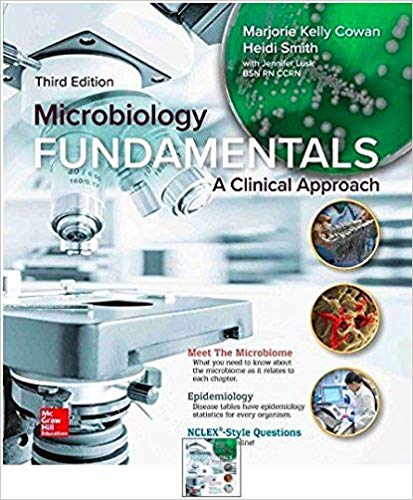
Microbiology Fundamentals A Clinical Approach 3rd Edition by Marjorie Kelly Cowan - Test Bank

Microbiology Fundamentals A Clinical Approach 3rd Edition by Marjorie Kelly Cowan - Test Bank   Instant Download - Complete Test Bank With Answers     Sample Questions Are Posted Below   Microbiology Fundamentals: A Clinical Approach, 3e (Cowan) Chapter 5   Viral Structure and Multiplication   1) Viruses have all the following except ________. A) definite …

$19.99

Microbiology Fundamentals A Clinical Approach 3rd Edition by Marjorie Kelly Cowan – Test Bank


Instant Download – Complete Test Bank With Answers


Sample Questions Are Posted Below


Microbiology Fundamentals: A Clinical Approach, 3e (Cowan)

Chapter 5   Viral Structure and Multiplication


1) Viruses have all the following except ________.

  1. A) definite shape
  2. B) metabolism
  3. C) genes
  4. D) the ability to infect host cells
  5. E) ultramicroscopic size


Answer:  B

Section:  05.02

Topic:  General Viral Properties

Bloom’s:  01. Remember

ASM Topic:  Module 02 Structure and Function

ASM Objective:  02.05 The replication cycles of viruses (lytic and lysogenic) differ among viruses and are determined by their unique structures and genomes.


2) Who developed a rabies vaccine by separating bacteria from virus using a filter?

  1. A) Leeuwenhoek
  2. B) Koch
  3. C) Pasteur
  4. D) Cohn
  5. E) Semmelwise


Answer:  C

Section:  05.01; 05.02

Topic:  General Viral Properties

Bloom’s:  01. Remember

ASM Topic:  Module 06 Impact of Microorganisms

ASM Objective:  06.03 Humans utilize and harness microorganisms and their products.

3) Host cells of viruses include ________.

  1. A) humans and other animals
  2. B) plants and fungi
  3. C) bacteria
  4. D) protozoa and algae
  5. E) All of the choices are correct


Answer:  E

Section:  05.06

Topic:  Viral Infections

Bloom’s:  01. Remember

ASM Topic:  Module 05 Systems

ASM Objective:  05.04 Microorganisms, cellular and viral, can interact with both human and nonhuman hosts in beneficial, neutral or detrimental ways.


4) Viruses ________.

  1. A) cannot be seen in a light microscope
  2. B) are prokaryotic
  3. C) contain 70S ribosomes
  4. D) undergo binary fission
  5. E) All of the choices are correct


Answer:  A

Section:  05.02

Topic:  General Viral Properties

Bloom’s:  01. Remember

ASM Topic:  Module 02 Structure and Function

ASM Objective:  02.05 The replication cycles of viruses (lytic and lysogenic) differ among viruses and are determined by their unique structures and genomes.


5) Virus capsids are made from subunits called ________.

  1. A) envelopes
  2. B) spikes
  3. C) capsomeres
  4. D) prophages
  5. E) peplomers


Answer:  C

Section:  05.02

Topic:  Viral Structure

Bloom’s:  01. Remember

ASM Topic:  Module 02 Structure and Function

ASM Objective:  02.05 The replication cycles of viruses (lytic and lysogenic) differ among viruses and are determined by their unique structures and genomes.

6) Helical and icosahedral are terms used to describe the shapes of a virus ________.

  1. A) spike
  2. B) capsomere
  3. C) envelope
  4. D) capsid
  5. E) core


Answer:  D

Section:  05.02

Topic:  Viral Structure

Bloom’s:  01. Remember

ASM Topic:  Module 02 Structure and Function

ASM Objective:  02.05 The replication cycles of viruses (lytic and lysogenic) differ among viruses and are determined by their unique structures and genomes.


7) A(n) ________ is the protein shell around the nucleic acid core of a virus.

  1. A) capsomere
  2. B) capsid
  3. C) spike
  4. D) envelope
  5. E) monolayer


Answer:  B

Section:  05.02

Topic:  Viral Structure

Bloom’s:  01. Remember

ASM Topic:  Module 02 Structure and Function

ASM Objective:  02.05 The replication cycles of viruses (lytic and lysogenic) differ among viruses and are determined by their unique structures and genomes.

8) One of the principal capsid shapes is a 20-sided figure with 12 evenly spaced corners referred to as a(n) ________ capsid.

  1. A) spiked
  2. B) complex
  3. C) icosahedral
  4. D) helical
  5. E) buckeyball


Answer:  C

Section:  05.02

Topic:  Viral Structure

Bloom’s:  01. Remember

ASM Topic:  Module 02 Structure and Function

ASM Objective:  02.05 The replication cycles of viruses (lytic and lysogenic) differ among viruses and are determined by their unique structures and genomes.


9) A naked virus has only a(n) ________.

  1. A) capsid
  2. B) capsomere
  3. C) nucleocapsid
  4. D) envelope
  5. E) antigenic surface


Answer:  C

Section:  05.02

Topic:  Viral Structure

Bloom’s:  01. Remember

ASM Topic:  Module 02 Structure and Function

ASM Objective:  02.05 The replication cycles of viruses (lytic and lysogenic) differ among viruses and are determined by their unique structures and genomes.


10) Which of the following is not a typical capsid shape?

  1. A) Tetrahedral
  2. B) Complex
  3. C) Helical
  4. D) Icosahedron
  5. E) All of the choices are capsid shapes.


Answer:  A

Section:  05.02

Topic:  Viral Structure

Bloom’s:  01. Remember

ASM Topic:  Module 02 Structure and Function

ASM Objective:  02.05 The replication cycles of viruses (lytic and lysogenic) differ among viruses and are determined by their unique structures and genomes.


11) All of the following pertain to virus envelopes except ________.

  1. A) gained as a virus leaves the host cell membrane
  2. B) are comprised primarily of lipids
  3. C) contain special virus proteins
  4. D) help the virus particle attach to host cells
  5. E) are located between the capsid and nucleic acid


Answer:  E

Section:  05.02

Topic:  Viral Structure

Bloom’s:  01. Remember

ASM Topic:  Module 02 Structure and Function

ASM Objective:  02.05 The replication cycles of viruses (lytic and lysogenic) differ among viruses and are determined by their unique structures and genomes.


12) Viral spikes ________.

  1. A) are present on all viruses
  2. B) protrude from the envelope
  3. C) block attachment between virus and host
  4. D) are derived from host proteins
  5. E) All of the choices are correct


Answer:  B

Section:  05.02

Topic:  Viral Structure

Bloom’s:  01. Remember

ASM Topic:  Module 02 Structure and Function

ASM Objective:  02.05 The replication cycles of viruses (lytic and lysogenic) differ among viruses and are determined by their unique structures and genomes.


13) The core of every virus particle always contains ________.

  1. A) DNA
  2. B) capsomeres
  3. C) enzymes
  4. D) DNA and RNA
  5. E) either DNA or RNA


Answer:  E

Section:  05.02

Topic:  Viral Structure

Bloom’s:  01. Remember

ASM Topic:  Module 02 Structure and Function

ASM Objective:  02.05 The replication cycles of viruses (lytic and lysogenic) differ among viruses and are determined by their unique structures and genomes.


14) Which of the following is not associated with every virus?

  1. A) Envelope
  2. B) Capsomeres
  3. C) Capsid
  4. D) Nucleic acid
  5. E) Genome


Answer:  A

Section:  05.02

Topic:  Viral Structure

Bloom’s:  01. Remember

ASM Topic:  Module 02 Structure and Function

ASM Objective:  02.05 The replication cycles of viruses (lytic and lysogenic) differ among viruses and are determined by their unique structures and genomes.


15) Viral nucleic acids include which of the following?

  1. A) Double-stranded DNA
  2. B) Single-stranded DNA
  3. C) Double-stranded RNA
  4. D) Single-stranded RNA
  5. E) All of the choices are correct


Answer:  E

Section:  05.02

Topic:  Viral Classification; Viral Structure

Bloom’s:  01. Remember

ASM Topic:  Module 02 Structure and Function

ASM Objective:  02.05 The replication cycles of viruses (lytic and lysogenic) differ among viruses and are determined by their unique structures and genomes.


16) Reverse transcriptase synthesizes ________.

  1. A) the positive RNA strand from a negative RNA strand
  2. B) a negative RNA strand from a positive RNA strand
  3. C) RNA from DNA
  4. D) DNA from RNA
  5. E) None of the choices are correct


Answer:  D

Section:  05.02

Topic:  Viral Replication

Bloom’s:  01. Remember

ASM Topic:  Module 04 Information Flow

ASM Objective:  04.02 Although the central dogma is universal in all cells, the processes of replication, transcription, and translation differ in Bacteria, Archaea, and Eukaryotes.


17) A negative-sense RNA virus ________.

  1. A) is ready for immediate translation
  2. B) must synthesize a negative RNA copy of its genome
  3. C) must synthesize a positive RNA copy of its genome
  4. D) is a special form of tRNA used by viruses
  5. E) always codes for RNA polymerase


Answer:  C

Section:  05.02

Topic:  Viral Replication

Bloom’s:  02. Understand

ASM Topic:  Module 02 Structure and Function

ASM Objective:  02.05 The replication cycles of viruses (lytic and lysogenic) differ among viruses and are determined by their unique structures and genomes.

18) Viruses with ________ -sense RNA contain the correct message for translation, while viruses with ________ -sense RNA must first be converted into a correct message.

  1. A) positive; negative
  2. B) negative; positive
  3. C) primary; secondary
  4. D) secondary; primary
  5. E) None of the choices are correct


Answer:  A

Section:  05.02

Topic:  Viral Replication

Bloom’s:  02. Understand

ASM Topic:  Module 02 Structure and Function

ASM Objective:  02.05 The replication cycles of viruses (lytic and lysogenic) differ among viruses and are determined by their unique structures and genomes.


19) Viruses acquire envelopes around their nucleocapsids during ________.

  1. A) replication
  2. B) assembly
  3. C) adsorption
  4. D) release
  5. E) penetration


Answer:  D

Section:  05.03

Topic:  Viral Replication

Bloom’s:  01. Remember

ASM Topic:  Module 02 Structure and Function

ASM Objective:  02.05 The replication cycles of viruses (lytic and lysogenic) differ among viruses and are determined by their unique structures and genomes.

20) In general, most DNA viruses multiply in the host cell’s ________, while most RNA viruses multiply in the host cell’s ________.

  1. A) nucleus; cytoplasm
  2. B) cytoplasm; cell membrane
  3. C) cell membrane; cytoplasm
  4. D) cytoplasm; nucleus
  5. E) nucleus; endoplasmic reticulum


Answer:  A

Section:  05.03

Topic:  Viral Replication

Bloom’s:  01. Remember

ASM Topic:  Module 04 Information Flow

ASM Objective:  04.04 The synthesis of viral genetic material and proteins is dependent on host cells.


21) Host range is limited by ________.

  1. A) type of nucleic acid in the virus
  2. B) age of the host cell
  3. C) type of host cell receptors on cell membrane
  4. D) size of the host cell
  5. E) All of the choices are correct


Answer:  C

Section:  05.03

Topic:  Viral Replication

Bloom’s:  01. Remember

ASM Topic:  Module 04 Information Flow

ASM Objective:  04.04 The synthesis of viral genetic material and proteins is dependent on host cells.


22) Oncoviruses include all the following except ________.

  1. A) hepatitis B virus
  2. B) measles virus
  3. C) papillomavirus
  4. D) HTLV I
  5. E) Epstein-Barr virus


Answer:  B

Section:  05.03

Topic:  Viral Infections

Bloom’s:  01. Remember

ASM Topic:  Module 05 Systems

ASM Objective:  05.04 Microorganisms, cellular and viral, can interact with both human and nonhuman hosts in beneficial, neutral or detrimental ways.

23) Which of the following is a type of cytopathic effect?

  1. A) Inclusions in the nucleus
  2. B) Multinucleated giant cells
  3. C) Inclusions in the cytoplasm
  4. D) Cells change shape
  5. E) All of the choices are correct.


Answer:  E

Section:  05.03

Topic:  Viral Infections

Bloom’s:  01. Remember

ASM Topic:  Module 05 Systems

ASM Objective:  05.04 Microorganisms, cellular and viral, can interact with both human and nonhuman hosts in beneficial, neutral or detrimental ways.


24) The envelope of enveloped viruses ________.

  1. A) is identical to the host plasma membrane
  2. B) is only composed of host endomembrane
  3. C) does not contain spikes
  4. D) is obtained by viral budding or exocytosis
  5. E) None of the choices are correct


Answer:  D

Section:  05.02; 05.03

Topic:  Viral Replication; Viral Structure

Bloom’s:  01. Remember

ASM Topic:  Module 02 Structure and Function

ASM Objective:  02.05 The replication cycles of viruses (lytic and lysogenic) differ among viruses and are determined by their unique structures and genomes.


25) Viruses attach to their hosts via ________.

  1. A) host glycoproteins
  2. B) host phospholipids
  3. C) viral phospholipids
  4. D) viral flagella
  5. E) All of the choices are correct


Answer:  A

Section:  05.03

Topic:  Viral Replication

Bloom’s:  01. Remember

ASM Topic:  Module 02 Structure and Function

ASM Objective:  02.05 The replication cycles of viruses (lytic and lysogenic) differ among viruses and are determined by their unique structures and genomes.

26) Viral tissue specificities are called ________.

  1. A) ranges
  2. B) virions
  3. C) receptacles
  4. D) tropisms
  5. E) uncoating


Answer:  D

Section:  05.03

Topic:  Viral Replication; Viral Infections; Viral Structure

Bloom’s:  01. Remember

ASM Topic:  Module 05 Systems

ASM Objective:  05.04 Microorganisms, cellular and viral, can interact with both human and nonhuman hosts in beneficial, neutral or detrimental ways.


27) The process of dissolving the envelope and capsid to release the viral nucleic acid is ________.

  1. A) adsorption
  2. B) penetration
  3. C) uncoating
  4. D) synthesis
  5. E) assembly


Answer:  C

Section:  05.03

Topic:  Viral Replication

Bloom’s:  01. Remember

ASM Topic:  Module 05 Systems

ASM Objective:  05.04 Microorganisms, cellular and viral, can interact with both human and nonhuman hosts in beneficial, neutral or detrimental ways.


28) Which of the following occurs during assembly of an enveloped virus?

  1. A) Nucleocapsid is formed.
  2. B) New viral nucleic acid is formed.
  3. C) Viral spikes insert in host cell membrane.
  4. D) A nucleocapsid is formed and viral spikes insert in host cell membrane.
  5. E) All of the choices occur.


Answer:  D

Section:  05.03

Topic:  Viral Replication

Bloom’s:  02. Understand

ASM Topic:  Module 05 Systems

ASM Objective:  05.04 Microorganisms, cellular and viral, can interact with both human and nonhuman hosts in beneficial, neutral or detrimental ways.


29) Mammalian viruses capable of starting tumors are ________.

  1. A) chronic latent viruses
  2. B) oncoviruses
  3. C) syncytia
  4. D) inclusion bodies
  5. E) cytopathic


Answer:  B

Section:  05.03

Topic:  Viral Infections

Bloom’s:  01. Remember

ASM Topic:  Module 05 Systems

ASM Objective:  05.04 Microorganisms, cellular and viral, can interact with both human and nonhuman hosts in beneficial, neutral or detrimental ways.


30) Persistent viruses that can reactivate periodically are ________.

  1. A) chronic latent viruses
  2. B) oncoviruses
  3. C) syncytia
  4. D) inclusion bodies
  5. E) cytopathic


Answer:  A

Section:  05.03

Topic:  Viral Infections

Bloom’s:  01. Remember

ASM Topic:  Module 05 Systems

ASM Objective:  05.04 Microorganisms, cellular and viral, can interact with both human and nonhuman hosts in beneficial, neutral or detrimental ways.


31) Which of the following is not a characteristic of a transformed cell?

  1. A) Viral nucleic acid integrated into host DNA
  2. B) Decreased growth rate
  3. C) Alterations in chromosomes
  4. D) Changes in cell surface molecules
  5. E) Capacity to divide indefinitely


Answer:  B

Section:  05.03

Topic:  Viral Infections

Bloom’s:  02. Understand

ASM Topic:  Module 05 Systems

ASM Objective:  05.04 Microorganisms, cellular and viral, can interact with both human and nonhuman hosts in beneficial, neutral or detrimental ways.


32) New, nonenveloped virus release occurs by ________.

  1. A) lysis
  2. B) budding
  3. C) exocytosis
  4. D) both lysis and budding
  5. E) both budding and exocytosis


Answer:  A

Section:  05.03

Topic:  Viral Replication

Bloom’s:  01. Remember

ASM Topic:  Module 02 Structure and Function

ASM Objective:  02.05 The replication cycles of viruses (lytic and lysogenic) differ among viruses and are determined by their unique structures and genomes.


33) What structures are used by bacteriophages to attach to host cell receptors?

  1. A) Sheath
  2. B) Tail fibers
  3. C) Nucleic acid
  4. D) Capsid head
  5. E) None of the choices are correct


Answer:  B

Section:  05.03

Topic:  Bacteriophage Cycles

Bloom’s:  01. Remember

ASM Topic:  Module 02 Structure and Function

ASM Objective:  02.05 The replication cycles of viruses (lytic and lysogenic) differ among viruses and are determined by their unique structures and genomes.


34) Which of the following is incorrect about prophages?

  1. A) Present when the virus is in lysogeny
  2. B) Formed when viral DNA enters the bacterial chromosome
  3. C) Replicated with host DNA and passed on to progeny
  4. D) Cause lysis of host cells
  5. E) Occur when temperate phages enter host cells


Answer:  D

Section:  05.03

Topic:  Bacteriophage Cycles

Bloom’s:  01. Remember

ASM Topic:  Module 02 Structure and Function

ASM Objective:  02.05 The replication cycles of viruses (lytic and lysogenic) differ among viruses and are determined by their unique structures and genomes.


35) T-even phages ________.

  1. A) include the poxviruses
  2. B) infect Escherichia coli cells
  3. C) enter host cells by engulfment
  4. D) have helical capsids
  5. E) All of the choices are correct


Answer:  B

Section:  05.03

Topic:  Bacteriophage Cycles

Bloom’s:  02. Understand

ASM Topic:  Module 02 Structure and Function

ASM Objective:  02.05 The replication cycles of viruses (lytic and lysogenic) differ among viruses and are determined by their unique structures and genomes.

36) The event that occurs in bacteriophage multiplication that does not occur in animal virus replication is ________.

  1. A) adsorption to the host cells
  2. B) injection of only the viral nucleic acid into the host cell
  3. C) host cell synthesis of viral enzymes and capsid proteins
  4. D) assembly of nucleocapsids
  5. E) replication of viral nucleic acid


Answer:  B

Section:  05.03

Topic:  Bacteriophage Cycles

Bloom’s:  02. Understand

ASM Topic:  Module 02 Structure and Function

ASM Objective:  02.05 The replication cycles of viruses (lytic and lysogenic) differ among viruses and are determined by their unique structures and genomes.


37) Viruses that cause infection resulting in alternating periods of activity with symptoms and inactivity without symptoms are called ________.

  1. A) latent
  2. B) oncogenic
  3. C) prions
  4. D) viroids
  5. E) delta agents


Answer:  A

Section:  05.03

Topic:  Viral Infections

Bloom’s:  01. Remember

ASM Topic:  Module 05 Systems

ASM Objective:  05.04 Microorganisms, cellular and viral, can interact with both human and nonhuman hosts in beneficial, neutral or detrimental ways.

38) Uncoating of viral nucleic acid ________.

  1. A) does not occur in bacteriophage multiplication
  2. B) involves enzymatic destruction of the capsid
  3. C) releases viral nucleic acid into the cell
  4. D) occurs before replication
  5. E) All of the choices are correct


Answer:  E

Section:  05.03

Topic:  Viral Replication

Bloom’s:  01. Remember

ASM Topic:  Module 02 Structure and Function

ASM Objective:  02.05 The replication cycles of viruses (lytic and lysogenic) differ among viruses and are determined by their unique structures and genomes.


39) Lysogeny refers to ________.

  1. A) altering the host range of a virus
  2. B) latent state of herpes infections
  3. C) virion exiting host cell
  4. D) viral genome inserting into bacterial host chromosome
  5. E) None of the choices are correct


Answer:  D

Section:  05.03

Topic:  Bacteriophage Cycles

Bloom’s:  01. Remember

ASM Topic:  Module 02 Structure and Function

ASM Objective:  02.05 The replication cycles of viruses (lytic and lysogenic) differ among viruses and are determined by their unique structures and genomes.


40) Viruses that infect bacteria are specifically called ________.

  1. A) viroids
  2. B) prions
  3. C) bacteriophages
  4. D) satellite viruses
  5. E) All of the choices infect bacteria.


Answer:  C

Section:  05.03

Topic:  Bacteriophage Cycles

Bloom’s:  01. Remember

ASM Topic:  Module 02 Structure and Function; Module 05 Systems

ASM Objective:  02.05 The replication cycles of viruses (lytic and lysogenic) differ among viruses and are determined by their unique structures and genomes.; 05.04 Microorganisms, cellular and viral, can interact with both human and nonhuman hosts in beneficial, neutral or detrimental ways.


41) During lysogeny, an inactive prophage state occurs when the viral DNA is inserted into the ________.

  1. A) host cytoplasm
  2. B) host nucleus
  3. C) host nucleolus
  4. D) host DNA
  5. E) host cell membrane


Answer:  D

Section:  05.03

Topic:  Bacteriophage Cycles

Bloom’s:  01. Remember

ASM Topic:  Module 02 Structure and Function

ASM Objective:  02.05 The replication cycles of viruses (lytic and lysogenic) differ among viruses and are determined by their unique structures and genomes.

42) What type of phage enters an inactive prophage stage?

  1. A) Primary
  2. B) Secondary
  3. C) Temperate
  4. D) Temporary
  5. E) Transformed


Answer:  C

Section:  05.03

Topic:  Bacteriophage Cycles

Bloom’s:  01. Remember

ASM Topic:  Module 02 Structure and Function

ASM Objective:  02.05 The replication cycles of viruses (lytic and lysogenic) differ among viruses and are determined by their unique structures and genomes.


43) The activation of a prophage is called ________.

  1. A) activation
  2. B) lysogeny
  3. C) transformation
  4. D) induction
  5. E) adsorption


Answer:  D

Section:  05.03

Topic:  Bacteriophage Cycles

Bloom’s:  01. Remember

ASM Topic:  Module 02 Structure and Function

ASM Objective:  02.05 The replication cycles of viruses (lytic and lysogenic) differ among viruses and are determined by their unique structures and genomes.


44) When a bacterium acquires a trait from its temperate phage, it is called ________.

  1. A) transformation
  2. B) lysogenic conversion
  3. C) viral persistence
  4. D) transcription
  5. E) translation


Answer:  B

Section:  05.03

Topic:  Bacteriophage Cycles

Bloom’s:  01. Remember

ASM Topic:  Module 05 Systems

ASM Objective:  05.04 Microorganisms, cellular and viral, can interact with both human and nonhuman hosts in beneficial, neutral or detrimental ways.

45) Which of the following will not support viral cultivation?

  1. A) Live lab animals
  2. B) Embryonated bird eggs
  3. C) Primary cell cultures
  4. D) Continuous cell cultures
  5. E) All of the choices will support viral cultivation.


Answer:  E

Section:  05.04

Topic:  General Viral Properties

Bloom’s:  02. Understand

ASM Topic:  Module 04 Information Flow

ASM Objective:  04.04 The synthesis of viral genetic material and proteins is dependent on host cells.


46) Visible, clear, well-defined patches in a monolayer of virus-infected cells in a culture are called ________.

  1. A) lysogeny
  2. B) budding
  3. C) plaques
  4. D) cytopathic effects
  5. E) pocks


Answer:  C

Section:  05.04

Topic:  General Viral Properties

Bloom’s:  01. Remember

ASM Topic:  Module 05 Systems; Module 08 Microbiology Skills

ASM Objective:  05.04 Microorganisms, cellular and viral, can interact with both human and nonhuman hosts in beneficial, neutral or detrimental ways.; 08.02 Use pure culture and selective techniques to enrich for and isolate microorganisms.


47) Cells grown in culture form a(n) ________.

  1. A) monolayer
  2. B) bilayer
  3. C) aggregate
  4. D) plaque
  5. E) None of the choices are correct.


Answer:  A

Section:  05.04

Topic:  General Viral Properties

Bloom’s:  01. Remember

ASM Topic:  Module 08 Microbiology Skills

ASM Objective:  08.02 Use pure culture and selective techniques to enrich for and isolate microorganisms.

48) A common method for cultivating viruses in the lab is to use in vitro systems called ________ cultures.

  1. A) embryo
  2. B) cell
  3. C) plaque
  4. D) bacteriophage
  5. E) egg


Answer:  B

Section:  05.04

Topic:  General Viral Properties

Bloom’s:  01. Remember

ASM Topic:  Module 08 Microbiology Skills

ASM Objective:  08.02 Use pure culture and selective techniques to enrich for and isolate microorganisms.


49) Infectious protein particles are called ________.

  1. A) viroids
  2. B) phages
  3. C) prions
  4. D) oncogenic viruses
  5. E) spikes


Answer:  C

Section:  05.05

Topic:  Prions

Bloom’s:  01. Remember

ASM Topic:  Module 05 Systems

ASM Objective:  05.04 Microorganisms, cellular and viral, can interact with both human and nonhuman hosts in beneficial, neutral or detrimental ways.


50) Infectious naked strands of RNA that affect plants are called ________.

  1. A) viroids
  2. B) phages
  3. C) prions
  4. D) oncogenic viruses
  5. E) spikes


Answer:  A

Section:  05.05

Topic:  Viral Structure

Bloom’s:  01. Remember

ASM Topic:  Module 05 Systems

ASM Objective:  05.04 Microorganisms, cellular and viral, can interact with both human and nonhuman hosts in beneficial, neutral or detrimental ways.

51) Creutzfeldt-Jakob disease is ________.

  1. A) caused by a chronic latent virus
  2. B) initiated by an oncogenic virus
  3. C) caused by a viroid
  4. D) a spongiform encephalopathy of humans
  5. E) also called “mad cow disease”


Answer:  D

Section:  05.05

Topic:  Prions

Bloom’s:  01. Remember

ASM Topic:  Module 05 Systems

ASM Objective:  05.04 Microorganisms, cellular and viral, can interact with both human and nonhuman hosts in beneficial, neutral or detrimental ways.


52) Satellite viruses are ________.

  1. A) also called viroids
  2. B) dependent on other viruses for replication
  3. C) the cause of spongiform encephalopathies
  4. D) significant pathogens of plants
  5. E) All of the choices are correct


Answer:  B

Section:  05.05

Topic:  Viral Replication

Bloom’s:  02. Understand

ASM Topic:  Module 02 Structure and Function

ASM Objective:  02.05 The replication cycles of viruses (lytic and lysogenic) differ among viruses and are determined by their unique structures and genomes.

53) Two noncellular agents, smaller than viruses, are the infectious proteins called ________ and the infectious RNA strands called ________.

  1. A) prions; capsomeres
  2. B) virions; prions
  3. C) viroids; phages
  4. D) prions; phages
  5. E) prions; viroids


Answer:  E

Section:  05.05

Topic:  Prions

Bloom’s:  01. Remember

ASM Topic:  Module 05 Systems

ASM Objective:  05.04 Microorganisms, cellular and viral, can interact with both human and nonhuman hosts in beneficial, neutral or detrimental ways.


54) The development of antiviral drug therapy is difficult because ________.

  1. A) viruses are obligate intracellular parasites so the host cell can be harmed by the drug
  2. B) viruses do not have specific replication cycles that can be targeted
  3. C) viruses do not contain genetic material
  4. D) their life cycles do not have distinctive stages


Answer:  A

Section:  05.06

Topic:  Viral Infections

Bloom’s:  02. Understand

ASM Topic:  Module 03 Metabolic Pathways; Module 05 Systems

ASM Objective:  03.04 The growth of microorganisms can be controlled by physical, chemical, mechanical, or biological means.; 05.04 Microorganisms, cellular and viral, can interact with both human and nonhuman hosts in beneficial, neutral or detrimental ways.


55) The primary purpose of viral cultivation is ________.

  1. A) to isolate and identify viruses in clinical specimens
  2. B) to prepare viruses for vaccines
  3. C) to do detailed research on viral structure, lifestyle, genetics, and effects on host cells
  4. D) All of the choices are correct


Answer:  D

Section:  05.04

Topic:  General Viral Properties

Bloom’s:  01. Remember

ASM Topic:  Module 06 Impact of Microorganisms

ASM Objective:  06.03 Humans utilize and harness microorganisms and their products.


56) When a virus enters a host cell, the viral genes redirect the genetic and metabolic activities of the host cell.


Answer:  TRUE

Section:  05.03

Topic:  Viral Replication

Bloom’s:  01. Remember

ASM Topic:  Module 02 Structure and Function; Module 04 Information Flow

ASM Objective:  02.05 The replication cycles of viruses (lytic and lysogenic) differ among viruses and are determined by their unique structures and genomes.; 04.04 The synthesis of viral genetic material and proteins is dependent on host cells.


57) Viruses are used to produce vaccines for prevention of certain viral infections.


Answer:  TRUE

Section:  05.06

Topic:  Viral Infections

Bloom’s:  01. Remember

ASM Topic:  Module 06 Impact of Microorganisms

ASM Objective:  06.03 Humans utilize and harness microorganisms and their products.


58) Viruses are ultramicroscopic because they range in size from 2 mm to 450 mm.


Answer:  FALSE

Section:  05.02

Topic:  General Viral Properties

Bloom’s:  01. Remember

ASM Topic:  Module 02 Structure and Function

ASM Objective:  02.05 The replication cycles of viruses (lytic and lysogenic) differ among viruses and are determined by their unique structures and genomes.


59) A fully formed virus that can cause an infection in a host cell is called a virion.


Answer:  TRUE

Section:  05.01

Topic:  General Viral Properties

Bloom’s:  01. Remember

ASM Topic:  Module 02 Structure and Function

ASM Objective:  02.05 The replication cycles of viruses (lytic and lysogenic) differ among viruses and are determined by their unique structures and genomes.


60) Spikes are glycoproteins of the virus capsid.


Answer:  TRUE

Section:  05.02

Topic:  Viral Structure

Bloom’s:  01. Remember

ASM Topic:  Module 02 Structure and Function

ASM Objective:  02.05 The replication cycles of viruses (lytic and lysogenic) differ among viruses and are determined by their unique structures and genomes.


61) A specific animal virus has the ability to attach to and enter almost any animal host cell.


Answer:  FALSE

Section:  05.03

Topic:  Viral Infections

Bloom’s:  02. Understand

ASM Topic:  Module 05 Systems

ASM Objective:  05.04 Microorganisms, cellular and viral, can interact with both human and nonhuman hosts in beneficial, neutral or detrimental ways.


62) Viral spikes are inserted into the host cell membrane before budding or exocytosis.


Answer:  TRUE

Section:  05.03

Topic:  Viral Structure

Bloom’s:  02. Understand

ASM Topic:  Module 02 Structure and Function; Module 05 Systems

ASM Objective:  02.05 The replication cycles of viruses (lytic and lysogenic) differ among viruses and are determined by their unique structures and genomes.; 05.04 Microorganisms, cellular and viral, can interact with both human and nonhuman hosts in beneficial, neutral or detrimental ways.


63) Prophages can be activated into viral replication and enter the lytic cycle.


Answer:  TRUE

Section:  05.03

Topic:  Bacteriophage Cycles

Bloom’s:  01. Remember

ASM Topic:  Module 02 Structure and Function

ASM Objective:  02.05 The replication cycles of viruses (lytic and lysogenic) differ among viruses and are determined by their unique structures and genomes.


64) Viruses are the most common cause of acute infections that do not result in hospitalization.


Answer:  TRUE

Section:  05.06

Topic:  Viral Infections

Bloom’s:  01. Remember

ASM Topic:  Module 05 Systems

ASM Objective:  05.04 Microorganisms, cellular and viral, can interact with both human and nonhuman hosts in beneficial, neutral or detrimental ways.


65) The adeno-associated virus (AAV) is a prion.


Answer:  FALSE

Section:  05.05; 05.06

Topic:  Viral Infections

Bloom’s:  01. Remember

ASM Topic:  Module 05 Systems

ASM Objective:  05.04 Microorganisms, cellular and viral, can interact with both human and nonhuman hosts in beneficial, neutral or detrimental ways.


66) Viruses are simple, noncellular, and lack ribosomes.


Answer:  TRUE

Section:  05.01

Topic:  General Viral Properties

Bloom’s:  01. Remember

ASM Topic:  Module 02 Structure and Function

ASM Objective:  02.05 The replication cycles of viruses (lytic and lysogenic) differ among viruses and are determined by their unique structures and genomes.


67) Viruses mutate and some have not been discovered.


Answer:  TRUE

Section:  05.06

Topic:  General Viral Properties

Bloom’s:  01. Remember

ASM Topic:  Module 06 Impact of Microorganisms

ASM Objective:  06.04 Because the true diversity of microbial life is largely unknown, its effects and potential benefits have not been fully explored.


68) Viruses are not filterable.


Answer:  FALSE

Section:  05.01

Topic:  General Viral Properties

Bloom’s:  01. Remember

ASM Topic:  Module 02 Structure and Function; Module 08 Microbiology Skills

ASM Objective:  02.01 The structure and function of microorganisms have been revealed by the use of microscopy (including bright field, phase contrast, fluorescent, and electron).; 08.02 Use pure culture and selective techniques to enrich for and isolate microorganisms.


69) Viruses are unable to multiply outside of a host cell.


Answer:  TRUE

Section:  05.01

Topic:  General Viral Properties

Bloom’s:  01. Remember

ASM Topic:  Module 04 Information Flow

ASM Objective:  04.04 The synthesis of viral genetic material and proteins is dependent on host cells.

70) You are running an experiment in calf serum, which cannot be autoclaved because proteins essential to your protocol will be denatured.  You decide to filter sterilize the serum since the 0.22μm filter is small enough to block any bacteria that may contaminate your tissue culture.  The success of this procedure hinges on the fact that ________.

  1. A) the presence of viruses in your serum is inconsequential to your experiment
  2. B) some of the bacteria will still be allowed to filter through
  3. C) viruses, as well as bacteria, will also be blocked by the 0.22μm pore size
  4. D) the proteins in the serum are also blocked by the pore size


Answer:  A

Section:  05.01

Topic:  Viral Structure

Bloom’s:  04. Analyze

ASM Topic:  Module 08 Microbiology Skills

ASM Objective:  08.05 Use appropriate microbiological and molecular lab equipment and methods.


71) Which of the following is not true regarding the structure and function of viral spikes?

  1. A) They are found on both enveloped and naked viruses
  2. B) They are coded for by the host genome
  3. C) They are coded for by the viral genome
  4. D) They mediate the docking process of virus to host cell
  5. E) They consist of proteins and carbohydrates


Answer:  B

Section:  05.02

Topic:  Viral Structure

Bloom’s:  02. Understand

ASM Topic:  Module 02 Structure and Function

ASM Objective:  02.05 The replication cycles of viruses (lytic and lysogenic) differ among viruses and are determined by their unique structures and genomes.


72) Glycoprotein spikes are essential for mediating the release stage of the viral life cycle.


Answer:  FALSE

Section:  05.02

Topic:  Viral Structure

Bloom’s:  02. Understand

ASM Topic:  Module 02 Structure and Function

ASM Objective:  02.05 The replication cycles of viruses (lytic and lysogenic) differ among viruses and are determined by their unique structures and genomes.

73) Respiratory syncytial virus (RSV) is a common respiratory virus that causes mild cold-like symptoms in most individuals, but can be more serious in infants and the elderly. RSV is so-named because ________.

  1. A) it causes the fusion of damaged host cells, forming a large, multinucleated cell
  2. B) it causes the proliferation of inclusion bodies within the host cell
  3. C) it causes a persistent infection in the host
  4. D) it transforms the host cell, causing cancer


Answer:  A

Section:  05.03

Topic:  Viral Infections

Bloom’s:  04. Analyze

ASM Topic:  Module 05 Systems

ASM Objective:  05.04 Microorganisms, cellular and viral, can interact with both human and nonhuman hosts in beneficial, neutral or detrimental ways.


74) A patient undergoing chemotherapy for cancer develops an infection with cytomegalovirus, conclusively diagnosed by the presence of “owl’s eye” viral nuclear inclusions in a liver biopsy.  This is an example of a(n) ________.

  1. A) cytopathic effect by cytomegalovirus
  2. B) immune response by the host
  3. C) cytomegalovirus becoming a provirus
  4. D) transformation of the host cell by cytomegalovirus


Answer:  A

Section:  05.03

Topic:  Viral Infections

Bloom’s:  03. Apply

ASM Topic:  Module 05 Systems

ASM Objective:  05.04 Microorganisms, cellular and viral, can interact with both human and nonhuman hosts in beneficial, neutral or detrimental ways.

75) Viral genetic studies, vaccine development and clinical identification would not be possible without the ability to ________.

  1. A) culture viruses in vivo and in vitro
  2. B) transform human cells into cancerous cells
  3. C) studying prions in neurological tissue of animals
  4. D) activate lysogenic induction in bacteriophages


Answer:  A

Section:  05.04

Topic:  General Viral Properties

Bloom’s:  02. Understand

ASM Topic:  Module 08 Microbiology Skills

ASM Objective:  08.02 Use pure culture and selective techniques to enrich for and isolate microorganisms.


76) It is necessary to culture viruses both in vivo and in vitro so that vaccines can be developed, analysis of viral genomes can be made and viruses in clinical specimens can be identified.


Answer:  TRUE

Section:  05.04

Topic:  General Viral Properties

Bloom’s:  01. Remember

ASM Topic:  Module 08 Microbiology Skills

ASM Objective:  08.02 Use pure culture and selective techniques to enrich for and isolate microorganisms.


77) An ideal antiviral drug would be one that ________.

  1. A) disrupted an integral viral process while causing little damage to the host cell
  2. B) killed the host cell thereby depriving the virus of its means to translate proteins
  3. C) killed both the virus and the host cell
  4. D) prevents translation by the host cell ribosome, depriving the virus of a means to replicate


Answer:  A

Section:  05.06

Topic:  Viral Infections

Bloom’s:  02. Understand

ASM Topic:  Module 03 Metabolic Pathways

ASM Objective:  03.04 The growth of microorganisms can be controlled by physical, chemical, mechanical, or biological means.

78) An ideal antiviral drug would be one that killed the host cell, effectively preventing the virus from replicating.


Answer:  FALSE

Section:  05.06

Topic:  Viral Infections

Bloom’s:  02. Understand

ASM Topic:  Module 03 Metabolic Pathways

ASM Objective:  03.04 The growth of microorganisms can be controlled by physical, chemical, mechanical, or biological means.


NCLEX Prep – Test Bank Question:  Please read the clinical scenario, and then answer the questions that follow to become familiar with the traditional NCLEX question format.


An RN is in a long-term care facility is caring for a 79-year-old female. The patient has been a resident on in the facility for the past 5 years. She has been complaining of pain, burning, and tingling on her left side. Upon further assessment, the RN observes fluid-filled blisters wrapping around the left side of her torso in a concentrated strip. The facility physician diagnoses her with shingles and orders the appropriate isolation.


79) The patient asks the RN how she contracted this viral infection since she has not come in contact with anyone with anyone infected with shingles. Which of the following statements is an appropriate response?

  1. A) Varicella zoster virus can remain in a chronic latent state by integrating into a bacteriophage.
  2. B) Varicella zoster virus can remain in a chronic latent state by turning on oncogenes.
  3. C) Varicella zoster virus can remain in a chronic latent state by attacking T cells.
  4. D) Varicella zoster virus can hide from the immune system within nerve cells.


Answer:  D

Section:  05.06

Topic:  Viral Infections

Bloom’s:  03. Apply

ASM Topic:  Module 05 Systems

ASM Objective:  05.04 Microorganisms, cellular and viral, can interact with both human and nonhuman hosts in beneficial, neutral or detrimental ways.

80) Viruses contain the necessary tools to invade and control a host cell. These tools may consist of a ________.

  1. A) nucleus, nucleic acid strands of DNA and RNA, and enzymes
  2. B) capsid or envelope, nucleic acid strands of DNA or RNA, and enzymes
  3. C) nucleus, nucleic acid strands of RNA, capsid, and enzymes
  4. D) capsid or envelope, nucleic acid strands of DNA, and enzymes


Answer:  B

Section:  05.02

Topic:  Viral Structure

Bloom’s:  03. Apply

ASM Topic:  Module 02 Structure and Function

ASM Objective:  02.05 The replication cycles of viruses (lytic and lysogenic) differ among viruses and are determined by their unique structures and genomes.


81) The viral genome is carried by ________.

  1. A) DNA only
  2. B) RNA only
  3. C) both RNA and DNA
  4. D) either DNA or RNA but not both


Answer:  D

Section:  05.02

Topic:  Viral Structure

Bloom’s:  03. Apply

ASM Topic:  Module 02 Structure and Function

ASM Objective:  02.05 The replication cycles of viruses (lytic and lysogenic) differ among viruses and are determined by their unique structures and genomes.


82) Which of the following is the priority intervention to prevent the spread of shingles to other residents of the facility?

  1. A) Institute droplet precautions for the patient.
  2. B) Perform wound care twice a day.
  3. C) Observe strict hand hygiene practices.
  4. D) Administer antivirals as soon as possible.


Answer:  B

Section:  05.06

Topic:  Viral Infections

Bloom’s:  03. Apply

ASM Topic:  Module 08 Microbiology Skills

ASM Objective:  08.06 Practice safe microbiology, using appropriate protective and emergency procedures.


NCLEX Prep – Test Bank Question:  Please read the clinical scenario, and then answer the questions that follow to become familiar with the traditional NCLEX question format.


An RN in a pediatric emergency department performs a triage patient on a 13-month-old male. The patient’s father states he had difficulty waking his son from a nap that afternoon. Additionally, the infant had difficulty crawling and had difficulty with feeding the following morning. The RN observes that the patient has a weak cry. Upon further assessment, the patient’s father noted that the infant had ingested fresh honey on his toast at breakfast yesterday. The medical team suspects Clostridium botulinum infection due to the ingestion of bacterial endospores.


83) Even though it is a bacterium, Clostridium botulinum can be made more pathogenic once infected with a(n) ________.

  1. A) bacteriophage
  2. B) oncogene
  3. C) plaque
  4. D) retrovirus


Answer:  A

Section:  05.03

Topic:  Bacteriophage Cycles

Bloom’s:  03. Apply

ASM Topic:  Module 02 Structure and Function; Module 05 Systems

ASM Objective:  02.05 The replication cycles of viruses (lytic and lysogenic) differ among viruses and are determined by their unique structures and genomes.; 05.04 Microorganisms, cellular and viral, can interact with both human and nonhuman hosts in beneficial, neutral or detrimental ways.


84) The RN anticipates that the priority intervention for this patient’s care will be ________.

  1. A) antibiotic administration
  2. B) oxygen administration
  3. C) airway support
  4. D) blood pressure support


Answer:  C

Section:  05.03

Topic:  Bacteriophage Cycles

Bloom’s:  03. Apply

ASM Topic:  Module 05 Systems

ASM Objective:  05.04 Microorganisms, cellular and viral, can interact with both human and nonhuman hosts in beneficial, neutral or detrimental ways.


85) Which of the following statements best explains how a bacteriophage can impair human health?

  1. A) Toxins or enzymes are produced by the infected bacterial pathogen that cause pathology in humans.
  2. B) Invasion by the prophage causes cessation of protein synthesis in human cells.
  3. C) Lysis of infected human cells results in the release of numerous phage particles.
  4. D) The entry of the prophage mutates the genome of human cells.


Answer:  A

Section:  05.03; 05.06

Topic:  Bacteriophage Cycles; Viral Infections

Bloom’s:  03. Apply

ASM Topic:  Module 05 Systems

ASM Objective:  05.04 Microorganisms, cellular and viral, can interact with both human and nonhuman hosts in beneficial, neutral or detrimental ways.


NCLEX Prep – Test Bank Question:  Please read the clinical scenario, and then answer the questions that follow to become familiar with the traditional NCLEX question format.


A 5-month-old female, accompanied by her parents, presents to the pediatrician’s office with a fever, dry mucous membranes, labored breathing, wheezing, and a harsh cough. Rapid testing of nasal swabs reveals respiratory syncytial virus infection. The RN arranges for transport to the hospital, where she will receive intravenous fluids and oxygen therapy.


86) Which of the following statements by the patient’s mother demonstrates a proper understanding of the cause of RSV disease?

  1. A) RSV is caused by a DNA virus.
  2. B) RSV is caused by an RNA virus.
  3. C) RSV is caused by a prion.
  4. D) RSV is caused by a bacteriophage.


Answer:  B

Section:  05.06

Topic:  Viral Infections

Bloom’s:  03. Apply

ASM Topic:  Module 02 Structure and Function; Module 05 Systems

ASM Objective:  02.05 The replication cycles of viruses (lytic and lysogenic) differ among viruses and are determined by their unique structures and genomes.; 05.04 Microorganisms, cellular and viral, can interact with both human and nonhuman hosts in beneficial, neutral or detrimental ways.


87) The patient’s parents question which antibiotic will be given to treat their daughter’s infection. You inform her that ________.

  1. A) antibiotics target eukaryotic cells and do not work on viruses
  2. B) antibiotics target bacterial cells and do not work on viruses
  3. C) her daughter will be tested for antibiotic sensitivity before they are given
  4. D) her daughter is too young to receive antibiotic therapy


Answer:  B

Section:  05.06

Topic:  Viral Infections

Bloom’s:  03. Apply

ASM Topic:  Module 03 Metabolic Pathways

ASM Objective:  03.04 The growth of microorganisms can be controlled by physical, chemical, mechanical, or biological means.


88) If the patient receives antibiotic therapy at the hospital, the RN would expect the patient’s duration of symptoms to be ________.

  1. A) increased
  2. B) decreased
  3. C) unchanged
  4. D) indeterminate with the information provided


Answer:  C

Section:  05.06

Topic:  Viral Infections

Bloom’s:  03. Apply

ASM Topic:  Module 03 Metabolic Pathways

ASM Objective:  03.04 The growth of microorganisms can be controlled by physical, chemical, mechanical, or biological means.


89) What is the rationale for providing intravenous fluids and oxygen support for this patient?

  1. A) These measures increase the patient’s immune response.
  2. B) These measures augment antiviral treatment for RSV disease.
  3. C) These measures prevent secondary respiratory infection while the patient is compromised.
  4. D) These measures are supportive therapies while the disease runs its course


Answer:  D

Section:  05.06

Topic:  Viral Infections

Bloom’s:  03. Apply

ASM Topic:  Module 08 Microbiology Skills

ASM Objective:  08.06 Practice safe microbiology, using appropriate protective and emergency procedures.

Additional information

Add Review

Your email address will not be published. Required fields are marked *