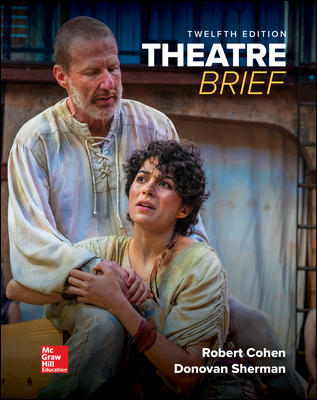
Theatre Brief 12Th Edition By Robert Cohen - Test Bank

Theatre Brief 12Th Edition By Robert Cohen - Test Bank   Instant Download - Complete Test Bank With Answers     Sample Questions Are Posted Below   Theatre, Brief, 12e (Cohen) Chapter 5   Designers and Technicians   1) The order and process of developing a design for a play could be summarized by which of …

$19.99

Theatre Brief 12Th Edition By Robert Cohen – Test Bank


Instant Download – Complete Test Bank With Answers


Sample Questions Are Posted Below


Theatre, Brief, 12e (Cohen)

Chapter 5   Designers and Technicians


1) The order and process of developing a design for a play could be summarized by which of the following series of steps?

  1. A) reading the play, researching, imagining, creating a physical presentation, collaborating, approving for the budget, ensuring viability, implementing
  2. B) collaborating, reading, creating a model, approving the budget
  3. C) approving the budget, creating a sample, reading the play, collaborating, implementing
  4. D) reading, imagining, implementing


Answer:  A

Learning Objective:  Recall that design is a comprehensive and collaborative process.

Bloom’s:  Remember

Accessibility:  Keyboard Navigation


2) Realistic costuming took over when which of the following became a major guiding principle in drama?

  1. A) the expression of the individual consciousness
  2. B) social expression
  3. C) historical accuracy
  4. D) psychological accuracy


Answer:  C

Learning Objective:  Recall the emergence and practice of modern costume design.

Bloom’s:  Remember

Accessibility:  Keyboard Navigation


3) All of the following are elements the scenic designer might take into consideration when creating the visual presentation of the staging EXCEPT

  1. A) color.
  2. B) scale.
  3. C) textures.
  4. D) underscoring.


Answer:  D

Learning Objective:  Recognize the kinds of questions designers must ask when working on a play.

Bloom’s:  Understand

Accessibility:  Keyboard Navigation


4) All of the following take part in the design of the staging EXCEPT

  1. A) the director.
  2. B) the lighting designer.
  3. C) the make-up designer.
  4. D) the house manager.


Answer:  D

Learning Objective:  Recall that design is a comprehensive and collaborative process.

Bloom’s:  Remember

Accessibility:  Keyboard Navigation


5) The proscenium stage format reached its highest realization in the

  1. A) Royal and Romantic eras.
  2. B) Victorian era.
  3. C) absurdist era.
  4. D) postmodern era.


Answer:  A

Learning Objective:  Recognize the different types of scenic design.

Bloom’s:  Understand

Accessibility:  Keyboard Navigation


6) Which of the following types of stage is completely surrounded by the audience?

  1. A) thrust
  2. B) proscenium
  3. C) arena
  4. D) metaphorical


Answer:  C

Learning Objective:  Recognize the different types of scenic design.

Bloom’s:  Understand

Accessibility:  Keyboard Navigation


7) During performances, the person fully in charge of overseeing the execution of the show is the

  1. A) production stage manager.
  2. B) shop supervisor.
  3. C) director.
  4. D) technical director.


Answer:  A

Learning Objective:  Recognize the importance of the technical production team.

Bloom’s:  Understand

Accessibility:  Keyboard Navigation


8) Which kind of stage consists of a bare room able to adapt to a variety of staging possibilities?

  1. A) arena stage
  2. B) thrust stage
  3. C) proscenium stage
  4. D) black box


Answer:  D

Learning Objective:  Recognize the different types of scenic design.

Bloom’s:  Understand

Accessibility:  Keyboard Navigation


9) The development of ________ fostered the great period of scenery design.

  1. A) the thrust stage
  2. B) the medieval platform stage
  3. C) artificial lighting and flat scenery used in European indoor stages
  4. D) the Roman open-air theatre


Answer:  C

Learning Objective:  Recognize the different types of scenic design.

Bloom’s:  Understand

Accessibility:  Keyboard Navigation


10) What kind of scenery attempts to depict, in great detail, a specific time and place in the observable world where the play’s events are presumed to take place?

  1. A) metaphorical
  2. B) realistic
  3. C) surreal
  4. D) picturesque


Answer:  B

Learning Objective:  Recognize the different types of scenic design.

Bloom’s:  Understand

Accessibility:  Keyboard Navigation


11) What kind of scenery uses evocative visual images to make a visual statement about the production’s intended mood or theme?

  1. A) picturesque
  2. B) surreal
  3. C) expressionist
  4. D) metaphorical


Answer:  D

Learning Objective:  Recognize the different types of scenic design.

Bloom’s:  Understand

Accessibility:  Keyboard Navigation


12) Makeup can serve all the functions EXCEPT which of the following?

  1. A) An actor may use illustrative makeup to resemble the appearance of a character.
  2. B) Makeup may be used to evoke or highlight psychological traits.
  3. C) Makeup may simplify or embolden the actor’s features in order to make them distinct and expressive to every member of the audience.
  4. D) Makeup may be used to help improve the actor’s diction.


Answer:  D

Learning Objective:  Recognize the importance of makeup design.

Bloom’s:  Understand

Accessibility:  Keyboard Navigation


13) Before the electronic age, theatres were routinely equipped with such devices as

  1. A) boom boxes.
  2. B) recordings.
  3. C) rain barrels, thundersheets, and and thunder runs.
  4. D) an airplane flying overhead from left to right.


Answer:  C

Learning Objective:  Recall the history of sound design.

Bloom’s:  Remember

Accessibility:  Keyboard Navigation


14) The Broadway production of War Horse won separate Tony Awards for best play, direction, scenery, costume and sound design, but not for its

  1. A) incredible acting.
  2. B) use of children playing adults.
  3. C) magnificent projections and puppets.
  4. D) stage management.


Answer:  C

Learning Objective:  Recognize the growing importance of puppetry and projections.

Bloom’s:  Understand

Accessibility:  Keyboard Navigation


15) Design for any show begins with

  1. A) the ideas of the director, commonly known as a concept statement.
  2. B) brainstorming from the actors.
  3. C) the producer.
  4. D) the stage manager.


Answer:  A

Learning Objective:  Recall that design is a comprehensive and collaborative process.

Bloom’s:  Remember

Accessibility:  Keyboard Navigation


16) What is NOT an example of projection design as it existed before its contemporary usage?

  1. A) Shakespeare’s plays using shadows in front of lanterns to simulate monsters
  2. B) Bertolt Brecht using slide projections in Mother Courage and Galileo
  3. C) Tennessee Williams calling for screens with slides of images or titles in The Glass Menagerie
  4. D) Wendell Harrington designing 34 Broadway productions since his 1979 breakthrough design of They’re Playing Our Song


Answer:  A

Learning Objective:  Recall the history of theatrical projections.

Bloom’s:  Remember

Accessibility:  Keyboard Navigation


17) Which of the following is NOT a postmodern design element?

  1. A) random assemblages of different and unrelated styles
  2. B) found objects that are “quoting historical periods” on the set
  3. C) painted scenery made to look fake
  4. D) exact replicas needed to make a realistic representation of the character’s homes


Answer:  D

Learning Objective:  Recognize the different types of scenic design.

Bloom’s:  Understand

Accessibility:  Keyboard Navigation


18) What is the name for the curved scenic backdrop at the rear of the stage, often representing the sky or skyline?

  1. A) borders
  2. B) curtain wings
  3. C) cyclorama
  4. D) proscenium


Answer:  C

Learning Objective:  Recognize the goals and techniques of contemporary lighting design.

Bloom’s:  Understand

Accessibility:  Keyboard Navigation


19) Which person is responsible for the building and operation of stage machinery and scenery; scheduling lighting and industrial crews; moving scenery in and out of the theatre; and establishing policies and directives for scene shifting?

  1. A) technical director
  2. B) dramaturg
  3. C) production manager
  4. D) director


Answer:  A

Learning Objective:  Recognize the importance of the technical production team.

Bloom’s:  Understand

Accessibility:  Keyboard Navigation


20) Turntables, elevators, hoists, rolling carts, and wagons, which are all used as scenic elements to accompany and support the dramatic action, are collectively called

  1. A) scrims.
  2. B) portable sets.
  3. C) stage machinery.
  4. D) cycloramas.


Answer:  C

Learning Objective:  Recognize the importance of scenic materials.

Bloom’s:  Understand

Accessibility:  Keyboard Navigation


21) Makeup, like costuming, is

  1. A) both ceremonial and illustrative.
  2. B) ceremonial alone.
  3. C) illustrative alone.
  4. D) nonsignifying.


Answer:  A

Learning Objective:  Recognize the importance of makeup design.

Bloom’s:  Understand

Accessibility:  Keyboard Navigation


22) Which invention brought lighting to the stage in its modern form and made lighting a more controlled part of the drama?

  1. A) the three-tiered candelabra
  2. B) the kerosene lamp
  3. C) the gaslight
  4. D) the use of tallow for candles


Answer:  C

Learning Objective:  Recall later developments in the history of lighting design.

Bloom’s:  Remember

Accessibility:  Keyboard Navigation


23) Ancient uses of costuming served primarily to

  1. A) separate the actors from the audience.
  2. B) distinguish individual characters.
  3. C) demonstrate historical accuracy.
  4. D) communicate particular attitudes.


Answer:  A

Learning Objective:  Recall the early history of costume design.

Bloom’s:  Remember

Accessibility:  Keyboard Navigation


24) A plan or series of plans showing the placement of each lighting instrument—its type, wattage, size, wiring and connection to a dimmer, and color—is called

  1. A) a scrim.
  2. B) a cyclorama.
  3. C) a light plot.
  4. D) a light plan.


Answer:  C

Learning Objective:  Recall the tasks of the contemporary lighting designer.

Bloom’s:  Remember

Accessibility:  Keyboard Navigation


25) Which of the following is true of the history of lighting in scene design?

  1. A) Lighting became a serious consideration only after directors started demanding more light on their work.
  2. B) Before electricity was invented, there were no attempts to control indoor or outdoor lighting.
  3. C) Even before the advent of electricity, designers attempted to manipulate lighting with candles, oil lamps, blazing torches, and reflective surfaces.
  4. D) Lighting was never really important in scene design.


Answer:  C

Learning Objective:  Recall the early history of lighting design.

Bloom’s:  Remember

Accessibility:  Keyboard Navigation


26) The production stage manager presides over the working and timing of lighting cues, ensuring that the lights support the play’s action and aesthetic.


Answer:  FALSE

Learning Objective:  Recognize the importance of the technical production team.

Bloom’s:  Understand

Accessibility:  Keyboard Navigation


27) The use of makeup signals to the audience that the actor is a performer.


Answer:  TRUE

Learning Objective:  Recognize the importance of makeup design.

Bloom’s:  Understand

Accessibility:  Keyboard Navigation


28) The traditional materials of stage scenery are wood, canvas, and paint.


Answer:  TRUE

Learning Objective:  Recognize the importance of scenic materials.

Bloom’s:  Understand

Accessibility:  Keyboard Navigation


29) Modern scenic design includes a range of materials, including metals, plastics, masonry, fire, and live animals.


Answer:  TRUE

Learning Objective:  Recognize the importance of scenic materials.

Bloom’s:  Understand

Accessibility:  Keyboard Navigation


30) The most exciting new development in lighting design is LED technology.


Answer:  TRUE

Learning Objective:  Recognize the goals and techniques of contemporary lighting design.

Bloom’s:  Understand

Accessibility:  Keyboard Navigation


31) The name given to the boards that elevate the actors above the level of the audience is a flat.


Answer:  FALSE

Learning Objective:  Recognize the importance of scenic materials.

Bloom’s:  Understand

Accessibility:  Keyboard Navigation


32) Platforms, flats, and drapery are the traditional building blocks of fixed stage scenery.


Answer:  TRUE

Learning Objective:  Recognize the importance of scenic materials.

Bloom’s:  Understand

Accessibility:  Keyboard Navigation


33) A loosely woven fabric that looks opaque when lit from one side and transparent when lit from the other side is called a cyclorama.


Answer:  FALSE

Learning Objective:  Recognize the importance of scenic materials.

Bloom’s:  Understand

Accessibility:  Keyboard Navigation


34) Common goals of lighting design are verisimilitude and atmosphere.


Answer:  TRUE

Learning Objective:  Recognize the goals and techniques of contemporary lighting design.

Bloom’s:  Understand

Accessibility:  Keyboard Navigation


35) A list of occasions referred to by number, keyed to the script of the play to indicate changes in intensity or use, is called a light plot.


Answer:  FALSE

Learning Objective:  Recognize the goals and techniques of contemporary lighting design.

Bloom’s:  Understand

Accessibility:  Keyboard Navigation


36) Describe the possible process of a scenic designer in creating a look for a play and the importance of creative collaboration. What does a designer look for when reading through a play’s text before production of any kind has begun?


Answer:  Answers will vary

Learning Objective:  Recognize the kinds of questions designers must ask when working on a play.

Bloom’s:  Understand

Accessibility:  Keyboard Navigation


37) What positions are included on the technical team? Describe the tasks of five of these positions. Which interests you the most? Why?


Answer:  Answers will vary

Learning Objective:  Recall that design is a comprehensive and collaborative process.

Bloom’s:  Remember

Accessibility:  Keyboard Navigation


38) Choose a play with which you are familiar, set in a time period prior to 1950. Describe the processes of designing costumes and fully preparing them for performance. Discuss design considerations and processes, sources of costumes, and the process of preparation.


Answer:  Answers will vary

Learning Objective:  Recall the tasks of the costume designer.

Bloom’s:  Remember

Accessibility:  Keyboard Navigation


39) What is the difference between light used as scenery and stage lighting? Which do you find contributes more to the theatrical experience? Please name any productions you have seen as examples of both.


Answer:  Answers will vary

Learning Objective:  Recognize the importance of scenic materials.

Bloom’s:  Understand

Accessibility:  Keyboard Navigation


40) Discuss the relationship between new technological innovations and live theatre. What contributions have new breakthroughs in digital technology made to scene design? In what ways might such innovation prove problematic for design?


Answer:  Answers will vary

Learning Objective:  Recognize the importance of digital technology in today’s theatre.

Bloom’s:  Understand
Accessibility:  Keyboard Navigation


Additional information

Add Review

Your email address will not be published. Required fields are marked *