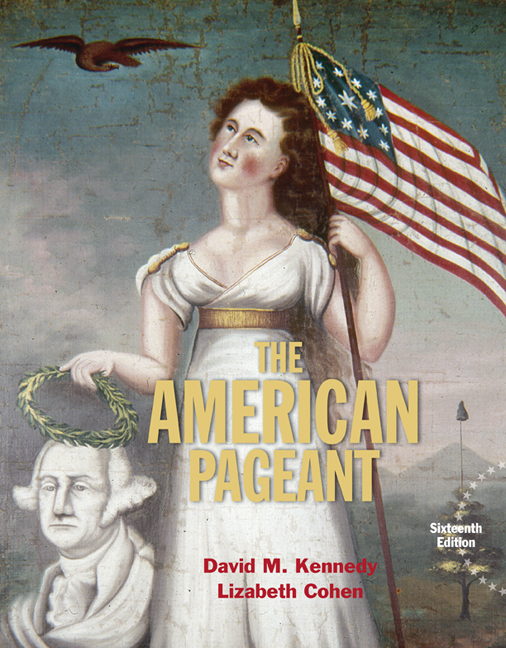
American Pageant 16th Edition By David M. Kennedy - Test Bank

American Pageant 16th Edition By David M. Kennedy - Test Bank   Instant Download - Complete Test Bank With Answers     Sample Questions Are Posted Below   Multiple Choice 1. All of the following are reasons the thirteen Atlantic seaboard colonies sought independence from Great Britain except a. distinctive social structures. b. distinctive economic …

$19.99

American Pageant 16th Edition By David M. Kennedy – Test Bank


Instant Download – Complete Test Bank With Answers


Sample Questions Are Posted Below


Multiple Choice

1. All of the following are reasons the thirteen Atlantic seaboard colonies sought independence from Great Britain except
a. distinctive social structures.
b. distinctive economic structures.
c. distinctive political structures.
d. a declining population in the thirteen Atlantic seaboard colonies.
e. the appearance of a recognizably American way of life.
ANSWER: d
POINTS: 1
REFERENCES: Chapter 5: Colonial Society on the Eve of Revolution, 1700-1775

2. Identify the statement that is false.
a. In 1700, the Atlantic seaboard colonies contained fewer than 300,000 inhabitants.
b. In 1700, only about 20,000 inhabitants were blacks.
c. By 1775, the Atlantic seaboard colonies contained almost 2.5 million inhabitants.
d. By 1775, the black population rose to over 1 million.
e. White immigrants in 1775 made up about 400,000 of the inhabitants.
ANSWER: d
POINTS: 1
REFERENCES: Conquest by the Cradle

3. One feature common to all of the eventually rebellious colonies was their
a. relatively equal wealth.
b. economic organization.
c. similar social structures.
d. rapidly growing populations.
e. support of religious freedom.
ANSWER: d
POINTS: 1
REFERENCES: Conquest by the Cradle

4. As a result of the rapid population growth in colonial America during the eighteenth century
a. a momentous shift occurred in the balance of power between the colonies and the mother country.
b. the British government was pleased that more workers would be available to fill an increasing need for laborers in Britain.
c. the need for slave labor declined.
d. the colonists became more dependent on Britain for the goods that they needed to survive.
e. the British government granted greater autonomy to colonial governments.
ANSWER: a
POINTS: 1
REFERENCES: Conquest by the Cradle

5. The population growth of the American colonies by 1775 is attributed mostly to
a. white immigration from Europe.
b. the natural fertility of Native Americans.
c. the importation of slaves from Africa.
d. the influx of immigrants from Latin America.
e. the natural fertility of all Americans.
ANSWER: e
POINTS: 1
REFERENCES: Conquest by the Cradle

6. The average age of the American colonists in 1775 was
a. 30.
b. 27.
c. 25.
d. 20.
e. 16.
ANSWER: e
POINTS: 1
REFERENCES: Conquest by Cradle

7. By 1775, which of the following communities could not be considered a city in colonial America?
a. New York
b. Charleston
c. Philadelphia
d. Boston
e. Baltimore
ANSWER: e
POINTS: 1
REFERENCES: Conquest by the Cradle

8. By the end of the 1700s, what was the percentage of people living in rural areas of colonial America?
a. 25 percent
b. 40 percent
c. 60 percent
d. 75 percent
e. 90 percent
ANSWER: e
POINTS: 1
REFERENCES: Conquest by the Cradle

9. The Scots-Irish can best be described as
a. pugnacious, lawless, and individualistic.
b. loyal to the British king.
c. people who did not like to move.
d. builders of sturdy homes and well-kept farms.
e. strong supporters of the Catholic Church.
ANSWER: a
POINTS: 1
REFERENCES: A Mingling of the Races

10. With regard to governmental authority, the Scots-Irish colonists
a. showed remarkable willingness to follow authority.
b. supported only Britain.
c. cherished no love for the British or any other government.
d. stated a preference for Catholic authority.
e. established good relations with local Indians.
ANSWER: c
POINTS: 1
REFERENCES: A Mingling of the Races

11. An armed march in Philadelphia in 1764 by Scots-Irish colonial immigrants, protesting the Quaker oligarchy’s lenient policy toward the Indians was known as
a. Bacon’s Rebellion.
b. March of the Paxton Boys.
c. Regulator Movement.
d. Shays’ Rebellion.
e. Oligarchy Revolution.
ANSWER: b
POINTS: 1
REFERENCES: A Mingling of the Races

12. In North Carolina, spearheaded by the Scots-Irish, a small insurrection against eastern domination of the colony’s affair was known as
a. Bacon’s Rebellion.
b. March of the Paxton Boys.
c. Regulator Movement.
d. Shays’ Rebellion.
e. Whiskey Rebellion.
ANSWER: c
POINTS: 1
REFERENCES: A Mingling of the Races

13. By 1775, the ____ were the largest non-English ethnic group in colonial America.
a. Africans
b. Germans
c. West Indians
d. Scots-Irish
e. Irish
ANSWER: a
POINTS: 1
REFERENCES: A Mingling of the Races

14. The population of the thirteen American colonies was
a. about evenly divided among Anglo-Saxons, French, Scots-Irish, and Germans.
b. perhaps the most diverse in the world, although it remained predominantly Anglo-Saxon.
c. overwhelmingly African.
d. the less diverse in the world.
e. None of these
ANSWER: b
POINTS: 1
REFERENCES: A Mingling of the Races

15. The South held about ____ percent of the slaves in the thirteen colonies of North America.
a. 100
b. 90
c. 80
d. 70
e. 50
ANSWER: b
POINTS: 1
REFERENCES: A Mingling of the Races

16. The most ethnically diverse region of colonial America was ____, whereas ____ was the least ethnically diverse.
a. New England, the South
b. the middle colonies, the South
c. the South, New England
d. the middle colonies, New England
e. the frontier regions, New England
ANSWER: d
POINTS: 1
REFERENCES: A Mingling of the Races

17. Identify the statement that is false.
a. The population of the thirteen colonies, mainly Anglo-Saxon, was the least mixed to be found anywhere in the world.
b. The South, holding about 90 percent of the slaves, displayed its historic black-and-white racial composition.
c. New England, mostly staked out by the original Puritan migrants, showed the least ethnic diversity.
d. The Middle Colonies received the bulk of later white immigrants and boasted the most variety of peoples.
e. In 1775, outside of New England, about one-half the population was non-English.
ANSWER: a
POINTS: 1
REFERENCES: A Mingling of the Races

18. Colonial immigrants laid the foundations for a new multicultural American national identity by
a. merging their religious traditions with those of Native Americans
b. intermarrying with people from other ethnic groups.
c. pushing their settlements from the East Coast into the backcountry.
d. importing increasing numbers of slaves.
e. None of these
ANSWER: b
POINTS: 1
REFERENCES: A Mingling of the Races

19. In contrast to the seventeenth century, by 1775, colonial Americans
a. had become more stratified into social classes.
b. had all but eliminated poverty.
c. found that it was easier for ordinary people to acquire land.
d. had nearly lost their fear of slave rebellion.
e. had few people who owned small farms.
ANSWER: a
POINTS: 1
REFERENCES: The Structure of Colonial Society

20. On the eve of the American Revolution, social and economic mobility in the colonies decreased for all of the following reasons except
a. earlier wars made Northern merchants rich and created a class of widows and orphans.
b. the supply of unclaimed land in New England began to diminish
c. farmers’ sons and daughters were forced to hire out as wage laborers.
d. the average size of New England farms increased dramatically.
e. the gap between owners of large Southern plantations and small farms widened.
ANSWER: d
POINTS: 1
REFERENCES: The Structure of Colonial Society

21. By the mid-1700s, the number of poor people in the American colonies
a. became greater than in all of Europe.
b. had increased to the point of overpopulation.
c. had begun to decline from seventeenth-century levels.
d. remained tiny compared with the number in England.
e. was about one-third of the population.
ANSWER: d
POINTS: 1
REFERENCES: The Structure of Colonial Society

22. In 1760, fearful of heavy concentrations of resentful slaves, which colonial legislature unsuccessfully sought to pass legislation that would halt the further importation of slaves.?
a. South Carolina
b. North Carolina
c. Georgia
d. Virginia
e. Maryland
ANSWER: a
POINTS: 1
REFERENCES: The Structure of Colonial Society

23. How did British authorities respond to efforts by colonial legislatures to restrict or halt the importation of slaves?
a. They applauded and supported these efforts.
b. British leaders vetoed such efforts.
c. They allowed only South Carolina’s legislation to stand.
d. They viewed such colonial actions as morally callous.
e. The British refused to intervene and did nothing.
ANSWER: b
POINTS: 1
REFERENCES: The Structure of Colonial Society

24. The riches created by the growing slave population in the American South
a. were distributed evenly among whites.
b. helped to narrow the gap between rich and poor.
c. created a serious problem with inflation.
d. were not distributed evenly among whites.
e. enabled poor whites to escape tenant farming.
ANSWER: d
POINTS: 1
REFERENCES: The Structure of Colonial Society

25. The most honored profession in early colonial society was
a. medicine.
b. law.
c. the ministry.
d. farming.
e. the merchants.
ANSWER: c
POINTS: 1
REFERENCES: Clerics, Physicians, and Jurists

26. One of the least honored and most haphazard professions in colonial society was a
a. physician.
b. teacher.
c. minister.
d. farmer.
e. merchant.
ANSWER: a
POINTS: 1
REFERENCES: Clerics, Physicians, and Jurists

27. By the eighteenth century, the various colonial regions had distinct economic identities; the northern colonies relied on ____, the Chesapeake colonies relied on ____, and the southern colonies relied on ____.
a. cattle and grain, tobacco, rice and indigo
b. furs and skins, tobacco, iron works
c. rice and indigo, lumber and timber, tobacco
d. shipbuilding, iron works, cattle and grain
e. cattle and grain, tobacco, fishing
ANSWER: a
POINTS: 1
REFERENCES: Workaday America

28. The leading industry in the American colonies was
a. fishing.
b. manufacturing.
c. commerce.
d. agriculture.
e. slave trading.
ANSWER: d
POINTS: 1
REFERENCES: Workaday America

29. Which of the following were considered the most promising avenues to acquiring speedy wealth in the American colonies?
a. practicing law
b. commercial ventures and land speculation
c. fishing
d. manufacturing
e. buying and selling slaves
ANSWER: b
POINTS: 1
REFERENCES: Workaday America

30. The triangular trade of the colonial American shipping industry
a. was not that profitable.
b. involved America, France, and England.
c. relied on the Spanish fleet for protection.
d. saw the Spanish gaining the largest profits.
e. involved the trading of rum for African slaves.
ANSWER: e
POINTS: 1
REFERENCES: Workaday America

31. Identify the statement that is false.
a. The triangular trade was enormously profitable and made up most of the colonial commerce.
b. A trader would leave New England with a cargo of rum and sail to the Gold Coast of Africa.
c. A trader would barter rum with African chiefs for captured African slaves.
d. A trader would travel to the West Indies with the African slaves for molasses.
e. A trader would travel to New England with the molasses, where it would be distilled into rum.
ANSWER: a
POINTS: 1
REFERENCES: Workaday America

32. Although manufacturing in the colonies was of only secondary importance, the colonies did produce which of the following?
a. Rum
b. Beaver hats
c. Lumber
d. Iron
e. All of these
ANSWER: e
POINTS: 1
REFERENCES: Workaday America

33. The most important manufacturing enterprise in colonial America in the eighteenth century was
a. iron making.
b. arms and munitions production.
c. lumbering.
d. rum distilling.
e. making clothes.
ANSWER: c
POINTS: 1
REFERENCES: Workaday America

34. What proportion of the British merchant marine fleet was American built?
a. One-fourth
b. One-third
c. Two-thirds
d. Three-fifths
e. None
ANSWER: b
POINTS: 1
REFERENCES: Workaday America

35. Which of the following was not considered to be a colonial naval store?
a. Tar
b. Pitch
c. Rosin
d. Turpentine
e. Glass
ANSWER: e
POINTS: 1
REFERENCES: Workaday America

36. One feature of the American economy that strained the relationship between the colonies and Britain was the
a. British demand to halt the importation of slaves.
b. growing desire of Americans to trade with other nations in addition to Britain.
c. lack of any British regulations regarding trade with foreign nations.
d. British rejection of the Molasses Act.
e. the Americans’ unwillingness to trade with the French West Indies.
ANSWER: b
POINTS: 1
REFERENCES: Workaday America

37. The Molasses Act of 1733 was intended to
a. stimulate the colonies’ triangle trade with Africa and the West Indies.
b. satisfy colonial demands for earning foreign exchange money.
c. inhibit colonial trade with the French West Indies.
d. increase the colonists’ standard of living and protect the livelihood of colonial merchants.
e. require Americans to sell their molasses to British merchants.
ANSWER: c
POINTS: 1
REFERENCES: Workaday America

38. American colonists sought trade with countries other than Great Britain
a. in order to gain their independence.
b. mainly to anger the king.
c. to anger Parliament.
d. to help strengthen the French.
e. because they needed markets besides Great Britain to sell their surplus goods and correct the colonies’ adverse trade imbalance with Britain.
ANSWER: e
POINTS: 1
REFERENCES: Weekday America

39. Transportation in colonial America was
a. surprisingly fast for the time.
b. safer by road than by any other means.
c. slow by any of the means available.
d. so poor that no mail service was established until the 1800s.
e. fast only on the waterways.
ANSWER: c
POINTS: 1
REFERENCES: Horsepower and Sailpower

40. Colonial American taverns were all of the following except
a. frequented mainly by the lower class.
b. another cradle of democracy.
c. hotbeds of agitation for the Revolutionary movement.
d. important in crystallizing public opinion.
e. places providing amusements.
ANSWER: a
POINTS: 1
REFERENCES: Horsepower and Sailpower

41. English officials tried to establish the Church of England in as many colonies as possible because
a. they were concerned about the eternal souls of the colonists.
b. the church would act as a major prop for royal authority.
c. such an action would restore enthusiasm for religion.
d. the American colonists supported such a move.
e. such an action brought in more money to England.
ANSWER: b
POINTS: 1
REFERENCES: Dominant Denominations

42. In 1775, the ____ churches were the only two established (tax-supported) churches in particular colonies in America.
a. Methodist and Anglican
b. Presbyterian and Congregational
c. Congregational and Anglican
d. Quaker and Catholic
e. Presbyterian and Anglican
ANSWER: c
POINTS: 1
REFERENCES: Dominant Denominations

43. Match each denomination on the left with the region where it predominated.

A. Congregationalist 1. the frontier
B. Anglican 2. New England
C. Presbyterian 3. the South
a. A-2, B-3, C-l
b. A-2, B-1, C-3
c. A-1, B-3, C-2
d. A-3, B-2, C-1
e. A-3, B-1, C-2
ANSWER: a
POINTS: 1
REFERENCES: Dominant Denominations

44. As the Revolution approached, Presbyterian and Congregational ministers in general
a. remained neutral.
b. supported the Revolutionary cause.
c. sided with the Anglican clergymen.
d. opposed the idea of revolution.
e. split on the issue of independence.
ANSWER: b
POINTS: 1
REFERENCES: Dominant Denominations

45. By the early eighteenth century, religion in colonial America was
a. stronger than at any previous time.
b. holding steadfastly to the belief that spiritual conversion was essential for church membership.
c. moving away from clerical intellectualism.
d. less fervid than when the colonies were established.
e. becoming less tolerant.
ANSWER: d
POINTS: 1
REFERENCES: The Great Awakening

46. The main reason that Puritan churches were struggling in the early eighteenth century was because
a. parishioners found their theological doctrines too elaborate.
b. parishioners thought that ministers had gone too soft in their preaching.
c. church members embraced the notion of predestination.
d. they banned their predominantly female membership from any leadership positions.
e. the Anglican Church successfully competed for church members.
ANSWER: a
POINTS: 1
REFERENCES: The Great Awakening

47. The religious doctrine of the Arminians held that
a. predestination determined a person’s eternal fate.
b. good works could get you into heaven.
c. Calvin’s ideas should be followed without question.
d. emotion had no place in religion.
e. individual free will determined a person’s eternal fate.
ANSWER: e
POINTS: 1
REFERENCES: The Great Awakening

48. The New Light preachers of the Great Awakening
a. delivered intensely emotional sermons.
b. rarely addressed themselves to the matter of individual salvation.
c. reinforced the established churches.
d. were ultimately unsuccessful in arousing the religious enthusiasm of colonial Americans.
e. opposed the emotionalism of the revivalists.
ANSWER: a
POINTS: 1
REFERENCES: The Great Awakening

49. The Great Awakening
a. undermined the prestige of the learned clergy in the colonies.
b. split colonial churches into several competing denominations.
c. led to the founding of Princeton, Dartmouth, and Rutgers colleges.
d. was the first spontaneous mass movement of the American people.
e. All of these
ANSWER: e
POINTS: 1
REFERENCES: The Great Awakening

50. The time-honored English ideal, which Americans accepted for some time, regarded education as all of the following except
a. essential training for citizenship.
b. designed primarily for men.
c. reserved for the aristocratic few.
d. essential for creating leaders.
e. hailed and embraced in New England more than any other region.
ANSWER: a
POINTS: 1
REFERENCES: Schools and Colleges

51. To the Puritans, education was essential for
a. reading the Bible.
b. enforcing Christian laws and customs.
c. creating good citizens.
d. writing inspiring sermons.
e. training future ministers.
ANSWER: a
POINTS: 1
REFERENCES: Schools and Colleges

52. Colonial schools and colleges placed their main emphasis on
a. math.
b. science.
c. modern languages.
d. literature.
e. religion.
ANSWER: e
POINTS: 1
REFERENCES: Schools and Colleges

53. The first American college free from denominational control was
a. Harvard.
b. Yale.
c. New York University.
d. Brown University.
e. the University of Pennsylvania.
ANSWER: e
POINTS: 1
REFERENCES: Schools and Colleges

54. Match the following description with the artist.

A. John Trumbull 1. regarded as a Loyalist during the Revolutionary War
B. Charles Willson Peale 2. best known for his portraits of George Washington, ran a museum, stuffed birds, and practiced dentistry
C. Benjamin West
D. John Singleton Copley 3. from Connecticut and was discouraged by his father as a youth, “Connecticut is not Athens”
4. close friend of George III and official court painter, was buried in London’s St. Paul’s Cathedral
a. A-3, B-1, C-2, D-4
b. A-2, B-4, C-3, D-1
c. A-3, B-2, C-4, D-1
d. A-2, B-3, C-1, D-4
e. A-1, B-2, C-3, D-4
ANSWER: c
POINTS: 1
REFERENCES: A Provincial Culture

55. All of the following contributed to the lack of development of art and artists in early colonial America except
a. simplicity of pioneering life.
b. lack of subjects to paint.
c. lack of talent among the Americans.
d. lack of patrons who could afford the expensive art.
e. lack of art schools in America.
ANSWER: c
POINTS: 1
REFERENCES: A Provincial Culture

56. Art and culture in colonial America
a. involved heavy investment in art.
b. was generally undistinguished and unsupported by colonial patrons.
c. showed its native creativity in architecture.
d. was always important to the colonists.
e. for a long time rejected any European influence.
ANSWER: b
POINTS: 1
REFERENCES: A Provincial Culture

57. The person most often called the “first civilized American” was
a. Thomas Jefferson.
b. John Trumbull.
c. John Winthrop.
d. Phillis Wheatley.
e. Benjamin Franklin.
ANSWER: e
POINTS: 1
REFERENCES: A Provincial Culture

58. All of the following are achievements of Benjamin Franklin except
a. the lightning rod.
b. influential poetry.
c. bifocal glasses.
d. a highly efficient stove.
e. author of Poor Richard’s Almanack.
ANSWER: b
POINTS: 1
REFERENCES: A Provincial Culture

59. All of the following are true statements about colonial newspapers on the eve of the Revolution except
a. there were about forty different newspapers throughout the colonies.
b. they were typically published twice a week.
c. they proved to be powerful vehicles for airing grievances and rallying support against England.
d. they consisted of a single large sheet of paper folded once.
e. the news they contained often lagged weeks behind the events themselves.
ANSWER: b
POINTS: 1
REFERENCES: Pioneer Presses

60. The jury’s decision in the case of John Peter Zenger, a newspaper printer, was significant because
a. he was found guilty.
b. it supported English law.
c. it facilitated freedom of the press and a more robust public discussion of political affairs in the colonies.
d. the ruling prohibited criticism of political officials.
e. it allowed the press to print irresponsible criticisms of powerful people without fearing a successful lawsuit for libel.
ANSWER: c
POINTS: 1
REFERENCES: Pioneer Presses

61. One political principle that colonial Americans came to cherish above most others was
a. the property qualification for voting.
b. one man, one vote.
c. the separation of powers.
d. self-taxation through representation.
e. political deference to the ruling colonial clique dominating royal and proprietary colonies.
ANSWER: d
POINTS: 1
REFERENCES: The Great Game of Politics

62. Colonial legislatures were often able to bend the power of the governors to their will because
a. the governors often had a greater sense of loyalty to their colony than to the king.
b. the governors were usually chosen by colonial legislatures and could be removed from office by the legislatures.
c. the king generally held the views of colonial legislators in higher regard than those of the governors.
d. colonial legislatures controlled taxes and expenditures that paid the governors’ salaries.
e. of the threat of violence.
ANSWER: d
POINTS: 1
REFERENCES: The Great Game of Politics

63. In colonial elections
a. most eligible voters zealously exercised their right to vote.
b. the right to vote was reserved for white male property holders.
c. only a small landed elite had the right to vote.
d. average citizens were usually elected to office.
e. true democracy had arrived.
ANSWER: b
POINTS: 1
REFERENCES: The Great Game of Politics

64. By the mid-eighteenth century, the overwhelming majority of North American colonies shared all of the following similarities except
a. full democratic participation by all colonists in political affairs, regardless of social and economic class.
b. the dominant use of English in language.
c. the dominance of Protestantism in religion.
d. increased opportunity for social mobility.
e. some degree of ethnic and religious toleration.
ANSWER: a
POINTS: 1
REFERENCES: Dominant Dominations
The Great Game of Politics

65. What was created by the mid-1700s that helped connect the Atlantic seaboard colonies of Great Britain to each other in a more cohesive manner?
a. an intercolonial postal system
b. an intercolonial paved roads system that connected all of the cities of the Atlantic seaboard colonies.
c. an intercolonial canals system
d. an intercolonial currency and monetary system
e. none of these choices
ANSWER: a
POINTS: 1
REFERENCES: Horsepower and Sailpower

66. All of the following characterized “old light” clergymen except
a. they were deeply skeptical of religious revivalists promoting the Great Awakening.
b. they were proponents of utilizing emotionalism and theatrics in religious preaching.
c. they took issue with key aspects of the stark theology of Jonathan Edwards.
d. they included both Congregationalist and Presbyterian ministers.
e. they were quite uncomfortable with the religious preaching style of George Whitefield and other Great Awakening-influenced ministers.
ANSWER: b
POINTS: 1
REFERENCES: The Great Awakening

67. Identify the statement that is false.
a. Most of the early African immigrants gained their freedom.
b. The legal difference between a slave and a servant was unclear early on in colonial history.
c. Slavery in American began for economic reasons.
d. Slavery was harshest in the deep South.
e. Some slaves became slave owners once they were freed.
ANSWER: a
POINTS: 1
REFERENCES: Africans in America

68. All of the following are true conditions of the Chesapeake, as compared to the Deep South, except
a. tobacco was less physically demanding than rice.
b. tobacco plantations were larger and closer to one another, allowing for more contact with friends and relatives.
c. the proportion of female slaves in the Chesapeake had begun to rise by 1720.
d. it was one of the few slave societies in history to perpetuate itself by its own natural reproduction.
e. as the slave population began to rise, the development of a distinctive African American family life became impossible.
ANSWER: e
POINTS: 1
REFERENCES: Africans in America

69. African American contributions to American culture include all of the following except
a. jazz music.
b. the banjo.
c. the piano.
d. an array of African words that have passed into the American lexicon.
e. a unique language, Gullah.
ANSWER: c
POINTS: 1
REFERENCES: Africans in America

70. The slave culture that developed in America
a. was derived exclusively from African roots.
b. rejected Christianity.
c. was Muslim in its religious teachings.
d. contained many Western elements that remained thoroughly European.
e. included the distinctive cultural contributions of native-born African Americans.
ANSWER: e
POINTS: 1
REFERENCES: Africans in America

71. All of the following can be said about slave culture in the colonies except
a. native-born African Americans had much to do with its development and growth.
b. it included a unique language that blended African and English words.
c. it transformed African religious rituals into what would become new musical forms.
d. it merged a blend of traditional African folkways with those found in the colonies.
e. it emerged from efforts by slave traders to suppress African speech, religion and traditions.
ANSWER: e
POINTS: 1
REFERENCES: Africans in America
Makers of America: From African to African American

72. Slave Christianity emphasized all of the following in their faith except
a. Jesus was the Messiah who would deliver them from bondage.
b. that they should be humble and obedient.
c. heaven was a place where they would be reunited with their ancestors.
d. that God freed the Hebrews from slavery.
e. how to use religious songs as encoded messages about escape.
ANSWER: b
POINTS: 1
REFERENCES: Makers of America: From African to African American
Africans in America

Multiple Response

Each of the following multiple choice questions has multiple correct responses. Select the correct responses for each of the following questions.

73. By 1775, population growth in the American colonies
a. was beginning to slow down.
b. was causing the population to double about every twenty-five years.
c. was attributable more to reproduction than to immigration.
d. made the American colonies more populous than England.
e. led to greater dependence on England.
ANSWER: b, c
POINTS: 1
REFERENCES: Conquest by the Cradle

74. Bacon’s Rebellion stemmed from
a. Governor Berkeley’s Indian policies.
b. the frustration of Virginia’s colonial dependency on England.
c. the frontier’s resentment of the tidewater gentry.
d. the inherent rebelliousness of African slaves.
e. lack of a policy toward Indians.
ANSWER: a, c
POINTS: 1
REFERENCES: Frustrated Freemen and Bacon’s Rebellion

75. In 1775, most of the population in the American colonies
a. lived east of the Allegheny Mountains.
b. lived in rural areas.
c. was under twenty-five years of age.
d. was of predominantly English stock.
e. was of non-English stock.
ANSWER: a, b, c, d
POINTS: 1
REFERENCES: Conquest by the Cradle

76. The rebelliousness and inclination toward violence of the Scots-Irish was demonstrated by
a. the trial of John Peter Zenger in New York.
b. the Paxton Boys in Philadelphia.
c. the Regulator movement in North Carolina.
d. the Great Awakening in New England.
e. opposition to slavery.
ANSWER: b, c
POINTS: 1
REFERENCES: A Mingling of the Races

77. Trends that sapped the spiritual vitality from many early eighteenth-century churches included
a. clerical intellectualism.
b. predestination.
c. the rejection of Arminianism.
d. lay liberalism.
e. the growing strength of Catholicism.
ANSWER: a, d
POINTS: 1
REFERENCES: The Great Awakening

78. Leaders of the Great Awakening endorsed the concepts of
a. salvation through “good works.”
b. divine omnipotence.
c. the Half-Way Covenant.
d. predestination.
e. Arminianism.
ANSWER: b, d
POINTS: 1
REFERENCES: The Great Awakening

79. Benjamin Franklin
a. was the author of Poor Richard’s Almanack.
b. celebrated the virtues of thrift, hard work, and common sense.
c. was a severe critic of the Great Awakening.
d. was John Peter Zenger’s defense lawyer.
e. was a scientist.
ANSWER: a, b, e
POINTS: 1
REFERENCES: A Provincial Culture

80. In colonial New England, education was primarily
a. for boys.
b. designed to promote good citizenship.
c. intended for religious instruction.
d. provided to foster independent thinking and aesthetic appreciation.
e. a blessing, even for the poor.
ANSWER: a, c
POINTS: 1
REFERENCES: Schools and Colleges

81. Colonial newspaper printer John Peter Zenger
a. was accused of seditious libel.
b. was found innocent of the charges brought against him.
c. printed comments accusing the royal governor of corruption.
d. had his case dismissed on a legal technicality.
e. was responsible for temporary restrictions on the free press.
ANSWER: a, b, c
POINTS: 1
REFERENCES: Pioneer Presses

82. Generally, in the eighteenth-century American colonies
a. most people had sufficient food to stay healthy.
b. many homes had bathtubs and running water.
c. lotteries were a usual source of funds used for civic purposes.
d. Christmas was New England’s favorite holiday.
e. labor was heavy and constant.
ANSWER: a, c, e
POINTS: 1
REFERENCES: Colonial Folkways

83. Which of the following represented examples of resistance by African Americans to the power and influence of the white planter elite?
a. “Negro spirituals”
b. Adhering to the Christian belief in obedience
c. Slave religion
d. The development of an American form of Islam
e. The New York and South Carolina slave revolts
ANSWER: a, c, e
POINTS: 1
REFERENCES: Makers of America: From African to African American
Africans in America

84. Slaves in colonial America
a. included a few who became skilled artisans and tradesmen.
b. engaged in frequent acts of organized rebellion.
c. were mostly menial field hands.
d. contributed almost nothing to the developing American culture.
e. failed to reproduce in large numbers.
ANSWER: a, c
POINTS: 1
REFERENCES: Africans in America
Makers of America: From African to African Americans

Completion

Identify the customary eighteenth-century shipping routes for the following cargoes by reference number on the map.

Eighteenth Century Colonial Trading Patterns and Shipping Routes


85. ____ Rum
ANSWER: 2
POINTS: 1

86. ____ Slaves
ANSWER: 3
POINTS: 1

87. ____ Timber and foodstuffs
ANSWER: 5
POINTS: 1

88. ____ Tobacco, fish, lumber, and flour for British textiles
ANSWER: 1
POINTS: 1

89. ____ Sugar and molasses
ANSWER: 4
POINTS: 1

Subjective Short Answer

Identify and state the historical significance of the following:

90. Jonathan Edwards
ANSWER: Student answers will vary.
POINTS: 1
REFERENCES: The Great Awakening

91. Benjamin Franklin
ANSWER: Student answers will vary.
POINTS: 1
REFERENCES: A Provincial Culture

92. Michel-Guillaume de Crèvecoeur
ANSWER: Student answers will vary.
POINTS: 1
REFERENCES: A Mingling of the Races

93. George Whitefield
ANSWER: Student answers will vary.
POINTS: 1
REFERENCES: The Great Awakening

94. John Peter Zenger
ANSWER: Student answers will vary.
POINTS: 1
REFERENCES: Pioneer Presses

95. Phillis Wheatley
ANSWER: Student answers will vary.
POINTS: 1
REFERENCES: A Provincial Culture

96. John Singleton Copley
ANSWER: Student answers will vary.
POINTS: 1
REFERENCES: A Provincial Culture

97. John Trumbull
ANSWER: Student answers will vary.
POINTS: 1
REFERENCES: A Provincial Culture

98. Charles Willson Peale
ANSWER: Student answers will vary.
POINTS: 1
REFERENCES: A Provincial Culture

99. Benjamin West
ANSWER: Student answers will vary.
POINTS: 1
REFERENCES: A Provincial Culture

100. Jacobus Arminius
ANSWER: Student answers will vary.
POINTS: 1
REFERENCES: Dominant Domintations

101. Andrew Hamilton
ANSWER: Student answers will vary.
POINTS: 1
REFERENCES: Pioneer Presses

Describe and state the historical significance of the following:

102. Paxton Boys
ANSWER: Student answers will vary.
POINTS: 1
REFERENCES: A Mingling of the Races

103. Great Awakening
ANSWER: Student answers will vary.
POINTS: 1
REFERENCES: The Great Awakening

104. Anglican Church in America
ANSWER: Student answers will vary.
POINTS: 1
REFERENCES: Dominant Denominations

105. Regulator movement
ANSWER: Student answers will vary.
POINTS: 1
REFERENCES: A Mingling of the Races

106. old lights
ANSWER: Student answers will vary.
POINTS: 1
REFERENCES: The Great Awakening

107. triangular trade
ANSWER: Student answers will vary.
POINTS: 1
REFERENCES: Workaday America

108. Molasses Act
ANSWER: Student answers will vary.
POINTS: 1
REFERENCES: Workaday America

109. Scots-Irish
ANSWER: Student answers will vary.
POINTS: 1
REFERENCES: A Mingling of the Races

110. naval stores
ANSWER: Student answers will vary.
POINTS: 1
REFERENCES: Workaday America

111. praying towns
ANSWER: Student answers will vary.
POINTS: 1
REFERENCES: A Mingling of the Races

112. almshouses
ANSWER: Student answers will vary.
POINTS: 1
REFERENCES: The Structure of Colonial Society

113. jayle birds
ANSWER: Student answers will vary.
POINTS: 1
REFERENCES: The Structure of Colonial Society

114. taverns
ANSWER: Student answers will vary.
POINTS: 1
REFERENCES: Horsepower and Sailpower

115. Congregational Church
ANSWER: Student answers will vary.
POINTS: 1
REFERENCES: Dominant Denominations

116. Presbyterianism
ANSWER: Student answers will vary.
POINTS: 1
REFERENCES: Dominant Denominations

117. Arminians
ANSWER: Student answers will vary.
POINTS: 1
REFERENCES: The Great Awakening

118. The Great Awakening
ANSWER: Student answers will vary.
POINTS: 1
REFERENCES: The Great Awakening

119. new lights
ANSWER:
POINTS: 1
REFERENCES: The Great Awakening

Describe and state the historical significance of the following:

120. African American

ANSWER: Student answers will vary.
POINTS: 1
REFERENCES: Africans in America

Essay

121. Summarize the key demographic features of the American population in the early eighteenth century. Consider its sources, size, location, diversity, and social mobility.

ANSWER: Student answers will vary.
POINTS: 1
REFERENCES: Conquest by the Cradle
A Mingling of the Races
The Structure of Colonial Society
Workaday America

122. Did differences in wealth and status in the colonies increase or diminish from 1700 to 1750? Explain.
ANSWER: Student answers will vary.
POINTS: 1
REFERENCES: A Mingling of the Races
The Structure of Colonial Society
Workaday America

123. Assess the extent to which the Great Awakening, an intensely religious mass movement, contributed to the breaking down of sectional boundaries, promoted religious pluralism, and facilitated a sense among Americans that they were a single people, united by a common history and shared social and cultural experiences.
ANSWER: Student answers will vary.
POINTS: 1
REFERENCES: The Great Awakening
Dominant Denominations

124. Write your definition of religious fundamentalism. Then use this definition to argue that the Great Awakening was or was not a movement of religious fundamentalists.
ANSWER: Student answers will vary.
POINTS: 1
REFERENCES: The Great Awakening

125. Write your definition of democracy. Then use this definition to argue that colonial politics had or had not become democratic by 1760.
ANSWER: Student answers will vary.
POINTS: 1
REFERENCES: Schools and Colleges
Pioneer Presses
The Great Game of Politics

126. Early America was not a world of equality and consensus, yet many immigrants poured in, seeing America as a land of opportunity. How could they draw such a conclusion? How was the conclusion of seeing America as land of opportunity limited by race, gender, and social class restrictions to upward mobility?
ANSWER: Student answers will vary.
POINTS: 1
REFERENCES: A Mingling of the Races
The Structure of the Colonial Society
Clerics, Physicians and Jurists
Workaday America

127. What were the short-term and long-term consequences of the American colonists seeking foreign markets for their exports?
ANSWER: Student answers will vary.
POINTS: 1
REFERENCES: Workaday America

Additional information

Add Review

Your email address will not be published. Required fields are marked *