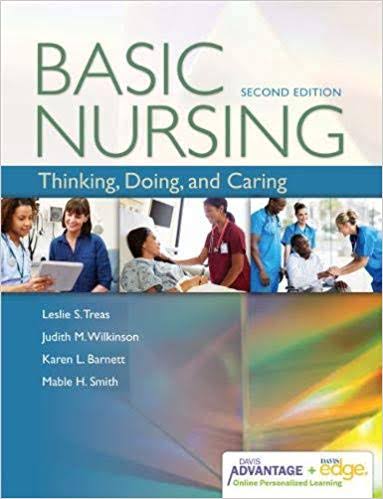
Basic Nursing Thinking Doing And Caring 2nd Edition By Treas - Test Bank

Basic Nursing Thinking Doing And Caring 2nd Edition By Treas - Test Bank   Instant Download - Complete Test Bank With Answers     Sample Questions Are Posted Below   Chapter 1. Nursing Past & Present   Multiple Choice   Identify the choice that best completes the statement or answers the question.   ____ 1. What is the most influential factor that has shaped the nursing profession?   1)   Physicians need for handmaidens   2)   Societal need for healthcare outside the home   3)   Military demand for nurses in the field   4)   Germ theory influence on sanitation   ANS: 3 …

$19.99

Basic Nursing Thinking Doing And Caring 2nd Edition By Treas – Test Bank


Instant Download – Complete Test Bank With Answers


Sample Questions Are Posted Below


Chapter 1. Nursing Past & Present


Multiple Choice


Identify the choice that best completes the statement or answers the question.


____ 1. What is the most influential factor that has shaped the nursing profession?


1)


Physicians need for handmaidens


2)


Societal need for healthcare outside the home


3)


Military demand for nurses in the field


4)


Germ theory influence on sanitation


ANS: 3


Throughout the centuries, stability of the government has been related to the success of


the military to protect or extend its domain. As the survival and well-being of soldiers is


critical, nurses provided healthcare to the sick and injured at the battle site. The


physicians handmaiden was/is a nursing stereotype rather than an influence on nursing.


Although there has been need for healthcare outside the home throughout history, this has


more influence on the development of hospitals than on nursing; this need provided one


more setting for nursing work. Germ theory and sanitation helped to improve healthcare


but did not shape nursing.


PTS: 1 DIF: Moderate REF: dm 910 KEY: Nursing process: N/A Client need: N/A |


____ 2. Which of the following is an example of an illness prevention activity? Select all


that apply.


1)


Encouraging the use of a food diary


2)


Joining a cancer support group


3)


Administering immunization for HPV


4)


Teaching a diabetic patient about his diet


ANS: 3


Administering immunization for HPV is an example of illness prevention. Although


cancer is a disease, it is assumed that a person joining a support group would already


have the disease; therefore, this is not disease prevention but treatment. Illness-prevention


activities focus on avoiding a specific disease. A food diary is a health-promotion


activity. Teaching a diabetic patient about diet is a treatment for diabetes; the patient


already has diabetes, so it cannot prevent diabetes.


PTS: 1 DIF: Moderate REF: p. 18; high-level question, not directly stated in text KEY:


Nursing process: N/A | Client need: HPM | Cognitive level: Application


____ 3. Which of the following contributions of Florence Nightingale had an immediate


impact on improving patients health?


1)


Providing a clean environment


2)


Improving nursing education


3)


Changing the delivery of care in hospitals


4)


Establishing nursing as a distinct profession


ANS: 1


Improved sanitation (a clean environment) greatly and immediately reduced the rate of


infection and mortality in hospitals. The other responses are all activities of Florence


Nightingale that improved healthcare or nursing, but the impact is long range, not


immediate.


PTS: 1 DIF: Easy REF: V1, p. 3; student must infer from content | V1, p. 10; student


must infer from content


KEY: Nursing process: N/A | Client need: SECE | Cognitive level: Application


____ 4. All of the following are aspects of the full-spectrum nursing role. Which one is


essential for the nurse to do in order to successfully carry out all the others?


1)


Thinking and reasoning about the clients care


2)


Providing hands-on client care


3)


Carrying out physician orders


4)


Delegating to assistive personnel


ANS: 1


A substantial portion of the nursing role involves using clinical judgment, critical


thinking, and problem solving, which directly affect the care the client will actually


receive. Providing hands-on care is important; however, clinical judgment, critical


thinking, and problem solving are essential to do it successfully. Carrying out physician


orders is a small part of a nurses role; it, too, requires nursing assessment, planning,


intervention, and evaluation. Many simple nursing tasks are being delegated to nursing


assistive personnel; delegation requires careful analysis of patient status and the


appropriateness of support personnel to deliver care. Another way to analyze this


question is that none of the options of providing hands-on care, carrying out physician


orders, and delegating to assistive personnel is required for the nurse to think and reason


about a clients care; so the answer must be 1.


PTS:1DIFifficultREF: p. 11


KEY: Nursing process: N/A | Client need: N/A | Cognitive level: Analysis


____ 5. Which statement pertaining to Benners practice model for clinical competence is


true?


1)


Progression through the stages is constant, with most nurses reaching the proficient stage.


2)


Progression through the stages involves continual development of thinking and technical


skills.


3)


The nurse must have experience in many areas before being considered an expert.


4)


The nurses progress through the stages is determined by years of experience and skills.


ANS: 2


Movement through the stages is not constant. Benners model is based on integration of


knowledge, technical skill, and intuition in the development of clinical wisdom. The


model does not mention experience in many areas. The model does not mention years of


experience.


PTS:1DIF:ModerateREF:p. 15


KEY: Nursing process: N/A | Client need: N/A | Cognitive level: Recall


____ 6. Which of the following best explains why it is difficult for the profession to


develop a definition of nursing?


1)


There are too many different and conflicting images of nurses.


2)


There are constant changes in healthcare and the activities of nurses.


3)


There is disagreement among the different nursing organizations.


4)


There are different education pathways and levels of practice.


ANS: 2


The conflicting images of nursing make it more important to develop a definition; they


may also make it more difficult, but not to the extent that constant change does.


Healthcare is constantly changing and with it come changes in where, how, and what


nursing care is delivered. Constant changes make it difficult to develop a definition.


Although different nursing organizations have different definitions, they are similar in


most ways. The different education pathways affect entry into practice, not the definition


of nursing.


PTS: 1 DIF: Moderate REF: p. 11; How Is Nursing Defined?


KEY: Nursing process: N/A | Client need: N/A | Cognitive level: Analysis


____ 7. Nurses have the potential to be very influential in shaping healthcare policy.


Which of the following factors contributes most to nurses influence?


1)


Nurses are the largest health professional group.


2)


Nurses have a long history of serving the public.


3)


Nurses have achieved some independence from physicians in recent years.


4)


Political involvement has helped refute negative images portrayed in the media.


ANS: 1


Nurses are trusted professionals and the largest health professional group. As such, they


have political power to effect changes. If nursing were a small group, there would be


little potential for power in shaping policies, even if all the other answers were true.


Serving the public, while positive, does not necessarily help nurses to be influential in


establishing health policy. Independence from physicians, although positive, does not


necessarily make nurses influential in establishing healthcare policy. Refuting negative


media, although positive, does not necessarily make nurses influential in establishing


healthcare policy.


PTS: 1 DIF: Moderate REF: p. 21


KEY: Nursing process: N/A | Client need: N/A | Cognitive level: Analysis


____ 8. Nursing was described as a distinct occupation in the sacred books of which


faith?


1)


Buddhism


2)


Christianity


3)


Hinduism


4)


Judaism


ANS: 3


The Vedas, the sacred books of the Hindu faith, described Indian healthcare practices and


were the earliest writings of a distinct nursing occupation.


PTS:1DIF:EasyREF:p. 7


KEY: Nursing process: N/A | Client need: N/A | Cognitive level: Recall


____ 9. The American Red Cross was established by


1)


Louisa May Alcott


2)


Clara Barton


3)


Dorothea Dix


4)


Harriet Tubman


ANS: 2


Clara Barton was an American teacher, nurse, and humanitarian who organized the


American Red Cross after the Civil War. Louisa May Alcott was an American novelist


who wrote Little Women in 1868. Dorothea Dix was an American activist who acted on


behalf of the indigent population with mental illness. She was credited for establishing


the first psychiatric institution. Harriet Tubman was an African American abolitionist and


Union spy during the Civil War. After escaping captivity, she set up a network of


antislavery activists, known as the Underground Railroad.


PTS:1DIF:EasyREF:p. 10


KEY: Nursing process: N/A | Client need: N/A | Cognitive level: Recall


____ 10. Which of the following is the most important reason to develop a definition of


nursing?


KEY: Nursing process: N/A | Client need: N/A | Cognitive level: Recall

1)


Recruit more informed people into the nursing profession


2)


Evaluate the degree of role satisfaction


3)


Dispel the stereotypical images of nurses and nursing


4)


Differentiate nursing activities from those of other health professionals


ANS: 4


Nursing organization leaders think it is important to develop a definition of nursing to


bring value and understanding to the profession, differentiate nursing activities from


those of other health professionals, and help student nurses understand what is expected


of them. A definition of nursing would not be likely to increase the number of informed


people recruited into nursing. A definition of nursing would do little to improve the


nurses role satisfaction. Although a definition of nursing might contribute to fighting


stereotypes of nursing, other, more powerful influences (e.g., media portrayals) exist to


counteract it.


PTS:1DIF:EasyREF:V1, dm 1113; students must infer from content


____ 11. Which of the following provides evidence-based support for the contribution


that advanced practice nurses (APNs) make within healthcare?


1)


Reduced usage of diagnostics using advanced technology


2)


Decreased number of unnecessary visits to the emergency department


3)


Improved patient compliance with prescribed treatments


4)


Increased usage of complementary alternative therapies


ANS: 3


Studies demonstrate that APNs have improved patient outcomes over those of physicians,


including increased patient understanding and cooperation with treatments and decreased


need for hospitalizations. No well-known, scientific studies support APNs effect on the


use of advanced technology. No well-known, scientific studies support APNs effect on


the frequency of emergency department visits. No well-known, scientific studies support


APNs effect on the use of alternative therapies.


PTS:1DIF:ModerateREF:p. 20


KEY: Nursing process: N/A | Client need: N/A | Cognitive level: Recall


____ 12. Which of the following is an example of what traditional medicine and


complementary and alternative medicine therapies have in common?


1)


Both can produce adverse effects in some patients.


2)


Both use prescription medications.


3)


Both are usually reimbursed by insurance programs.


4)


Both are regulated by the FDA.


ANS: 1


Both traditional and complementary therapies can produce adverse effects in some


patients. Many medications are derived from herbs, but the alternative treatments usually


use the herbs, not prescription medication. Insurance programs do not necessarily


reimburse alternative treatments, because many are not supported by sound scientific


research methodology. Alternative medications are not regulated by the FDA.


PTS:1DIF:ModerateREF:p. 20


KEY: Nursing process: N/A | Client need: N/A | Cognitive level: Recall


____ 13. Of the following, the biggest disadvantage of having nursing assistive personnel


(NAP) help nurses is that the nurse


1)


Must know what aspects of care can legally and safely be delegated to the NAP


2)


May rely too heavily on information gathered by the NAP when making patient care


decisions


3)


Is removed from many components of direct patient care that have been delegated to the


NAP


4)


Still maintains responsibility for the patient care given by the NAP


ANS: 2


All of the options may be disadvantages to using NAPs, but making decisions based on


anothers information is the greatest drawback because of the potential for negatively


affecting patient care. Treatment decisions based on incorrect information may cause


harm to the patient.


PTS:1DIFifficultREF:p. 2021; students must conclude from content


KEY: Nursing process: N/A | Client need: N/A | Cognitive level: Analysis


____ 14. An older adult has type 1 diabetes. He can perform self-care activities but needs


help with shopping and meal preparation as well as with blood glucose monitoring and


insulin administration. Which type of healthcare facility would be most appropriate for


him?


1)


Acute care facility


2)


Ambulatory care facility


3)


Extended care facility


4)


Assisted living facility


ANS: 4


Assisted living facilities are intended for those who are able to perform self-care


activities but who require assistance with meals, housekeeping, or medications. Acute


care facilities focus on preventing illnesses and treating acute problems. These facilities


include physicians offices, clinics, and diagnostic centers. Ambulatory care facilities


provide outpatient care. Clients live at home or in nonhospital settings and come to the


site for care. Ambulatory care facilities include private health and medical offices,


clinics, surgery centers, and outpatient therapy centers. Extended care facilities typically


provide long-term care, rehabilitation, wound care, and ongoing monitoring of patient


conditions.


PTS:1DIF:EasyREF:p. 18; ESG, Chapter 1, Healthcare Delivery SystemsExpanded


Discussion, Where is Healthcare Provided?


KEY: Nursing process: N/A | Client need: SECE | Cognitive level: Application


____ 15. The nurse in the intensive care unit is providing care for only one patient, who


was admitted in septic shock. Based on this information, which care delivery model can


you infer that this nurse is following?


1)


Functional


2)


Primary


3)


Case method


4)


Team


ANS: 3


The nurse is following the case method model of nursing care. In this model, one nurse


cares for one patient during a single shift. When the functional nursing model is


employed, care is compartmentalized, and each task is assigned to a staff member with


the appropriate knowledge and skills. In primary nursing, one nurse plans the care for a


group of patients round-the-clock. The primary nurse assesses the patient and develops


the plan of care. When he or she is working, he or she provides care for those patients


that he or she is responsible for. In his or her absence, the associate nurses deliver care.


Although the nurse in this case could possibly be a primary nurse, there are not enough


data to confidently infer that. If the team nursing approach is utilized, a licensed nurse


(RN or LVN) is paired with a nursing assistant. The pair is then assigned to a group of


patients.


PTS:1DIF:ModerateREF:ESG, Chapter 1, Healthcare Delivery SystemsExpanded


Discussion, What Models of Care Are Used to Provide Nursing Care?


KEY: Nursing process: Implementation | Client need: SECE | Cognitive level: Analysis


____ 16. Which healthcare worker should the nurse consult to counsel a patient about


financial and family stressors affecting healthcare?


1)


Social worker


2)


Occupational therapist


3)


Physicians assistant


4)


Technologist


ANS: 1


The social worker coordinates services and counsels patients about financial, housing,


marital, and family issues affecting healthcare. The occupational therapist helps patients


regain function and independence for activities of daily living. Physicians assistants work


under the physicians direction to diagnose certain diseases and injuries. Technologists


provide a variety of specific functions in hospitals, diagnostic centers, and emergency


care. For example, laboratory technologists aid in the diagnosis and treatment of patients


by examining blood, urine, tissue, and body fluids. Radiology technologists perform x-


rays and other diagnostic testing.


PTS:1DIF:ModerateREF:ESG, Chapter 1, Healthcare Delivery SystemsExpanded


Discussion, What Healthcare Providers Will You Work With?


KEY: Nursing process: Planning | Client need: SECE | Cognitive level: Comprehension


____ 17. Which type of managed care allows patients the greatest choice of providers,


medications, and medical devices?


1)


Health maintenance organization


2)


Integrated delivery network


3)


Preferred provider organization


4)


Employment-based private insurance


ANS: 3


Preferred provider organizations are a form of managed care that allows the patient a


greater choice of providers, medications, and medical devices within the designated list.


Health maintenance organizations allow the patient to choose a primary care provider


within the organization to coordinate his care. This type of program will only reimburse


medical care when the patient has first obtained a referral from the primary provider.


Integrated delivery networks combine providers, healthcare facilities, pharmaceuticals,


and services into one system, and the patient must remain within the system to receive


care. Employment-based private insurance is not a managed care organization.


PTS:1DIF:EasyREF:ESG, Chapter 1, Healthcare Delivery Systems, Expanded


Discussion, How Do Healthcare Policy and Reform Efforts Affect Care?


KEY: Nursing process: N/A | Client need: SECE | Cognitive level: Analysis


____ 18. A patient who underwent a total abdominal hysterectomy is assisted out of bed


as soon as her vital signs are stable. This intervention is most likely being directed by a


1)


Critical pathway


2)


Nursing care plan


3)


Case manager


4)


Traditional care model


ANS: 1


This patients care is most likely being directed by a critical pathway. A critical pathway


is a multidisciplinary approach to care that sequences interventions over a length of stay


for a given case type, such as total abdominal hysterectomy. Using this model, the patient


can be assisted out of bed as soon as her vital signs are stable. Using the traditional


model, the nurse would have to obtain a physicians order to assist the patient out of bed


after surgery. The nursing care plan guides nursing care but cannot specify when the


patient can get out of bed postoperatively without a physicians order. When case


management is used, care is coordinated by the case manager across the healthcare


setting, but the case manager does not direct each care intervention.


PTS:1DIF:ModerateREF:ESG, Chapter 1, Healthcare Delivery SystemsExpanded


Discussion, Issues Related to Healthcare Reform


KEY: Nursing process: Planning | Client need: SECE | Cognitive level: Application


____ 19. Which member of the healthcare team typically serves as the case manager?


1)


Occupational therapist


2)


Physician


3)


Physicians assistant


4)


Registered nurse


ANS: 4


Typically, registered nurses serve as case managers for patients with specific diagnoses.


Their role is coordinator of care across the healthcare system. The occupational therapist,


physician, and physicians assistant all serve on the healthcare team and take direction


from the case manager.


PTS: 1 DIF: Easy REF: ESG, Chapter 1, Healthcare Delivery SystemsExpanded


Discussion, What Healthcare Providers Will You Work With?


KEY: Nursing process: N/A | Client need: SECE | Cognitive level: Recall


____ 20. Which of the following is considered a primary care service?


1)


Providing wound care


2)


Administering childhood immunizations


3)


Providing drug rehabilitation


4)


Outpatient hernia repair


ANS: 2


Primary care services focus on health promotion and disease prevention; administering


childhood immunizations is one such service. Providing wound care and drug


rehabilitation are examples of tertiary care services. Outpatient hernia repair surgery is an


example of a secondary care service.


PTS:1DIF:ModerateREF:ESG, Chapter 1, Healthcare Delivery SystemsExpanded


Discussion, Categories of Healthcare?


KEY: Nursing process: N/A | Client need: SECE | Cognitive level: Application


____ 21. Which of the following nursing activities represent direct care? Choose all that


apply.


1)


Bathing a patient


2)


Administering a medication


3)


Documenting an assessment


4)


Making work assignments for the shift


ANS: 1


B


Direct care involves personal interaction between the nurse and clients (e.g., giving


medications, dressing a wound, or teaching a client about medicines or care). Nurses


deliver indirect care when they work on behalf of an individual, group, family, or


community to improve their health status (e.g., restocking the code blue cart [an


emergency cart], ordering unit supplies, or arranging unit staffing).


PTS:1DIF:EasyREF:p. 17


KEY: Nursing process: Implementation | Client need: SECE | Cognitive level:


Comprehension


____ 22. An 80-year-old patient fell and fractured her hip and is in the hospital. Before


the fall, she lived at home with her husband and managed their activities of daily living


very well. The goal is for the patient to recover from the injury and return to her home.


The hospital is ready to discharge her because she has exceeded the recommended length


of stay in a hospital. However, she cannot walk or care for herself yet, and she will


require lengthy physical therapy and further monitoring of her medications and her


physical and mental status. To which type of facility should she be transferred?


1)


Nursing home


2)


Rehabilitation center


3)


Outpatient therapy center


4)


None of these; she should receive home healthcare


ANS: 2


A skilled nursing facility primarily provides skilled nursing care for patients who can be


expected to improve with treatment. For example, a patient who no longer needs


hospitalization may transfer to a skilled nursing facility to get skilled care until she is able


to return home. A nursing home provides custodial care for people, like this patient, who


cannot live on their own but who are not sick enough to require hospitalization. It


provides a room, custodial care, and opportunity for recreation. This patient cannot


ambulate or perform activities of daily living, so outpatient therapy and home care would


not be appropriate.


PTS:1DIF:ModerateREF:p. 18


KEY: Nursing process: Implementation | Client need: SECE | Cognitive level:


Application


Multiple Response


Identify one or more choices that best complete the statement or answer the question.


____ 1. Which of the following are examples of a health-promotion activity? Select all


that apply.


1)


Helping a client develop a plan for a low-fat, low-cholesterol diet


2)


Disinfecting an abraded knee after a child falls off a bicycle


3)


Administering a tetanus vaccination after an injury from a car accident


4)


Distributing educational brochures about the benefits of exercise


ANS: 1, 4


Health promotion includes strategies that promote positive lifestyle changes. Disinfecting


an abraded knee is a treatment/intervention for an injury. Administering a vaccination is a


disease-prevention and treatment activity.


PTS: 1 DIF: Moderate REF: p. 18; high-level question, not directly stated in text


KEY: Nursing process: N/A | Client need: HPM | Cognitive level: Application


Matching


Match the nursing role listed on the left with the appropriate activity listed on the right.


Each activity has only one correct answer.


1)


Planning the units staffing schedule


2)


Participating on a committee to develop a program to teach schoolchildren proper


handwashing


3)


Teaching the client about a scheduled test


4)


Discussing new medication at a staff meeting


5)


Discussing with the physician the clients reasons for not wanting the recommended


surgery.


____ 1. Direct care provider


____ 2. Client advocate


____ 3. Manager


____ 4. Change agent


1.ANS:3PTS:1DIF:Moderate


REF:p. 13; must recognize examples not provided in content


KEY: Nursing process: N/A | Client need: N/A | Cognitive level: Application


2.ANS:5PTS:1DIF:Moderate


REF:p. 13; must recognize examples not provided in content


KEY: Nursing process: N/A | Client need: N/A | Cognitive level: Application


3.ANS:1PTS:1DIF:Moderate


REF:p. 13; must recognize examples not provided in content


KEY: Nursing process: N/A | Client need: N/A | Cognitive level: Application


4.ANS:2PTS:1DIF:Moderate


REF:p. 13; must recognize examples not provided in content


KEY: Nursing process: N/A | Client need: N/A | Cognitive level: Application


Match the event with the appropriate year. Each item has only one correct answer.


1)


Nursing programs become affiliated with religious groups


2)


Start of public health nursing with the founding of the Henry Street Settlement


3)


First formal nursing education in United States


4)


First hospital


5)


Establishment of the Army Nursing Service


6)


Disassociation of nursing from religious orders


7)


Florence Nightingale cared for the soldiers of the Crimean War


____ 5. 1st-century AD


____ 6. 15th to 19th century


____ 7. 1854


____ 8. 1861


____ 9. 1873


____ 10. 1893


ANS:4PTS:1DIFifficult


REF: dm 611; must recognize examples not provided in content


KEY: Nursing process: N/A | Client need: N/A | Cognitive level: Recall


ANS:6PTS:1DIFifficult


REF: dm 611; must recognize examples not provided in content


KEY: Nursing process: N/A | Client need: N/A | Cognitive level: Recall


ANS:7PTS:1DIFifficult


REF: dm 611; must recognize examples not provided in content


KEY: Nursing process: N/A | Client need: N/A | Cognitive level: Recall


ANS:5PTS:1DIFifficult


REF: dm 611; must recognize examples not provided in content


KEY: Nursing process: N/A | Client need: N/A | Cognitive level: Recall


ANS:3PTS:1DIFifficult


REF: dm 611; must recognize examples not provided in content


KEY: Nursing process: N/A | Client need: N/A | Cognitive level: Recall


  1. ANS:2PTS:1DIFifficult

REF: dm 611; must recognize examples not provided in content


KEY: Nursing process: N/A | Client need: N/A | Cognitive level: Recall


Match the nursing organization with its function in the nursing profession.


1)


Responsible for setting and maintaining nursing education standards


2)


Developed Code for Nurses and the Standards of Clinical Nursing Practice


3)


Responsible for publishing the journal, Image


4)


Honor society for nursing


5)


Represents nursing and promotes nursing leadership worldwide


____ 11. American Nurses Association (ANA)


____ 12. National Student Nurses Association (NSNA)


____ 13. National League for Nursing (NLN)


____ 14. International Council of Nursing (ICN)


____ 15. Sigma Theta Tau International (STTI)


  1. ANS: 2 PTS: 1 DIF: Moderate REF: p. 17


KEY: Nursing process: N/A | Client need: N/A | Cognitive level: Recall


  1. ANS: 3 PTS: 1 DIF: Moderate REF: p. 17


KEY: Nursing process: N/A | Client need: N/A | Cognitive level: Recall


  1. ANS: 1 PTS: 1 DIF: Moderate REF: p. 17


KEY: Nursing process: N/A | Client need: N/A | Cognitive level: Recall


  1. ANS: 5 PTS: 1 DIF: Moderate REF: p. 17


KEY: Nursing process: N/A | Client need: N/A | Cognitive level: Recall


  1. ANS: 4 PTS: 1 DIF: Moderate REF: p. 17


KEY: Nursing process: N/A | Client need: N/A | Cognitive level: Recall


True/False


Indicate whether the statement is true or false.


____ 1. The nurse caring for a patient undergoing minor surgery as an outpatient provides


the same type of care as for a hospitalized patient undergoing the same procedure.


ANS: T


The nurse caring for a patient receiving care after outpatient surgery provides the same


type of care as with the hospitalized patient. The only difference is that the outpatient


spends fewer than 24 hours in the facility.


PTS:1DIF:EasyREF:p. 18; students must draw conclusion from content


KEY: Nursing process: Implementation | Client need: SECE | Cognitive level: Recall


Completion


Complete each statement.


  1. ____________________ is a health program, administered by the state and funded by


federal and state governments to provide care for low-income people.


ANS:


Medicaid


Medicaid is a health program run by the state and funded by the federal and state


governments. It is intended to provide preventative and acute healthcare for individuals


without ability to pay for services, particularly pregnant women and children.


PTS:1DIF:ModerateREF:ESG, Chapter 1, Healthcare Delivery SystemsExpanded


Discussion, How Is Healthcare Financed?


KEY:Nursing process: N/A | Client need: SECE | Cognitive level: Recall


  1. ____________________ is a federal insurance-type program designed to fund


healthcare for people age 65 years and older, the disabled, and those with end-stage renal


disease from the high cost of healthcare.


PTS:1DIF:ModerateREF:dm 26

ANS: Medicare


Medicare is a federal insurance program created by Title XVIII of Social Security Act of


  1. This Act was designed to protect people age 65 years and older from the high cost


of healthcare. In 1972, the program was expanded to cover disabled workers as well as


people with end-stage renal disease.


Chapter 2. Critical Thinking and Nursing Process


___ 1. Which of the following characteristics do the various definitions of critical 


thinking have in common? Critical thinking


1)


Requires reasoned thought


2)


Asks the questions why? or how?


3)


Is a hierarchical process


4)


Demands specialized thinking skills


ANS: 1


The definitions listed in the text as well as definitions in Box 2-1 state that critical


thinking requires reasoning or reasoned thinking. Critical thinking is neither linear nor


hierarchical. That means that the steps involved in critical thinking are not necessarily


sequential, where mastery of one step is necessary to proceed to the next. Critical


thinking is a purposeful, dynamic, analytic process that contributes to reasoned decisions


and sound contextual judgments.


PTS:1DIF:ModerateREF: p. 25; high-level question, answer not stated verbatim


KEY: Nursing process: N/A | Client need: SECE | Cognitive level: Analysis


____ 2. A few nurses on a unit have proposed to the nurse manager that the process for


documenting care on the unit be changed. They have described a completely new system.


Why is it important for the nurse manager to have a critical attitude? It will help the


manager to


1)


Consider all the possible advantages and disadvantages


2)


Maintain an open mind about the proposed change


3)


Apply the nursing process to the situation


4)


Make a decision based on past experience with documentation


ANS: 2


A critical attitude enables the person to think fairly and keep an open mind.


KEY: Nursing process: N/A | Client need: SECE | Cognitive level: Comprehension


____ 3. The nurse has just been assigned to the clinical care of a newly admitted patient.


To know how to best care for the patient, the nurse uses the nursing process. Which step


would the nurse probably do first?


1)


Assessment


2)


Diagnosis


3)


Plan outcomes


4)


Plan interventions


ANS: 1


Assessment is the first step of the nursing process. The nursing diagnosis is derived from


the data gathered during assessment, outcomes from the diagnosis, and interventions


from the outcomes.


PTS:1DIF:EasyREF: p. 30-31


KEY: Nursing process: Assessment | Client need: SECE | Cognitive level: Application


____ 4. Which of the following is an example of theoretical knowledge?


1)


A nurse uses sterile technique to catheterize a patient.


2)


Room air has an oxygen concentration of 21%.


3)


Glucose monitoring machines should be calibrated daily.


4)


An irregular apical heart rate should be compared with the radial pulse.


ANS: 2


Theoretical knowledge consists of research findings, facts, principles, and theories. The


oxygen concentration of room air is a scientific fact. The others are examples of practical


knowledgewhat to do and how to do it.


PTS:1DIF:ModerateREF:p. 30; high-level question, answer not stated verbatim


KEY: Nursing process: N/A | Client need: SECE | Cognitive level: Application


____ 5. Which of the following is an example of practical knowledge? (Assume all are


true.)


1)


The tricuspid valve is between the right atrium and ventricle of the heart.


2)


The pancreas does not produce enough insulin in type 1 diabetes.


3)


When assessing the abdomen, you should auscultate before palpating.


4)


Research shows pain medication given intravenously acts faster than by other routes.


ANS: 3


Practical knowledge is knowing what to do and how to do it, such as how to do an


assessment. The others are examples of theoretical knowledge, anatomy (tricuspid valve),


fact (type 1 diabetes), and research (IV pain medication).


PTS:1DIF:ModerateREF:p. 30; high-level question, answer not stated verbatim


KEY: Nursing process: N/A | Client need: SECE | Cognitive level: Application


____ 6. Which of the following is an example of self-knowledge? The nurse thinks, I


know that I


1)


Should take the clients apical pulse for 1 minute before giving digoxin


2)


Should follow the clients wishes even though it is not what I would want


3)


Have religious beliefs that may make it difficult to take care of some clients


4)


Need to honor the clients request not to discuss his health concern with the family


ANS: 3


Self-knowledge is being aware of your religious and cultural beliefs and values. Taking


the pulse is an example of practical knowledge. Following client wishes and honoring


client requests are examples of ethical knowledge.


PTS:1DIFifficultREF: p. 30; high-level question, answer not stated verbatim | V1, p. 32;


high-level question, answer not stated verbatim


KEY: Nursing process: N/A | Client need: SECE | Cognitive level: Application


____ 7. Which of the following is the most important reason for nurses to be critical


thinkers?


1)


Nurses need to follow policies and procedures.


2)


Nurses work with other healthcare team members.


3)


Nurses care for clients who have multiple health problems.


4)


Nurses have to be flexible and work variable schedules.


ANS: 3


Critical thinking is essential for client care, particularly when the care is complex,


involving numerous health issues. Following policies and procedures does not necessarily


require critical thinking, and working with others or being flexible and working different


schedules do not necessarily require critical thinking.


PTS:1DIF:ModerateREF: p. 26-27; high-level question, answer not stated verbatim


KEY: Nursing process: N/A | Client need: SECE | Cognitive level: Application


____ 8. The nurse administering pain medication every 4 hours is an example of which


aspect of patient care?


1)


Assessment data


2)


Nursing diagnosis


3)


Patient outcome


4)


Nursing intervention


ANS: 4


Interventions are activities that will help the patient achieve a goal, such as administering


pain-relieving medication. An example of assessment data might be, Patient reports pain


is a 5 on a 1 to 10 scale. The nursing diagnosis would be Pain. The nurse might define the


patient outcome in this scenario as, The patient will state the level of pain is less than 4.


PTS:1DIF:ModerateREF:p. 31; high-level question, answer not stated verbatim


KEY: Nursing process: Interventions | Client need: SECE | Cognitive level: Application


____ 9. How does nursing diagnosis differ from a medical diagnosis? A nursing


diagnosis is


1)


Terminology for the clients disease or injury


2)


A part of the clients medical diagnosis


3)


The clients presenting signs and symptoms


4)


A clients response to a health problem


ANS: 4


A nursing diagnosis is the clients response to actual or potential health problems.


PTS:1DIF:ModerateREF: p. 31


KEY: Nursing process: Diagnosis | Client need: SECE | Cognitive level: Recall


____ 10. Which statement about the nursing process is correct?


1)


It was developed from the ANA Standards of Care.


2)


It is a problem-solving method to guide nursing activities.


3)


It is a linear process with separate, distinct steps.


4)


It involves care that only the nurse will give.


ANS: 2


The nursing process is a problem-solving process that guides nursing actions. The ANA


organizes its Standards of Care around the nursing process, but the process was not


developed from the standards. The nursing process is cyclical and involves care the


nurses give or delegate to other members of the healthcare team.


PTS:1DIF:EasyREF: p. 31


KEY:Nursing process: N/A | Client need: SECE | Cognitive level: Recall


____ 11. What do critical thinking and the nursing process have in common?


1)


They are both linear processes used to guide ones thinking.


2)


They are both thinking methods used to solve a problem.


3)


They both use specific steps to solve a problem.


4)


They both use similar steps to solve a problem.


ANS: 2


Critical thinking and the nursing process are ways of thinking that can be used in problem


solving (although critical thinking can be used beyond problem-solving applications).


Neither method of thinking is linear. The nursing process has specific steps; critical


thinking does not.


PTS:1DIFifficultREF: p. 31


KEY: Nursing process: N/A | Client need: SECE | Cognitive level: Analysis


____ 12. A nurse admits a patient to the unit after completing a comprehensive interview


and physical examination. To develop a nursing diagnosis, the nurse must now


1)


Analyze the assessment data


2)


Consult standards of care


3)


Decide which interventions are appropriate


4)


Ask the clients perceptions of her health problem


ANS: 1


The basis of the nursing diagnosis is the assessment data. Standards of care are referred to


when establishing nursing interventions. Customizing interventions personalizes nursing


care. Asking the patient about her perceptions is a method to validate whether the nurse


has chosen the correct nursing diagnosis and would probably have been done during the


comprehensive assessment.


PTS: 1 DIF: Moderate REF: p. 31


KEY: Nursing process: Diagnosis | Client need: SECE | Cognitive level: Application


____ 13. The nurse developed a care plan for a patient to help prevent Impaired Skin


Integrity. She has made sure that nursing assistive personnel change the patients position


every 2 hours. In the evaluation phase of the nursing process, which of the following


would the nurse do first?


1)


Determine whether she has gathered enough assessment data.


2)


Judge whether the interventions achieved the stated outcomes.


3)


Follow up to verify that care for the nursing diagnosis was given.


4)


Decide whether the nursing diagnosis was accurate for the patients condition.


ANS: 2


The evaluation phase judges whether the interventions were effective in achieving the


desired outcomes and helped to alleviate the nursing diagnosis. This must be done before


examining the nursing process steps and revising the care plan.


PTS:1DIF:ModerateREF: p. 31


KEY: Nursing process: Evaluation | Client need: SECE | Cognitive level: Analysis


____ 14. In caring for a patient with comorbidities, the nurse draws upon her knowledge


of diabetes and skin integrity. In a spirit of inquiry, she looks up the latest guidelines for


providing skin care and includes them in the plan of care. The nurse provides skin care


according to the procedural guidelines and begins regular monitoring to evaluate the


effectiveness of the interventions. These activities are best described as


1)


KEY: Nursing process: N/A | Client need: PHSI | Cognitive level: Analysis
KEY: Nursing process: N/A | Client need: PHSI | Cognitive level: Comprehension

Full-spectrum nursing


2)


Critical thinking


3)


Nursing process


4)


Nursing knowledge


ANS: 1


Full-spectrum nursing (1) involves the use of critical thinking, nursing knowledge,


nursing process, and patient situation. Although the other answers are important for


planning and delivering nursing care, they do not reflect all the nurse has demonstrated.


PTS:1DIFifficultREF:dm 32-33; high-level question, answer not stated verbatim


____ 15. The nurse is preparing to admit a patient from the emergency department. The


transferring nurse reports that the patient is obese. The nurse has been overweight at one


time and works very hard now to maintain a healthy weight. She immediately thinks, I


know I tend to feel negatively about obese people; I figure if I can stop eating, they


should be able to. I must remember how very difficult that is and be very careful not to be


judgmental of this patient. This best illustrates


1)


Theoretical knowledge


2)


Self-knowledge


3)


Using reliable resources


4)


Use of the nursing process


ANS: 2


Self-knowledge is self-understandingawareness of ones beliefs, values, biases, and so on.


That best describes the nurses awareness that her bias can affect her patient care.


Theoretical knowledge consists of information, facts, principles, and theories in nursing


and related disciplines; it consists of research findings and rationally constructed


explanations of phenomena. Using reliable resources is a critical thinking skill. The


nursing process is a problem-solving process consisting of the steps of assessing,


diagnosing, planning outcomes, planning interventions, implementing, and evaluating.


The nurse has not yet met this patient, so she could not have begun the nursing process.


PTS:1DIFifficultREF:dm 30; high-level question, answer not stated verbatim


Multiple Response


Identify one or more choices that best complete the statement or answer the question.


____ 1. Which aspects of healthcare are affected by a clients culture? Select all that


apply.


1)


How the clients views healthcare


2)


How the client views illness


3)


How the client will pay for healthcare services


4)

The types of treatme

Additional information

Add Review

Your email address will not be published. Required fields are marked *