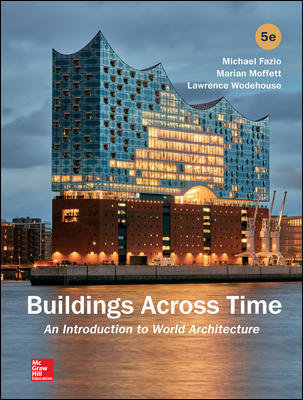
Buildings Across Time An Introduction to World Architecture 5Th Edition By Michael Fazio - Test Bank

Buildings Across Time An Introduction to World Architecture 5Th Edition By Michael Fazio - Test Bank   Instant Download - Complete Test Bank With Answers     Sample Questions Are Posted Below   Buildings Across Time: An Introduction to World Architecture, 5e (Fazio) Chapter 5   The Roman World   1) The main north-south and the …

$19.99

Buildings Across Time An Introduction to World Architecture 5Th Edition By Michael Fazio – Test Bank


Instant Download – Complete Test Bank With Answers


Sample Questions Are Posted Below


Buildings Across Time: An Introduction to World Architecture, 5e (Fazio)

Chapter 5   The Roman World


1) The main north-south and the east-west streets in a Roman castra are called the:

  1. A) cardo and the decumanus, respectively.
  2. B) foro and the saturnalia, respectively.
  3. C) etrusco and the romanus, respectively.
  4. D) caesaro and the imperius, respectively.
  5. E) None of the answers is correct.


Answer:  A

Accessibility:  Keyboard Navigation


2) An atrium is:

  1. A) an inner court.
  2. B) a type of mosaic floor.
  3. C) a dining room.
  4. D) the Roman equivalent of the Greek cella.
  5. E) None of the answers is correct.


Answer:  A

Accessibility:  Keyboard Navigation


3) Marcus Vitruvius Pollio, commonly known as Vitruvius, wrote:

  1. A) a biography of Julius Caesar.
  2. B) a history of ancient Rome.
  3. C) The Ten Books of Architecture.
  4. D) The Architecture of the Roman Republic.
  5. E) None of the answers is correct.


Answer:  C

Accessibility:  Keyboard Navigation


4) The upper portion of the Sanctuary of Fortuna at Palestrina was strongly influenced by:

  1. A) Roman Imperial work.
  2. B) Etruscan work.
  3. C) Egyptian work.
  4. D) Hellenistic Greek practices.
  5. E) All of the answers are correct.


Answer:  D

Accessibility:  Keyboard Navigation


5) All of the following are Roman masonry construction techniques EXCEPT:

  1. A) opus incertum.
  2. B) opus reticulatum.
  3. C) opus testaceum.
  4. D) opus quadratum.
  5. E) All of the answers are correct.


Answer:  E

Accessibility:  Keyboard Navigation


6) The Romans developed an expedient building method by using a new material, hydraulic cement, derived from volcanic deposits first discovered around Puteoli and named:

  1. A) portlana.
  2. B) pozzolana.
  3. C) cementia.
  4. D) vesuviana.
  5. E) None of the answers is correct.


Answer:  B

Accessibility:  Keyboard Navigation


7) The Temple of Diana in Nîmes is a fine example of:

  1. A) barrel-vaulted masonry construction.
  2. B) a groin-vaulted space with clerestory lighting and flying buttresses.
  3. C) the atrium-peristyle house that has been dated to the mid-second century BCE.
  4. D) the dome-on-drum design.
  5. E) None of the answers is correct.


Answer:  A

Accessibility:  Keyboard Navigation


8) The ________ in Pompeii where public assemblies for legal, commercial, and social purposes were held functioned much as did the stoa in the Athenian Agora.

  1. A) castra
  2. B) Pantheon
  3. C) Eumachia building
  4. D) basilica
  5. E) None of the answers is correct.


Answer:  D

Accessibility:  Keyboard Navigation


9) The city of Pompeii included:

  1. A) a forum.
  2. B) open-air theaters.
  3. C) an amphitheater.
  4. D) a palaestra.
  5. E) All of the answers are correct.


Answer:  E

Accessibility:  Keyboard Navigation


10) The plan of Timgad, Algeria, was originally:

  1. A) laid out by the Greeks.
  2. B) a gridded layout.
  3. C) a plan similar to that of Pompeii.
  4. D) a linear plan.
  5. E) None of the answers is correct.


Answer:  B

Accessibility:  Keyboard Navigation


11) An amphitheater is:

  1. A) a circular or oval theater.
  2. B) a semicircular, open-air theater.
  3. C) a large, square theater.
  4. D) a theater with good acoustic properties.
  5. E) a semicircular, enclosed theater.


Answer:  A

Accessibility:  Keyboard Navigation


12) The largest of the Roman fora was that of:

  1. A) Augustus.
  2. B) Nerva.
  3. C) Trajan.
  4. D) Nero.
  5. E) None of the answers is correct.


Answer:  C

Accessibility:  Keyboard Navigation


13) The Markets of Trajan were:

  1. A) carved out of the Quirinale hillside.
  2. B) surrounded by tiered buildings.
  3. C) organized around a semicircle.
  4. D) a series of shops.
  5. E) All of the answers are correct.


Answer:  E

Accessibility:  Keyboard Navigation


14) Trajan’s markets in ancient Rome:

  1. A) were set in a single-story circle.
  2. B) contained a groin-vaulted market hall.
  3. C) were built of marble and elaborate ornaments.
  4. D) contained a suite of official rooms with a grand audience hall.
  5. E) None of the answers is correct.


Answer:  B

Accessibility:  Keyboard Navigation


15) The Pantheon in ancient Rome is covered by a:

  1. A) coffered dome.
  2. B) coffered groin vault.
  3. C) wood truss with false coffering.
  4. D) series of coffered barrel vaults.
  5. E) None of the answers is correct.


Answer:  A

Accessibility:  Keyboard Navigation


16) The Pantheon in ancient Rome was constructed during the reign of the emperor:

  1. A) Nero.
  2. B) Hadrian.
  3. C) Augustus.
  4. D) Caracalla.
  5. E) None of the answers is correct.


Answer:  B

Accessibility:  Keyboard Navigation


17) In the context of the Roman architecture, an oculus is:

  1. A) an eye-shaped window.
  2. B) an opening atop a dome.
  3. C) a type of masonry vault.
  4. D) a space beneath a dome.
  5. E) None of the answers is correct.


Answer:  B

Accessibility:  Keyboard Navigation


18) Roman baths in ancient Rome included a:

  1. A) frigidarium.
  2. B) natatio.
  3. C) caldarium.
  4. D) tepidarium.
  5. E) All of the answers are correct.


Answer:  E

Accessibility:  Keyboard Navigation


19) The Colosseum in ancient Rome had:

  1. A) stacked half-columns in the Roman Doric, Ionic, and Corinthian orders.
  2. B) a structure similar to that of the great Forum of Trajan.
  3. C) exterior walls covered with red bricks.
  4. D) a circular structure surrounded by rising ground that was used for seating.
  5. E) None of the answers is correct.


Answer:  A

Accessibility:  Keyboard Navigation


20) The oldest known Roman basilica in Pompeii was used:

  1. A) for meetings of the Senate.
  2. B) for displaying statues of gods.
  3. C) as Imperial banqueting halls.
  4. D) for commercial activity.
  5. E) as a gathering place for social and commercial functions.


Answer:  E

Accessibility:  Keyboard Navigation


21) The House of the Surgeon, the most ancient dwelling found in Pompeii, had:

  1. A) an atrium.
  2. B) frontage shops.
  3. C) a triclinium.
  4. D) a tablinum.
  5. E) All of the answers are correct.


Answer:  E

Accessibility:  Keyboard Navigation


22) Wall paintings in a room in the Villa of the Mysteries at Pompeii relate to the:

  1. A) history of Rome.
  2. B) eruption of Mount Vesuvius.
  3. C) mystery cult of Bacchus.
  4. D) practice of Early Christianity.
  5. E) None of the answers is correct.


Answer:  C

Accessibility:  Keyboard Navigation


23) The Palace of Domitian in Rome is located on the:

  1. A) Esquiline Hill.
  2. B) Palatine Hill.
  3. C) Quirinale Hill.
  4. D) Domitine Hill.
  5. E) None of the answers is correct.


Answer:  B

Accessibility:  Keyboard Navigation


24) The plan of Hadrian’s Villa outside Tivoli had:

  1. A) a central open space or atrium that admitted fresh air and light.
  2. B) small rooms around the atrium.
  3. C) a suite of official rooms arranged along cross-axes.
  4. D) horizontal passageways, ramps, and stairs.
  5. E) unprecedented forms and compositions around water features.


Answer:  E

Accessibility:  Keyboard Navigation


25) An insula refers to an ancient Roman:

  1. A) island palace.
  2. B) reception room.
  3. C) swimming pool.
  4. D) apartment block.
  5. E) None of the answers is correct.


Answer:  D

Accessibility:  Keyboard Navigation


26) Discuss Etruscan contributions to Roman architecture.


Answer:  Answer may vary.

Accessibility:  Keyboard Navigation


27) Discuss city planning practices in ancient Rome.


Answer:  Answer may vary.

Accessibility:  Keyboard Navigation


28) Citing specific examples, discuss the Roman use of brick and concrete in building arches, vaults, and domes.


Answer:  Answer may vary.

Accessibility:  Keyboard Navigation


29) Discuss the features of Roman housing in Pompeii.


Answer:  Answer may vary.

Accessibility:  Keyboard Navigation

Additional information

Add Review

Your email address will not be published. Required fields are marked *