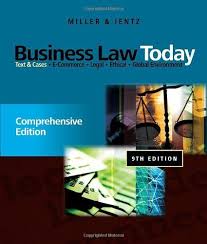
Business Law Today Comprehensive Text and Cases 9th Edition by Roger LeRoy Miller - Test Bank

Business Law Today Comprehensive Text and Cases 9th Edition by Roger LeRoy Miller - Test Bank   Instant Download - Complete Test Bank With Answers     Sample Questions Are Posted Below   Chapter 5     Intellectual Property and Internet Law           N.B.:  TYPE indicates that a question is new, …

$19.99

Business Law Today Comprehensive Text and Cases 9th Edition by Roger LeRoy Miller – Test Bank


Instant Download – Complete Test Bank With Answers


Sample Questions Are Posted Below


Chapter 5


Intellectual Property

and Internet Law


N.B.:  TYPE indicates that a question is new, modified, or unchanged, as follows.


N      A question new to this edition of the Test Bank.

=       A question modified from the previous edition of the Test Bank,

=       A question included in the previous edition of the Test Bank.


true/false questions


  1. In Case 5.1, The Coca-Cola Co. v. The Koke Co. of America, the United States Supreme Court upheld an injunction prohibiting competing beverage companies from calling their products “Koke.”


ANSWER:         T                               PAGE:        115                           TYPE:         =

                  NAT: AACSB Communication     AICPA Legal


  1. A famous trademark may be diluted only by the unauthorized use of an identical mark.


answer:         f                               PAGE:        116                           TYPE:         N

NAT: AACSB Reflective                                AICPA Legal


  1. Trademark dilution requires proof that consumers are likely to be confused by the unauthorized use of the mark.


ANSWER:         F                               PAGE:        116                           TYPE:         N

NAT: AACSB Analytic                                    AICPA Legal


  1. A trademark must be registered to support a trademark infringement action.


ANSWER:         F                               PAGE:        117                           TYPE:         N

NAT: AACSB Analytic                                    AICPA Legal


  1. A party who unintentionally uses the trademark of another is not li­able for trademark infringement.


ANSWER:         F                               PAGE:        117                           TYPE:         N

NAT: AACSB Reflective                                AICPA Legal


  1. A fanciful use of ordinary words may be trademarked.


ANSWER:         T                               PAGE:        117                           TYPE:         =

NAT: AACSB Reflective                                AICPA Legal


  1. An arbitrary use of ordinary words may not be trademarked.


ANSWER:         F                               PAGE:        117                           TYPE:         =

NAT: AACSB Reflective                                AICPA Legal


  1. A suggestive use of ordinary words may not be trademarked.


            ANSWER:         F                               PAGE:        117                           TYPE:         =

NAT: AACSB Reflective                                AICPA Legal


  1. A personal name is not protected under trademark law unless it acquires a secondary meaning.


ANSWER:         T                               PAGE:        118                           TYPE:         +

NAT: AACSB Reflective                                AICPA Legal


  1. A generic term is not protected under trademark law unless it acquires a secondary meaning.


ANSWER:         F                               PAGE:        118                           TYPE:         =

NAT: AACSB Reflective                                AICPA Legal


  1. A service mark distinguishes products used, or “put into service,” by the government.


            ANSWER:         F                               PAGE:        118                           TYPE:         N

NAT: AACSB Reflective                                AICPA Legal


  1. A certification mark distinguishes products approved, or “certified,” by the government.


ANSWER:         F                               PAGE:        118                           TYPE:         +

NAT: AACSB Reflective                                AICPA Legal


  1. A collective mark distinguishes products that are likely to be of interest to collectors.


ANSWER:         F                               PAGE:        118                           TYPE:         N

NAT: AACSB Reflective                                AICPA Legal


  1. Trade dress has the same legal protection as trademarks.


answer:         t                               PAGE:        119                           TYPE:         =

NAT: AACSB Reflective                                AICPA Legal


  1. A trade name cannot be registered with the federal government if it is also a trademark.


ANSWER:         F                               PAGE:        120                           TYPE:         =

NAT: AACSB Reflective                                AICPA Legal


  1. Because the Internet is vast, the unauthorized use of another’s mark in a domain name is generally permissible.


ANSWER:         F                               PAGE:        120                           TYPE:         =

NAT: AACSB Reflective                                AICPA Legal


  1. A license permits the use of intellectual property for certain limited purposes.


ANSWER:         T                               PAGE:        122                           TYPE:         N

NAT: AACSB Analytic                                    AICPA Legal


  1. In the United States, a patent is given to the first person to file for it.


ANSWER:         F                               PAGE:        123                           TYPE:         =

NAT: AACSB Analytic                                    AICPA Legal


  1. Patent protection begins on the date that a patent is issued.


ANSWER:         F                               PAGE:        123                           TYPE:         N

NAT: AACSB Reflective                                AICPA Legal


  1. In the United States, a patent is given to the first person to invent a product or process.


ANSWER:         T                               PAGE:        123                           TYPE:         =

NAT: AACSB Analytic                                    AICPA Legal


  1. A patent applicant must demonstrate that the invention, discovery, or design is commercially practicable to receive a patent.


ANSWER:         F                               PAGE:        124                           TYPE:         =

NAT: AACSB Analytic                                    AICPA Legal


  1. Patent infringement occurs only if an invention is copied in its entirety.


ANSWER:         F                               PAGE:        124                           TYPE:         =

NAT: AACSB Reflective                                AICPA Legal


  1. It is possible to copyright an idea.


ANSWER:         F                               PAGE:        126                           TYPE:         =

NAT: AACSB Reflective                                AICPA Critical Thinking


  1. Copyright protection is automatic—registration is not required.


answer:         T                               PAGE:        126                           TYPE:         N

NAT: AACSB Analytic                                    AICPA Critical Thinking


  1. A person can reproduce copyrighted material for purposes such as teaching, including multiple copies for classroom use, without paying royalties.


ANSWER:         T                               PAGE:        127                           TYPE:         =

NAT: AACSB Reflective                                AICPA Legal


  1. A copy must be exactly the same as the original to infringe a copyright.


ANSWER:         F                               PAGE:        127                           TYPE:         N

NAT: AACSB Analytic                                    AICPA Critical Thinking


  1. Exchanging pirated, copyrighted works with oth­ers is a not crime unless money is involved.


answer:         F                               PAGE:        127                           TYPE:         N

NAT: AACSB Analytic                                    AICPA Legal


  1. Downloading software or music into a computer’s random access memory without authorization is copyright infringement.


ANSWER:         T                               PAGE:        128                           TYPE:         N

NAT: AACSB Reflective                                AICPA Legal


  1. A marketing technique can be a trade secret.


ANSWER:         T                               PAGE:        130                           TYPE:         N

NAT: AACSB Reflective                                AICPA Legal


  1. A list of customers cannot be a trade secret.


ANSWER:         F                               PAGE:        130                           TYPE:         =

NAT: AACSB Reflective                                AICPA Legal


  1. Pricing information cannot be a trade secret.


ANSWER:         F                               PAGE:        130                           TYPE:         =

NAT: AACSB Reflective                                AICPA Legal


  1. There are no registration requirements for trade secrets.


ANSWER:         T                               PAGE:        130                           TYPE:         N

NAT: AACSB Analytic                                    AICPA Critical Thinking


  1. Anyone who writes a book has automatic copyright protection in every country in the world.


ANSWER:         F                               PAGE:        131                           TYPE:         +

NAT: AACSB Analytic                                    AICPA Legal


  1. Each member country of the TRIPS agreement must include in its domestic laws broad intellectual property rights.


ANSWER:         T                               PAGE:        131                           TYPE:         =

NAT: AACSB Analytic                                    AICPA Legal


  1. The Madrid Protocol concerns trademarks.


ANSWER:         T                               PAGE:        133                           TYPE:         N

NAT: AACSB Reflective                                AICPA Legal


MULTIPLE-CHOICE questions


  1. Paula develops a new espresso machine, which she names “Quik Shot.” She also writes the operating manual. Paula can obtain trademark protection for


  1. the espresso machine.
  2. the “newness” of the espresso machine.
  3. the name.
  4. the operating manual.


ANSWER:         C                               PAGE:        115                           TYPE:         +

                  NAT: AACSB Reflective                                AICPA Legal


  1. Beans Coffee & Cocoa Company makes and sells a chocolate-flavored coffee drink under the name “CoCoCafe.” Darkroast Java, Inc., later markets a similar tasting drink under the name “KoKoKafe.” This is most likely


  1. copyright infringement.
  2. patent infringement.
  3. trademark infringement.
  4. a theft of trade secrets.


answer:         C                               PAGE:        115                           TYPE:         N

                  NAT: AACSB Reflective                                AICPA Legal


  1. Copy Products, Inc., uses, in its ads, a trademark that is similar, but not identical, to the famous, registered mark of Imitated Goods, Inc. Copy’s unauthorized use of the mark constitutes trademark dilution provided


  1. consumers are confused.
  2. Copy and Imitated are competitors.
  3. Copy’s use is intentional.
  4. Copy’s use reduces the value of Imitated’s mark.


ANSWER:         D                               PAGE:        116                           TYPE:         +

                  NAT: AACSB Reflective                                AICPA Legal


  1. Li’l Canine Company (LCC) uses a trademark that neither LCC nor anyone else has registered with the government. Under federal trademark law, LCC


  1. can register the mark for protection.
  2. cannot register a mark that has been used in commerce.
  3. has committed trademark infringement.
  4. must put off registration until the mark is out of use for six months.


answer:         A                               PAGE:        117                           TYPE:         N

                  NAT: AACSB Reflective                                AICPA Legal


  1. In 2010, Online Marketing Corporation registers its trademark as provided by federal law. After the first renewal, this registration


  1. is renewable every ten years.
  2. is renewable every twenty years.
  3. runs for the life of the corporation plus seventy years.
  4. runs forever.


ANSWER:         A                               PAGE:        117                           TYPE:         +

                  NAT: AACSB Reflective                                AICPA Legal


  1. Bubbly Cola features Sparkly Cola’s trademark without its owner’s permission. Bubbly’s use of the mark is actionable provided


  1. consumers are confused.
  2. Bubbly’s use is intentional.
  3. Bubbly’s use reduces the value of Sparkly’s mark.
  4. Sparkly’s mark is registered.


ANSWER:         A                               PAGE:        117                           TYPE:         N

                  NAT: AACSB Reflective                                AICPA Legal


  1. Modern Clothing, Inc., and National Denim Corporation use the mark “Made by Members of the U.S. Textile Workers Union” on the tags of their products to indicate the participation of the union in the manufacture. Modern and National are not in business together and do not own this mark. This mark is


  1. a certification mark.
  2. a collective mark.
  3. a service mark.
  4. trade dress.


ANSWER:         B                               PAGE:        118                           TYPE:         =

                  NAT: AACSB Reflective                                AICPA Legal


  1. Home Products Company and House & Yard, Inc., use the mark “Good Housekeeping Seal of Approval” to certify the quality of their products. Home Products and House & Yard are not in business together and do not own this mark. This mark is


  1. a certification mark.
  2. a collective mark.
  3. a service mark.
  4. trade dress.


ANSWER:         A                               PAGE:        118                           TYPE:         =

                  NAT: AACSB Reflective                                AICPA Legal


  1. Standard Corporation can not claim a trademark in the phrase “Quality Is Standard” if the phrase


  1. has a secondary meaning.
  2. is descriptive.
  3. is generic.
  4. means nothing.


ANSWER:         C                               PAGE:        118                           TYPE:         =

                  NAT: AACSB Reflective                                AICPA Legal


  1. Trek Transport Company uses a mark associated with its name to distinguish its services from those of other trucking firms. This mark is


  1. a certification mark.
  2. a collective mark.
  3. a service mark.
  4. trade dress.


ANSWER:         C                               PAGE:        118                           TYPE:         =

                  NAT: AACSB Reflective                                AICPA Legal


  1. Ernie’s Good Eatin’ Cafe uses a distinctive decor, layout, menu, and style of service. This restaurant’s image and overall appearance is


  1. a certification mark.
  2. a collective mark.
  3. a service mark.
  4. trade dress.


ANSWER:         D                               PAGE:        119                           TYPE:         =

                  NAT: AACSB Reflective                                AICPA Legal


  1. E-Shopping Corporation inserts Fiesta Mall, Inc.’s trademark as a meta tag in E-Shopping’s Web site’s key-words field without Fiesta’s permission in a manner that suggests Fiesta authorized the use. This is


  1. copyright infringement.
  2. patent infringement.
  3. trademark infringement.
  4. no infringement.


answer:         C                               PAGE:        121                           TYPE:         N

                  NAT: AACSB Reflective                                AICPA Legal


  1. Delite Toys, Inc., makes EZ Goo, a famous children’s toy. Without Delite’s consent, Fast Adhesives Company begins to use “ezgoo” as part of the URL for Fast’s Web site. Fast claims that no consumer would confuse the Web site with the toy. Fast has committed


  1. copyright infringement.
  2. patent infringement.
  3. trademark infringement.
  4. no actionable violation.


ANSWER:         C                               PAGE:        121                           TYPE:         =

                  NAT: AACSB Reflective                                AICPA Legal


  1. Mary Kate Corporation allows Ashley Company to use Mary Kate’s trademark as part of Ashley’s domain name. This is


  1. a license.
  2. a likelihood of consumer confusion.
  3. cybersquatting.
  4. trademark dilution.


ANSWER:         A                               PAGE:        122                           TYPE:         +

                  NAT: AACSB Reflective                                AICPA Legal


  1. Ric designs a new computer hard drive, which he names “Sci Phi.” He also writes the operating manual to be included with each final product. Ric could obtain patent protection for


  1. the hard drive.
  2. the “newness” of the hard drive.
  3. the name.
  4. the operating manual.


answer:         A                               PAGE:        123                           TYPE:         +

                  NAT: AACSB Reflective                                AICPA Legal


  1. Phil invents “PhutureNow,” new Web site design software, and applies for a patent. If Phil is granted a patent, his invention will be protected


  1. for ten years.
  2. for twenty years.
  3. for the life of the inventor plus seventy years.
  4. forever.


ANSWER:         B                               PAGE:        123                           TYPE:         =

                  NAT: AACSB Reflective                                AICPA Legal


  1. Sights Unseen, Inc., (SUI) sells scopes with distinctively designed and made lenses and mirrors to scientists. Telescopes, Etc. Corporation later begins to sell scopes with identical set-ups of lenses and mirrors, without SUI’s permission, to consumers. This is most likely


  1. copyright infringement.
  2. patent infringement.
  3. trademark infringement.
  4. not infringement.


ANSWER:         B                               PAGE:        124                           TYPE:         N

                  NAT: AACSB Reflective                                AICPA Legal


  1. Gas Up, Inc., designs, makes, and sells a fuel injection system that copies Hybrid Corporation’s design without Hybrid’s permis­sion. This is most likely


  1. copyright infringement.
  2. patent infringement.
  3. trademark infringement.
  4. a theft of trade secrets.


answer:         B                               PAGE:        124                           TYPE:         +

                  NAT: AACSB Reflective                                AICPA Legal


  1. RiteMade Machinery, Inc., designs, makes, and sells a drill press. Steel Equipment Company copies the design without RiteMade’s permission. Steel’s conduct is actionable provided


  1. consumers are confused.
  2. Steel’s conduct is intentional.
  3. Steel’s conduct reduces the value of RiteMade’s design.
  4. RiteMade’s design is patented.


answer:         D                               PAGE:        124                           TYPE:         N

                  NAT: AACSB Reflective                                AICPA Legal


  1. In 2010, Sara writes Terror at the Track, a novel about racecar driving. Sara does not register the work with the appropriate government office. Under federal copyright law, Sara’s work is protected


  1. for ten years.
  2. for twenty years.
  3. for the life of the author plus seventy years.
  4. forever.


ANSWER:         C                               PAGE:        125                           TYPE:         =

                  NAT: AACSB Reflective                                AICPA Legal


  1. Fiona invents a new deep-sea fishing net, which she names “Great Catch.” She also writes the operating manual to be included with each net. Fiona could obtain copyright protection for


  1. the net.
  2. the “newness” of the net.
  3. the name.
  4. the operating manual.


ANSWER:         D                               PAGE:        126                           TYPE:         +

                  NAT: AACSB Reflective                                AICPA Legal


  1. The graphics used in “Go!,” a handheld video game featuring racecars, are protected by


  1. copyright law.
  2. patent law.
  3. trademark law.
  4. trade secrets law.


ANSWER:         A                               PAGE:        126                           TYPE:         =

                  NAT: AACSB Reflective                                AICPA Legal


  1. Ellen publishes a book titled First Place, which includes a chapter from Frank’s copyrighted book Great Racecar Drivers. Ellen’s use of the chapter is actionable provided


  1. consumers are confused.
  2. Ellen’s use is intentional.
  3. Ellen’s use reproduces Frank’s chapter exactly.
  4. Ellen does not have Frank’s permission.


ANSWER:         D                               PAGE:        127                           TYPE:         +

                  NAT: AACSB Reflective                                AICPA Legal


  1. Mace copies Nick’s book, Off the Beaten Path, in its entirety and sells it to Parkland Books, Inc., without Nick’s permission. Parkland publishes it under Mace’s name. This is


  1. copyright infringement.
  2. fair use.
  3. licensing.
  4. protected expression.


ANSWER:         A                               PAGE:        127                           TYPE:         +

                  NAT: AACSB Reflective                                AICPA Legal


  1. Cathy uses, on her new recording Drive By, the exact note-for-note melody of a song written by Earl without his permission. This is


  1. copyright infringement.
  2. patent infringement.
  3. trademark infringement.
  4. a theft of trade secrets.


ANSWER:         A                               PAGE:        127                           TYPE:         =

                  NAT: AACSB Reflective                                AICPA Legal


  1. Joey reproduces Mina’s copyrighted work without paying royalties. Joey is most likely excepted from liability for copyright infringement under the “fair use” doctrine if


  1. Joey copies the entire work.
  2. Joey distributes the copies freely to the public.
  3. Joey’s use has no effect on the market for Mina’s work.
  4. Joey’s use is for a commercial purpose.


ANSWER:         C                               PAGE:        127                           TYPE:         =

                  NAT: AACSB Reflective                                AICPA Legal


  1. Kay and Leo copy and exchange MP3 music files over the Internet with­out anyone’s permission. With respect to songs owned by Natural Recording Company, this is


  1. copyright infringement.
  2. fair use.
  3. licensing.
  4. protected expression.


ANSWER:         A                               PAGE:        128                           TYPE:         =

                  NAT: AACSB Reflective                                AICPA Legal


  1. The process behind the production of “Fast Pace,” a racecar video game, is protected by


  1. copyright law.
  2. patent law.
  3. trademark law.
  4. trade secrets law.


ANSWER:         D                               PAGE:        130                           TYPE:         =

                  NAT: AACSB Reflective                                AICPA Legal


  1. The idea for “On Your Mark,” a computer game featuring racing cars, is protected by


  1. copyright law.
  2. patent law.
  3. trademark law.
  4. trade secrets law.


ANSWER:         D                               PAGE:        130                           TYPE:         =

                  NAT: AACSB Reflective                                AICPA Legal


  1. Diamond Financial Planners employs Ella, who is the firm’s most productive performer. Ella, dissatisfied with the commission structure, quits to work for Feldstar Investments, Inc. She takes her list of Diamond clients to induce them to switch to Feldstar. Trade secrets law covers


  1. Diamond’s list of clients.
  2. Ella’s performance.
  3. Feldstar’s commission structure.
  4. none of the choices.


answer:         A                               PAGE:        130                           TYPE:         N

                  NAT: AACSB Reflective                                AICPA Legal


  1. RockStar Software, Inc., develops a new series of performance-related video games. This software is most likely pro­tected by


  1. copyright law.
  2. patent law.
  3. trademark law.
  4. trade secrets law.


answer:         D                               PAGE:        130                           TYPE:         N

                  NAT: AACSB Reflective                                AICPA Legal


  1. Ross e-mails Super Snowboard Company’s marketing campaign to Winter Sports Corporation, Super’s competitor, without its permission. This is


  1. copyright infringement.
  2. patent infringement.
  3. trademark infringement.
  4. a theft of trade secrets.


ANSWER:         D                               PAGE:        131                           TYPE:         N

                  NAT: AACSB Reflective                                AICPA Legal


  1. Chocolate Chip Cookie Corporation (4C) obtains, and gives its employees, a list of the customers of Sugar & Spice Sales, Inc. (3S). Under the law that applies to trade secrets, 4C’s conduct is actionable provided


  1. consumers are confused.
  2. 4C’s conduct is intentional.
  3. 4C uses the list.
  4. 4C does not have 3S’s permission to use the list.


ANSWER:         D                               PAGE:        131                           TYPE:         N

                  NAT: AACSB Reflective                                AICPA Legal


  1. Canada and the United States are signatories of the Berne Convention. Doug, a citizen of Canada, publishes a book first in Canada and then in the United States. Doug’s copyright must be recognized by


  1. all of the signatories of the Berne Convention.
  2. Canada and the United States only.
  3. Canada only.
  4. none of the signatories of the Berne Convention.


answer:         A                               PAGE:        131                           TYPE:         =

                  NAT: AACSB Reflective                                AICPA Legal


  1. New Apps Company develops “Browser Lite,” software to speed the display of graphics on Web sites. Browser Lite has the most copyright protection under


  1. the Berne Convention.
  2. the Paris Convention
  3. the TRIPS Agreement.
  4. the Madrid Protocol.


ANSWER:         C                               PAGE:        131                           TYPE:         N

                  NAT: AACSB Reflective                                AICPA Legal


ESSAY questions


  1. Hawk Corporation begins making and selling motorcycles in 2000 under the mark “Hawk.” Ten years later, Hawk.com, Inc., a differ­ent company selling medical equipment and supplies, begins to use “hawk” as part of its URL and registers it as a domain name. Can Hawk Corporation stop Hawk.com’s use of “hawk”? If so, what must the motorcycle-maker show?


ANSWER:         Hawk may be successful in obtaining an order to stop the use of its name as part of another company’s URL and registered domain name. This use may constitute trademark dilution. Dilution occurs when a trade­mark is used, without permission, in a way that diminishes the distinctive quality of the mark. This cause of action does not require proof that con­sumers are likely to be confused by a connection between the un­authorized use and the mark. As in this problem, the products in­volved do not have to be similar. To succeed on a charge of dilution, how­ever, a mark must be shown to have been famous when the dilution took place.


PAGES: 121–122                                                                                  type:         =

                  NAT: AACSB Reflective                                AICPA Decision Modeling


  1. College Copy Shop (CCS) compiles, copies, and sells reading materials to students on the instructions of their professors, who indicate which parts of which publications should be included. These include texts published by Deep Topics, Inc. CCS does not obtain the permission of Deep Topics, or any of the other original publishers of the copied materials, and does not pay royalties on the sales of the compilations. Deep Topics and others file a suit against CCS, alleging infringement of the plaintiffs’ intellectual property rights. Which type of intellectual property is involved in this situation? What is CCS’s likely defense? How is a court most likely to rule? Explain.


ANSWER:         The intellectual property at issue in this situation is copyright—specifically, of course, the copyrights of the publishers of the materials that CCS copies and sells without permission. CCS is likely to assert the “fair use” doctrine in its defense. This doctrine includes exceptions to the general requirement that an owner’s permission be obtained before copyrighted material can be copied. CCS is probably likely to argue that its compilations are excepted because they are dedicated to “educational” uses. A court is most likely to conclude, however, that the copying and selling of the materials is not a fair use, because CCS profits from their sale, which undercuts the potential market for the copyrighted publications from which the copies are made. In determining fair use, a court considers four factors: the purpose and character of the use, the nature of the copyrighted work, the amount and substantiality of the portion used in relation to the copyrighted work as a whole, and the effect of the use on the potential market for or value of the copyrighted work. In this situation, the fourth factor is most significant and supports the conclusion that CCS’s use of the materials is not a fair use.


PAGE:  127                                                                  type:               N

                  NAT: AACSB Reflective                                AICPA Decision Modeling


Additional information

Add Review

Your email address will not be published. Required fields are marked *