Subtotal: $434.87

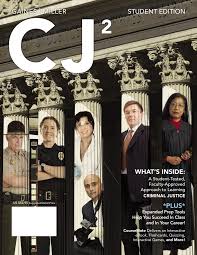
CJ2 2nd Edition Larry K. Gaines - Test Bank

CJ2 2nd Edition Larry K. Gaines - Test Bank   Instant Download - Complete Test Bank With Answers     Sample Questions Are Posted Below   Chapter 5 – Law Enforcement Today   MULTIPLE CHOICE   Which of the following is NOT one of the areas the FBI has jurisdiction over? white collar crimes civil …

$19.99

CJ2 2nd Edition Larry K. Gaines – Test Bank


Instant Download – Complete Test Bank With Answers


Sample Questions Are Posted Below


Chapter 5 – Law Enforcement Today


MULTIPLE CHOICE


  1. Which of the following is NOT one of the areas the FBI has jurisdiction over?
  2. white collar crimes
  3. civil rights violations
  4. espionage
  5. transportation of federal prisoners

ANS:  D

REF:  91

LO:  3


  1. After surveying a year’s worth of dispatch data from the Wilmington (Delaware) Police Department, researchers Jack Greene and Carl Klockars found that officers spent how much of their time enforcing the law or dealing with crimes?
  2. one-fourth
  3. half
  4. two-thirds
  5. three-fourths

ANS:  B

REF:  83

LO:  1


  1. In the public’s mind, the primary responsibility of the police is which of the following?
  2. to enforce laws
  3. to provide services
  4. to prevent crime
  5. to preserve the peace

ANS:  A

REF:  82

LO:  1


  1. The Uniform Crime Report shows the majority of crimes that do not lead to arrest in the United States are:
  2. violent crimes
  3. violent property crimes
  4. public annoyances
  5. crimes of disorder

ANS:  A

REF:  83

LO:  1


  1. __________ is one of the most controversial roles of the police because it detracts from the other more visible duties of law enforcement.
  2. Enforcing laws
  3. Providing services
  4. Preventing crime
  5. Preserving the peace

ANS:  C

REF:  83

LO:  1


  1. The federal law enforcement agency that has the largest number of officers is the:
  2. Federal Bureau of Investigation (FBI)
  3. Customs and Border Protection (CBP)
  4. Internal Revenue Service (IRS)
  5. Immigration and Customs Enforcement (ICE)

ANS:  B

REF:  88

LO:  3


  1. Which of the following is typically NOT one of the responsibilities of the sheriff’s department?
  2. operating the jail
  3. investigating drug crimes
  4. carrying out civil and criminal processes within county lines
  5. transporting inmates to and from the federal courthouse

ANS:  D

REF:  86

LO:  2


  1. What percent of the nation’s local police departments have implemented police pursuit

policies?

  1. 10
  2. 52
  3. 70
  4. 94

ANS:  D

REF:  97

LO:  5


  1. Which level of law enforcement agency has the broadest authority to apprehend criminal suspects, maintain order, and provide services to the community?
  2. local
  3. state
  4. federal
  5. national

ANS:  A

REF:  85

LO:  2


  1. What is the difference between a medical examiner and a coroner?
  2. medical examiners are licensed physicians, coroners are not
  3. coroners also have a legal degree, medical examiners do not
  4. medical examiners are sworn police officers, coroners are not
  5. coroners are licensed, medical examiners are not

ANS:  A

REF:  86

LO:  2


  1. Which of the following agencies has the mission to enforce domestic drug laws and regulations and to assist other federal and foreign agencies in combating illegal drug manufacture and trade on an international level?
  2. FBI
  3. ATF
  4. CIA
  5. DEA

ANS:  D

REF:  91

LO:  3


  1. Which of the following is the responsibility of the ATF?
  2. Enforcing domestic drug laws and regulations and assisting other federal and foreign

agencies in combating illegal drug manufacture and trade on an international level.

  1. Monitoring the illegal sale, possession, and use of firearms and the control of

untaxed tobacco and liquor products.

  1. Providing security at federal courts, and controlling property that has been ordered

seized by federal courts.

  1. Investigating and to enforcing our country’s immigration and customs laws.

ANS:  B

REF:  92

LO:  3


  1. Who investigates cases of tax evasion and fraud?
  2. Department of Homeland Security
  3. Department of Justice
  4. Department of the Treasury
  5. Federal Bureau of Investigation

ANS:  C

REF:  93

LO:  3


  1. Which of the following is NOT one of the duties of a member of the U.S. Marshals Service?

a .  investigate federal crimes

  1. transport federal prisoners to and from court
  2. capture fugitives from federal law
  3. provide security for federal courts

ANS:  A

REF:  93

LO:  3


  1. Which of the following is one of the primary purposes of U.S. Customs and Border Protection?
  2. detaining illegal aliens and deporting them
  3. disrupting human trafficking operations
  4. to facilitate the smooth flow of legal trade and travel
  5. ensuring that those without permission do not work or gain other benefits in the U.S.

ANS:  C

REF:  89

LO:  3


  1. The demand for private security in the United States has been:
  2. growing
  3. decreasing
  4. staying the same
  5. exhausted

ANS:  A

REF:  94

LO:  4


  1. The predominant goal of private security is to __________ crime.
  2. stop
  3. eliminate
  4. deter
  5. catch

ANS:  C

REF:  93

LO:  4

  1. Which of the following is NOT one of the issues associated with private security in the U.S. today?
  2. lack of standards
  3. lack of state regulation
  4. low pay and lack of benefits
  5. rigorous training

ANS:  D

REF:  94-95

LO:  4


  1. Which of the following has contributed to the growth in private security in the U.S.?
  2. A decrease in fear of crime on the part of the public.
  3. The problem of crime in the workplace.
  4. The increase in budgets in states and municipalities.
  5. A decreased awareness of private security products.

ANS:  B

REF:  95

LO:  4


  1. Which of the following positions earns the least amount of money compared to the other positions listed here:
  2. police patrol officers
  3. correctional officers
  4. parking enforcement
  5. security guards

ANS:  D

REF:  94

LO:  4


  1. Which of the following is the primary factor that influences police discretion?
  2. the nature of the criminal act
  3. the attitude of the wrongdoer towards the officer
  4. the race or ethnicity of the offender
  5. departmental policy

ANS:  A

REF:  96

LO:  5


  1. Which of the following is NOT one of the reasons police officers are entrusted with a great amount of trust in their discretion?
  2. Police officers are considered trustworthy and are therefore assumed to make honest

decisions.

  1. Experience and training give officers the ability to determine whether certain activity

poses a threat to society.

  1. The department controls their behavior through quotas so they do not misuse their

discretion.

  1. Due to the nature of their jobs, police officers are extremely knowledgeable in human,

and by extension criminal behavior.

ANS:  C

REF:  96

LO:  5


  1. If a private security officer is a witness to a crime, they may do which of the following?
  2. Make a citizen’s arrest.
  3. Transport the offender to the police department.
  4. Make a formal arrest like a law enforcement officer would.
  5. Do nothing.

ANS:  A

REF:  93

LO:  4


  1. Police officers primarily see themselves as:
  2. crime fighters
  3. peace preservers
  4. public protectors
  5. public servants

ANS:  A

REF:  83

LO:  1


  1. Which of the following is not an agency that is housed in the Department of Homeland Security?
  2. U.S. Customs and Border Protection
  3. Federal Bureau of Investigation
  4. U.S. Immigration and Customs Enforcement
  5. U.S. Secret Service

ANS:  B

REF:  88

LO:  5


TRUE/FALSE


  1. According to Bittner, the function of the police is to solve any problem that may possibly,

though not necessarily, require the use of force.

ANS:  T

REF:  82

LO:  1


  1. A great deal of a police officer’s time is spent performing law enforcement duties.

ANS:  F

REF:  83

LO:  1


  1. Of the three levels of law enforcement, municipal agencies have the broadest authority to apprehend criminal suspects, maintain order, and provide services to the community.

ANS:  T

REF:  85

LO:  2


  1. The majority of sheriff’s in the United States are elected.

ANS:  T

REF:  85

LO:  2


  1. The Secret Service is responsible for the Treasury Police Force.

ANS:  T

REF:  90

LO:  3


  1. The oldest federal law enforcement agency in the United States is the U.S. Marshals Service.

ANS:  T

REF:  92

LO:  3


  1. To avoid negative publicity, private security companies are becoming more professional through increased training and better screening of employees.

ANS:  T

REF:  95

LO:  4


  1. Budget cuts in states and municipalities have forced reductions in the number of

public police, thereby raising the demand for private ones.

ANS:  T

REF:  95

LO:  4


  1. Mandatory arrest

policies remove an officer’s ability to use discretion in a situation.

ANS:  T

REF:  96

LO:  5


  1. A motorist who is belligerent toward a highway patrol officer is much more likely to be ticketed than one who is contrite and apologetic.

ANS:  T

REF:  96

LO:  5


COMPLETION


  1. The primary law enforcement officer in a countyis the __________.

ANS:  sheriff

REF:  85

LO:  2


  1. The __________ is the medical examiner of a county, usually elected by popular vote.

ANS:  coroner

REF:  86

LO:  2


  1. The branch of the Department of Justice that is responsible for investigating violations of federal law is the __________.

ANS:  Federal Bureau of Investigation or FBI

REF:  91

LO:  3


  1. The _________ is federal agency responsible for enforcing the nation’s federal gambling laws

ANS:   ATF

REF:  92

LO:  3


  1. The __________ is a federal law enforcement organization with the primary responsibility of protecting the president, the president’s family, the vice president, and other important political figures.

ANS:  United States Secret Service

REF:  90

LO:  3


  1. Pinizzotto and Miller argue that an additional justification for police officer’s use of

discretion is because officers have a “sixth sense,” also known as _______________, that helps them handle on-the-job challenges.

ANS:  intuition or intuitive policing

REF:  96

LO:  5


  1. Private security is the practice of private corporations or individuals offering services traditionally performed by __________.

ANS:  police

REF:  93

LO:  4


  1. A uniformed security guard patrolling a shopping mall parking lot or a bank lobby has one primary function— to convince a potential criminal to search out a shopping mall or bank that does not have private security, this is known as the __________ factor.

ANS:  deterrence

REF:  93

LO:  4


  1. In 1998, the U.S. Supreme Court held that an officer can be sued in _______________ for damages caused by a high-speed pursuit only if her or his conduct was so outrageous that it “shocks the conscience.”

ANS:  civil court

REF:  97

LO:  5


  1. When law enforcement officers use their judgment in deciding which offenses to punish and which to ignore, they are said to be using __________.

ANS:  discretion

REF:  96

LO:  5


ESSAY


  1. Explain why police officers are allowed discretionary powers in the United States.

ANS:

  • Experience and training give officers the ability to determine whether certain activity poses a threat to society, and to take any reasonable action necessary to investigate or prevent such activity.
  • Due to the nature of their jobs, police officers are extremely knowledgeable in human, and by extension criminal, behavior.
  • Police officers may find themselves in danger of personal, physical harm and must be allowed to take reasonable and necessary steps to protect themselves.

REF:  96

LO:  5


  1. Discuss and explain at least three reasons why the field of private security continues to grow in the United States.

ANS:

  • An increase in fear on the part of the public triggered by media coverage of crime.
  • The problem of crime in the workplace. According to the University of Florida’s National Retail Security Survey, American retailers lose more than $40 billion a year because of shoplifting and employee theft.
  • Budget cuts in states and municipalities that have forced reductions in the number of public police, thereby raising the demand for private ones.
  • A rising awareness of private security products (such as home burglar alarms) and service as cost-effective protective measures.
  • Another reason for the industry’s continued health is Private security is responsible for protecting more than three-fourths of the nation’s likely terrorist targets such as power plants, financial centers, dams, malls, oil refineries, and railroad lines.

REF:  95

LO:  4


  1. Explain the role of at least three federal law enforcement agencies in the U.S.

ANS:

  • S. Customs and Border Protection – The federal agency responsible for protecting U.S. borders and facilitating legal trade and travel across those borders.
  • S. Immigration and Customs Enforcement – The federal agency that enforces the nation’s immigration and customs laws.
  • S. Secret Service – A federal law enforcement organization with the primary responsibility of protecting the president, the president’s family, the vice president, and other important political figures.
  • Federal Bureau of Investigation – The branch of the Department of Justice responsible for investigating violations of federal law.
  • Drug Enforcement Administration – The federal agency responsible for enforcing the nation’s laws and regulations regarding narcotics and other controlled substances.

REF:  88-93

LO:  3


  1. List and explain the four basic responsibilities of the police.

ANS:

  • Enforce laws – In their role as “crime fighters,” police officers have a clear mandate to seek out and apprehend those who have violated the law. The crime-fighting responsibility is so dominant that all police activity— from the purchase of new automobiles to a plan to hire more minority officers— must often be justified in terms of its law enforcement value.
  • Provide services – The services that police provide are numerous—a partial list would include directing traffic, performing emergency medical procedures, counseling those involved in domestic disputes, providing directions to tourists, and finding lost children. Along with firefighters, police officers are among the first public servants to arrive at disaster scenes to conduct search and rescue operations. This particular duty adds considerably to the dangers faced by law enforcement agents. They also conduct community policing.
  • Prevent crime – When crime rates begin to rise in a community, citizens tend to demand that the police “do something” to prevent crimes from occurring in the first place. On a limited basis, police can certainly prevent some crimes by patrol, but it is simply impossible for them to prevent every crime.
  • Preserve the peace – Police have the legal authority to use the power of arrest, or even force, in situations in which no crime has yet occurred but might occur in the immediate future, i.e. somewhat of a peacekeeping role

REF:  82-84

LO:  1


  1. Explain the three factors that affect a police officer’s decision on use of discretion?

ANS:

  • The nature of the criminal act. The less serious a crime, the more likely a police officer is to ignore it.
  • The attitude of the wrongdoer toward the officer. A motorist who is belligerent toward a highway patrol officer is much more likely to be ticketed than one who is remorseful and apologetic.
  • Departmental policy can place limits on discretion, for example mandatory arrest policies for domestic violence.

REF:  96

LO:  5


Additional information

Add Review

Your email address will not be published. Required fields are marked *