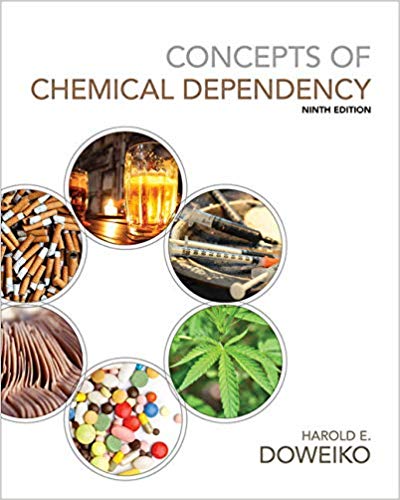
Concepts of Chemical Dependency 9th Edition by Harold E. Doweiko - Test Bank

Concepts of Chemical Dependency 9th Edition by Harold E. Doweiko - Test Bank   Instant Download - Complete Test Bank With Answers     Sample Questions Are Posted Below   1. The earliest written record of wine-making is found in _______ and dates back to 3,000 B.C.E. a. Sumeria b. Rome c. Egypt d. Greece …

$19.99

Concepts of Chemical Dependency 9th Edition by Harold E. Doweiko – Test Bank


Instant Download – Complete Test Bank With Answers


Sample Questions Are Posted Below


1. The earliest written record of wine-making is found in _______ and dates back to 3,000 B.C.E.
a. Sumeria
b. Rome
c. Egypt
d. Greece
ANSWER:
c
POINTS:
1
REFERENCES: A Brief History of Alcohol
2. Evidence suggests that beer made from ingredients other than fermented honey might date back to
a. 3,000 B.C.E.
b. 5,000 B.C.E.
c. 7,000 B.C.E.
d. 9,000 B.C.E.
ANSWER:
d
POINTS:
1
REFERENCES: A Brief History of Alcohol
3. Prohibition in the United States could be described as a ______ social experiment.
a. failed
b. successful
c. primitive
d. neutral
ANSWER:
a
POINTS:
1
REFERENCES: A Brief History of Alcohol
4. Presently, ______ percent of the human population is intoxicated at any given moment.
a. 0.25
b. 0.5
c. 0.7
d. 1.2
ANSWER:
c
POINTS:
1
REFERENCES: Alcohol Today

5. Jamal will have an occasional glass of wine with dinner, does not require daily use of alcohol to function, has never
had any negative consequences due to his drinking, and does not use alcohol for continuous periods of time. Jamal
would most likely be considered
a. someone with an alcohol addiction.
b. someone with an alcohol abuse problem.
c. a binge drinker.
d. a rare or social drinker.
ANSWER:
d
POINTS:
1
REFERENCES: A Working Definition of Rare or Social Drinking
6. The most popular alcohol-containing beverage in the United States is
a. beer.
b. wine.
c. whiskey.
d. rum.
ANSWER:
a
POINTS:
1
REFERENCES: Scope of Alcohol Use in the United States Today
7. In general, peak blood alcohol levels after the ingestion of single alcoholic drink are achieved in __________
minutes.
a. 5-10
b. 15-25
c. 30-60
d. 70-90
ANSWER:
c
POINTS:
1
REFERENCES: 35
8. Currently, scientists believe that alcohol is a “dirty” compound. This means
a. alcohol shows a preference for a specific receptor site.
b. alcohol decreases the effects of GABA.
c. alcohol gets contaminated during the fermentation process.
d. alcohol alters the action of various neurotransmitters and interferes with the action of messenger molecules
within the neuron.
ANSWER:
d
POINTS:
1
REFERENCES: The Pharmacology of Ethyl Alcohol

9. Which of the following drugs are dangerous to mix with alcohol?
a. Nitroglycerine
b. Barbiturates
c. Opiates
d. All of these answers
ANSWER:
d
POINTS:
1
REFERENCES: Medical Complications of Alcohol Use for the Social Drinker
10. According to your text, many historians believe
a. alcohol was the cause of the Protestant reformation in Europe.
b. alcohol was one reason for the expansion of the Roman empire.
c. alcohol may have been one factor in the rise of civilization.
d. the brewing of alcohol resulted in the widespread application of the new science of biochemistry that emerged
during the mid-13th century.
ANSWER:
c
POINTS:
1
REFERENCES: Introduction
11. According to sources cited in your text, there is evidence that the consumption of mead can be traced back
a. to the “stone ages.”
b. 18,000 years.
c. 2,000 years.
d. to the 8th century B.C.E.
ANSWER:
a
POINTS:
1
REFERENCES: A Brief History of Alcohol
12. According to your text, the highest concentration of alcohol that can be achieved from fermentation is about
a. 22 percent.
b. 28 percent.
c. 15 percent.
d. 8 percent.
ANSWER:
c
POINTS:
1
REFERENCES: Alcohol Today

13. Historical evidence suggests that the process of distillation emerged
a. in 800 A.D.
b. in 8,000 B.C.E.
c. 800 years ago.
d. 1,800 years ago.
ANSWER:
a
POINTS:
1
REFERENCES: A Brief History of Alcohol
14. One major consequence of distillation is
a. many of the vitamins and minerals found in the mash prior to distillation are lost.
b. you cannot achieve an alcohol level higher than 30 percent.
c. the flavor is enhanced, but only for products made from certain species of grapes.
d. it is necessary to warm the resulting fluid to body temperature to serve it.
ANSWER:
a
POINTS:
1
REFERENCES: How Alcoholic Beverages Are Produced Today
15. According to your text, all of the following are methods by which alcohol has been introduced into the body
EXCEPT
a. orally.
b. transdermal administration.
c. as a vapor.
d. intravenously.
ANSWER:
b
POINTS:
1
REFERENCES: The Pharmacology of Ethyl Alcohol
16. As a general rule, the __________ can biotransform alcohol at the rate of one 12-ounce can of beer, one glass of
wine, or one standard drink per hour.
a. duodenum
b. pancreas
c. liver
d. glutamate
ANSWER:
c
POINTS:
1
REFERENCES: The Biotransformation of Alcohol

17. All of the following are end products of the alcohol biotransformation process EXCEPT
a. aldehyde dehydrogenase.
b. glucose.
c. carbon dioxide.
d. carbohydrates.
ANSWER:
a
POINTS:
1
REFERENCES: The Biotransformation of Alcohol
18. Which of the following is a good summary of the Mellanby effect, according to your text?
a. A person feels more intoxicated when the alcohol levels are falling, after the neurons have been affected by
the alcohol molecules.
b. A person feels more intoxicated as the blood alcohol level is rising
c. The alcohol ingested causes the body to become stimulated.
d. The alcohol ingested causes the release of opioid peptides in the peripheral regions of the body.
ANSWER:
b
POINTS:
1
REFERENCES: The Blood Alcohol Level (BAL)
19. The sense of euphoria that many drinkers report is the result of
a. the release of opioid peptides in the peripheral regions of the body, which eventually reach the brain’s pleasure
center and accounts for alcohol’s slow onset of action.
b. alcohol’s ability to stimulate the release of alcohol dehydrogenase in the stomach.
c. alcohol’s ability to stimulate the brain’s reward system.
d. the release of glucose by the liver, directly causing the reward cascade in the brain.
ANSWER:
c
POINTS:
1
REFERENCES: The Biotransformation of Alcohol
20. A friend of yours is a rare drinker, perhaps drinking one or two mixed drinks a month when out for dinner. You
know this will
a. increase that person’s risk of a hemorrhagic stroke.
b. improve muscle coordination as the alcohol removes doubts and inhibitions.
c. improve respiration, allowing more oxygenated blood to reach the muscles and brain.
d. improve visual peripheral field perception, allowing the person to see and then anticipate tactics used by
defensive players.
ANSWER:
a
POINTS:
1
REFERENCES: Medical Complications of Alcohol Use for the Social Drinker

21. The disinhibition effect induced by alcohol is caused by its effects on the activity of the _________ region of the
drinker’s brain.
a. hippocampus
b. reticular activating system (RAS)
c. cortex
d. occipital
ANSWER:
c
POINTS:
1
REFERENCES: Subjective Effects of Alcohol on the Individual at Normal Doses in the Social Drinker
22. According to your text, the alcohol­related “hangover”
a. is sufficient to cause the drinker’s death.
b. is self-limiting for those drinkers who ingested less than 8 cans of beer or mixed drinks.
c. can be avoided if the drinker ingests food prior to drinking.
d. is generally self-limiting, although very unpleasant.
ANSWER:
d
POINTS:
1
REFERENCES: Medical Complications of Alcohol Use for the Social Drinker
23. According to your text, which of the following individuals would you normally expect to have the lowest blood
alcohol level?
a. A 160-pound man who consumed 14 standard drinks over a 3 hour span of time
b. A 160-pound man who consumed 8 stand drinks over a 3 hour span of time
c. A 160-pound man who consumed 4 standard drinks over a 3 hour span of time.
d. A 180-pound man who consumed 16 standard drinks over a 3 hour span of time.
ANSWER:
c
POINTS:
1
REFERENCES: The Blood Alcohol Level (BAL)
24. Your aunt, who suffers from sleep apnea, likes to have a “wee shot of brandy” before going to bed to help her sleep
better. Based on your textbook, this
a. can suppress or improve the symptoms of sleep apnea.
b. can exacerbate the symptoms of sleep apnea.
c. will have no effect on her sleep apnea symptoms.
d. will have little effect on her sleep apnea if she waits 20 minutes before going to bed.
ANSWER:
b
POINTS:
1
REFERENCES: Medical Complications of Alcohol Use for the Social Drinker

25. There are no significant long-term neurocognitive effects from alcohol because
a. it improves blood flow to the cortex of the brain.
b. it decreases endorphin release in the cortex of the brain.
c. it improves blood oxygenation levels and stimulates the production of free radicals in the brain.
d. none of the above.
ANSWER:
d
POINTS:
1
REFERENCES: Medical Complications of Alcohol Use for the Social Drinker
26. As a physician on duty in the emergency room, you could expect
a. alcohol ingestion would make drinkers so relaxed that they would suffer fewer head injuries than nondrinkers
in similar automobile accidents.
b. about half of the patients you see who have a traumatic injury will have been drinking immediately prior to the
incident.
c. improved survival rates for drinkers, who would be more likely to be thrown from a vehicle during an
accident.
d. no relationship between the individual’s alcohol use status and his or her having suffered a traumatic injury of
some kind.
ANSWER:
b
POINTS:
1
REFERENCES: Medical Complications of Alcohol Use for the Social Drinker
27. According to your text, why do people consume alcohol?​
ANSWER:
No answer provided.​
POINTS:
1
REFERENCES: Why Do People Consume Alcohol?
28. E
​ xplain what is meant when alcohol is described as a “dirty” compound.
ANSWER:
No answer provided.​
POINTS:
1
REFERENCES: The Pharmacology of Ethyl Alcohol
29. What are some of the factors that may affect the blood alcohol level (BAL)?​
ANSWER:
No answer provided.​
POINTS:
1
REFERENCES: The Blood Alcohol Level (BAL)
30. Describe the symptoms and treatments for hangovers. What is believed to be the basic causal factor(s) of a
hangover?
ANSWER:
No answer provided.​
POINTS:
1
REFERENCES: Medical Complications of Alcohol Use for the Social Drinker

31. D
​ escribe the characteristics of a rare, or social, drinker.
ANSWER:
No answer provided.​
POINTS:
1
REFERENCES: A Working Definition of Rare or Social Drinking


Additional information

Add Review

Your email address will not be published. Required fields are marked *