Subtotal: $659.87

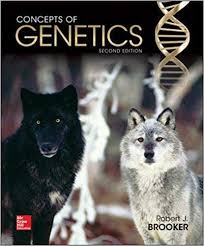
Concepts of Genetics 2nd Edition Brooker - Test Bank

Concepts of Genetics 2nd Edition Brooker - Test Bank   Instant Download - Complete Test Bank With Answers     Sample Questions Are Posted Below   Chapter 05 Extensions of Mendelian Inheritance Student: ___________________________________________________________________________ 1. Genes that are not required for survival, but are likely to be beneficial to the organism, are called _________. A. …

$19.99

Concepts of Genetics 2nd Edition Brooker – Test Bank


Instant Download – Complete Test Bank With Answers


Sample Questions Are Posted Below


Chapter 05 Extensions of Mendelian Inheritance

Student: ___________________________________________________________________________

1. Genes that are not required for survival, but are likely to be beneficial to the organism, are called _________.

A. essential genes


B. lethal alleles


C. semilethal alleles


D. nonessential genes


E. conditional lethal alleles


2. Temperature-sensitive alleles are examples of _________.

A. essential genes


B. lethal alleles


C. semilethal alleles


D. nonessential genes


E. conditional lethal alleles


3. Huntington disease in humans is an example of ____________.

A. essential genes


B. lethal alleles


C. semilethal alleles


D. nonessential genes


E. conditional lethal alleles


4. A heterozygote possesses a phenotype that is intermediate between the homozygous dominant and homozygous recessive phenotypes. This is most likely an example of ________.

A. lethal alleles


B. incomplete dominance


C. gene dosage


D. sex-influenced inheritance


5. In four-o’clock plants, red flower color is dominant to white flower color. However, heterozygous plants have a pink color. If a pink-flowered plant is crossed with a white-flowered plant, what will be the phenotypic ratios of their offspring?

A. ¼ red, ½ pink, ¼ white


B. All pink


C. All white


D. ½ pink, ½ white


E. ½ red, ½ pink


6. The coat characteristics of Siamese cats and Himalayan rabbits, where proteins in the extremities function differently than in other parts of the body is an example of _________.

A. incomplete dominance


B. multiple allele systems


C. semilethal alleles


D. temperature-sensitive allele


E. None of these choices are correct


7. In rabbits, full coat color (c) is the dominant trait. A second allele, chinchilla (cch) is recessive to full coat color. Himalayan coat color (ch) is recessive to chinchilla and full coat colors and albino (c) is recessive to all coat colors. If two chinchilla rabbits mate, what coat color is not possible in their offspring?

A. Full coat color


B. Chinchilla coat color


C. Himalayan coat color


D. Albino coat color


E. All coat colors are possible


8. In human blood groups, the fact that an individual can have an AB blood type is an example of ___________.

A. incomplete dominance


B. incomplete penetrance


C. sex-influenced trait


D. temperature-sensitive conditional allele


E. codominance


9. An individual with type A blood and an individual with type B blood mate and have offspring. What blood type is not possible in their offspring?

A. Type O blood


B. Type A blood


C. Type B blood


D. Type AB blood


E. All blood types are possible


10. At the molecular level, type A and type B blood differ in which of the following characteristics?

A. The antigens present on the surface of the red blood cells


B. The type of sugar found in each type


C. The antibodies that are generated against the other type of blood


D. All of these choices are correct


11. For a certain trait, a heterozygous individual has a selective advantage than a homozygous dominant or homozygous recessive individual. This is called ________.

A. codiminance


B. incomplete dominance


C. over dominance


D. incomplete penetrance


E. multiple allele systems


12. Sickle-cell anemia in humans is an example of ________________.

A. codominance


B. incomplete penetrance


C. heterozygous advantage


D. multiple allele systems


E. None of these choices are correct


13. At the molecular level, which of the following best explain heterozygous advantage and over dominance?

A. A heterozygous individual can produce more varieties of homodimer proteins


B. The alleles produce two different proteins with slightly different functions


C. The proteins produced by the alleles may provide a broader range of environmental tolerance, such as temperature ranges


D. Infectious organisms may recognize only a specific functional protein


E. All of the answers are possibilities


14. Polydactyly in humans is an example of __________.

A. simple Mendelian inheritance


B. incomplete dominance


C. incomplete penetrance


D. codominance


E. gene dosage


15. If a geneticist describes a trait as being 70% penetrant, what would they mean?

A. The expression of the trait varies by individual


B. It is lethal in 30% of the individuals who have the trait


C. Only 70% of the individuals who carry the trait express the trait


D. The trait is present in 70% of the population


16. Phenylketonuria in humans is an example of __________.

A. incomplete penetrance


B. codominance


C. an environmental-influenced trait


D. incomplete dominance


E. All of these choices are correct


17. If an allele is dominant in one sex and recessive in another, it is an example of ___________.

A. sex-limited inheritance


B. sex-influenced inheritance


C. incomplete dominance


D. simple Mendelian inheritance


E. incomplete dominance


18. Male-pattern baldness is a sex-linked trait in humans.

True    False


19. A woman who is heterozygous for pattern baldness marries a man who is nonbald. Which of the following would be true of their offspring?

A. All would be bald


B. All of the females would be nonbald, all males would be bald


C. All of the females would be nonbald, ½ of the males would be bald


D. ½ of females would be bald, and ½ of the females would be bald


E. All would be nonbald


20. A paralog ____________.

A. is found for every gene in mammals


B. is only found on the X but not the Y chromosome


C. can explain the lack of phenotype for a gene knockout


D. cannot be mutated


E. has the same DNA sequence as the original duplicated gene


21. The interaction of two genes to produce a phenotype was first described by __________.

A. Morgan and Bridges


B. Mendel


C. Darwin


D. Bateson and Punnett


E. None of these choices are correct


22. Epistasis is _______________.

A. another term for over dominance


B. when one gene can mask the expression of a second gene


C. a trait that is only expressed in one sex of the species


D. when two dominant alleles can be expressed in the same individual


E. None of these choices are correct


23. In a dihybrid cross of two heterozygous individuals, you expect a 9:3:3:1 phenotypic ratio in the offspring, but observe a ratio of 9:7. What is the most likely explantation?

A. Codominace


B. It is a sex-limited trait


C. Simple Mendelian inheritance


D. Incomplete penetrance


E. Epistatic interactions of the two genes


24. Which of the following is not correct concerning epistatic interactions?

A. They are often associated with enzymatic pathways


B. They produce variations in the expected 9:3:3:1 ratio of a dihybrid cross


C. They can result when a gene at one locus masks the expression of a gene at a different locus


D. They always result in a 9:7 ratio of a dihybrid cross


E. They are due to gene interactions


25. When wild-type offspring are produced from a cross between parents that both display the same recessive phenotype illustrates the genetic phenomenon of _______.

A. simple recessive alleles


B. incomplete penetrance


C. complementation


D. gene dosage


E. a spontaneous mutation


26. The multiple effects of a single gene on the phenotype of an organism is called _______.

A. epistasis


B. penetrance


C. expressivity


D. overdominance


E. pleiotropy


27. A _______ allele encodes a protein that is made in the proper amount and functions normally.

A. loss-of-function


B. mutant


C. wild-type


D. gain-of-function


E. lethal


28. In overdominance, the _______ genotype is beneficial over the _______ genotypes.

A. heterozygous, homozygous


B. homozygous, heterozygous


C. homozygous dominant, homozygous recessive


D. homozygous recessive, homozygous dominant


E. incomplete dominant, codominant


29. In humans, pattern baldness follows a sex-influenced pattern of inheritance. A heterozygous male has the _______ phenotype and a heterozygous female has a _______ phenotype.

A. Y-linked, X-linked


B. nonbald, bald


C. X-linked, Y-linked


D. bald, nonbald


E. None of these choices are correct


30. If a combination of two or more genes is required to produce a specific trait, it is called a _______.

A. overdominance


B. simple mendelian trait


C. sex-influenced trait


D. sex-linked trait


E. gene interaction


31. In an epistatic interaction, the genes must be located on the same chromosome.

True    False


32. Typically, a recessive allele increases the expression of a functional protein.

True    False


33. Incomplete dominance is an example of blending of phenotypes, not genotypes.

True    False


34. Human blood groups are determined by antigens on the surface of red blood cells.

True    False


35. Incomplete penetrance indicates that individuals who possess a dominant trait always express the trait.

True    False


36. Variable expressivity means that the phenotype of a trait can vary between individuals.

True    False


37. Paralogs are often functionally redundant and can compensate for the loss of either of the paralogs in a set.

True    False


Chapter 05 Extensions of Mendelian Inheritance Key

1. Genes that are not required for survival, but are likely to be beneficial to the organism, are called _________.

A. essential genes


B. lethal alleles


C. semilethal alleles


D. nonessential genes


E. conditional lethal alleles


Bloom’s Level: 2. Understand
Learning Outcome: 05.05: Understand how lethal alleles may result in inheritance patterns with unexpected results.
Section: 05.06
Topic: Inheritance


2. Temperature-sensitive alleles are examples of _________.

A. essential genes


B. lethal alleles


C. semilethal alleles


D. nonessential genes


E. conditional lethal alleles


Bloom’s Level: 3. Apply
Learning Outcome: 05.05: Understand how lethal alleles may result in inheritance patterns with unexpected results.
Section: 05.06
Topic: Inheritance


3. Huntington disease in humans is an example of ____________.

A. essential genes


B. lethal alleles


C. semilethal alleles


D. nonessential genes


E. conditional lethal alleles


Bloom’s Level: 5. Evaluate
Learning Outcome: 05.05: Understand how lethal alleles may result in inheritance patterns with unexpected results.
Section: 05.06
Topic: Inheritance


4. A heterozygote possesses a phenotype that is intermediate between the homozygous dominant and homozygous recessive phenotypes. This is most likely an example of ________.

A. lethal alleles


B. incomplete dominance


C. gene dosage


D. sex-influenced inheritance


Bloom’s Level: 5. Evaluate
Learning Outcome: 05.02: Understand the different patterns of Mendelian inheritance involving single genes and how to solve relevant problems.
Section: 05.04
Topic: Inheritance


5. In four-o’clock plants, red flower color is dominant to white flower color. However, heterozygous plants have a pink color. If a pink-flowered plant is crossed with a white-flowered plant, what will be the phenotypic ratios of their offspring?

A. ¼ red, ½ pink, ¼ white


B. All pink


C. All white


D. ½ pink, ½ white


E. ½ red, ½ pink


Bloom’s Level: 6. Create
Learning Outcome: 05.02: Understand the different patterns of Mendelian inheritance involving single genes and how to solve relevant problems.
Section: 05.04
Topic: Inheritance


6. The coat characteristics of Siamese cats and Himalayan rabbits, where proteins in the extremities function differently than in other parts of the body is an example of _________.

A. incomplete dominance


B. multiple allele systems


C. semilethal alleles


D. temperature-sensitive allele


E. None of these choices are correct


Bloom’s Level: 5. Evaluate
Learning Outcome: 05.05: Understand how lethal alleles may result in inheritance patterns with unexpected results.
Section: 05.06
Topic: Inheritance


7. In rabbits, full coat color (c) is the dominant trait. A second allele, chinchilla (cch) is recessive to full coat color. Himalayan coat color (ch) is recessive to chinchilla and full coat colors and albino (c) is recessive to all coat colors. If two chinchilla rabbits mate, what coat color is not possible in their offspring?

A. Full coat color


B. Chinchilla coat color


C. Himalayan coat color


D. Albino coat color


E. All coat colors are possible


Bloom’s Level: 6. Create
Learning Outcome: 05.02: Understand the different patterns of Mendelian inheritance involving single genes and how to solve relevant problems.
Section: 05.02
Topic: Inheritance


8. In human blood groups, the fact that an individual can have an AB blood type is an example of ___________.

A. incomplete dominance


B. incomplete penetrance


C. sex-influenced trait


D. temperature-sensitive conditional allele


E. codominance


Bloom’s Level: 3. Apply
Learning Outcome: 05.02: Understand the different patterns of Mendelian inheritance involving single genes and how to solve relevant problems.
Section: 05.04
Topic: Inheritance


9. An individual with type A blood and an individual with type B blood mate and have offspring. What blood type is not possible in their offspring?

A. Type O blood


B. Type A blood


C. Type B blood


D. Type AB blood


E. All blood types are possible


Bloom’s Level: 6. Create
Learning Outcome: 05.02: Understand the different patterns of Mendelian inheritance involving single genes and how to solve relevant problems.
Section: 05.04
Topic: Inheritance


10. At the molecular level, type A and type B blood differ in which of the following characteristics?

A. The antigens present on the surface of the red blood cells


B. The type of sugar found in each type


C. The antibodies that are generated against the other type of blood


D. All of these choices are correct


Bloom’s Level: 4. Analyze
Learning Outcome: 05.02: Understand the different patterns of Mendelian inheritance involving single genes and how to solve relevant problems.
Section: 05.04
Topic: Inheritance


11. For a certain trait, a heterozygous individual has a selective advantage than a homozygous dominant or homozygous recessive individual. This is called ________.

A. codiminance


B. incomplete dominance


C. over dominance


D. incomplete penetrance


E. multiple allele systems


Bloom’s Level: 4. Analyze
Learning Outcome: 05.02: Understand the different patterns of Mendelian inheritance involving single genes and how to solve relevant problems.
Section: 05.04
Topic: Inheritance


12. Sickle-cell anemia in humans is an example of ________________.

A. codominance


B. incomplete penetrance


C. heterozygous advantage


D. multiple allele systems


E. None of these choices are correct


Bloom’s Level: 2. Understand
Learning Outcome: 05.02: Understand the different patterns of Mendelian inheritance involving single genes and how to solve relevant problems.
Section: 05.04
Topic: Inheritance


13. At the molecular level, which of the following best explain heterozygous advantage and over dominance?

A. A heterozygous individual can produce more varieties of homodimer proteins


B. The alleles produce two different proteins with slightly different functions


C. The proteins produced by the alleles may provide a broader range of environmental tolerance, such as temperature ranges


D. Infectious organisms may recognize only a specific functional protein


E. All of the answers are possibilities


Bloom’s Level: 5. Evaluate
Learning Outcome: 05.02: Understand the different patterns of Mendelian inheritance involving single genes and how to solve relevant problems.
Section: 05.04
Topic: Inheritance


14. Polydactyly in humans is an example of __________.

A. simple Mendelian inheritance


B. incomplete dominance


C. incomplete penetrance


D. codominance


E. gene dosage


Bloom’s Level: 2. Understand
Learning Outcome: 05.02: Understand the different patterns of Mendelian inheritance involving single genes and how to solve relevant problems.
Section: 05.02
Topic: Inheritance


15. If a geneticist describes a trait as being 70% penetrant, what would they mean?

A. The expression of the trait varies by individual


B. It is lethal in 30% of the individuals who have the trait


C. Only 70% of the individuals who carry the trait express the trait


D. The trait is present in 70% of the population


Bloom’s Level: 4. Analyze
Learning Outcome: 05.02: Understand the different patterns of Mendelian inheritance involving single genes and how to solve relevant problems.
Section: 05.02
Topic: Inheritance


16. Phenylketonuria in humans is an example of __________.

A. incomplete penetrance


B. codominance


C. an environmental-influenced trait


D. incomplete dominance


E. All of these choices are correct


Bloom’s Level: 2. Understand
Learning Outcome: 05.03: Recognize how traits can be influenced by the environment.
Section: 05.03
Topic: Inheritance


17. If an allele is dominant in one sex and recessive in another, it is an example of ___________.

A. sex-limited inheritance


B. sex-influenced inheritance


C. incomplete dominance


D. simple Mendelian inheritance


E. incomplete dominance


Bloom’s Level: 2. Understand
Learning Outcome: 05.04: Differentiate between sex-linked, sex-limited, and sex-influenced patterns of inheritance.
Section: 05.05
Topic: Inheritance


18. Male-pattern baldness is a sex-linked trait in humans.

FALSE


Bloom’s Level: 2. Understand
Learning Outcome: 05.04: Differentiate between sex-linked, sex-limited, and sex-influenced patterns of inheritance.
Section: 05.05
Topic: Inheritance


19. A woman who is heterozygous for pattern baldness marries a man who is nonbald. Which of the following would be true of their offspring?

A. All would be bald


B. All of the females would be nonbald, all males would be bald


C. All of the females would be nonbald, ½ of the males would be bald


D. ½ of females would be bald, and ½ of the females would be bald


E. All would be nonbald


Bloom’s Level: 6. Create
Learning Outcome: 05.04: Differentiate between sex-linked, sex-limited, and sex-influenced patterns of inheritance.
Section: 05.05
Topic: Inheritance


20. A paralog ____________.

A. is found for every gene in mammals


B. is only found on the X but not the Y chromosome


C. can explain the lack of phenotype for a gene knockout


D. cannot be mutated


E. has the same DNA sequence as the original duplicated gene


Bloom’s Level: 3. Apply
Learning Outcome: 05.06: Recognize how gene interactions, such as epistasis, can alter the predicted 9:3:3:1 ratio of a dihybrid cross.
Section: 05.08
Topic: Inheritance


21. The interaction of two genes to produce a phenotype was first described by __________.

A. Morgan and Bridges


B. Mendel


C. Darwin


D. Bateson and Punnett


E. None of these choices are correct


Bloom’s Level: 1. Remember
Learning Outcome: 05.06: Recognize how gene interactions, such as epistasis, can alter the predicted 9:3:3:1 ratio of a dihybrid cross.
Section: 05.08
Topic: Inheritance


22. Epistasis is _______________.

A. another term for over dominance


B. when one gene can mask the expression of a second gene


C. a trait that is only expressed in one sex of the species


D. when two dominant alleles can be expressed in the same individual


E. None of these choices are correct


Bloom’s Level: 2. Understand
Learning Outcome: 05.06: Recognize how gene interactions, such as epistasis, can alter the predicted 9:3:3:1 ratio of a dihybrid cross.
Section: 05.08
Topic: Inheritance


23. In a dihybrid cross of two heterozygous individuals, you expect a 9:3:3:1 phenotypic ratio in the offspring, but observe a ratio of 9:7. What is the most likely explantation?

A. Codominace


B. It is a sex-limited trait


C. Simple Mendelian inheritance


D. Incomplete penetrance


E. Epistatic interactions of the two genes


Bloom’s Level: 4. Analyze
Learning Outcome: 05.06: Recognize how gene interactions, such as epistasis, can alter the predicted 9:3:3:1 ratio of a dihybrid cross.
Section: 05.08
Topic: Inheritance


24. Which of the following is not correct concerning epistatic interactions?

A. They are often associated with enzymatic pathways


B. They produce variations in the expected 9:3:3:1 ratio of a dihybrid cross


C. They can result when a gene at one locus masks the expression of a gene at a different locus


D. They always result in a 9:7 ratio of a dihybrid cross


E. They are due to gene interactions


Bloom’s Level: 5. Evaluate
Learning Outcome: 05.06: Recognize how gene interactions, such as epistasis, can alter the predicted 9:3:3:1 ratio of a dihybrid cross.
Section: 05.08
Topic: Inheritance


25. When wild-type offspring are produced from a cross between parents that both display the same recessive phenotype illustrates the genetic phenomenon of _______.

A. simple recessive alleles


B. incomplete penetrance


C. complementation


D. gene dosage


E. a spontaneous mutation


Bloom’s Level: 3. Apply
Learning Outcome: 05.06: Recognize how gene interactions, such as epistasis, can alter the predicted 9:3:3:1 ratio of a dihybrid cross.
Section: 05.08
Topic: Inheritance


26. The multiple effects of a single gene on the phenotype of an organism is called _______.

A. epistasis


B. penetrance


C. expressivity


D. overdominance


E. pleiotropy


Bloom’s Level: 2. Understand
Learning Outcome: 05.02: Understand the different patterns of Mendelian inheritance involving single genes and how to solve relevant problems.
Section: 05.07
Topic: Inheritance


27. A _______ allele encodes a protein that is made in the proper amount and functions normally.

A. loss-of-function


B. mutant


C. wild-type


D. gain-of-function


E. lethal


Bloom’s Level: 2. Understand
Learning Outcome: 05.02: Understand the different patterns of Mendelian inheritance involving single genes and how to solve relevant problems.
Section: 05.02
Topic: Inheritance


28. In overdominance, the _______ genotype is beneficial over the _______ genotypes.

A. heterozygous, homozygous


B. homozygous, heterozygous


C. homozygous dominant, homozygous recessive


D. homozygous recessive, homozygous dominant


E. incomplete dominant, codominant


Bloom’s Level: 4. Analyze
Learning Outcome: 05.02: Understand the different patterns of Mendelian inheritance involving single genes and how to solve relevant problems.
Section: 05.04
Topic: Inheritance


29. In humans, pattern baldness follows a sex-influenced pattern of inheritance. A heterozygous male has the _______ phenotype and a heterozygous female has a _______ phenotype.

A. Y-linked, X-linked


B. nonbald, bald


C. X-linked, Y-linked


D. bald, nonbald


E. None of these choices are correct


Bloom’s Level: 4. Analyze
Learning Outcome: 05.04: Differentiate between sex-linked, sex-limited, and sex-influenced patterns of inheritance.
Section: 05.05
Topic: Inheritance


30. If a combination of two or more genes is required to produce a specific trait, it is called a _______.

A. overdominance


B. simple mendelian trait


C. sex-influenced trait


D. sex-linked trait


E. gene interaction


Bloom’s Level: 3. Apply
Learning Outcome: 05.06: Recognize how gene interactions, such as epistasis, can alter the predicted 9:3:3:1 ratio of a dihybrid cross.
Section: 05.08
Topic: Inheritance


31. In an epistatic interaction, the genes must be located on the same chromosome.

FALSE


Bloom’s Level: 5. Evaluate
Learning Outcome: 05.06: Recognize how gene interactions, such as epistasis, can alter the predicted 9:3:3:1 ratio of a dihybrid cross.
Section: 05.08
Topic: Inheritance


32. Typically, a recessive allele increases the expression of a functional protein.

FALSE


Bloom’s Level: 5. Evaluate
Learning Outcome: 05.02: Understand the different patterns of Mendelian inheritance involving single genes and how to solve relevant problems.
Section: 05.02
Topic: Inheritance


33. Incomplete dominance is an example of blending of phenotypes, not genotypes.

TRUE


Bloom’s Level: 4. Analyze
Learning Outcome: 05.02: Understand the different patterns of Mendelian inheritance involving single genes and how to solve relevant problems.
Section: 05.04
Topic: Inheritance


34. Human blood groups are determined by antigens on the surface of red blood cells.

TRUE


Bloom’s Level: 2. Understand
Learning Outcome: 05.02: Understand the different patterns of Mendelian inheritance involving single genes and how to solve relevant problems.
Section: 05.04
Topic: Inheritance


35. Incomplete penetrance indicates that individuals who possess a dominant trait always express the trait.

FALSE


Bloom’s Level: 4. Analyze
Learning Outcome: 05.02: Understand the different patterns of Mendelian inheritance involving single genes and how to solve relevant problems.
Section: 05.02
Topic: Inheritance


36. Variable expressivity means that the phenotype of a trait can vary between individuals.

TRUE


Bloom’s Level: 4. Analyze
Learning Outcome: 05.02: Understand the different patterns of Mendelian inheritance involving single genes and how to solve relevant problems.
Section: 05.02
Topic: Inheritance


37. Paralogs are often functionally redundant and can compensate for the loss of either of the paralogs in a set.

TRUE


Bloom’s Level: 5. Evaluate
Learning Outcome: 05.06: Recognize how gene interactions, such as epistasis, can alter the predicted 9:3:3:1 ratio of a dihybrid cross.
Section: 05.08
Topic: Inheritance


Chapter 05 Extensions of Mendelian Inheritance Summary

Category # of Questions
Bloom’s Level: 1. Remember 1
Bloom’s Level: 2. Understand 10
Bloom’s Level: 3. Apply 5
Bloom’s Level: 4. Analyze 9
Bloom’s Level: 5. Evaluate 8
Bloom’s Level: 6. Create 4
Learning Outcome: 05.02: Understand the different patterns of Mendelian inheritance involving single genes and how to solve relevant problems. 19
Learning Outcome: 05.03: Recognize how traits can be influenced by the environment. 1
Learning Outcome: 05.04: Differentiate between sex-linked, sex-limited, and sex-influenced patterns of inheritance. 4
Learning Outcome: 05.05: Understand how lethal alleles may result in inheritance patterns with unexpected results. 4
Learning Outcome: 05.06: Recognize how gene interactions, such as epistasis, can alter the predicted 9:3:3:1 ratio of a dihybrid cross. 9
Section: 05.02 7
Section: 05.03 1
Section: 05.04 11
Section: 05.05 4
Section: 05.06 4
Section: 05.07 1
Section: 05.08 9
Topic: Inheritance 37


Additional information

Add Review

Your email address will not be published. Required fields are marked *