No products in the cart.

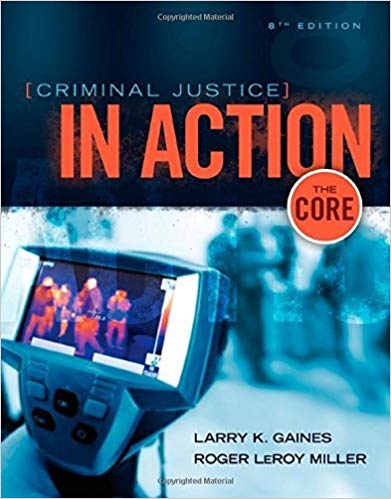
Criminal Justice in Action The Core 8th Edition by Gaines - Test Bank

Criminal Justice in Action The Core 8th Edition by Gaines - Test Bank   Instant Download - Complete Test Bank With Answers     Sample Questions Are Posted Below   A hierarchically structured administrative organization that carries out specific functions is a: b. delegation. chain of command. d. strategy.   ANSWER:                            a POINTS:                             1 REFERENCES:                   …

$19.99

Criminal Justice in Action The Core 8th Edition by Gaines – Test Bank


Instant Download – Complete Test Bank With Answers


Sample Questions Are Posted Below


  1. A hierarchically structured administrative organization that carries out specific functions is a:
    1. b. delegation.
    2. chain of command. d. strategy.


ANSWER:                            a

POINTS:                             1

REFERENCES:                   Police Organization and Field Operations

LEARNING OBJECTIVES:  CJIA.GAMI.16.05.01 – List the three primary purposes of police patrol.

KEYWORDS:                       Blooms: Remember


  1. What is the ultimate goal of a bureaucratic organization, such as a police department?
    1. administration development efficiency
    2. low employee turnover d. work satisfaction for the employee


ANSWER:                            b

POINTS:                             1

REFERENCES:                   Police Organization and Field Operations

LEARNING OBJECTIVES:  CJIA.GAMI.16.05.01 – List the three primary purposes of police patrol.

KEYWORDS:                       Blooms: Remember


  1. What is the smallest stretch of area that a police officer or group of police officers regularly patrol?
    1. beat district
    2. station d. zone


ANSWER:                            a

POINTS:                             1

REFERENCES:                   Police Organization and Field Operations

LEARNING OBJECTIVES:  CJIA.GAMI.16.05.01 – List the three primary purposes of police patrol.

KEYWORDS:                       Blooms: Remember


  1. Which of the following is NOT a purpose of police patrol listed in the text?
    1. deterrence of crime
    2. maintenance of public order
    3. improvement of public attitudes toward the police
    4. provision of services that are not crime related


ANSWER:                            c

POINTS:                             1

REFERENCES:                   Police Organization and Field Operations

LEARNING OBJECTIVES:  CJIA.GAMI.16.05.01 – List the three primary purposes of police patrol.

KEYWORDS:                       Blooms: Remember


  1. The majority of a patrol officer’s time is spent on:
    1. preventive b. calls for service.
    2. administrative duties. d. officer-initiated activities.


ANSWER:                            a

POINTS:                             1

REFERENCES:                   Police Organization and Field Operations

LEARNING OBJECTIVES:  CJIA.GAMI.16.05.01 – List the three primary purposes of police patrol.

KEYWORDS:                       Blooms: Remember


  1. Paperwork takes up to of a patrol officer’s a. 20%      b. 40%
  2. 60% d. 80%


ANSWER:                            a

POINTS:                             1

REFERENCES:                   Police Organization and Field Operations

LEARNING OBJECTIVES:  CJIA.GAMI.16.05.01 – List the three primary purposes of police patrol.

KEYWORDS:                       Blooms: Remember


  1. Studies have suggested that only calls to the police involve the report of criminal
    1. one in two
    2. one in three
    3. one in four
    4. one in five


ANSWER:                            d

POINTS:                             1

REFERENCES:                   Police Organization and Field Operations

LEARNING OBJECTIVES:  CJIA.GAMI.16.05.01 – List the three primary purposes of police patrol.

KEYWORDS:                       Blooms: Remember


  1. After a crime has been committed and the patrol officer has gathered preliminary information from a crime scene, the responsibility of identifying the offender is delegated to the:
    1. b. internal affairs unit.
    2. patrol officer. d. police chief.


ANSWER:                            a

POINTS:                             1

REFERENCES:                   Police Organization and Field Operations

LEARNING OBJECTIVES:  CJIA.GAMI.16.05.01 – List the three primary purposes of police patrol.

KEYWORDS:                       Blooms: Remember


  1. The most common way for someone to become a detective is to:
    1. attend graduate school in criminal
    2. attend specialized training in the
    3. earn an undergraduate college
    4. be promoted from patrol


ANSWER:                            d

POINTS:                             1

REFERENCES:                   Police Organization and Field Operations

LEARNING OBJECTIVES:  CJIA.GAMI.16.05.01 – List the three primary purposes of police patrol.

KEYWORDS:                       Blooms: Remember


  1. Aggressive investigation strategies include:
    1. b. undercover operations.
    2. roadblocks. d. increased patrol of hot spots.


ANSWER:                            b

POINTS:                             1

REFERENCES:                   Police Organization and Field Operations

LEARNING OBJECTIVES:  CJIA.GAMI.16.05.02 – Indicate some investigation strategies that are considered aggressive.

KEYWORDS:                       Blooms: Remember


  1. Because of , police officers are limited in what they can do to convince the target of an undercover operation to participate in an illegal
    1. duress entrapment
    2. necessity d. self-defense


ANSWER:                            b

POINTS:                             1

REFERENCES:                   Police Organization and Field Operations

LEARNING OBJECTIVES:  CJIA.GAMI.16.05.02 – Indicate some investigation strategies that are considered aggressive.

KEYWORDS:                       Blooms: Remember


  1. Today, most undercover officers are used to infiltrate large-scale
    1. burglary car theft
    2. narcotics d. serial killer


ANSWER:                            c

POINTS:                             1

REFERENCES:                   Police Organization and Field Operations

LEARNING OBJECTIVES:  CJIA.GAMI.16.05.02 – Indicate some investigation strategies that are considered aggressive.

KEYWORDS:                       Blooms: Remember


  1. tThe term “clearance rate” refers to:
    1. the percentage of reported
    2. the percentage of crimes that result in arrest and
    3. the percentage of crimes that result in a criminal
    4. the percentage of stolen goods that are returned to victims of


ANSWER:                            b

POINTS:                             1

REFERENCES:                   Police Organization and Field Operations

LEARNING OBJECTIVES:  CJIA.GAMI.16.05.02 – Indicate some investigation strategies that are considered aggressive.

KEYWORDS:                       Blooms: Remember


  1. Which crime is investigated most thoroughly and thus results in the highest clearance rates?
    1. burglary computer theft
    2. murder d. stolen vehicle


ANSWER:                            c

POINTS:                             1

REFERENCES:                   Police Organization and Field Operations

LEARNING OBJECTIVES:  CJIA.GAMI.16.05.02 – Indicate some investigation strategies that are considered aggressive.

KEYWORDS:                       Blooms: Remember


  1. Which is NOT an example of trace evidence?
    1. ballistics blood
    2. fingerprints d. hair


ANSWER:                            a

POINTS:                             1

REFERENCES:                   Police Organization and Field Operations

LEARNING OBJECTIVES:  CJIA.GAMI.16.05.03 – Describe how forensic experts use DNA fingerprinting to solve crimes.

KEYWORDS:                       Blooms: Remember


  1. For more than a century, the most important piece of trace evidence has been:
    1. b. the human fingerprint.
    2. human hair. d. blood evidence.


ANSWER:                            b

POINTS:                             1

REFERENCES:                   Police Organization and Field Operations

LEARNING OBJECTIVES:  CJIA.GAMI.16.05.03 – Describe how forensic experts use DNA fingerprinting to solve crimes.

KEYWORDS:                       Blooms: Remember


  1. Ballistics is the study of:
    1. b. fingerprinting.
    2. firearms. d. response time.


ANSWER:                            c

POINTS:                             1

REFERENCES:                   Police Organization and Field Operations

LEARNING OBJECTIVES:  CJIA.GAMI.16.05.03 – Describe how forensic experts use DNA fingerprinting to solve crimes.

KEYWORDS:                       Blooms: Remember


  1. DNA fingerprinting emerged in the: 1970s.
  2. 1980s. c. 1990s. d. 2000s.

ANSWER:                            c

POINTS:                             1

REFERENCES:                   Police Organization and Field Operations

LEARNING OBJECTIVES:  CJIA.GAMI.16.05.03 – Describe how forensic experts use DNA fingerprinting to solve crimes.

KEYWORDS:                       Blooms: Remember


  1. The establishment of a connection between a suspect and a crime, often through the use of DNA evidence, in the absence of an ongoing investigation is a:
    1. proactive b. clearance rate.
    2. random hit. d. cold hit.


ANSWER:                            d

POINTS:                             1

REFERENCES:                   Police Organization and Field Operations

LEARNING OBJECTIVES:  CJIA.GAMI.16.05.03 – Describe how forensic experts use DNA fingerprinting to solve crimes.

KEYWORDS:                       Blooms: Remember


  1. A database containing the DNA of more than 5 million people is:
    1. b. AFIS.
    2. IBIS. d. NCVS.


ANSWER:                            a

POINTS:                             1

REFERENCES:                   Police Organization and Field Operations

LEARNING OBJECTIVES:  CJIA.GAMI.16.05.03 – Describe how forensic experts use DNA fingerprinting to solve crimes.

KEYWORDS:                       Blooms: Remember


  1. Who operated the National Combined DNA Index System?
    1. ATF DEA
    2. FBI d. ICE


ANSWER:                            c

POINTS:                             1

REFERENCES:                   Police Organization and Field Operations

LEARNING OBJECTIVES:  CJIA.GAMI.16.05.03 – Describe how forensic experts use DNA fingerprinting to solve crimes.

KEYWORDS:                       Blooms: Remember


  1. A reactive approach to policing that emphasizes a speedy response to calls for service is:
    1. community b. directed policing.
    2. problem-oriented policing. d. incident-driven policing.


ANSWER:                            d

POINTS:                             1

REFERENCES:                   Police Strategies: What Works

LEARNING OBJECTIVES:  CJIA.GAMI.16.05.04 – Explain why differential response strategies enable police departments to respond more efficiently to 911 calls.

KEYWORDS:                       Blooms: Remember


  1. Time elapsed between the instant a call for service is received and the instant a police officer arrives on the scene, otherwise referred to as , has become a benchmark for police
    1. differential response directed patrol
    2. incident-driven policing d. response time


ANSWER:                            d

POINTS:                             1

REFERENCES:                   Police Strategies: What Works

LEARNING OBJECTIVES:  CJIA.GAMI.16.05.04 – Explain why differential response strategies enable police departments to respond more efficiently to 911 calls.

KEYWORDS:                       Blooms: Remember


  1. In which type of patrol do officers make the rounds of a specific area with the purpose of carrying out the various patrol functions?
    1. directed incident-driven
    2. general d. scattered indirect


ANSWER:                            c

POINTS:                             1

REFERENCES:                   Police Strategies: What Works

LEARNING OBJECTIVES:  CJIA.GAMI.16.05.04 – Explain why differential response strategies enable police departments to respond more efficiently to 911 calls.

KEYWORDS:                       Blooms: Remember


  1. The Kansas City Experiment showed that decreasing preventive patrol:
    1. had little or no impact on
    2. decreased
    3. increased
    4. increased the number of reported


ANSWER:                            a

POINTS:                             1

REFERENCES:                   Police Strategies: What Works

LEARNING OBJECTIVES:  CJIA.GAMI.16.05.04 – Explain why differential response strategies enable police departments to respond more efficiently to 911 calls.

KEYWORDS:                       Blooms: Remember


  1. An area that is concentrated with high criminal activity to which there is a directed police response is a:
    1. depressed b. heavy spot.
    2. hot spot. d. crime spot.


ANSWER:                            c

POINTS:                             1

REFERENCES:                   Police Strategies: What Works

LEARNING OBJECTIVES:  CJIA.GAMI.16.05.04 – Explain why differential response strategies enable police departments to respond more efficiently to 911 calls.

KEYWORDS:                       Blooms: Remember


  1. What type of technology is utilized by police departments to locate and identify hot spots?
    1. arrest rates crime mapping
    2. preventive patrol d. rapid response


ANSWER:                            b

POINTS:                             1

REFERENCES:                   Police Strategies: What Works

LEARNING OBJECTIVES:  CJIA.GAMI.16.05.04 – Explain why differential response strategies enable police departments to respond more efficiently to 911 calls.

KEYWORDS:                       Blooms: Remember


  1. The “broken windows theory” is based on the theory that by cracking down on crimes, police can significantly reduce all crime in an
    1. felony property
    2. quality-of-life d. violent


ANSWER:                            c

POINTS:                             1

REFERENCES:                   Police Strategies: What Works

LEARNING OBJECTIVES:  CJIA.GAMI.16.05.04 – Explain why differential response strategies enable police departments to respond more efficiently to 911 calls.

KEYWORDS:                       Blooms: Remember


  1. A policing philosophy that moves beyond responding to incidents and attempts to solve the root causes of criminal behavior is:
    1. problem-oriented b. community policing.
    2. incident-driving policing. d. proactive policing.


ANSWER:                            a

POINTS:                             1

REFERENCES:                   Police Strategies: What Works

LEARNING OBJECTIVES:  CJIA.GAMI.16.05.05 – Explain why reactive arrest strategies might be incompatible with problem-oriented policing.

KEYWORDS:                       Blooms: Remember


  1.                           can be defined as an approach that promotes community-police
    1. Directed patrol
    2. Random patrol
    3. Proactive patrol
    4. Community policing


ANSWER:                            d

POINTS:                             1

REFERENCES:                   Police Strategies: What Works

LEARNING OBJECTIVES:  CJIA.GAMI.16.05.05 – Explain why reactive arrest strategies might be incompatible with problem-oriented policing.

KEYWORDS:                       Blooms: Remember


  1. A broad term used to describe the basic assumptions and values that permeate law enforcement agencies and are taught to new members of a law enforcement agency as the proper way to think, perceive, and act is called:
    1. the blue b. police cynicism.
    2. the police subculture. d. socialization.


ANSWER:                            c

POINTS:                             1

REFERENCES:                   “Us Versus Them”: Issues in Modern Policing

LEARNING OBJECTIVES:  CJIA.GAMI.16.05.06 – Determine when police officers are justified in using deadly force.

KEYWORDS:                       Blooms: Remember


  1. Which of the following is defined as “a metaphorical term used to refer to the value placed on secrecy and the general mistrust of the outside world shared by many police officers”?
    1. blue curtain police sarcasm
    2. police cynicism d. police subculture


ANSWER:                            a

POINTS:                             1

REFERENCES:                   “Us Versus Them”: Issues in Modern Policing

LEARNING OBJECTIVES:  CJIA.GAMI.16.05.06 – Determine when police officers are justified in using deadly force.

KEYWORDS:                       Blooms: Remember


  1. Which one is NOT an internal pressure of police officers that causes stress?
    1. the need to comply with the law
    2. limited opportunities for career and advancement
    3. excessive paperwork
    4. low wages and benefits


ANSWER:                            a

POINTS:                             1

REFERENCES:                   “Us Versus Them”: Issues in Modern Policing

LEARNING OBJECTIVES:  CJIA.GAMI.16.05.06 – Determine when police officers are justified in using deadly force.

KEYWORDS:                       Blooms: Remember


  1. Police officers often have high levels of , otherwise known as the stress
    1. dopamine
    2. cortisol
    3. proposol
    4. adrenaline


ANSWER:                            b

POINTS:                             1

REFERENCES:                   “Us Versus Them”: Issues in Modern Policing

LEARNING OBJECTIVES:  CJIA.GAMI.16.05.06 – Determine when police officers are justified in using deadly force.

KEYWORDS:                       Blooms: Remember


  1. The use of force by police officers occurs in about % of all police-public
    1. 9 4
    2. c. 1 6


ANSWER:                            c

POINTS:                             1

REFERENCES:                   “Us Versus Them”: Issues in Modern Policing

LEARNING OBJECTIVES:  CJIA.GAMI.16.05.06 – Determine when police officers are justified in using deadly force.

KEYWORDS:                       Blooms: Remember


  1. In , the S. Supreme Court set the limits for the use of deadly force by law enforcement officers.
    1. Miranda Arizona (1966) b. Tennessee v. Garner (1985)
    2. Graham v. Connor (1989) d. Roviaro v. United States (1957)


ANSWER:                            b

POINTS:                             1

REFERENCES:                   “Us Versus Them”: Issues in Modern Policing

LEARNING OBJECTIVES:  CJIA.GAMI.16.05.06 – Determine when police officers are justified in using deadly force.

KEYWORDS:                       Blooms: Remember


  1.                           is the degree of force that is appropriate to protect the police officer or other citizens and is not
    1. Deadly force
    2. Reasonable force
    3. Sufficient force
    4. Minimal force


ANSWER:                            b

POINTS:                             1

REFERENCES:                   “Us Versus Them”: Issues in Modern Policing

LEARNING OBJECTIVES:  CJIA.GAMI.16.05.06 – Determine when police officers are justified in using deadly force.

KEYWORDS:                       Blooms: Remember


  1.                  is when an officer actively demands payment from an individual or a business in return for certain
    1. Gleaning Mooching
    2. A payoff d. A shakedown


ANSWER:                            c

POINTS:                             1

REFERENCES:                   Police Misconduct and Ethics

LEARNING OBJECTIVES:  CJIA.GAMI.16.05.07 – Explain why police officers are allowed discretionary powers.

KEYWORDS:                       Blooms: Remember


  1. When police officers accept free gifts from citizens (a passive form of corruption), this is called:
    1. a b. a payoff.
    2. mooching. d. bribery.


ANSWER:                            c

POINTS:                             1

REFERENCES:                   Police Misconduct and Ethics

LEARNING OBJECTIVES:  CJIA.GAMI.16.05.07 – Explain why police officers are allowed discretionary powers.

KEYWORDS:                       Blooms: Remember


  1. The is a division within a police department that receives and investigates complaints of wrongdoing by police
    1. Administrative Department Citizen Oversight Committee
    2. Ethics Department d. Internal Affairs Unit


ANSWER:                            d

POINTS:                             1

REFERENCES:                   Police Misconduct and Ethics

LEARNING OBJECTIVES:  CJIA.GAMI.16.05.07 – Explain why police officers are allowed discretionary powers.

KEYWORDS:                       Blooms: Remember


  1. According to Sherman, in the first stage of moral decline of a police officer, the officer:
    1. accepts minor
    2. may force another party to pay for unwanted police
    3. no longer passively accepts
    4. takes in large amounts of money through involvement in drugs, gambling, or prostitution


ANSWER:                            a

POINTS:                             1

REFERENCES:                   Police Misconduct and Ethics

LEARNING OBJECTIVES:  CJIA.GAMI.16.05.07 – Explain why police officers are allowed discretionary powers.

KEYWORDS:                       Blooms: Remember


Case 5-1

Officer Richards was driving his beat when he saw a man running down the street at the same time that he received a radio dispatch that a convenience store was robbed and the cashier shot. Officer Richard jumps out of his car and chases the man down. He arrested the man because he believed this was the man that just committed an armed robbery at the local convenience store. In the robbery, the cashier was shot three times. There were also bullet holes in the wall. When arresting the suspect, Officer Richards did not find a gun on the suspect’s person.

  1. What category of routine patrol activity was Officers Richards participating in when he was driving down his beat attempting to prevent crime from occurring?
    1. preventive patrol
    2. calls for service
    3. administrative duties
    4. officer-initiated activities

ANSWER:                            a

POINTS:                             1

REFERENCES:                   Police Organization and Field Operations

LEARNING OBJECTIVES:  CJIA.GAMI.16.05.01 – List the three primary purposes of police patrol.

KEYWORDS:                       Blooms: Understand


  1. When crime scene investigators respond to the convenience store, what trace evidence will they immediately protect from contamination?
    1. blood
    2. fingerprints
    3. hair
    4. all of these

ANSWER:                            d

POINTS:                             1

REFERENCES:                   Police Organization and Field Operations

LEARNING OBJECTIVES:  CJIA.GAMI.16.05.02 – Indicate some investigation strategies that are considered aggressive.

KEYWORDS:                       Blooms: Understand


  1. Crime scene investigators will also study the ballistics at the crime Ballistics is:
    1. the study of firearms, including the weapon and the flight of the
    2. the identification of a person based on a sample of her or his
    3. the comparison of the number of crimes cleared compared to the number of crimes
    4. the time that passed between the call to report the robbery and when police arrived on the

ANSWER:                            a

POINTS:                             1

REFERENCES:                   Police Organization and Field Operations

LEARNING OBJECTIVES:  CJIA.GAMI.16.05.02 – Indicate some investigation strategies that are considered aggressive.

KEYWORDS:                       Blooms: Understand


  1. Officer Richards was patrolling this particular area because there had been multiple reports of robberies and illegal narcotics transactions in this area at this time of Officer Richards was most likely participating in:
    1. general
    2. directed
    3. crime
    4. community

ANSWER:                            b

POINTS:                             1

REFERENCES:                   Police Strategies: What Works

LEARNING OBJECTIVES:  CJIA.GAMI.16.05.04 – Explain why differential response strategies enable police departments to respond more efficiently to 911 calls.

KEYWORDS:                       Blooms: Understand


  1. While placing the suspect under arrest, there was no What level of force would Officer Richards appropriately be able to use?
    1. officer presence
    2. verbal commands
    3. intermediate weapons like a baton or taser
    4. deadly force

ANSWER:                            a

POINTS:                             1

REFERENCES:                   “Us Versus Them”: Issues in Modern Policing

LEARNING OBJECTIVES:  CJIA.GAMI.16.05.06 – Determine when police officers are justified in using deadly force.

KEYWORDS:                       Blooms: Understand


Case 5-2

Officer Torres is new to the police force. She was the top of her class in the police academy and received positive feedback from her field training officer. She has been on the job for approximately 1 year and has soon realized that working as a police officer is very different from what they learned in the police academy.

  1. Officer Torres is having a difficult time because many of her fellow officers are trying to “teach” her the way to

think, perceive, and act. This is known as:

  1. proactive
  2. reactive
  3. police
  4. police use of

ANSWER:                            c

POINTS:                             1

REFERENCES:                   Police Strategies: What Works

LEARNING OBJECTIVES:  CJIA.GAMI.16.05.05 – Explain why reactive arrest strategies might be incompatible with problem-oriented policing.

KEYWORDS:                       Blooms: Understand


  1. Officer Torres’ fellow officers are very secretive with outsiders about the police department and generally mistrust

the outside world. This is known as the:

  1. blue
  2. green
  3. red
  4. yellow

ANSWER:                            a

POINTS:                             1

REFERENCES:                   Police Strategies: What Works

LEARNING OBJECTIVES:  CJIA.GAMI.16.05.05 – Explain why reactive arrest strategies might be incompatible with problem-oriented policing.

KEYWORDS:                       Blooms: Understand


  1. Officer Torres believes that she is suffering from burnout and feels that there are many stressors that are causing Which would NOT be considered a common stressor for law enforcement officers?
    1. fear of being a victim of violent crime
    2. the need to comply with the law in nearly every job action
    3. lack of community support
    4. positive media coverage

ANSWER:                            d

POINTS:                             1

REFERENCES:                   Police Strategies: What Works

LEARNING OBJECTIVES:  CJIA.GAMI.16.05.05 – Explain why reactive arrest strategies might be incompatible with problem-oriented policing.

KEYWORDS:                       Blooms: Understand


  1. Officer Torres was recently in a situation where she was apprehending a burglary The suspect was actively resisting by pulling away from Officer Torres and even attempted to punch her in the stomach. Which weapon would Officer Torres not be allowed to use to subdue the offender?
    1. baton
    2. gun
    3. strikes
    4. taser

ANSWER:                            b

POINTS:                             1

REFERENCES:                   “Us Versus Them”: Issues in Modern Policing

LEARNING OBJECTIVES:  CJIA.GAMI.16.05.06 – Determine when police officers are justified in using deadly force.

KEYWORDS:                       Blooms: Understand


  1. Officer Torres is also stressed because her partner, Officer Williams, often coerces money from local drug dealers and keeps the money for Officer Williams is using which type of police corruption?
    1. bribery
    2. extortion
    3. mooching
    4. shakedowns

ANSWER:                            d

POINTS:                             1

REFERENCES:                   Police Misconduct and Ethics

LEARNING OBJECTIVES:  CJIA.GAMI.16.05.07 – Explain why police officers are allowed discretionary powers.

KEYWORDS:                       Blooms: Understand


  1. In most police departments the police responsibilities are divided according to zones as well as by
    1. True
    2. False


ANSWER:                            True

POINTS:                             1

REFERENCES:                   Police Organization and Field Operations

LEARNING OBJECTIVES:  CJIA.GAMI.16.05.01 – List the three primary purposes of police patrol.

KEYWORDS:                       Blooms: Understand


  1. The first goal of policing is to provide services to the community that are not crime
    1. True
    2. False


ANSWER:                            False

POINTS:                             1

REFERENCES:                   Police Organization and Field Operations

LEARNING OBJECTIVES:  CJIA.GAMI.16.05.01 – List the three primary purposes of police patrol.

KEYWORDS:                       Blooms: Understand


  1. In large police departments, as many as two-thirds of all employees are sworn
    1. True
    2. False


ANSWER:                            True

POINTS:                             1

REFERENCES:                   Police Organization and Field Operations

LEARNING OBJECTIVES:  CJIA.GAMI.16.05.01 – List the three primary purposes of police patrol.

KEYWORDS:                       Blooms: Understand


  1. The vast majority of patrol shifts are completed without a single
    1. True
    2. False


ANSWER:                            True

POINTS:                             1

REFERENCES:                   Police Organization and Field Operations

LEARNING OBJECTIVES:  CJIA.GAMI.16.05.01 – List the three primary purposes of police patrol.

KEYWORDS:                       Blooms: Understand


  1. Officer-initiated activities account for the most amount of patrol
    1. True
    2. False


ANSWER:                            False

POINTS:                             1

REFERENCES:                   Police Organization and Field Operations

LEARNING OBJECTIVES:  CJIA.GAMI.16.05.01 – List the three primary purposes of police patrol.

KEYWORDS:                       Blooms: Understand


  1. Delegation of authority is a critical component of the chain of command, especially in large
    1. True
    2. False


ANSWER:                            True

POINTS:                             1

REFERENCES:                   Police Organization and Field Operations

LEARNING OBJECTIVES:  CJIA.GAMI.16.05.01 – List the three primary purposes of police patrol.

KEYWORDS:                       Blooms: Remember


  1. Officer-initiated activities account for the least amount of
    1. True
    2. False


ANSWER:                            True

POINTS:                             1

REFERENCES:                   Police Organization and Field Operations

LEARNING OBJECTIVES:  CJIA.GAMI.16.05.01 – List the three primary purposes of police patrol.

KEYWORDS:                       Blooms: Remember


  1. Because there are more stolen vehicles than murders in most jurisdictions, law enforcement agencies use more resources and time to investigate stolen vehicles than
    1. True
    2. False


ANSWER:                            False

POINTS:                             1

REFERENCES:                   Police Organization and Field Operations

LEARNING OBJECTIVES:  CJIA.GAMI.16.05.02 – Indicate some investigation strategies that are considered aggressive.

KEYWORDS:                       Blooms: Remember


  1. Confidential informants are generally police officers who are working undercover to infiltrate criminal
    1. True
    2. False


ANSWER:                            False

POINTS:                             1

REFERENCES:                   Police Organization and Field Operations

LEARNING OBJECTIVES:  CJIA.GAMI.16.05.02 – Indicate some investigation strategies that are considered aggressive.

KEYWORDS:                       Blooms: Remember


  1. Police departments are only using DNA to solve murders and
    1. True
    2. False


ANSWER:                            False

POINTS:                             1

REFERENCES:                   Police Organization and Field Operations

LEARNING OBJECTIVES:  CJIA.GAMI.16.05.03 – Describe how forensic experts use DNA fingerprinting to solve crimes.

KEYWORDS:                       Blooms: Remember


  1. DNA taken from a crime scene may soon be able to provide law enforcement with a physical description of a
    1. True
    2. False


ANSWER:                            True

POINTS:                             1

REFERENCES:                   Police Organization and Field Operations

LEARNING OBJECTIVES:  CJIA.GAMI.16.05.03 – Describe how forensic experts use DNA fingerprinting to solve crimes.

KEYWORDS:                       Blooms: Remember


  1. Police response time is a benchmark used for police
    1. True
    2. False


ANSWER:                            True

POINTS:                             1

REFERENCES:                   Police Strategies: What Works

LEARNING OBJECTIVES:  CJIA.GAMI.16.05.04 – Explain why differential response strategies enable police departments to respond more efficiently to 911 calls.

KEYWORDS:                       Blooms: Remember


  1. The most pressing shortcomings of America’s 911 services are
    1. True
    2. False


ANSWER:                            False

POINTS:                             1

REFERENCES:                   Police Strategies: What Works

LEARNING OBJECTIVES:  CJIA.GAMI.16.05.04 – Explain why differential response strategies enable police departments to respond more efficiently to 911 calls.

KEYWORDS:                       Blooms: Remember


  1. Directed patrol strategies are also known as preventive
    1. True
    2. False


ANSWER:                            False

POINTS:                             1

REFERENCES:                   Police Strategies: What Works

LEARNING OBJECTIVES:  CJIA.GAMI.16.05.04 – Explain why differential response strategies enable police departments to respond more efficiently to 911 calls.

KEYWORDS:                       Blooms: Remember


  1. Reactive arrests are associated with general patrol
    1. True
    2. False


ANSWER:                            True

POINTS:                             1

REFERENCES:                   Police Strategies: What Works

LEARNING OBJECTIVES:  CJIA.GAMI.16.05.04 – Explain why differential response strategies enable police departments to respond more efficiently to 911 calls.

KEYWORDS:                       Blooms: Remember


  1. The “broken windows theory” proposes that cracking down on violent crime will allow police to reclaim

neighborhoods.

  1. True
  2. False


ANSWER:                            False

POINTS:                             1

REFERENCES:                   Police Strategies: What Works

LEARNING OBJECTIVES:  CJIA.GAMI.16.05.04 – Explain why differential response strategies enable police departments to respond more efficiently to 911 calls.

KEYWORDS:                       Blooms: Remember


  1. A “hot crime” will receive attention as “time ”


  1. True
  2. False


ANSWER:                            False

POINTS:                             1

REFERENCES:                   Police Strategies: What Works

LEARNING OBJECTIVES:  CJIA.GAMI.16.05.04 – Explain why differential response strategies enable police departments to respond more efficiently to 911 calls.

KEYWORDS:                       Blooms: Remember


  1. One problem for police is that standard 911 systems cannot pinpoint a location of a mobile phone or
    1. True
    2. False


ANSWER:                            False

POINTS:                             1

REFERENCES:                   Police Strategies: What Works

LEARNING OBJECTIVES:  CJIA.GAMI.16.05.04 – Explain why differential response strategies enable police departments to respond more efficiently to 911 calls.

KEYWORDS:                       Blooms: Remember


  1. According to the Kansas City Experiment, increasing or decreasing random patrol had little or no impact on the crime
    1. True
    2. False


ANSWER:                            False

POINTS:                             1

REFERENCES:                   Police Strategies: What Works

LEARNING OBJECTIVES:  CJIA.GAMI.16.05.04 – Explain why differential response strategies enable police departments to respond more efficiently to 911 calls.

KEYWORDS:                       Blooms: Remember


  1. Community-oriented policing is a philosophy that requires police to identify potential criminal activity and develop strategies to prevent or respond to that
    1. True
    2. False


ANSWER:                            False

POINTS:                             1

REFERENCES:                   Police Strategies: What Works

LEARNING OBJECTIVES:  CJIA.GAMI.16.05.05 – Explain why reactive arrest strategies might be incompatible with problem-oriented policing.

  1. Rookies begin the process of socialization from the first day on the
    1. True
    2. False


ANSWER:                            True

POINTS:                             1

REFERENCES:                   “Us Versus Them”: Issues in Modern Policing

LEARNING OBJECTIVES:  CJIA.GAMI.16.05.06 – Determine when police officers are justified in using deadly force.

KEYWORDS:                       Blooms: Remember


  1. Tennessee Garner (1985) outlawed the use of deadly force by police officers.
    1. True
    2. False


ANSWER:                            False

POINTS:                             1

REFERENCES:                   “Us Versus Them”: Issues in Modern Policing

LEARNING OBJECTIVES:  CJIA.GAMI.16.05.06 – Determine when police officers are justified in using deadly force.

KEYWORDS:                       Blooms: Remember


  1. Police officers use physical force in about 25% of police-public
    1. True
    2. False


ANSWER:                            False

POINTS:                             1

REFERENCES:                   “Us Versus Them”: Issues in Modern Policing

LEARNING OBJECTIVES:  CJIA.GAMI.16.05.06 – Determine when police officers are justified in using deadly force.

KEYWORDS:                       Blooms: Remember


75.

A police officer who accepts free “gifts,” such as cigarettes, liquor, or services, in return for favorable treatment of

the gift giver is said be participating in mooching.

  1. True
  2. False


ANSWER:                            True

POINTS:                              1

REFERENCES:                   Police Misconduct and Ethics

LEARNING OBJECTIVES:  CJIA.GAMI.16.05.07 – Explain why police officers are allowed discretionary powers.

KEYWORDS:                       Blooms: Remember


  1. Police officers are generally considered trustworthy and therefore assumed to make honest
    1. True
    2. False


ANSWER:                            True

POINTS:                             1

REFERENCES:                   Police Misconduct and Ethics

LEARNING OBJECTIVES:  CJIA.GAMI.16.05.07 – Explain why police officers are allowed discretionary powers.

KEYWORDS:                       Blooms: Remember


  1. Police officers are allowed discretionary powers because they may find themselves in danger of physical harm and must be allowed to take reasonable steps to protect
    1. True
    2. False


ANSWER:                            True

POINTS:                             1

REFERENCES:                   Police Misconduct and Ethics

LEARNING OBJECTIVES:  CJIA.GAMI.16.05.07 – Explain why police officers are allowed discretionary powers.

KEYWORDS:                       Blooms: Remember


  1. Duty is the obligation to act in a certain
    1. True
    2. False


ANSWER:                            True

POINTS:                             1

REFERENCES:                   Police Misconduct and Ethics

LEARNING OBJECTIVES:  CJIA.GAMI.16.05.08 – Explain what an ethical dilemma is, and name four categories of ethical dilemmas that a police officer typically may face.

KEYWORDS:                       Blooms: Remember


  1.                               is a hierarchically structured administrative organization that carries out specific

ANSWER:                            Bureaucracy

POINTS:                             1

REFERENCES:                   Police Organization and Field Operations

LEARNING OBJECTIVES:  CJIA.GAMI.16.05.01 – List the three primary purposes of police patrol.

KEYWORDS:                       Blooms: Remember


  1. A is the smallest stretch that a police officer or group of police officers regularly

ANSWER:                            beat

POINTS:                             1

REFERENCES:                   Police Organization and Field Operations

LEARNING OBJECTIVES:  CJIA.GAMI.16.05.01 – List the three primary purposes of police patrol.

KEYWORDS:                       Blooms: Remember


  1. ________________ are those officers authorized to make arrests and use

ANSWER:                            Sworn officers

POINTS:                             1

REFERENCES:                   Police Organization and Field Operations

LEARNING OBJECTIVES:  CJIA.GAMI.16.05.01 – List the three primary purposes of police patrol.

KEYWORDS:                       Blooms: Remember


  1. A is a criminal investigation that has not been solved after a certain amount of

ANSWER:                            cold case

POINTS:                             1

REFERENCES:                   Police Organization and Field Operations

LEARNING OBJECTIVES:  CJIA.GAMI.16.05.02 – Indicate some investigation strategies that are considered aggressive.

KEYWORDS:                       Blooms: Remember


  1. The application of science to establish facts and evidence during the investigation of crimes is

___________________.

ANSWER:                            forensics

POINTS:                             1

REFERENCES:                   Police Organization and Field Operations

LEARNING OBJECTIVES:  CJIA.GAMI.16.05.02 – Indicate some investigation strategies that are considered aggressive.

KEYWORDS:                       Blooms: Remember


  1. The study of firearms, including the firing of the weapon and the flight of the bullet, is .

ANSWER:                            ballistics

POINTS:                             1

REFERENCES:                   Police Organization and Field Operations

LEARNING OBJECTIVES:  CJIA.GAMI.16.05.02 – Indicate some investigation strategies that are considered aggressive.

KEYWORDS:                       Blooms: Remember


  1.                   is the genetic material found in the cells of all living

ANSWER:                            DNA

POINTS:                             1

REFERENCES:                   Police Organization and Field Operations

LEARNING OBJECTIVES:  CJIA.GAMI.16.05.03 – Describe how forensic experts use DNA fingerprinting to solve crimes.

KEYWORDS:                       Blooms: Remember


  1.                                      is a strategy for answering calls for service in which response time is adapted to the seriousness of the

ANSWER:                            Differential response

POINTS:                             1

REFERENCES:                   Police Strategies: What Works

LEARNING OBJECTIVES:  CJIA.GAMI.16.05.04 – Explain why differential response strategies enable police departments to respond more efficiently to 911 calls.

KEYWORDS:                       Blooms: Remember


  1. Since the mid-1900s, a number of metropolitan areas have introduced call systems to reduce the strain on 911

ANSWER:                            311 nonemergency

POINTS:                             1

REFERENCES:                   Police Strategies: What Works

LEARNING OBJECTIVES:  CJIA.GAMI.16.05.04 – Explain why differential response strategies enable police departments to respond more efficiently to 911 calls.

KEYWORDS:                       Blooms: Remember


  1. In patrols, officers spend a substantial amount of their shifts hoping to notice any crimes that may be

ANSWER:                            random

POINTS:                             1

REFERENCES:                   Police Strategies: What Works

LEARNING OBJECTIVES:  CJIA.GAMI.16.05.04 – Explain why differential response strategies enable police departments to respond more efficiently to 911 calls.

KEYWORDS:                       Blooms: Remember


  1. Areas that contain a greater number of criminals and higher-than-average levels of victimization are often labeled

_______________.

ANSWER:                            hot spots

POINTS:                             1

REFERENCES:                   Police Strategies: What Works

LEARNING OBJECTIVES:  CJIA.GAMI.16.05.04 – Explain why differential response strategies enable police departments to respond more efficiently to 911 calls.

KEYWORDS:                       Blooms: Remember


  1.                             is the technology that allows crime analysis to identify trends and patterns of criminal behavior within a given

ANSWER:                            Crime mapping

POINTS:                             1

REFERENCES:                   Police Strategies: What Works

LEARNING OBJECTIVES:  CJIA.GAMI.16.05.04 – Explain why differential response strategies enable police departments to respond more efficiently to 911 calls.

KEYWORDS:                       Blooms: Remember


  1.                     arrests occur when the police take the initiative to target a particular type of criminal

ANSWER:                            Proactive

POINTS:                             1

REFERENCES:                   Police Strategies: What Works

LEARNING OBJECTIVES:  CJIA.GAMI.16.05.05 – Explain why reactive arrest strategies might be incompatible with problem-oriented policing.

KEYWORDS:                       Blooms: Remember


  1. Feelings of frustration and mistrust toward civilians are part of the .

ANSWER:                            police subculture

POINTS:                             1

REFERENCES:                   “Us Versus Them”: Issues in Modern Policing

LEARNING OBJECTIVES:  CJIA.GAMI.16.05.06 – Determine when police officers are justified in using deadly force.

KEYWORDS:                       Blooms: Remember


  1. The aspects of police work and life that lead to feelings of stress are called .

ANSWER:                            stressors

POINTS:                             1

REFERENCES:                   “Us Versus Them”: Issues in Modern Policing

LEARNING OBJECTIVES:  CJIA.GAMI.16.05.06 – Determine when police officers are justified in using deadly force.

KEYWORDS:                       Blooms: Remember


  1. An officer suffering from will reexperience the traumatic event through nightmares and

ANSWER:                            PTSD

POINTS:                             1

REFERENCES:                   “Us Versus Them”: Issues in Modern Policing

LEARNING OBJECTIVES:  CJIA.GAMI.16.05.06 – Determine when police officers are justified in using deadly force.

KEYWORDS:                       Blooms: Remember


  1. is a mental state that occurs when a person suffers from exhaustion and has difficulty functioning normally as a result of overwork and

ANSWER:                            Burnout

POINTS:                             1

REFERENCES:                   “Us Versus Them”: Issues in Modern Policing

LEARNING OBJECTIVES:  CJIA.GAMI.16.05.06 – Determine when police officers are justified in using deadly force.

KEYWORDS:                       Blooms: Remember


  1.                                  is force applied by a police officer that is likely or intended to cause

ANSWER:                            Deadly force

POINTS:                             1

REFERENCES:                   “Us Versus Them”: Issues in Modern Policing

LEARNING OBJECTIVES:  CJIA.GAMI.16.05.06 – Determine when police officers are justified in using deadly force.

KEYWORDS:                       Blooms: Remember


  1. The misuse of authority by a law enforcement officer is .

ANSWER:                            police corruption

POINTS:                             1

REFERENCES:                   Police Misconduct and Ethics

LEARNING OBJECTIVES:  CJIA.GAMI.16.05.07 – Explain why police officers are allowed discretionary powers.

KEYWORDS:                       Blooms: Remember


  1.                             is when an officer accepts money in exchange for allowing a certain criminal activity to

ANSWER:                            Bribery

POINTS:                              1

REFERENCES:                   Police Misconduct and Ethics

LEARNING OBJECTIVES:  CJIA.GAMI.16.05.07 – Explain why police officers are allowed discretionary powers.

KEYWORDS:                       Blooms: Remember


  1. The is a division within a police department that receives and investigates complaints of wrongdoing by police

ANSWER:                            Internal Affairs Unit

POINTS:                             1

REFERENCES:                   Police Misconduct and Ethics

LEARNING OBJECTIVES:  CJIA.GAMI.16.05.07 – Explain why police officers are allowed discretionary powers.

KEYWORDS:                       Blooms: Remember


  1. Many communities rely on an external procedure for handling citizen complaints, which is known as

___________________________.

ANSWER:                            citizen oversight

POINTS:                             1

REFERENCES:                   Police Misconduct and Ethics

LEARNING OBJECTIVES:  CJIA.GAMI.16.05.07 – Explain why police officers are allowed discretionary powers.

KEYWORDS:                       Blooms: Remember


  1.                                                          corruption is knowing misconduct by a police officer with the goal of

attaining what the officer believes is a “just” result.

ANSWER:                            Noble cause

POINTS:                             1

REFERENCES:                   Police Misconduct and Ethics

LEARNING OBJECTIVES:  CJIA.GAMI.16.05.08 – Explain what an ethical dilemma is, and name four categories of ethical dilemmas that a police officer typically may face.

KEYWORDS:                       Blooms: Remember


  1. The obligation to act in a certain manner is .

ANSWER:                            duty

POINTS:                             1

REFERENCES:                   Police Misconduct and Ethics

LEARNING OBJECTIVES:  CJIA.GAMI.16.05.08 – Explain what an ethical dilemma is, and name four categories of ethical dilemmas that a police officer typically may face.

KEYWORDS:                       Blooms: Remember


  1. The four categories of ethical dilemmas involve discretion, duty, honesty, and .

ANSWER:                            loyalty

POINTS:                              1

REFERENCES:                   Police Misconduct and Ethics

LEARNING OBJECTIVES:  CJIA.GAMI.16.05.08 – Explain what an ethical dilemma is, and name four categories of ethical dilemmas that a police officer typically may face.

KEYWORDS:                       Blooms: Remember


  1. List and discuss the three primary purposes/goals of police

ANSWER:                            o   the deterrence of crime by maintaining a visible police presence

  • the maintenance of public order and a sense of security in the community
  • the 24-hour provision of services that are not crime related

each department has its own methods and strategies for accomplishing these


o

POINTS:                             1

goals


REFERENCES:                   Police Organization and Field Operations

LEARNING OBJECTIVES:  CJIA.GAMI.16.05.01 – List the three primary purposes of police patrol.

KEYWORDS:                       Blooms: Understand


  1. Why did reformers implement a militaristic organization of police departments?


ANSWER:                                      to lessen corruption

to have a clear chain of command

to implement a clear rank structure with strict accountability


POINTS:                             1

REFERENCES:                   Police Organization and Field Operations

LEARNING OBJECTIVES:  CJIA.GAMI.16.05.01 – List the three primary purposes of police patrol.

KEYWORDS:                       Blooms: Remember


  1. Discuss two aggressive investigation

Going undercover is one investigation strategy. This occurs when a law enforcement agent assumes a false identity in order to obtain information concerning illegal activities. Each department has its own guidelines on when


ANSWER:

  • undercover operations are All that is required is a suspicion thatcriminal activity is taking place. Undercover officers are most commonly used to infiltrate large-scale narcotics operations or those run by organized crime.

Some police departments use confidential informants as an investigation strategy. CIs are people involved in criminal activity who give information about

  • that activity and those who engage in it to the Police departments are not required to disclose the identity of an informant unless a court finds that information is needed to determine the guilt or innocence of a suspect.


POINTS:                              1

REFERENCES:                   Police Organization and Field Operations

LEARNING OBJECTIVES:  CJIA.GAMI.16.05.02 – Indicate some investigation strategies that are considered aggressive.

KEYWORDS:                       Blooms: Understand


  1. What type of information are forensic scientists looking for?


ANSWER:                                      the cause of death or injury the time of death or injury

the type of weapon or weapons used the identity of the crime weapon

the identity of the offender


POINTS:                             1

REFERENCES:                   Police Organization and Field Operations

LEARNING OBJECTIVES:  CJIA.GAMI.16.05.02 – Indicate some investigation strategies that are considered aggressive.

KEYWORDS:                       Blooms: Remember


  1. Describe how forensic experts use DNA fingerprinting to solve

DNA provides a “genetic blueprint” or “code” for every living organism. DNA


ANSWER:

  • fingerprinting is useful in criminal investigations because no two people have the same genetic Therefore, lab technicians can compare the DNA sample of a

suspect to the evidence found at the crime scene.

Operated by the FBI since 1998, CODIS gives local and state law enforcement

  • agencies access to the DNA profiles of a wide variety of persons who have been convicted of murder and sexual This can provide police with what is

referred to as a “cold hit.”


POINTS:                              1

REFERENCES:                   Police Organization and Field Operations

LEARNING OBJECTIVES:  CJIA.GAMI.16.05.03 – Describe how forensic experts use DNA fingerprinting to solve crimes.

KEYWORDS:                       Blooms: Understand


  1. List four new developments in DNA


ANSWER:                                      touch DNA

familial searches DNA fog

DNA as a genetic witness

POINTS:                              1

REFERENCES:                   Police Organization and Field Operations

LEARNING OBJECTIVES:  CJIA.GAMI.16.05.03 – Describe how forensic experts use DNA fingerprinting to solve crimes.

KEYWORDS:                       Blooms: Remember


  1. How do differential response strategies enable police departments to respond more efficiently to 911 calls?

A differential response strategy allows a police department to distinguish among


ANSWER:

  • calls for service so that officers may respond to important calls more

A “hot” crime like a burglary in progress will receive more immediate action than

  • a crime that occurred several days


o  Overall response time is not as critical as response for the most important calls.

POINTS:                              1

REFERENCES:                   Police Strategies: What Works

LEARNING OBJECTIVES:  CJIA.GAMI.16.05.04 – Explain why differential response strategies enable police departments to respond more efficiently to 911 calls.

KEYWORDS:                       Blooms: Understand


  1. Discuss the Kansas City Preventive Patrol

There was a debate as to whether the presence of a police officer would deter


ANSWER:

  • criminals from attempting to commit

In 1972 and 1973, researchers tested this theory when they chose three

  • research

Over a 12-month period, police applied one of three patrol strategies including

  • control beats, proactive beats, and reactive

Control beats use normal preventive measures where a single automobile drove

  • the streets when not answering calls for

On the proactive beats, the level of preventive measures was increased, with

  • automobile patrols being doubled or

On the reactive beats, preventive patrol was eliminated entirely, and patrol cars

  • only answered calls for

The results of the study were surprising because researchers found that increasing or decreasing preventive patrol had little or no impact on crimes,

  • public opinion, the effectiveness of the police, police response time, traffic

accidents, or reports of crime to police.


POINTS:                              1

REFERENCES:                   Police Strategies: What Works

LEARNING OBJECTIVES:  CJIA.GAMI.16.05.04 – Explain why differential response strategies enable police departments to respond more efficiently to 911 calls.

KEYWORDS:                       Blooms: Understand


  1. Explain community policing and its contribution to the concept of problem-oriented

Community policing involves proactive problem solving and a community-police


ANSWER:

  • partnership in which the community engages itself along with the police to address crime and the fear of crime in a particular geographic

By establishing cooperative presence in a community, police officers are better

  • able to recognize the root causes of criminal behavior there and apply problem- oriented policing methods when


POINTS:                              1

REFERENCES:                   Police Strategies: What Works

LEARNING OBJECTIVES:  CJIA.GAMI.16.05.05 – Explain why reactive arrest strategies might be incompatible with problem-oriented policing.

KEYWORDS:                       Blooms: Understand


  1. Discuss police subculture and how police officers become

Police subculture is a broad term that describes the values and perceptions


ANSWER:

  • that are shared by members of a police department and, to a certain extent, by all law enforcement

Feelings of frustration and mistrust toward civilians are hallmarks of police

Every organization has a subculture. Police subcultures are formed in an

  • environment characterized by danger, stress, boredom, and

Through socialization rookies adopt a police subculture. This is the process through which a police officer is taught the values and expected behavior of

  • the police This process is aided by rituals that are common to the

law enforcement experience.


o    The following rituals are critical to the police subculture:

  • attending a police academy
  • working with a senior officer
  • making the initial felony arrest
  • using force to make an arrest for the first time
  • using or witnessing deadly force for the first time
  • witnessing major traumatic incidents for the first time

POINTS:                              1

REFERENCES:                   “Us Versus Them”: Issues in Modern Policing

LEARNING OBJECTIVES:  CJIA.GAMI.16.05.06 – Determine when police officers are justified in using deadly force.

KEYWORDS:                       Blooms: Understand


  1. What are the rituals that are part of a police officer’s acceptance, and even embrace, of the police subculture?


ANSWER:                                      attending the police academy

working with a senior officer, who passes on the lessons of police work making the initial felony arrest

using force to make an arrest for the first time using or witnessing deadly force for the first time

witnessing major traumatic incidents for the first time

POINTS:                              1

REFERENCES:                   “Us Versus Them”: Issues in Modern Policing

LEARNING OBJECTIVES:  CJIA.GAMI.16.05.06 – Determine when police officers are justified in using deadly force.

KEYWORDS:                       Blooms:Understand


  1. Explain five stress factors that police officers


ANSWER:                                      the constant fear of being a victim of a crime exposure to violent crime and its victims

the need to comply with the law in nearly every job action lack of community support

negative media support


POINTS:                             1

REFERENCES:                   “Us Versus Them”: Issues in Modern Policing

LEARNING OBJECTIVES:  CJIA.GAMI.16.05.06 – Determine when police officers are justified in using deadly force.

KEYWORDS:                       Blooms: Understand


  1. Discuss the use of force and when police are justified in using deadly

ANSWER:                            o   Police officers may have to use force in their day-to-day patrol activities.

The use of physical force by law enforcement personnel is rare, occurring in

  • only about 1% of all police-public

Police officers are justified in using force to protect themselves and other

  • To provide guidance for officers, nearly all law enforcement agencies use a use of force matrix.

There are two kinds of force, non-deadly and deadly force. Most force used by law enforcement is non-deadly and is often considered reasonable. Reasonable

  • force is the degree of force that is appropriate to protect the police officer or

other citizens and is not excessive.

  • Deadly force applied by a police officer is likely to cause

Deadly force is allowed if the officer has probable cause to believe that a


o

POINTS:                             1

suspect poses a threat of serious injury or death to officers or others.


REFERENCES:                   “Us Versus Them”: Issues in Modern Policing

LEARNING OBJECTIVES:  CJIA.GAMI.16.05.06 – Determine when police officers are justified in using deadly force.

KEYWORDS:                       Blooms: Understand


  1. Identify and discuss the three traditional forms of police

One of the three forms is bribery, in which the police officer accepts money or

other forms of payment in exchange for “favors,” which may include allowing a


ANSWER:

o    certain criminal activity to continue or misplacing a key piece of evidence before   a trial. Related to bribery are payoffs, in which an officer demands payment from an individual or a business in return for certain services.


o    Shakedowns, another form of police corruption, occur when an officer attempts to coerce money or goods from a citizen or criminal.

Mooching is a type of corruption in which the police officer accepts free “gifts,”


ο

POINTS:                             1

such as cigarettes, liquor, or services, in return for favorable treatment of the gift giver.


REFERENCES:                   Police Misconduct and Ethics

LEARNING OBJECTIVES:  CJIA.GAMI.16.05.07 – Explain why police officers are allowed discretionary powers.

KEYWORDS:                       Blooms: Remember


  1. Explain what an ethical dilemma is and name four categories of ethical dilemmas typically faced by police

ANSWER:

  • Criminologists Joycelyn Pollock and Ronald F. Becker define an ethical dilemma as a situation in which law enforcement officers:
    • do not know the right course of action;
    • have difficulty doing what they consider to be right; and/or
    • find the wrong choice very
  • There are four categories of ethical dilemmas:
    • Discretion. The law provides rigid guidelines for how police officers must act and how they cannot act, but it does not offer guidelines for how officers should act in many
    • Duty. The concept of discretion is linked with duty, or the obligation to act in a certain
    • Honesty. Of course, honesty is a critical attribute for an ethical police A law enforcement agent must make hundreds of decisions in a day, and most of them require him or her to be honest in order to properly do the job.
    • Loyalty. What should a police officer do if he or she witnesses a partner using excessive force on a suspect? The choice often sets loyalty against ethics, especially if the officer does not condone the

POINTS:                              1

REFERENCES:                   Police Misconduct and Ethics

LEARNING OBJECTIVES:  CJIA.GAMI.16.05.08 – Explain what an ethical dilemma is, and name four categories of ethical dilemmas that a police officer typically may face.

KEYWORDS:                       Blooms: Understand

Additional information

Add Review

Your email address will not be published. Required fields are marked *