Subtotal: $784.81

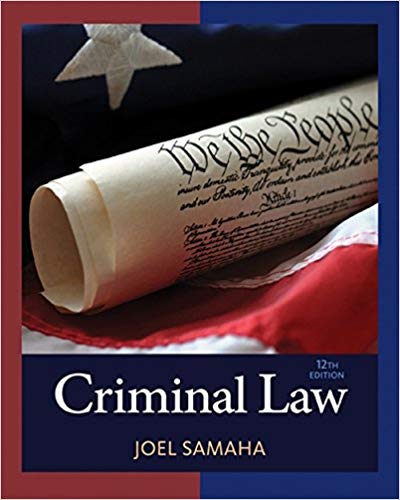
Criminal Law 12th Edition by Joel Samaha - Test Bank

Criminal Law 12th Edition by Joel Samaha - Test Bank   Instant Download - Complete Test Bank With Answers     Sample Questions Are Posted Below   True / False   1. ​Deadly force may never be used for defense.   a. True   b. False   ANSWER:   False REFERENCES:   Proving Defenses LEARNING OBJECTIVES:   CRLW.SAMA.17.05.01 - To …

$19.99

Criminal Law 12th Edition by Joel Samaha – Test Bank


Instant Download – Complete Test Bank With Answers


Sample Questions Are Posted Below


True / False


1. ​Deadly force may never be used for defense.

  a. True
  b. False


ANSWER:   False
REFERENCES:   Proving Defenses
LEARNING OBJECTIVES:   CRLW.SAMA.17.05.01 – To know that defendants aren’t criminally liable if their actions were justified or excused under the circumstances, and to understand how the affirmative defenses operate in justified and excused conduct.
KEYWORDS:   Bloom’s: Remember


2. Insanity is an example of a justification defense.

  a. True
  b. False


ANSWER:   False
REFERENCES:   Proving Defenses
LEARNING OBJECTIVES:   CRLW.SAMA.17.05.01 – To know that defendants aren’t criminally liable if their actions were justified or excused under the circumstances, and to understand how the affirmative defenses operate in justified and excused conduct.
KEYWORDS:   Bloom’s: Remember


3. In both justifications and excuses, the defendant admits doing the criminal act.

  a. True
  b. False


ANSWER:   True
REFERENCES:   Proving Defenses
LEARNING OBJECTIVES:   CRLW.SAMA.17.05.01 – To know that defendants aren’t criminally liable if their actions were justified or excused under the circumstances, and to understand how the affirmative defenses operate in justified and excused conduct.
KEYWORDS:   Bloom’s: Remember


4. Most affirmative defenses are perfect defenses.

  a. True
  b. False


ANSWER:   True
REFERENCES:   Proving Defenses
LEARNING OBJECTIVES:   CRLW.SAMA.17.05.01 – To know that defendants aren’t criminally liable if their actions were justified or excused under the circumstances, and to understand how the affirmative defenses operate in justified and excused conduct.
KEYWORDS:   Bloom’s: Remember


5. An imperfect defense, such as imperfect self-defense, may, in some jurisdictions, reduce a murder to manslaughter.

  a. True
  b. False


ANSWER:   True
REFERENCES:   Proving Defenses
LEARNING OBJECTIVES:   CRLW.SAMA.17.05.01 – To know that defendants aren’t criminally liable if their actions were justified or excused under the circumstances, and to understand how the affirmative defenses operate in justified and excused conduct.
KEYWORDS:   Bloom’s: Remember


6. If a perfect defense is successful, defendants are convicted.

  a. True
  b. False


ANSWER:   False
REFERENCES:   Proving Defenses
LEARNING OBJECTIVES:   CRLW.SAMA.17.05.01 – To know that defendants aren’t criminally liable if their actions were justified or excused under the circumstances, and to understand how the affirmative defenses operate in justified and excused conduct.
KEYWORDS:   Bloom’s: Remember


7. One purpose of competency hearings is to determine if defendants are still insane.

  a. True
  b. False


ANSWER:   True
REFERENCES:   Proving Defenses
LEARNING OBJECTIVES:   CRLW.SAMA.17.05.01 – To know that defendants aren’t criminally liable if their actions were justified or excused under the circumstances, and to understand how the affirmative defenses operate in justified and excused conduct.
KEYWORDS:   Bloom’s: Remember


8. ​If you use force to protect yourself, your home or property, or the people you care about, you’ve violated the rule of law.

  a. True
  b. False


ANSWER:   True
REFERENCES:   Self-Defense
LEARNING OBJECTIVES:   CRLW.SAMA.17.05.02 – To understand that self-defense limits the use of deadly force to those who reasonably believe that they’re faced with the choice to kill or be killed right now.
KEYWORDS:   Bloom’s: Remember


9. ​In some cases necessity refers to an imminent danger of attack.

  a. True
  b. False


ANSWER:   True
REFERENCES:   Self-Defense
LEARNING OBJECTIVES:   CRLW.SAMA.17.05.03 – To know and understand the four elements of self-defense.
KEYWORDS:   Bloom’s: Remember


10. ​Proponents of new “castle laws” warn that they are a license to kill.

  a. True
  b. False


ANSWER:   False
REFERENCES:   Defense of Home and Property
LEARNING OBJECTIVES:   CRLW.SAMA.17.05.07 – To appreciate how the new “Castle Laws” are drastically transforming the law of self-defense, and to understand their application to self-defense cases.
KEYWORDS:   Bloom’s: Remember


11. In the justification defenses, defendants admit they were responsible for their acts but claim what they did was right (justified) under the circumstances.

  a. True
  b. False


ANSWER:   True
REFERENCES:   Proving Defenses
LEARNING OBJECTIVES:   CRLW.SAMA.17.05.01 – To know that defendants aren’t criminally liable if their actions were justified or excused under the circumstances, and to understand how the affirmative defenses operate in justified and excused conduct.
KEYWORDS:   Bloom’s: Remember


12. The law of self-defense is undergoing major transformation.

  a. True
  b. False


ANSWER:   True
REFERENCES:   Defense of Home and Property
LEARNING OBJECTIVES:   CRLW.SAMA.17.05.07 – To appreciate how the new “Castle Laws” are drastically transforming the law of self-defense, and to understand their application to self-defense cases.
KEYWORDS:   Bloom’s: Remember


13. ​The Model Penal Code “choice of evils” provision contains five elements.

  a. True
  b. False


ANSWER:   False
REFERENCES:   “Choice of Evils”
LEARNING OBJECTIVES:   CRLW.SAMA.17.05.08 – To know that the choice-of-evils defense justifies the commission of a lesser crime to avoid an imminent threat of harm from a greater evil.
KEYWORDS:   Bloom’s: Remember


14. ​At the heart of the defense of consent is the high value placed on group autonomy in a free society.

  a. True
  b. False


ANSWER:   False
REFERENCES:   Consent
LEARNING OBJECTIVES:   CRLW.SAMA.17.05.09 – To know that the defense of consent is a justification defense based on the high value placed on individual autonomy in a free society.
KEYWORDS:   Bloom’s: Remember


15. The “New Castle Doctrine” laws are transforming the law of self-defense.

  a. True
  b. False


ANSWER:   True
REFERENCES:   Defense of Home and Property
LEARNING OBJECTIVES:   CRLW.SAMA.17.05.07 – To appreciate how the new “Castle Laws” are drastically transforming the law of self-defense, and to understand their application to self-defense cases.
KEYWORDS:   Bloom’s: Remember


16. Most deadly force statutes do not include the curtilage.

  a. True
  b. False


ANSWER:   True
REFERENCES:   Defense of Home and Property
LEARNING OBJECTIVES:   CRLW.SAMA.17.05.06 – To know and appreciate how self-defense has been expanded to include the defense of others, the home, and property.
KEYWORDS:   Bloom’s: Remember


17. Mitigating circumstances may convince judges or juries that defendants don’t deserve the maximum penalty for the crime they’re convicted of.

  a. True
  b. False


ANSWER:   True
REFERENCES:   Proving Defenses
LEARNING OBJECTIVES:   CRLW.SAMA.17.05.01 – To know that defendants aren’t criminally liable if their actions were justified or excused under the circumstances, and to understand how the affirmative defenses operate in justified and excused conduct.
KEYWORDS:   Bloom’s: Remember


18. Force may lawfully be used as a preemptive strike against a potential attacker.

  a. True
  b. False


ANSWER:   False
REFERENCES:   Self-Defense
LEARNING OBJECTIVES:   CRLW.SAMA.17.05.02 – To understand that self-defense limits the use of deadly force to those who reasonably believe that they’re faced with the choice to kill or be killed right now.
KEYWORDS:   Bloom’s: Remember


19. A classic excuse defense is insanity.

  a. True
  b. False


ANSWER:   True
REFERENCES:   Self-Defense
LEARNING OBJECTIVES:   CRLW.SAMA.17.05.01 – To know that defendants aren’t criminally liable if their actions were justified or excused under the circumstances, and to understand how the affirmative defenses operate in justified and excused conduct.
KEYWORDS:   Bloom’s: Remember


20. Retribution is the heart of the defense of self-defense.

  a. True
  b. False


ANSWER:   False
REFERENCES:   Self-Defense
LEARNING OBJECTIVES:   CRLW.SAMA.17.05.02 – To understand that self-defense limits the use of deadly force to those who reasonably believe that they’re faced with the choice to kill or be killed right now.
KEYWORDS:   Bloom’s: Remember


21. “Inevitable” harm is the same as “imminent” harm.

  a. True
  b. False


ANSWER:   False
REFERENCES:   Self-Defense
LEARNING OBJECTIVES:   CRLW.SAMA.17.05.03 – To know and understand the four elements of self-defense.
KEYWORDS:   Bloom’s: Remember


22. A victim of domestic violence is justified in shooting her cohabitant husband while he is asleep.

  a. True
  b. False


ANSWER:   False
REFERENCES:   Self-Defense
LEARNING OBJECTIVES:   CRLW.SAMA.17.05.05 – To know and understand the exceptions to the retreat rule, and to appreciate their impact on self-defense in cases of domestic violence.
KEYWORDS:   Bloom’s: Remember


23. ​Historically, self-defense meant protecting yourself and the members of your immediate family.

  a. True
  b. False


ANSWER:   True
REFERENCES:   Defense of Others
LEARNING OBJECTIVES:   CRLW.SAMA.17.05.06 – To know and appreciate how self-defense has been expanded to include the defense of others, the home, and property.
KEYWORDS:   Bloom’s: Remember


24. There’s no empirical research to help explain why so many states have adopted the “new castle laws.”

  a. True
  b. False


ANSWER:   True
REFERENCES:   Defense of Home and Property
LEARNING OBJECTIVES:   CRLW.SAMA.17.05.07 – To appreciate how the new “Castle Laws” are drastically transforming the law of self-defense, and to understand their application to self-defense cases.
KEYWORDS:   Bloom’s: Remember


25. Self-defense is never available to an initial aggressor.

  a. True
  b. False


ANSWER:   False
REFERENCES:   Self-Defense
LEARNING OBJECTIVES:   CRLW.SAMA.17.05.03 – To know and understand the four elements of self-defense.
KEYWORDS:   Bloom’s: Remember


26. Defendants are not criminally liable if their actions were justified under the circumstances.

  a. True
  b. False


ANSWER:   True
REFERENCES:   Self-Defense
LEARNING OBJECTIVES:   CRLW.SAMA.17.05.01 – To know that defendants aren’t criminally liable if their actions were justified or excused under the circumstances, and to understand how the affirmative defenses operate in justified and excused conduct.
KEYWORDS:   Bloom’s: Remember


27. Most affirmative defenses are imperfect defenses.

  a. True
  b. False


ANSWER:   False
REFERENCES:   Self-Defense
LEARNING OBJECTIVES:   CRLW.SAMA.17.05.01 – To know that defendants aren’t criminally liable if their actions were justified or excused under the circumstances, and to understand how the affirmative defenses operate in justified and excused conduct.
KEYWORDS:   Bloom’s: Remember


28. Juvenile court judges can use their discretion to transfer a juvenile to adult court.

  a. True
  b. False


ANSWER:   True
REFERENCES:   The Excuse of Age
LEARNING OBJECTIVES:   CRLW.SAMA.17.05.06 – To know and appreciate how self-defense has been expanded to include the defense of others, the home, and property.
KEYWORDS:   Bloom’s: Remember


29. Self-defense consists of four elements.

  a. True
  b. False


ANSWER:   True
REFERENCES:   Self-Defense
LEARNING OBJECTIVES:   CRLW.SAMA.17.05.03 – To know and understand the four elements of self-defense.
KEYWORDS:   Bloom’s: Remember


30. Some self-defense statutes allow you to kill someone you reasonably believe is about to commit a serious felony against you that doesn’t threaten either your life or serious bodily injury.

  a. True
  b. False


ANSWER:   True
REFERENCES:   Self-Defense
LEARNING OBJECTIVES:   CRLW.SAMA.17.05.03 – To know and understand the four elements of self-defense.
KEYWORDS:   Bloom’s: Remember


Multiple Choice


31. ​A defense in which the defendant accepts responsibility for the act but claims what they did was right is called

  a. ​justification.
  b. ​excuse.
  c. ​rationalization.
  d. ​claim of right.


ANSWER:   a
REFERENCES:   Proving Defenses
LEARNING OBJECTIVES:   CRLW.SAMA.17.05.01 – To know that defendants aren’t criminally liable if their actions were justified or excused under the circumstances, and to understand how the affirmative defenses operate in justified and excused conduct.
KEYWORDS:   Bloom’s: Remember


32. A defense in which the defendant admits the act but claims that, under the circumstances, they aren’t legally responsible is called

  a. ​justification.
  b. ​excuse.
  c. ​rationalization.
  d. ​claim of right.


ANSWER:   b
REFERENCES:   Proving Defenses
LEARNING OBJECTIVES:   CRLW.SAMA.17.05.01 – To know that defendants aren’t criminally liable if their actions were justified or excused under the circumstances, and to understand how the affirmative defenses operate in justified and excused conduct.
KEYWORDS:   Bloom’s: Remember


33. Circumstances that convince fact finders that defendants don’t deserve the maximum penalty for the crime they’re convicted of are called

  a. perfect circumstances.
  b. imperfect circumstances.
  c. mitigating circumstances.
  d. aggravating circumstances.


ANSWER:   c
REFERENCES:   Proving Defenses
LEARNING OBJECTIVES:   CRLW.SAMA.17.05.01 – To know that defendants aren’t criminally liable if their actions were justified or excused under the circumstances, and to understand how the affirmative defenses operate in justified and excused conduct.
KEYWORDS:   Bloom’s: Remember


34. Most defenses are perfect defenses; if they’re successful, defendants are

  a. committed.
  b. convicted.
  c. acquitted.
  d. sentenced.


ANSWER:   c
REFERENCES:   Proving Defenses
LEARNING OBJECTIVES:   CRLW.SAMA.17.05.01 – To know that defendants aren’t criminally liable if their actions were justified or excused under the circumstances, and to understand how the affirmative defenses operate in justified and excused conduct.
KEYWORDS:   Bloom’s: Remember


35. Evidence that doesn’t amount to a perfect defense might amount to an imperfect defense; that is, defendants are

  a. committed to a mental hospital.
  b. entitled to an acquittal.
  c. entitled to a sentence reduction.
  d. guilty of lesser offenses.


ANSWER:   d
REFERENCES:   Proving Defenses
LEARNING OBJECTIVES:   CRLW.SAMA.17.05.01 – To know that defendants aren’t criminally liable if their actions were justified or excused under the circumstances, and to understand how the affirmative defenses operate in justified and excused conduct.
KEYWORDS:   Bloom’s: Remember


36. ​The castle exception is an exception to what doctrine?

  a. ​the retreat doctrine
  b. ​the stand-your-ground doctrine
  c. ​the justification doctrine
  d. ​the excuse doctrine


ANSWER:   a
REFERENCES:   Self-Defense
LEARNING OBJECTIVES:   CRLW.SAMA.17.05.04 – To understand the retreat rule and its historic transformation that led to the stand-your-ground rule.
KEYWORDS:   Bloom’s: Remember


37. ​At the heart of the “choice of evils” defense is the necessity to prevent

  a. imminent danger.​
  b. ​crime.
  c. ​rape.
  d. ​murder.


ANSWER:   a
REFERENCES:   “Choice of Evils”
LEARNING OBJECTIVES:   CRLW.SAMA.17.05.08 – To know that the choice-of-evils defense justifies the commission of a lesser crime to avoid an imminent threat of harm from a greater evil.
KEYWORDS:   Bloom’s: Remember


38. ​Under English common law, who had the burden to prove they “retreated to the wall” before acting in self-defense?

  a. ​commoners
  b. ​accusers
  c. ​victims
  d. ​defendants


ANSWER:   d
REFERENCES:   Self-Defense
LEARNING OBJECTIVES:   CRLW.SAMA.17.05.05 – To know and understand the exceptions to the retreat rule, and to appreciate their impact on self-defense in cases of domestic violence.
KEYWORDS:   Bloom’s: Remember


39. ​Which of the following cases involves the “New York Subway Vigilante”?

  a. State v. Harold Fish (2009)
  b. People v. John Gray et al. (1991)​
  c. People v. Goetz (1986)​
  d. State v. Thomas (1997)


ANSWER:   c
REFERENCES:   Self-Defense
LEARNING OBJECTIVES:   CRLW.SAMA.17.05.03 – To know and understand the four elements of self-defense.
KEYWORDS:   Bloom’s: Remember


40. ​Which defense is based on the high valued placed on individual autonomy in a free society?

  a. ​perfect
  b. ​justification
  c. ​excuse
  d. ​consent


ANSWER:   d
REFERENCES:   Consent
LEARNING OBJECTIVES:   CRLW.SAMA.17.05.09 – To know that the defense of consent is a justification defense based on the high value placed on individual autonomy in a free society.
KEYWORDS:   Bloom’s: Remember


41. ​The general rule is that self-defense is available only against what type of attacks?

  a. ​justified
  b. ​legal
  c. ​excusable
  d. ​unprovoked


ANSWER:   d
REFERENCES:   Self-Defense
LEARNING OBJECTIVES:   CRLW.SAMA.17.05.02 – To understand that self-defense limits the use of deadly force to those who reasonably believe that they’re faced with the choice to kill or be killed right now.
CRLW.SAMA.17.05.03 – To know and understand the four elements of self-defense.
KEYWORDS:   Bloom’s: Remember


42. A person who was the initial aggressor can gain a lawful right to self-defense if they do which of the following from the incident they started?

  a. renounce themselves
  b. completely withdraw
  c. irrevocably abbreviate themselves
  d. tangentially abstain


ANSWER:   b
REFERENCES:   Self-Defense
LEARNING OBJECTIVES:   OBJ: CRLW.SAMA.17.05.03 – To know and understand the four elements of self-defense.
KEYWORDS:   Bloom’s: Remember


43. According to what rule does the government have a monopoly on the use of force; so when you use force, you’re “taking the law into your own hands”?

  a. the rule of law
  b. the rule of self-defense
  c. the rule of justification
  d. the rule of mitigation


ANSWER:   a
REFERENCES:   Self-Defense
LEARNING OBJECTIVES:   CRLW.SAMA.17.05.02 – To understand that self-defense limits the use of deadly force to those who reasonably believe that they’re faced with the choice to kill or be killed right now.
KEYWORDS:   Bloom’s: Remember


44. The four elements of self-defense are non-aggressor, necessity, reasonable belief and

  a. perspective.
  b. proportionality.
  c. permanence.
  d. permissibility.


ANSWER:   b
REFERENCES:   Self-Defense
LEARNING OBJECTIVES:   OBJ: CRLW.SAMA.17.05.03 – To know and understand the four elements of self-defense.
KEYWORDS:   Bloom’s: Remember


45. In some jurisdictions, a person must retreat before using defensive deadly force if

  a. he can with complete safety to himself and others.
  b. he was not the original attacker.
  c. the attacker demands he retreat or die.
  d. the attacker refuses to retreat.


ANSWER:   a
REFERENCES:   Self-Defense
LEARNING OBJECTIVES:   OBJ: CRLW.SAMA.17.05.03 – To know and understand the four elements of self-defense.
KEYWORDS:   Bloom’s: Remember


46. ​What type of laws are drastically reforming the law of self-defense?

  a. ​excuse laws
  b. ​justification laws
  c. ​castle laws
  d. ​retreat laws


ANSWER:   c
REFERENCES:   Defense of Home and Property
LEARNING OBJECTIVES:   CRLW.SAMA.17.05.07 – To appreciate how the new “Castle Laws” are drastically transforming the law of self-defense, and to understand their application to self-defense cases.
KEYWORDS:   Bloom’s: Remember


47. What is the heart of self-defense?

  a. necessity
  b. imminence
  c. practicality
  d. concession


ANSWER:   a
REFERENCES:   Self-Defense
LEARNING OBJECTIVES:   CRLW.SAMA.17.05.02 – To understand that self-defense limits the use of deadly force to those who reasonably believe that they’re faced with the choice to kill or be killed right now.
KEYWORDS:   Bloom’s: Remember


48. Which of the following never justifies the use of force against another person?

  a. retaliation
  b. self-defense
  c. defense of someone other than yourself
  d. an imminent attack


ANSWER:   a
REFERENCES:   Self-Defense
LEARNING OBJECTIVES:   CRLW.SAMA.17.05.02 – To understand that self-defense limits the use of deadly force to those who reasonably believe that they’re faced with the choice to kill or be killed right now.
KEYWORDS:   Bloom’s: Remember


49. What defense justifies the commission of a lesser crime to avoid the threat of harm from a greater evil?

  a. castle defense
  b. choice of evils
  c. consent
  d. self-defense


ANSWER:   b
REFERENCES:   “Choice of Evils”
LEARNING OBJECTIVES:   CRLW.SAMA.17.05.08 – To know that the choice-of-evils defense justifies the commission of a lesser crime to avoid an imminent threat of harm from a greater evil.
KEYWORDS:   Bloom’s: Remember


50. Which doctrine holds that a person does not have to retreat if he or she didn’t start the fight, even if it is safely possible?

  a. the stand-your-ground rule
  b. the self-defense rule
  c. the preemptive-strike rule
  d. the self-preservation rule


ANSWER:   a
REFERENCES:   Self-Defense
LEARNING OBJECTIVES:   CRLW.SAMA.17.05.04 – To understand the retreat rule and its historic transformation that led to the stand-your-ground rule.
KEYWORDS:   Bloom’s: Remember


51. Supporters of the castle laws see them as the public reasserting

  a. fundamental rights.
  b. gun rights.
  c. freedom of speech rights.
  d. freedom of religion rights.


ANSWER:   a
REFERENCES:   Defense of Home and Property
LEARNING OBJECTIVES:   CRLW.SAMA.17.05.07 – To appreciate how the new “Castle Laws” are drastically transforming the law of self-defense, and to understand their application to self-defense cases.
KEYWORDS:   Bloom’s: Remember


52. Which of the following is the majority rule?

  a. the stand-your-ground rule
  b. the retreat rule
  c. both
  d. neither


ANSWER:   a
REFERENCES:   Self-Defense
LEARNING OBJECTIVES:   CRLW.SAMA.17.05.04 – To understand the retreat rule and its historic transformation that led to the stand-your-ground rule.
KEYWORDS:   Bloom’s: Remember


53. The law of self-defense is undergoing

  a. no change currently.
  b. major transformation.
  c. minor transformation.
  d. nothing.


ANSWER:   b
REFERENCES:   Defense of Home and Property
LEARNING OBJECTIVES:   CRLW.SAMA.17.05.07 – To appreciate how the new “Castle Laws” are drastically transforming the law of self-defense, and to understand their application to self-defense cases.
KEYWORDS:   Bloom’s: Remember


54. Evidence that doesn’t amount to a perfect defense might amount to a/an

  a. imperfect defense.
  b. special defense.
  c. specific defense.
  d. rational defense.


ANSWER:   a
REFERENCES:   Proving Defenses
LEARNING OBJECTIVES:   CRLW.SAMA.17.05.01 – To know that defendants aren’t criminally liable if their actions were justified or excused under the circumstances, and to understand how the affirmative defenses operate in justified and excused conduct.
KEYWORDS:   Bloom’s: Remember


55. ​The modern right to use force against those unlawfully entering the person’s home generally

  a. ​does not include defense of the curtilage.
  b. ​does not include deadly force.
  c. ​applies only to nighttime intrusions.
  d. ​requires that the intruder specifically threaten the occupants of the home.


ANSWER:   a
REFERENCES:   Defense of Home and Property
LEARNING OBJECTIVES:   CRLW.SAMA.17.05.06 – To know and appreciate how self-defense has been expanded to include the defense of others, the home, and property.
KEYWORDS:   Bloom’s: Remember


56. Which of the following is a key requirement of the necessity defense?

  a. that no reasonable legal option exists for averting the harm
  b. that the harm could have been averted
  c. that the harm as minimal and did not need to be averted
  d. that efforts to avert the harm would have caused worse harm


ANSWER:   a
REFERENCES:   “Choice of Evils”
LEARNING OBJECTIVES:   CRLW.SAMA.17.05.08 – To know that the choice-of-evils defense justifies the commission of a lesser crime to avoid an imminent threat of harm from a greater evil.
KEYWORDS:   Bloom’s: Remember


57. At the heart of the “choice of evils” defense is the necessity to prevent what kind of danger?

  a. imminent danger
  b. unavoidable danger
  c. deadly danger
  d. serious danger


ANSWER:   a
REFERENCES:   “Choice of Evils”
LEARNING OBJECTIVES:   CRLW.SAMA.17.05.08 – To know that the choice-of-evils defense justifies the commission of a lesser crime to avoid an imminent threat of harm from a greater evil.
KEYWORDS:   Bloom’s: Remember


58. At the heart of the defense of consent is the high value placed on the right to

  a. bear arms.
  b. a jury trial.
  c. free speech.
  d. individual autonomy.


ANSWER:   d
REFERENCES:   Consent
LEARNING OBJECTIVES:   CRLW.SAMA.17.05.09 – To know that the defense of consent is a justification defense based on the high value placed on individual autonomy in a free society.
KEYWORDS:   Bloom’s: Remember


59. One of the four elements of self-defense requires that the defender didn’t start or provoke the attack. What is the name of this element?

  a. necessity
  b. proportionality
  c. nonaggressor
  d. reasonable belief


ANSWER:   c
REFERENCES:   Self-Defense
LEARNING OBJECTIVES:   OBJ: CRLW.SAMA.17.05.03 – To know and understand the four elements of self-defense.
KEYWORDS:   Bloom’s: Remember


60. The defense of consent is

  a. a justification defense.
  b. an excuse defense.
  c. not a defense.
  d. a castle doctrine defense.


ANSWER:   a
REFERENCES:   Consent
LEARNING OBJECTIVES:   CRLW.SAMA.17.05.09 – To know that the defense of consent is a justification defense based on the high value placed on individual autonomy in a free society.
KEYWORDS:   Bloom’s: Remember


61. Which of the following is recognized as a valid consent defense situation in most states?

  a. a person consents to be killed
  b. a person consents to a crime being committed on their children
  c. the injury happens during a sporting event
  d. statutory rape


ANSWER:   c
REFERENCES:   Consent
LEARNING OBJECTIVES:   CRLW.SAMA.17.05.09 – To know that the defense of consent is a justification defense based on the high value placed on individual autonomy in a free society.
KEYWORDS:   Bloom’s: Remember


62. To provide a valid consent defense, the consent of the victim must be

  a. objectively reasonable and imminent.
  b. knowing and voluntary.
  c. in writing and authorized.
  d. given after the crime occurs.


ANSWER:   b
REFERENCES:   Consent
LEARNING OBJECTIVES:   CRLW.SAMA.17.05.09 – To know that the defense of consent is a justification defense based on the high value placed on individual autonomy in a free society.
KEYWORDS:   Bloom’s: Remember


63. What kind of defense is diminished capacity?

  a. both an affirmative excuse and a failure-of-proof defense
  b. diminished capacity is not a defense
  c. an affirmative excuse defense
  d. a failure-of-proof defense


ANSWER:   d
REFERENCES:   Defense of Home and Property
LEARNING OBJECTIVES:   CRLW.SAMA.17.05.06 – To know and appreciate how self-defense has been expanded to include the defense of others, the home, and property.
KEYWORDS:   Bloom’s: Remember


64. The case of The Queen v. Dudley and Stephens (1884) involves which defense?

  a. imminent necessity
  b. the castle doctrine
  c. the Good Samaritan defense
  d. unprovoked attack defense


ANSWER:   a
REFERENCES:   “Choice of Evils”
LEARNING OBJECTIVES:   CRLW.SAMA.17.05.08 – To know that the choice-of-evils defense justifies the commission of a lesser crime to avoid an imminent threat of harm from a greater evil.
KEYWORDS:   Bloom’s: Remember


65. Knowing consent means

  a. the person consenting is too young to understand what she’s consenting to.
  b. the person consenting understands what she’s consenting to.
  c. consent was the product of free will.
  d. consent was not the product of force.


ANSWER:   b
REFERENCES:   Consent
LEARNING OBJECTIVES:   CRLW.SAMA.17.05.09 – To know that the defense of consent is a justification defense based on the high value placed on individual autonomy in a free society.
KEYWORDS:   Bloom’s: Remember


66. One of the four elements of self-defense states that defenders can use deadly force only if they reasonably believe it’s necessary to repel an imminent deadly attack. What is the name of this element?

  a. necessity
  b. attack
  c. proportionality
  d. reasonable belief


ANSWER:   a
REFERENCES:   Self-Defense
LEARNING OBJECTIVES:   CRLW.SAMA.17.05.02 – To understand that self-defense limits the use of deadly force to those who reasonably believe that they’re faced with the choice to kill or be killed right now.
CRLW.SAMA.17.05.03 – To know and understand the four elements of self-defense.
KEYWORDS:   Bloom’s: Remember


67. Most self-defense statutes require the belief in imminent danger to be honest and

  a. credible.
  b. legitimate.
  c. defensible.
  d. reasonable.


ANSWER:   d
REFERENCES:   Self-Defense
LEARNING OBJECTIVES:   CRLW.SAMA.17.05.02 – To understand that self-defense limits the use of deadly force to those who reasonably believe that they’re faced with the choice to kill or be killed right now.
CRLW.SAMA.17.05.03 – To know and understand the four elements of self-defense.
KEYWORDS:   Bloom’s: Remember


68. If attackers completely withdraw from attacks they provoke, they can defend themselves against an attack by their initial victims. This is known as

  a. the withdrawal exception.
  b. the retreat exception.
  c. the stand-your-ground exception.
  d. the castle exception.


ANSWER:   a
REFERENCES:   Self-Defense
LEARNING OBJECTIVES:   OBJ: CRLW.SAMA.17.05.03 – To know and understand the four elements of self-defense.
KEYWORDS:   Bloom’s: Remember


69. The retreat rule is the

  a. common rule.
  b. minority rule.
  c. majority rule.
  d. same as the castle rule.


ANSWER:   b
REFERENCES:   Self-Defense
LEARNING OBJECTIVES:   CRLW.SAMA.17.05.04 – To understand the retreat rule and its historic transformation that led to the stand-your-ground rule.
KEYWORDS:   Bloom’s: Remember


70. One element of self-defense requires that defenders can use deadly force only if the use of nondeadly force isn’t enough to repel the attack. What element is this?

  a. necessity
  b. nonaggressor
  c. reasonable belief
  d. proportionality


ANSWER:   d
REFERENCES:   Self-Defense
LEARNING OBJECTIVES:   OBJ: CRLW.SAMA.17.05.03 – To know and understand the four elements of self-defense.
KEYWORDS:   Bloom’s: Remember


71. Regarding defense of home and property, most statutes do not include what area?

  a. the backyard
  b. the front yard
  c. the garage
  d. the curtilage


ANSWER:   d
REFERENCES:   Defense of Home and Property
LEARNING OBJECTIVES:   CRLW.SAMA.17.05.06 – To know and appreciate how self-defense has been expanded to include the defense of others, the home, and property.
KEYWORDS:   Bloom’s: Remember


72. What state passed the first new castle doctrine?

  a. California
  b. Ohio
  c. Oregon
  d. Florida


ANSWER:   d
REFERENCES:   Defense of Home and Property
LEARNING OBJECTIVES:   CRLW.SAMA.17.05.07 – To appreciate how the new “Castle Laws” are drastically transforming the law of self-defense, and to understand their application to self-defense cases.
KEYWORDS:   Bloom’s: Remember


73. The Florida castle law abolished

  a. the duty to retreat rule.
  b. the imminence rule.
  c. the use of force rule.
  d. the recklessness rule.


ANSWER:   a
REFERENCES:   Defense of Home and Property
LEARNING OBJECTIVES:   CRLW.SAMA.17.05.07 – To appreciate how the new “Castle Laws” are drastically transforming the law of self-defense, and to understand their application to self-defense cases.
KEYWORDS:   Bloom’s: Remember


74. Two commonly mentioned reasons for the current spread of new castle laws are Americans’ heightened consciousness and concern about their security since 9/11 and

  a. use of force by police officers.
  b. lack of training requirements for police officers.
  c. the lack of funding for police.
  d. the lack of enough police officers to protect the public.


ANSWER:   d
REFERENCES:   Defense of Home and Property
LEARNING OBJECTIVES:   CRLW.SAMA.17.05.07 – To appreciate how the new “Castle Laws” are drastically transforming the law of self-defense, and to understand their application to self-defense cases.
KEYWORDS:   Bloom’s: Remember


75. The Jacqueline Galas case deals with the expansion of what laws?

  a. new castle laws
  b. new retreat laws
  c. new curtilage laws
  d. new prostitution laws


ANSWER:   b
REFERENCES:   Defense of Home and Property
LEARNING OBJECTIVES:   CRLW.SAMA.17.05.07 – To appreciate how the new “Castle Laws” are drastically transforming the law of self-defense, and to understand their application to self-defense cases.
KEYWORDS:   Bloom’s: Remember


Case 5.1

Li plays on a local soccer team. In a match against another team Li is hit by an opponent during normal play and his leg is broken. Li calls the police department from the hospital emergency room and requests that the player who hit him be charged with assault.


76. If charged with assault, what defense would the opponent most likely use at trial?

  a. consent
  b. excuse
  c. justification
  d. mental illness


ANSWER:   a
REFERENCES:   Consent
PREFACE NAME:   Case 5.1
LEARNING OBJECTIVES:   CRLW.SAMA.17.05.09 – To know that the defense of consent is a justification defense based on the high value placed on individual autonomy in a free society.
KEYWORDS:   Bloom’s: Remember


77. If charged with assault, what might prevent the opponent from claiming consent as a defense?

  a. the consent was voluntary
  b. the consent was knowing
  c. the consent was authorized
  d. the consent was coerced


ANSWER:   d
REFERENCES:   Consent
PREFACE NAME:   Case 5.1
LEARNING OBJECTIVES:   CRLW.SAMA.17.05.09 – To know that the defense of consent is a justification defense based on the high value placed on individual autonomy in a free society.
KEYWORDS:   Bloom’s: Remember


Case 5.2

Vincent is awoken in the middle of the night by a sound outside his house. He takes a loaded .38 pistol from his nightstand and proceeds downstairs to his kitchen to check on the noise. He encounters a stranger in his kitchen. The stranger hits him in the face knocking him to the floor. As he gets up his see the man running out his kitchen door. Vincent shoots the man through the kitchen door.


78. Which of the following rules is most applicable to this case?

  a. the stand-your-ground rule
  b. the retreat rule
  c. the castle rule
  d. the grounded doctrine rule


ANSWER:   a
REFERENCES:   Self-Defense
PREFACE NAME:   Case 5.2
LEARNING OBJECTIVES:   CRLW.SAMA.17.05.04 – To understand the retreat rule and its historic transformation that led to the stand-your-ground rule.
KEYWORDS:   Bloom’s: Remember


79. Why is Vincent not justified in shooting the man?

  a. the castle exception requires that you reasonably believe the attack threatens death or serious bodily injury
  b. the castle exception does not include curtilage
  c. the stand-your-ground rule does not include curtilage
  d. the stand-your-ground requires that you reasonably believe the attack threatens death or serious bodily injury


ANSWER:   a
REFERENCES:   Self-Defense
PREFACE NAME:   Case 5.2
LEARNING OBJECTIVES:   CRLW.SAMA.17.05.04 – To understand the retreat rule and its historic transformation that led to the stand-your-ground rule.
KEYWORDS:   Bloom’s: Remember


Case 5.3

Savannah and her girlfriend Vanessa have been drinking at her apartment most of the afternoon. They are arguing when Savannah goes into her bedroom and gets her gun. She shoots at Vanessa but misses. Vanessa leaves the apartment and gets a gun from her car. She returns to the apartment. Savannah yells stop and runs towards the bathroom. Vanessa shoots at her but also misses. Savannah turns and shoots Vanessa.


80. What element of self-defense would Savannah fail to meet in this encounter if she did not withdraw?

  a. unprovoked attack
  b. necessity
  c. proportionality
  d. reasonable belief


ANSWER:   a
REFERENCES:   Self-Defense
PREFACE NAME:   Case 5.3
LEARNING OBJECTIVES:   OBJ: CRLW.SAMA.17.05.03 – To know and understand the four elements of self-defense.
KEYWORDS:   Bloom’s: Remember


81. What exception allows Savannah to claim self-defense in this situation?

  a. the withdrawal exception
  b. the retreat exception
  c. the stand-your-ground exception
  d. the castle exception


ANSWER:   a
REFERENCES:   Self-Defense
PREFACE NAME:   Case 5.3
LEARNING OBJECTIVES:   OBJ: CRLW.SAMA.17.05.03 – To know and understand the four elements of self-defense.
KEYWORDS:   Bloom’s: Remember


82. What kind of defense to criminal liability would Savannah most likely use?

  a. self-defense
  b. excuse
  c. incompetence
  d. consent


ANSWER:   a
REFERENCES:   Self-Defense
PREFACE NAME:   Case 5.3
LEARNING OBJECTIVES:   OBJ: CRLW.SAMA.17.05.03 – To know and understand the four elements of self-defense.
KEYWORDS:   Bloom’s: Remember


Case 5.5

Tiffany is walking to the market to buy groceries. A man comes up behind her and puts a gun in her back. He tells her to step into the alley with him. Tiffany goes to the alley with the man who tells her to remove her clothes. Before she can do what he says the man drops the gun and Tiffany grabs it and shoots him. The man dies.


83. If Tiffany is charged with murder which of the following defenses should she use?

  a. failure-of-proof defense
  b. diminished capacity defense
  c. justification defense
  d. attendant circumstances defense


ANSWER:   c
REFERENCES:   Proving Defenses
PREFACE NAME:   Case 5.5
LEARNING OBJECTIVES:   CRLW.SAMA.17.05.01 – To know that defendants aren’t criminally liable if their actions were justified or excused under the circumstances, and to understand how the affirmative defenses operate in justified and excused conduct.
KEYWORDS:   Bloom’s: Remember


84. Tiffany’s defense is described best as a

  a. failure-of-proof defense.
  b. diminished capacity defense.
  c. excuse defense.
  d. affirmative defense.


ANSWER:   d
REFERENCES:   Proving Defenses
PREFACE NAME:   Case 5.5
LEARNING OBJECTIVES:   CRLW.SAMA.17.05.01 – To know that defendants aren’t criminally liable if their actions were justified or excused under the circumstances, and to understand how the affirmative defenses operate in justified and excused conduct.
KEYWORDS:   Bloom’s: Remember


85. If Tiffany is acquitted, she has achieved which of the following?

  a. a perfect defense
  b. an imperfect defense
  c. a positive defense
  d. a negative defense


ANSWER:   a
REFERENCES:   Proving Defenses
PREFACE NAME:   Case 5.5
LEARNING OBJECTIVES:   CRLW.SAMA.17.05.01 – To know that defendants aren’t criminally liable if their actions were justified or excused under the circumstances, and to understand how the affirmative defenses operate in justified and excused conduct.
KEYWORDS:   Bloom’s: Remember


Completion


86. ​Defenders can use deadly force only if they reasonably believe it’s necessary to repel an                             deadly attack.

ANSWER:   imminent​
REFERENCES:   Self-Defense
LEARNING OBJECTIVES:   CRLW.SAMA.17.05.03 – To know and understand the four elements of self-defense.
KEYWORDS:   Bloom’s: Remember


87. ​The defense of consent is a                  defense.

ANSWER:   ​justification/perfect
REFERENCES:   Consent
LEARNING OBJECTIVES:   CRLW.SAMA.17.05.09 – To know that the defense of consent is a justification defense based on the high value placed on individual autonomy in a free society.
KEYWORDS:   Bloom’s: Remember


88. ​Most justifications and excuses are                            defenses.

ANSWER:   ​affirmative
REFERENCES:   Proving Defenses
LEARNING OBJECTIVES:   CRLW.SAMA.17.05.01 – To know that defendants aren’t criminally liable if their actions were justified or excused under the circumstances, and to understand how the affirmative defenses operate in justified and excused conduct.
KEYWORDS:   Bloom’s: Remember


89. The defense of consent represents the high value placed on individual                      in a free society.

ANSWER:   autonomy
REFERENCES:   Consent
LEARNING OBJECTIVES:   CRLW.SAMA.17.05.09 – To know that the defense of consent is a justification defense based on the high value placed on individual autonomy in a free society.
KEYWORDS:   Bloom’s: Remember


90. ​The                  Personal Protection Law (2009) became the model for most of the new castle laws.

ANSWER:   ​Florida
REFERENCES:   Defense of Home and Property
LEARNING OBJECTIVES:   CRLW.SAMA.17.05.07 – To appreciate how the new “Castle Laws” are drastically transforming the law of self-defense, and to understand their application to self-defense cases.
KEYWORDS:   Bloom’s: Remember


91. A(n) _____________ defense is one that only reduces the conviction to a lesser offense.​

ANSWER:   imperfect
REFERENCES:   Proving Defenses
LEARNING OBJECTIVES:   CRLW.SAMA.17.05.01 – To know that defendants aren’t criminally liable if their actions were justified or excused under the circumstances, and to understand how the affirmative defenses operate in justified and excused conduct.
KEYWORDS:   Bloom’s: Remember


92. A _____________ defense is one that, if established, requires an acquittal.

ANSWER:   perfect
REFERENCES:   Proving Defenses
LEARNING OBJECTIVES:   CRLW.SAMA.17.05.01 – To know that defendants aren’t criminally liable if their actions were justified or excused under the circumstances, and to understand how the affirmative defenses operate in justified and excused conduct.
KEYWORDS:   Bloom’s: Remember


93. ​Self-defense is a limited exception to the government                                    on the use of force.

ANSWER:   monopoly
REFERENCES:   Self-Defense
LEARNING OBJECTIVES:   CRLW.SAMA.17.05.02 – To understand that self-defense limits the use of deadly force to those who reasonably believe that they’re faced with the choice to kill or be killed right now.
KEYWORDS:   Bloom’s: Remember


94. ​There is no duty to                 from your own home to avoid using deadly force.

ANSWER:   ​retreat
REFERENCES:   Self-Defense
LEARNING OBJECTIVES:   CRLW.SAMA.17.05.04 – To understand the retreat rule and its historic transformation that led to the stand-your-ground rule.
KEYWORDS:   Bloom’s: Remember


95. If you don’t                 a fight, you can stand your ground and kill to defend yourself without retreating from any place you have a right to be.

ANSWER:   start
REFERENCES:   Self-Defense
LEARNING OBJECTIVES:   CRLW.SAMA.17.05.04 – To understand the retreat rule and its historic transformation that led to the stand-your-ground rule.
KEYWORDS:   Bloom’s: Remember


Essay


96. ​Discuss the differences between justification and excuse defenses. Be sure to give an example of each.

ANSWER:   ​Justifications free defendants from criminal liability because they prove the defendants are not blameworthy. The criminal act was right or justified. An example is self-defense. Excuses free defendants from criminal liability because they prove the defendants aren’t responsible for their acts. An example is the insanity defense.
REFERENCES:   Proving Defenses
LEARNING OBJECTIVES:   CRLW.SAMA.17.05.01 – To know that defendants aren’t criminally liable if their actions were justified or excused under the circumstances, and to understand how the affirmative defenses operate in justified and excused conduct.
KEYWORDS:   Bloom’s: Understand


97. ​List and explain the four elements of self-defense. Are there any exceptions to any of these elements? If so, explain.

ANSWER:   ​Self-defense consists of four elements: (1) Unprovoked attack. The defender didn’t start or provoke the attack. (2) Necessity. Defenders can use deadly force only if it’s necessary repel an imminent deadly attack, namely one that’s going to happen right now. (3) Proportionality. Defenders can only use deadly force if the use of nondeadly force isn’t enough, namely excessive force is not allowed. (4) Reasonable belief. The defender has to reasonably believe that it’s necessary to use deadly force to repel the imminent deadly attack. The withdrawal exception applies to the unprovoked attack element.
REFERENCES:   Self-Defense
LEARNING OBJECTIVES:   CRLW.SAMA.17.05.03 – To know and understand the four elements of self-defense.
KEYWORDS:   Bloom’s: Apply


98. ​Explain the “choice of evils” defense and present an example.

ANSWER:   ​The “choice of evils” defense is based on necessity. This defense protects those who make the right choice in deciding to commit a lesser crime to avoid the imminent harm of a greater crime or social harm. The crime results in a net social good. Examples include destroying property to prevent fire or speeding to get a dying person to the hospital.
REFERENCES:   “Choice of Evils”
LEARNING OBJECTIVES:   CRLW.SAMA.17.05.08 – To know that the choice-of-evils defense justifies the commission of a lesser crime to avoid an imminent threat of harm from a greater evil.
KEYWORDS:   Bloom’s: Understand


99. ​Discuss the general rules on the use of force and deadly force. Be sure to provide examples.

ANSWER:   According to the rule of law, the government has a monopoly on the use of force. Individuals may use force only when authorized by law. Self-defense is a concession to necessity and is only justified when the force is reasonably and immediately necessary for defense. Deadly force is justified only when the necessity is unprovoked and the attack involves threatened death or serious bodily injury. The amount of force used must be the minimum amount reasonably necessary to defend against an imminent threat.​
REFERENCES:   Self-Defense
LEARNING OBJECTIVES:   CRLW.SAMA.17.05.02 – To understand that self-defense limits the use of deadly force to those who reasonably believe that they’re faced with the choice to kill or be killed right now.
KEYWORDS:   Bloom’s: Understand


100. ​In the minority of states that follow the retreat rule there are usually two exceptions. Identify and explain these two exceptions.

ANSWER:   ​In the minority of states that follow the retreat rule, two exceptions usually exist: (1) the castle exception allows a defender to stand her ground and use deadly force to fend off an unprovoked attack in the home; and (2) the cohabitant exception allows people who live in the same home to stand their ground as well. By the late 1990s, battered women were recognized as fitting the “true man protecting his castle” frame; now, every state allows expert witnesses to explain “battered women’s syndrome” to judges and juries in cases of self-defense in the home.
REFERENCES:   Self-Defense
LEARNING OBJECTIVES:   CRLW.SAMA.17.05.05 – To know and understand the exceptions to the retreat rule, and to appreciate their impact on self-defense in cases of domestic violence.
KEYWORDS:   Bloom’s: Understand


101. ​The concept of retreat has undergone historic transformation since the English common-law requirement that one “retreat to the wall.” Explain this transformation and how it’s altering the stand-your-ground rule and the retreat rule.

ANSWER:   ​The English common law put the burden on defendants to prove they “retreated to the wall” before acting in self-defense. The American majority “stand-your-ground rule” was based on the idea that a “true man” shouldn’t have to flee from attack because he’d done nothing wrong to provoke or deserve the attack and the need to protect the family and country, and could stand his ground and kill to “defend himself without retreating from any place he had a right to be.” Current views on how a person may defend him/herself wherever he/she has a “right to be” have paved the way for a multitude of new statutes. There is no duty to retreat from your own home to avoid using deadly force. Judges and legislators have generalized the right to self-defense into the majority stand-your-ground rule, namely that if he didn’t start the fight, he could stand his ground and kill to “defend himself without retreating from any place he had a right to be” (245). The retreat rule now holds that you have to retreat from an attack, if you reasonably believe (1) that you’re in danger of death or serious bodily harm and (2) that backing off won’t unreasonably put you in danger of death or serious bodily harm.
REFERENCES:   Defense of Home and Property
LEARNING OBJECTIVES:   CRLW.SAMA.17.05.04 – To understand the retreat rule and its historic transformation that led to the stand-your-ground rule.
KEYWORDS:   Bloom’s: Understand


102. ​Explain the defense of consent. In most states, the law recognizes only four situations where consent justifies otherwise criminal conduct. What are those situations? What does it mean to say that “the heart of the defense of consent is the high value placed on individual autonomy in a free society?”

ANSWER:   The defense of consent, is based on the idea that competent adults voluntarily consented to crimes against them, and knew what they were consenting to. The four situations where consent justifies otherwise criminal conduct in most states include (1) no serious injury results from the consensual crime; (2) the injury happens during a sporting event; (3) the conduct benefits the consenting person, such as when a patient consents to surgery; and (4) the consent is to sexual conduct (Fletcher 1978, 770). To say that the heart of the defense of consent is the high value placed on individual autonomy in a free society means that if mentally competent adults want to be crime victims the government should not get in their way.​
REFERENCES:   Consent
LEARNING OBJECTIVES:   CRLW.SAMA.17.05.09 – To know that the defense of consent is a justification defense based on the high value placed on individual autonomy in a free society.
KEYWORDS:   Bloom’s: Understand


103. ​Two types of affirmative defenses are “perfect” and “imperfect” defenses. Explain the difference between a “perfect” and an “imperfect” defense. Provide examples of each. What is one exception to a “perfect” defense?

ANSWER:   ​Most affirmative defenses are perfect defenses; this means that if they’re successful, defendants are acquitted. Evidence that doesn’t amount to a perfect defense might amount to an imperfect defense; that is, defendants are guilty of lesser offenses. Self-defense is an example of a perfect defense: When someone kills another person because if they didn’t, they would be killed themselves. An example of an imperfect defense includes killing someone when one honestly believes they are in imminent danger but that belief is not objectively reasonable reducing the charge from murder to manslaughter. The exception to a perfect defense is insanity where the defendants are most often confined to a maximum security hospital until they are sane.
REFERENCES:   Proving Self-Defense
LEARNING OBJECTIVES:   CRLW.SAMA.17.05.01 – To know that defendants aren’t criminally liable if their actions were justified or excused under the circumstances, and to understand how the affirmative defenses operate in justified and excused conduct.
KEYWORDS:   Bloom’s: Understand


104. ​The concept of self-defense today is different than what self-defense has historically meant. Discuss the differences between the two meanings and the reasons for the transformation.

ANSWER:   Historically, self-defense meant protecting yourself and the members of your immediate family and, although some states still require this sort of special relationship, the trend is headed in the opposite direction as many states have extended the right to use force to defend anyone who needs immediate protection from attack. The defense of home is rooted deeply in the common law idea that “a man’s home is his castle” and limited the use of deadly force to nighttime invasions or daytime robberies. Modern statutes limit the use of deadly force to defend occupied homes if it’s reasonable to believe the intruders intend to commit violent crimes against the occupants. Deadly force is generally not allowed to protect other property, but nondeadly force can be used to protect our “stuff.”​
REFERENCES:   Self-Defense
LEARNING OBJECTIVES:   CRLW.SAMA.17.05.06 – To know and appreciate how self-defense has been expanded to include the defense of others, the home, and property.
KEYWORDS:   Bloom’s: Understand


105. ​Since 2005, more than 40 states have passed or proposed new “Castle Doctrine” legislation intended to expand the right to use deadly force in self-defense. Some argue that these new laws are the expression of one’s “right to defend” while others argue that they are a “license to kill.” Explain each argument and make your own argument for one side or the other.

ANSWER:   Opponents and supporters of the castle laws see them in fundamentally different ways. Supporters claim them as the public reasserting fundamental rights. The first woman president of the National Rifle Association argues that the castle law codifies the “right of the people to use any manner of force to protect their home and its inhabitants.” She contends this right goes back to the 1400s, and that Florida prosecutors and courts took away that right by requiring that “law-abiding citizens who are attacked by criminals” have to retreat. Gun control advocates say the laws “are ushering in a violent new era where civilians may have more freedom to use deadly force than even the police.” They’re not a “right to defend”; they’re a “license to kill” (Rather 2009). The Brady Campaign to Prevent Gun Violence sees the laws entirely differently. The communications director for the Campaign says: This law sends a message to people who are potentially dangerous and have an itchy trigger finger that as long as they can make a reasonable case they were in fear, they can use deadly force against somebody (Kleindienst 2005).​
REFERENCES:   Defense of Home and Property
LEARNING OBJECTIVES:   CRLW.SAMA.17.05.07 – To appreciate how the new “Castle Laws” are drastically transforming the law of self-defense, and to understand their application to self-defense cases.
KEYWORDS:   Bloom’s: Understand


Additional information

Add Review

Your email address will not be published. Required fields are marked *