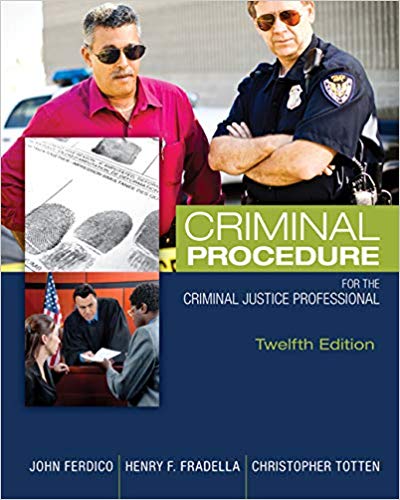
Criminal Procedure for the Criminal Justice Professional 12th Edition - Test Bank

Criminal Procedure for the Criminal Justice Professional 12th Edition - Test Bank   Instant Download - Complete Test Bank With Answers     Sample Questions Are Posted Below   1. ​_____ concerns the use of scientific methods toward the preservation, collection, and interpretation of digital evidence from digital sources. a. ​Forensic computer information systems b. ​Computer …

$19.99

Criminal Procedure for the Criminal Justice Professional 12th Edition – Test Bank


Instant Download – Complete Test Bank With Answers


Sample Questions Are Posted Below


1. ​_____ concerns the use of scientific methods toward the preservation, collection, and interpretation of digital evidence from digital sources.

a. ​Forensic computer information systems
b. ​Computer forensics
c. ​Electronic surveillance
d. ​Computer science


ANSWER:   b
REFERENCES:   Searches of Electronically Stored Information
LEARNING OBJECTIVES:   CPCJ.FERD.16.5.1
KEYWORDS:   Bloom’s: Understand


2. The first phase of searches of Electronically Stored Information (ESI) includes _____.​

a. ​entering the place(s) housing the devices on which data are stored
b. ​seizing the devices on which the data may be stored as well as devices linked via networks
c. ​examining the seized devices for the data described in a warrant
d. ​providing the devices to forensic computer specialists who search for data described in a warrant


ANSWER:   a
REFERENCES:   Searches of Electronically Stored Information
LEARNING OBJECTIVES:   CPCJ.FERD.16.5.2
KEYWORDS:   Bloom’s: Understand


3. What term describes tools for hiding, destroying, or counterfeiting the information relied on by digital forensics experts?​

a. ​anti forensics
b. ​Trojans
c. ​wipes
d. ​back doors


ANSWER:   a
REFERENCES:   Searches of Electronically Stored Information
LEARNING OBJECTIVES:   CPCJ.FERD.16.5.1
KEYWORDS:   Bloom’s: Understand


4. ​The exacting process of computer forensic examination includes _____.

a. ​read protecting the device
b. ​connecting the computer to a network
c. ​imaging the hard drive
d. ​deconstructing the hard drive


ANSWER:   c
REFERENCES:   Searches of Electronically Stored Information
LEARNING OBJECTIVES:   CPCJ.FERD.16.5.3
KEYWORDS:   Bloom’s: Analyze


5. In Berger v. New York (1967) the issue was the constitutionality of a New York statute that authorized electronic surveillance pursuant to a judicial warrant. In the case, the Court:​

a. ​validated the law because the government had probable cause and the intrusion was reasonably related to what the government was looking for
b. ​validated the law because it properly limited the nature, scope, or duration of the electronic surveillance
c. ​invalidated the law because the government did not establish probable cause
d. ​invalidated the law because it failed to properly limit the nature, scope, or duration of the electronic surveillance


ANSWER:   d
REFERENCES:   Electronic Surveillance
LEARNING OBJECTIVES:   CPCJ.FERD.16.5.4
KEYWORDS:   Bloom’s: Understand


6. ​The term _____ transfer refers to a transfer containing the human voice at any point between, and including, the point of origin and the point of reception?

a. ​aural
b. ​electronic
c. ​intercept
d. ​oral


ANSWER:   a
REFERENCES:   Electronic Surveillance
LEARNING OBJECTIVES:   CPCJ.FERD.16.5.1
KEYWORDS:   Bloom’s: Understand


7. A _____ wiretap allows for interception of a particular suspect’s communications wherever they are made, dispensing with the normal requirement that interceptions be limited to a fixed location.​

a. ​geographical
b. ​roving
c. ​non-specific
d. ​roaming


ANSWER:   b
REFERENCES:   Electronic Surveillance
LEARNING OBJECTIVES:   CPCJ.FERD.16.5.4
KEYWORDS:   Bloom’s: Understand


8. ​What specific legislation authorizes courts to conduct closed reviews of surveillance materials?

a. ​The Foreign Intelligence Surveillance Act (FISA)
b. ​Stored Communications Act (SCA)
c. ​Electronic communications Privacy Act (ECPA)
d. ​Freedom of Information Act (FOIA)


ANSWER:   a
REFERENCES:   Intelligence Surveillance
LEARNING OBJECTIVES:   CPCJ.FERD.16.5.10
KEYWORDS:   Bloom’s: Understand


9. Which statement concerning time limitations on the forensic examination phase of electronically stored information is correct?​

a. ​The police are only allowed 10 days to extract the evidence.
b. ​The time period allowed to obtain the evidence is the same for forensic searches and more traditional searches.
c. ​Law enforcement is allowed a shorter time period to obtain the evidence than normally allowed under a traditional search warrant.
d. ​Rule 41 does not require magistrates to specify a time limit because the amount of time is unpredictable.


ANSWER:   d
REFERENCES:   Intelligence Surveillance
LEARNING OBJECTIVES:   CPCJ.FERD.16.5.10
KEYWORDS:   Bloom’s: Analyze


10. The statutory-based exclusionary rule in Title III of the Omnibus Crime Control and Safe Streets Act of 1968 applies to _____.​

a. ​wire, oral, and electronic communications
b. ​electronic and wire communications, but not oral communications
c. ​electronic and oral communications, but not wire communications
d. ​wire and oral communications, but not electronic communications


ANSWER:   a
REFERENCES:   Electronic Surveillance
LEARNING OBJECTIVES:   CPCJ.FERD.16.5.4
KEYWORDS:   Bloom’s: Understand


11. ​Title III of the Omnibus Crime Control and Safe Streets Act of 1968 _____.

a. ​requires authorization by a judge in the location of the tapped telephone
b. ​allows the issuance of interception orders for any felony offense
c. ​permits taps even when ordinary investigative procedures have not been exhausted
d. ​requires that the order be executed “as soon as practicable”


ANSWER:   d
REFERENCES:   Electronic Surveillance
LEARNING OBJECTIVES:   CPCJ.FERD.16.5.4
KEYWORDS:   Bloom’s: Understand


12. In the case of Olmstead v. United States, the Court decided that the practice of wiretapping was not covered by the Fourth Amendment, primarily because _____.​

a. ​the person had no reasonable expectation of privacy in the home
b. ​the evidence was obtained only by hearing (and did not involve tangible items) so the interception of a conversation could not qualify as a seizure
c. ​the Fourth Amendment protects people, but not places
d. ​there was no legitimate remedy for the alleged violation at the time, as the exclusionary rule did not yet exist yet


ANSWER:   b
REFERENCES:   Electronic Surveillance
LEARNING OBJECTIVES:   CPCJ.FERD.16.5.5
KEYWORDS:   Bloom’s: Evaluate


13. _____ is most accurately defined as searches using wiretaps, bugs, or other devices to overhear conversation or obtain other kinds of information?​

a. ​Electronic surveillance
b. ​Covert surveillance
c. ​Covert intelligence
d. ​Cyber surveillance


ANSWER:   a
REFERENCES:   Electronic Surveillance
LEARNING OBJECTIVES:   CPCJ.FERD.16.5.5
KEYWORDS:   Bloom’s: Evaluate


14. In Olmstead v. United States (1928), the Court held that wiretapping of telephone conversations _____.​

a. ​is covered by the Fourth Amendment, but does not violate it
b. ​was not covered by the Fourth Amendment
c. ​is covered by the Fourth Amendment, and is a violation of it
d. ​was only a partial violation of the Fourth Amendment


ANSWER:   b
REFERENCES:   Electronic Surveillance
LEARNING OBJECTIVES:   CPCJ.FERD.16.5.4
KEYWORDS:   Bloom’s: Understand


15. Under the exigent circumstances exception, a law enforcement officer must apply for an interception order _____ after the interception has occurred or begins to occur.​

a. ​immediately
b. ​within forty-eight hours
c. ​as soon as practicable
d. ​when prudent as deemed by the officer


ANSWER:   b
REFERENCES:   Electronic Surveillance
LEARNING OBJECTIVES:   CPCJ.FERD.16.5.5
KEYWORDS:   Bloom’s: Evaluate


16. Neither Title III of the Omnibus Crime Control and Safe Streets Act of 1968 nor the Fourth Amendment requires law enforcement to _____.​

a. ​obtain a judicial order to intercept wire, oral, or electronic communications
b. ​obtain judicial authorization to covertly enter the premises to install a listening device
c. ​first receive administrative authorization to apply for an interception order
d. ​conduct themselves in a way that minimizes the interception of communications not subject to the interception order


ANSWER:   b
REFERENCES:   Electronic Surveillance
LEARNING OBJECTIVES:   CPCJ.FERD.16.5.5
KEYWORDS:   Bloom’s: Evaluate


17. Materials that are made inaccessible to anyone without a special court order are said to be _____.​

a. ​under lock and key
b. ​on-hold
c. ​under seal
d. en todos


ANSWER:   c
REFERENCES:   Electronic Surveillance
LEARNING OBJECTIVES:   CPCJ.FERD.16.5.6
KEYWORDS:   Bloom’s: Understand


18. Within a reasonable time, but not later than _____ days after the termination of the period of an order, an inventory must be served on the persons named in the order and on such other parties to intercepted communications as the judge determines in the interest of justice.​

a. ​twenty
b. ​thirty
c. ​sixty
d. ​ninety


ANSWER:   d
REFERENCES:   Electronic Surveillance
LEARNING OBJECTIVES:   CPCJ.FERD.16.5.5
KEYWORDS:   Bloom’s: Analyze


19. ​Title III of the Omnibus Crime Control and Safe Streets Act of 1968  refers to a “person who was a party to any intercepted” wire or oral communication or “a person against whom the interception was directed” as _____.

a. ​suspect
b. ​aggrieved
c. ​felonious
d. ​victimized


ANSWER:   b
REFERENCES:   Electronic Surveillance
LEARNING OBJECTIVES:   CPCJ.FERD.16.5.5
KEYWORDS:   Bloom’s: Analyze


20. When one party to a communication consents to the interception of the communication, _____.​

a. ​Title III of the Wiretap Act prevents the use of the communication in court against another party, but the Fourth Amendment allows use of the communication
b. ​the Fourth Amendment prevents the use of the communication in court against another party, but Title III of the Wiretap Act allows use of the communication in court against another party
c. ​both the Fourth Amendment and Title III of the Wiretap Act prevent use of the communication in court against another party
d. ​neither Title III of the Wiretap Act nor the Fourth Amendment prevents the use of the communication in court against another party


ANSWER:   d
REFERENCES:   Electronic Surveillance
LEARNING OBJECTIVES:   CPCJ.FERD.16.5.5
KEYWORDS:   Bloom’s: Analyze


21. Under the _____ exception, an employee or agent of a communications service entity may intercept and disclose communications to protect the rights or property of the provider as part of the ordinary course of business.​

a. ​computer trespasser
b. ​public access
c. ​provider
d. ​exigent circumstances


ANSWER:   c
REFERENCES:   Electronic Surveillance
LEARNING OBJECTIVES:   CPCJ.FERD.16.5.4
KEYWORDS:   Bloom’s: Understand


22. Under the _____ exception, victims of computer attacks by hackers can authorize law enforcement officials to intercept wire or electronic communications of a computer trespasser, if specific statutory requirements are satisfied.​

a. ​computer trespasser
b. ​provider
c. ​public access
d. ​exceptional privilege


ANSWER:   a
REFERENCES:   Electronic Surveillance
LEARNING OBJECTIVES:   CPCJ.FERD.16.5.5
KEYWORDS:   Bloom’s: Evaluate


23. What is the difference between a pen register and a trap-and-trace device?​

a. ​A pen register records incoming addressing information (such as caller ID information); whereas a trap-and-trace device records outgoing addressing information (such as numbers dialed from a phone).
b. ​A pen register records outgoing addressing information (such as numbers dialed from a phone); whereas a trap-and-trace device records incoming addressing information (such as caller ID information).
c. ​A pen register intercepts communication; whereas a trap-and-trace device does not intercept communication.
d. ​A pen register does not intercept communication; whereas a trap-and-trace device intercepts communication.


ANSWER:   b
REFERENCES:   Electronic Surveillance
LEARNING OBJECTIVES:   CPCJ.FERD.16.5.8
KEYWORDS:   Bloom’s: Understand


24. When law enforcement officers intercept communications that relate to offenses other than those specified in the interception order, the government may use the evidence of these other crimes only if _____.​

a. ​the evidence was observed in plain view
b. ​the evidence could have been discovered through an independent source
c. another application is made to a court “as soon as practicable” for a determination that the interception complied with Title III requirements
d. ​the evidence is testimonial in nature


ANSWER:   c
REFERENCES:   Electronic Surveillance
LEARNING OBJECTIVES:   CPCJ.FERD.16.5.8
KEYWORDS:   Bloom’s: Understand


25. Title III of the Omnibus Crime Control and Safe Streets Act of 1968  does not apply to the use of electronic devices emitting signals that enable law enforcement officials to track the location of objects and persons. Why?​

a. ​Title III only covers incidental interception of communication.
b. ​By their very nature, the devices are mobile and this not covered.
c. ​These devices are incapable of transmitting speech.
d. ​The devices were not in existence in 1968.


ANSWER:   c
REFERENCES:   Electronic Surveillance
LEARNING OBJECTIVES:   CPCJ.FERD.16.5.7
KEYWORDS:   Bloom’s: Analyze


26. Title III of the Omnibus Crime Control and Safe Streets Act of 1968 specifically exempts _____ from the warrant requirement.​

a. ​buildings
b. ​cell phones
c. ​tone-only pagers
d. ​answering machines


ANSWER:   c
REFERENCES:   Electronic Surveillance
LEARNING OBJECTIVES:   CPCJ.FERD.16.5.6
KEYWORDS:   Bloom’s: Understand


27. Prior to the passing of Title III of the Omnibus Crime Control and Safe Streets Act of 1968, the United States Government utilized a “national security exception” to conduct warrantless electronic surveillance of foreign powers. In 1978, the Foreign Intelligence Surveillance Act (FISA) was passed as a result of the _____.​

a. ​Watergate scandal
b. ​abuses of the Vietnam war
c. ​Iranian Hostage Crisis
d. ​violent acts by student groups


ANSWER:   a
REFERENCES:   Intelligence Surveillance
LEARNING OBJECTIVES:   CPCJ.FERD.16.5.10
KEYWORDS:   Bloom’s: Analyze


28. Who determines the composition of the Foreign Intelligence Surveillance Court (FISC)?​

a. ​the Associate Justices of the U.S. Supreme Court.
b. ​the Speaker of the House.
c. ​the Attorney General of the U.S.
d. ​the Chief Justice of the U.S. Supreme Court.


ANSWER:   d
REFERENCES:   Intelligence Surveillance
LEARNING OBJECTIVES:   CPCJ.FERD.16.5.11
KEYWORDS:   Bloom’s: Understand


29. Title III of the Omnibus Crime Control and Safe Streets Act of 1968 is often referred to as the _____.​

a. ​Digital Act
b. ​Wiretap Act
c. ​Electronics Act
d. ​Surveillance Act


ANSWER:   b
REFERENCES:   Electronic Surveillance
LEARNING OBJECTIVES:   CPCJ.FERD.16.5.4
KEYWORDS:   Bloom’s: Understand


30. Before the enactment of the _____, interception orders for wire communications in computer hacking investigations were not permitted.​

a. ​Omnibus Crime Control and Safe Streets Act of 1968
b. ​FISA
c. ​Violent Crime Control and Law Enforcement Act of 1994
d. ​USA PATRIOT Act


ANSWER:   d
REFERENCES:   Electronic Surveillance
LEARNING OBJECTIVES:   CPCJ.FERD.16.5.8
KEYWORDS:   Bloom’s: Analyze


31. Many courts have upheld requirements that forensic analysis of the computers had to be conducted within 90 days of the physical search.​

a. True
b. False


ANSWER:   True
REFERENCES:   Electronic Surveillance
LEARNING OBJECTIVES:   CPCJ.FERD.16.5.3
KEYWORDS:   Bloom’s: Analyze


32. Many courts require the government to return seized computers and data storage equipment at a particular time as a condition of issuing the warrant.​

a. True
b. False


ANSWER:   True
REFERENCES:   Electronic Surveillance
LEARNING OBJECTIVES:   CPCJ.FERD.16.5.3
KEYWORDS:   Bloom’s: Analyze


33. The Department of Justice cautions that limitations on search methodologies have the potential to seriously impair the government’s ability to uncover electronic evidence.​

a. True
b. False


ANSWER:   True
REFERENCES:   Searches of Electronically Stored Information
LEARNING OBJECTIVES:   CPCJ.FERD.16.5.3
KEYWORDS:   Bloom’s: Analyze


34. Although e-mail has replaced telephone communication in many spheres, it is not considered a ‘wire communication’ for purposes of Title III of the Wiretap Act.​

a. True
b. False


ANSWER:   True
REFERENCES:   Searches of Electronically Stored Information
LEARNING OBJECTIVES:   CPCJ.FERD.16.5.3
KEYWORDS:   Bloom’s: Analyze


35. Searches and seizures concerning foreign intelligence and antiterrorism efforts are authorized and regulated by the Foreign Intelligence and Racketeering Act (FIRA).​

a. True
b. False


ANSWER:   False
REFERENCES:   Intelligence Surveillance
LEARNING OBJECTIVES:   CPCJ.FERD.16.5.10
KEYWORDS:   Bloom’s: Analyze


36. The Foreign Intelligence Surveillance Act does not require a showing of probable cause to believe that a crime has been or is being committed.​

a. True
b. False


ANSWER:   True
REFERENCES:   Intelligence Surveillance
LEARNING OBJECTIVES:   CPCJ.FERD.16.5.10
KEYWORDS:   Bloom’s: Analyze


37. Title III of the Wiretap Act applies to private searches and seizures of wire, oral, or electronic communications.​

a. True
b. False


ANSWER:   True
REFERENCES:   Searches of Electronically Stored Information
LEARNING OBJECTIVES:   CPCJ.FERD.16.5.3
KEYWORDS:   Bloom’s: Analyze


38. If a conversation takes place in public where other parties can overhear the conversation, there is no reasonable expectation of privacy. However, any recording of such a conversation would violate Title III of the Wiretap Act.​

a. True
b. False


ANSWER:   False
REFERENCES:   Electronic Surveillance
LEARNING OBJECTIVES:   CPCJ.FERD.16.5.5
KEYWORDS:   Bloom’s: Evaluate


39. Title III of the Wiretap Act applies to the use of electronic devices emitting signals that enable law enforcement officials to track the location of objects and persons.​

a. True
b. False


ANSWER:   False
REFERENCES:   Electronic Surveillance
LEARNING OBJECTIVES:   CPCJ.FERD.16.5.4
KEYWORDS:   Bloom’s: Understand


40. Title III of the Wiretap Act does not cover video surveillance using video cameras that record only images and not aural communications.​

a. True
b. False


ANSWER:   True
REFERENCES:   Electronic Surveillance
LEARNING OBJECTIVES:   CPCJ.FERD.16.5.4
KEYWORDS:   Bloom’s: Explain


41. When one party to a communication consents to the interception of the communication, neither Title III of the Wiretap Act nor the Fourth Amendment prevents the use of the communication in court against another party to the communication. This is called __________.​

ANSWER:   consent surveillance​
REFERENCES:   Electronic Surveillance
LEARNING OBJECTIVES:   CPCJ.FERD.16.5.5
KEYWORDS:   Bloom’s: Evaluate


42. The __________ allows a communications service provider to intercept and disclose communications to protect the rights or property of the provider as part of the ordinary course of business.​

ANSWER:   provider exception​
REFERENCES:   Electronic Surveillance
LEARNING OBJECTIVES:   CPCJ.FERD.16.5.5
KEYWORDS:   Bloom’s: Evaluate


43. The __________ provides that any person may intercept an electronic communication made through a system that is configured so that the communication is readily accessible to the general public.​

ANSWER:   accessible to the public exception​
REFERENCES:   Electronic Surveillance
LEARNING OBJECTIVES:   CPCJ.FERD.16.5.5
KEYWORDS:   Bloom’s: Evaluate


44. Computer __________ uses the scientific methods for the preservation, collection, and analysis of digital sources of information.​

ANSWER:   forensics​
REFERENCES:   Searches of Electronically Stored Information
LEARNING OBJECTIVES:   CPCJ.FERD.16.5.1
KEYWORDS:   Bloom’s: Understand


45. Searches conducted using wiretaps, bugs, or other devices to overhear conversations or obtain other kinds of information are collectively referred to as __________ surveillance.​

ANSWER:   electronic​
REFERENCES:   Searches of Electronically Stored Information
LEARNING OBJECTIVES:   CPCJ.FERD.16.5.1
KEYWORDS:   Bloom’s: Understand


46. Dropbox, SkyDrive and SugarSync are companies that offer remote computing services, where one can digitally store their information “in the __________ .”​

ANSWER:   cloud​
REFERENCES:   Searches of Electronically Stored Information
LEARNING OBJECTIVES:   CPCJ.FERD.16.5.9
KEYWORDS:   Bloom’s: Analyze


47. A(n) ___________ is defined as “…a transfer containing the human voice at any point between and including the point of origin and the point of reception.”​

ANSWER:   aural transfer​
REFERENCES:   Electronic Surveillance
LEARNING OBJECTIVES:   CPCJ.FERD.16.5.1
KEYWORDS:   Bloom’s: Understand


48. The case of Dalia v. United States  ruled that a judicial order to place an eavesdropping device by law enforcement in a business or residence need not have a separate order specifically authorizing the __________ entry to install the device.​

ANSWER:   covert​
REFERENCES:   Electronic Surveillance
LEARNING OBJECTIVES:   CPCJ.FERD.16.5.6
KEYWORDS:   Bloom’s: Understand


49. Congress created a special Article III court to review FISA applications called the __________.​

ANSWER:   Foreign Intelligence Surveillance Court​
REFERENCES:   Intelligence Surveillance
LEARNING OBJECTIVES:   CPCJ.FERD.16.5.11
KEYWORDS:   Bloom’s: Understand


50. Title III of the Wiretap Act provides authority for designated officials to intercept wire, oral, or electronic communications without a prior interception order if an emergency situation exists that involves immediate danger of death or serious physical injury to any person. This is referred to as the __________.​

ANSWER:   exigent circumstances exception​
REFERENCES:   Electronic Surveillance
LEARNING OBJECTIVES:   CPCJ.FERD.16.5.5
KEYWORDS:   Bloom’s: Evaluate


51. Briefly describe how the Title III of the Omnibus Crime Control and Safe Streets Acts of 1968 originated. ​

ANSWER:   Answers will vary.​
REFERENCES:   Electronic Surveillance
LEARNING OBJECTIVES:   CPCJ.FERD.16.5.4
KEYWORDS:   Bloom’s: Analyze


52. What impact has “cloud” technology had upon law enforcement in terms of electronic surveillance? Explain your reasoning.​

ANSWER:   Answers will vary.​
REFERENCES:   Searches of Electronically Stored Information
LEARNING OBJECTIVES:   CPCJ.FERD.16.5.9
KEYWORDS:   Bloom’s: Analyze


53. List a minimum of three forms of wiretaps. Describe each.​

ANSWER:   Answers will vary.​
REFERENCES:   Electronic Surveillance
LEARNING OBJECTIVES:   CPCJ.FERD.16.5.9
KEYWORDS:   Bloom’s: Analyze


54. Outline the two stage process used for most searches of electronically stored information.​

ANSWER:   Answers will vary.​
REFERENCES:   Searches of Electronically Stored Information
LEARNING OBJECTIVES:   CPCJ.FERD.16.5.8
KEYWORDS:   Bloom’s: Understand


55. ​Compare and contrast an interception order under Title III of the Wiretap Act and an ordinary search warrant.

ANSWER:   Answers will vary.​
REFERENCES:   Searches of Electronically Stored Information
LEARNING OBJECTIVES:   CPCJ.FERD.16.5.7
KEYWORDS:   Bloom’s: Analyze


56. Briefly describe what the Foreign Intelligence Surveillance Act (FISA) is and does. ​

ANSWER:   Answers will vary.​
REFERENCES:   Intelligence Surveillance
LEARNING OBJECTIVES:   CPCJ.FERD.16.5.10
KEYWORDS:   Bloom’s: Understand


57. What is meant by sealing/putting under seal and why this is done?​

ANSWER:   Answers will vary.​
REFERENCES:   Intelligence Surveillance
LEARNING OBJECTIVES:   CPCJ.FERD.16.5.10
KEYWORDS:   Bloom’s: Understand


58. Explain the conflicting demands for more effective law enforcement and individual privacy rights relevant to electronic surveillance.​

ANSWER:   Answers will vary.​
REFERENCES:   Electronic Surveillance
LEARNING OBJECTIVES:   CPCJ.FERD.16.5.5
KEYWORDS:   Bloom’s: Evaluate


59. Explain the jurisdiction and procedures of the Foreign Intelligence Surveillance Court (FISC).​

ANSWER:   Answers will vary.​
REFERENCES:   Intelligence Surveillance
LEARNING OBJECTIVES:   CPCJ.FERD.16.5.11
KEYWORDS:   Bloom’s: Understand


60. Assess the requirements that some courts impose on applications for search warrants for electronically stored information. Identify the limitations in place and explain the rationale of these limitations.​

ANSWER:   Answers will vary.​
REFERENCES:   Electronic Surveillance
LEARNING OBJECTIVES:   CPCJ.FERD.16.5.5
KEYWORDS:   Bloom’s: Evaluate


Additional information

Add Review

Your email address will not be published. Required fields are marked *