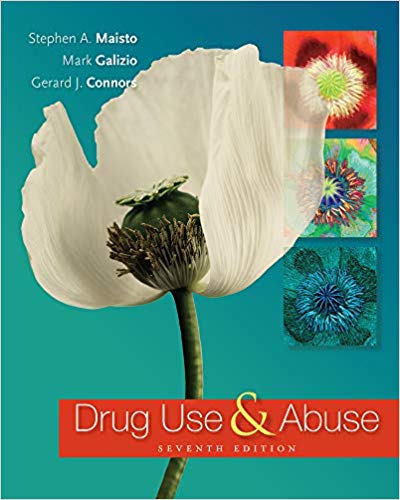
Drug Use and Abuse 7th Edition by Stephen A. Maisto - Test Bank

Drug Use and Abuse 7th Edition by Stephen A. Maisto - Test Bank   Instant Download - Complete Test Bank With Answers     Sample Questions Are Posted Below   1. Which of the following accurately describes the influence that age has on drug effects? a. susceptibility to a drug's effects declines over the life …

$19.99

Drug Use and Abuse 7th Edition by Stephen A. Maisto – Test Bank


Instant Download – Complete Test Bank With Answers


Sample Questions Are Posted Below


1. Which of the following accurately describes the influence that age has on drug effects?
a. susceptibility to a drug’s effects declines over the life span
b. susceptibility to a drug’s effects increases over the life span
c. children and the elderly are more susceptible to a drug’s effects
d. age has no effect on susceptibility to drug effects
ANSWER: c
REFERENCES: page 95
2. Individual differences in the initial sensitivity to a drug’s effects are thought to be determined by __________.
a. classical conditioning b. expectancies
c. genetics d. none of these
ANSWER: c
REFERENCES: page 95
3. A specified dose of a drug administered to a man and a woman on average will have greater effects on the woman.
This is because of differences in __________.
a. brain chemistry b. body fat
c. hormones d. expectancies
ANSWER: b
REFERENCES: page 95
4. Studies have shown that young men who later developed alcohol problems were more likely to be __________.
a. conforming
b. introverted
c. impulsive
d. all of these
e. none of these
ANSWER: c
REFERENCES: page 97
5. According to the stress response dampening model, people who are ________ are more likely to be sensitive to
alcohol’s stressreducing effects.
a. bored b. introverted
c. deliberate d. aggressive
ANSWER: d
REFERENCES: page 96
6. Which of the following is thought to contribute to drug expectancies?
a. past use of a drug
b. advertising
c. friends’ use of a drug
d. television
e. all of these
ANSWER: e
REFERENCES: page 97
7. Setting factors are particularly important in the effects of __________.
a. alcohol
b. marijuana
c. hallucinogens
d. all of these
e. alcohol and marijuana only
ANSWER: d
REFERENCES: page 98
8. Which of the following is not true of drug expectancies?
a. Expectancy effects are most prominent with proscribed behaviors, such as aggression
b. Expectancies may be more influential than a drug’s pharmacological action
c. Alcohol’s effect on motor skills is not impacted by expectancies
d. The same sensation produced by a drug may be interpreted either positively or negatively depending on the
user’s expectancies.
ANSWER: c
REFERENCES: page 97-98
9. The phenomenon of _________ occurs when repeated administration of a drug results in reduced response to that
drug.
a. tolerance b. dependence
c. conditioning d. withdrawal
ANSWER: a
REFERENCES: page 99
OTHER: WWW
10. Tachyphylaxis is another name for ___________.
a. reverse tolerance b. acute tolerance
c. dispositional tolerance d. protracted tolerance
ANSWER: b
REFERENCES: page 99
11. __________ tolerance is a type of functional tolerance that is measured within the course of action of a single dose
or first few doses of a drug.
a. Acute b. Cross
c. Protracted d. Dispositional
ANSWER: a
REFERENCES: page 99
12. __________ refers to an increase in the rate of the metabolism of a drug, so that the user must consume greater
quantities of it in order to maintain a certain level of the drug in his or her body.
a. Functional tolerance b. Dispositional tolerance
c. Cross tolerance d. Reverse tolerance
ANSWER: b
REFERENCES: page 99
13. Which of the following is a type of functional tolerance?
a. behavioral tolerance b. reverse tolerance
c. dispositional tolerance d. protracted tolerance
ANSWER: d
REFERENCES: page 100
14. If an individual needs to drink 6 beers in order to achieve the same effect that he/she used to experience with 3
beers, this is an example of ___________.
a. acute tolerance b. protracted tolerance
c. dispositional tolerance d. reverse tolerance
ANSWER: b
REFERENCES: page 100
OTHER: WWW
15. A person who is highly tolerant to __________ creates problems for anesthesiologists in surgery.
a. marijuana b. amphetamines
c. nicotine d. barbiturates
ANSWER: d
REFERENCES: page 100
16. __________ tolerance to a drug occurs when there is increased sensitivity to the effects of the drug with repeated
use.
a. Reverse b. Cross
c. Dispositional d. Protracted
ANSWER: a
REFERENCES: page 100
17. If an individual learns to compensate for his or her drunkenness by walking more slowly, this would be an example of
_________ tolerance.
a. behavioral b. acute
c. dispositional d. protracted
ANSWER: a
REFERENCES: page 100
18. In __________ tolerance, tolerance to one drug may extend to other closely related drugs.
a. dispositional tolerance b. functional
c. reverse d. cross
ANSWER: d
REFERENCES: page 100
19. According to cell adaptation theory, the cells of the ____________ become adapted to the presence of a drug with
repeated exposure to it.
a. central nervous system b. liver
c. kidneys d. pancreas
ANSWER: a
REFERENCES: page 101
20. __________ means a state of equilibrium or balance.
a. Homeostasis b. Potentiation
c. Cell adaptation d. Tolerance
ANSWER: a
REFERENCES: page 101
21. Sometimes the body counteracts a drug’s disruption to the body’s homeostasis by producing an effect opposite to the
drug effect. This is referred to as __________.
a. a rebound effect b. withdrawal
c. a compensatory reaction d. a flashback
ANSWER: c
REFERENCES: page 101
22. The cell adaptation-homeostasis theory of drug tolerance is most helpful in explaining __________ tolerance.
a. dispositional b. protracted functional
c. acute functional d. none of these
ANSWER: b
REFERENCES: page 101-102
23. Over repeated occasions of pairing drug taking and drug taking cues, just presenting the drug taking cues alone will
elicit a drug compensatory reaction. This is an example of __________.
a. cell adaptation b. homeostasis
c. classical conditioning d. reverse tolerance
ANSWER: c
REFERENCES: page 102
24. When people are exposed to conditioned stimuli many times without the drug they are associated with, the feelings of
discomfort or craving these stimuli produce dissipate. This is a process known as __________.
a. extinction b. withdrawal
c. rebound d. reverse tolerance
ANSWER: a
REFERENCES: page 102
OTHER: WWW
25. Which of the following are examples of conditioned stimuli associated with substance use?
a. a syringe
b. a bar
c. a drinking buddy
d. all of these
e. none of these
ANSWER: d
REFERENCES: page 102
26. Which of the following is true?
a. protracted tolerance reverses in a short time period, while acute tolerance requires more abstinence to reverse
b. acute tolerance reverses in a short time period, while protracted tolerance requires more abstinence to reverse
c. acute and protracted tolerance both reverse in a short time period of abstinence
d. acute and protracted tolerance both require a lengthy period of abstinence to reverse
ANSWER: b
REFERENCES: page 102
27. A __________ is a consequence of a behavior that increases the likelihood that it will occur in the future.
a. conditioned stimulus b. punisher
c. reinforcer d. rebound effect
ANSWER: c
REFERENCES: page 104
28. At what blood alcohol level do all states consider an individual to be legally intoxicated?
a. .06 b. .08
c. .10 d. .12
ANSWER: b
REFERENCES: page 103
29. Learning not to touch a hot stove after having been burned by it is an example of learning through __________.
a. positive reinforcement b. negative reinforcement
c. punishment d. none of these
ANSWER: c
REFERENCES: page 104
30. __________ is an increase in the frequency of a behavior when it results in avoidance of or escape from
something.
a. Negative reinforcement b. Punishment
c. Positive reinforcement d. Withdrawal
ANSWER: a
REFERENCES: page 104
OTHER: WWW
31. Research has shown that about _________ of the traffic fatalities in the U.S. are associated with alcohol.
a. 10% b. 25%
c. 50% d. 75%
ANSWER: c
REFERENCES: page 103
32. Drug self-administration studies indicate that __________.
a. animals may actually “prefer” the drug experience
b. reinforcers are more effective when there is some delay between them and the behavior
c. the psychiatric drugs chlorpromazine and imipramine are high in reinforcement value
d. all of these
e. none of these
ANSWER: a
REFERENCES: page 104
33. ___________ studies allow behavioral pharmacologists to classify experimental drugs according to their subjective
effects even before they have been administered to people.
a. drug discrimination b. conflict paradigm
c. placebo control d. classical conditioning
ANSWER: a
REFERENCES: page 106
34. When given __________, the usual disruption in behavior produced by introducing the punishment component in
“conflict paradigm” experiments does not occur.
a. marijuana b. benzodiazepines
c. LSD d. amphetamines
ANSWER: b
REFERENCES: page 107
35. __________ refers to the experimental method in which neither the experimenter nor the subject knows which
experimental condition the subject is in.
a. Placebo control b. Classical conditioning
c. Double blind d. Group design
ANSWER: c
REFERENCES: page 109
36. A __________ group is one in which subjects receive a chemically inactive substance, but are of the same make-
up and are treated the same as subjects who do receive the drug.
a. double blind b. drug discrimination
c. placebo control d. none of these
ANSWER: c
REFERENCES: page 108
37. The _________ is a set of ethical guidelines established after WWII to prevent human rights abuse in biomedical
research.
a. Warsaw Pact b. Treaty of Versailles
c. Nuremberg Code d. Helsinki Charter
ANSWER: c
REFERENCES: page 108
OTHER: WWW
38. In the development of new drugs, how many species must be tested in the animal testing phase?
a. 1 b. 2
c. 5 d. 10
ANSWER: b
REFERENCES: page 111
39. How was penicillin discovered?
a. in mold b. in plant microbes taken from the sea
c. from bacteria found in jellyfish d. synthesized using a computer
ANSWER: a
REFERENCES: page 109
40. Which of the following is a way in which new drugs are discovered?
a. accidental observation of an unexpected drug effect
b. the synthesis of known or novel compounds
c. the rediscovery of folk usages of naturally occurring products
d. all of these
ANSWER: d
REFERENCES: page 110
41. A drug’s __________ name indicates the drug’s structural formula.
a. chemical b. pharmacokinetic
c. brand d. generic
ANSWER: a
REFERENCES: page 112
42. How long does the first step in new drug development–initial synthesis and preclinical trials–typically take?
a. 1 – 3 months b. 6 months – 1 year
c. 1 – 3 years d. 5 – 10 years
ANSWER: c
REFERENCES: page 111
43. Subjects in Phase 1 of clinical trials on humans during new drug development typically include __________.
a. up to 50 patients with the target disease b. up to 50 normal volunteers
c. 1,000 or more patients with the target disease d. 1,000 or more normal volunteers
ANSWER: b
REFERENCES: page 111
44. Which of the following is true regarding a drug’s generic name?
a. It is the name most people would know.
b. It is the most useful name for chemists.
c. It is a shortened version of a drug’s chemical name.
d. None of these are true.
ANSWER: c
REFERENCES: page 113
45. What is the first stage in the FDA’s guidelines for the testing and marketing of a drug?
a. animal trials
b. experimental studies with healthy volunteers
c. experimental studies with clinical patients
d. belief that a particular compound has clinical value
e. none of these
ANSWER: d
REFERENCES: page 111
46. How long does the post-marketing testing of a new drug take?
a. 6 months to one year b. 1 to 2 years
c. 3 to 5 years d. 2 to 10 years
ANSWER: b
REFERENCES: page 111
47. Which of the following is true of generic drugs?
a. They are chemical copies of brand name drugs
b. They are less effective than brand name drugs
c. They can be sold after a brand name drug has been on the market for 20 years
d. They cost the same as brand name drugs, but are more readily available
ANSWER: c
REFERENCES: page 113
48. As of 2007, generic drugs account for ______ of the prescription drugs that are dispensed in the U.S.
a. 10% b. 25%
c. 60% d. 75%
ANSWER: c
REFERENCES: page 113
49. _________ is an example of a drug that was approved too early, before potential side effects could adequately be
explored.
a. AZT b. penicillin
c. thalidomide d. prozac
ANSWER: c
REFERENCES: page 114
50. What can be concluded from the results of the 1993 Concorde study?
a. the clinical trials process in drug testing should be dramatically reduced
b. the clinical trials process will continue to take a substantial period of time
c. the clinical trials process is only necessary for certain drugs
d. none of these
ANSWER: b
REFERENCES: page 114
51. Because a heavier person has more blood and other body fluids than a lighter person, the same drug dose has more
of an effect on the heavier person.
a. True
b. False
ANSWER: False
REFERENCES: page 95
52. The elderly are more sensitive to drug effects because their enzyme systems may be impaired, resulting in increased
duration of drug action.
a. True
b. False
ANSWER: True
REFERENCES: page 95
53. Research has indicated that men and women who have developed substance use disorders may be distinguished
from people who did not on the basis of personality characteristics predating the substance abuse.
a. True
b. False
ANSWER: True
REFERENCES: page 97
54. According to the Stress Response Dampening model, individuals who have had a stressful drug or alcohol
experience are less likely to abuse drugs or alcohol.
a. True
b. False
ANSWER: False
REFERENCES: page 96
55. Expectancy effects are most prominent with behaviors or emotions that society proscribes from free expression.
a. True
b. False
ANSWER: True
REFERENCES: page 97-98
56. Marijuana is a drug whose pharmacological effects far outweigh the influence of expectancies.
a. True
b. False
ANSWER: False
REFERENCES: page 98
57. Research subjects who drank in the company of others were more likely to report about physical changes related to
drinking than were subjects who drank alone.
a. True
b. False
ANSWER: False
REFERENCES: page 98
58. Acute tolerance to alcohol is more likely to produce impairment in the speed in which we perform cognitive tasks
than in the accuracy of performance.
a. True
b. False
ANSWER: True
REFERENCES: page 99
59. Tolerance may develop to some effects of a drug, but not to others.
a. True
b. False
ANSWER: True
REFERENCES: page 100
60. “Downregulation” refers to a process where repeated exposure to a drug increases the number of receptor sites on
neurons that the drug activates.
a. True
b. False
ANSWER: False
REFERENCES: page 101
61. Cell adaptation theory assumes that a drug’s action occurs on specific cells in the central nervous system.
a. True
b. False
ANSWER: True
REFERENCES: page 101
62. Reacquisition of tolerance following an extended period of abstinence takes as long as when tolerance to the drug
was initially developed.
a. True
b. False
ANSWER: False
REFERENCES: page 102
63. Once a particular tolerance level is reached, it is irreversible.
a. True
b. False
ANSWER: False
REFERENCES: page 102
64. There appear to be underlying genetic differences between ethnic subgroups that impact their response to a dose of
a given psychotherapeutic drug.
a. True
b. False
ANSWER: True
REFERENCES: page 103
65. In drug studies, the generalizability from animals to humans is poor.
a. True
b. False
ANSWER: False
REFERENCES: page 107-108
66. The set of ethical guidelines for biomedical research is known as the Nuremburg code.
a. True
b. False
ANSWER: True
REFERENCES: page 108
67. The term “placebo effects” arose in the 16th Century with the Catholic Church’s effort to discriminate between
exorcisms of the devil that were real or fake.
a. True
b. False
ANSWER: True
REFERENCES: page 108-109
68. A control group is an experimental group in which subjects can control the dose of a drug that is administered.
a. True
b. False
ANSWER: False
REFERENCES: page 108
69. In the United States, the Drug Enforcement Administration sets the guidelines regulating new drug development.
a. True
b. False
ANSWER: False
REFERENCES: page 110
70. The American Medical Association prefers that their customers use brand-name drugs rather than generic drugs
because the brand-name drugs are more rigorously tested.
a. True
b. False
ANSWER: False
REFERENCES: page 114
71. How do the characteristics of the user (for example, age, weight) affect the drug experience?
ANSWER: Answer not provided
REFERENCES: page 94-97
72. How do drug expectancies develop? How do they affect the drug experience?
ANSWER: Answer not provided
REFERENCES: page 97-98
73. What are the current theories regarding the development of tolerance to a drug’s effects?
ANSWER: Answer not provided
REFERENCES: page 99-103
74. What is a placebo-control experiment? Why is it often used in the study of alcohol and other drugs?
ANSWER: Answer not provided
REFERENCES: page 108-110
75. How have recent advances in technology impacted the discovery and development of new drugs?
ANSWER: Answer not provided
REFERENCES: page 109
76. How are new drugs discovered, developed, and distributed? What are the different levels of testing new drugs?
ANSWER: Answer not provided
REFERENCES: page 110-114


Additional information

Add Review

Your email address will not be published. Required fields are marked *