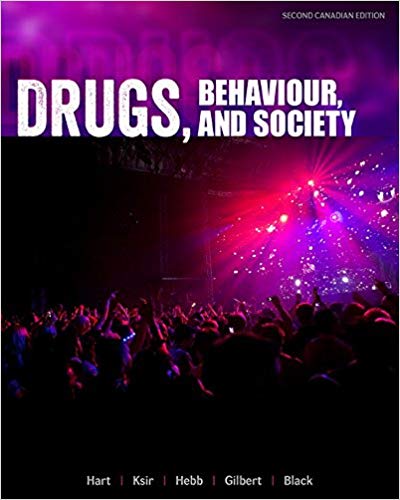
Drugs Behaviour, And Society 2nd Canadian Edition by Carl L Hart -Test Bank

Drugs Behaviour, And Society 2nd Canadian Edition by Carl L Hart -Test Bank   Instant Download - Complete Test Bank With Answers     Sample Questions Are Posted Below   Chapter 05 The Actions of Drugs     Multiple Choice Questions Most of our drugs originally came either directly or indirectly from which of the …

$19.99

Drugs Behaviour, And Society 2nd Canadian Edition by Carl L Hart -Test Bank


Instant Download – Complete Test Bank With Answers


Sample Questions Are Posted Below


Chapter 05

The Actions of Drugs


Multiple Choice Questions

  1. Most of our drugs originally came either directly or indirectly from which of the following?
    A.The sea
    B. Plants
    C. Animals
    D. Chemists


Accessibility: Keyboard Navigation
Bloom’s: Remember
Learning Objective: 05-01 Explain why plants are the source of many of the chemicals we use as drugs.
Learning Objective: 05-02 Distinguish among generic; brand; and chemical names for a drug.

  1. St. John’s wort is an herb that is believed to help what condition?
    A.Anxiety
    B. Depression
    C. Arthritis
    D. Congestive heart failure


Accessibility: Keyboard Navigation
Bloom’s: Understand
Learning Objective: 05-01 Explain why plants are the source of many of the chemicals we use as drugs.
Learning Objective: 05-02 Distinguish among generic; brand; and chemical names for a drug.


  1. Which of the following provides an important distinction regarding the herb St. John’s wort?
    A.It was first discovered to be a potent cardiotonic; it improved the heat’s pumping action.
    B. Unlike other herbal supplements approved by the NHPR, it should only be taken under a doctor’s supervision.
    C. If taken with other herbal supplements, an induced psychosis can occur.
    D. When smoked is classified as a schedule 5 drug under the CSDA.


Accessibility: Keyboard Navigation
Bloom’s: Understand
Learning Objective: 05-01 Explain why plants are the source of many of the chemicals we use as drugs.
Learning Objective: 05-02 Distinguish among generic; brand; and chemical names for a drug.

  1. Most drugs have three different kinds of names. Which one would identify the manufacturer?
    A.Chemical name
    B. Generic name
    C. Brand name
    D. Research name


Accessibility: Keyboard Navigation
Bloom’s: Remember
Learning Objective: 05-02 Distinguish among generic; brand; and chemical names for a drug.

  1. What does the group of psychoactive drugs called stimulants include?
    A.Cocaine
    B. Prozac
    C. LSD
    D. Heroin


Accessibility: Keyboard Navigation
Bloom’s: Remember
Learning Objective: 05-03 Name the major drug categories.


  1. Among the psychoactive drugs, how is alcohol classified?
    A.Stimulant
    B. Opioid
    C. Hallucinogen
    D. Depressant


Accessibility: Keyboard Navigation
Bloom’s: Remember
Learning Objective: 05-03 Name the major drug categories.

  1. In addition to ADHD, which individual may also be prescribed Ritalin?
    A.Josh who has difficulty sleeping.
    B. Martin who has a mild case of congestive heart failure.
    C. Sarah who has a spider phobia preventing her from attending school.
    D. Diane who frequently falls asleep at work, and has been known to fall asleep while driving.


Accessibility: Keyboard Navigation
Bloom’s: Understand
Learning Objective: 05-03 Name the major drug categories.

  1. How many children did Health Canada estimate are taking Ritalin in Canada?
    A.45,000
    B. 100,000
    C. 145,000
    D. 255,000


Accessibility: Keyboard Navigation
Bloom’s: Remember
Learning Objective: 05-03 Name the major drug categories.


  1. Based on the significant increase of prescription amphetamines use by Canadian university students, what did Maclean’s magazine call Ritalin?
    A.”The Get Smart Pill”
    B. “The Go All Night Pill”
    C. “Concentration for $5 a pill”
    D. “The Student pill for success”


Accessibility: Keyboard Navigation
Bloom’s: Remember
Learning Objective: 05-03 Name the major drug categories.

  1. Alcohol and inhalants are all examples of which drug grouping?
    A.Hallucinogens
    B. Analgesics
    C. Psychotherapeutics
    D. CNS Depressants


Accessibility: Keyboard Navigation
Bloom’s: Understand
Learning Objective: 05-03 Name the major drug categories.

  1. Prozac and thorazine are examples of which drug grouping?
    A.Hallucinogens
    B. Analgesics
    C. Psychotherapeutics
    D. CNS Depressants


Accessibility: Keyboard Navigation
Bloom’s: Understand
Learning Objective: 05-03 Name the major drug categories.


  1. Mescaline, ecstasy, and cannabis are examples of which drug grouping?
    A.Hallucinogens
    B. Analgesics
    C. Psychotherapeutics
    D. CNS Depressants


Accessibility: Keyboard Navigation
Bloom’s: Understand
Learning Objective: 05-03 Name the major drug categories.

  1. LSD and PCP are examples of which drug grouping?
    A.Hallucinogens
    B. Analgesics
    C. Psychotherapeutics
    D. CNS Depressants


Accessibility: Keyboard Navigation
Bloom’s: Understand
Learning Objective: 05-03 Name the major drug categories.

  1. Which of these is difficult to classify, due to its complex effects at different doses?
    A.Cocaine
    B. Marijuana
    C. Prozac
    D. Caffeine


Accessibility: Keyboard Navigation
Bloom’s: Remember
Learning Objective: 05-03 Name the major drug categories.


  1. Your friend asked you to describe The Grapefruit-Juice Effect, which statement would you state?
    A.Research states that 75% of people taking Grapefruit-Juice only experience a boost in a drug’s potency.
    B. Taking Grapefruit-Juice can be dangerous because the juice can raise blood concentrations of the drug beyond what the dosage calls for.
    C. Taking Grapefruit-Juice can be dangerous because the juice can lower blood concentrations of the drug beyond what the dosage calls for.
    D. Research has demonstrated that the Grapefruit-Juice concern has not been proven in clinical studies, despite the concern original published.


Accessibility: Keyboard Navigation
Bloom’s: Remember
Learning Objective: 05-04 Define pharmacodynamic factors including drug receptor interactions; the dose-response relationship; ED50; LD50; and the therapeutic index.
Learning Objective: 05-05 Describe drug action and specific and nonspecific drug effects; including placebo effects; therapeutic effects; and side effects.

  1. Nonspecific effects of taking a drug are those that do not depend on its chemical activity. What are they referred as?
    A.Placebo effects
    B. Ataxia
    C. Side effects
    D. Dose-response effects


Accessibility: Keyboard Navigation
Bloom’s: Remember
Learning Objective: 05-04 Define pharmacodynamic factors including drug receptor interactions; the dose-response relationship; ED50; LD50; and the therapeutic index.
Learning Objective: 05-05 Describe drug action and specific and nonspecific drug effects; including placebo effects; therapeutic effects; and side effects.


  1. What do we call the procedure when neither the person taking the drug nor the person evaluating the effects of the drug knows who is getting the experimental drug and who is getting the placebo?
    A.Dose-response design
    B. Effect size
    C. Preclinical study
    D. Double-blind procedure


Accessibility: Keyboard Navigation
Bloom’s: Understand
Learning Objective: 05-04 Define pharmacodynamic factors including drug receptor interactions; the dose-response relationship; ED50; LD50; and the therapeutic index.
Learning Objective: 05-05 Describe drug action and specific and nonspecific drug effects; including placebo effects; therapeutic effects; and side effects.

  1. What is the threshold on a dose-response curve?
    A.The point at which the dose of the drug causes maximal response.
    B. The lowest dose at which there is an observable effect of the drug.
    C. A safe effective dose of the drug.
    D. The therapeutic index of the drug.


Accessibility: Keyboard Navigation
Bloom’s: Remember
Learning Objective: 05-04 Define pharmacodynamic factors including drug receptor interactions; the dose-response relationship; ED50; LD50; and the therapeutic index.
Learning Objective: 05-05 Describe drug action and specific and nonspecific drug effects; including placebo effects; therapeutic effects; and side effects.

  1. The text uses an example of overlapping dose-response curves for slowed reaction time, ataxia (staggering), and coma to illustrate which of the following?
    A.How different drugs have different effects.
    B. That new responses appear as the dose of alcohol is increased.
    C. The placebo effect.
    D. The grapefruit-juice effect.


Accessibility: Keyboard Navigation
Bloom’s: Remember
Learning Objective: 05-04 Define pharmacodynamic factors including drug receptor interactions; the dose-response relationship; ED50; LD50; and the therapeutic index.
Learning Objective: 05-05 Describe drug action and specific and nonspecific drug effects; including placebo effects; therapeutic effects; and side effects.


  1. The idea of a safety margin for a particular drug is based on what idea?
    A.Toxic doses will typically be larger than therapeutic doses.
    B. Most drugs cause toxicity problems only when combined with other drugs.
    C. We need to determine an LD50 using human volunteers.
    D. We should only prescribe drugs that are not toxic even at high doses.


Accessibility: Keyboard Navigation
Bloom’s: Remember
Learning Objective: 05-04 Define pharmacodynamic factors including drug receptor interactions; the dose-response relationship; ED50; LD50; and the therapeutic index.
Learning Objective: 05-05 Describe drug action and specific and nonspecific drug effects; including placebo effects; therapeutic effects; and side effects.

  1. With increasing doses of any useful drug what is there usually an increase in the number and severity of?
    A.Side effects
    B. Beneficial effects
    C. Placebo effects
    D. Effects on the stomach


Accessibility: Keyboard Navigation
Bloom’s: Remember
Learning Objective: 05-04 Define pharmacodynamic factors including drug receptor interactions; the dose-response relationship; ED50; LD50; and the therapeutic index.
Learning Objective: 05-05 Describe drug action and specific and nonspecific drug effects; including placebo effects; therapeutic effects; and side effects.

  1. In what terms is the potency of a drug is defined?
    A.The magnitude of the effect it produces.
    B. Its dependence potential.
    C. Whether it has a detectible odour.
    D. The amount required to produce an effect.


Accessibility: Keyboard Navigation
Bloom’s: Remember
Learning Objective: 05-06 Explain why pharmacological potency is not synonymous with effectiveness.
Learning Objective: 05-07 Explain the pharmacokinetic factors that determine drug action; including routes of drug absorption; distribution; metabolism; and excretion.


  1. The time course of a drug’s action depends on all of the following EXCEPT which one?
    A.How the drug is administered.
    B. How rapidly the drug is absorbed.
    C. How the drug is eliminated from the body.
    D. How the drug is manufactured.


Accessibility: Keyboard Navigation
Bloom’s: Remember
Learning Objective: 05-06 Explain why pharmacological potency is not synonymous with effectiveness.
Learning Objective: 05-07 Explain the pharmacokinetic factors that determine drug action; including routes of drug absorption; distribution; metabolism; and excretion.

  1. How do psychoactive drugs reach the brain tissue?
    A.The Meninges
    B. The Spinal cord
    C. The bloodstream
    D. The liver


Accessibility: Keyboard Navigation
Bloom’s: Remember
Learning Objective: 05-06 Explain why pharmacological potency is not synonymous with effectiveness.
Learning Objective: 05-07 Explain the pharmacokinetic factors that determine drug action; including routes of drug absorption; distribution; metabolism; and excretion.

  1. After oral administration, where does most absorption of drug molecules take place?
    A.Small intestine
    B. Kidneys
    C. Heart
    D. Liver


Accessibility: Keyboard Navigation
Bloom’s: Remember
Learning Objective: 05-08 Discuss routes of administration and the importance of the blood-brain barrier.


  1. If you want to rapidly get very high concentrations of a drug to the brain, which route of administration would you probably use?
    A.Oral
    B. Subcutaneous
    C. Topical
    D. Intravenous


Accessibility: Keyboard Navigation
Bloom’s: Remember
Learning Objective: 05-08 Discuss routes of administration and the importance of the blood-brain barrier.

  1. For some psychoactive drugs, what is the fastest route to the brain?
    A.Inhalation
    B. Intramuscular injection
    C. Using a rectal suppository
    D. Rubbing it on the head


Accessibility: Keyboard Navigation
Bloom’s: Understand
Learning Objective: 05-08 Discuss routes of administration and the importance of the blood-brain barrier.

  1. Alcohol has a low tendency, but THC has a high tendency to do what?
    A.Bind to the serotonin receptor
    B. Dissolve in water
    C. Bind to blood proteins
    D. Produce dependence


Accessibility: Keyboard Navigation
Bloom’s: Understand
Learning Objective: 05-08 Discuss routes of administration and the importance of the blood-brain barrier.


  1. Which of the following describes the blood-brain barrier?
    A.It is fully developed in humans at birth.
    B. It is malleable in order to permit drug compounds into the brain.
    C. It cannot be penetrated, even with trauma to the brain.
    D. It prevents many drugs from entering the brain.


Accessibility: Keyboard Navigation
Bloom’s: Remember
Learning Objective: 05-09 List the mechanisms of drug actions.

  1. What can concussions and cerebral infections decrease the effectiveness of?
    A.Drug metabolism.
    B. The blood-brain barrier.
    C. Protein binding.
    D. Multiple drug doses.


Accessibility: Keyboard Navigation
Bloom’s: Remember
Learning Objective: 05-09 List the mechanisms of drug actions.

  1. Some drugs may act on all types of neurons by doing which of the following?
    A.Blocking all receptor types.
    B. Interfering with metabolism.
    C. Preventing absorption of nutrients.
    D. Altering the electrical potential across the cell membrane.


Accessibility: Keyboard Navigation
Bloom’s: Understand
Learning Objective: 05-09 List the mechanisms of drug actions.


  1. The most common way for drug molecules to be deactivated is by which of the following?
    A.CYP450 enzymes in the liver
    B. Protein binding
    C. Elimination through the bowel
    D. Reuptake


Accessibility: Keyboard Navigation
Bloom’s: Remember
Learning Objective: 05-10 Explain how drugs are metabolized and excreted.

  1. If the repeated exposure to a drug increases the activity of the CYP450 enzyme that is responsible for metabolizing that drug, then future doses of the drug will be less effective than the first doses. What is this an example of?
    A.Drug disposition tolerance
    B. Behavioural tolerance
    C. An active metabolite
    D. A prodrug


Accessibility: Keyboard Navigation
Bloom’s: Remember
Learning Objective: 05-11 Know the types of tolerance related to physical dependence.

  1. Which statement describes what is known regarding inhalation?
    A.The capillary walls are not accessible in the lungs, thus the drug enters the blood stream slowly.
    B. For psychotic drugs, inhalation produces a less rapid effect than intravenous administration.
    C. The drug is not stored in the body.
    D. It is used medically with various anesthetics.


Accessibility: Keyboard Navigation
Bloom’s: Remember
Learning Objective: 05-10 Explain how drugs are metabolized and excreted.


  1. Jarrod’s doctor recommend which of the following route of administration to him quite smoking?
    A.A daily nicotine pill
    B. A topical application
    C. An intramuscular injection
    D. Subcutaneous injections


Accessibility: Keyboard Navigation
Bloom’s: Understand
Learning Objective: 05-10 Explain how drugs are metabolized and excreted.

  1. Which route of administration would describe vaginal suppositories, chewing tobacco, and sniffing cocaine?
    A.Inhalation
    B. Topical Applications
    C. Pill taking
    D. Subcutaneous injections


Accessibility: Keyboard Navigation
Bloom’s: Understand
Learning Objective: 05-10 Explain how drugs are metabolized and excreted.

  1. Which route of administration will Martha use if she want her drug to go directly into the bloodstream?
    A.Intravenous
    B. Subcutaneous injection
    C. Intramuscular injection
    D. Inhalation


Accessibility: Keyboard Navigation
Bloom’s: Understand
Learning Objective: 05-10 Explain how drugs are metabolized and excreted.


  1. When drug use interferes with normal behaviour, experienced users may learn to compensate and show less impairment than new users. What does this demonstrate?
    A.Drug disposition tolerance
    B. Behavioural tolerance
    C. An active metabolite
    D. A prodrug


Accessibility: Keyboard Navigation
Bloom’s: Remember
Learning Objective: 05-11 Know the types of tolerance related to physical dependence.

  1. Occasionally, the repeated use of a drug leads to pharmacodynamic tolerance, which is based on which of the following?
    A.Altered liver function.
    B. Learning.
    C. Reduced sensitivity of neurons.
    D. Slower metabolism.


Accessibility: Keyboard Navigation
Bloom’s: Remember
Learning Objective: 05-11 Know the types of tolerance related to physical dependence.


True / False Questions

  1. A drug’s generic name can only be used by one company.
    FALSE


Accessibility: Keyboard Navigation
Bloom’s: Understand
Learning Objective: 05-01 Explain why plants are the source of many of the chemicals we use as drugs.
Learning Objective: 05-02 Distinguish among generic; brand; and chemical names for a drug.


  1. Caffeine and cocaine are both considered to be stimulant drugs.
    TRUE


Accessibility: Keyboard Navigation
Bloom’s: Remember
Learning Objective: 05-03 Name the major drug categories.

  1. Lithium is used to control manic episodes and to prevent psychosis.
    FALSE


Accessibility: Keyboard Navigation
Bloom’s: Remember
Learning Objective: 05-03 Name the major drug categories.

  1. Marijuana and heroin are both considered to be opioid drugs.
    FALSE


Accessibility: Keyboard Navigation
Bloom’s: Understand
Learning Objective: 05-03 Name the major drug categories.

  1. Placebo effects are another name for nonspecific effects.
    TRUE


Accessibility: Keyboard Navigation
Bloom’s: Remember
Learning Objective: 05-04 Define pharmacodynamic factors including drug receptor interactions; the dose-response relationship; ED50; LD50; and the therapeutic index.
Learning Objective: 05-05 Describe drug action and specific and nonspecific drug effects; including placebo effects; therapeutic effects; and side effects.


  1. For most therapeutic effects, there is a maximum effect, and increasing the dose more just increases the number and type of side effects.
    TRUE


Accessibility: Keyboard Navigation
Bloom’s: Remember
Learning Objective: 05-04 Define pharmacodynamic factors including drug receptor interactions; the dose-response relationship; ED50; LD50; and the therapeutic index.
Learning Objective: 05-05 Describe drug action and specific and nonspecific drug effects; including placebo effects; therapeutic effects; and side effects.

  1. A drug’s potency is defined in terms of how great an effect it can produce.
    FALSE


Accessibility: Keyboard Navigation
Bloom’s: Remember
Learning Objective: 05-06 Explain why pharmacological potency is not synonymous with effectiveness.
Learning Objective: 05-07 Explain the pharmacokinetic factors that determine drug action; including routes of drug absorption; distribution; metabolism; and excretion.

  1. Most psychoactive drugs go directly from the stomach to the brain.
    FALSE


Accessibility: Keyboard Navigation
Bloom’s: Remember
Learning Objective: 05-06 Explain why pharmacological potency is not synonymous with effectiveness.
Learning Objective: 05-07 Explain the pharmacokinetic factors that determine drug action; including routes of drug absorption; distribution; metabolism; and excretion.

  1. Most basic biological functions are quite similar among all mammals, whereas the greatest differences between laboratory mice and humans would probably be found in the areas of thoughts, emotions, and “personality.”
    TRUE


Accessibility: Keyboard Navigation
Bloom’s: Remember
Learning Objective: 05-06 Explain why pharmacological potency is not synonymous with effectiveness.
Learning Objective: 05-07 Explain the pharmacokinetic factors that determine drug action; including routes of drug absorption; distribution; metabolism; and excretion.


  1. The time course refers to the timing of the onset, duration, and termination of a drug’s effect.
    TRUE


Accessibility: Keyboard Navigation
Bloom’s: Remember
Learning Objective: 05-06 Explain why pharmacological potency is not synonymous with effectiveness.
Learning Objective: 05-07 Explain the pharmacokinetic factors that determine drug action; including routes of drug absorption; distribution; metabolism; and excretion.

  1. Enteral routes of drug administration involve the digestive tract and involve orally taking the drug or using a suppository (rectal/vaginal).
    TRUE


Accessibility: Keyboard Navigation
Bloom’s: Remember
Learning Objective: 05-08 Discuss routes of administration and the importance of the blood-brain barrier.

  1. For many psychoactive drugs, such as nicotine and cocaine, the fastest way to get an effect is by inhaling the drug’s vapors.
    TRUE


Accessibility: Keyboard Navigation
Bloom’s: Understand
Learning Objective: 05-08 Discuss routes of administration and the importance of the blood-brain barrier.

  1. There have been increased reports of adolescents administering alcohol using alcohol suppositories, called “booty bumping” or “butt bongs.”
    TRUE


Accessibility: Keyboard Navigation
Bloom’s: Remember
Learning Objective: 05-08 Discuss routes of administration and the importance of the blood-brain barrier.


  1. The blood-brain barrier keeps toxic drugs out of the brain, but allows all other drugs to cross readily.
    FALSE


Accessibility: Keyboard Navigation
Bloom’s: Understand
Learning Objective: 05-08 Discuss routes of administration and the importance of the blood-brain barrier.

  1. Chemicals that have an effect on all neurons must do it by influencing some characteristic common to all neurons.
    TRUE


Accessibility: Keyboard Navigation
Bloom’s: Understand
Learning Objective: 05-09 List the mechanisms of drug actions.

  1. The kidneys operate in a two-stage process. In the first step, water and most of the small and water-soluble molecules are filtered out. Second, most of the water is reabsorbed, along with some of the dissolved chemicals.
    TRUE


Accessibility: Keyboard Navigation
Bloom’s: Remember
Learning Objective: 05-10 Explain how drugs are metabolized and excreted.

  1. Behavioural tolerance is the result of learning to compensate for the disruptive effects of a drug.
    TRUE


Accessibility: Keyboard Navigation
Bloom’s: Remember
Learning Objective: 05-11 Know the types of tolerance related to physical dependence.


  1. Less than 45% of Canadians think marijuana will be legalized in the within the 10 years.
    FALSE


Accessibility: Keyboard Navigation
Bloom’s: Remember
Learning Objective: 05-11 Know the types of tolerance related to physical dependence.


Short Answer Questions

  1. Describe the brand name.

The brand name of a drug specifies a particular formulation and manufacturer, and the trademark belongs to that manufacturer.


Bloom’s: Remember
Learning Objective: 05-01 Explain why plants are the source of many of the chemicals we use as drugs.
Learning Objective: 05-02 Distinguish among generic; brand; and chemical names for a drug.

  1. Describe what Ritalin is used to treat.

Ritalin helps people with ADHD reduce impulsive and hyperactive behaviour and pay attention to tasks.


Bloom’s: Remember
Learning Objective: 05-03 Name the major drug categories.

  1. Describe the double-blind procedure.

The double-blind procedure is an experiment in which neither the researcher nor the participant knows whether the drug or a placebo is being used?


Bloom’s: Understand
Learning Objective: 05-04 Define pharmacodynamic factors including drug receptor interactions; the dose-response relationship; ED50; LD50; and the therapeutic index.
Learning Objective: 05-05 Describe drug action and specific and nonspecific drug effects; including placebo effects; therapeutic effects; and side effects.


  1. Describe drug distribution.

Drug distribution the movement of drugs to and from the blood and various tissues of the body (for example, fat, muscle, and brain tissue).


Bloom’s: Understand
Learning Objective: 05-06 Explain why pharmacological potency is not synonymous with effectiveness.
Learning Objective: 05-07 Explain the pharmacokinetic factors that determine drug action; including routes of drug absorption; distribution; metabolism; and excretion.

  1. Describe lipid solubility.

lipid solubility: the tendency of a chemical to dissolve in fat, as opposed to in water.


Bloom’s: Understand
Learning Objective: 05-08 Discuss routes of administration and the importance of the blood-brain barrier.

  1. How can psychoactive drugs alter the availability of a neurotransmitter?

Psychoactive drugs can alter the availability of a neurotransmitter by increasing or decreasing the transmitter chemical’s rate of synthesis, metabolism, release from storage vesicles, or reuptake into the releasing neuron.


Bloom’s: Understand
Learning Objective: 05-09 List the mechanisms of drug actions.

  1. Describe the term; Drug Half-Life.

The amount of drug remaining in blood plasma is decreased by half over equal time intervals. In this example the time is expressed in half-lives whereby each passing interval the drug is eliminated by 50%.


Bloom’s: Understand
Learning Objective: 05-10 Explain how drugs are metabolized and excreted.


  1. What is drug tolerance?

Drug tolerance can result from changes in distribution and elimination, from behavioural adaptations, or from changes in the responsiveness of the nervous system caused by compensatory (homeostatic) mechanisms. Physical dependence (withdrawal) can be a consequence of this last type of tolerance.


Bloom’s: Understand
Learning Objective: 05-11 Know the types of tolerance related to physical dependence.


Essay Questions

  1. Describe what is known about the purpose and effect of St. John’s Wort.

St. John’s Wort is an herb that is believed to be helpful in relieving mild to moderate depression. It should be taken only under a doctor’s supervision, even though Health Canada’s approval under the Natural Health Products Regulations. St. John’s wort does interact with other medications.


Bloom’s: Remember
Learning Objective: 05-01 Explain why plants are the source of many of the chemicals we use as drugs.
Learning Objective: 05-02 Distinguish among generic; brand; and chemical names for a drug.

  1. Describe the difference between a chemical name and the generic name of a drug.

The chemical name specifies the complete chemical description of a drug, and the Generic Name specifies a particular chemical but not a particular brand.


Bloom’s: Remember
Learning Objective: 05-03 Name the major drug categories.


  1. What is the placebo effect? Describe some research techniques that have been developed to separate specific drug effects from placebo effects.

The placebo effect is an effect that does not depend on the presence of a specific chemical in the system. Double-blind procedures and dose-effect curves are two ways of demonstrating specific drug effects.


Bloom’s: Remember
Learning Objective: 05-04 Define pharmacodynamic factors including drug receptor interactions; the dose-response relationship; ED50; LD50; and the therapeutic index.
Learning Objective: 05-05 Describe drug action and specific and nonspecific drug effects; including placebo effects; therapeutic effects; and side effects.

  1. People for the Ethical Treatment of Animals (PETA), a well-known animal rights group, has fought against laboratory animal testing, and cited the thalidomide drug as an example in favour of their cause, however, describe the flaws in their argument.

A specific case cited by PETA was thalidomide testing, which it claims “passed animal safety tests with flying colours” and later caused thousands of human deformities. Some critical points in that argument were omitted, however. Thalidomide caused birth defects when taken during pregnancy. Otherwise, its human toxicity was quite low. Thalidomide was not tested on pregnant animals. If it had been, the birth defects would have been detected. And because of thalidomide, the laws were changed more than 30 years ago to require that drugs to be used by humans during pregnancy first undergo testing in pregnant animals.


Bloom’s: Understand
Learning Objective: 05-06 Explain why pharmacological potency is not synonymous with effectiveness.
Learning Objective: 05-07 Explain the pharmacokinetic factors that determine drug action; including routes of drug absorption; distribution; metabolism; and excretion.


  1. There are many different routes by which drugs can be administered. Describe the pros and cons of the oral route versus the intravenous route.

Oral administration: pros are simple techniques; cons are that absorption from gastrointestinal tract is slow and complicated by many factors.
Intravenous administration: pros are short onset of action, can deliver irritating material since blood vessel walls are relatively insensitive; cons are vein walls lose some elasticity over time and can eventually collapse, can introduce infection directly into bloodstream.


Bloom’s: Remember
Learning Objective: 05-08 Discuss routes of administration and the importance of the blood-brain barrier.

  1. Describe drug actions at a synapse.

A drug can cause the neurotransmitter (NT) to leak out of a synaptic vesicle into the axon terminal, prevent release of NT into the synaptic cleft, promote release of NT into the synaptic cleft, prevent reuptake of NT by the presynaptic membrane, block the enzyme that causes breakdown of the NT, or bind to a receptor, mimicking the action of an NT.


Bloom’s: Understand
Learning Objective: 05-09 List the mechanisms of drug actions.

  1. Describe three factors that can influence the time course of the behavioural effect of a drug, and show that you understand how each factor influences the time course.

1) route of administration, 2) speed of absorption (both influence how fast the drug acts and how long it takes to reach its maximum effect), and 3) how the drug is eliminated (mainly influences how long it lasts). Other possible answers include protein binding, drug distribution (e.g., fat storage). Bonus: discussion of metabolism by CYP450 enzymes in the liver, drug disposition tolerance.


Bloom’s: Understand
Learning Objective: 05-10 Explain how drugs are metabolized and excreted.


  1. List and explain three mechanisms by which drug tolerance might occur.

The three mechanisms are: 1) drug disposition tolerance-use of a drug that increases a drug’s rate of metabolism or excretion, therefore requiring a greater dose to obtain the same result; 2) behavioural tolerance-individuals learn to adapt to the altered state and compensate for the impairment; and 3) pharmacodynamic tolerance-sensitivity of neurons to a drug changes in an attempt by the brain to maintain its level of functioning within normal limits.


Bloom’s: Remember
Learning Objective: 05-11 Know the types of tolerance related to physical dependence.

Additional information

Add Review

Your email address will not be published. Required fields are marked *