Subtotal: $1,164.94

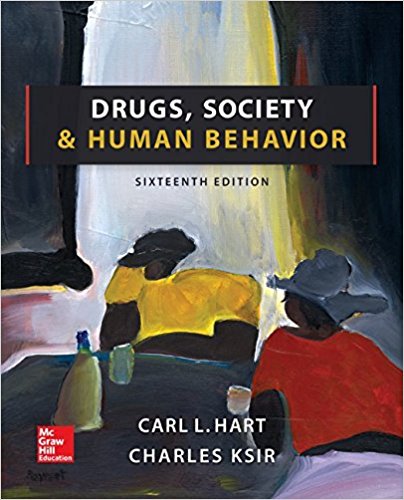
Drugs Society And Human Behavior 16th Edition by Carl L Hart Dr. - Test Bank

Drugs Society And Human Behavior 16th Edition by Carl L Hart Dr. - Test Bank   Instant Download - Complete Test Bank With Answers     Sample Questions Are Posted Below   Chapter 05 The Actions of Drugs     Multiple Choice Questions (p. 101)Most of our drugs originally came either directly or indirectly from A. South …

$19.99

Drugs Society And Human Behavior 16th Edition by Carl L Hart Dr. – Test Bank


Instant Download – Complete Test Bank With Answers


Sample Questions Are Posted Below


Chapter 05

The Actions of Drugs


Multiple Choice Questions

  1. (p. 101)Most of our drugs originally came either directly or indirectly from
    A. South America.
    B. plants.
    C. petroleum.
    D. German chemists.


Blooms Level: 01. Remember

  1. (p. 102)Most drugs have three different kinds of names. Which of them belongs to a specific manufacturer?
    A. chemical name
    B. generic name
    C. brand name
    D. research name


Blooms Level: 01. Remember

  1. (p. 103)The group of psychoactive drugs called stimulants includes
    A. cocaine.
    B. Prozac.
    C. LSD.
    D. heroin.


Blooms Level: 01. Remember


  1. (p. 103)Among the psychoactive drugs, alcohol can be classified as a(n)
    A. stimulant.
    B. opioid.
    C. hallucinogen.
    D. depressant.


Blooms Level: 01. Remember

  1. (p. 103)Which of these is given its own classification category, due to its complex effects at different doses?
    A. cocaine
    B. marijuana
    C. Abilify
    D. caffeine


Blooms Level: 01. Remember

  1. (p. 105)Nonspecific effects of taking a drug are those that do not depend on its chemical activity. They are sometimes referred to as
    A. placebo effects.
    B. ataxia.
    C. side effects.
    D. dose-response effects.


Blooms Level: 01. Remember

  1. (p. 105)When neither the person taking the drug nor the person evaluating the effects of the drug knows which people are getting the experimental drug and which people are getting the placebo, this procedure is referred to as a(n)
    A. design flaw.
    B. effect size.
    C. preclinical study.
    D. double-blind procedure.


Blooms Level: 01. Remember


  1. (p. 106)The threshold on a dose-response curve is the
    A. point at which the dose of the drug causes maximal response.
    B. lowest dose at which there is an observable effect of the drug.
    C. safe effective dose of the drug.
    D. therapeutic index of the drug.


Blooms Level: 01. Remember

  1. (p. 106)The text uses an example of overlapping dose-response curves for slowed reaction time, ataxia (staggering), and coma to illustrate
    A. how different drugs have different effects.
    B. that different drug-related effects can have different thresholds.
    C. the placebo effect.
    D. the grapefruit-juice effect.


Blooms Level: 01. Remember

  1. (p. 107)The safety margin for a particular drug is based on the idea that
    A. toxic doses will typically be larger than therapeutic doses.
    B. most drugs cause toxicity problems only when combined with other drugs.
    C. we need to determine an LD50 using human volunteers.
    D. we should only prescribe drugs that are not toxic even at high doses.


Blooms Level: 01. Remember

  1. (p. 108)With increasing doses of any useful drug, there is usually an increase in the number and severity of
    A. side effects.
    B. beneficial effects.
    C. placebo effects.
    D. effects on the stomach.


Blooms Level: 01. Remember


  1. (p. 108)The potency of a drug is defined in terms of
    A. the magnitude of the effect it produces.
    B. its dependence potential.
    C. whether it has a detectible odor.
    D. the amount required to produce an effect.


Blooms Level: 01. Remember

  1. (p. 111)The story of the Michigan police officer who ate marijuana-laced brownies and then called 911, is a good illustration of which basic psychopharmacology fact?
    A. Drug laws only apply to those outside of law enforcement.
    B. Marijuana produces paranoia in the majority of users.
    C. The oral route of administration produces the fastest onset of effects.
    D. Different routes of administration can producing markedly different drug effects.


Blooms Level: 01. Remember

  1. (p. 109)The time course of a drug’s action depends on
    A. how the drug is administered.
    B. how rapidly the drug is absorbed.
    C. how the drug is eliminated from the body.
    D. all of the above.


Blooms Level: 01. Remember
Blooms Level: 02. Understand

  1. (p. 111)Regardless of the route of administration, psychoactive drugs reach the brain tissue by way of the
    A. meninges.
    B. spinal cord.
    C. bloodstream.
    D. liver.


Blooms Level: 01. Remember
Blooms Level: 02. Understand


  1. (p. 112)After oral administration, most absorption of the drug molecules takes place in the
    A. small intestine.
    B. kidneys.
    C. heart.
    D. lower bowel.


Blooms Level: 01. Remember

  1. (p. 114)If you want to get very high concentrations of cocaine to the brain very rapidly, which route of administration would you probably use?
    A. oral
    B. subcutaneous
    C. topical
    D. intravenous


Blooms Level: 01. Remember

  1. (p. 115)Of the following routes of administration, which will produce fastest onset of effects?
    A. inhalation.
    B. intramuscular injection.
    C. using a rectal suppository.
    D. rubbing it on the head.


Blooms Level: 01. Remember
Blooms Level: 02. Understand

  1. (p. 116)Alcohol has a low tendency, but THC has a high tendency, to
    A. bind to the serotonin receptor.
    B. dissolve in water.
    C. bind to blood proteins.
    D. produce dependence.


Blooms Level: 01. Remember


  1. (p. 116)The blood-brain barrier
    A. is fully developed in humans when they are born.
    B. is designed to allow all drug compounds into the brain.
    C. cannot be penetrated, even with trauma to the brain.
    D. prevents many drugs from entering the brain.


Blooms Level: 01. Remember

  1. (p. 117)Concussions and cerebral infections can decrease the effectiveness of
    A. drug metabolism.
    B. the blood-brain barrier.
    C. protein binding.
    D. multiple drug doses.


Blooms Level: 01. Remember

  1. (p. 117)Some drugs may act on all types of neurons by
    A. blocking all receptor types.
    B. interfering with metabolism.
    C. preventing absorption of nutrients.
    D. altering the electrical potential across the cell membrane.


Blooms Level: 01. Remember

  1. (p. 118-119)The most common way for drug molecules to be deactivated is by
    A. CYP450 enzymes in the liver.
    B. protein binding.
    C. elimination through the bowel.
    D. reuptake.


Blooms Level: 01. Remember


  1. (p. 119)If repeated exposure to a drug increases the activity of the CYP450 enzyme that is responsible for metabolizing that drug, then later doses will be less effective than the first few doses. This is an example of
    A. drug disposition tolerance.
    B. behavioral tolerance.
    C. an active metabolite.
    D. a prodrug.


Blooms Level: 01. Remember

  1. (p. 120)When use of a drug interferes with normal behavior, experienced users may learn to compensate and show less impairment than new users. This is an example of
    A. drug disposition tolerance.
    B. behavioral tolerance.
    C. an active metabolite.
    D. a prodrug.


Blooms Level: 01. Remember

  1. (p. 120)In some cases, repeated use of a drug leads to pharmacodynamic tolerance, which is based on
    A. altered liver function.
    B. learning.
    C. reduced sensitivity of neurons.
    D. slower metabolism.


Blooms Level: 01. Remember

  1. (p. 102)What kind of name is Provigil (an alerting drug)?
    A. chemical name
    B. generic name
    C. brand name
    D. none of the above


Blooms Level: 01. Remember


  1. (p. 108)Which of the following would be a reason for a drug company NOT to pursue expensive clinical trails with a new drug?
    A. The drug produces no side effects.
    B. The drug produces side effects.
    C. The therapeutic index is greater than 1.
    D. The therapeutic index is less than 1.


Blooms Level: 01. Remember
Blooms Level: 02. Understand


True / False Questions

  1. (p. 102)A drug’s generic name can only be used by one company.
    FALSE


Blooms Level: 01. Remember

  1. (p. 103)Caffeine and cocaine are both considered to be stimulant drugs.
    TRUE


Blooms Level: 01. Remember

  1. (p. 103)Marijuana and heroin are both considered to be opioid drugs.
    FALSE


Blooms Level: 01. Remember

  1. (p. 109)For most therapeutic effects, there is a maximum effect, and increasing the dose more just increases the number and type of side effects.
    TRUE


Blooms Level: 01. Remember
Blooms Level: 02. Understand


  1. (p. 112-114)Most psychoactive drugs taken orally go directly from the stomach to the brain.
    FALSE


Blooms Level: 01. Remember

  1. (p. 115)For many psychoactive drugs, such as nicotine and cocaine, the fastest way to get an effect is by inhaling the drug’s vapors.
    TRUE


Blooms Level: 01. Remember

  1. (p. 109)According to the text, inexperienced drug users should avoid taking a drug via a route that increases the drug’s potency.
    TRUE


Blooms Level: 01. Remember

  1. (p. 118)Because the effects of stimulants and depressants counteract each other, taking these drugs in combination does not produce intoxication.
    FALSE


Blooms Level: 01. Remember
Blooms Level: 02. Understand


Essay Questions
 

  1. (p. 105)What is the placebo effect? Describe some research techniques that have been developed to separate specific drug effects from placebo effects.

The placebo effect is an effect that does not depend on the presence of a specific chemical in the system. Double-blind procedures and dose-effect curves are two ways of demonstrating specific drug effects.


Blooms Level: 01. Remember
Blooms Level: 02. Understand

  1. (p. 110-120)Describe three factors that can influence the time course of the behavioral effect of a drug, and show that you understand how each factor influences the time course.

1) route of administration, 2) speed of absorption (both influence how fast the drug acts and how long it takes to reach its maximum effect), and 3) how the drug is eliminated (mainly influences how long it lasts). Other possible answers include protein binding, drug distribution (e.g., fat storage). Bonus: discussion of metabolism by CYP450 enzymes in the liver, drug disposition tolerance.


Blooms Level: 01. Remember
Blooms Level: 02. Understand

  1. (p. 112-114)There are many different routes by which drugs can be administered. Describe the pros and cons of the oral route versus the intravenous route.

Oral administration: pros are simpler and relatively safer technique; cons are that absorption from gastrointestinal tract is slow and complicated by many factors.
Intravenous administration: pros are short onset of action, can deliver irritating material since blood vessel walls are relatively insensitive; cons are vein walls lose some elasticity over time and can eventually collapse, can introduce infection directly into bloodstream.


Blooms Level: 01. Remember


  1. (p. 119-120)Describe three mechanisms that might explain why an alcohol-dependent individual might have to take more of the drug to experience the same effects.

The three mechanisms are 1) drug disposition tolerance – use of a drug that increases a drug’s rate of metabolism or excretion, therefore requiring a greater dose to obtain the same result; 2) behavioral tolerance – individuals learn to adapt to the altered state and compensate for the impairment; and 3) pharmacodynamic tolerance – sensitivity of neurons to a drug changes in an attempt by the brain to maintain its level of functioning within normal limits.


Blooms Level: 01. Remember
Blooms Level: 02. Understand

  1. (p. 109)Explain why an experienced heroin user would most likely choose to smoke or inject the drug rather then taking it orally. Then explain why inexperienced users should initially be discouraged from these routes of administration.

An experienced heroin user will smoke or inject because these routes produce a more intense high (because of a fast rate of onset) and less of the drug will be needed (because none will be metabolized by the stomach and/or liver). These routes are less safe for the inexperienced user because they have not built tolerance, and thus small drug doses with a fast onset are more likely to produce toxic effects.


Blooms Level: 01. Remember
Blooms Level: 02. Understand

Additional information

Add Review

Your email address will not be published. Required fields are marked *