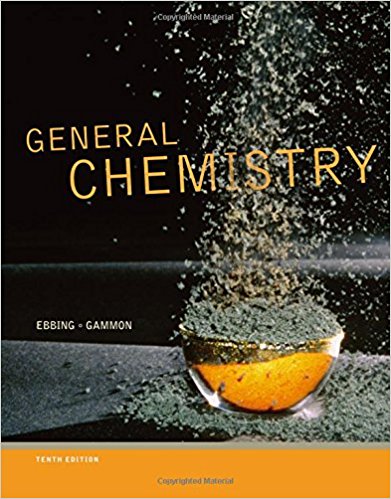
General Chemistry 10th Edition by Darrell Ebbing - Test Bank

General Chemistry 10th Edition by Darrell Ebbing - Test Bank   Instant Download - Complete Test Bank With Answers     Sample Questions Are Posted Below   Chapter 5 - The Gaseous State   Which of the following concerning a barometer or manometer is/are true?   1. Pressure is directly proportional to the height of …

$19.99

General Chemistry 10th Edition by Darrell Ebbing – Test Bank


Instant Download – Complete Test Bank With Answers


Sample Questions Are Posted Below


Chapter 5 – The Gaseous State


  1. Which of the following concerning a barometer or manometer is/are true?
  1. Pressure is directly proportional to the height of the liquid used in the device.
  2. Pressure is directly proportional to the density of the liquid used in the device.
  3. Pressure is independent of the acceleration of gravity.


A) 1 only
B) 2 only
C) 3 only
D) 1 and 2
E) 1, 2, and 3


ANS:   D                     PTS:    1                      DIF:    easy                 REF:    5.1

OBJ:    Convert units of pressure. (Example 5.1)                              TOP:    phases | gas


  1. It is possible to make a barometer using a liquid other than mercury.  What would be the height (in meters) of a column of water at a pressure of 0.390 atm, given that 0.390 atm is equal to a 0.296 m column of mercury and the densities of mercury and water are 13.5 g/cm3 and 1.00 g/cm3, respectively.
A) 4.00 m
B) 0.250 m
C) 0.0220 m
D) 0.296 m
E) 3.37 m


ANS:   A                     PTS:    1                      DIF:    easy                 REF:    5.1

OBJ:    Convert units of pressure. (Example 5.1)                              TOP:    phases | gas


  1. A particular gas exerts a pressure of 621 mmHg.  What is this pressure in units of bar?
A) 4.66 ´ 105 bar
B) 4.78 ´ 105 bar
C) 629 bar
D) 0.806 bar
E) 0.828 bar


ANS:   E                     PTS:    1                      DIF:    easy                 REF:    5.1

OBJ:    Convert units of pressure. (Example 5.1)                              TOP:    phases | gas

KEY:   gas pressure     MSC:   general chemistry


  1. A particular gas exerts a pressure of 785 mmHg.  What is this pressure in units of atmospheres?
A) 5.89 ´ 105 atm
B) 6.05 ´ 105 atm
C) 775 atm
D) 1.05 atm
E) 1.03 atm


ANS:   E                     PTS:    1                      DIF:    easy                 REF:    5.1

OBJ:    Convert units of pressure. (Example 5.1)                              TOP:    phases | gas

KEY:   gas pressure     MSC:   general chemistry


  1. A particular gas exerts a pressure of 2.79 bar.  What is this pressure in units of pascals?
A) 2.75 ´ 105 Pa
B) 2.79 ´ 10–5 Pa
C) 2.79 ´ 105 Pa
D) 2.83 ´ 105 Pa
E) 2.75 ´ 10–5 Pa


ANS:   C                     PTS:    1                      DIF:    easy                 REF:    5.1

OBJ:    Convert units of pressure. (Example 5.1)                              TOP:    phases | gas

KEY:   gas pressure     MSC:   general chemistry


  1. A particular gas exerts a pressure of 3.43 bar.  What is this pressure in units of atmospheres?
A) 3.48 atm
B) 2.57 ´ 103 atm
C) 2.64 ´ 103 atm
D) 3.39 atm
E) 3.43 atm


ANS:   D                     PTS:    1                      DIF:    easy                 REF:    5.1

OBJ:    Convert units of pressure. (Example 5.1)                              TOP:    phases | gas

KEY:   gas pressure     MSC:   general chemistry


  1. A particular gas exerts a pressure of 4.79 atm.  What is this pressure in units of mmHg?
A) 4.73 mmHg
B) 3.64 ´ 103 mmHg
C) 4.85 mmHg
D) 6.30 ´ 10–3 mmHg
E) 3.69 ´ 103 mmHg


ANS:   B                     PTS:    1                      DIF:    easy                 REF:    5.1

OBJ:    Convert units of pressure. (Example 5.1)                              TOP:    phases | gas

KEY:   gas pressure     MSC:   general chemistry


  1. A particular gas exerts a pressure of 2.27 atm.  What is this pressure in units of bar?
A) 1.73 ´ 103 bar
B) 2.27 ´ 105 bar
C) 2.30 bar
D) 2.24 bar
E) 2.99 ´ 10–3 bar


ANS:   C                     PTS:    1                      DIF:    easy                 REF:    5.1

OBJ:    Convert units of pressure. (Example 5.1)                              TOP:    phases | gas

KEY:   gas pressure     MSC:   general chemistry


  1. A particular gas exerts a pressure of 2.62 ´ 104 Pa.  What is this pressure in units of bar?
A) 2.62 ´ 109 bar
B) 0.262 bar
C) 34.5 bar
D) 2.59 ´ 104 bar
E) 2.65 ´ 104 bar


ANS:   B                     PTS:    1                      DIF:    easy                 REF:    5.1

OBJ:    Convert units of pressure. (Example 5.1)                              TOP:    phases | gas

KEY:   gas pressure     MSC:   general chemistry


  1. A particular gas exerts a pressure of 7.54 ´ 104 Pa.  What is this pressure in units of atmospheres?
A) 0.744 atm
B) 7.44 ´ 109 atm
C) 0.764 atm
D) 0.754 atm
E) 7.64 ´ 109 atm


ANS:   A                     PTS:    1                      DIF:    easy                 REF:    5.1

OBJ:    Convert units of pressure. (Example 5.1)                              TOP:    phases | gas

KEY:   gas pressure     MSC:   general chemistry


  1. The pressure of a certain gas is measured to be 360.6 mmHg.  What is this pressure expressed in units of pascals?
A) 4.683 ´ 10–6 Pa
B) 2.136 ´ 105 Pa
C) 2.080 ´ 10–5 Pa
D) 3.654 ´ 107 Pa
E) 4.808 ´ 104 Pa


ANS:   E                     PTS:    1                      DIF:    easy                 REF:    5.1

OBJ:    Convert units of pressure. (Example 5.1)                              TOP:    phases | gas

KEY:   gas pressure     MSC:   general chemistry


  1. The pressure of a certain gas is measured to be 5.159 ´ 103 Pa.  What is this pressure expressed in units of mmHg?
A) 6.699 ´ 10–5 mmHg
B) 3.921 ´ 106 mmHg
C) 2.584 ´ 10–2 mmHg
D) 38.70 mmHg
E) 1.493 ´ 104 mmHg


ANS:   D                     PTS:    1                      DIF:    easy                 REF:    5.1

OBJ:    Convert units of pressure. (Example 5.1)                              TOP:    phases | gas

KEY:   gas pressure     MSC:   general chemistry


  1. A flexible vessel contains 47 L of gas where the pressure is 1.3 atm. What will the volume be when the pressure is 0.85 atm, the temperature remaining constant?
A) 0.014 L
B) 31 L
C) 47 L
D) 0.046 L
E) 72 L


ANS:   E                     PTS:    1                      DIF:    easy                 REF:    5.2

OBJ:    Use Boyle’s law. (Example 5.2)         TOP:    phases | gas

KEY:   empirical gas laws | Boyle’s law        MSC:   general chemistry


  1. A flexible vessel contains 32.00 L of gas at a pressure of 1.59 atm. Under conditions of constant temperature and moles of gas, what is the volume of the gas when the pressure of the vessel is decreased by a factor of three?
A) 96.1 L
B) 10.7 L
C) 0.0104 L
D) 32 L
E) 4.80 L


ANS:   A                     PTS:    1                      DIF:    easy                 REF:    5.2

OBJ:    Use Boyle’s law. (Example 5.2)         TOP:    phases | gas


  1. A flexible vessel is filled to a certain pressure with 12.00 L of gas. Under conditions of constant temperature and moles of gas, how does the volume of the gas change when the pressure of the gas is decreased by a factor of three?
A) The volume increases by a factor of three.
B) The volume increases by a factor of two.
C) The volume increases by a factor of four.
D) The volume decreases by a factor of two.
E) The volume decreases by a factor of four.


ANS:   A                     PTS:    1                      DIF:    moderate         REF:    5.2

OBJ:    Use Boyle’s law. (Example 5.2)         TOP:    phases | gas


  1. A flexible vessel contains 53 L of gas where the pressure is 1.6 atm. What will the volume be when the pressure is 0.61 atm, the temperature remaining constant?
A) 0.007 L
B) 20 L
C) 53 L
D) 0.042 L
E) 139 L


ANS:   E                     PTS:    1                      DIF:    easy                 REF:    5.2

OBJ:    Use Boyle’s law. (Example 5.2)         TOP:    phases | gas

KEY:   empirical gas laws | Boyle’s law        MSC:   general chemistry


  1. A 2.00-L glass soda bottle filled only with air is tightly capped at 24°C and 744.0 mmHg. If the bottle is placed in water at 75°C, what is the pressure in the bottle?
A) 238 mmHg
B) 872 mmHg
C) 2330 mmHg
D) 635 mmHg
E) 383 mmHg


ANS:   B                     PTS:    1                      DIF:    easy                 REF:    5.2

OBJ:    Use Boyle’s law. (Example 5.2)         TOP:    phases | gas

KEY:   empirical gas laws | Boyle’s law        MSC:   general chemistry


  1. A sample of methane, CH4, occupies a volume of 170.0 mL at 25°C and exerts a pressure of 965.0 mmHg. If the volume of the gas is allowed to expand to 720.0 mL at 298 K, what will be the pressure of the gas?
A) 4090 mmHg
B) 2720 mmHg
C) 227.8 mmHg
D) 0.008823 mmHg
E) 550.0 mmHg


ANS:   C                     PTS:    1                      DIF:    easy                 REF:    5.2

OBJ:    Use Boyle’s law. (Example 5.2)         TOP:    phases | gas

KEY:   empirical gas laws | Boyle’s law        MSC:   general chemistry


  1. When the valve between the 2.00-L bulb, in which the gas pressure is 3.00 atm, and the 3.00-L bulb, in which the gas pressure is 2.50 atm, is opened, what will be the final pressure in the two bulbs?  Assume the temperature remains constant.
A) 2.70 atm
B) 5.50 atm
C) 2.83 atm
D) 2.80 atm
E) 2.67 atm


ANS:   A                     PTS:    1                      DIF:    moderate         REF:    5.2

OBJ:    Use Boyle’s law. (Example 5.2)         TOP:    phases | gas

KEY:   empirical gas laws | Boyle’s law        MSC:   general chemistry


  1. Absolute zero is the point at which
A) a straight-line graph of V versus T (°C)  intersects the origin.
B) a straight-line graph of 1/V versus P at constant T intersects the origin.
C) gaseous helium liquefies.
D) a straight-line graph of V versus 1/P at constant T intersects the origin.
E) a straight-line graph of V versus T (K)  intersects the origin.


ANS:   E                     PTS:    1                      DIF:    moderate         REF:    5.2

OBJ:    Express Charles’s law in words and as an equation.              TOP:    phases | gas

KEY:   empirical gas laws | Charles’s law      MSC:   general chemistry


  1. The following volume-temperature plots were made at different values of constant pressure while the number of moles of gas in each experiment remained the same. Which plot represents measurements at the highest pressure?
A) B
B) C
C) A
D) They are all at the same pressure.
E) D


ANS:   C                     PTS:    1                      DIF:    moderate         REF:    5.2

OBJ:    Express Charles’s law in words and as an equation.              TOP:    phases | gas

KEY:   empirical gas laws | Charles’s law      MSC:   general chemistry


  1. Which of the following is a correct statement of Charles’s law, ?
A) The volume of a gas varies proportionally with the pressure.
B) The volume of a gas sample varies directly with the absolute temperature.
C) All gas samples of the same volume at STP contain the same number of atoms.
D) The pressure of a gas sample varies inversely with the volume.
E) All gas samples of the same volume at STP contain the same number of molecules.


ANS:   B                     PTS:    1                      DIF:    easy                 REF:    5.2

OBJ:    Express Charles’s law in words and as an equation.              TOP:    phases | gas

KEY:   empirical gas laws | Charles’s law      MSC:   general chemistry


  1. The volume of a sample of gas measured at 55.0°C and 1.00 atm pressure is 8.00 L. What must the final temperature be in order for the gas to have a final volume of 9.00 L at 1.00 atm pressure?
A) 96.0°C
B) 61.9°C
C) –211.1°C
D) 48.9°C
E) 18.6°C


ANS:   A                     PTS:    1                      DIF:    moderate         REF:    5.2

OBJ:    Use Charles’s law. (Example 5.3)      TOP:    phases | gas

KEY:   empirical gas laws | Charles’s law      MSC:   general chemistry


  1. A flexible container is charged with 51.00 L of gas at 368 K. Under conditions of constant pressure and moles of gas, what is the volume of the gas when the temperature is tripled?
A) 153 L
B) 17.0 L
C) 0.0588 L
D) 51 L
E) 0.850 L


ANS:   A                     PTS:    1                      DIF:    easy                 REF:    5.2

OBJ:    Use Charles’s law. (Example 5.3)      TOP:    phases | gas


  1. A flexible container is charged with a certain volume of gas at 318.3 K. Under conditions of constant pressure and moles of gas, how does the volume of the gas change when the temperature is decreased by a factor of four?
A) The volume decreases by a factor of four.
B) The volume decreases by a factor of two.
C) The volume remains the same.
D) The volume increases by a factor of three.
E) The volume increases by a factor of two.


ANS:   A                     PTS:    1                      DIF:    moderate         REF:    5.2

OBJ:    Use Charles’s law. (Example 5.3)      TOP:    phases | gas


  1. A gas occupies a volume of 2.75 L at 350 mmHg and 200°C. Which mathematical expression gives the correct volume at 550 mmHg and 450°C?
A)
B)
C)
D)
E)


ANS:   E                     PTS:    1                      DIF:    moderate         REF:    5.2

OBJ:    Use the combined gas law. (Example 5.4)                            TOP:    phases | gas

KEY:   empirical gas laws | combined gas law                                  MSC:   general chemistry


  1. A gas occupying a volume of 1.50 L exerts a pressure of 700 mmHg at 200°C. Which mathematical expression gives the correct pressure at 6.00 L and 400°C?
A)
B)
C)
D)
E)


ANS:   B                     PTS:    1                      DIF:    moderate         REF:    5.2

OBJ:    Use the combined gas law. (Example 5.4)                            TOP:    phases | gas

KEY:   empirical gas laws | combined gas law                                  MSC:   general chemistry


  1. A rigid container is charged with a gas to a pressure of 760 mmHg at 20.0°C and tightly sealed. If the temperature of the gas increases by 40.0°C what is the new pressure?
A) 1520 mmHg
B) 669 mmHg
C) 656 mmHg
D) 864 mmHg
E) 1140 mmHg


ANS:   D                     PTS:    1                      DIF:    easy                 REF:    5.2

OBJ:    Use the combined gas law. (Example 5.4)                            TOP:    phases | gas


  1. The pressure of 4.2 L of nitrogen gas in a flexible container is decreased to one-half its original pressure, and its absolute temperature is increased to double the original temperature. The volume is now
A) 2.1 L.
B) 4.2 L.
C) 8 L.
D) 17 L.
E) 1.1 L.


ANS:   D                     PTS:    1                      DIF:    easy                 REF:    5.2

OBJ:    Use the combined gas law. (Example 5.4)                            TOP:    phases | gas

KEY:   empirical gas laws | combined gas law                                  MSC:   general chemistry


  1. Which of the following concerning the ideal gas law is/are true?
  1. Pressure is directly proportional to volume when temperature and moles of gas are held constant.
  2. Pressure is directly proportional to moles of gas when temperature and volume are held constant.
  3. Volume is inversely proportional to temperature when the pressure and moles of gas are held constant.


A) 1 only
B) 2 only
C) 3 only
D) 1 and 2 only
E) 2 and 3 only


ANS:   B                     PTS:    1                      DIF:    easy                 REF:    5.2

OBJ:    Use the combined gas law. (Example 5.4)                            TOP:    phases | gas


  1. A given mass of gas occupies a volume of 4.00 L at 60°C and 550 mmHg. Which of the following mathematical expressions will yield its temperature at 3.00 L and 775 mmHg?
A)
B)
C)
D)
E)


ANS:   D                     PTS:    1                      DIF:    moderate         REF:    5.2

OBJ:    Use the combined gas law. (Example 5.4)                            TOP:    phases | gas

KEY:   empirical gas laws | combined gas law                                  MSC:   general chemistry


  1. A fixed amount of gas in a rigid container is heated from 300 to 900 K. Which of the following responses best describes what will happen to the pressure of the gas?
A) The pressure will increase by a factor of 3.
B) The pressure will increase by a factor less than 3.
C) The pressure will increase by a factor greater than 3.
D) The pressure will decrease by a factor of 3.
E) The pressure will remain the same.


ANS:   A                     PTS:    1                      DIF:    easy                 REF:    5.2

OBJ:    Use the combined gas law. (Example 5.4)                            TOP:    phases | gas

KEY:   empirical gas laws | combined gas law                                  MSC:   general chemistry


  1. A 22.4-L sample of nitrogen at 3.65 atm and 22°C is simultaneously expanded to 57.4 L and heated to 38°C.  What is the new pressure of the gas?
A) 2.46 atm
B) 1.50 atm
C) 204 atm
D) 334 atm
E) 1.35 atm


ANS:   B                     PTS:    1                      DIF:    easy                 REF:    5.2

OBJ:    Use the combined gas law. (Example 5.4)                            TOP:    phases | gas

KEY:   empirical gas laws | combined gas law                                  MSC:   general chemistry


  1. A fixed amount of gas in a rigid container is heated from 100°C to 700°C. Which of the following responses best describes what will happen to the pressure of the gas?
A) The pressure will increase by a factor greater than 7.
B) The pressure will increase by a factor of 7.
C) The pressure will increase by a factor less than 7.
D) The pressure will decrease by a factor of 7.
E) The pressure will remain the same.


ANS:   C                     PTS:    1                      DIF:    easy                 REF:    5.2

OBJ:    Use the combined gas law. (Example 5.4)                            TOP:    phases | gas

KEY:   empirical gas laws | combined gas law                                  MSC:   general chemistry


  1. Equal volumes of propane, C3H8, and carbon monoxide, CO, at the same temperature and pressure have the same
A) chemical properties.
B) number of atoms.
C) average molecular speed.
D) density.
E) number of molecules.


ANS:   E                     PTS:    1                      DIF:    easy                 REF:    5.2

OBJ:    State Avogadro’s law.                        TOP:    phases | gas

KEY:   empirical gas laws | Avogadro’s law                                     MSC:   general chemistry


  1. A 1.00-L bulb contains a sample of O2 at 25°C and 1.00 atm pressure. A second 1.00-L bulb contains a sample of CH4 at 25°C and 1.00 atm pressure. What is the ratio of the number of molecules of methane to the number of molecules of oxygen in each of the containers?
A) 2:5
B)
C) 5:2
D)
E) 1:1


ANS:   E                     PTS:    1                      DIF:    easy                 REF:    5.2

OBJ:    State Avogadro’s law.                        TOP:    phases | gas

KEY:   empirical gas laws | Avogadro’s law                                     MSC:   general chemistry


  1. Which of the following statements, concerning equal volumes of the gases dinitrogen monoxide, N2O, and propane, C3H8, at the same temperature and pressure, is not correct?
A) The moles of N2O and C3H8 are equal.
B) They have the same density.
C) They have the same number of molecules.
D) They have the same number of atoms.
E) They have the same absolute temperature.


ANS:   D                     PTS:    1                      DIF:    easy                 REF:    5.2

OBJ:    State Avogadro’s law.                        TOP:    phases | gas

KEY:   empirical gas laws | Avogadro’s law                                     MSC:   general chemistry


  1. What volume of methane gas, CH4, has the same number of atoms as 6.00 L of krypton gas at the same temperature and pressure?
A) 36.0 L
B) 1.00 L
C) 6.00 L
D) 1.20 L
E) 30.0 L


ANS:   D                     PTS:    1                      DIF:    moderate         REF:    5.2

OBJ:    State Avogadro’s law.                        TOP:    phases | gas


  1. What volume of gaseous water, H2O, has the same moles of gas as 10.0 L of xenon gas at the same temperature and pressure?
A) 40.0 L
B) 2.50 L
C) 10.0 L
D) 3.33 L
E) 30.0 L


ANS:   C                     PTS:    1                      DIF:    easy                 REF:    5.2

OBJ:    State Avogadro’s law.                        TOP:    phases | gas


  1. A gas occupies a volume of 2.00 L at 860 mmHg and 30.0°C. Which of the following mathematical expressions will yield its volume at STP?
A)
B)
C)
D)
E)


ANS:   A                     PTS:    1                      DIF:    moderate         REF:    5.2

OBJ:    Define standard temperature and pressure (STP).                 TOP:    phases | gas

KEY:   empirical gas laws | combined gas law                                  MSC:   general chemistry


  1. Which conditions of P, T, and n, respectively, are most ideal?
A) low P, low T, low n
B) high P, low T, high n
C) low P, high T, high n
D) low P, high T, low n
E) high P, high T, high n


ANS:   D                     PTS:    1                      DIF:    easy                 REF:    5.3

OBJ:    State what makes a gas an ideal gas.                                     TOP:    phases | gas

KEY:   ideal gas law                                      MSC:   general chemistry


  1. The behavior of PH3(g) is most likely to approach ideal behavior at
A) 1.0 atm and 100°C.
B) 0.10 atm and –100°C.
C) 10 atm and 100°C.
D) 0.10 atm and 100°C.
E) 1.0 atm and 0°C.


ANS:   D                     PTS:    1                      DIF:    easy                 REF:    5.3

OBJ:    State what makes a gas an ideal gas.                                     TOP:    phases | gas

KEY:   ideal gas law                                      MSC:   general chemistry


  1. For an ideal gas, which of the following statements is true?
A) V is inversely proportional to n at constant P and T.
B) P is inversely proportional to T at constant n and V.
C) P is inversely proportional to n at constant V and T.
D) P is inversely proportional to V at constant n and T.
E) V is inversely proportional to T at constant n and P.


ANS:   D                     PTS:    1                      DIF:    easy                 REF:    5.3

OBJ:    Learn the ideal gas law equation.      TOP:    phases | gas     KEY:   ideal gas law

MSC:   general chemistry


  1. The volume of 1 mol of nitrogen
A) is lower than that of  1mol ammonia at high pressures.
B) is decreased by decreasing the pressure of the gas.
C) has the value of 22.4 L at 0°C and 1.00 atm.
D) is decreased by increasing its kinetic energy.
E) is increased by decreasing the temperature.


ANS:   C                     PTS:    1                      DIF:    easy                 REF:    5.3

OBJ:    Learn the ideal gas law equation.      TOP:    phases | gas     KEY:   ideal gas law

MSC:   general chemistry


  1. Which of the following graphs does not correctly describe the ideal gas law?
A)
B) They all correctly represent the ideal gas law.
C)
D)
E)


ANS:   B                     PTS:    1                      DIF:    moderate         REF:    5.3

OBJ:    Derive the empirical gas laws from the ideal gas law. (Example 5.5)

TOP:    phases | gas     KEY:   ideal gas law                                      MSC:   general chemistry


  1. What is the pressure of a 59.6-L gas sample containing 3.01 mol of gas at 44.9°C?  (R = 0.0821 L • atm/(K • mol), 1 atm = 760 torr)
A) 1.41 ´ 102 mmHg
B) 1.73 ´ 10–3 mmHg
C) 1.32 mmHg
D) 1.00 ´ 103 mmHg
E) 5.77 ´ 102 mmHg


ANS:   D                     PTS:    1                      DIF:    easy                 REF:    5.3

OBJ:    Use the ideal gas law. (Example 5.6)                                    TOP:    phases | gas

KEY:   ideal gas law | calculations with the ideal gas law                MSC:   general chemistry


  1. How many moles of gas are in a gas sample occupying 0.738 L at 135 mmHg and 30°C?
A) 190 mol
B) 4.01 mol
C) 40.5 mol
D) 0.00527 mol
E) 0.000433 mol


ANS:   D                     PTS:    1                      DIF:    easy                 REF:    5.3

OBJ:    Use the ideal gas law. (Example 5.6)                                    TOP:    phases | gas

KEY:   ideal gas law | calculations with the ideal gas law                MSC:   general chemistry


  1. How many moles of gas are in a gas sample occupying 1.48 L at 591 mmHg and 302 K?
A) 35.3 mol
B) 0.0464 mol
C) 21.5 mol
D) 0.00381 mol
E) 2.90 mol


ANS:   B                     PTS:    1                      DIF:    easy                 REF:    5.3

OBJ:    Use the ideal gas law. (Example 5.6)                                    TOP:    phases | gas

KEY:   ideal gas law | calculations with the ideal gas law                MSC:   general chemistry


  1. Which of the following statements is incorrect regarding a 320-g sample of gaseous sulfur dioxide at 0°C and 760 mmHg pressure?
A) The density of the gas is 2.86 g/L.
B) There are 5 ´ 6.02 ´ 1023 atoms of oxygen present.
C) There are 5 mol of gas present.
D) The molar mass of the gas is 64 g/mol.
E) The volume of the gas is 112.1 L.


ANS:   B                     PTS:    1                      DIF:    easy                 REF:    5.3

OBJ:    Use the ideal gas law. (Example 5.6)                                    TOP:    phases | gas

KEY:   ideal gas law | calculations with the ideal gas law                MSC:   general chemistry


  1. The following gases are stored in identical flexible containers at 25°C and 1.00 atm pressure.  Order the gases from highest to lowest density.
  1. 200 g propane, C3H8
  2. 100 g carbon dioxide, CO2
  3. 50 g nitrous oxide, N2O


A) 1 » 2 » 3
B) 3 > 2 > 1
C) 1 > 2 > 3
D) 2 > 1> 3
E) 1 > 2 » 3


ANS:   A                     PTS:    1                      DIF:    easy                 REF:    5.3

OBJ:    Use the ideal gas law. (Example 5.6)                                    TOP:    phases | gas


  1. Which of the following samples has the fewest moles of gas?
A) 1.00 L of CH4 at 10°C and 1.00 atm
B) 1.00 L of Ar at –10.0°C and 1.00 atm
C) 1.00 L of NH3 at STP
D) 1.00 L of H2 at 0.0°C and 1.56 atm
E) 1.00 L of HCl at 30°C and 1.00 atm


ANS:   E                     PTS:    1                      DIF:    easy                 REF:    5.3

OBJ:    Use the ideal gas law. (Example 5.6)                                    TOP:    phases | gas

KEY:   ideal gas law | calculations with the ideal gas law                MSC:   general chemistry


  1. A 3.80-L cylinder contains 6.83 g of methane, CH4, at a pressure of 3320 mmHg. What is the temperature of the gas?
A) 475 °C
B) 202 °C
C) 748 °C
D) 3240 °C
E) –62.4 °C


ANS:   B                     PTS:    1                      DIF:    easy                 REF:    5.3

OBJ:    Use the ideal gas law. (Example 5.6)                                    TOP:    phases | gas


  1. The number of molecules in 1.0 L of air at 0°C and 1.0 atm pressure is
A) between 1020 and 1021.
B) between 1023 and 6 ´ 1023.
C) between 1022 and 1023.
D) less than 1020.
E) between 1021 and 1022.


ANS:   C                     PTS:    1                      DIF:    easy                 REF:    5.3

OBJ:    Use the ideal gas law. (Example 5.6)                                    TOP:    phases | gas

KEY:   ideal gas law | calculations with the ideal gas law                MSC:   general chemistry


  1. A mixture consisting of 0.120 mol N2, 0.018 mol O2, 0.112 mol CH4, and an unknown amount of CO2 occupies a volume of 9.04 L at 25°C and 1.17 atm pressure. How many moles of CO2 are there in this sample?
A) 0.750 mol
B) 0.182 mol
C) 2.06 mol
D) 4.90 mol
E) 0.432 mol


ANS:   B                     PTS:    1                      DIF:    difficult           REF:    5.3

OBJ:    Use the ideal gas law. (Example 5.6)                                    TOP:    phases | gas

KEY:   ideal gas law | calculations with the ideal gas law                MSC:   general chemistry


  1. Which of the following gases has the greatest density at 2.5 atm and 25°C?
A) C3H8
B) SO2
C) N2O
D) O2
E) NF3


ANS:   E                     PTS:    1                      DIF:    moderate         REF:    5.3

OBJ:    Calculate gas density. (Example 5.7)                                    TOP:    phases | gas

KEY:   ideal gas law | gas density                  MSC:   general chemistry


  1. The density of ethane, C2H6 (30.1 g/mol), at 32°C and 1.31 atm pressure is
A) 1.57 g/L.
B) 19.2 g/L.
C) 1.34 g/L.
D) 0.635 g/L.
E) 0.162 g/L.


ANS:   A                     PTS:    1                      DIF:    moderate         REF:    5.3

OBJ:    Calculate gas density. (Example 5.7)                                    TOP:    phases | gas

KEY:   ideal gas law | gas density                  MSC:   general chemistry


  1. The density of O2 gas at 4°C and 1.57 atm is
A) 153 g/L.
B) 35.2 g/L.
C) 2.21 g/L.
D) 68.8 g/mL.
E) 0.453 g/L.


ANS:   C                     PTS:    1                      DIF:    moderate         REF:    5.3

OBJ:    Calculate gas density. (Example 5.7)                                    TOP:    phases | gas

KEY:   ideal gas law | gas density                  MSC:   general chemistry


  1. A 1.00-L sample of a gas at STP has a mass of 1.16 g. The molar mass of the gas is
A) 5.18 g/mol.
B) 26.0 g/mol.
C) 22.4 g/mol.
D) 44.8 g/mol.
E) 193 g/mol.


ANS:   B                     PTS:    1                      DIF:    easy                 REF:    5.3

OBJ:    Determine the molecular mass of a vapor. (Example 5.8)    TOP:    phases | gas

KEY:   ideal gas law | calculations with the ideal gas law                MSC:   general chemistry


  1. The density of a gas is 1.96 g/L at STP. What is its molar mass?
A) 65.2 g/mol
B) 58.9 g/mol
C) 11.4 g/mol
D) 22.4 g/mol
E) 43.9 g/mol


ANS:   E                     PTS:    1                      DIF:    easy                 REF:    5.3

OBJ:    Determine the molecular mass of a vapor. (Example 5.8)    TOP:    phases | gas

KEY:   ideal gas law | gas density                  MSC:   general chemistry


  1. A 1.50-L sample of a gas at STP has a mass of 4.75 g. What is one possible formula of the gas?
A) N2F4
B) NF3
C) NCl3
D) NHF2
E) NO2


ANS:   B                     PTS:    1                      DIF:    moderate         REF:    5.3

OBJ:    Determine the molecular mass of a vapor. (Example 5.8)    TOP:    phases | gas

KEY:   ideal gas law | calculations with the ideal gas law                MSC:   general chemistry


  1. At 540.5 mmHg and 40.2oC, a 8.18-L sample of a hydrocarbon gas has a mass of 9.98 g.  What is the formula of the gas?
A) C2H2
B) C3H8
C) C3H6
D) C2H4
E) C2H6


ANS:   B                     PTS:    1                      DIF:    moderate         REF:    5.3

OBJ:    Determine the molecular mass of a vapor. (Example 5.8)    TOP:    phases | gas

KEY:   ideal gas law | calculations with the ideal gas law                MSC:   general chemistry


  1. It is found that at 27°C and 1.14 atm pressure, 2.22 L of gas has a mass of 3.49 g. Its molar mass is
A) 46.2 g/mol.
B) 34.0 g/mol.
C) 29.4 g/mol.
D) 30.6 g/mol.
E) 39.8 g/mol.


ANS:   B                     PTS:    1                      DIF:    moderate         REF:    5.3

OBJ:    Determine the molecular mass of a vapor. (Example 5.8)    TOP:    phases | gas

KEY:   ideal gas law | calculations with the ideal gas law                MSC:   general chemistry


  1. At 28°C and 452 mmHg, an unknown pure gas has a density of 0.674 g/L. Which of the following gases could be the unknown gas?
A) F2
B) C3H6
C) N2O
D) Ne
E) N2


ANS:   E                     PTS:    1                      DIF:    moderate         REF:    5.3

OBJ:    Determine the molecular mass of a vapor. (Example 5.8)    TOP:    phases | gas

KEY:   ideal gas law | gas density                  MSC:   general chemistry


  1. An unknown gaseous hydrocarbon consists of 85.63% carbon by mass.  A 0.335-g sample of the gas occupies a volume of 0.107 L at STP.  What is the identity of the gas?
A) C5H10
B) C6H12
C) C7H14
D) CH2
E) C4H8


ANS:   A                     PTS:    1                      DIF:    difficult           REF:    5.3

OBJ:    Determine the molecular mass of a vapor. (Example 5.8)    TOP:    phases | gas

KEY:   ideal gas law | calculations with the ideal gas law                MSC:   general chemistry


  1. An excess of sodium hydroxide is treated with 2.4 L of dry hydrogen iodide gas measured at STP. What is the mass of sodium iodide is formed?
A) 1.20 g
B) 32.1 g
C) 16.1 g
D) 19 g
E) 360 g


ANS:   C                     PTS:    1                      DIF:    easy                 REF:    5.4

OBJ:    Solving stoichiometry problems involving gas volumes. (Example 5.9)

TOP:    phases | gas


  1. The balanced chemical equation for the conversion of nitrogen to ammonia is:

2N2(g) + 3H2(g) ® 2NH3(g)

Which of the following statements concerning this chemical equation is/are correct?

  1. In a 22.4 L container at standard temperature, 2 atm of nitrogen gas will react with 3 atm of hydrogen gas to produce 2 atm of ammonia gas.
  2. At standard pressure and temperature, 22.4 L of nitrogen gas will react with 22.4 L of hydrogen gas to produce 22.4 L of ammonia gas.
  3. At standard pressure and temperature, 44.8 L of nitrogen gas will react with 67.2 L of hydrogen gas produce 22.4 L of ammonia gas .


A) 1 only
B) 2 only
C) 3 only
D) 1 and 2
E) 1, 2, and 3


ANS:   A                     PTS:    1                      DIF:    easy                 REF:    5.4

OBJ:    Solving stoichiometry problems involving gas volumes. (Example 5.9)

TOP:    phases | gas


  1. A 22.4 L high pressure reaction vessel is charged with 0.3910 mol of iron powder and 1.20 atm of oxygen gas at standard temperature. On heating, the iron and oxygen react according to the balanced reaction below.


4Fe(s) + 3O2(g) ®  2Fe2O3(s)


After the reaction vessel is cooled, and assuming the reaction goes to completion, what pressure of oxygen remains?

A) 0.903 atm
B) 1.196 atm
C) 0.675 atm
D) 0.293 atm
E) 0.196 atm


ANS:   A                     PTS:    1                      DIF:    easy                 REF:    5.4

OBJ:    Solving stoichiometry problems involving gas volumes. (Example 5.9)

TOP:    phases | gas


  1. A high temperature reaction vessel is charged with 0.5860 mol of iron powder and 35.1 L of oxygen gas at standard temperature at pressure. On heating, the iron and oxygen react according to the balanced reaction below.


4Fe(s) + 3O2(g) ®  2Fe2O3(s)


After the reaction vessel is cooled, and assuming the reaction goes to completion, what volume of oxygen remains?

A) 25.3 L
B) 35.1 L
C) 17.6 L
D) 9.84 L
E) 0.293 L


ANS:   A                     PTS:    1                      DIF:    easy                 REF:    5.4

OBJ:    Solving stoichiometry problems involving gas volumes. (Example 5.9)

TOP:    phases | gas


  1. What is the total volume of gases produced at 819 K and 1.00 atm pressure when 320 g of ammonium nitrite undergoes the following decomposition reaction?

NH4NO2(s)  ®  N2(g) + 2H2O(g)

A) 3 ´ 22.4 L
B) 22.4 L
C) 15 ´ 22.4 L
D) 5 ´ 22.4 L
E) 45 ´ 22.4 L


ANS:   E                     PTS:    1                      DIF:    moderate         REF:    5.4

OBJ:    Solving stoichiometry problems involving gas volumes. (Example 5.9)

TOP:    phases | gas     KEY:   ideal gas law | stoichiometry and gas volumes

MSC:   general chemistry


  1. In which of the following reactions will the pressure increase upon completion of the reaction at constant temperature?
A) C(s) + O2(g) ® CO2(g)
B) 2NO(g) + O2(g) ® 2NO2(g)
C) C2H6O(l) + 3O2(g) ® 2CO2(g) + 3H2O(l)
D) 4NH3(g) + 5O2(g) ® 4NO(g) + 6H2O(g)
E) Cl2(g) + 3F2(g) ® 2ClF3(g)


ANS:   D                     PTS:    1                      DIF:    moderate         REF:    5.4

OBJ:    Solving stoichiometry problems involving gas volumes. (Example 5.9)

TOP:    phases | gas     KEY:   ideal gas law | stoichiometry and gas volumes

MSC:   general chemistry


  1. What volume of ammonia gas, measured at 660.3 mmHg and 58.2oC, is required to produce 6.46 g of ammonium sulfate according to the following balanced chemical equation?

2NH3(g) + H2SO4(aq)  ®  (NH4)2SO4(s)

A) 0.000781 L
B) 0.00312 L
C) 0.765 L
D) 11.9 L
E) 3.06 L


ANS:   E                     PTS:    1                      DIF:    moderate         REF:    5.4

OBJ:    Solving stoichiometry problems involving gas volumes. (Example 5.9)

TOP:    phases | gas     KEY:   ideal gas law | stoichiometry and gas volumes

MSC:   general chemistry


  1. If 379.8 mL of nitrogen gas, measured at 628.4 mmHg and 29.7oC, reacts with excess iodine according to the following reaction, what mass of nitrogen triiodide is produced?

N2(g) + 3I2(s)  ®  2NI3(s)

A) 0.354 g
B) 4.99 g
C) 2.49 g
D) 9.98 g
E) 102 g


ANS:   D                     PTS:    1                      DIF:    moderate         REF:    5.4

OBJ:    Solving stoichiometry problems involving gas volumes. (Example 5.9)

TOP:    phases | gas     KEY:   ideal gas law | stoichiometry and gas volumes

MSC:   general chemistry


  1. The following equation represents the partial combustion of methane, CH4.

2CH4(g) + 3O2(g)  ®  2CO(g) + 4H2O(g)

At constant temperature and pressure, what is the maximum volume of carbon monoxide that can be obtained from 3.39 ´ 102 L of methane and 1.70 ´ 102 L of oxygen?

A) 5.09 ´ 102 L
B) 3.39 ´ 102 L
C) 1.19 ´ 103 L
D) 1.13 ´ 102 L
E) 6.78 ´ 102 L


ANS:   D                     PTS:    1                      DIF:    difficult           REF:    5.4

OBJ:    Solving stoichiometry problems involving gas volumes. (Example 5.9)

TOP:    phases | gas


  1. Calcium nitrate will react with ammonium chloride at slightly elevated temperatures, as represented in the equation below.

Ca(NO3)2(s) + 2NH4Cl(s)  ® 2N2O(g) + CaCl2(s) + 4H2O(g)

What is the maximum volume of N2O at STP that could be produced using a 3.40-mol sample of each reactant?

A) 9.28 ´ 102 L
B) 152 L
C) 1.31 ´ 10–2 L
D) 76.2 L
E) 22.4 L


ANS:   D                     PTS:    1                      DIF:    difficult           REF:    5.4

OBJ:    Solving stoichiometry problems involving gas volumes. (Example 5.9)

TOP:    phases | gas     KEY:   ideal gas law | stoichiometry and gas volumes

MSC:   general chemistry


  1. The following equation represents the oxidation of ammonia, NH3.

4NH3(g) + 5O2(g)  ®  4NO(g) + 6H2O(g)

At the same temperature and pressure, what is the maximum volume of nitrogen monoxide that can be obtained from 4.55 ´ 102 L of ammonia and 4.55 ´ 102 L of oxygen?

A) 1.02 ´ 103 L
B) 2.02 ´ 102 L
C) 3.64 ´ 102 L
D) 9.10 ´ 102 L
E) 4.55 ´ 102 L


ANS:   C                     PTS:    1                      DIF:    difficult           REF:    5.4

OBJ:    Solving stoichiometry problems involving gas volumes. (Example 5.9)

TOP:    phases | gas     KEY:   ideal gas law | stoichiometry and gas volumes

MSC:   general chemistry


  1. A vessel with a volume of 32.5 L contains 2.80 g of nitrogen gas, 0.403 g of hydrogen gas, and 79.9 g of argon gas. At 25°C, what is the pressure in the vessel?
A) 63 atm
B) 256.2 atm
C) 1.73 atm
D) 0.145 atm
E) 0.87 atm


ANS:   C                     PTS:    1                      DIF:    moderate         REF:    5.5

OBJ:    Learn the equation for Dalton’s law of partial pressures.      TOP:    phases | gas

KEY:   gas mixtures | Dalton’s law of partial pressures                     MSC:   general chemistry


  1. What is the volume occupied by a mixture of 0.522 mol of N2 and 0.522 mol of O2 gases at 0.83 atm and 42.7°C?
A) 9.79 ´ 102 L
B) 32.6 L
C) 2.20 L
D) 4.41 L
E) 16.3 L


ANS:   B                     PTS:    1                      DIF:    moderate         REF:    5.5

OBJ:    Learn the equation for Dalton’s law of partial pressures.      TOP:    phases | gas

KEY:   gas mixtures | Dalton’s law of partial pressures                     MSC:   general chemistry


  1. In a mixture of argon and hydrogen, occupying a volume of 1.66 L at 910.0 mmHg and 54.9oC, it is found that the total mass of the sample is 1.13 g.  What is the partial pressure of argon?
A) 455 mmHg
B) 319 mmHg
C) 866 mmHg
D) 591 mmHg
E) 43.7 mmHg


ANS:   B                     PTS:    1                      DIF:    difficult           REF:    5.5

OBJ:    Calculate the partial pressure and mole fractions of a gas in a mixture. (Example 5.10)      TOP:            phases | gas     KEY:   gas mixtures    MSC:   general chemistry


  1. The partial pressures of CH4, N2, and O2 in a sample of gas were found to be 155 mmHg, 476 mmHg, and 669 mmHg, respectively. What is the mole fraction of nitrogen?
A) 20.9
B) 0.880
C) 0.515
D) 0.410
E) 0.366


ANS:   E                     PTS:    1                      DIF:    moderate         REF:    5.5

OBJ:    Calculate the partial pressure and mole fractions of a gas in a mixture. (Example 5.10)      TOP:            phases | gas

KEY:   gas mixtures | Dalton’s law of partial pressures                     MSC:   general chemistry


  1. A 24.1-g mixture of nitrogen and carbon dioxide is found to occupy a volume of 15.1 L when measured at 870.2 mmHg and 31.2oC.  What is the mole fraction of nitrogen in this mixture?
A) 0.539
B) 0.500
C) 0.461
D) 0.426
E) 0.574


ANS:   E                     PTS:    1                      DIF:    difficult           REF:    5.5

OBJ:    Calculate the partial pressure and mole fractions of a gas in a mixture. (Example 5.10)      TOP:            phases | gas     KEY:   gas mixtures    MSC:   general chemistry


  1. A 19.3-g mixture of oxygen and argon is found to occupy a volume of 16.2 L when measured at 675.9 mmHg and 43.4oC.  What is the partial pressure of oxygen in this mixture?
A) 401 mmHg
B) 338 mmHg
C) 274 mmHg
D) 437 mmHg
E) 239 mmHg


ANS:   D                     PTS:    1                      DIF:    difficult           REF:    5.5

OBJ:    Calculate the partial pressure and mole fractions of a gas in a mixture. (Example 5.10)      TOP:            phases | gas     KEY:   gas mixtures    MSC:   general chemistry


  1. In a mixture of helium and chlorine, occupying a volume of 14.6 L at 871.7 mmHg and 28.6oC, it is found that the partial pressure of chlorine is 355 mmHg.  What is the total mass of the sample?
A) 50.6 g
B) 1.10 g
C) 21.1 g
D) 1.60 g
E) 19.5 g


ANS:   C                     PTS:    1                      DIF:    difficult           REF:    5.5

OBJ:    Calculate the partial pressure and mole fractions of a gas in a mixture. (Example 5.10)      TOP:            phases | gas     KEY:   gas mixtures    MSC:   general chemistry


  1. What is the partial pressure of nitrogen in a container that contains 3.96 mol of oxygen, 7.49 mol of nitrogen, and 1.19 mol of carbon dioxide when the total pressure is 563 mmHg?
A) 53.0 mmHg
B) 819 mmHg
C) 176 mmHg
D) 334 mmHg
E) 563 mmHg


ANS:   D                     PTS:    1                      DIF:    moderate         REF:    5.5

OBJ:    Calculate the partial pressure and mole fractions of a gas in a mixture. (Example 5.10)      TOP:            phases | gas

KEY:   gas mixtures | Dalton’s law of partial pressures                     MSC:   general chemistry


  1. A sample of oxygen is collected over water at a total pressure of 690.7 mmHg at 19°C.  The vapor pressure of water at 19°C is 16.5 mmHg.  The partial pressure of the O2 is
A) 0.9305 atm.
B) 0.9349 atm.
C) 0.9088 atm.
D) 1.070 atm.
E) 0.8871 atm.


ANS:   E                     PTS:    1                      DIF:    easy                 REF:    5.5

OBJ:    Calculate the amount of gas collected over water. (Example 5.11)

TOP:    phases | gas     KEY:   gas mixtures | collecting gases over water

MSC:   general chemistry


  1. A sample of hydrogen was collected by water displacement at 23.0°C and an atmospheric pressure of 735 mmHg. Its volume is 568 mL. After water vapor is removed, what volume would the hydrogen occupy at the same conditions of pressure and temperature? (The vapor pressure of water at 23.0°C is 21 mmHg.)
A) 509 mL
B) 539 mL
C) 552 mL
D) 568 mL
E) 585 mL


ANS:   C                     PTS:    1                      DIF:    moderate         REF:    5.5

OBJ:    Calculate the amount of gas collected over water. (Example 5.11)

TOP:    phases | gas     KEY:   gas mixtures | collecting gases over water

MSC:   general chemistry


  1. A small amount wet of hydrogen gas (H2) can be prepared by the reaction of zinc with excess hydrochloric acid and trapping the gas produced in an inverted tube initially filled with water.  If the total pressure of the gas in the collection tube is 729.7 mmHg at 25°C, what is the partial pressure of the hydrogen?  The vapor pressure of water is 23.8 mmHg.
A) 705.9 mmHg
B) 753.5 mmHg
C) 729.7 mmHg
D) 31.51 mmHg
E) 47.60 mmHg


ANS:   A                     PTS:    1                      DIF:    moderate         REF:    5.5

OBJ:    Calculate the amount of gas collected over water. (Example 5.11)

TOP:    phases | gas


  1. Which statement is inconsistent with the kinetic theory of an ideal gas?
A) Most of the volume occupied by a gas is empty space.
B) The forces of repulsion between gas molecules are very weak or negligible.
C) Gas molecules move in a straight line between collisions.
D) The average kinetic energy of a gas is proportional to the absolute temperature.
E) The collisions between gas molecules are inelastic.


ANS:   E                     PTS:    1                      DIF:    easy                 REF:    5.6

OBJ:    List the five postulates of the kinetic theory.                        TOP:    phases | gas

KEY:   kinetic theory of an ideal gas | postulates of kinetic theory

MSC:   general chemistry


  1. Which of the following is included as a postulate in the kinetic molecular theory of an ideal gas?
A) Collisions between molecules are all elastic.
B) All molecules move randomly in zigzag directions.
C) The distance between gas molecules is small compared with the size of the molecule.
D) All the molecules have the same velocity.
E) In an average collision between molecules, both molecules have the same kinetic energy.


ANS:   A                     PTS:    1                      DIF:    easy                 REF:    5.6

OBJ:    List the five postulates of the kinetic theory.                        TOP:    phases | gas

KEY:   kinetic theory of an ideal gas | postulates of kinetic theory

MSC:   general chemistry


  1. Which of the following is not a postulates of the kinetic molecular theory of gases?
A) The gas molecules are in constant motion.
B) At a constant temperature, each molecule has the same kinetic energy.
C) The collisions between molecules are elastic.
D) The volumes of the molecules are negligible compared with the volume of the container.
E) The gas molecules are in rapid motion.


ANS:   B                     PTS:    1                      DIF:    easy                 REF:    5.6

OBJ:    List the five postulates of the kinetic theory.                        TOP:    phases | gas

KEY:   kinetic theory of an ideal gas | postulates of kinetic theory

MSC:   general chemistry


  1. Which of the following statements is least likely to be true of a sample of nitrogen gas at STP?
A) Collisions between the gaseous molecules are elastic.
B) The intermolecular forces between nitrogen molecules are not negligible.
C) Molecules of gaseous nitrogen are in constant random motion.
D) The average kinetic energy of the gaseous nitrogen is proportional to the absolute temperature of the gas.
E) The pressure exerted by gaseous nitrogen is due to collisions of the molecules with the walls of the container.


ANS:   B                     PTS:    1                      DIF:    easy                 REF:    5.6

OBJ:    List the five postulates of the kinetic theory.                        TOP:    phases | gas

KEY:   kinetic-molecular theory                    MSC:   general chemistry


  1. If a sample of nitrogen gas in a sealed container of fixed volume is heated from 25°C to 150°C, the value of which of the following quantities will remain constant?
A) the average speed of the molecules
B) the density of the nitrogen
C) the average intensity of a molecular collision with the walls of the container
D) the average kinetic energy of the molecules
E) the pressure of the gas


ANS:   B                     PTS:    1                      DIF:    easy                 REF:    5.6

OBJ:    Provide a qualitative description of the gas laws based on the kinetic theory.

TOP:    phases | gas     KEY:   kinetic-molecular theory                    MSC:   general chemistry


  1. A sealed 22.4 L flask contains pure O2 at STP. A second sealed 22.4 L flask contains CH4 at STP. Which of the following statements concerning the molecules in the flasks is/are true?


  1. The average kinetic energy of the O2 molecules is greater than the average kinetic energy of CH4 molecules.
  2. The average velocity of the CH4 molecules is greater than the average velocity of the O2 molecules.
  3. The volume occupied by the gas molecules in both flasks is small relative to the total volume of the flasks.


A) 1 only
B) 2 only
C) 3 only
D) 2 and 3
E) 1, 2, and 3


ANS:   D                     PTS:    1                      DIF:    easy                 REF:    5.6

OBJ:    Provide a qualitative description of the gas laws based on the kinetic theory.

TOP:    phases | gas


  1. Which of the following statements concerning a sample of oxygen gas at 1.00 atm pressure is incorrect?
A) The molecules are in constant rapid random motion.
B) The pressure exerted by gaseous oxygen is due to the impact of the molecules with the walls of the container.
C) The average kinetic energy of the gaseous oxygen is inversely proportional to the absolute temperature of the gas.
D) The volume occupied by the oxygen molecules is negligible compared with the size of the container.
E) Collisions between the gaseous molecules are elastic.


ANS:   C                     PTS:    1                      DIF:    easy                 REF:    5.7

OBJ:    Describe how the root-mean-square (rms) molecular speed of gas molecules varies with temperature.            TOP:               phases | gas                 KEY:   kinetic-molecular theory

MSC:   general chemistry


  1. According to the postulates of the kinetic theory of gases, the root-mean-square (rms) speed of the molecules of a given gas is proportional to the
A) reciprocal of the absolute temperature.
B) Celsius temperature squared.
C) absolute temperature.
D) square root of the absolute temperature.
E) absolute temperature squared.


ANS:   D                     PTS:    1                      DIF:    easy                 REF:    5.7

OBJ:    Describe how the root-mean-square (rms) molecular speed of gas molecules varies with temperature.            TOP:               phases | gas                 KEY:   molecular speed

MSC:   general chemistry


  1. At STP, as the molar mass of the molecules that make up a pure gas increases, the
A) root mean square speed of the molecules increases.
B) root mean square speed of the molecules decreases.
C) root mean square speed of the molecules remains constant.
D) root mean square speed increases to a maximum, then decreases.
E) none of the above.


ANS:   B                     PTS:    1                      DIF:    easy                 REF:    5.7

OBJ:    Describe how the root-mean-square (rms) molecular speed of gas molecules varies with temperature.            TOP:               phases | gas


  1. What is the ratio of the average speed of SO2 molecules to that of oxygen molecules at 298 K?
A)  :
B)  :
C) 2:1
D) 1:2
E) 1:1


ANS:   B                     PTS:    1                      DIF:    moderate         REF:    5.7

OBJ:    Describe how the root-mean-square (rms) molecular speed of gas molecules varies with temperature.            TOP:               phases | gas                 KEY:   kinetic-molecular theory

MSC:   general chemistry


  1. Molecular speed distributions for a gas at two different temperatures are shown below. Which of the following graphs correctly describes the distributions at the two temperatures, where T2 > T1? NOTE: The small vertical lines indicate average speed.
A)
B)
C)
D)
E) none of the above


ANS:   A                     PTS:    1                      DIF:    moderate         REF:    5.7

OBJ:    Describe the molecular-speed distribution of gas molecules at different temperatures.

TOP:    phases | gas     KEY:   molecular speed                                 MSC:   general chemistry


  1. Calculate the root-mean-square velocity for the O2 molecules in a sample of O2 gas at 24.3°C. (R = 8.3145 J/K×mol)
A) 15.22 m/s
B) 137.6 m/s
C) 277.9 m/s
D) 481.4 m/s
E) 9.167 ´ 1026 m/s


ANS:   D                     PTS:    1                      DIF:    easy                 REF:    5.7

OBJ:    Calculate the rms speed of gas molecules. (Example 5.12)

TOP:    phases | gas     KEY:   molecular speed                                 MSC:   general chemistry


  1. What is the ratio of the average speed of CH4 molecules to that of SO2 molecules at 298 K?
A) 1:1
B) 1:2
C) 1.4:1
D) 1:1.4
E) 2:1


ANS:   E                     PTS:    1                      DIF:    easy                 REF:    5.7

OBJ:    Calculate the rms speed of gas molecules. (Example 5.12)

TOP:    phases | gas     KEY:   kinetic-molecular theory                    MSC:   general chemistry


  1. Which of the following relates the rate of effusion of a gas to the square root of its molar mass?
A) Boyle’s law
B) Graham’s law
C) Charles’s law
D) Dalton’s law
E) Avogadro’s hypothesis


ANS:   B                     PTS:    1                      DIF:    easy                 REF:    5.7

OBJ:    Define effusion and diffusion.           TOP:    phases | gas

KEY:   molecular speed | effusion                 MSC:   general chemistry


  1. What is the ratio of the average rate of effusion of NOF(g) to that of HBr(g) at 400 K?
A) 81:49
B) 7:9
C) 49:81
D) 9:7
E) The average rate of effusion is the same for the two gases.


ANS:   D                     PTS:    1                      DIF:    easy                 REF:    5.7

OBJ:    Calculate the ratio of effusion rates of gases. (Example 5.13)

TOP:    phases | gas     KEY:   molecular speed | effusion                 MSC:   general chemistry


  1. Which of the following gases will have the slowest rate of effusion at constant temperature?
A) H2
B) F2
C) Ne
D) SO3
E) CF4


ANS:   E                     PTS:    1                      DIF:    easy                 REF:    5.7

OBJ:    Calculate the ratio of effusion rates of gases. (Example 5.13)

TOP:    phases | gas     KEY:   molecular speed | effusion                 MSC:   general chemistry


  1. The molar mass of an unknown gas was measured by an effusion experiment. It was found that it took 63 s for the gas to effuse, whereas nitrogen gas required 48 s. The molar mass of the gas is
A) 24 g/mol.
B) 37 g/mol.
C) 16 g/mol.
D) 32 g/mol.
E) 48 g/mol.


ANS:   E                     PTS:    1                      DIF:    moderate         REF:    5.7

OBJ:    Calculate the ratio of effusion rates of gases. (Example 5.13)

TOP:    phases | gas     KEY:   molecular speed | effusion                 MSC:   general chemistry


  1. If 250 mL of methane, CH4, effuses through a small hole in 28 s, the time required for the same volume of helium to pass through the hole under the same conditions will be
A) 56 s.
B) 7 s.
C) 1.8 s.
D) 14 s.
E) 112 s.


ANS:   D                     PTS:    1                      DIF:    moderate         REF:    5.7

OBJ:    Calculate the ratio of effusion rates of gases. (Example 5.13)

TOP:    phases | gas     KEY:   molecular speed | effusion                 MSC:   general chemistry


  1. Under what set of conditions does HCl(g) deviate the most from ideal behavior?
A) standard temperature and pressure
B) high temperature and low pressure
C) low temperature and high pressure
D) low temperature and low pressure
E) high temperature and high pressure


ANS:   C                     PTS:    1                      DIF:    moderate         REF:    5.8

OBJ:    Explain how and why a real gas is different from an ideal gas.

TOP:    phases | gas     KEY:   real gases        MSC:   general chemistry


  1. Real gases deviate from ideal behavior for two reasons: (1) real gas molecules have intermolecular forces, and (2) real gas molecules have
A) pressures within the chemical bonds.
B) nonzero molecular volumes.
C) ionization energies.
D) molecular vibrations.
E) a distribution of molecular speeds.


ANS:   B                     PTS:    1                      DIF:    easy                 REF:    5.8

OBJ:    Explain how and why a real gas is different from an ideal gas.

TOP:    phases | gas     KEY:   real gases        MSC:   general chemistry


  1. At 320 K and 16 atm pressure, the molar volume of ammonia, NH3, is about 10% less than the molar volume of an ideal gas. The best explanation for actual volume being this much smaller than ideal volume is that
A) the intermolecular forces of attraction become significant at this temperature and this pressure.
B) the critical temperature and pressure of NH3 (405 K and 112 atm) are too close to the actual temperature and pressure of the NH3 above.
C) at this high temperature, a significant amount of NH3 decomposes to N2 and H2.
D) ammonia is a real gas and not an ideal gas.
E) the volume occupied by the NH3 molecules themselves is significant at this high concentration.


ANS:   A                     PTS:    1                      DIF:    easy                 REF:    5.8

OBJ:    Explain how and why a real gas is different from an ideal gas.

TOP:    phases | gas     KEY:   real gases        MSC:   general chemistry


  1. Which of the following statements concerning gas molecules is incorrect?
A) Attraction is greater between fast-moving molecules than between slow-moving molecules.
B) Real molecules have a weak attraction for each other.
C) Real molecules have the greatest attraction for each other at low temperatures.
D) Real molecules have the greatest attraction for each other at high pressures.
E) Real molecules occupy a finite space.


ANS:   A                     PTS:    1                      DIF:    easy                 REF:    5.8

OBJ:    Explain how and why a real gas is different from an ideal gas.

TOP:    phases | gas     KEY:   real gases        MSC:   general chemistry


  1. Using the van der Waals equation, determine the pressure of 459.0 g of SO2(g) in a 4.40-L vessel at 625 K.  For SO2(g), a = 6.865 L2 • atm/mol2 and b = 0.05679 L/mol.  (R = 0.0821 L • atm/(K • mol))
A) 110 atm
B) 8.06 atm
C) 73.9 atm
D) 83.6 atm
E) 8.36 atm


ANS:   C                     PTS:    1                      DIF:    moderate         REF:    5.8

OBJ:    Use the van der Waals equation. (Example 5.14)                 TOP:    phases | gas

KEY:   real gases        MSC:   general chemistry


  1. In the van der Waals equation,

the effect of intermolecular forces is accounted for by

A) T.
B) V.
C) b.
D) a.
E) P.


ANS:   D                     PTS:    1                      DIF:    moderate         REF:    5.8

OBJ:    Use the van der Waals equation. (Example 5.14)                 TOP:    phases | gas

KEY:   real gases        MSC:   general chemistry


  1. From a consideration of the van der Waals constants for water and sulfur dioxide,
  a (atm×L2/mol2) b (L/mol)
H2O 5.54 0.0305
SO2 6.87 0.0568

we can conclude that

A) H2O molecules are smaller and less attracted to each other than SO2 molecules.
B) H2O molecules are larger and less attracted to each other than SO2 molecules.
C) H2O molecules are larger and more attracted to each other than SO2 molecules.
D) H2O molecules are equivalent to SO2 molecules in size and attraction to each other.
E) H2O molecules are smaller and more attracted to each other than SO2 molecules.


ANS:   A                     PTS:    1                      DIF:    moderate         REF:    5.8

OBJ:    Use the van der Waals equation. (Example 5.14)                 TOP:    phases | gas

KEY:   real gases        MSC:   general chemistry

Additional information

Add Review

Your email address will not be published. Required fields are marked *