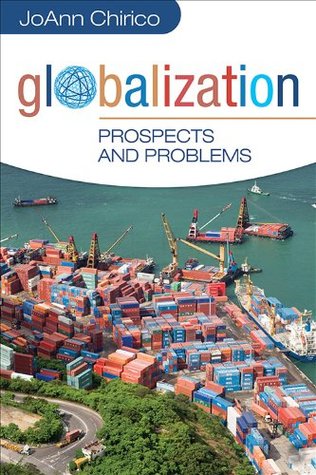
Globalization Prospects And Problems 1st Edition By JoAnn A. Chirico -Test Bank

Globalization Prospects And Problems 1st Edition By JoAnn A. Chirico -Test Bank   Instant Download - Complete Test Bank With Answers     Sample Questions Are Posted Below   Multiple Choice Bernard Kouchner credits media with making New humanitarianism possible Distorting images of other countries Increasing prejudice against the poor Civil society possible A   …

$19.99

Globalization Prospects And Problems 1st Edition By JoAnn A. Chirico -Test Bank


Instant Download – Complete Test Bank With Answers


Sample Questions Are Posted Below


Multiple Choice

  1. Bernard Kouchner credits media with making
  2. New humanitarianism possible
  3. Distorting images of other countries
  4. Increasing prejudice against the poor
  5. Civil society possible

A


  1. Alexis de Tocqueville thought that the strength of democracy in America was related to
  2. Their revolutionary, anti-authoritarian past
  3. The importance of religion
  4. The strength of civil society
  5. Strong individualism

C


  1. Civil society is intimately involved with
  2. The state
  3. The family
  4. The community
  5. The military

C


  1. The civil in civil society stands for
  2. Relating to civil authority
  3. Non coercive and non-violent
  4. Communication
  5. Democratic

B


  1. Civil society is
  2. Voluntary
  3. A strictly western concept
  4. Practiced by authoritarian regimes
  5. For profit

A


  1. A global regime is
  2. An authoritarian government with global ambitions
  3. A set of policies and rules agreed on by governments concerning a particular issue
  4. A large multinational corporation
  5. International NGOs

B


  1. Controlling the cognitive agenda on an issue refers to the ability to
  2. Controlling how people think of or perceive an issue
  3. Passing treaties laws important to the issues
  4. Activating people to take action on an issue
  5. Showing how the issue is bad for people

A


  1. Promotional activities of civil society groups
  2. Provide knowledge of a human condition
  3. Monitor countries for violations of regimes
  4. Encourage support for particular policies
  5. Coordinate international policies

C


  1. Declaratory activities of civil society groups
  2. Provides knowledge of a human condition
  3. Monitor countries for violations of regimes
  4. Encourage support for particular policies
  5. Coordinate international policies

A


  1. Implementation activities of civil society groups
  2. Provide knowledge of a human condition
  3. Monitor countries for violations of regimes
  4. Encourage support for particular policies
  5. Coordinate international policies

D


  1. Enforcement activities of civil society groups
  2. Provide knowledge of a human condition
  3. Monitor countries for violations of regimes
  4. Encourage support for particular policies
  5. Coordinate international policies

B


  1. One of the vehicles that gave a boost to international non-governmental organizations was the creation of
  2. The United Nations
  3. The League of Nations
  4. The International Monetary Fund
  5. The World Bank

A


  1. One reason that global civil society cannot substitute for democracy is that
  2. All groups needing help do not get recognized
  3. Not everyone is included in global civil society
  4. Sometimes the goals of a needy group are displaced by the international group’s goals
  5. All of the above

D


  1. The people who began the movement to ban landmines were
  2. Experts in the field, doctors and others who worked with landmine victims
  3. Parents and children of landmine victims
  4. People in countries that are planted heavily with landmines
  5. Politicians who believed landmines were destructive

A


  1. Before the movement to ban landmines, people saw landmines as
  2. Dangerous to innocent people
  3. A military weapon and arms control issue
  4. A serious problem
  5. A moral issue

A


  1. The movement to ban landmines was able to control the normative agenda about landmines using
  2. Military uses of landmines
  3. Stories of victims of landmines
  4. Pictures of landmines
  5. Politicians to get the message out

B


  1. The environmental movement started with
  2. Non-governmental groups
  3. Governmental regulatory agencies
  4. Environmental legislation
  5. The United Nations

A


  1. The first non-governmental groups in the environmental movement were concerned with
  2. Specific animals and natural areas
  3. Air pollution and global warming
  4. Laws of the seas and pollution
  5. Land degradation from overgrazing

A


  1. The beginnings of global regimes in social movements and non-governmental organizations demonstrates the importance of
  2. The United Nations
  3. INGOs
  4. World society
  5. Global governance

C


  1. As international treaties on the environment were secured,
  2. Countries did not feel as though they had to enforce them
  3. Non-governmental organizations arose to lobby the public
  4. International governmental agencies increased in number
  5. Non-governmental organizations decreased their activities

C


  1. When negotiations in the Conference on Security and Cooperation in Europe began in 1950s the only intergovernmental organization or country that wanted to include human rights in discussion was
    1. NATO
    2. The European Commission
    3. The USA
    4. The USSR

B


  1. At the time of the negotiations of the Conference on Security and Cooperation in Europe
    1. Human rights were respected in all NATO countries
    2. Human rights were already accepted by Eastern Bloc countries
    3. A number of NATO countries had poor human rights records
    4. The United States pushed for human rights to be included in the agenda

C


  1. The most contentious issue in the decades long negotiations of the Conference on Security and Cooperation in Europe was
    1. Sharing technology
    2. Drawing national borders
    3. Human rights
    4. Business cooperation

C


  1. At the beginning and throughout the negotiations of the Conference on Security and Cooperation in Europe, the European Commission pursued the cause of human rights primarily
    1. To bring justice to the people of Eastern Bloc countries
    2. To ensure their own security from encroachment by Eastern Europe
    3. To enhance and reinforce their own identity and status
    4. To show up the United States on an important global issue

C


  1. When the Helsinki Accords were signed, most of the world thought
    1. That the USA and Western Europe had abandoned the human rights cause in Eastern Bloc countries
    2. That human rights would not be respected by Eastern Bloc countries
    3. The dissident groups in Eastern Europe had been betrayed by the USA and Western Europe
    4. All of the above

D


  1. Optimism about the outcome of the Helsinki Accords for the realization of human rights in Eastern Bloc countries came from
    1. The United States
    2. International civil society groups
    3. European politicians who negotiated the Accords
    4. Dissidents in Eastern Europe

D


  1. When the Helsinki Accords were signed in 1975, dissidents in Eastern European countries
    1. Resigned themselves to never achieving human rights
    2. Began to lobby political leaders in the USA and Europe to put pressure on the Eastern Bloc governments
    3. Protested to the USSR
    4. Worked individually in their own countries to achieve reforms

B


  1. In response to the signing of the Helsinki Accords,
    1. A strong network among dissident groups was established in Eastern Europe
    2. Relationships between Eastern European dissidents and Western European and USA politicians and civil society groups grew strong
    3. Human rights watch dog groups were established
    4. All of the above

D


  1. Shortly after Gorbachev was elected president of the USSR, his acted to
    1. Institute many liberalizing programs in line with the Helsinki Accords
    2. Withdraw from the human rights commitments made by Brezhnev
    3. Arrest many hardliners who wanted to violently crush those protesting for human rights
    4. Fortifying the militaries of Eastern Bloc countries

A


  1. Although accompanied by violence, most Eastern Bloc nations responded to human rights protests in 1989 by eventually negotiating with protesters and scheduling elections except
    1. Poland
    2. East Germany
    3. Czechoslovakia
    4. Romania

D

True False

  1. International non-governmental organizations spread themselves evenly through countries where people are in need of help.
  2. True
  3. False

B


  1. International non-governmental organizations always accurately represent the local groups that they work with.
  2. True
  3. False

B


  1. The objectives of non-governmental organizations are always compatible with one another because they represent people’s interests.
  2. True
  3. False

B


  1. Where governments are closed to influence from domestic or international groups, a INGO has diminished chances of activism.
  2. True
  3. False

A


  1. Where governments are closed to influence from domestic or international groups, change is impossible.
  2. True
  3. False

B


  1. Activists were successful in promoting democracy in the former Eastern bloc countries because they used international groups and other governments to pressure their governments.
  2. True
  3. False

A


  1. Insider- outsider coalitions are effective in promoting change when both internal and external channels of change in a country are open.
  2. True
  3. False

A


  1. Landmines are found equally in developed and developing nations.
  2. True
  3. False
  4. B


  1. The development of the global regime on the environment was facilitated by romanticizing the animals being threatened.
  2. True
  3. False

B


  1. The development of the global regime on the environment was facilitated by scientific and rational discourse.
  2. True
  3. False

A


  1. When the 1975 Helsinki Accords were signed, all parties recognized that it was a victory for the implementation and respect of human rights throughout Europe.
    1. True
    2. False

B


  1. The last leader of the USSR, who oversaw its dissolution was Mikhail Gorbachev.
    1. True
    2. False

A

Essay

  1. How was the ban the landmine movement successful in controlling the cognitive and moral agenda?


  1. How were land mines thought of before the movement to ban land mines? What was the cognitive agenda promoted by the movement? What was the moral agenda?


  1. What are the three dimensions of effectiveness on which civil society groups can be evaluated?


  1. What techniques did civil society organizations in the former Warsaw Pact countries use to get human rights accepted in their countries?


  1. How did the international community work to help achieve human rights recognition in the formerWarsaw Pact countries?


  1. Explain the problems of accountability of global civil society organizations?


  1. How do global and national civil society organizations differ in their capacity to work democratically or within a democracy?

Additional information

Add Review

Your email address will not be published. Required fields are marked *