No products in the cart.

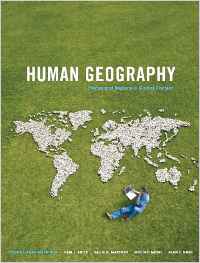
Human Geography Places And Regions in Global Context 4th Canadian Edition by Paul L. Knox - Test Bank

Human Geography Places And Regions in Global Context 4th Canadian Edition by Paul L. Knox - Test Bank   Instant Download - Complete Test Bank With Answers     Sample Questions Are Posted Below     Human Geography, Cdn. 4e (Knox, et al.) Chapter 5   Mapping Cultural Identities   1) Cultural geography A) is concerned …

$19.99

Human Geography Places And Regions in Global Context 4th Canadian Edition by Paul L. Knox – Test Bank


Instant Download – Complete Test Bank With Answers


Sample Questions Are Posted Below


Human Geography, Cdn. 4e (Knox, et al.)

Chapter 5   Mapping Cultural Identities


1) Cultural geography

  1. A) is concerned only with material culture.
  2. B) is no longer relevant because the world has become homogeneous.
  3. C) involves the study of the mutual interactions of space, place, and landscape with culture.
  4. D) was denounced for its racist and upper-class bias by Carl Sauer.
  5. E) mostly focuses on religion.

Answer:  C

Diff: 1      Type: MC      Page Ref: 206

Topic:  Culture as a geographical process

Skill:  Applied


2) This type of music results from a blend of Acadian French, African, and Aboriginal-American influences.

  1. A) Cajun music
  2. B) world music
  3. C) country music
  4. D) rhythm and blues
  5. E) native music

Answer:  A

Diff: 1      Type: MC      Page Ref: 206

Topic:  Culture as a geographical process

Skill:  Applied


3) According to Carl Sauer, a cultural landscape

  1. A) can exist prior to human habitation of the given landscape.
  2. B) does not require a natural landscape.
  3. C) results from the action of a cultural group within and on a landscape.
  4. D) is a concept with limited usefulness for the geographer.
  5. E) excludes abiotic components.

Answer:  C

Diff: 3      Type: MC      Page Ref: 209

Topic:  Cultural landscapes, traits, systems, and regions

Skill:  Applied

4) Who was the nineteenth-century author of the book Man and Nature, which influenced Carl Sauer in his development of the concept of cultural landscape?

  1. A) Alexander Von Humboldt
  2. B) Charles Darwin
  3. C) William Morris Davis
  4. D) Paul Vidal de la Blache
  5. E) George Perkins Marsh

Answer:  E

Diff: 2      Type: MC      Page Ref: 209

Topic:  Cultural landscapes, traits, systems, and regions

Skill:  Recall


5) British geographer H.C. Darby

  1. A) founded the genre de vie approach to cultural geography.
  2. B) used The Domesday Book to create a rich study of eleventh-century England.
  3. C) is the most famous student of Carl Sauer.
  4. D) focused on ideas prominent in cultures, not material possessions and landscape attributes.
  5. E) wrote the classic book The Making of the English Landscape.

Answer:  B

Diff: 2      Type: MC      Page Ref: 211

Topic:  Cultural landscapes, traits, systems, and regions

Skill:  Applied


6) French geographer Vidal de la Blache

  1. A) thought that how people obtained their livelihoods was important for the geographer.
  2. B) concentrated on studying large geographical units.
  3. C) found that industrialization had only a small impact on rural France.
  4. D) wrote the first volume of La Géographie Universelle.
  5. E) was an early environmental determinist.

Answer:  A

Diff: 2      Type: MC      Page Ref: 211

Topic:  Cultural landscapes, traits, systems, and regions

Skill:  Applied


7) The nineteenth-century Ontario farmhouse is an example of

  1. A) vernacular architecture.
  2. B) Victorian architecture.
  3. C) folk architecture.
  4. D) utopian architecture.
  5. E) colonial American.

Answer:  A

Diff: 2      Type: MC      Page Ref: 212

Topic:  Cultural landscapes, traits, systems, and regions

Skill:  Applied

8) Hip-hop has roots in the West African storytelling culture known as

  1. A) voodoo.
  2. B) rap.
  3. C) afrobeat.
  4. D) griot.
  5. E) djembe.

Answer:  D

Diff: 3      Type: MC      Page Ref: 207

Topic:  Culture as a geographical process

Skill:  Recall


9) According to cultural critic bell hooks,

  1. A) gangsta rap, due to its inner city cultural content, is not popular in the suburbs.
  2. B) gangsta rap exists purely as a means by which youth culture expresses itself.
  3. C) gangsta rap does not exist in a vacuum but is an extension of white, male dominated capitalist society.
  4. D) capitalist society has failed to capitalize on the potential of gangsta rap.
  5. E) gangsta rap lyrics are neutral on gender relations.

Answer:  C

Diff: 3      Type: MC      Page Ref: 208

Topic:  Culture as a geographical process

Skill:  Applied


10) The writing of this book was instrumental in helping historical geographers understand the cultural landscapes of medieval, feudal Europe.

  1. A) the Magna Carta
  2. B) the Domesday Book
  3. C) the King James Bible
  4. D) the Medieval Landscape Treatise
  5. E) Samuel Johnson’s Dictionary of Feudal Landforms

Answer:  B

Diff: 2      Type: MC      Page Ref: 211

Topic:  Cultural landscapes, traits, systems, and regions

Skill:  Recall


11) Nelson, British Columbia, displays unique cultural features associated with

  1. A) a countercultural tradition.
  2. B) U.S. southwest type traits.
  3. C) First Nations heritage.
  4. D) presence of migrant farm workers.
  5. E) the nineteenth-century Gold rush.

Answer:  A

Diff: 3      Type: MC      Page Ref: 214

Topic:  Cultural landscapes, traits, systems, and regions

Skill:  Applied

12) The cultural system

  1. A) doesn’t allow for internal variation.
  2. B) requires its members to have a common religion.
  3. C) helps shape a group’s collective identity.
  4. D) is dependent primarily on language.
  5. E) is the product of evolving technologies.

Answer:  C

Diff: 2      Type: MC      Page Ref: 214

Topic:  Cultural landscapes, traits, systems, and regions

Skill:  Applied


13) Diaspora

  1. A) occurs when members of a homogeneous group become spatially dispersed.
  2. B) occurred frequently during biblical times, but has been rare since.
  3. C) has been the most common reason for conversion to Christianity.
  4. D) refers solely to the emigration of Greeks before the time of Christ.
  5. E) is a term that uniquely applies to the genocide of European Jews by the Nazis.

Answer:  A

Diff: 1      Type: MC      Page Ref: 215

Topic:  Cultural landscapes, traits, systems, and regions

Skill:  Applied


14) The geographical expansion of Christian missionizing coincides with

  1. A) the onset of the Columbian Exchange.
  2. B) Portuguese exploration of East Asia.
  3. C) European colonialism in Africa.
  4. D) the foundation of the Roman Catholic Church.
  5. E) the split between the Catholic and Orthodox faiths.

Answer:  A

Diff: 3      Type: MC      Page Ref: 215

Topic:  Cultural landscapes, traits, systems, and regions

Skill:  Applied


15) Which was the first monotheistic religion?

  1. A) Judaism
  2. B) Roman Catholicism
  3. C) Orthodox
  4. D) Islam
  5. E) Hinduism

Answer:  A

Diff: 1      Type: MC      Page Ref: 216-217

Topic:  Cultural landscapes, traits, systems, and regions

Skill:  Recall

16) Prior to European contact and colonization, the native peoples of the Americas practised

  1. A) Shintoism.
  2. B) Animism.
  3. C) Buddhism and Taoism.
  4. D) Sikhism.
  5. E) Mormonism.

Answer:  B

Diff: 1      Type: MC      Page Ref: 217

Topic:  Cultural landscapes, traits, systems, and regions

Skill:  Applied


17) If current population growth trends continue, it is expected that the bulk of the world’s Roman Catholics will be located in

  1. A) Africa.
  2. B) South East Asia.
  3. C) Central America.
  4. D) Latin America.
  5. E) Western and Southern Europe.

Answer:  D

Diff: 2      Type: MC      Page Ref: 219

Topic:  Cultural landscapes, traits, systems, and regions

Skill:  Recall


18) The most visited European “sacred” site is

  1. A) St. James’ Cathedral.
  2. B) Lourdes.
  3. C) Stonehenge.
  4. D) Turin Cathedral of the Shroud.
  5. E) Notre Dame.

Answer:  B

Diff: 3      Type: MC      Page Ref: 223

Topic:  Cultural landscapes, traits, systems, and regions

Skill:  Recall


19) The majority of Canada’s Sikh community concentrates in

  1. A) British Columbia.
  2. B) the Toronto area.
  3. C) southern Ontario.
  4. D) the Montreal region.
  5. E) the Prairie provinces.

Answer:  A

Diff: 1      Type: MC      Page Ref: 221

Topic:  Cultural landscapes, traits, systems, and regions

Skill:  Recall

20) Which Canadian province displays an almost even split between Roman Catholics and Protestants?

  1. A) Quebec
  2. B) Ontario
  3. C) Alberta
  4. D) Saskatchewan
  5. E) British Columbia

Answer:  B

Diff: 2      Type: MC      Page Ref: 219

Topic:  Cultural landscapes, traits, systems, and regions

Skill:  Recall


21) The dominant religion of Canada.

  1. A) Muslim
  2. B) Protestant
  3. C) Anglican
  4. D) Roman Catholic
  5. E) Orthodox Christian

Answer:  D

Diff: 2      Type: MC      Page Ref: 220

Topic:  Cultural landscapes, traits, systems, and regions

Skill:  Recall


22) The following native peoples travel through the landscape on routes known as “Songlines”:

  1. A) Navajo
  2. B) Australian Aborigine
  3. C) Lakota Sioux
  4. D) Maori
  5. E) Cree

Answer:  B

Diff: 2      Type: MC      Page Ref: 225

Topic:  Cultural landscapes, traits, systems, and regions

Skill:  Recall


23) The hajj is the once-in-a-lifetime pilgrimage for people practising this religion.

  1. A) Hinduism
  2. B) Judaism
  3. C) Islam
  4. D) Jainism
  5. E) Buddhism

Answer:  C

Diff: 1      Type: MC      Page Ref: 223

Topic:  Cultural landscapes, traits, systems, and regions

Skill:  Recall

24) This Chinese practice is used to interpret the Earth’s energy lines and more propitious landscapes.

  1. A) kabuki
  2. B) tae kwon do
  3. C) taoism
  4. D) feng-shui
  5. E) confucianism

Answer:  D

Diff: 2      Type: MC      Page Ref: 225

Topic:  Cultural landscapes, traits, systems, and regions

Skill:  Recall


25) About 50 percent of the global population speaks languages belonging to this language family.

  1. A) Caucasian
  2. B) Afro-Asiatic
  3. C) Sino-Tibetan
  4. D) Indo-European
  5. E) Amerind

Answer:  D

Diff: 1      Type: MC      Page Ref: 226

Topic:  Cultural landscapes, traits, systems, and regions

Skill:  Recall


26) Which among the following languages is an isolate?

  1. A) Finnish
  2. B) Basque
  3. C) Estonian
  4. D) Hungarian
  5. E) Breton

Answer:  B

Diff: 2      Type: MC      Page Ref: 227

Topic:  Cultural landscapes, traits, systems, and regions

Skill:  Applied


27) Amerindian and Na-Dene languages were introduced to North America

  1. A) at least 10 000 years ago.
  2. B) between 6500 and 4500 years ago.
  3. C) 4000 years ago.
  4. D) about 2500 years ago.
  5. E) about 1500 years ago

Answer:  A

Diff: 2      Type: MC      Page Ref: 228

Topic:  Cultural landscapes, traits, systems, and regions

Skill:  Recall

28) In terms of the world’s indigenous language families, the dominant language family in South America is

  1. A) Altaic.
  2. B) Afro-Asiatic.
  3. C) Amerind.
  4. D) Uralic.
  5. E) Caucasian.

Answer:  C

Diff: 2      Type: MC      Page Ref: 228

Topic:  Cultural landscapes, traits, systems, and regions

Skill:  Recall


29) In Canada, outside of Quebec, the francophone population is mainly found

  1. A) in Manitoba and Newfoundland.
  2. B) in Manitoba and Ontario.
  3. C) in Ontario and New Brunswick.
  4. D) in New Brunswick and Manitoba.
  5. E) in Ontario and Manitoba.

Answer:  C

Diff: 1      Type: MC      Page Ref: 230

Topic:  Cultural landscapes, traits, systems, and regions

Skill:  Applied


30) About ________ of Canada’s population speak neither French nor English as their mother tongue.

  1. A) 12 percent
  2. B) 17 percent
  3. C) 20 percent
  4. D) 25 percent
  5. E) 30 percent

Answer:  C

Diff: 2      Type: MC      Page Ref: 231

Topic:  Cultural landscapes, traits, systems, and regions

Skill:  Recall


31) Excluding French and English, the following is the most spoken language in Canada:

  1. A) Greek
  2. B) German
  3. C) Chinese
  4. D) Italian
  5. E) Arabic

Answer:  C

Diff: 2      Type: MC      Page Ref: 231

Topic:  Cultural landscapes, traits, systems, and regions

Skill:  Recall

32) The most spoken Aboriginal language in Canada is

  1. A) Iroquoian.
  2. B) Inuktitut.
  3. C) Ojibway.
  4. D) Cree.
  5. E) Wendat Huron

Answer:  D

Diff: 2      Type: MC      Page Ref: 233

Topic:  Cultural landscapes, traits, systems, and regions

Skill:  Recall


33) The fact that only 15 percent of Aboriginal Canadians speak their mother tongue at home is an example of

  1. A) language annihilation.
  2. B) language assimilation.
  3. C) language expansion.
  4. D) language death.
  5. E) language shift.

Answer:  E

Diff: 3      Type: MC      Page Ref: 232

Topic:  Cultural landscapes, traits, systems, and regions

Skill:  Applied


34) This country’s central government suppressed regional dialects in the late eighteenth century.

  1. A) France
  2. B) England
  3. C) Germany
  4. D) Italy
  5. E) Switzerland

Answer:  A

Diff: 2      Type: MC      Page Ref: 234

Topic:  Cultural landscapes, traits, systems, and regions

Skill:  Applied


35) This Canadian English dialect is spoken with an accent that blends Irish and English as spoken in Southwestern England.

  1. A) Eastern Townships English
  2. B) Newfoundland English
  3. C) Ottawa Valley English
  4. D) Southern Ontario English
  5. E) Victoria English

Answer:  B

Diff: 2      Type: MC      Page Ref: 235

Topic:  Cultural landscapes, traits, systems, and regions

Skill:  Applied

36) The efforts to protect regional and national cultures from the homogenizing impacts of globalization is known as which of the following?

  1. A) cultural exclusion
  2. B) cultural protectionism
  3. C) cultural nationalism
  4. D) cultural dominance
  5. E) multiculturalism

Answer:  C

Diff: 2      Type: MC      Page Ref: 235

Topic:  Cultural nationalism

Skill:  Recall


37) In 2005, which Canadian province proposed to recognize sharia-based tribunals in family arbitration cases?

  1. A) Quebec
  2. B) British Columbia
  3. C) Ontario
  4. D) Alberta
  5. E) Manitoba

Answer:  C

Diff: 2      Type: MC      Page Ref: 237

Topic:  Cultural nationalism

Skill:  Recall


38) This country has engaged in the strongest actions against American cultural imperialism.

  1. A) Britain
  2. B) France
  3. C) Denmark
  4. D) Holland
  5. E) Canada

Answer:  E

Diff: 2      Type: MC      Page Ref: 236

Topic:  Cultural nationalism

Skill:  Applied


39) For the geographer, which most characterizes ethnicity at the group level?

  1. A) bringing together several languages or religions
  2. B) avoidance of public displays related to its ethnicity
  3. C) a socially created system of rules governing who is and is not a member of the group
  4. D) association with nation-building objectives
  5. E) political activism

Answer:  C

Diff: 3      Type: MC      Page Ref: 238

Topic:  Culture and identity

Skill:  Applied

40) From a biological standpoint, race

  1. A) is most apparent in the segregation of certain ethnic groups, such as the Chinese in a “Chinatown.”
  2. B) does not exist.
  3. C) is evidenced primarily by skin colour.
  4. D) can be determined by intelligence tests.
  5. E) is associated with geographical space.

Answer:  B

Diff: 2      Type: MC      Page Ref: 239

Topic:  Culture and identity

Skill:  Applied


41) Ethnic neighbourhoods

  1. A) are often created by the dominant society to affirm that society’s sense of identity.
  2. B) are the best method for breaking down systems of racial classification.
  3. C) are rarely found in core countries.
  4. D) are magnets for gentrification.
  5. E) usually go through rapid economic redynamization.

Answer:  A

Diff: 3      Type: MC      Page Ref: 239

Topic:  Culture and identity

Skill:  Applied


42) Chinatown is an example of which geographical concept maintaining and manifesting racially defined differences between societies?

  1. A) space
  2. B) perception
  3. C) cognition
  4. D) distance
  5. E) place

Answer:  E

Diff: 1      Type: MC      Page Ref: 239

Topic:  Culture and identity

Skill:  Applied


43) Power differences between men and women in a society are determined primarily by

  1. A) biological differences.
  2. B) society and culture.
  3. C) physical geography.
  4. D) income levels.
  5. E) political institutions.

Answer:  B

Diff: 2      Type: MC      Page Ref: 240

Topic:  Culture and identity

Skill:  Applied

44) The Grameen Bank is a grassroots organization which provides small loans to the rural poor, often women, in

  1. A) Pakistan.
  2. B) India.
  3. C) Indonesia.
  4. D) Bangladesh.
  5. E) Sri Lanka.

Answer:  D

Diff: 2      Type: MC      Page Ref: 241

Topic:  Culture and identity

Skill:  Recall


45) In Western metropolitan regions the following area has tended to be seen as “female” space:

  1. A) shopping streets
  2. B) the suburbs
  3. C) waterfronts
  4. D) upscale residential districts
  5. E) parks

Answer:  B

Diff: 2      Type: MC      Page Ref: 241

Topic:  Culture and identity

Skill:  Applied


46) “Women in Geography” study groups became established and took their place

  1. A) in the 1920s (following the Suffragettes movement).
  2. B) after World War II.
  3. C) in the 1960s (with the rise of Radical geography).
  4. D) in the 1970s.
  5. E) in the early 1980s.

Answer:  E

Diff: 3      Type: MC      Page Ref: 242

Topic:  Culture and identity

Skill:  Recall


47) The most recent “wave” of gender-sensitive geographical research uses the insight that

  1. A) the domination of males is not as significant as when such research initially started.
  2. B) women have made satisfactory social and economic progress since the 1980s.
  3. C) gender is equally as socially constructed as space.
  4. D) the social construction of gender differs between space and place.
  5. E) differences between males and females are political constructions.

Answer:  C

Diff: 3      Type: MC      Page Ref: 242

Topic:  Culture and identity

Skill:  Applied

48) Cultural ecology

  1. A) is the same approach taken by Sauer in his studies of the cultural landscape.
  2. B) stresses that systemic interrelationships link cultures and the environment.
  3. C) looks only at material elements of culture.
  4. D) is an approach used by few modem geographers.
  5. E) focuses on the spatial distribution of culture traits.

Answer:  B

Diff: 3      Type: MC      Page Ref: 243

Topic:  Culture and the physical environment

Skill:  Applied


49) Political ecology

  1. A) stresses the importance of political and economic forces.
  2. B) takes a narrower approach than cultural ecology.
  3. C) originated in the Soviet Union, and collapsed when the Soviet Union essentially ended.
  4. D) strongly promotes environmental activism.
  5. E) is essentially a Marxist approach.

Answer:  A

Diff: 3      Type: MC      Page Ref: 245

Topic:  Culture and the physical environment

Skill:  Applied


50) The haka is a traditional Maori war dance meant to display aggressiveness and fearlessness.

Answer:  TRUE

Diff: 2      Type: TF      Page Ref: 205

Topic:  Culture as a geographical process

Skill:  Applied


51) The Domesday survey of England was conducted by the Vikings in the ninth century.

Answer:  FALSE

Diff: 2      Type: TF      Page Ref: 211

Topic:  Culture as a geographical process

Skill:  Recall


52) The approach to the study of landscape that became known as historical geography in Great Britain was conceptualized as genre de vie in France.

Answer:  TRUE

Diff: 3      Type: TF      Page Ref: 211

Topic:  Culture as a geographical process

Skill:  Applied

53) Vidal de la Blache emphasized the need to study small, homogeneous geographical areas.

Answer:  TRUE

Diff: 3      Type: TF      Page Ref: 211

Topic:  Culture as a geographical process

Skill:  Applied


54) The common architecture developed in Canada established a standard, creating a set pattern between all regions of the country.

Answer:  FALSE

Diff: 2      Type: TF      Page Ref: 212

Topic:  Culture as a geographical process

Skill:  Applied


55) The design of Canadian Prairies farmhouses displays predominantly Scottish influences.

Answer:  FALSE

Diff: 1      Type: TF      Page Ref: 212

Topic:  Culture as a geographical process

Skill:  Applied


56) During the city’s early phase of expansion, the bungalow was the leading form of housing in Vancouver’s suburbs.

Answer:  TRUE

Diff: 2      Type: TF      Page Ref: 213

Topic:  Culture as a geographical process

Skill:  Applied


57) In the Manitoba plain, Mennonites adopted an Anglo-American model of settlement.

Answer:  FALSE

Diff: 2      Type: TF      Page Ref: 213

Topic:  Cultural landscapes, traits, systems, and regions

Skill:  Applied


58) Cultural system is a narrower concept than cultural complex.

Answer:  FALSE

Diff: 3      Type: TF      Page Ref: 214

Topic:  Cultural landscapes, traits, systems, and regions

Skill:  Applied


59) Buddhism and Sikhism evolved from Hinduism as reform religions.

Answer:  TRUE

Diff: 2      Type: TF      Page Ref: 216

Topic:  Cultural landscapes, traits, systems, and regions

Skill:  Applied

60) Before European contact, North American indigenous religious traditions based on hunting diffused from west to east.

Answer:  FALSE

Diff: 3      Type: TF      Page Ref: 218

Topic:  Cultural landscapes, traits, systems, and regions

Skill:  Applied


61) Goth is an example of youth culture.

Answer:  TRUE

Diff: 2      Type: TF      Page Ref: 206

Topic:  Culture as a geographical process

Skill:  Recall


62) Hip-hop is a popular manifestation of contemporary cultural practices among U.S. inner city youth.

Answer:  FALSE

Diff: 1      Type: TF      Page Ref: 207

Topic:  Cultural landscapes, traits, systems, and regions

Skill:  Applied


63) Fatima, in Portugal, is the most visited sacred site in Europe.

Answer:  FALSE

Diff: 2      Type: TF      Page Ref: 223

Topic:  Cultural landscapes, traits, systems, and regions

Skill:  Recall


64) The Alberta foothills are considered sacred places by the North American Navajo.

Answer:  FALSE

Diff: 2      Type: TF      Page Ref: 225

Topic:  Cultural landscapes, traits, systems, and regions

Skill:  Recall


65) It is believed by most scholars that the Indo-European language family had its origins in southern India.

Answer:  FALSE

Diff: 2      Type: TF      Page Ref: 226

Topic:  Culture as a geographical process

Skill:  Applied


66) Many similarities have been recognized between Sanskrit and several Indo-European languages.

Answer:  TRUE

Diff: 1      Type: TF      Page Ref: 226

Topic:  Cultural landscapes, traits, systems, and regions

Skill:  Applied

67) Languages of the Eskimo-Aleut family arrived the earliest in what became Canada.

Answer:  FALSE

Diff: 2      Type: TF      Page Ref: 228

Topic:  Cultural landscapes, traits, systems, and regions

Skill:  Applied


68) Isolates cannot exist within countries dominated by one particular language.

Answer:  FALSE

Diff: 2      Type: TF      Page Ref: 227

Topic:  Cultural landscapes, traits, systems, and regions

Skill:  Applied


69) Quebec is the Canadian province with the highest rate of bilingualism.

Answer:  TRUE

Diff: 2      Type: TF      Page Ref: 230

Topic:  Cultural landscapes, traits, systems, and regions

Skill:  Applied


70) In the 2006 census, allophones represented fully one-third of Canada’s population for the first time.

Answer:  FALSE

Diff: 3      Type: TF      Page Ref: 230

Topic:  Cultural landscapes, traits, systems, and regions

Skill:  Recall


71) Only 10 of the 50 Aboriginal languages currently spoken in Canada can be considered secure.

Answer:  FALSE

Diff: 2      Type: TF      Page Ref: 232

Topic:  Cultural landscapes, traits, systems, and regions

Skill:  Recall


72) Most Canadian First Nations people mainly use a language other than their mother tongue at home.

Answer:  TRUE

Diff: 2      Type: TF      Page Ref: 233

Topic:  Cultural landscapes, traits, systems, and regions

Skill:  Applied


73) The island of Saint Lucia is a fascinating example of the merging of African languages with Dutch and Spanish to create a creole language.

Answer:  FALSE

Diff: 3      Type: TF      Page Ref: 235

Topic:  Cultural landscapes, traits, systems, and regions

Skill:  Recall

74) Canada has strongly resisted the encroachment of American culture.

Answer:  TRUE

Diff: 1      Type: TF      Page Ref: 236

Topic:  Cultural nationalism

Skill:  Applied


75) Canada began to proclaim multiculturalism policies in the 1990s.

Answer:  FALSE

Diff: 1      Type: TF      Page Ref: 236

Topic:  Cultural nationalism

Skill:  Recall


76) Canada’s multiculturalism policies have been able to fully combat the discrimination faced by members of ethnic communities.

Answer:  FALSE

Diff: 2      Type: TF      Page Ref: 237

Topic:  Cultural nationalism

Skill:  Applied


77) Place (and place making) may become a mechanism for creating local systems of racial classification.

Answer:  TRUE

Diff: 3      Type: TF      Page Ref: 240

Topic:  Culture and identity

Skill:  Applied


78) Within poor segments of South Asian societies, women’s subservience to men is manifested most clearly in the workplace.

Answer:  FALSE

Diff: 3      Type: TF      Page Ref: 240

Topic:  Culture and identity

Skill:  Applied


79) The male-female dichotomy between industrial space and domestic space is a construction of the European Renaissance era.

Answer:  FALSE

Diff: 3      Type: TF      Page Ref: 241

Topic:  Culture and identity

Skill:  Applied


80) Early work in feminist geography concentrated essentially on the different ways in which men dominate women in Western society.

Answer:  FALSE

Diff: 2      Type: TF      Page Ref: 242

Topic:  Culture and identity

Skill:  Applied

81) Recent gender-sensitive geographical research assumes that gender is equally as socially constructed as space and place.

Answer:  TRUE

Diff: 1      Type: TF      Page Ref: 242

Topic:  Culture and identity

Skill:  Applied


82) In comparison to Sauer’s approach to the cultural landscape, cultural ecology places more emphasis on the cultural processes of groups rather than on the impact of the groups on the environment.

Answer:  TRUE

Diff: 3      Type: TF      Page Ref: 243

Topic:  Culture and the physical environment

Skill:  Applied


83) Political ecologists place less emphasis on economic forces than do cultural ecologists.

Answer:  FALSE

Diff: 2      Type: TF      Page Ref: 243

Topic:  Culture and the physical environment

Skill:  Applied


84) Hybrid cultures result from the interaction of local culture with global cultural products.

Answer:  TRUE

Diff: 1      Type: TF      Page Ref: 248

Topic:  Globalization and cultural change

Skill:  Applied


85) Define the terms “culture” and “cultural geography.”

Diff: 1      Type: SA      Page Ref: 206-207

Topic:  Culture as a geographical process

Skill:  Applied


86) What is ‘World of Warcraft’ and what does it reveal about globalization and culture?

Diff: 2      Type: SA      Page Ref: 203-204

Topic:  Culture as a geographical process

Skill:  Applied


87) Define the term “cultural landscape”; then discuss the contributions of Carl Sauer to the development of the cultural landscape concept.

Diff: 1      Type: ES      Page Ref: 209-210

Topic:  Culture as a geographical process

Skill:  Recall

88) Briefly explain Vidal de la Blache’s approach and contribution to cultural geography.

Diff: 2      Type: SA      Page Ref: 211

Topic:  Culture as a geographical process

Skill:  Recall


89) In relation to the house building styles of early Canadian settlers, some Canadian geographers noted that Canada was “a simplification of Europe overseas.” Discuss, making reference to specific influences and Canadian geography, and considering both folk and vernacular architecture.

Diff: 3      Type: ES      Page Ref: 212-213

Topic:  Culture as a geographical process

Skill:  Applied


90) Discuss the cultural and geographical aspects of hip-hop.

Diff: 2      Type: ES      Page Ref: 207-208

Topic:  Culture as a geographical process

Skill:  Applied


91) Pick three of the world’s major religions and discuss where they originated and to where they have diffused.

Diff: 2      Type: ES      Page Ref: 215-219

Topic:  Cultural landscapes, traits, systems, and regions

Skill:  Applied


92) Outline a few ways in which the growing number and diversity of religions have influenced the ability of Canadians to appreciate other cultures.

Diff: 1      Type: SA      Page Ref: 219-223

Topic:  Cultural landscapes, traits, systems, and regions

Skill:  Applied


93) Use examples in an essay to discuss how sacred sites are viewed by various peoples.  Discuss how the same site can mean different things to different groups.

Diff: 2      Type: ES      Page Ref: 223-226

Topic:  Cultural landscapes, traits, systems, and regions

Skill:  Applied


94) How have the forces and factors of globalization influenced language?

Diff: 2      Type: ES      Page Ref: 226-235

Topic:  Cultural landscapes, traits, systems, and regions

Skill:  Applied


95) While making reference to spatial patterns of distribution and their numerical variations coming into the twenty-first century, present the geography of Canada’s main language groups (anglophone, francophone, and allophone).

Diff: 3      Type: ES      Page Ref: 228-232

Topic:  Cultural landscapes, traits, systems, and regions

Skill:  Applied


96) While emphasizing Montreal’s special situation, present some facts associated with the changing position and status of the French language in Quebec.

Diff: 2      Type: SA      Page Ref: 230-232

Topic:  Cultural landscapes, traits, systems, and regions

Skill:  Applied


97) Present the situation of Canada’s Aboriginal languages in the late twentieth century.

Diff: 2      Type: SA      Page Ref: 232

Topic:  Cultural landscapes, traits, systems, and regions

Skill:  Recall


98) Discuss the impact of migration on language, as it is manifested in two general processes associated with the presence of dialects in the linguistic geography of Canada.  Give examples of dialect formation for each of the two processes identified.

Diff: 3      Type: ES      Page Ref: 233-235

Topic:  Cultural landscapes, traits, systems, and regions

Skill:  Applied


99) Present and explain Jean Burnet’s explanation of multiculturalism in Canada.  What conclusion does he come to in relation to the value of multiculturalism policies?

Diff: 3      Type: ES      Page Ref: 236-237

Topic:  Cultural nationalism

Skill:  Applied


100) Use Chinatowns and cultural parades as examples in an essay about ethnicity, space, and place.

Diff: 2      Type: ES      Page Ref: 238-240

Topic:  Culture and identity

Skill:  Applied


101) Elaborate on a few aspects of the disadvantageous position of women in the poor strata of South Asian societies.

Diff: 2      Type: SA      Page Ref: 240

Topic:  Culture and identity

Skill:  Recall

102) Briefly explain how urban regions in core countries have become gendered spaces.

Diff: 2      Type: SA      Page Ref: 241

Topic:  Culture and identity

Skill:  Applied


103) Write an essay where you discuss the evolution of feminist geography, outlining its changing areas of interest.

Diff: 3      Type: ES      Page Ref: 242

Topic:  Culture and identity

Skill:  Applied


104) Use examples in an essay that defines and analyzes the fields of cultural ecology and political ecology.

Diff: 2      Type: ES      Page Ref: 243-247

Topic:  Culture and the physical environment

Skill:  Applied


105) Explain how the St. Vincent case shows the way in which the political ecology approach helps explain how local cultures are affected by the processes of the world economy.

Diff: 3      Type: ES      Page Ref: 246-247

Topic:  Culture and the physical environment

Skill:  Applied


106) Is there a global culture? Give evidence for both answers to the question, and explain why you think your answer is right.

Diff: 2      Type: ES      Page Ref: 248

Topic:  Globalization and cultural change

Skill:  Applied

Additional information

Add Review

Your email address will not be published. Required fields are marked *