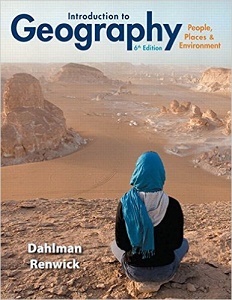
Introduction to Geography People, Places & Environment 6th Edition Carl H. Dahlman - Test Bank

Introduction to Geography People, Places & Environment 6th Edition Carl H. Dahlman - Test Bank   Instant Download - Complete Test Bank With Answers     Sample Questions Are Posted Below   Introduction to Geography, 6e (Dahlman/Renwick) Chapter 5   Earth's Resources and Environmental Protection   1) Anything created through natural processes that people use and …

$19.99

Introduction to Geography People, Places & Environment 6th Edition Carl H. Dahlman – Test Bank


Instant Download – Complete Test Bank With Answers


Sample Questions Are Posted Below


Introduction to Geography, 6e (Dahlman/Renwick)

Chapter 5   Earth’s Resources and Environmental Protection


1) Anything created through natural processes that people use and value is a

  1. A) natural resource.
  2. B) human-made resource.
  3. C) potential resource.
  4. D) renewable resource.

Answer:  A

Diff: 1

Topic/Section:  What Is a Natural Resource?

Bloom’s Taxonomy:  Knowledge

Nat Geo Standard:  16. Environment and Society: The changes that occur in the meaning, use, distribution, and importance of resources

Learning Outcome:  1. List the three factors that determine whether something created by natural processes is a natural resource


2) A natural resource is defined by three elements:

  1. A) cultural values, technology and economic system.
  2. B) resource availability, technology and economic system.
  3. C) cultural values, resource availability and economic system.
  4. D) cultural values, technology and resource availability.

Answer:  A

Diff: 1

Topic/Section:  What Is a Natural Resource?

Bloom’s Taxonomy:  Comprehension

Nat Geo Standard:  16. Environment and Society: The changes that occur in the meaning, use, distribution, and importance of resources

Learning Outcome:  1. List the three factors that determine whether something created by natural processes is a natural resource


3) Renewable energy sources include all of the following EXCEPT ________ power.

  1. A) hydroelectric
  2. B) solar
  3. C) tidal
  4. D) nuclear
  5. E) wind

Answer:  D

Diff: 1

Topic/Section:  What Is a Natural Resource?

Bloom’s Taxonomy:  Comprehension

Nat Geo Standard:  16. Environment and Society: The changes that occur in the meaning, use, distribution, and importance of resources

Learning Outcome:  5. List three types of renewable energy resources


4) Which of the following is a renewable resource?

  1. A) gas
  2. B) hydroelectric power
  3. C) coal
  4. D) plutonium

Answer:  B

Diff: 2

Topic/Section:  What Is a Natural Resource?

Bloom’s Taxonomy:  Application

Nat Geo Standard:  16. Environment and Society: The changes that occur in the meaning, use, distribution, and importance of resources

Learning Outcome:  5. List three types of renewable energy resources


5) Which of the following would NOT be considered a natural resource?

  1. A) oil
  2. B) forests
  3. C) water
  4. D) computers

Answer:  D

Diff: 2

Topic/Section:  What Is a Natural Resource?

Bloom’s Taxonomy:  Analysis

Nat Geo Standard:  16. Environment and Society: The changes that occur in the meaning, use, distribution, and importance of resources

Learning Outcome:  1. List the three factors that determine whether something created by natural processes is a natural resource


6) Which of the following is NOT a nonrenewable resource?

  1. A) oil
  2. B) iron ore
  3. C) gold
  4. D) water

Answer:  D

Diff: 2

Topic/Section:  What Is a Natural Resource?

Bloom’s Taxonomy:  Application

Nat Geo Standard:  16. Environment and Society: The changes that occur in the meaning, use, distribution, and importance of resources

Learning Outcome:  2. Explain the difference between a renewable resource and a nonrenewable resource


7) Which of the following is important in stabilizing resource prices and limiting problems caused by resource scarcity?

  1. A) nonrenewable resources
  2. B) source separation
  3. C) substitutability
  4. D) potential resources

Answer:  C

Diff: 3

Topic/Section:  What Is a Natural Resource?

Bloom’s Taxonomy:  Synthesis

Nat Geo Standard:  16. Environment and Society: The changes that occur in the meaning, use, distribution, and importance of resources

Global Sci LO:  5. Demonstrate an understanding of the impact of science on society.

8) A group of countries that agree to control the market by limiting production in order to drive up prices is

  1. A) a cartel.
  2. B) a world bank.
  3. C) an
  4. D) an ecumene.

Answer:  A

Diff: 1

Topic/Section:  Geologic and Energy Resources

Bloom’s Taxonomy:  Knowledge

Nat Geo Standard:  16. Environment and Society: The changes that occur in the meaning, use, distribution, and importance of resources


9) Which of the following is NOT a common method of disposing of solid waste?

  1. A) oceanic submergence
  2. B) recycling
  3. C) landfills
  4. D) incineration

Answer:  A

Diff: 1

Topic/Section:  Geologic and Energy Resources

Bloom’s Taxonomy:  Comprehension

Nat Geo Standard:  16. Environment and Society: The changes that occur in the meaning, use, distribution, and importance of resources


10) Nearly all transportation systems rely on this energy source.

  1. A) coal
  2. B) oil
  3. C) wood
  4. D) solar energy

Answer:  B

Diff: 1

Topic/Section:  Geologic and Energy Resources

Bloom’s Taxonomy:  Knowledge

Nat Geo Standard:  16. Environment and Society: The changes that occur in the meaning, use, distribution, and importance of resources

Learning Outcome:  2. Explain the difference between a renewable resource and a nonrenewable resource


11) OPEC

  1. A) is a cartel of oil-producing countries.
  2. B) consists of Middle Eastern countries only.
  3. C) has been able to take complete control over oil prices.
  4. D) is always in total agreement in matters of production and price of oil.

Answer:  A

Diff: 1

Topic/Section:  Geologic and Energy Resources

Bloom’s Taxonomy:  Knowledge

Nat Geo Standard:  16. Environment and Society: The changes that occur in the meaning, use, distribution, and importance of resources

Learning Outcome:  2. Explain the difference between a renewable resource and a nonrenewable resource

12) Applying the principal of supply and demand, which of the following is likely to be true of wheat in Saudi Arabia?

  1. A) The demand will be high and the price will be low.
  2. B) The supply and price will be high.
  3. C) The price will be low; therefore, the demand will be greater.
  4. D) The supply will be low and the price will be high.

Answer:  D

Diff: 2

Topic/Section:  Geologic and Energy Resources

Bloom’s Taxonomy:  Application

Nat Geo Standard:  16. Environment and Society: The changes that occur in the meaning, use, distribution, and importance of resources

Global Sci LO:  2. Demonstrate the ability to think critically and employ critical thinking skills.


13) In most developing countries, the largest proportion of energy is supplied through

  1. A) coal.
  2. B) oil.
  3. C) wood.
  4. D) solar energy.

Answer:  C

Diff: 2

Topic/Section:  Geologic and Energy Resources

Bloom’s Taxonomy:  Application

Nat Geo Standard:  16. Environment and Society: The changes that occur in the meaning, use, distribution, and importance of resources

Learning Outcome:  5. List three types of renewable energy resources


14) The world’s most important energy resource today is

  1. A) coal.
  2. B) petroleum.
  3. C) wind.
  4. D) nuclear.
  5. E) natural gas.

Answer:  B

Diff: 2

Topic/Section:  Geologic and Energy Resources

Bloom’s Taxonomy:  Application

Nat Geo Standard:  16. Environment and Society: The changes that occur in the meaning, use, distribution, and importance of resources

Learning Outcome:  5. List three types of renewable energy resources


15) For U.S. and Canadian industry, the main energy resource is

  1. A) oil.
  2. B) uranium.
  3. C) natural gas.
  4. D) coal.
  5. E) running water.

Answer:  C

Diff: 2

Topic/Section:  Geologic and Energy Resources

Bloom’s Taxonomy:  Analysis

Nat Geo Standard:  16. Environment and Society: The changes that occur in the meaning, use, distribution, and importance of resources

Learning Outcome:  5. List three types of renewable energy resources


16) For electric generation in the United States, the main energy resource is

  1. A) coal.
  2. B) oil and natural gas.
  3. C) wood.
  4. D) solar energy.

Answer:  A

Diff: 2

Topic/Section:  Geologic and Energy Resources

Bloom’s Taxonomy:  Application

Nat Geo Standard:  16. Environment and Society: The changes that occur in the meaning, use, distribution, and importance of resources

Learning Outcome:  6. Explain how acid deposition develops


17) China is the leading producer of ________, but the United States is also a major producer and user.

  1. A) coal
  2. B) natural gas
  3. C) wood
  4. D) solar energy

Answer:  A

Diff: 2

Topic/Section:  Geologic and Energy Resources

Bloom’s Taxonomy:  Application

Nat Geo Standard:  16. Environment and Society: The changes that occur in the meaning, use, distribution, and importance of resources

Learning Outcome:  6. Explain how acid deposition develops


18) Russia is the leading producer of

  1. A) coal.
  2. B) natural gas.
  3. C) wood.
  4. D) solar energy.

Answer:  B

Diff: 2

Topic/Section:  Geologic and Energy Resources

Bloom’s Taxonomy:  Application

Nat Geo Standard:  16. Environment and Society: The changes that occur in the meaning, use, distribution, and importance of resources

Learning Outcome:  2. Explain the difference between a renewable resource and a nonrenewable resource


19) When plants die and become fossilized, the energy within them becomes trapped until it is mined and burned in the form of

  1. A) coal.
  2. B) oil.
  3. C) wood.
  4. D) solar energy.

Answer:  A

Diff: 2

Topic/Section:  Geologic and Energy Resources

Bloom’s Taxonomy:  Analysis

Nat Geo Standard:  16. Environment and Society: The changes that occur in the meaning, use, distribution, and importance of resources

Global Sci LO:  2. Demonstrate the ability to think critically and employ critical thinking skills.

Learning Outcome:  2. Explain the difference between a renewable resource and a nonrenewable resource

20) China is the leading producer of

  1. A) natural gas.
  2. B) coal.
  3. C) oil.
  4. D) all fossil fuels.

Answer:  B

Diff: 2

Topic/Section:  Geologic and Energy Resources

Bloom’s Taxonomy:  Analysis

Nat Geo Standard:  16. Environment and Society: The changes that occur in the meaning, use, distribution, and importance of resources

Learning Outcome:  2. Explain the difference between a renewable resource and a nonrenewable resource


21) North America and Europe account for nearly three-fourths of the world’s

  1. A) oil production.
  2. B) energy consumption.
  3. C) population.
  4. D) coal production.

Answer:  B

Diff: 2

Topic/Section:  Geologic and Energy Resources

Bloom’s Taxonomy:  Analysis

Nat Geo Standard:  16. Environment and Society: The changes that occur in the meaning, use, distribution, and importance of resources

Learning Outcome:  2. Explain the difference between a renewable resource and a nonrenewable resource


22) Which of the following is NOT true of oil?

  1. A) When burned it is actually releasing stored solar energy.
  2. B) It is deposited next to coal.
  3. C) It was created over millions of years and is still being created.
  4. D) It is a nonrenewable resource from the human perspective.

Answer:  B

Diff: 2

Topic/Section:  Geologic and Energy Resources

Bloom’s Taxonomy:  Analysis

Nat Geo Standard:  16. Environment and Society: The changes that occur in the meaning, use, distribution, and importance of resources

Global Sci LO:  2. Demonstrate the ability to think critically and employ critical thinking skills.

Learning Outcome:  6. Explain how acid deposition develops


23) A newly discovered conventional oil reserve is most likely to be found

  1. A) beneath the sea floor.
  2. B) in the Middle East.
  3. C) in Texas.
  4. D) in the Appalachian Mountains.

Answer:  A

Diff: 2

Topic/Section:  Geologic and Energy Resources

Bloom’s Taxonomy:  Analysis

Nat Geo Standard:  16. Environment and Society: The changes that occur in the meaning, use, distribution, and importance of resources

Global Sci LO:  5. Demonstrate an understanding of the impact of science on society.

Learning Outcome:  2. Explain the difference between a renewable resource and a nonrenewable resource

24) Photovoltaic electric production

  1. A) is a direct conversion of solar energy to electricity, such as in solar-powered calculators.
  2. B) is heat collected directly from sunshine.
  3. C) is a result of the heat absorbed by collectors, such as those on rooftops.
  4. D) is carried in water or other liquids to places where it is needed.

Answer:  A

Diff: 2

Topic/Section:  Geologic and Energy Resources

Bloom’s Taxonomy:  Application

Nat Geo Standard:  16. Environment and Society: The changes that occur in the meaning, use, distribution, and importance of resources

Learning Outcome:  5. List three types of renewable energy resources


25) What will most likely be the best source of new energy resources in the future?

  1. A) hydroelectric
  2. B) oil
  3. C) solar
  4. D) conservation

Answer:  D

Diff: 2

Topic/Section:  Geologic and Energy Resources

Bloom’s Taxonomy:  Analysis

Nat Geo Standard:  16. Environment and Society: The changes that occur in the meaning, use, distribution, and importance of resources

Learning Outcome:  5. List three types of renewable energy resources


26) Which of the following is NOT true of developed countries?

  1. A) They comprise about one-fourth of the world’s population.
  2. B) They possess more than 60 percent of the world’s coal.
  3. C) They contain nearly 80 percent of the world’s oil reserves.
  4. D) They contain more than 60 percent of the world’s natural gas.

Answer:  C

Diff: 3

Topic/Section:  Geologic and Energy Resources

Bloom’s Taxonomy:  Synthesis

Nat Geo Standard:  16. Environment and Society: The changes that occur in the meaning, use, distribution, and importance of resources

Learning Outcome:  2. Explain the difference between a renewable resource and a nonrenewable resource


27) Which country relies on nuclear energy for approximately 20 percent of its electricity?

  1. A) France
  2. B) Belgium
  3. C) South Korea
  4. D) Taiwan
  5. E) the United States

Answer:  E

Diff: 3

Topic/Section:  Geologic and Energy Resources

Bloom’s Taxonomy:  Evaluation

Nat Geo Standard:  16. Environment and Society: The changes that occur in the meaning, use, distribution, and importance of resources

Global Sci LO:  4. Demonstrate the quantitative skills needed to succeed in Introductory Geography.

Learning Outcome:  5. List three types of renewable energy resources


28) A condition where warmer air lies above cooler air, limiting vertical circulation and trapping pollutants near the surface, is

  1. A) photochemical smog.
  2. B) temperature inversion.
  3. C) source separation.
  4. D) photovoltaic cells.

Answer:  B

Diff: 1

Topic/Section:  Air and Water Resources

Bloom’s Taxonomy:  Knowledge

Nat Geo Standard:  16. Environment and Society: The changes that occur in the meaning, use, distribution, and importance of resources

Learning Outcome:  8. Explain how dissolved oxygen indicates the health of a stream or lake


29) Sulfur oxides are a major component of acid rain; they come primarily from the burning of

  1. A) fossil fuels.
  2. B) peat.
  3. C) animal waste.
  4. D) wood.

Answer:  A

Diff: 2

Topic/Section:  Air and Water Resources

Bloom’s Taxonomy:  Application

Nat Geo Standard:  16. Environment and Society: The changes that occur in the meaning, use, distribution, and importance of resources

Learning Outcome:  6. Explain how acid deposition develops


30) The “universal solvent,” able to dissolve and transport a wide range of substances, is

  1. A) water.
  2. B) air.
  3. C) wind.
  4. D) soil.

Answer:  A

Diff: 2

Topic/Section:  Air and Water Resources

Bloom’s Taxonomy:  Application

Nat Geo Standard:  16. Environment and Society: The changes that occur in the meaning, use, distribution, and importance of resources

Learning Outcome:  8. Explain how dissolved oxygen indicates the health of a stream or lake


31) Which of the following is NOT true of non-point source pollutants?

  1. A) They come from a large, diffuse area.
  2. B) They are easier to control than point sources.
  3. C) They include fertilizer washed from a field.
  4. D) They usually pollute in greater quantities than point sources.

Answer:  B

Diff: 2

Topic/Section:  Air and Water Resources

Bloom’s Taxonomy:  Application

Nat Geo Standard:  16. Environment and Society: The changes that occur in the meaning, use, distribution, and importance of resources

Global Sci LO:  2. Demonstrate the ability to think critically and employ critical thinking skills.

32) The presence of which of the following indicates the health of a stream or lake?

  1. A) chlorofluorocarbons
  2. B) hydrocarbons
  3. C) sulfur dioxide
  4. D) dissolved oxygen concentrations

Answer:  D

Diff: 2

Topic/Section:  Air and Water Resources

Bloom’s Taxonomy:  Analysis

Nat Geo Standard:  16. Environment and Society: The changes that occur in the meaning, use, distribution, and importance of resources

Learning Outcome:  8. Explain how dissolved oxygen indicates the health of a stream or lake


33) The leading consumer and polluter of water in the United States is

  1. A) industry.
  2. B) agriculture.
  3. C) household use.
  4. D) municipalities.

Answer:  B

Diff: 2

Topic/Section:  Air and Water Resources

Bloom’s Taxonomy:  Analysis

Nat Geo Standard:  16. Environment and Society: The changes that occur in the meaning, use, distribution, and importance of resources

Global Sci LO:  5. Demonstrate an understanding of the impact of science on society.


34) Smog, the product of NOX, sunlight, and ________, is created by chemical reactions that occur in the atmosphere.

  1. A) carbon monoxide
  2. B) sulfur oxides
  3. C) hydrocarbons
  4. D) particulates

Answer:  C

Diff: 3

Topic/Section:  Air and Water Resources

Bloom’s Taxonomy:  Synthesis

Nat Geo Standard:  16. Environment and Society: The changes that occur in the meaning, use, distribution, and importance of resources

Learning Outcome:  6. Explain how acid deposition develops


35) Nitrogen oxides (NOX) and ________ combine with water and fall to Earth as acid rain.

  1. A) carbon monoxide
  2. B) sulfur dioxides
  3. C) hydrocarbons
  4. D) particulates

Answer:  B

Diff: 3

Topic/Section:  Air and Water Resources

Bloom’s Taxonomy:  Synthesis

Nat Geo Standard:  16. Environment and Society: The changes that occur in the meaning, use, distribution, and importance of resources

Learning Outcome:  7. Explain where acid deposition occurs

36) In the United States, when would you expect the worst pollution problems?

  1. A) winter
  2. B) spring
  3. C) summer
  4. D) at night

Answer:  C

Diff: 3

Topic/Section:  Air and Water Resources

Bloom’s Taxonomy:  Synthesis

Nat Geo Standard:  16. Environment and Society: The changes that occur in the meaning, use, distribution, and importance of resources

Learning Outcome:  7. Explain where acid deposition occurs


37) A strategy that can maintain the productivity of a resource even as it is being used is

  1. A) sustained yield management.
  2. B) incineration.
  3. C) source separation.
  4. D) recycling.

Answer:  A

Diff: 1

Topic/Section:  Forests

Bloom’s Taxonomy:  Knowledge

Nat Geo Standard:  16. Environment and Society: The changes that occur in the meaning, use, distribution, and importance of resources

Global Sci LO:  4. Demonstrate the quantitative skills needed to succeed in Introductory Geography.

Learning Outcome:  4. Explain the reasons for variability in mineral use


38) Forests do NOT

  1. A) store carbon that otherwise would be in the atmosphere.
  2. B) absorb carbon dioxide and release oxygen.
  3. C) reduce erosion and aid in flood prevention.
  4. D) cover only 3 percent of the Earth’s surface.

Answer:  D

Diff: 2

Topic/Section:  Forests

Bloom’s Taxonomy:  Analysis

Nat Geo Standard:  16. Environment and Society: The changes that occur in the meaning, use, distribution, and importance of resources

Global Sci LO:  4. Demonstrate the quantitative skills needed to succeed in Introductory Geography.


39) Coal is an example of a renewable resource.

Answer:  FALSE

Diff: 1

Topic/Section:  What Is a Natural Resource?

Bloom’s Taxonomy:  Knowledge

Nat Geo Standard:  16. Environment and Society: The changes that occur in the meaning, use, distribution, and importance of resources

Learning Outcome:  2. Explain the difference between a renewable resource and a nonrenewable resource


40) One hundred years ago in the United States, wetlands were generally considered to be wastelands that should be eliminated.

Answer:  TRUE

Diff: 2

Topic/Section:  What Is a Natural Resource?

Bloom’s Taxonomy:  Application

Nat Geo Standard:  16. Environment and Society: The changes that occur in the meaning, use, distribution, and importance of resources

Global Sci LO:  5. Demonstrate an understanding of the impact of science on society.

Learning Outcome:  1. List the three factors that determine whether something created by natural processes is a natural resource


41) The price of a mineral fluctuates according to the factors of supply, of demand, and according to the perception of future supplies and demands.

Answer:  TRUE

Diff: 2

Topic/Section:  What Is a Natural Resource?

Bloom’s Taxonomy:  Application

Nat Geo Standard:  16. Environment and Society: The changes that occur in the meaning, use, distribution, and importance of resources

Global Sci LO:  4. Demonstrate the quantitative skills needed to succeed in Introductory Geography.


42) In the economic sense, an externality is an expense passed on to taxpayers by businesses.

Answer:  FALSE

Diff: 2

Topic/Section:  What Is a Natural Resource?

Bloom’s Taxonomy:  Application

Nat Geo Standard:  16. Environment and Society: The changes that occur in the meaning, use, distribution, and importance of resources

Global Sci LO:  7. Demonstrate the ability to make connections across Geography.


43) Mineral resources are evenly distributed throughout the world.

Answer:  FALSE

Diff: 1

Topic/Section:  Geologic and Energy Resources

Bloom’s Taxonomy:  Knowledge

Nat Geo Standard:  16. Environment and Society: The changes that occur in the meaning, use, distribution, and importance of resources

Learning Outcome:  2. Explain the difference between a renewable resource and a nonrenewable resource


44) Most of the solid waste generated in the United States is deposited in landfills.

Answer:  TRUE

Diff: 1

Topic/Section:  Geologic and Energy Resources

Bloom’s Taxonomy:  Comprehension

Nat Geo Standard:  16. Environment and Society: The changes that occur in the meaning, use, distribution, and importance of resources

45) Recycling has become so important in the United States that 80 to 85 percent of all municipal wastes are recycled.

Answer:  FALSE

Diff: 1

Topic/Section:  Geologic and Energy Resources

Bloom’s Taxonomy:  Comprehension

Nat Geo Standard:  16. Environment and Society: The changes that occur in the meaning, use, distribution, and importance of resources

Global Sci LO:  4. Demonstrate the quantitative skills needed to succeed in Introductory Geography.


46) Since 1973, OPEC has used its control of oil as a political weapon in world affairs.

Answer:  TRUE

Diff: 1

Topic/Section:  Geologic and Energy Resources

Bloom’s Taxonomy:  Knowledge

Nat Geo Standard:  16. Environment and Society: The changes that occur in the meaning, use, distribution, and importance of resources


47) Hydroelectric power provides 15 percent of the total commercial energy production in the United States.

Answer:  FALSE

Diff: 1

Topic/Section:  Geologic and Energy Resources

Bloom’s Taxonomy:  Knowledge

Nat Geo Standard:  16. Environment and Society: The changes that occur in the meaning, use, distribution, and importance of resources

Global Sci LO:  4. Demonstrate the quantitative skills needed to succeed in Introductory Geography.

Learning Outcome:  5. List three types of renewable energy resources


48) Hydroelectric power offers great potential as a future energy source in the United States.

Answer:  FALSE

Diff: 2

Topic/Section:  Geologic and Energy Resources

Bloom’s Taxonomy:  Analysis

Nat Geo Standard:  16. Environment and Society: The changes that occur in the meaning, use, distribution, and importance of resources

Global Sci LO:  5. Demonstrate an understanding of the impact of science on society.

Learning Outcome:  5. List three types of renewable energy resources


49) Oil prices in 2000 were the lowest they had been in nearly two decades.

Answer:  FALSE

Diff: 2

Topic/Section:  Geologic and Energy Resources

Bloom’s Taxonomy:  Analysis

Nat Geo Standard:  16. Environment and Society: The changes that occur in the meaning, use, distribution, and importance of resources

50) Aluminum resources are widely distributed throughout the world, and most industrial countries have enough to meet their needs.

Answer:  FALSE

Diff: 2

Topic/Section:  Geologic and Energy Resources

Bloom’s Taxonomy:  Analysis

Nat Geo Standard:  16. Environment and Society: The changes that occur in the meaning, use, distribution, and importance of resources

Learning Outcome:  3. Explain the reasons for variability in demand for metals


51) To avoid a decline in prices for some minerals, producing countries have occasionally joined together in cartels—organizations that agree to control and limit production.

Answer:  TRUE

Diff: 2

Topic/Section:  Geologic and Energy Resources

Bloom’s Taxonomy:  Analysis

Nat Geo Standard:  16. Environment and Society: The changes that occur in the meaning, use, distribution, and importance of resources

Global Sci LO:  7. Demonstrate the ability to make connections across Geography.

Learning Outcome:  5. List three types of renewable energy resources


52) Fossil fuels possess energy that is ultimately traced back to the sun.

Answer:  TRUE

Diff: 2

Topic/Section:  Geologic and Energy Resources

Bloom’s Taxonomy:  Analysis

Nat Geo Standard:  16. Environment and Society: The changes that occur in the meaning, use, distribution, and importance of resources

Global Sci LO:  2. Demonstrate the ability to think critically and employ critical thinking skills.

Learning Outcome:  2. Explain the difference between a renewable resource and a nonrenewable resource


53) The world “reserves,” when used in the context of amounts of minerals that can be recovered for use, is an economic term, not a geographical or geological term.

Answer:  TRUE

Diff: 3

Topic/Section:  Geologic and Energy Resources

Bloom’s Taxonomy:  Synthesis

Nat Geo Standard:  16. Environment and Society: The changes that occur in the meaning, use, distribution, and importance of resources

Global Sci LO:  2. Demonstrate the ability to think critically and employ critical thinking skills.


54) The world geography of both minerals and energy supplies reveals that the countries that have the most of any resource are not necessarily those that produce the most, the countries that produce the most do not necessarily consume the most, and the key to wealth is the ability to use resources.

Answer:  TRUE

Diff: 3

Topic/Section:  Geologic and Energy Resources

Bloom’s Taxonomy:  Synthesis

Nat Geo Standard:  16. Environment and Society: The changes that occur in the meaning, use, distribution, and importance of resources

Global Sci LO:  5. Demonstrate an understanding of the impact of science on society.

Learning Outcome:  3. Explain the reasons for variability in demand for metals

55) Oil shales and tar sands contain trillions of barrels of oil that are chemically locked in the formations.

Answer:  TRUE

Diff: 3

Topic/Section:  Geologic and Energy Resources

Bloom’s Taxonomy:  Evaluation

Nat Geo Standard:  16. Environment and Society: The changes that occur in the meaning, use, distribution, and importance of resources


56) The world has enough coal to last more than 400 years at present rates of consumption.

Answer:  TRUE

Diff: 3

Topic/Section:  Geologic and Energy Resources

Bloom’s Taxonomy:  Synthesis

Nat Geo Standard:  16. Environment and Society: The changes that occur in the meaning, use, distribution, and importance of resources

Global Sci LO:  4. Demonstrate the quantitative skills needed to succeed in Introductory Geography.

Learning Outcome:  2. Explain the difference between a renewable resource and a nonrenewable resource


57) Hydrocarbon emissions are a major contributor to smog formation.

Answer:  TRUE

Diff: 2

Topic/Section:  Air and Water Resources

Bloom’s Taxonomy:  Application

Nat Geo Standard:  16. Environment and Society: The changes that occur in the meaning, use, distribution, and importance of resources

Learning Outcome:  6. Explain how acid deposition develops


58) The worst air pollution problems in the world are in the developed countries.

Answer:  FALSE

Diff: 2

Topic/Section:  Air and Water Resources

Bloom’s Taxonomy:  Analysis

Nat Geo Standard:  16. Environment and Society: The changes that occur in the meaning, use, distribution, and importance of resources

Global Sci LO:  5. Demonstrate an understanding of the impact of science on society.

Learning Outcome:  7. Explain where acid deposition occurs


59) Acid deposition is minor in the American Midwest.

Answer:  FALSE

Diff: 2

Topic/Section:  Air and Water Resources

Bloom’s Taxonomy:  Analysis

Nat Geo Standard:  16. Environment and Society: The changes that occur in the meaning, use, distribution, and importance of resources

Learning Outcome:  7. Explain where acid deposition occurs


60) When sewage is added to a river, one effect is an increase in dissolved oxygen levels.

Answer:  FALSE

Diff: 2

Topic/Section:  Air and Water Resources

Bloom’s Taxonomy:  Application

Nat Geo Standard:  16. Environment and Society: The changes that occur in the meaning, use, distribution, and importance of resources

Learning Outcome:  8. Explain how dissolved oxygen indicates the health of a stream or lake

61) There is no proven relationship between acid rain and the burning of coal for energy production.

Answer:  FALSE

Diff: 2

Topic/Section:  Air and Water Resources

Bloom’s Taxonomy:  Application

Nat Geo Standard:  16. Environment and Society: The changes that occur in the meaning, use, distribution, and importance of resources

Learning Outcome:  7. Explain where acid deposition occurs


62) Nearly half of the United States’ forests are classified as virgin.

Answer:  FALSE

Diff: 1

Topic/Section:  Forests

Bloom’s Taxonomy:  Knowledge

Nat Geo Standard:  16. Environment and Society: The changes that occur in the meaning, use, distribution, and importance of resources

Learning Outcome:  9. Describe how technology has changed our needs for wood resources


63) Sustained yield management for forests is more prevalent in developing countries than in developed countries.

Answer:  FALSE

Diff: 2

Topic/Section:  Forests

Bloom’s Taxonomy:  Application

Nat Geo Standard:  16. Environment and Society: The changes that occur in the meaning, use, distribution, and importance of resources

Learning Outcome:  9. Describe how technology has changed our needs for wood resources


64) About half the world’s forests are protected from cutting.

Answer:  FALSE

Diff: 3

Topic/Section:  Forests

Bloom’s Taxonomy:  Synthesis

Nat Geo Standard:  16. Environment and Society: The changes that occur in the meaning, use, distribution, and importance of resources

Global Sci LO:  4. Demonstrate the quantitative skills needed to succeed in Introductory Geography.

Learning Outcome:  9. Describe how technology has changed our needs for wood resources


65) An increase in total forest mass should lead to a decrease in either the amount of carbon dioxide in the atmosphere and/or the rate at which the concentration of carbon dioxide in the atmosphere is growing.

Answer:  TRUE

Diff: 3

Topic/Section:  Forests

Bloom’s Taxonomy:  Evaluation

Nat Geo Standard:  16. Environment and Society: The changes that occur in the meaning, use, distribution, and importance of resources

Global Sci LO:  4. Demonstrate the quantitative skills needed to succeed in Introductory Geography.

Learning Outcome:  9. Describe how technology has changed our needs for wood resources

66) What is the difference between a renewable and a nonrenewable resource?

Answer:  A renewable resource regenerates itself naturally if used carefully; a nonrenewable resource is not naturally regenerated (or is regenerated at rates that are much slower than any reasonable rate of use).

Diff: 1

Topic/Section:  What Is a Natural Resource?

Bloom’s Taxonomy:  Knowledge

Nat Geo Standard:  16. Environment and Society: The changes that occur in the meaning, use, distribution, and importance of resources

Global Sci LO:  2. Demonstrate the ability to think critically and employ critical thinking skills.

Learning Outcome:  2. Explain the difference between a renewable resource and a nonrenewable resource


67) If petroleum is in short supply relative to demand, its price tends to rise. How does this affect the demand for coal?

Answer:  When oil prices rise, demand for coal rises to the extent that coal can be substituted for oil.

Diff: 3

Topic/Section:  What Is a Natural Resource?

Bloom’s Taxonomy:  Synthesis

Nat Geo Standard:  16. Environment and Society: The changes that occur in the meaning, use, distribution, and importance of resources

Global Sci LO:  2. Demonstrate the ability to think critically and employ critical thinking skills.

Learning Outcome:  2. Explain the difference between a renewable resource and a nonrenewable resource


68) In the 1970s the price of copper rose rapidly, but since then it has declined substantially. In what ways do these variations demonstrate the effect of substitutability on mineral resource use?

Answer:  Once a suitable substitution for copper was economically viable, the demand for copper declined, making the copper more affordable.

Diff: 3

Topic/Section:  Geologic and Energy Resources

Bloom’s Taxonomy:  Synthesis

Nat Geo Standard:  16. Environment and Society: The changes that occur in the meaning, use, distribution, and importance of resources

Global Sci LO:  5. Demonstrate an understanding of the impact of science on society.

Learning Outcome:  3. Explain the reasons for variability in demand for metals


69) It has been said that recycling has grown too fast in the United States. Explain.

Answer:  In many cases we have generated more recyclable waste than the market for these materials can accept; manufacturers may need to develop ways to use recycled materials or produce products that generate less waste.

Diff: 3

Topic/Section:  Geologic and Energy Resources

Bloom’s Taxonomy:  Synthesis

Nat Geo Standard:  16. Environment and Society: The changes that occur in the meaning, use, distribution, and importance of resources

Global Sci LO:  5. Demonstrate an understanding of the impact of science on society.

Learning Outcome:  9. Describe how technology has changed our needs for wood resources


70) How has concern over safety affected the cost of nuclear power?

Answer:  Nuclear power has become more expensive as safety concerns have slowed plant construction and required more complex engineering.

Diff: 3

Topic/Section:  Geologic and Energy Resources

Bloom’s Taxonomy:  Synthesis

Nat Geo Standard:  16. Environment and Society: The changes that occur in the meaning, use, distribution, and importance of resources

Global Sci LO:  5. Demonstrate an understanding of the impact of science on society.


71) What are common air pollutants?

Answer:  They include carbon dioxide, carbon monoxide, sulfur oxides, nitrogen oxides, hydrocarbons and particulates.

Diff: 1

Topic/Section:  Air and Water Resources

Bloom’s Taxonomy:  Comprehension

Nat Geo Standard:  16. Environment and Society: The changes that occur in the meaning, use, distribution, and importance of resources

Learning Outcome:  6. Explain how acid deposition develops


72) What is photochemical smog?

Answer:  A mixture of pollutants including hydrocarbons, nitrogen oxides, and oxidants; the latter are produced in the atmosphere by photochemical reactions.

Diff: 2

Topic/Section:  Air and Water Resources

Bloom’s Taxonomy:  Application

Nat Geo Standard:  16. Environment and Society: The changes that occur in the meaning, use, distribution, and importance of resources

Global Sci LO:  5. Demonstrate an understanding of the impact of science on society.

Learning Outcome:  7. Explain where acid deposition occurs


73) What are the major air pollutants that contribute to acid deposition?

Answer:  Sulfur oxides and nitrogen oxides

Diff: 2

Topic/Section:  Air and Water Resources

Bloom’s Taxonomy:  Application

Nat Geo Standard:  16. Environment and Society: The changes that occur in the meaning, use, distribution, and importance of resources

Learning Outcome:  6. Explain how acid deposition develops


74) What kind of temperature condition can result in air pollution?

Answer:  temperature inversion

Diff: 2

Topic/Section:  Air and Water Resources

Bloom’s Taxonomy:  Application

Nat Geo Standard:  16. Environment and Society: The changes that occur in the meaning, use, distribution, and importance of resources

Learning Outcome:  6. Explain how acid deposition develops

75) What is temperature inversion, and how does it affect urban air pollution problems?

Answer:  A layer in the atmosphere in which warmer air lies above cooler air; it makes pollution worse by limiting vertical circulation.

Diff: 2

Topic/Section:  Air and Water Resources

Bloom’s Taxonomy:  Application

Nat Geo Standard:  16. Environment and Society: The changes that occur in the meaning, use, distribution, and importance of resources

Global Sci LO:  5. Demonstrate an understanding of the impact of science on society.

Learning Outcome:  7. Explain where acid deposition occurs


76) What is meant by the term “nonpoint pollution”? Give examples.

Answer:  Pollution that does not come from a defined site such as a pipe or a smokestack; examples of nonpoint water pollution include agricultural runoff, and urban runoff; windblown dust is an example of nonpoint air pollution.

Diff: 2

Topic/Section:  Air and Water Resources

Bloom’s Taxonomy:  Application

Nat Geo Standard:  16. Environment and Society: The changes that occur in the meaning, use, distribution, and importance of resources

Global Sci LO:  5. Demonstrate an understanding of the impact of science on society.


77) How is pollution prevention different from pollution control?

Answer:  Pollution prevention means not producing pollutants: pollution control means removing them from waste before discharging the waste to the environment.

Diff: 2

Topic/Section:  Air and Water Resources

Bloom’s Taxonomy:  Analysis

Nat Geo Standard:  16. Environment and Society: The changes that occur in the meaning, use, distribution, and importance of resources

Global Sci LO:  5. Demonstrate an understanding of the impact of science on society.


78) What is sustained yield forestry?

Answer:  The number of trees harvested does not exceed those replaced by new growth.

Diff: 1

Topic/Section:  Forests

Bloom’s Taxonomy:  Comprehension

Nat Geo Standard:  16. Environment and Society: The changes that occur in the meaning, use, distribution, and importance of resources

Global Sci LO:  5. Demonstrate an understanding of the impact of science on society.

Learning Outcome:  9. Describe how technology has changed our needs for wood resources


79) List three important uses of forest resources that do not require harvesting trees.

Answer:  watershed; recreation; wildlife habitat; carbon storage; grazing; native tree crops

Diff: 2

Topic/Section:  Forests

Bloom’s Taxonomy:  Application

Nat Geo Standard:  16. Environment and Society: The changes that occur in the meaning, use, distribution, and importance of resources

Global Sci LO:  5. Demonstrate an understanding of the impact of science on society.

Learning Outcome:  9. Describe how technology has changed our needs for wood resources

80) Describe, with examples, the influences of cultural values, level of technology, and economic systems on natural resource value.

Answer:  Cultural values is when a resource is culturally important, such as the perceptual change of swamps to wetlands. Level of technology means that you have to have the technology to both gather the resources and process them into the needed form (petroleum to plastics). Economic Systems is that it must be profitable to gather and use the resources (sea floor extraction of petroleum for low priced gasoline).

Diff: 3

Topic/Section:  What Is a Natural Resource?

Bloom’s Taxonomy:  Evaluation

Nat Geo Standard:  16. Environment and Society: The changes that occur in the meaning, use, distribution, and importance of resources

Global Sci LO:  5. Demonstrate an understanding of the impact of science on society.

Learning Outcome:  1. List the three factors that determine whether something created by natural processes is a natural resource


81) Describe the history of energy use in the United States over the past 200 years.

Answer:  As wood for energy use depleted forests, different fuels were needed. Coal was first used as a substitute for wood in the mid-19th century. When motor vehicles were developed in the early 1900s oil became an important energy source. As technology developed to harness the energy from natural gas, the use of gas increased substantially. Coal is still used today, primarily for electricity production.

Diff: 3

Topic/Section:  Geologic and Energy Resources

Bloom’s Taxonomy:  Synthesis

Nat Geo Standard:  16. Environment and Society: The changes that occur in the meaning, use, distribution, and importance of resources

Global Sci LO:  5. Demonstrate an understanding of the impact of science on society.

Learning Outcome:  5. List three types of renewable energy resources


82) Explain the arguments for and against nuclear power.

Answer:  Nuclear power generates the same amount of energy from one kilogram of material as from two million kilograms of coal, which makes nuclear energy potential very abundant. However, a number of accidents at power plants have raised safety concerns. As a result, the development of new nuclear power plants has mostly halted.

Diff: 3

Topic/Section:  Geologic and Energy Resources

Bloom’s Taxonomy:  Evaluation

Nat Geo Standard:  16. Environment and Society: The changes that occur in the meaning, use, distribution, and importance of resources

Global Sci LO:  5. Demonstrate an understanding of the impact of science on society.


83) Discuss the relative merits of coal and nuclear power as energy supplies for the 21st century.

Answer:  Coal is fairly abundant and there are still large reserves in many countries, including the United States. Also, coal is very cheap to obtain. Nuclear energy supplies a lot of power with a very small amount of material, making it a very abundant energy source.

Diff: 3

Topic/Section:  Geologic and Energy Resources

Bloom’s Taxonomy:  Evaluation

Nat Geo Standard:  16. Environment and Society: The changes that occur in the meaning, use, distribution, and importance of resources

Global Sci LO:  5. Demonstrate an understanding of the impact of science on society.

Learning Outcome:  4. Explain the reasons for variability in mineral use


84) Discuss and analyze the environmental, economic, and political consequences of the United States’ energy use.

Answer:  Most of the energy use in the United States is through fossil fuels. Fossil fuels release pollutants when consumed that can cause an increase in smog and greenhouse gases. The dependency on fossil fuels leads to economic and political vulnerability to changes in the markets for those fuels. Cartels have restricted prices to gain economic advantage, and wars have been fought to gain control of oil reserves.

Diff: 3

Topic/Section:  Geologic and Energy Resources

Bloom’s Taxonomy:  Evaluation

Nat Geo Standard:  16. Environment and Society: The changes that occur in the meaning, use, distribution, and importance of resources

Global Sci LO:  5. Demonstrate an understanding of the impact of science on society.

Learning Outcome:  5. List three types of renewable energy resources


85) Discuss the nature of water pollution, its sources, and what can be done to control it.

Answer:  Since water is the universal solvent, it is used in industrial, commercial, agricultural and residential operations. Through this use, the water incorporates contaminants and transports them downstream. There are two types of pollution sources, point and non-point. Point pollution is where the water exits a known location such as a pipe. Filters and sieves can be applied to these locations to remove most pollutants. Non-point pollution locations are more difficult as these have no specific place to intercept the contaminants, such as water running off a farm field. The planting of vegetative buffers or development of man-made wetlands have been used to intercept pollutants from these sources.

Diff: 3

Topic/Section:  Geologic and Energy Resources

Bloom’s Taxonomy:  Evaluation

Nat Geo Standard:  16. Environment and Society: The changes that occur in the meaning, use, distribution, and importance of resources

Global Sci LO:  5. Demonstrate an understanding of the impact of science on society.

Learning Outcome:  8. Explain how dissolved oxygen indicates the health of a stream or lake

Additional information

Add Review

Your email address will not be published. Required fields are marked *