No products in the cart.

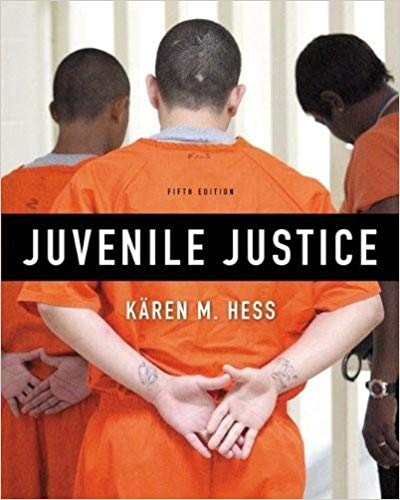
Juvenile Justice 5th Edition By Kären - Test Bank

Juvenile Justice 5th Edition By Kären - Test Bank   Instant Download - Complete Test Bank With Answers     Sample Questions Are Posted Below   CHAPTER 5   Juvenile Victims       TEST BANK – Chapter 5  (85 questions)   Multiple Choice  (25 questions)   The largest single cause of death in young …

$19.99

Juvenile Justice 5th Edition By Kären – Test Bank


Instant Download – Complete Test Bank With Answers


Sample Questions Are Posted Below


CHAPTER 5


Juvenile Victims


TEST BANK – Chapter 5  (85 questions)


Multiple Choice  (25 questions)


  1. The largest single cause of death in young children is:
  2. child abuse *
  3. malnutrition
  4. second-hand smoke
  5. neglect

PG: 134                      OBJ:  2


  1. The following are the three levels of abuse EXCEPT:
  2. collective
  3. institutional
  4. correctional *
  5. individual

PG: 134                      OBJ:  3


  1. The most common form of child maltreatment is:
  2. child abuse
  3. neglect *
  4. malnutrition
  5. inconsistent healthcare

PG: 131                      OBJ:  4


  1. Often neglecting parents:
  2. ignore their children or set bad examples for them *
  3. are uneducated, unable to read and/or write
  4. have significant issues with anger control and aggression
  5. force drugs on their children

PG: 137                      OBJ:  5


  1. Physical or sexual assault is a higher risk in families with:
  2. step-parents/sibling and single parents *
  3. two biological parents
  4. two adoptive parents
  5. two foster parents

PG: 133                      OBJ:  5


  1. The Missing Children’s Act, passed in 1984, does NOT define a missing child as:
  2. one whose age is less than 21 years of age *
  3. one whose whereabouts are unknown to such individual’s legal custodian
  4. one whose disappearance indicates that the child has been removed from the legal guardian’s control without the custodian’s consent
  5. one whose circumstances indicate the child is likely to be abused or sexually exploited

PG: 152                      OBJ:  12


  1. ___________ strain refers to real-life strains experienced by others when around a victimized individual.
  2. Secondary
  3. Peripheral
  4. Vicarious *
  5. Projected

PG: 142                      OBJ:  12


  1. Typically, the three components of child abuse/neglect laws are the following EXCEPT:
  2. criminal definitions and penalties
  3. a mandate to report suspected cases
  4. mental health treatment *
  5. civil processes for removing a child from the abusive or neglectful environment

PG: 139                      OBJ:  6


  1. The two leading causes of child abuse are thought to be:
  2. violence between spouses and poverty *
  3. ongoing exposure to violent video games and movies
  4. malnutrition and lack of health care
  5. drugs and alcohol abuse

PG: 141                      OBJ:  7


  1. Individual maltreatment includes situations when:
  2. there is sexual abuse of a child
  3. one or more people emotionally abuse a child
  4. one or more people physically abuse a child
  5. students bully peers at school *

PG: 144                      OBJ:  3


  1. Child abuse can be directly linked with:
  2. illiteracy
  3. drug abuse
  4. DUI/DWI
  5. delinquency *

PG: 145                      OBJ:  9


  1. Victimization rates are:
  2. inversely related to age, with the youngest children being the highest *
  3. similar among all ages, with the median age being 8
  4. highest among foster parents
  5. highest among legal guardians

PG: 131                      OBJ:  10


  1. The two organizations that have concurrent jurisdiction for missing and exploited children are:
  2. NAF and OJJDP
  3. ACYF and OJJDP *
  4. Communities in Action and NAF
  5. ACYF and CPS

PG: 157                      OBJ:  12


  1. Warning signs of suicide often include all of the following EXCEPT:
  2. threatening to kill one’s self, and talking as if no one cares
  3. preparing for death, such as giving away possessions
  4. expressing hopelessness and giving up on one’s self
  5. increase or decrease in appetite *

PG: 159                      OBJ:  14


  1. Collective maltreatment is seen in the effects of:
  2. poverty and other forms of social injustice *
  3. sickness and hospitalization
  4. gang activity
  5. poor educational facilities

PG: 134                      OBJ:  5


  1. The broken home, in and of itself:
  2. causes delinquency
  3. does not cause delinquency *
  4. causes physical abuse
  5. causes emotional abuse

PG: 137                      OBJ:  5


  1. The leading cause of teen suicide is:
  2. drug use
  3. untreated anxiety
  4. alcohol abuse
  5. untreated depression *

PG: 158                      OBJ:  13


  1. OJJDP is focused on:
  2. social welfare and emergency care approaches for missing and exploited children
  3. educational approaches for missing and exploited children
  4. mental health approaches for missing and exploited children
  5. the challenges missing children present to law enforcement and the justice system *

PG: 158                      OBJ:  12


  1. Most maltreatment cases enter the child welfare system through:
  2. school counselors
  3. hospitalization
  4. Child Protective Services *
  5. National Institute of Mental Health

PG: 131                      OBJ:  1


  1. All states mandate agencies to do the following EXCEPT:
  2. assess reports of child abuse and neglect
  3. investigate reports of child abuse and neglect
  4. offer rehabilitative services to families where maltreatment has or is likely to occur
  5. offer home educational services to families where maltreatment is likely to occur *

PG: 131                      OBJ:  6


  1. An act or omission by a parent or other caregiver that results in harm or serious risk of harm to a child is referred to as:
  2. maltreatment *
  3. abuse
  4. neglect
  5. exploitation

PG: 132                OBJ:  3


  1. Most common types of maltreatment include all of the following EXCEPT:
  2. neglect and medical neglect
  3. physical abuse and sexual abuse
  4. psychological maltreatment
  5. sociological maltreatment *

PG: 132                OBJ:  4


  1. Sexual abuse by a parent or other family member is referred to as:
  2. suprafamilial sexual abuse
  3. intrafamilial sexual abuse *
  4. extrafamilial sexual abuse
  5. parafamilial sexual abuse

PG: 146                OBJ:  10


  1. Rates of victimization of females are typically:
  2. about the same as that of boys
  3. slightly lower than that of boys
  4. higher than that of boys *
  5. considerably lower than that of boys

PG: 150                OBJ:  10


  1. The “dark underbelly of cohabitation” refers to:
  2. drug abuse
  3. abusive-boyfriend syndrome *
  4. alcoholism
  5. depression

PG: 133                OBJ:  5


True/False  (20 questions)


  1. It is estimated that 500,000 teens attempt suicide every year with 5,000 succeeding. T

PG: 158                OBJ:  13


  1. Investigations concluded that an estimated 899,000 children were abused or neglected during 2005. T

PG: 131                OBJ:  1


  1. Maltreated youths are at an increased risk for performing poorly in school and displaying symptoms of mental illness. T

PG: 132                OBJ:  1


  1. The risk of kidnapping increases substantially for male juveniles after age nine. F

PG: 152                OBJ:  11


  1. More than half of all maltreatment victims are white. T

PG: 133                OBJ:  10


  1. Foster parents, residential facility staff and legal guardians each made up less than one percent of maltreatment perpetrators. T

PG: 133                OBJ:  5


  1. Child abuse has been identified as the biggest single cause of death of young children. T

PG: 134                OBJ:  2


  1. The collective attitude in America takes notice of the natural and legal rights of children. F

PG: 134                OBJ:  3


  1. The broken home, in and of itself, causes delinquency. F

PG: 137                OBJ:  5


  1. Children who are abused are less likely to be violent themselves. F

PG: 144                OBJ:  1


  1. Premature birth increases a child’s risk of being abused. T

PG: 141                OBJ:  7


  1. Children who experience intrafamily violence are no more at risk for child abuse than children who are exposed to this type of violence. F

PG: 142                OBJ:  5


  1. Witnessing actual violence or fearing its potential occurrence has no real effect on children. F

PG: 142                OBJ:  8


  1. Child abuse has been directly linked with delinquency. T

PG: 144                OBJ:   9


  1. A central complexity of the juvenile victim justice system is that it encompasses two distinct subsystems, the criminal justice system and the child protection system. T

PG: 162                OBJ:  12


  1. Cultural values do not play a role in determining what constitutes abuse. F

PG: 148                OBJ:  9


  1. Less than one-third of violent crimes with juvenile victims occur in a residence. F

PG: 150                OBJ:  5


  1. More than one-third of juvenile victims of violent crime are under age 16. F

PG: 150                OBJ:  10


  1. Researchers theorized that early puberty creates unusually high levels of distress for adolescents. T

PG: 151                OBJ:  9


  1. Running away from home is seen by many youths as a solution to problems at home or school. T

PG: 154                OBJ:  11


Fill-in-the-blank/Short Answer  (20 questions) 


  1. Most maltreatment cases enter the child welfare system through___________ agencies. CHILD PROTECTIVE SERVICES

PG: 131                OBJ: 1


  1. Victimization rates were highest among young children from _________________. BIRTH TO AGE 3

PG: 131                OBJ:  10


  1. Children living in households with _______________ are nearly 50 times as likely to die of inflicted injuries as children with two biological parents. UNRELATED ADULTS

PG: 133                OBJ:  5


  1. The two most frequently mentioned personal problems indicated by runaway youth were ___________ and ____________. A POOR SELF-IMAGE; DEPRESSION

PG: 155                OBJ: 11


  1. Fatal neglect cases usually result from a caregiver’s _____________. FAILURE TO ACT

PG: 134                OBJ:  5


  1. The three levels of child maltreatment are ___________, ________________, and ___________. COLLECTIVE, INSTITUTIONAL, INDIVIDUAL

PG: 134                OBJ:  3


  1. Institutional maltreatment of children is sometimes called ________. ADMINISTRATIVE ABUSE

PG: 134                OBJ:  3


  1. The homes of neglected children often are ______________. DISORGANIZED

PG: 137                OBJ:  5


  1. Frequent hunger, poor hygiene, inappropriate dress, consistent lack of supervision are considered __________________ of child neglect. PHYSICAL INDICATORS

PG: 138                OBJ:  5


  1. Begging, stealing food, extending school days by arriving early or leaving late, constant fatigue, listlessness or falling asleep in school, alcohol or drug abuse are examples of __________________ of child neglect. BEHAVIORAL INDICATORS

PG: 138                OBJ:  5


  1. In _______________________ the court held that “The parent is the sole judge of the necessity for the exercise of disciplinary right and of the nature of the correction to be given.” PEOPLE v. GREEN (1909)

PG: 139                OBJ:  6


  1. Mistaken for child abuse is the condition ______________ which is characterized by bones that break easily. OSTEOGENESIS IMPERFECTA

PG: 141                OBJ:  6


  1. The two leading causes of child abuse are thought to be __________________and __________. VIOLENCE BETWEEN SPOUSES; POVERTY

PG: 141                OBJ:  8


  1. Violence is ___________ behavior that is often self-perpetuating. LEARNED

PG: 142                OBJ:  8


  1. The leading cause of youth suicide is ___________________. UNTREATED DEPRESSION

PG: 158                OBJ:  14


  1. Sexual harassment was declared illegal in Title IX of the _____________. EDUCATION AMENDMENTS OF 1972

PG: 146                OBJ:  8


  1. The ____________________ passed in ______, imposes tougher penalties for sex crimes against children, particularly those facilitated by the use of the Internet. CHILD PROTECTION AND SEXUAL PREDATOR PUNISHMENT ACT; 1998

PG: 147                OBJ:  9


  1. The average age of entry into prostitution through human trafficking is _______. 12—14 YEARS OF AGE

PG: 147                OBJ:  11


  1. _________________ account for nearly half of all missing children. RUNAWAYS

PG: 152                OBJ:  11


  1. The two federal criminal statutes that apply in international family abduction cases are _________ and the ________. THE FUGITIVE FELON ACT; INTERNATIONAL PARENTAL KIDNAPPING CRIME ACT

PG: 156                OBJ:  12


Matching  (15 questions)


  1. collective maltreatment
  2. intrafamilial sexual abuse
  3. stereotypical kidnapping
  4. extrafamilial sexual abuse
  5. maximalist alarmist perspective
  6. anticipated strain
  7. institutional maltreatment
  8. maltreatment
  9. dependency
  10. minimalist skeptical perspective
  11. runaway
  12. thrownaway
  13. neglect
  14. osteogenesis imperfecta
  15. vicarious strain


  1. the legal status of children over whom a juvenile court has assumed jurisdiction because the court has found their care to fall short of legal standards of proper care by parents, guardians or custodians. (i)


  1. sexual abuse of a child by a parent or other family member. (b)


  1. includes neglect, medical neglect, physical abuse, sexual abuse and psychological abuse. (h)


  1. the approved use of force and violence against children in the schools and in the denial of children’s due process rights in institutions. (g)


  1. the view that the time has come to reject the reluctance of earlier generations to face the facts and to recognize the enormity of the developing crisis. (e)


  1. is a condition characterized by bones that break easily and can be mistaken for child abuse. (n) 


  1. sexual abuse of a child by a friend or stranger, a non-family member. (d)


  1. without proper care; without education or health care because of the refusal of a parent, guardian or custodian to provide them; in need of supervision as a result of the neglect. (m)


  1. a youth who commits the status offense of leaving the custody and home of parents, guardians or custodians without permission and fails to return within a reasonable time. (k)


  1. attitudes held as a group in a society that impede the psychological and physical development of children. (a)


  1. stress experienced by others around an individual experiencing stress. (o)


  1. the view that huge numbers of honestly mistaken and maliciously false allegations are mixed in with true disclosures, making the problem seem worse than it really is and fueling the impression that it is spiraling out of control. (j)


  1. occurs when a stranger or slight acquaintance perpetrates a nonfamily abduction in which the child is detained overnight, transported at least 50 miles, held for ransom, and abducted with intent to keep the child permanently or killed (c)


  1. a child whose family has kicked him or her out. (l)


  1. an individual’s expectation that current stresses will continue into the future or that new stresses will be experienced. (f)


Essay  (5 questions)


  1. Differentiate between the three levels of child maltreatment.

OBJ:  3


  1. Compare and contrast federal and state child neglect and abuse laws.

OBJ:  6


  1. Discuss the cycle of violence. Provide an example.

OBJ:  8


  1. Discuss, including legislation directly related to, child sexual abuse and the Internet.

OBJ:  9


  1. Discuss missing and exploited children. Address the NISMART project.

OBJ:  11


Additional information

Add Review

Your email address will not be published. Required fields are marked *