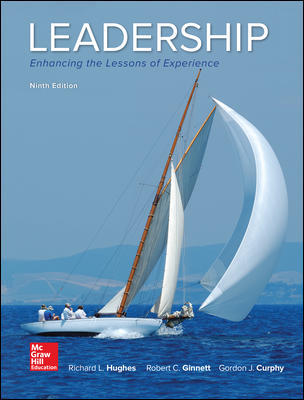
Leadership Enhancing the Lessons of Experience 9Th Edition By Richard Hughes - Test Bank

Leadership Enhancing the Lessons of Experience 9Th Edition By Richard Hughes - Test Bank   Instant Download - Complete Test Bank With Answers     Sample Questions Are Posted Below   Leadership: Enhancing the Lessons of Experience, 9e (Hughes) Chapter 5   Values, Ethics, and Character   1) Leaders ultimately must be judged on the basis …

$19.99

Leadership Enhancing the Lessons of Experience 9Th Edition By Richard Hughes – Test Bank


Instant Download – Complete Test Bank With Answers


Sample Questions Are Posted Below


Leadership: Enhancing the Lessons of Experience, 9e (Hughes)

Chapter 5   Values, Ethics, and Character


1) Leaders ultimately must be judged on the basis of a framework of values, not just in terms of their effectiveness.


Answer:  TRUE

Difficulty: 1 Easy

Learning Objective:  05-01 Describe why values, ethics, and character are important for effective leaders.

Bloom’s:  Remember


2) Managers with Theory X orientation rely heavily on coercive, external control methods to motivate workers, such as pay, disciplinary techniques, punishments, and threats.


Answer:  TRUE

Difficulty: 1 Easy

Learning Objective:  05-01 Describe why values, ethics, and character are important for effective leaders.

Bloom’s:  Remember


3) Gen Xers tend to be more committed to a specific organization than to their vocation because they believe in job security.


Answer:  FALSE

Difficulty: 1 Easy

Learning Objective:  05-01 Describe why values, ethics, and character are important for effective leaders.

Bloom’s:  Remember


4) Baby Boomers came of age during the Great Depression and World War II.


Answer:  FALSE

Difficulty: 1 Easy

Learning Objective:  05-01 Describe why values, ethics, and character are important for effective leaders.

Bloom’s:  Remember


5) Being helpful, honest, and logical are examples of terminal values.


Answer:  FALSE

Difficulty: 1 Easy

Learning Objective:  05-01 Describe why values, ethics, and character are important for effective leaders.

Bloom’s:  Remember


6) Instrumental values refer to modes of behavior, and terminal values refer to desired end states.


Answer:  TRUE

Difficulty: 1 Easy

Learning Objective:  05-01 Describe why values, ethics, and character are important for effective leaders.

Bloom’s:  Remember


7) Millennials share an optimism born, perhaps, from having been raised by parents devoted to the task of bringing their generation to adulthood.


Answer:  TRUE

Difficulty: 1 Easy

Learning Objective:  05-01 Describe why values, ethics, and character are important for effective leaders.

Bloom’s:  Remember


8) Gen Xers have been a stabilizing force in organizations for decades, even if they are prone to digressions about “the good old days.”


Answer:  FALSE

Difficulty: 1 Easy

Learning Objective:  05-01 Describe why values, ethics, and character are important for effective leaders.

Bloom’s:  Remember


9) Moral reasoning refers to the process leaders use to make decisions about ethical and unethical behaviors.


Answer:  TRUE

Difficulty: 1 Easy

Learning Objective:  05-01 Describe why values, ethics, and character are important for effective leaders.

Bloom’s:  Remember


10) Ends-based thinking is consistent with Kantian philosophy and is characterized colloquially as “following the highest principle or duty.”


Answer:  FALSE

Difficulty: 1 Easy

Learning Objective:  05-01 Describe why values, ethics, and character are important for effective leaders.

Bloom’s:  Remember


11) According to the dual-process theory, moral judgments dealing primarily with “rights” and “duties” are made by automatic emotional responses.


Answer:  TRUE

Difficulty: 1 Easy

Learning Objective:  05-01 Describe why values, ethics, and character are important for effective leaders.

Bloom’s:  Remember


12) Rule-based thinking, known as utilitarianism in philosophy, is premised on the idea that right and wrong are best determined by considering the consequences or results of an action.


Answer:  FALSE

Difficulty: 1 Easy

Learning Objective:  05-01 Describe why values, ethics, and character are important for effective leaders.

Bloom’s:  Remember


13) In-group favoritism occurs when people overrate the quality of their work and their contributions to the groups and teams to which they belong.


Answer:  FALSE

Difficulty: 1 Easy

Learning Objective:  05-01 Describe why values, ethics, and character are important for effective leaders.

Bloom’s:  Remember


14) Through a distortion of consequences, people minimize the harm caused by their behavior.


Answer:  TRUE

Difficulty: 1 Easy

Learning Objective:  05-01 Describe why values, ethics, and character are important for effective leaders.

Bloom’s:  Remember


15) Advantageous comparison refers to the process of using cosmetic words to defuse or disguise the offensiveness of otherwise morally repugnant or distasteful behavior.


Answer:  FALSE

Difficulty: 1 Easy

Learning Objective:  05-01 Describe why values, ethics, and character are important for effective leaders.

Bloom’s:  Remember


16) In the context of moral potency, moral ownership is best described as the fortitude to face risk and overcome fears associated with taking ethical action.


Answer:  FALSE

Difficulty: 1 Easy

Learning Objective:  05-01 Describe why values, ethics, and character are important for effective leaders.

Bloom’s:  Remember


17) The study of authentic leadership has gained considerable momentum in the last decade because of the belief that enhancing self-awareness can help people in organizations find more meaning and connection at work.


Answer:  TRUE

Difficulty: 1 Easy

Learning Objective:  05-02 Compare two character-based leadership approaches: authentic and servant.

Bloom’s:  Remember


18) Servant leadership puts an emphasis on listening effectively to others.


Answer:  TRUE

Difficulty: 1 Easy

Learning Objective:  05-02 Compare two character-based leadership approaches: authentic and servant.

Bloom’s:  Remember


19) Authentic leaders behave as they do to attain status, rewards, and other advantages rather than to achieve personal conviction.


Answer:  FALSE

Difficulty: 1 Easy

Learning Objective:  05-02 Compare two character-based leadership approaches: authentic and servant.

Bloom’s:  Remember


20) The ultimate test of a servant leader’s work is whether those served develop toward being more responsible, caring, and competent individuals.


Answer:  TRUE

Difficulty: 1 Easy

Learning Objective:  05-02 Compare two character-based leadership approaches: authentic and servant.

Bloom’s:  Remember


21) What are the four qualities of leadership that engender trust according to Bennis and Goldsmith?

  1. A) values, loyalty, consistency, and integrity
  2. B) honesty, values, loyalty, and creativity
  3. C) creativity, honesty, consistency, and vision
  4. D) vision, empathy, consistency, and integrity


Answer:  D

Difficulty: 1 Easy

Learning Objective:  05-01 Describe why values, ethics, and character are important for effective leaders.

Bloom’s:  Remember


22) Leaders who pull people together on the basis of shared beliefs and a common sense of organizational purpose and belonging are most likely the ones

  1. A) who are consistent.
  2. B) who demonstrate empathy.
  3. C) who create a compelling vision.
  4. D) whose integrity is strong.


Answer:  C

Difficulty: 1 Easy

Learning Objective:  05-01 Describe why values, ethics, and character are important for effective leaders.

Bloom’s:  Remember


23) Which of the following best describes ethics?

  1. A) an appreciation of laws
  2. B) principles of right conduct
  3. C) a sense of organizational purpose
  4. D) modes of intrapersonal behavior


Answer:  B

Difficulty: 1 Easy

Learning Objective:  05-01 Describe why values, ethics, and character are important for effective leaders.

Bloom’s:  Remember


24) Which of the following statements is true of managers with the Theory Y orientation?

  1. A) They reflect a view that most people are intrinsically motivated by their work.
  2. B) They believe that people need to be coaxed or coerced to work productively.
  3. C) They tend to maximize workers’ sense of responsibility by closely overseeing their work.
  4. D) They rely on pressure tactics to motivate their workers.


Answer:  A

Difficulty: 2 Medium

Learning Objective:  05-01 Describe why values, ethics, and character are important for effective leaders.

Bloom’s:  Understand


25) Hall and Donnell reported findings of five separate studies involving over 12,000 managers that explored the relationship between managerial achievement and attitudes toward subordinates. Overall, they found that managers who strongly subscribed to Theory X beliefs

  1. A) were unlikely to have a pessimistic view of others.
  2. B) were unlikely to rely on coercive, external control methods to motivate workers.
  3. C) were highly likely to believe that workers were naturally motivated to work.
  4. D) were highly likely to be in their lower-achieving group.


Answer:  D

Difficulty: 1 Easy

Learning Objective:  05-01 Describe why values, ethics, and character are important for effective leaders.

Bloom’s:  Remember


26) Values are most likely

  1. A) shared by all human beings.
  2. B) learned through the socialization process.
  3. C) based on the principles of law.
  4. D) demonstrated through empathy.


Answer:  B

Difficulty: 1 Easy

Learning Objective:  05-01 Describe why values, ethics, and character are important for effective leaders.

Bloom’s:  Remember


27) According to Zemke’s four generations of workers, which of the following statements is most likely true of the Veterans?

  1. A) They are most likely latchkey kids.
  2. B) They represent a wealth of lore and wisdom.
  3. C) They are entrepreneurial, and they embrace change.
  4. D) They tend to be more committed to their vocation than to any specific organization.


Answer:  B

Difficulty: 2 Medium

Learning Objective:  05-01 Describe why values, ethics, and character are important for effective leaders.

Bloom’s:  Understand


28) According to Zemke’s four generations of workers, which of the following statements is most likely true of the Baby Boomers?

  1. A) They are concerned about creating a level playing field for all.
  2. B) They came of age during the Great Depression and World War II.
  3. C) They usually think of themselves as “the problem” in their workplace.
  4. D) They are the children of soccer moms and Little League dads.


Answer:  A

Difficulty: 2 Medium

Learning Objective:  05-01 Describe why values, ethics, and character are important for effective leaders.

Bloom’s:  Understand


29) Which of the following generation of workers tends to be technologically savvy, independent, and skeptical of institutions and hierarchy?

  1. A) the Millennials
  2. B) the Veterans
  3. C) the Baby Boomers
  4. D) the Gen Xers


Answer:  D

Difficulty: 1 Easy

Learning Objective:  05-01 Describe why values, ethics, and character are important for effective leaders.

Bloom’s:  Remember


30) According to Zemke’s four generations of workers, the Millennials

  1. A) doubt the wisdom of traditional racial and sexual categorizing.
  2. B) have been a stabilizing force in organizations for decades.
  3. C) have a work ethic characterized by organizational loyalty.
  4. D) tend to be uncomfortable with transparency of action in workplaces.


Answer:  A

Difficulty: 2 Medium

Learning Objective:  05-01 Describe why values, ethics, and character are important for effective leaders.

Bloom’s:  Understand


31) Dr. Jonathon realizes that his patient is suffering from a highly contagious disease that is likely to pose a threat to the entire city. However, he is uncertain about sharing this information with city officials to protect his patient’s privacy. In this scenario, which of the following ethical dilemmas does the doctor most likely face?

  1. A) truth versus loyalty
  2. B) individual versus community
  3. C) short-term versus long-term
  4. D) justice versus mercy


Answer:  B

Difficulty: 3 Hard

Learning Objective:  05-01 Describe why values, ethics, and character are important for effective leaders.

Bloom’s:  Apply


32) Ends-based thinking is often characterized as

  1. A) “doing what you want others to do to you.”
  2. B) “following the highest principle or duty.”
  3. C) “do what’s best to get my desired end results.”
  4. D) “do what’s best for the greatest number of people.”


Answer:  D

Difficulty: 1 Easy

Learning Objective:  05-01 Describe why values, ethics, and character are important for effective leaders.

Bloom’s:  Remember


33) Terrorists may call themselves “freedom fighters,” and firing someone may be referred to as “letting him or her go.” These are both examples of

  1. A) moral justification.
  2. B) diffusion of responsibility.
  3. C) euphemistic labeling.
  4. D) advantageous comparison.


Answer:  C

Difficulty: 1 Easy

Learning Objective:  05-01 Describe why values, ethics, and character are important for effective leaders.

Bloom’s:  Remember


34) ________ involves reinterpreting otherwise immoral behavior in terms of a higher purpose.

  1. A) Advantageous comparison
  2. B) Moral justification
  3. C) Displacement of responsibility
  4. D) Euphemistic labeling


Answer:  B

Difficulty: 1 Easy

Learning Objective:  05-01 Describe why values, ethics, and character are important for effective leaders.

Bloom’s:  Remember


35) Which of the following best describes attribution of blame?

  1. A) using cosmetic words to defuse the offensiveness of distasteful behavior
  2. B) justifying immoral behavior by claiming it was caused by someone else’s actions
  3. C) avoiding self-contempt for personal behavior by comparing it to the more heinous actions of others
  4. D) minimizing the harm caused by immoral actions by blaming the behavior on low societal standards


Answer:  B

Difficulty: 2 Medium

Learning Objective:  05-01 Describe why values, ethics, and character are important for effective leaders.

Bloom’s:  Understand


36) In the context of moral potency, the belief or confidence in one’s capability to mobilize various personal, interpersonal, and other external resources to persist despite moral adversity is referred to as

  1. A) moral ownership.
  2. B) moral efficacy.
  3. C) moral justification.
  4. D) moral courage.


Answer:  B

Difficulty: 1 Easy

Learning Objective:  05-01 Describe why values, ethics, and character are important for effective leaders.

Bloom’s:  Remember


37) An authentic leader will most likely

  1. A) manage impressions and actions.
  2. B) have a realistic self-perception.
  3. C) exaggerate strong emotions.
  4. D) foster in-group exclusivity.


Answer:  B

Difficulty: 2 Medium

Learning Objective:  05-02 Compare two character-based leadership approaches: authentic and servant.

Bloom’s:  Understand


38) Which of the following statements is most likely true of servant leaders?

  1. A) They rely on positional authority to influence others.
  2. B) They fail to foster each person’s emotional and spiritual health and wholeness.
  3. C) They tend to overlook their own values, feelings, strengths, and weaknesses.
  4. D) They need to integrate present realities and future possibilities.


Answer:  D

Difficulty: 2 Medium

Learning Objective:  05-02 Compare two character-based leadership approaches: authentic and servant.

Bloom’s:  Understand


39) Leadership behavior enacted by individuals who take action to maintain ethical standards in the face of questionable moral behaviors by higher-ups is referred to as

  1. A) compelling vision.
  2. B) charismatic leadership.
  3. C) servant leadership behavior.
  4. D) upward ethical leadership.


Answer:  D

Difficulty: 1 Easy

Learning Objective:  05-03 Map the roles of ethics and values in organizational leadership.

Bloom’s:  Remember


40) Which of the following is an approach, developed and popularized by Covey, which postulates a fundamental interdependence between the personal, the interpersonal, the managerial, and the organizational levels of leadership?

  1. A) principle-centered leadership
  2. B) upward ethical leadership
  3. C) the constructionist approach
  4. D) the role approach


Answer:  A

Difficulty: 1 Easy

Learning Objective:  05-03 Map the roles of ethics and values in organizational leadership.

Bloom’s:  Remember


41) Describe the four qualities of leadership that engender trust according to Bennis and Goldsmith.


Answer:  Answers will vary.

Difficulty: 2 Medium

Learning Objective:  05-01 Describe why values, ethics, and character are important for effective leaders.

Bloom’s:  Understand


42) Describe the differences between instrumental and terminal values and give examples of each. What role do values play in work settings?


Answer:  Answers will vary.

Difficulty: 2 Medium

Learning Objective:  05-01 Describe why values, ethics, and character are important for effective leaders.

Bloom’s:  Understand


43) Discuss how the values of Gen Xers affect the leadership process in the workplace.


Answer:  Answers will vary.

Difficulty: 2 Medium

Learning Objective:  05-01 Describe why values, ethics, and character are important for effective leaders.

Bloom’s:  Understand


44) Identify and describe the four generations of workers as illustrated by Zemke.


Answer:  Answers will vary.

Difficulty: 2 Medium

Learning Objective:  05-01 Describe why values, ethics, and character are important for effective leaders.

Bloom’s:  Understand


45) What are the three principles for resolving ethical dilemmas according to Kidder? How does Kidder suggest using these principles?


Answer:  Answers will vary.

Difficulty: 2 Medium

Learning Objective:  05-01 Describe why values, ethics, and character are important for effective leaders.

Bloom’s:  Understand


46) When good people do bad things, what are the different methods they use in minimizing personal moral responsibility? Briefly describe at least four such methods.


Answer:  Answers will vary.

Difficulty: 2 Medium

Learning Objective:  05-01 Describe why values, ethics, and character are important for effective leaders.

Bloom’s:  Understand


47) What is authentic leadership? What are the characteristics of authentic leaders?


Answer:  Answers will vary.

Difficulty: 2 Medium

Learning Objective:  05-01 Describe why values, ethics, and character are important for effective leaders.

Bloom’s:  Understand


48) Leaders create and sustain ethical climates in organizations through five “fronts” of leadership. Identify and describe these fronts and discuss how they relate to an ethical climate in an organization.


Answer:  Answers will vary.

Difficulty: 2 Medium

Learning Objective:  05-03 Map the roles of ethics and values in organizational leadership.

Bloom’s:  Understand


49) Individuals in a formal leadership role face unique ethical responsibilities and challenges. What are the six responsibilities that formal leaders face more than followers?


Answer:  Answers will vary.

Difficulty: 2 Medium

Learning Objective:  05-03 Map the roles of ethics and values in organizational leadership.

Bloom’s:  Understand


50) What are the characteristics of ethical and unethical climates in organizations?


Answer:  Answers will vary.

Difficulty: 2 Medium

Learning Objective:  05-03 Map the roles of ethics and values in organizational leadership.

Bloom’s:  Understand

Additional information

Add Review

Your email address will not be published. Required fields are marked *