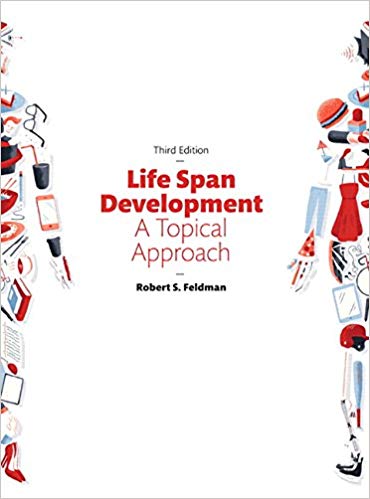
Life Span Development A Topical Approach 3rd Edition by Feldman - Test Bank

Life Span Development A Topical Approach 3rd Edition by Feldman - Test Bank   Instant Download - Complete Test Bank With Answers     Sample Questions Are Posted Below           Chapter 5   Cognitive Growth: Piaget and Vygotsky     MULTIPLE CHOICE   5-1. Piaget argued that infants acquire knowledge through …

$19.99

Life Span Development A Topical Approach 3rd Edition by Feldman – Test Bank


Instant Download – Complete Test Bank With Answers


Sample Questions Are Posted Below


Chapter 5


Cognitive Growth: Piaget and Vygotsky


MULTIPLE CHOICE


5-1. Piaget argued that infants acquire knowledge through


  1. a)
  2. b)
  3. c) facts communicated by others.
  4. d) direct motor behavior.


Answer: D
Difficulty: Difficult
Page: 164
Skill: Conceptual
LO 5.1: Summarize the fundamental features of Piaget’s theory of cognitive development.
Bloom’s Taxonomy Level: Understand


5-2. Who was the Swiss developmental researcher whose theory of developmental stages highly influenced a considerable amount of work on cognitive development?


  1. a) Skinner
  2. b) Watson
  3. c) Piaget
  4. d) Erikson


Answer: C
Difficulty: Easy
Page: 164
Skill: Factual
LO 5.1: Summarize the fundamental features of Piaget’s theory of cognitive development.
Bloom’s Taxonomy Level: Remember


5-3. Piaget’s theory of development assumed that all children pass through a series of ____ universal stages in a fixed order from birth to adolescence. These are __________.


  1. a) 5; sensorimotor, preoperational, formal operational concrete operational, and maturation
  2. b) 4; sensorimotor, preoperational, concrete operational, and formal operational
  3. c) 3; preoperational, concrete operational, and formal operational
  4. d) 6; sensorimotor, preoperational, concrete operational, formal operational, assimilation, and accommodation


Answer: B
Difficulty: Difficult
Page: 164
Skill: Factual
LO 5.1: Summarize the fundamental features of Piaget’s theory of cognitive development.
Bloom’s Taxonomy Level: Remember


5-4. What is the term for an organized pattern of functioning that adapts and changes with mental development?


  1. a) assimilation
  2. b) scheme
  3. c) accommodation
  4. d) skill


Answer: B
Difficulty: Medium
Page: 164
Skill: Factual
LO 5.1: Summarize the fundamental features of Piaget’s theory of cognitive development.
Bloom’s Taxonomy Level: Remember


5-5. Piaget believed that the basic building blocks of the way children understand the world are mental structures called


  1. a)
  2. b)
  3. c)
  4. d)


Answer: C
Difficulty: Medium
Page: 164
Skill: Conceptual
LO 5.1: Summarize the fundamental features of Piaget’s theory of cognitive development.
Bloom’s Taxonomy Level: Understand


5-6. Mark and Amanda just purchased some new toys for their 4-month-old son, and as soon as they put them in the baby’s crib, the baby immediately tried to put the toys in his mouth, pick up and shake the toys. Piaget would say that this is an example of


  1. a) a scheme.
  2. b)
  3. c)
  4. d)


Answer: A
Difficulty: Difficult
Page: 164
Skill: Applied
LO 5.1: Summarize the fundamental features of Piaget’s theory of cognitive development.
Bloom’s Taxonomy Level: Apply


5-7. While being dressed for bed, 7-month-old Darnell picked up new baby’s comb that his mother just bought for him. Darnell had never seen this before and didn’t know how it was used, so he tried to put it in his mouth. Piaget might say that Darnell was


  1. a) assimilating the comb into his existing schemes.
  2. b) accommodating the comb into his existing schemes.
  3. c) adapting the comb into his exiting schemes.
  4. d) adapting the comb with secondary circular reactions.


Answer: A
Difficulty: Difficult
Page: 164
Skill: Applied
LO 5.1: Summarize the fundamental features of Piaget’s theory of cognitive development.
Bloom’s Taxonomy Level: Apply


5-8. What is the term that Piaget used to explain the process in which people understand an experience in terms of their current stage of cognitive development and way of thinking?


  1. a) scheme
  2. b) assimilation
  3. c) accommodation
  4. d) operational stage


Answer: B
Difficulty: Medium
Page: 164
Skill: Factual
LO 5.1: Summarize the fundamental features of Piaget’s theory of cognitive development.
Bloom’s Taxonomy Level: Remember


5-9. Piaget thought that ________ occurs when a stimulus or event is acted upon, perceived, and understood in accordance with existing patterns of thought.


  1. a) assimilation
  2. b) scheme
  3. c) accommodation
  4. d) learning


Answer: A
Difficulty: Medium
Page: 164
Skill: Factual
LO 5.1: Summarize the fundamental features of Piaget’s theory of cognitive development.
Bloom’s Taxonomy Level: Remember


5-10. Four-year-old Alex and his mother visited the zoo. While they were there, Alex’s mother took him to see the squirrel exhibit. Alex saw many different types of squirrels, but when he saw a flying squirrel glide from one branch to the next he pointed and said, “A bird.” Considering Piaget’s work, Alex is demonstrating an example of


  1. a)
  2. b)
  3. c) object permanence.
  4. d)


Answer: D
Difficulty: Difficult
Page: 164
Skill: Applied
LO 5.1: Summarize the fundamental features of Piaget’s theory of cognitive development.
Bloom’s Taxonomy Level: Apply


5-11. Piaget used the term _______ to describe changes in existing ways of thinking that occur in response to encounters with new stimuli or events.


  1. a) accommodation
  2. b) scheme
  3. c) preoperational
  4. d) assimilation


Answer: A
Difficulty: Medium
Page: 165
Skill: Factual
LO 5.1: Summarize the fundamental features of Piaget’s theory of cognitive development.
Bloom’s Taxonomy Level: Remember


5-12. Five-year-old Alex and his mother visited the zoo. While they were there, Alex’s mother took him to see the squirrel exhibit. Alex saw many different types of squirrels, but when he saw a flying squirrel glide from one branch to the next he pointed and said, “A bird with a tail.” Considering Piaget’s work, Alex is demonstrating an example of


  1. a)
  2. b)
  3. c) object permanence.
  4. d)


Answer: B
Difficulty: Medium
Page: 165
Skill: Applied
LO 5.1: Summarize the fundamental features of Piaget’s theory of cognitive development.
Bloom’s Taxonomy Level: Apply


5-13. Baby Alexander makes minor changes in his schemes each time his environment provides him with a new experience. This is the process of


  1. a)
  2. b) simple reflexes.
  3. c)
  4. d) secondary circular reactions.


Answer: A
Difficulty: Medium
Page: 165
Skill: Applied
LO 5.1: Summarize the fundamental features of Piaget’s theory of cognitive development.
Bloom’s Taxonomy Level: Apply


5-14. Piaget believed that the earliest schemes are limited to ________ that we have when we are born.


  1. a) inherited abilities
  2. b) senses
  3. c) neuron and synapse development
  4. d) reflexes


Answer: D
Difficulty: Medium
Page: 165
Skill: Factual
LO 5.1: Summarize the fundamental features of Piaget’s theory of cognitive development.
Bloom’s Taxonomy Level: Remember


5-15. Piaget believed that the exact timing of a stage reflects an interaction between the infant’s ________ and __________.


  1. a) level of physical maturation; the nature of the social environment in which the child is raised
  2. b) level of physical maturation; the genetic predisposition of the child
  3. c) level of cognitive development; the environment in which the child is raised
  4. d) level of physical maturation; cognitive development of the child


Answer: A
Difficulty: Difficult
Page: 165
Skill: Conceptual
LO 5.2: Describe infants’ cognitive development across the six substages of Piaget’s sensorimotor stage.
Bloom’s Taxonomy Level: Understand


5-16. What is the term for Piaget’s initial major stage of cognitive development, which can be broken down into six substages?


  1. a) concrete operational
  2. b) preoperational
  3. c) sensorimotor
  4. d) formal operational


Answer: C
Difficulty: Medium
Page: 165
Skill: Factual
LO 5.2: Describe infants’ cognitive development across the six substages of Piaget’s sensorimotor stage.
Bloom’s Taxonomy Level: Remember


5-17. In Piaget’s sensorimotor stage, the first substage is called


  1. a) first habits and primary circular reactions.
  2. b)
  3. c)
  4. d) simple reflexes.


Answer: D
Difficulty: Easy
Page: 165
Skill: Factual
LO 5.2: Describe infants’ cognitive development across the six substages of Piaget’s sensorimotor stage.
Bloom’s Taxonomy Level: Remember


5-18. Beth normally breastfeeds her baby; however, during the workday Beth’s mother watches her baby, and the baby must be fed with a bottle. Beth has noticed that her baby’s approach to being bottle-fed is somewhat different than when the baby is being breast-fed. Piaget would say that this is an example of


  1. a)
  2. b) Substage 1: Simple reflexes of the sensorimotor stage.
  3. c)
  4. d)


Answer: B
Difficulty: Difficult
Page: 165
Skill: Applied
LO 5.2: Describe infants’ cognitive development across the six substages of Piaget’s sensorimotor stage.
Bloom’s Taxonomy Level: Apply


5-19. Piaget’s Substage 2: First habits and primary circular reactions occurs for infants in the age range of ____ to _____ months of age.


  1. a) 1; 6
  2. b) 2; 8
  3. c) 1; 4
  4. d) 4; 8


Answer: C
Difficulty: Difficult
Page: 166
Skill: Factual
LO 5.2: Describe infants’ cognitive development across the six substages of Piaget’s sensorimotor stage.
Bloom’s Taxonomy Level: Remember


5-20. Which of Piaget’s substages of his sensorimotor stage is the one in which infants begin to coordinate what were separate actions into single, integrated activities?


  1. a) secondary circular reactions
  2. b) simple reflexes
  3. c) tertiary circular reactions
  4. d) first habits and primary circular reactions


Answer: D
Difficulty: Difficult
Page: 166
Skill: Factual
LO 5.2: Describe infants’ cognitive development across the six substages of Piaget’s sensorimotor stage.
Bloom’s Taxonomy Level: Remember


5-21. Piaget believed that __________ are schemes reflecting an infant’s repetition of interesting or enjoyable actions that focus on the infant’s own body.


  1. a) primary circular reactions
  2. b) circular reactions
  3. c) secondary circular reactions
  4. d) tertiary circular reactions


Answer: A
Difficulty: Difficult
Page: 166
Skill: Factual
LO 5.2: Describe infants’ cognitive development across the six substages of Piaget’s sensorimotor stage.
Bloom’s Taxonomy Level: Remember


5-22. Piaget thought that the repetition of a chance motor event that helps the baby start building cognitive schemes is a process called


  1. a) first habits.
  2. b)
  3. c) a circular reaction.
  4. d)


Answer: C
Difficulty: Difficult
Page: 166
Skill: Factual
LO 5.2: Describe infants’ cognitive development across the six substages of Piaget’s sensorimotor stage.
Bloom’s Taxonomy Level: Remember


5-23. Piaget’s Substage 3: Secondary circular reactions stage occurs for infants in the age range of ____ months.


  1. a) 1–6
  2. b) 1–8
  3. c) 1–4
  4. d) 4–8


Answer: D
Difficulty: Difficult
Page: 167
Skill: Factual
LO 5.2: Describe infants’ cognitive development across the six substages of Piaget’s sensorimotor stage.
Bloom’s Taxonomy Level: Remember


5-24. During which substage of Piaget’s sensorimotor stage does the child “begin to act upon the outside world,” in which infants seek to repeat enjoyable events in their environments if they happen to produce them through chance activities?


  1. a) Substage 2: First habits and primary circular reactions
  2. b) Substage 1: Simple reflexes
  3. c) Substage 3: Secondary circular reactions
  4. d) Substage 4: Coordination of secondary circular reactions


Answer: C
Difficulty: Difficult
Page: 167
Skill: Factual
LO 5.2: Describe infants’ cognitive development across the six substages of Piaget’s sensorimotor stage.
Bloom’s Taxonomy Level: Remember


5-25. Baby Jimmy’s parent places a brand new rattle in his crib, and Jimmy immediately picks it up and tries to mouth the rattle. When it shakes, it makes noise. Jimmy immediately tries shaking the rattle in different ways to see how the sound changes. He seems to enjoy this activity. Piaget would say that this is an example of


  1. a) Substage 2: First habits and primary circular reactions.
  2. b) Substage 1: Simple reflexes.
  3. c) Substage 3: Secondary circular reactions.
  4. d) Substage 4: Coordination of secondary circular reactions.


Answer: C
Difficulty: Difficult

Page: 167
Skill: Applied
LO 5.2: Describe infants’ cognitive development across the six substages of Piaget’s sensorimotor stage.
Bloom’s Taxonomy Level: Apply


5-26. What is the major difference between primary circular reactions and secondary circular reactions in Piaget’s sensorimotor stage?


  1. a) An infant must first demonstrate the primary circular reactions before demonstrating the secondary circular reactions.
  2. b) Primary circular reactions are based upon enjoyment activities, while secondary circular reactions are not.
  3. c) Primary circular reactions bring about a desirable consequence, while secondary circular reactions do not.
  4. d) Primary circular reactions involve activities where the infant is focused on its own body, while secondary circular reactions involve activities where the infant’s actions relate to the outside world.


Answer: D
Difficulty: Difficult
Page: 167
Skill: Conceptual
LO 5.2: Describe infants’ cognitive development across the six substages of Piaget’s sensorimotor stage.
Bloom’s Taxonomy Level: Understand


5-27. Baby Lucy is 8 months old. She picks up a toy in her crib and accidentally hits her crib with the toy, making an interesting noise. She begins to drag the toy back and forth against the sides of the crib’s railing, which produces another different and interesting sound. This prompts Lucy to continue repeating the action over and over again. Piaget would say that this is an example of


  1. a) Substage 1: Simple reflexes.
  2. b) Substage 2: First habits and primary circular reactions.
  3. c) Substage 3: Secondary circular reactions.
  4. d) Substage 4: Coordination of secondary circular reactions.


Answer: C
Difficulty: Difficult
Page: 167
Skill: Applied
LO 5.2: Describe infants’ cognitive development across the six substages of Piaget’s sensorimotor stage.
Bloom’s Taxonomy Level: Apply


5-28. When several schemes are combined and coordinated to generate a single act to solve a problem, this is called


  1. a) goal-directed behavior.
  2. b) tertiary circular reaction.
  3. c) secondary circular reaction.
  4. d) object-directed behavior.


Answer: A
Difficulty: Medium
Page: 167
Skill: Factual
LO 5.2: Describe infants’ cognitive development across the six substages of Piaget’s sensorimotor stage.
Bloom’s Taxonomy Level: Remember


5-29. Piaget’s Substage 4: Coordination of secondary circular reactions occurs for infants in the age range of _____ months.


  1. a) 6 to 8
  2. b) 8 to 12
  3. c) 4 to 8
  4. d) 5 to 8


Answer: B
Difficulty: Difficult
Page: 167
Skill: Factual
LO 5.2: Describe infants’ cognitive development across the six substages of Piaget’s sensorimotor stage.
Bloom’s Taxonomy Level: Remember


5-30. Baby Dionne is playing in her crib and reaches to pull back a blanket that is partially covering the teddy bear that she wants to play with. Piaget would say that this is an example of


  1. a) secondary circular reactions.
  2. b) first habits and primary circular reactions.
  3. c) coordination of secondary circular reactions.
  4. d) tertiary circular reactions.


Answer: C
Difficulty: Difficult
Page: 167
Skill: Applied
LO 5.2: Describe infants’ cognitive development across the six substages of Piaget’s sensorimotor stage.
Bloom’s Taxonomy Level: Apply


5-31. Each of the following demonstrates the characteristics of Piaget’s Substage 4: Coordination of secondary circular reactions EXCEPT an infant’s


  1. a) independence from his/her parent.
  2. b) newfound purposefulness.
  3. c) ability to use means to attain a particular end.
  4. d) skill in anticipating future circumstances.


Answer: A
Difficulty: Difficult
Page: 167
Skill: Conceptual
LO 5.2: Describe infants’ cognitive development across the six substages of Piaget’s sensorimotor stage.
Bloom’s Taxonomy Level: Understand


5-32. Piaget believed that _________ appears in Substage 4, which enables the infant to realize that people and objects exist even when they cannot be seen.


  1. a) accommodation
  2. b) object permanence
  3. c) assimilation
  4. d) goal-directed behavior


Answer: B
Difficulty: Medium
Page: 167
Skill: Factual
LO 5.2: Describe infants’ cognitive development across the six substages of Piaget’s sensorimotor stage.
Bloom’s Taxonomy Level: Remember


5-33. Baby Nicholas watches as his mother leaves the room, but he does not cry because he understands that his mother still exists even though he cannot see her. This is an example of which reaction concept?


  1. a) primary circular reactions
  2. b) reflexes
  3. c) secondary circular reactions
  4. d) object permanence


Answer: D
Difficulty: Easy
Page: 167
Skill: Applied
LO 5.2: Describe infants’ cognitive development across the six substages of Piaget’s sensorimotor stage.
Bloom’s Taxonomy Level: Apply


5-34. What is the term for the realization that people and objects exist even when they cannot be seen?


  1. a) magic
  2. b) illusion
  3. c) imagination
  4. d) object permanence


Answer: D
Difficulty: Easy
Page: 167
Skill: Factual
LO 5.2: Describe infants’ cognitive development across the six substages of Piaget’s sensorimotor stage.
Bloom’s Taxonomy Level: Remember


5-35. Piaget’s Substage 5: Tertiary circular reactions stage occurs for infants in the age range of _______ months of age.


  1. a) 12–18
  2. b) 8–12
  3. c) 6–8
  4. d) 12–14


Answer: A
Difficulty: Difficult
Page: 167
Skill: Factual
LO 5.2: Describe infants’ cognitive development across the six substages of Piaget’s sensorimotor stage.
Bloom’s Taxonomy Level: Remember


5-36. What is the term in Piaget’s sensorimotor stage where an infant develops schemes that include deliberate variations of actions that bring about desirable consequences?


  1. a) Substage 2: First habits and primary circular reactions
  2. b) Substage 5: Tertiary circular reactions
  3. c) Substage 4: Coordination of circular reactions
  4. d) Substage 3: Secondary circular reactions


Answer: B
Difficulty: Difficult
Page: 167
Skill: Factual
LO 5.2: Describe infants’ cognitive development across the six substages of Piaget’s sensorimotor stage.
Bloom’s Taxonomy Level: Remember


5-37. At dinnertime, Baby Michael is seated in his high chair as his parents try to feed him; however, Michael repeatedly drops or throws his cup, spoon, and much of his dinner onto the floor while he watches the consequences of his actions. Which of Piaget’s substages might explain Michael’s behaviors?


  1. a) Substage 5: Tertiary circular reactions
  2. b) Substage 3: Secondary circular reactions
  3. c) Substage 4: Coordination of circular reactions
  4. d) Substage 2: First habits and primary circular reactions


Answer: A
Difficulty: Difficult
Page: 168
Skill: Applied
LO 5.2: Describe infants’ cognitive development across the six substages of Piaget’s sensorimotor stage.
Bloom’s Taxonomy Level: Apply


5-38. “Piaget observed his son Laurent dropping a toy swan repeatedly, varying the position from which he dropped it, [and] carefully observing each time to see where it fell.” This is an example of


  1. a) Substage 2: First habits and primary circular reactions.
  2. b) Substage 3: Secondary circular reactions.
  3. c) Substage 4: Coordination of circular reactions.
  4. d) Substage 5: Tertiary circular reactions.


Answer: D
Difficulty: Difficult
Page: 168
Skill: Applied
LO 5.2: Describe infants’ cognitive development across the six substages of Piaget’s sensorimotor stage.
Bloom’s Taxonomy Level: Apply


5-39. Piaget’s Substage 6: Beginnings of thought stage occurs for children in the age range of _____ months.


  1. a) 12–18
  2. b) 18–24
  3. c) 8–14
  4. d) 12–14


Answer: B
Difficulty: Difficult
Page: 168
Skill: Factual
LO 5.2: Describe infants’ cognitive development across the six substages of Piaget’s sensorimotor stage.
Bloom’s Taxonomy Level: Remember


5-40. According to Piaget, what is the major accomplishment of Substage 6?


  1. a) children understand that a person or object continues to exist even if it cannot be seen
  2. b) children are able to show purposeful acts with deliberate variety
  3. c) children employ goal-directed behavior
  4. d) children exhibit the capacity for mental representation or symbolic thought


Answer: D
Difficulty: Medium
Page: 168
Skill: Factual
LO 5.2: Describe infants’ cognitive development across the six substages of Piaget’s sensorimotor stage.
Bloom’s Taxonomy Level: Remember


5-41. Piaget calls an internal image of a past event or object a(n)


  1. a) mental representation.
  2. b)
  3. c)
  4. d)


Answer: A
Difficulty: Medium
Page: 168
Skill: Factual
LO 5.2: Describe infants’ cognitive development across the six substages of Piaget’s sensorimotor stage.
Bloom’s Taxonomy Level: Remember


5-42. Baby Luke is playing with a bouncing ball in his playpen, and accidentally the ball bounces out of the playpen and rolls under a nearby chair. Luke tries to get his mother to retrieve his ball by pointing in the direction of where the ball went under the chair. Piaget would say this is an example of a(n)


  1. a) mental manipulation.
  2. b)
  3. c) mental representation.
  4. d)


Answer: C
Difficulty: Medium
Page: 168
Skill: Applied
LO 5.2: Describe infants’ cognitive development across the six substages of Piaget’s sensorimotor stage.
Bloom’s Taxonomy Level: Apply


5-43. One of the important developments in Piaget’s Substage 6: Beginnings of thought stage is the child’s ability to demonstrate


  1. a) coping skills.
  2. b) deferred imitation.
  3. c) deliberate variations of actions to bring about desired consequences.
  4. d) object permanence.


Answer: B
Difficulty: Medium
Page: 169
Skill: Factual
LO 5.2: Describe infants’ cognitive development across the six substages of Piaget’s sensorimotor stage.
Bloom’s Taxonomy Level: Remember


5-44. When a child is able to pretend that he/she is driving a car, feeding a doll, or cooking dinner after he/she has witnessed such scenes, and the person the child witnessed doing the activity is no longer present, this is called


  1. a) deferred imitation.
  2. b) make believe.
  3. c) object permanence.
  4. d)


Answer: A
Difficulty: Medium
Page: 169
Skill: Factual
LO 5.2: Describe infants’ cognitive development across the six substages of Piaget’s sensorimotor stage.
Bloom’s Taxonomy Level: Remember


5-45. Piaget believed that the _______ fit entirely in a single stage of cognitive development called the ___________ stage.


  1. a) preschool years; operational
  2. b) preschool years; preoperational
  3. c) school years; concrete
  4. d) school years; operational


Answer: B
Difficulty: Medium
Page: 169
Skill: Factual
LO 5.3: Define what Piaget meant by preoperational thought, and describe the cognitive characteristics of this stage.
Bloom’s Taxonomy Level: Remember


5-46. Piaget believed that children from _______ years of age fall into the _________ stage.


  1. a) 5 to 7; preoperational
  2. b) 2 to 7; concrete operational
  3. c) 5 to 7; concrete operational
  4. d) 2 to 7; preoperational


Answer: D
Difficulty: Easy
Page: 169
Skill: Factual
LO 5.3: Define what Piaget meant by preoperational thought, and describe the cognitive characteristics of this stage.
Bloom’s Taxonomy Level: Remember


5-47. According to Piaget, which stage occurs from approximately age 2 to age 7 in which children’s use of symbolic thinking grows, mental reasoning emerges, and the use of concepts increases?


  1. a) concrete operational
  2. b) preoperational
  3. c) abstract operational
  4. d) symbolic functioning


Answer: B
Difficulty: Easy
Page: 169
Skill: Factual
LO 5.3: Define what Piaget meant by preoperational thought, and describe the cognitive characteristics of this stage.
Bloom’s Taxonomy Level: Remember


5-48. According to Piaget, what is the key aspect of preoperational stage?


  1. a) symbolic function
  2. b) organized, formal, logical mental processes
  3. c) increased memory for objects
  4. d) increased fine motor skill development


Answer: A
Difficulty: Medium
Page: 169
Skill: Factual
LO 5.3: Define what Piaget meant by preoperational thought, and describe the cognitive characteristics of this stage.
Bloom’s Taxonomy Level: Remember


5-49. Which of the following is the best description of Piaget’s “symbolic function”?


  1. a) a child is able to understand that symbols on a page (letters or numbers) mean something
  2. b) a child is able to use a mental symbol, a word, or object to stand for or represent something that is not physically present
  3. c) a child is able to use organized, formal, logical mental processes
  4. d) a child is able to use his/her imagination


Answer: B
Difficulty: Medium
Page: 169
Skill: Factual
LO 5.3: Define what Piaget meant by preoperational thought, and describe the cognitive characteristics of this stage.
Bloom’s Taxonomy Level: Remember


5-50. According to Piaget, _________ is at the heart of __________, which is a major advance for preschool children.


  1. a) symbolic function; language
  2. b) concrete operations; language
  3. c) symbolic function; preoperations
  4. d) object permanence; concrete operations


Answer: A
Difficulty: Medium
Page: 169
Skill: Conceptual
LO 5.3: Define what Piaget meant by preoperational thought, and describe the cognitive characteristics of this stage.
Bloom’s Taxonomy Level: Understand


5-51. What is the term for the process of concentrating on one limited aspect of a stimulus and ignoring other aspects?


  1. a) symbolic functioning
  2. b) language acquisition
  3. c) centration
  4. d) concrete operations


Answer: C
Difficulty: Easy
Page: 169
Skill: Factual
LO 5.3: Define what Piaget meant by preoperational thought, and describe the cognitive characteristics of this stage.
Bloom’s Taxonomy Level: Remember


5-52. Madeline is working to teach her 4-year-old daughter, Eliza, how to count. She places 10 buttons in one row with very little space between the buttons, and 8 buttons in another row with more space between the buttons; therefore, the second row is longer than the first. Then Madeline asks her daughter which row has more buttons. Inevitably, Eliza chooses the second row, even though she knows that 10 is more than 8. What is this an example of?


  1. a) symbolic functioning
  2. b) concrete operations
  3. c) preoperational functioning
  4. d) centration


Answer: D
Difficulty: Medium
Page: 169
Skill: Factual
LO 5.3: Define what Piaget meant by preoperational thought, and describe the cognitive characteristics of this stage.
Bloom’s Taxonomy Level: Remember


5-53. What was Piaget’s explanation as to why preschool-age children in the preoperational stage make errors on tasks requiring conservation?


  1. a) preschool children’s neural-visual network is not fully matured
  2. b) preschool children have not lived long enough and accrued enough experience to know the difference between quantities
  3. c) preschool children’s tendency toward centration prevents them from focusing on other relevant features of a situation
  4. d) preschool children have not yet developed numerical understanding; therefore, different amounts are meaningless


Answer: C
Difficulty: Difficult
Page: 169
Skill: Conceptual
LO 5.3: Define what Piaget meant by preoperational thought, and describe the cognitive characteristics of this stage.
Bloom’s Taxonomy Level: Understand


5-54. What is the term that means the knowledge that quantity is unrelated to the arrangement and physical appearance of objects?


  1. a) concrete operations
  2. b) conservation
  3. c) centration
  4. d) preoperational operations


Answer: B
Difficulty: Medium
Page: 170
Skill: Factual
LO 5.3: Define what Piaget meant by preoperational thought, and describe the cognitive characteristics of this stage.
Bloom’s Taxonomy Level: Remember


5-55. Johnny is a 4-year-old youngster who is having lunch with his mother and sister. When his mother pours the milk that is left in the carton into the children’s glasses, she finds that there isn’t enough to fill both glasses, so she carefully pours half of the milk in the shorter, fatter glass into a thin, taller glass in front of Johnny’s sister. Immediately, Johnny complains that his sister got more milk than he did, and even when his mother tries to explain that they both got the same amount, Johnny insisted he was right. In this example, Johnny is demonstrating a lack of development in the area of


  1. a)
  2. b)
  3. c) concrete operational thought.
  4. d) preoperational thought.


Answer: B
Difficulty: Medium
Page: 170
Skill: Applied
LO 5.3: Define what Piaget meant by preoperational thought, and describe the cognitive characteristics of this stage.
Bloom’s Taxonomy Level: Apply


5-56. What is the term that Piaget used for the process in which one state is changed into another?


  1. a) transformation
  2. b) conservation
  3. c) centration
  4. d) concrete operations


Answer: A
Difficulty: Easy
Page: 170
Skill: Factual
LO 5.3: Define what Piaget meant by preoperational thought, and describe the cognitive characteristics of this stage.
Bloom’s Taxonomy Level: Remember


5-57. If a 4 ½-year-old child is asked to draw a person who is first standing upright and then has fallen down, the child is likely to draw the figure in the vertical position, and then the figure lying in the horizontal position, with no other pictures in between to demonstrate the person falling. This child would be demonstrating a lack of


  1. a) egocentric thought.
  2. b) intuitive thought.
  3. c)
  4. d)


Answer: D
Difficulty: Medium
Page: 170
Skill: Applied
LO 5.3: Define what Piaget meant by preoperational thought, and describe the cognitive characteristics of this stage.
Bloom’s Taxonomy Level: Apply


5-58. Thinking that does not take into account the viewpoints of others is called


  1. a)
  2. b)
  3. c) intuitive thought.
  4. d) egocentric thought.


Answer: D
Difficulty: Easy
Page: 171
Skill: Factual
LO 5.3: Define what Piaget meant by preoperational thought, and describe the cognitive characteristics of this stage.
Bloom’s Taxonomy Level: Remember


5-59. On Christmas morning, 3-year-old Billy opens one of his gifts from his mother and finds a new sweater. Disappointed that it is not a toy, Billy frowns and throws the sweater aside in front of his mother with no regard for her feelings. In this example, Billy is demonstrating


  1. a)
  2. b) egocentric thought.
  3. c)
  4. d) intuitive thought.


Answer: B
Difficulty: Medium
Page: 171
Skill: Applied
LO 5.3: Define what Piaget meant by preoperational thought, and describe the cognitive characteristics of this stage.
Bloom’s Taxonomy Level: Apply


5-60. 3-year-old Randy occasionally talks to himself in front of others, and ignores his mother’s instructions to come to the table and eat with his family. In this example, Randy is demonstrating


  1. a) childhood schizophrenia.
  2. b) conservation of thought.
  3. c) intuitive thought.
  4. d) egocentric thought.


Answer: D
Difficulty: Medium
Page: 171
Skill: Applied
LO 5.3: Define what Piaget meant by preoperational thought, and describe the cognitive characteristics of this stage.
Bloom’s Taxonomy Level: Apply


5-61. 3-year-old Wendy is playing hide-and-seek with some older children. However, instead of running to find a hiding place away from the other children, Wendy simply covers her eyes. In this example, Wendy is demonstrating


  1. a) intuitive thought.
  2. b) egocentric thought.
  3. c)
  4. d)


Answer: B
Difficulty: Medium
Page: 171
Skill: Applied
LO 5.3: Define what Piaget meant by preoperational thought, and describe the cognitive characteristics of this stage.
Bloom’s Taxonomy Level: Apply


5-62. What is the term for thinking that reflects preschooler’s use of primitive reasoning and their avid acquisition of knowledge about the world?


  1. a) egocentric thought
  2. b) centration
  3. c) intuitive thought
  4. d) conservation


Answer: C
Difficulty: Medium
Page: 171
Skill: Factual
LO 5.3: Define what Piaget meant by preoperational thought, and describe the cognitive characteristics of this stage.
Bloom’s Taxonomy Level: Remember


5-63. In 4-year-old Amanda’s preschool class, the group discussion involved airplanes. After that, Amanda considered herself an expert on airplanes and believed she knew everything there was to know about airplanes, even though she was unable to provide a reasonable explanation about why she thought she knew so much about airplanes. In this example, Amanda is demonstrating


  1. a)
  2. b) intuitive thought.
  3. c) egocentric thought.
  4. d)


Answer: B
Difficulty: Medium
Page: 171
Skill: Applied
LO 5.3: Define what Piaget meant by preoperational thought, and describe the cognitive characteristics of this stage.
Bloom’s Taxonomy Level: Apply


5-64. By the end of the preoperational stage, children are able to understand the idea that actions, events, and outcomes are related to one another in fixed patterns, and this is called


  1. a)
  2. b)
  3. c) intuitive thought.
  4. d) egocentric thought.


Answer: B
Difficulty: Easy
Page: 171
Skill: Factual
LO 5.3: Define what Piaget meant by preoperational thought, and describe the cognitive characteristics of this stage.
Bloom’s Taxonomy Level: Remember


5-65. In the later stages of preoperational stage, children show an understanding that certain things stay the same, regardless of changes in shape, size, and appearance, and this is called


  1. a)
  2. b)
  3. c) intuitive thought.
  4. d) egocentric thought.


Answer: A
Difficulty: Medium
Page: 171
Skill: Factual
LO 5.3: Define what Piaget meant by preoperational thought, and describe the cognitive characteristics of this stage.
Bloom’s Taxonomy Level: Remember


5-66. If a preschool child thinks largely in an egocentric manner, then from Piaget’s perspective he would say that the child is in the ________ stage.


  1. a) concrete operational
  2. b) decentering
  3. c) abstract operational
  4. d) preoperational


Answer: D
Difficulty: Medium
Page: 171
Skill: Conceptual
LO 5.3: Define what Piaget meant by preoperational thought, and describe the cognitive characteristics of this stage.
Bloom’s Taxonomy Level: Understand


5-67. Comprehension of _____ is necessary for children to develop an understanding of conservation.


  1. a) transformation
  2. b) egocentrism
  3. c) identity
  4. d) personal fable


Answer: C
Difficulty: Difficult
Page: 171
Skill: Conceptual
LO 5.3: Define what Piaget meant by preoperational thought, and describe the cognitive characteristics of this stage.
Bloom’s Taxonomy Level: Understand


5-68. What is the term that refers to the period of cognitive development between 7 and 12 years of age, which is characterized by the active, and appropriate, use of logic?


  1. a) concrete operational
  2. b) decentering
  3. c) abstract operational
  4. d) preoperational


Answer: A
Difficulty: Medium
Page: 172
Skill: Factual
LO 5.4: Describe the cognitive advances children make during Piaget’s concrete operational and formal operational stages.
Bloom’s Taxonomy Level: Remember


5-69. Concrete operational thought involves applying _____ to solve problems.


  1. a) intuitive reasoning
  2. b) intuition or hunches
  3. c) logical operations
  4. d) acquired knowledge


Answer: C
Difficulty: Easy
Page: 172
Skill: Factual
LO 5.4: Describe the cognitive advances children make during Piaget’s concrete operational and formal operational stages.
Bloom’s Taxonomy Level: Remember


5-70. 7-year-old Alice is working with clay in art class, and she rolls a round ball of clay between her hands until it becomes a long rope of clay. However, she decides that she doesn’t want the rope of clay, but would prefer that the clay is in the shape of a ball again. Alice knows that this is possible. Piaget would say that Alice is demonstrating the knowledge of


  1. a)
  2. b)
  3. c)
  4. d)


Answer: C
Difficulty: Easy
Page: 172
Skill: Applied
LO 5.4: Describe the cognitive advances children make during Piaget’s concrete operational and formal operational stages.
Bloom’s Taxonomy Level: Apply


5-71. Piaget proposed that children reach the formal operational stage of development around ____ years of age.


  1. a) 8
  2. b) 12
  3. c) 10
  4. d) 16


Answer: B
Difficulty: Easy
Page: 173
Skill: Factual
LO 5.4: Describe the cognitive advances children make during Piaget’s concrete operational and formal operational stages.
Bloom’s Taxonomy Level: Remember


5-72. According to Piaget, the stage at which people develop the ability to think abstractly is called the


  1. a) concrete operational stage.
  2. b) preoperational stage.
  3. c) formal operational stage.
  4. d) theory of mind stage.


Answer: C
Difficulty: Medium
Page: 173
Skill: Factual
LO 5.4: Describe the cognitive advances children make during Piaget’s concrete operational and formal operational stages.
Bloom’s Taxonomy Level: Remember


5-73. According to Piaget, what do adolescents employ during the formal operational stage of development that helps them reason differently than children in the concrete development stage?


  1. a) reversibility and decentration
  2. b) additionally myelinated neurons
  3. c) propositional thought
  4. d) trial and error experience from previous years


Answer: C
Difficulty: Difficult
Page: 174
Skill: Factual
LO 5.4: Describe the cognitive advances children make during Piaget’s concrete operational and formal operational stages.
Bloom’s Taxonomy Level: Remember


5-74. Thinking that acknowledges that adult predicaments must sometimes be solved in relativistic terms is called __________ thought.


  1. a) dialectical
  2. b) moralistic
  3. c) postformal
  4. d) logical


Answer: C
Difficulty: Medium
Page: 178
Skill: Factual
LO 5.6: Compare and contrast Labouvie-Vief’s, Perry’s, and Schaie’s theories of cognitive development to that of Piaget.
Bloom’s Taxonomy Level: Remember


5-75. Researcher Gisela Labouvie-Vief promoted _________, and Piaget believed in __________.


  1. a) formal operations; postformal thought
  2. b) postformal thought; formal operations
  3. c) postformal thought; postformal thought
  4. d) concrete operational thought; postformal thought


Answer: B
Difficulty: Difficult
Page: 178
Skill: Conceptual
LO 5.6: Compare and contrast Labouvie-Vief’s, Perry’s, and Schaie’s theories of cognitive development to that of Piaget.
Bloom’s Taxonomy Level: Understand


5-76. Researcher Gisela Labouvie-Vief suggests that


  1. a) the nature of thinking does not change during early adulthood.
  2. b) the nature of thinking is fully developed before early adulthood.
  3. c) the nature of thinking changes during early adulthood.
  4. d) thinking based upon Piaget’s formal operations is sufficient to explain the demands and complexities that young adults face.


Answer: C
Difficulty: Difficult
Page: 178
Skill: Conceptual
LO 5.6: Compare and contrast Labouvie-Vief’s, Perry’s, and Schaie’s theories of cognitive development to that of Piaget.
Bloom’s Taxonomy Level: Understand


5-77. According to Labouvie-Vief, the complexity of society requires specialization of thought. Therefore, thought is not necessarily based on only logic but also requires all of the following EXCEPT


  1. a) practical experience.
  2. b) intellectual superiority.
  3. c) moral judgments.
  4. d)


Answer: B
Difficulty: Medium
Page: 178
Skill: Conceptual
LO 5.6: Compare and contrast Labouvie-Vief’s, Perry’s, and Schaie’s theories of cognitive development to that of Piaget.
Bloom’s Taxonomy Level: Understand


5-78. According to research by psychologist William Perry, students entering Harvard University tended to have a view of the world where they reasoned that something was good or bad; people were good or bad; or others were for them or against them. He called this


  1. a) postformal thought.
  2. b) dualistic thinking.
  3. c) dialectical thinking.
  4. d) formal operational thought.


Answer: B
Difficulty: Medium
Page: 179
Skill: Factual
LO 5.6: Compare and contrast Labouvie-Vief’s, Perry’s, and Schaie’s theories of cognitive development to that of Piaget.
Bloom’s Taxonomy Level: Remember


5-79. According to developmental psychologist K. Warner Schaie, the first stage of cognitive development, encompassing all of childhood and adolescence, in which the main developmental task is to acquire information, is called the __________ stage.


  1. a) achieving
  2. b) responsible
  3. c) acquisitive
  4. d) executive


Answer: C
Difficulty: Medium
Page: 179
Skill: Factual
LO 5.6: Compare and contrast Labouvie-Vief’s, Perry’s, and Schaie’s theories of cognitive development to that of Piaget.
Bloom’s Taxonomy Level: Remember


5-80. According to developmental psychologist K. Warner Schaie, the point reached by young adults in which intelligence is applied to specific situations involving the attainment of long-term goals regarding careers, family, and societal contributions is called the __________ stage.


  1. a) achieving
  2. b) acquisitive
  3. c) reintegrative
  4. d) responsible


Answer: A
Difficulty: Medium
Page: 179
Skill: Factual
LO 5.6: Compare and contrast Labouvie-Vief’s, Perry’s, and Schaie’s theories of cognitive development to that of Piaget.
Bloom’s Taxonomy Level: Remember


5-81. The stage in which information is gathered as we grow up and is stored away for future use (e.g. education during childhood and adolescence) is what Schaie calls the __________ stage.


  1. a) achieving
  2. b) acquisitive
  3. c) reintegrative
  4. d) responsible


Answer: B
Difficulty: Medium
Page: 179
Skill: Factual
LO 5.6: Compare and contrast Labouvie-Vief’s, Perry’s, and Schaie’s theories of cognitive development to that of Piaget.
Bloom’s Taxonomy Level: Remember


5-82. Schaie believed that when young adults are applying their intelligence to attaining long-term goals and major issues, such as what job to take and whom to marry, they are using an operation in the __________ stage.


  1. a) responsible
  2. b) acquisitive
  3. c) reintegrative
  4. d) achieving


Answer: D
Difficulty: Medium
Page: 180
Skill: Factual
LO 5.6: Compare and contrast Labouvie-Vief’s, Perry’s, and Schaie’s theories of cognitive development to that of Piaget.
Bloom’s Taxonomy Level: Remember


5-83. According to Schaie, what is the mission of young adulthood?


  1. a) responsibility
  2. b) acquisition
  3. c) achievement
  4. d) reintegration


Answer: C
Difficulty: Medium
Page: 180
Skill: Conceptual
LO 5.6: Compare and contrast Labouvie-Vief’s, Perry’s, and Schaie’s theories of cognitive development to that of Piaget.
Bloom’s Taxonomy Level: Understand


5-84. According to developmental psychologist K. Warner Schaie, the stage where the major concerns of middle-aged adults relate to their personal situations, including protecting and nourishing their spouses, families, and careers, is called the __________ stage.


  1. a) achieving
  2. b) acquisitive
  3. c) executive
  4. d) responsible


Answer: D
Difficulty: Medium
Page: 180
Skill: Factual
LO 5.6: Compare and contrast Labouvie-Vief’s, Perry’s, and Schaie’s theories of cognitive development to that of Piaget.
Bloom’s Taxonomy Level: Remember


5-85. According to Schaie, what is the mission of many (but not all) of people in middle adulthood?


  1. a) responsibility
  2. b) being executive
  3. c) achievement
  4. d) reintegration


Answer: B
Difficulty: Medium
Page: 180
Skill: Conceptual
LO 5.6: Compare and contrast Labouvie-Vief’s, Perry’s, and Schaie’s theories of cognitive development to that of Piaget.
Bloom’s Taxonomy Level: Understand


5-86. According to Schaie, the stage in which people in early adulthood through middle adulthood are mainly concerned with protecting and nourishing their families and careers is called the __________ stage.


  1. a) executive
  2. b) acquisitive
  3. c) responsible
  4. d) reintegrative


Answer: C
Difficulty: Medium
Page: 180
Skill: Factual
LO 5.6: Compare and contrast Labouvie-Vief’s, Perry’s, and Schaie’s theories of cognitive development to that of Piaget.
Bloom’s Taxonomy Level: Remember


5-87. According to developmental psychologist K. Warner Schaie, the period in middle adulthood when people take a broader perspective than earlier, including focusing more on concerns about the world, is called the __________ stage.


  1. a) executive
  2. b) acquisitive
  3. c) responsible
  4. d) reintegrative


Answer: A
Difficulty: Medium
Page: 180
Skill: Factual
LO 5.6: Compare and contrast Labouvie-Vief’s, Perry’s, and Schaie’s theories of cognitive development to that of Piaget.
Bloom’s Taxonomy Level: Remember


5-88. According to Schaie, the stage in which people in middle adulthood may become involved in town government, service clubs, charitable groups, unions and organizations, where they have a larger purpose in society and can look beyond their individual/family situations, is called the __________ stage.


  1. a) responsible
  2. b) reintegrative
  3. c) executive
  4. d) achieving


Answer: C
Difficulty: Medium
Page: 180
Skill: Factual
LO 5.6: Compare and contrast Labouvie-Vief’s, Perry’s, and Schaie’s theories of cognitive development to that of Piaget.
Bloom’s Taxonomy Level: Remember


5-89. According to Schaie, what is the mission of the late stages of early adulthood through middle adulthood?


  1. a) responsibility
  2. b) acquisition
  3. c) achievement
  4. d) reintegration


Answer: A
Difficulty: Medium
Page: 180
Skill: Conceptual
LO 5.6: Compare and contrast Labouvie-Vief’s, Perry’s, and Schaie’s theories of cognitive development to that of Piaget.
Bloom’s Taxonomy Level: Understand


5-90. According to Schaie, what is the mission of people in late adulthood?


  1. a) responsibility
  2. b) executive functions
  3. c) achievement
  4. d) reintegration


Answer: D
Difficulty: Medium
Page: 180
Skill: Conceptual
LO 5.6: Compare and contrast Labouvie-Vief’s, Perry’s, and Schaie’s theories of cognitive development to that of Piaget.
Bloom’s Taxonomy Level: Understand


5-91. According to developmental psychologist K. Warner Schaie, the period of late adulthood, during which the focus is on tasks that have personal meaning, is called the


  1. a) responsible stage.
  2. b) reintegrative stage.
  3. c) executive stage.
  4. d) achieving stage.


Answer: B
Difficulty: Medium
Page: 180
Skill: Factual
LO 5.6: Compare and contrast Labouvie-Vief’s, Perry’s, and Schaie’s theories of cognitive development to that of Piaget.
Bloom’s Taxonomy Level: Remember


5-92. According to Schaie, old age marks a period in which people no longer focus on acquiring knowledge to solve potential problems, but rather focus on acquiring information directed toward issues of personal interest. He calls this stage the


  1. a) responsible stage.
  2. b) executive stage.
  3. c) reintegrative stage.
  4. d) acquisitive stage.


Answer: C
Difficulty: Medium
Page: 180
Skill: Factual
LO 5.6: Compare and contrast Labouvie-Vief’s, Perry’s, and Schaie’s theories of cognitive development to that of Piaget.
Bloom’s Taxonomy Level: Remember


5-93. Which developmental psychologist believed that cognitive development is a result of social interactions in which children learn through guided participation and working with mentors to solve problems?


  1. a) Skinner
  2. b) Piaget
  3. c) Watson
  4. d) Vygotsky


Answer: D
Difficulty: Easy
Page: 181
Skill: Factual
LO 5.7: Explain Vygotsky’s view of cognitive development and contrast it to Piaget’s theory.
Bloom’s Taxonomy Level: Remember


5-94. Which developmental psychologist believed that the nature of the partnership of children, adults, and peers is determined through cultural and societal factors such as preschools, play groups, and the emphasis on certain tasks that are valued by the culture and society—that even the toys that children play with reflect the nature of the society in which the child lives?


  1. a) Piaget
  2. b) Vygotsky
  3. c) Watson
  4. d) Skinner


Answer: B
Difficulty: Medium
Page: 181
Skill: Conceptual
LO 5.7: Explain Vygotsky’s view of cognitive development and contrast it to Piaget’s theory.
Bloom’s Taxonomy Level: Understand


5-95. What is Vygotsky’s term for the level at which a child can almost, but not quite, understand or perform a task?


  1. a) metamemory
  2. b) transference
  3. c) zone of proximal development
  4. d) theory of mind


Answer: C
Difficulty: Medium
Page: 182
Skill: Factual
LO 5.8: Define Vygotsky’s zone of proximal development, and explain the role it plays in children’s cognitive development.
Bloom’s Taxonomy Level: Remember


5-96. The concept of the zone of proximal development suggests that a child will improve more if he/she


  1. a) is left to figure out a task on his/her own.
  2. b) uses trial and error practices independently.
  3. c) solves problems without assistance from peers.
  4. d) receives aid from someone more competent in a task.


Answer: D
Difficulty: Medium
Page: 182
Skill: Conceptual
LO 5.8: Define Vygotsky’s zone of proximal development, and explain the role it plays in children’s cognitive development.
Bloom’s Taxonomy Level: Understand


5-97. The greater the _________, the larger the zone of proximal development.


  1. a) interference from parents and teachers
  2. b) effort of the child
  3. c) improvement that comes with help
  4. d) challenge


Answer: C
Difficulty: Difficult
Page: 182
Skill: Conceptual
LO 5.8: Define Vygotsky’s zone of proximal development, and explain the role it plays in children’s cognitive development.
Bloom’s Taxonomy Level: Understand


5-98. The assistance or structuring provided by others is termed


  1. a)
  2. b)
  3. c)
  4. d)


Answer: B
Difficulty: Easy
Page: 182
Skill: Factual
LO 5.8: Define Vygotsky’s zone of proximal development, and explain the role it plays in children’s cognitive development.
Bloom’s Taxonomy Level: Remember


5-99. What is the term for the support for learning and problem solving that encourages independence and growth?


  1. a) scaffolding
  2. b) scripting
  3. c) schema
  4. d) mentoring


Answer: A
Difficulty: Medium
Page: 182
Skill: Factual
LO 5.8: Define Vygotsky’s zone of proximal development, and explain the role it plays in children’s cognitive development.
Bloom’s Taxonomy Level: Remember


5-100. Vygotsky believed that that actual physical items that a child uses to learn (pencils, books, computers, etc.) as well as the intellectual and conceptual framework that the child uses to learn (language, alphabet, number/math systems, religious systems, etc.) are called


  1. a) memory aids.
  2. b) definition aids.
  3. c) cultural tools.
  4. d) learning aids.


Answer: C
Difficulty: Medium
Page: 183
Skill: Factual
LO 5.8: Define Vygotsky’s zone of proximal development, and explain the role it plays in children’s cognitive development.
Bloom’s Taxonomy Level: Remember


TRUE/FALSE


5-101. Piaget’s views of the ways infants learn could be summarized in a simple equation: Action = Knowledge.


Answer: True
Difficulty: Easy
Page: 163
Skill: Conceptual
LO 5.1: Summarize the fundamental features of Piaget’s theory of cognitive development.
Bloom’s Taxonomy Level: Understand


5-102. In Piaget’s sensorimotor stage, all infants reach a particular substage at the exact same time.


Answer: False
Difficulty: Medium
Page: 165
Skill: Factual
LO 5.2: Describe infants’ cognitive development across the six substages of Piaget’s sensorimotor stage.
Bloom’s Taxonomy Level: Remember


5-103. Piaget thought that there is a period of transition in which some behavior reflects one stage, while other behavior reflects a more advanced stage.


Answer: True
Difficulty: Medium
Page: 165
Skill: Conceptual
LO 5.2: Describe infants’ cognitive development across the six substages of Piaget’s sensorimotor stage.
Bloom’s Taxonomy Level: Understand


5-104. Adolescents’ ability to reason using formal operations also causes a change in their everyday behavior(s).


Answer: True
Difficulty: Easy
Page: 174
Skill: Factual
LO 5.4: Describe the cognitive advances children make during Piaget’s concrete operational and formal operational stages.
Bloom’s Taxonomy Level: Remember


5-105. Research indicates that people who live in unsophisticated, non-technologically based cultures are incapable of attaining the formal operational stage of thinking, as described by Piaget.


Answer: False
Difficulty: Medium
Page: 174
Skill: Factual
LO 5.4: Describe the cognitive advances children make during Piaget’s concrete operational and formal operational stages.
Bloom’s Taxonomy Level: Remember


5-106. There are no disputes or disagreements with Piaget’s theories. Everybody agrees with everything he has proposed.


Answer: False
Difficulty: Easy
Page: 176
Skill: Factual
LO 5.5: Summarize the arguments for and against Piaget’s theory of cognitive development.
Bloom’s Taxonomy Level: Remember


5-107. Research on babies in non-Western cultures indicates that Piaget’s four developmental stages are not necessarily universal, but may be influenced by the culture in which the child is raised.


Answer: True
Difficulty: Easy
Page: 176
Skill: Factual
LO 5.5: Summarize the arguments for and against Piaget’s theory of cognitive development.
Bloom’s Taxonomy Level: Remember


5-108. Psychologist William Perry’s research indicated that as Harvard students encountered new ideas and points of view from other students and professors, the level of their dualistic thinking increased.


Answer: False
Difficulty: Difficult
Page: 179
Skill: Factual
LO 5.6: Compare and contrast Labouvie-Vief’s, Perry’s, and Schaie’s theories of cognitive development to that of Piaget.
Bloom’s Taxonomy Level: Remember


5-109. Schaie’s perspective on cognitive development supports the notion that cognitive change stops at adolescence.


Answer: False
Difficulty: Medium
Page: 180
Skill: Conceptual
LO 5.6: Compare and contrast Labouvie-Vief’s, Perry’s, and Schaie’s theories of cognitive development to that of Piaget.
Bloom’s Taxonomy Level: Understand


ESSAY QUESTIONS


5-110. Briefly discuss criticisms, if any, of Piaget’s theories.


Answer: Researchers question the stage conception of Piaget’s theory because they contend that development proceeds in a continuous fashion. Critics dispute Piaget’s notion that cognitive development is grounded in motor activities because it overlooks the importance of sensory and perceptual systems present from infancy. Recent studies cast doubt on Piaget’s view that infants are incapable of mastering the concept of object permanence until they are one year old because the techniques used to test infant’s abilities were not sensitive enough. An infant’s inability to demonstrate object permanent may be attributed to memory deficits rather than an inability to demonstrate object permanence. Recent studies suggest that infants are able to demonstrate other behavioral skills, such as imitating facial expressions, hours after birth, which is something that Piaget did not promote because he believed infants could only imitate another’s behavior if the infant was able to view its own body parts. Piaget’s work has been criticized for being based upon Western cultural experience with an omission of a non-Western point of view.


Difficulty: Difficult
Page: 176
Skill: Conceptual
LO 5.5: Summarize the arguments for and against Piaget’s theory of cognitive development.
Bloom’s Taxonomy Level: Understand


5-111. Briefly give an example how recent research refutes some of Piaget’s understanding of preschool children’s abilities.


Answer: Developmental psychologist Rochel Gelman found that children as young as 3 can easily tell the difference between rows of two and three toy animals regardless of the toys’ spacing. Gelman concludes that children have an innate ability to count akin to learning language, and this is at odds with Piagetian notions, which suggest that children’s numerical abilities do not blossom until after the preoperational period.


Difficulty: Medium
Page: 176
Skill: Factual
LO 5.5: Summarize the arguments for and against Piaget’s theory of cognitive development.
Bloom’s Taxonomy Level: Remember


5-112. Briefly describe criticism of Vygotsky’s theories.


Answer: Critics point to the lack of precision in his conceptualization of cognitive growth, such as the zone of proximal development. Vygotsky’s theories do not lend themselves to experimental tests. Vygotsky did not provide information regarding how basic cognitive processes, such as attention and memory, unfold in children, and he did not focus on how individual bits of information are processed and synthesized.


Difficulty: Difficult
Page: 184
Skill: Conceptual
LO 5.9: Summarize the strengths and weaknesses of Vygotsky’s theory of cognitive development in children.
Bloom’s Taxonomy Level: Understand


REVEL QUIZ QUESTIONS


EOM Quiz Question 5.1.1


The four stages of cognitive development, according to Piaget, are ____________.


  1. a) sensorimotor, secondary circular, intuitive thought, and formal operational
  2. b) primary, assimilation, concrete operational, and egocentric thought
  3. c) simple reflex, preoperational, symbolic functional, and intuitive thought
  4. d) sensorimotor, preoperational, concrete operational, and formal operational


Answer: D

Difficulty: 1

Topic: Piaget’s Approach to Cognitive Development

Skill: Factual

LO 5.1: Summarize the fundamental features of Piaget’s theory of cognitive development.


EOM Quiz Question 5.1.2


According to Piaget, ___________ is the process by which people understand an experience in terms of their current stage of cognitive development and way of thinking.


  1. a) accommodation
  2. b) tolerance
  3. c) assimilation
  4. d) self-awareness


Answer: C

Difficulty: 1

Topic: Piaget’s Approach to Cognitive Development

Skill: Conceptual

LO 5.1: Summarize the fundamental features of Piaget’s theory of cognitive development.


EOM Quiz Question 5.1.3


Piaget believed the major achievement of the final substage in the sensorimotor stage is ____________.


  1. a) symbolic thought
  2. b) centration
  3. c) object permanence
  4. d) conservation


Answer: A

Difficulty: 1

Topic: Piaget’s Approach to Cognitive Development

Skill: Conceptual

LO 5.2: Describe infants’ cognitive development across the six substages of Piaget’s sensorimotor stage.


EOM Quiz Question 5.1.4


One hallmark of the preoperational stage is _____________, thinking that does not take into account the viewpoints of others.


  1. a) concrete thought
  2. b) egocentric thought
  3. c) symbolic thought
  4. d) intuitive thought


Answer: B

Difficulty: 1

Topic: Piaget’s Approach to Cognitive Development

Skill: Conceptual

LO 5.3: Define what Piaget meant by preoperational thought, and describe the cognitive characteristics of this stage.


EOM Quiz Question 5.1.5


Understanding that because 3 + 5 equals 8, 5 + 3 also equals 8 is an example of the concept of ____________, a characteristic of concrete operational thought.


  1. a) intuition
  2. b) transferability
  3. c) reversibility
  4. d) abstraction


Answer: C

Difficulty: 2

Topic: Piaget’s Approach to Cognitive Development

Skill: Application

LO 5.4: Describe the cognitive advances children make during Piaget’s concrete operational and formal operational stages.


EOM Quiz Question 5.2.1


Critics of Piaget note that his theory of cognitive development overlooks the _________________ systems that are present from early infancy.


  1. a) intuitive and sequencing
  2. b) motor and permanence
  3. c) sensory and perceptual
  4. d) memory and conservation


Answer: C

Difficulty: 1

Topic: Appraising Piaget: Support, Challenges, and Alternatives

Skill: Conceptual

LO 5.5: Summarize the arguments for and against Piaget’s theory of cognitive development.


EOM Quiz Question 5.2.2


Research suggests Piaget may have erred in asserting that preschoolers have little understanding of ___________, as shown by their inability to grasp conservation and reversibility.


  1. a) the alphabet
  2. b) numbers
  3. c) object permanence
  4. d) transformation


Answer: B

Difficulty: 1

Topic: Appraising Piaget: Support, Challenges, and Alternatives

Skill: Factual

LO 5.5: Summarize the arguments for and against Piaget’s theory of cognitive development.


EOM Quiz Question 5.2.3


____________ thinking takes into account that issues are not always clear-cut, and makes use of argument, counterargument, and debate.


  1. a) Dialectical
  2. b) Counterintuitive
  3. c) Symbolic
  4. d) Egocentric


Answer: A

Difficulty: 1

Topic: Appraising Piaget: Support, Challenges, and Alternatives

Skill: Conceptual

LO 5.6: Compare and contrast Labouvie-Vief’s, Perry’s, and Schaie’s theories of cognitive development to that of Piaget.


EOM Quiz Question 5.2.4


Perry found that as college students were exposed to new ideas and viewpoints, they came to understand that it is possible to hold ________________ on an issue.


  1. a) acquisitive perspectives
  2. b) responsible positions
  3. c) multiple perspectives
  4. d) informal positions


Answer: C

Difficulty: 1

Topic: Appraising Piaget: Support, Challenges, and Alternatives

Skill: Conceptual

LO 5.6: Compare and contrast Labouvie-Vief’s, Perry’s, and Schaie’s theories of cognitive development to that of Piaget.


EOM Quiz Question 5.2.5


Schaie’s final stage of cognitive development, the __________ stage, occurs in late adulthood as people focus on tasks that have personal meaning.


  1. a) responsible
  2. b) achieving
  3. c) reintegrative
  4. d) acquisitive


Answer: C

Difficulty: 1

Topic: Appraising Piaget: Support, Challenges, and Alternatives

Skill: Conceptual

LO 5.6: Compare and contrast Labouvie-Vief’s, Perry’s, and Schaie’s theories of cognitive development to that of Piaget.


EOM Quiz Question 5.3.1


Vygotsky viewed children as ______________ who learn cognitive strategies and other skills from adults and peer mentors.


  1. a) blank slates
  2. b) junior scientists
  3. c) assimilators
  4. d) apprentices


Answer: D

Difficulty: 1

Topic: Vygotsky’s View of Cognitive Development: Taking Culture Into Account

Skill: Conceptual

LO 5.7: Explain Vygotsky’s view of cognitive development, and contrast it to Piaget’s theory.


EOM Quiz Question 5.3.2


Vygotsky believed that societal expectations about __________ play a role in how children come to understand the world.


  1. a) intelligence
  2. b) gender
  3. c) temperament
  4. d) personality


Answer: B

Difficulty: 1

Topic: Vygotsky’s View of Cognitive Development: Taking Culture Into Account

Skill: Conceptual

LO 5.7: Explain Vygotsky’s view of cognitive development, and contrast it to Piaget’s theory.


EOM Quiz Question 5.3.3


According to Vygotsky, the level at which a child can almost but not fully perform a task independently (but can do so with assistance), is the child’s __________.


  1. a) preoperative stage
  2. b) zone of cognitive engagement
  3. c) transformative stage
  4. d) zone of proximal development


Answer: D

Difficulty: 1

Topic: Vygotsky’s View of Cognitive Development: Taking Culture Into Account

Skill: Conceptual

LO 5.8: Define Vygotsky’s zone of proximal development, and explain the role it plays in children’s cognitive development.


EOM Quiz Question 5.3.4


Scaffolding involves helping children to __________________ appropriately.


  1. a) think about and frame a task
  2. b) read passages and answer questions
  3. c) review and correct their work
  4. d) work with peers in cooperative groups


Answer: A

Difficulty: 1

Topic: Vygotsky’s View of Cognitive Development: Taking Culture Into Account

Skill: Conceptual

LO 5.8: Define Vygotsky’s zone of proximal development, and explain the role it plays in children’s cognitive development.


EOM Quiz Question 5.3.5


Vygotsky’s theory that children’s comprehension of the world flows from their _________ is increasingly well-supported by research.


  1. a) continual advance in motor skills
  2. b) mental representations and schemes
  3. c) interactions with adults and peers
  4. d) concrete operational thinking


Answer: C

Difficulty: 2

Topic: Vygotsky’s View of Cognitive Development: Taking Culture Into Account

Skill: Application

LO 5.9: Summarize the strengths and weaknesses of Vygotsky’s theory of cognitive development in children.


EOC Quiz Question 5.1


Piaget believed that the basic building blocks of our understanding of the world are mental structures called ____________, organized patterns of functioning that adapt and change with mental development.


  1. a) operations
  2. b) schemes
  3. c) assimilators
  4. d) accommodators


Answer: B

Difficulty: 1

Topic: Piaget’s Approach to Cognitive Development

Skill: Factual

LO 5.1: Summarize the fundamental features of Piaget’s theory of cognitive development.


EOC Quiz Question 5.2


In substage 4 of the sensorimotor period, infants begin to use __________, in which they combine and coordinate several schemes to generate a single act or solve a problem.


  1. a) deferred imitation
  2. b) mental representation
  3. c) accommodation
  4. d) goal-directed behavior


Answer: D

Difficulty: 1

Topic: Piaget’s Approach to Cognitive Development

Skill: Conceptual

LO 5.2: Describe infants’ cognitive development across the six substages of Piaget’s sensorimotor stage.


EOC Quiz Question 5.3


The knowledge that develops in the preschool years that quantity is unrelated to the arrangement and physical appearance of objects is called ____________.


  1. a) object permanence
  2. b) conservation
  3. c) intuitive thought
  4. d) centration


Answer: B

Difficulty: 1

Topic: Piaget’s Approach to Cognitive Development

Skill: Conceptual

LO 5.3: Define what Piaget meant by preoperational thought, and describe the cognitive characteristics of this stage.


EOC Quiz Question 5.4


In middle childhood, children begin to apply __________ to solve concrete problems.


  1. a) mental representation
  2. b) transformative thought
  3. c) logical operations
  4. d) formal reasoning


Answer: C

Difficulty: 1

Topic: Piaget’s Approach to Cognitive Development

Skill: Conceptual

LO 5.4: Describe the cognitive advances children make during Piaget’s concrete operational and formal operational stages.


EOC Quiz Question 5.5


_____________ is reasoning that allows adolescents to use abstract logic in the absence of concrete examples.


  1. a) Propositional thought
  2. b) Conclusive thought
  3. c) Operational thought
  4. d) Goal-directed thought


Answer: A

Difficulty: 1

Topic: Piaget’s Approach to Cognitive Development

Skill: Conceptual

LO 5.4: Describe the cognitive advances children make during Piaget’s concrete operational and formal operational stages.


EOC Quiz Question 5.6


Critics of Piaget believe his timeline for the development of both __________ is too late.


  1. a) motor skills and goal-directed behavior
  2. b) information processing and egocentric thought
  3. c) symbolic function and simple reflexes
  4. d) object permanence and conservation


Answer: D

Difficulty: 1

Topic: Appraising Piaget: Support, Challenges, and Alternatives

Skill: Factual

LO 5.5: Summarize the arguments for and against Piaget’s theory of cognitive development.


EOC Quiz Question 5.7


Research shows that the progress of cognitive development cannot be understood without considering a child’s ____________.


  1. a) nature
  2. b) culture
  3. c) limitations
  4. d) intuition


Answer: B

Difficulty: 2

Topic: Appraising Piaget: Support, Challenges, and Alternatives

Skill: Application

LO 5.5: Summarize the arguments for and against Piaget’s theory of cognitive development.


EOC Quiz Question 5.8


Labouvie-Vief believes cognitive development continues beyond adolescence. Her theory of ___________ thought acknowledges that adult problems must sometimes be solved in relativistic terms.


  1. a) postformal
  2. b) acquisitive
  3. c) responsible
  4. d) executive


Answer: A

Difficulty: 2

Topic: Appraising Piaget: Support, Challenges, and Alternatives

Skill: Factual

LO 5.6: Compare and contrast Labouvie-Vief’s, Perry’s, and Schaie’s theories of cognitive development to that of Piaget.


EOC Quiz Question 5.9


Perry found that students entering college tended to engage in ______________ thinking, regarding everything as either right or wrong and people as good or bad.


  1. a) preconditional
  2. b) circular
  3. c) dualistic
  4. d) transformational


Answer: C

Difficulty: 1

Topic: Appraising Piaget: Support, Challenges, and Alternatives

Skill: Conceptual

LO 5.6: Compare and contrast Labouvie-Vief’s, Perry’s, and Schaie’s theories of cognitive development to that of Piaget.


EOC Quiz Question 5.10


According to Schaie’s stages of cognitive development, young adults’ focus shifts from the future to the here-and-now as they enter the __________ stage.


  1. a) responsible
  2. b) achieving
  3. c) reintegrative
  4. d) acquisitive


Answer: B

Difficulty: 1

Topic: Appraising Piaget: Support, Challenges, and Alternatives

Skill: Conceptual

LO 5.6: Compare and contrast Labouvie-Vief’s, Perry’s, and Schaie’s theories of cognitive development to that of Piaget.


EOC Quiz Question 5.11


Vygotsky viewed cognitive development as the product of ____________.


  1. a) transformational scaffolding
  2. b) concrete interventions
  3. c) formal operations
  4. d) social interactions


Answer: D

Difficulty: 1

Topic: Vygotsky’s View of Cognitive Development: Taking Culture Into Account

Skill: Conceptual

LO 5.7: Explain Vygotsky’s view of cognitive development, and contrast it to Piaget’s theory.


EOC Quiz Question 5.12


According to Vygotsky, ______________ establish the institutions that promote development by providing opportunities for cognitive growth.


  1. a) schools and churches
  2. b) culture and society
  3. c) government and civic groups
  4. d) volunteers and donors


Answer: B

Difficulty: 1

Topic: Vygotsky’s View of Cognitive Development: Taking Culture Into Account

Skill: Conceptual

LO 5.7: Explain Vygotsky’s view of cognitive development, and contrast it to Piaget’s theory.


EOC Quiz Question 5.13


Vygotsky refers to the assistance or structuring provided by parents, teachers, or skilled peers as ____________.


  1. a) scaffolding
  2. b) modeling
  3. c) nurturing
  4. d) cooperation


Answer: A

Difficulty: 1

Topic: Vygotsky’s View of Cognitive Development: Taking Culture Into Account

Skill: Conceptual

LO 5.8: Define Vygotsky’s zone of proximal development, and explain the role it plays in children’s cognitive development.


EOC Quiz Question 5.14


According to Vygotsky, cognitive development occurs when new information is presented by an adult or skilled peer within a child’s ____________.


  1. a) circle of cooperation
  2. b) culture of thinking and action
  3. c) sphere of scaffolding
  4. d) zone of proximal development


Answer: D

Difficulty: 1

Topic: Vygotsky’s View of Cognitive Development: Taking Culture Into Account

Skill: Conceptual

LO 5.8: Define Vygotsky’s zone of proximal development, and explain the role it plays in children’s cognitive development.


EOC Quiz Question 5.15


Vygotsky’s theory is sometimes criticized for overlooking how basic cognitive processes such as _________________ develop.


  1. a) reversibility and conservation
  2. b) attention and memory
  3. c) intuition and symbolic thought
  4. d) concrete thinking and logic


Answer: B

Difficulty: 1

Topic: Vygotsky’s View of Cognitive Development: Taking Culture Into Account

Skill: Factual

LO 5.9: Summarize the strengths and weaknesses of Vygotsky’s theory of cognitive development in children.

Additional information

Add Review

Your email address will not be published. Required fields are marked *