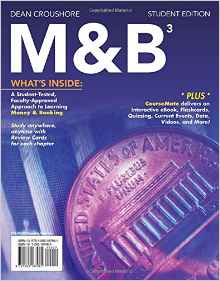
M and B 3,3rd Edition by Dean Croushore - Test Bank

M and B 3,3rd Edition by Dean Croushore - Test Bank   Instant Download - Complete Test Bank With Answers     Sample Questions Are Posted Below   Which of the following is a security in which a saver buys the security for a given time to maturity, earning interest at the specified rate? a. …

$19.99

M and B 3,3rd Edition by Dean Croushore – Test Bank


Instant Download – Complete Test Bank With Answers


Sample Questions Are Posted Below


  1. Which of the following is a security in which a saver buys the security for a given time to maturity, earning interest at the specified rate?
  2. a. Commercial paper Debenture
  3. c. Government bond
  4. Certificates of deposit


ANSWER:         d

POINTS:           1

DIFFICULTY:  Basic

TOPICS:           What Explains Differences in Interest Rates?

OTHER:            Factual


  1. The process of turning assets such as mortgages into bonds sold to investors is a. default.
  2. standard deviation. c. standardization.
  3. securitization.


ANSWER:         d

POINTS:           1

DIFFICULTY:  Basic

TOPICS:           What Explains Differences in Interest Rates?

OTHER:            Factual


  1. A debt security sold by large corporations to raise short­term funds is known as a(n)​
  2. a. ​commercial
  3. ​treasury bill.
  4. c. ​debenture.
  5. ​bond.


ANSWER:         a

POINTS:           1

DIFFICULTY:  Basic

TOPICS:           What Explains Differences in Interest Rates?

OTHER:            Factual


  1. A corporate bond with a financial rating of        is likely to have the lowest yield to maturity.​
  2. a. Ccc Baa c. Aaa d. BBB


ANSWER:         c

POINTS:           1

DIFFICULTY:  Moderate

TOPICS:           What Explains Differences in Interest Rates?

OTHER:            Conceptual


  1. ​Which of the following securities is likely to have the highest yield to maturity?
  2. a. ​A corporate bond with a Baa rating
  3. ​A corporate bond with AAA rating
  4. c. ​A government bond exempted from federal income tax
  5. ​A certificate of deposit with a three months to maturity


ANSWER:         a

POINTS:           1

DIFFICULTY:  Moderate

TOPICS:           What Explains Differences in Interest Rates?

OTHER:            Conceptual


  1. The U.S. Treasury security that was issued most recently, in the primary market, is known as the a. off-the-run security.
  2. on-the-run security.
  3. c. in-the-money
  4. out-of-the-money security.


ANSWER:         b

POINTS:           1

DIFFICULTY:  Basic

TOPICS:           What Explains Differences in Interest Rates?

OTHER:            Factual


  1. Which of the following securities has the highest yield to maturity?
  2. a. An on-the-run Treasury bond with ten years to maturity
  3. An on-the-run Treasury bond with twenty years to maturity
  4. c. An off­the­run Treasury bond with twenty­four years to maturity​
  5. An off-the-run Treasury bond with twelve years to maturity


ANSWER:         c

POINTS:           1

DIFFICULTY:  Moderate

TOPICS:           What Explains Differences in Interest Rates?

OTHER:            Conceptual


  1. An on-the-run ten-year Treasury security is
  2. a. a ten-year government bond that is in greatest demand by investors who want to hold it until it b. a ten-year government bond that can be used to pay estate taxes, also known as a flower bond.
  3. c. a non-taxable ten-year government
  4. a ten-year government bond that was the most recently issued.


ANSWER:         d

POINTS:           1

DIFFICULTY:  Basic

TOPICS:           What Explains Differences in Interest Rates?

OTHER:            Factual


  1. A basis point equals
  2. a. one hundredth of a percentage b. one tenth of a percentage point.
  3. c. one half of a percentage d. ten percentage points.


ANSWER:         a

POINTS:           1

DIFFICULTY:  Basic

TOPICS:           What Explains Differences in Interest Rates?

OTHER:            Factual


  1. 10. When the federal tax rate on interest income is 20 percent, an investor will purchase
  2. a. a local government bond with an interest rate of 7 percent a corporate bond with an interest rate of 8 percent
  3. c. a corporate bond with an interest rate of 5 percent
  4. a local government bond with an interest rate of 6.5 percent


ANSWER:         a

POINTS:           1

DIFFICULTY:  Moderate

TOPICS:           What Explains Differences in Interest Rates?

OTHER:            Conceptual

in order to maximize


  1. 11. Which of the following is true of a certificate of deposit?
  2. a. It is sold by large corporations to raise short-term
  3. ​A fall in its demand will lead to an increase in the price of the security and a fall in its yield to maturity.
  4. c. Higher the term to maturity of a certificate of deposit, higher the yield to d. ​It is not a liquid security and cannot be transferred from one party to another.


ANSWER:         c

POINTS:           1

DIFFICULTY:  Moderate

TOPICS:           What Explains Differences in Interest Rates?

OTHER:            Conceptual


  1. 12. ​Which of the following is a possible outcome of a fall in the demand for a security?
  2. a. ​It will lead to an increase in the price and the yield to maturity of the
  3. ​It will lead to an increase in the price of the security and a fall in its yield to maturity.
  4. c. ​It will lead to a fall in the price of the security and a fall in its yield to
  5. ​It will lead to a fall in the price of the security and an increase in its yield to maturity.


ANSWER:         d

POINTS:           1

DIFFICULTY:  Moderate

TOPICS:           What Explains Differences in Interest Rates?

OTHER:            Conceptual


  1. 13. Which of the following was an outcome of the announcement made by the S. government in October 2001 that it will stop selling 30-year bonds?
  2. a. There was a sharp fall in the price of the securities and an increase in the yield to b. There was a sharp rise in the price of the securities and a decline in the yield to maturity.
  3. c. There was a sharp rise in the price of the securities and an increase in the yield to d. There was a sharp fall in the price of the securities and a decline in the yield to maturity.


ANSWER:         b

POINTS:           1

DIFFICULTY:  Basic

TOPICS:           What Explains Differences in Interest Rates?

OTHER:            Factual


  1. 14. The relationship between interest rates with differing times to maturity is known as the of interest
  2. a. term structure term curve
  3. c. yield curve
  4. yield structure


ANSWER:         a

POINTS:           1

DIFFICULTY:  Basic

TOPICS:           The Term Structure of Interest Rates

OTHER:            Factual


  1. 15. Which of the following is true of short­term interest rates?​
  2. a. Short-term interest rates decline when long-term interest rates b. ​Short­term interest rates are more volatile than long­term interest rates. c. ​Short­term interest rates are higher than long­term interest rates.
  3. ​Short­term interest rates are less volatile than long­term interest rates.


ANSWER:         b

POINTS:           1

DIFFICULTY:  Basic

TOPICS:           The Term Structure of Interest Rates

OTHER:            Factual


  1. 16. What does a yield curve show?
  2. a. The yield to maturity on the vertical axis and the time to maturity on the horizontal axis The time to maturity on the vertical axis and the yield to maturity on the horizontal axis c. The yield to maturity on the vertical axis and the maturity date on the horizontal axis
  3. The maturity date on the vertical axis and the yield to maturity on the horizontal axis


ANSWER:         a

POINTS:           1

DIFFICULTY:  Basic

TOPICS:           The Term Structure of Interest Rates

OTHER:            Factual


  1. 17. The interest that an investor will earn, on maturity, if she purchases a two year bond by paying 6 percent today is a. 1.1025.
  2. 1.1363. c. 1.0036. d. 1.0003.


ANSWER:         b

POINTS:           1

DIFFICULTY:  Moderate

TOPICS:           The Term Structure of Interest Rates

OTHER:            Conceptual


  1. 18. Suppose that a risk-neutral investor has a choice between buying a one-year bond paying 4 percent today, a two- year bond paying 5 percent today, a three-year bond paying 3 percent today, or a four-year bond paying 5.8 percent today. The investor would buy
  2. a. a one-year bond b. a two-year bond today. c. a three-year bond today. d. a four-year bond today.


ANSWER:         d

POINTS:           1

DIFFICULTY:  Moderate

TOPICS:           The Term Structure of Interest Rates

OTHER:            Conceptual


  1. 19. Which of the following bonds has a comparatively higher yield to maturity?​
  2. a. ​A one­year bond with a 7 percent interest today b. ​A three­year bond with a 5 percent interest today c. ​A two­year bond with a 4 percent interest today
  3. ​A four­year bond with a 4.5 percent interest today


ANSWER:         d

POINTS:           1

DIFFICULTY:  Moderate

TOPICS:           The Term Structure of Interest Rates

OTHER:            Conceptual


  1. 20. The analysis of the term structure of interest rates assumes that​
  2. a. ​there is uncertainty about future interest
  3. ​there is no risk involved in the purchase and sale of long­term securities.
  4. c. ​short­term and long­term securities offer the same rate of
  5. ​there are no transaction costs.


ANSWER:         d

POINTS:           1

DIFFICULTY:  Basic

TOPICS:           The Term Structure of Interest Rates

OTHER:            Factual


  1. 21. Which of the following is true of the analysis of the term structure of interest rates?​
  2. a. ​It assumes that investors in long­term securities face high transaction
  3. ​It assumes that investors can predict short­term interest rates accurately.
  4. c. ​It assumes that the yield curve is always
  5. ​It assumes that investors in bonds have a preferred habitat.


ANSWER:         b

POINTS:           1

DIFFICULTY:  Moderate

TOPICS:           The Term Structure of Interest Rates

OTHER:            Conceptual


  1. 22. According to the expectations theory of the term structure of interest rates,
  2. a. a short-term interest rate is equal to the average of current and expected future long-term interest b. a short-term interest rate has no relation to long-term interest rates.
  3. c. a long-term interest rate is equal to the average of current and expected future short-term interest d. the yield curve is always flat.


ANSWER:         c

POINTS:           1

DIFFICULTY:  Basic

TOPICS:           The Term Structure of Interest Rates

OTHER:            Factual


  1. 23. Consider a two-year bond that can be purchased for $550. What is the yield to maturity on the bond if it promises a

payment of $890 in two years?​

  1. a. ​27.2 percent
  2. ​20 percent
  3. c. ​6 percent
  4. ​18.1 percent


ANSWER:         a

POINTS:           1

DIFFICULTY:  Moderate

TOPICS:           The Term Structure of Interest Rates

OTHER:            Conceptual


  1. 24. Suppose an investor purchases a one-year bond today, for $960. The bond promises a return of $1,000. She purchases another one-year bond, after a year, for $887 that promises a return of $990. What is the yield to maturity earned by the investor on the purchase of these two short­term bonds?​
  2. a. ​6.50 percent ​7.85 percent c. ​8 percent
  3. ​10 percent


ANSWER:         b

POINTS:           1

DIFFICULTY:  Moderate

TOPICS:           The Term Structure of Interest Rates

OTHER:            Conceptual


  1. 25. The present value of a two­year bond with a future payment of $1,345.50 and the yield to maturity of 6 percent is​
  2. a. ​$1,300
  3. ​$1,500.50 c. ​$1,253.62 d. ​$1,246.72


ANSWER:         c

POINTS:           1

DIFFICULTY:  Moderate

TOPICS:           The Term Structure of Interest Rates

OTHER:            Conceptual


  1. 26. If the interest rate on a one-year bond today is 5 percent and the expected interest rate on a one-year bond one

year from now is ​5.6 percent, then the interest rate on a two­year bond will be

  1. a. ​7 percent
  2. ​12.5 percent c. ​8.5 percent d. ​6.55 percent


ANSWER:         d

POINTS:           1

DIFFICULTY:  Moderate

TOPICS:           The Term Structure of Interest Rates

OTHER:            Conceptual


  1. 27. According to the expectations theory of the term structure of interest rates, if the interest rate on a one-year bond today is 0 percent, the expected interest rate on a one-year bond one year from now is 4.0 percent, and the expected interest rate on a one-year bond two years from now is 4.5 percent, then the interest rate on a two-year bond today is
  2. a. 00 percent. b. 3.50 percent. c. 3.83 percent. d. 4.00 percent.


ANSWER:         c

POINTS:           1

DIFFICULTY:  Moderate

TOPICS:           The Term Structure of Interest Rates

OTHER:            Conceptual


  1. 28. What does a flat yield curve imply, according to the expectations theory of the term structure of interest rates?
  2. a. The price level will not change in the b. Future long-term rates are expected to rise. c. Future long-term rates are expected to fall.
  3. Future short-term rates are not expected to change.


ANSWER:         d

POINTS:           1

DIFFICULTY:  Basic

TOPICS:           The Term Structure of Interest Rates

OTHER:            Factual


  1. 29. What does a downward-sloping yield curve imply, according to the expectations theory of the term structure of interest rates?
  2. a. Investors expect long-term interest rates to rise in the
  3. Investors expect future short-term interest rates to be lower than the current short-term interest rate. c. Investors expect future short-term interest rates to be the same as the current short-term interest rate. d. Investors expect future short-term interest rates to be higher than the current short-term interest rate.


ANSWER:         b

POINTS:           1

DIFFICULTY:  Basic

TOPICS:           The Term Structure of Interest Rates

OTHER:            Factual


  1. 30. What does an upward-sloping yield curve imply, according to the expectations theory of the term structure of interest rates?
  2. a. Investors expect long-term interest rates to fall in the
  3. Investors expect future short-term interest rates to be lower than the current short-term interest rate. c. Investors expect future short-term interest rates to be the same as the current short-term interest rate. d. Investors expect future short-term interest rates to be higher than the current short-term interest rate.


ANSWER:         d

POINTS:           1

DIFFICULTY:  Basic

TOPICS:           The Term Structure of Interest Rates

OTHER:            Factual


  1. 31. Term premium refers to
  2. a. the interest rate on a long-term bond minus the average interest rate on future short-term b. the interest rate on a long-term bond plus the average interest rate on future short-term bonds.
  3. c. the average interest rate on future short-term
  4. the standard deviation of the interest rate on long-term bonds.


ANSWER:         a

POINTS:           1

DIFFICULTY:  Basic

TOPICS:           The Term Premium

OTHER:            Factual


  1. a. A short-term bond and a long-term bond provides the same
  2. Investors in short-term bonds earn higher premiums than investors in long-term bonds.
  3. c. A change in the interest rates of bonds affect the prices of long-term bonds more than the prices of short- term
  4. A change in the interest rates of bonds affect the prices of short-term bonds more than the prices of long- term bonds.


ANSWER:         c

POINTS:           1

DIFFICULTY:  Basic

TOPICS:           The Term Premium

OTHER:            Factual


  1. 33. Consider the bond market to be in equilibrium according to our complete theory of the term structure of interest rates. The current interest rate on one-year bonds is 0 percent, and you believe, as does everyone in the market, that in one year the interest rate on one-year bonds will be 3.5 percent. Assume that there is no term premium on a one-year bond. Suppose there is a term premium equals 0.75 percent × the number of years to maturity, for the two- year bond. The interest rate today on the two-year bond is
  2. a. 25 percent. b. 4.00 percent. c. 4.75 percent. d. 5.00 percent.


ANSWER:         c

POINTS:           1

DIFFICULTY:  Moderate

TOPICS:           The Term Premium

OTHER:            Conceptual


  1. 34. Consider the following hypothetical situation. The interest rate on a two-year bond today is 5 percent and the interest rates on two one-year bonds are 3 percent and 4 percent respectively. The term premium earned by the investors is
  2. a. 5 b. 4 percent.
  3. c. 25 percent. d. 6 percent.


ANSWER:         b

POINTS:           1

DIFFICULTY:  Basic

TOPICS:           The Term Premium

OTHER:            Factual


  1. 35. Which of the following bonds has the greatest interest-rate risk?
  2. a. A one-year bond A five-year bond c. A ten-year bond
  3. A thirty-year bond


ANSWER:         d

POINTS:           1

DIFFICULTY:  Basic

TOPICS:           The Term Premium

OTHER:            Factual


  1. 36. Which of the following bonds is likely to have the highest term premium?
  2. a. A one-year bond A five-year bond c. A ten-year bond
  3. A thirty-year bond


ANSWER:         d

POINTS:           1

DIFFICULTY:  Basic

TOPICS:           The Term Premium

OTHER:            Factual


  1. 37. Assume that the bond market is in equilibrium. The current interest rate on one-year bonds is 5 percent, the interest rate on one-year bonds, one year from now is 6 percent, and in two years the interest rate on one-year bonds will be

6.5 percent. Assume that there is no term premium on a one-year bond. If the term premium equals 0.5 percent × the number of years to maturity, for two-year bonds and three-year bonds. The interest rate today on the two-year bond is                                                                                    and the interest rate today on a three-year bond is        .

  1. a. 5 percent; 5.8 percent b. 6.0 percent; 6.3 percent c. 6.2 percent; 6.8 percent d. 6.5 percent; 7.3 percent


ANSWER:         d

POINTS:           1

DIFFICULTY:  Moderate

TOPICS:           The Term Premium

OTHER:            Conceptual


  1. a. The prices of debt securities fall during
  2. Interest rates on neither the short-term securities nor the long-term securities fall in recession.
  3. c. Interest rates on long-term securities fall more than the interest rates on short-term securities in d. Interest rates on short-term securities fall more than the interest rates on long-term securities in recession.


ANSWER:         d

POINTS:           1

DIFFICULTY:  Basic

TOPICS:           The Yield Curve and the Business Cycle

OTHER:            Factual


  1. 39. An inverted yield curve indicates that
  2. a. an economic expansion has just
  3. an economic expansion has been going on for several years. c. a recession is about to begin.
  4. a recession is nearly over.


ANSWER:         c

POINTS:           1

DIFFICULTY:  Basic

TOPICS:           The Yield Curve and the Business Cycle

OTHER:            Factual


  1. 40. Which of the following is likely to happen to short-term and long-term interest rates during recessions?
  2. a. The short-term interest rates rise during recessions but the long-term interest rates fall during b. The short-term interest rates fall during recessions but the long-term interest rates rise during recessions. c. Both the short-term and the long-term interest rates fall during recessions.
  3. Both the short-term and the long-term interest rates rise during recessions.


ANSWER:         c

POINTS:           1

DIFFICULTY:  Basic

TOPICS:           The Yield Curve and the Business Cycle

OTHER:            Factual


  1. 41. If you observe that the current yield curve is upward sloping, it is likely that a. an economic expansion has just
  2. an economic expansion has been going on for several years. c. a recession is about to begin.
  3. a recession is nearly over.


ANSWER:         b

POINTS:           1

DIFFICULTY:  Basic

TOPICS:           The Yield Curve and the Business Cycle

OTHER:            Factual


  1. 42. A sharp upward sloping yield curve indicates that a. an economic expansion has just
  2. an economic expansion has been going on for several years. c. a recession is about to begin.
  3. an economic expansion is nearly over.


ANSWER:         a

POINTS:           1

DIFFICULTY:  Basic

TOPICS:           The Yield Curve and the Business Cycle

OTHER:            Factual


  1. 43. Which of the following is likely to happen to short-term and long-term interest rates during expansions?
  2. a. Both the short-term and the long-term interest rates rise during
  3. The short-term interest rates fall during expansions but the long-term interest rates rise during expansions. c. Both the short-term and the long-term interest rates fall during expansions.
  4. The short-term interest rates rise during expansions but the long-term interest rates fall during expansions.


ANSWER:         a

POINTS:           1

DIFFICULTY:  Basic

TOPICS:           The Yield Curve and the Business Cycle

OTHER:            Factual


  1. 44. Which of the following statements is true?
  2. a. During recessions, there is an increase in the demand for debt b. During recessions, there is an increase in the supply of debt securities.
  3. c. During recessions, the supply-curve of debt securities shift comparatively more, to the left, than the demand- curve for
  4. During recessions, the demand-curve for debt securities shift comparatively more, to the left, than the supply- curve of securities.


ANSWER:         c

POINTS:           1

DIFFICULTY:  Basic

TOPICS:           The Yield Curve and the Business Cycle

OTHER:            Factual


  1. 45. Which of the following is true of the yield curve?
  2. a. The yield curve is steep and is upward sloping when the recession ends and the economy starts to b. The yield curve is flat and is downward sloping when the recession ends and the economy starts to recover. c. The yield curve is flat or inverted when the term premium is small.
  3. The yield curve is downward sloping when the term premium is large.


ANSWER:         a

POINTS:           1

DIFFICULTY:  Basic

TOPICS:           The Yield Curve and the Business Cycle

OTHER:            Factual


  1. 46. When an economic expansion has been going on for several years, you are likely to observe that a. the yield curve is sharply upward
  2. the yield curve is somewhat upward sloping. c. the yield curve is flat or inverted.
  3. the yield curve is a vertical straight line.


ANSWER:         b

POINTS:           1

DIFFICULTY:  Basic

TOPICS:           The Yield Curve and the Business Cycle

OTHER:            Factual


  1. 47. Term spread is the interest rate on a long-term debt security
  2. a. minus plus
  3. c. times
  4. divided by

the interest rate on a short-term debt


ANSWER:         a

POINTS:           1

DIFFICULTY:  Basic

TOPICS:           Policy Perspective: Can the Term Spread Help Predict Recessions?

OTHER:            Factual


  1. 48. If the interest rate on three-month Treasury securities is 6 percent and the interest rate on ten-year Treasury securities is 4 percent, then
  2. a. the economy has probably just emerged from a b. the yield curve slopes upward steeply.
  3. c. a recession is likely to
  4. the economy is probably in the middle of an economic expansion.


ANSWER:         c

POINTS:           1

DIFFICULTY:  Basic

TOPICS:           Policy Perspective: Can the Term Spread Help Predict Recessions?

OTHER:            Conceptual


  1. 49. If the interest rate on three-month Treasury securities is 5 percent and the interest rate on ten-year Treasury securities is 6 percent, then the odds of a recession are
  2. a. less than 15 b. about 25 percent.
  3. c. about 40 d. about 80 percent.


ANSWER:         a

POINTS:           1

DIFFICULTY:  Basic

TOPICS:           Policy Perspective: Can the Term Spread Help Predict Recessions?

OTHER:            Conceptual


  1. 50. Which of the following statements is true?
  2. a. The yield curve slopes downward when the term spread is
  3. Researchers suggest that the smaller the term spread, the higher the chance is of a recession in the coming year.
  4. c. The yield curve slopes upward when the term spread is negative
  5. Researchers suggest that the larger the spread, the higher the chance is of a recession in the coming year.


ANSWER:         b

POINTS:           1

DIFFICULTY:  Basic

TOPICS:           Policy Perspective: Can the Term Spread Help Predict Recessions?

OTHER:            Conceptual


  1. 51. Which of the following is a possible outcome of a negative or low term spread?
  2. a. A low of negative spread may indicate higher short-term interest rates in the b. A low or negative spread may cause the yield curve to slope upward.
  3. c. A low or negative spread may reduce lending by
  4. A low or negative spread may indicate the early stages of economic expansions.


ANSWER:         c

POINTS:           1

DIFFICULTY:  Basic

TOPICS:           Policy Perspective: Can the Term Spread Help Predict Recessions?

OTHER:            Conceptual


  1. 52. What is the reason for a low rated security to generate a high yield to maturity?


ANSWER:  Riskier bonds have higher interest rates, to compensate investors for taking the additional risk.

Therefore, in order to attract investors to take additional risk by investing in low-rated securities, these securities have comparatively higher interest rates, or yield to maturity.

POINTS:    1

TOPICS:    What Explains Differences in Interest Rates?


  1. 53. Put the following securities in order according to their after-tax interest rates, from lowest to highest. The federal tax rate on interest income is 30 percent. Show your


A:       A corporate bond that pays an interest rate of 6 percent. B: A corporate bond that pays an interest rate of 7 percent.

C:       A local government bond identical that pays an interest rate of 4.5 percent.


ANSWER:  The after-tax interest rate is (1 − t) × i for the corporate bonds, but the local government bond is free from tax.

A:       (1 − 0.3) × 6% = 4.2% B:            (1 − 0.3) × 7% = 4.9%

C:       (1 − 0.0) × 4.5% = 4.5%

Order from lowest to highest: A, C, B

POINTS:    1

TOPICS:    What Explains Differences in Interest Rates?


  1. 54. Compare a two-year bond with two successive one-year bonds, in which an investor buys a one-year bond today, then another one-year bond when the first matures. Suppose the two-year bond has an annual interest rate of 4 percent.


Consider the pattern of interest rates on the one-year bonds listed below and explain whether an investor should buy the two-year bond or the one-year bond today, assuming that the only thing that matters to the investor is the amount of money she has at the end of the two years; that is, she is risk neutral. In each case, how much would an investor have at the end of two years if she invested $1,000 today? Show your work. Round to the nearest penny ($0.01). In each case be sure to say which bond the investor would buy today.


  1. a. The interest rate on a one-year bond today is 1 percent, and the interest rate on a one-year bond purchased in one year from now is 8


  1. b. The interest rate on a one-year bond today is 2 percent; and the interest rate on a one-year bond purchased one-year from now is 6


  1. c. The interest rate on a one-year bond today is 3 percent; and the interest rate on a one-year bond purchased one-year from now is 5


  1. d. The interest rate on a one-year bond today is 5 percent; nd the interest rate on a one-year bond purchased one-year from now is 3


a. Two one-year bonds: One two-year bond: $1,000 × 1.01 × 1.08 = $1,090.80

$1,000 × 1.042 = $1,081.60

In this case, the investor will purchase two one-year bonds.
b. Two one-year bonds: $1,000 × 1.02 × 1.06 = $1,081.20
  One two-year bond: $1,000 × 1.042 = $1,081.60
In this case, the investor will purchase one two-year bond.
c. Two one-year bonds: $1,000 × 1.03 × 1.05 = $1,081.50
  One two-year bond: $1,000 × 1.042 = $1,081.60


ANSWER:


In this case, the investor will buy either two one-year bonds or one two-year bond. d.                                     Two one-year bonds:    $1,000 × 1.05 × 1.03 = $1,081.50

One two-year bond:            $1,000 × 1.042 = $1,081.60

In this case, the investor will buy either two one-year bonds or one two-year bond.

POINTS:    1

TOPICS:    The Term Structure of Interest Rates


  1. 55. Suppose that a risk-neutral investor has a choice between buying a one-year bond paying 5 percent today, a two- year bond paying 4 percent today, a three-year bond paying 5.8 percent today, or a four-year bond paying 6.2 percent today, if a one-year bond purchased one year from now is expected to have an interest rate of 6 percent, a one-year bond purchased two years from now is expected to have an interest rate of 7 percent, and a one-year bond purchased three years from now is expected to have an interest rate of 8 percent. Explain with the help of suitable calculations, which of the following would the investor decide to do?
  2. a. The investor will purchase a one-year bond today, followed by three successive one-year b. The investor will purchase a two-year bond today, followed by two successive one-year bonds. c. The investor will purchase a three-year bond today, followed by a one-year bond.
  3. d. The investor will purchase a four-year bond


ANSWER:  One-year bond today, followed by three successive one-year bonds: 1.05 × 1.06 × 1.07 × 1.08 = 1.286


Two-year bond today, followed by two successive one-year bonds: 1.054 × 1.054 × 1.07 × 1.08 = 1.284


Three-year bond today, followed by a one-year bond: 1.058 × 1.058 × 1.058 × 1.08 = 1.279


Four-year bond today: 1.062 × 1.062 × 1.062 × 1.062 = 1.272


Based on the calculations it is clear that the investor would buy a one-year bond today that gives him a return of 1.286.

POINTS:    1

TOPICS:    The Term Structure of Interest Rates


  1. 56. Consider the bond market to be in equilibrium according to our complete theory of the term structure of interest rates. You observe the following interest rates available today on bonds with differing times to maturity. (You may ignore transactions )


Time to maturity         Yield to maturity

1 year                           5.0%

2 years                          7.0%

3 years                          7.5%


The term premium for the two-year bond is the extra yield to maturity paid on a two-year bond compared with buying two separate one-year bonds (one today and another after one year). You believe that the term premium on the two-year bond is 0.5 percent.


The term premium for the three-year bond is the extra yield to maturity paid on a three-year bond compared with buying three separate one-year bonds (one today, another after one year, and another after two years). You believe that the term premium on the three-year bond is 1.0 percent.


Given your beliefs about the term premiums on two-year and three-year bonds, calculate the interest rates on one- year bonds that you expect to prevail one year from now and two years from now. In other words, what do you expect to be the yield to maturity on a one-year bond one year from now and what do you expect to be the yield to maturity on a one-year bond two years from now? Explain and show all your work.


ANSWER:  The term premium implies that


.


POINTS:    1

TOPICS:    The Term Premium


  1. 57. Consider the bond market to be in equilibrium according to our complete theory of the term structure of interest

rates. The current interest rate on one-year bonds is 2 percent, and you believe, as does everyone in the market, that in one year the interest rate on one-year bonds will be 3 percent, and in two years, the interest rate on one-year bonds will be 4 percent. That is, using our standard notation,

= 2%,  = 3%, and  = 4%.

Assume that there is no term premium on a one-year bond.


  1. a. According to the expectations theory of the term structure of interest rates, what will the interest rate be today on a two-year bond and a three-year bond?


Suppose the term premium equals 0.75 percent × the number of years to maturity, for the 2-year bond and the 3- year bond.


  1. b. Calculate the interest rate today on the two-year bond and the three-year bond, incorporating the term


Draw the yield curve for today, using the values you calculated in part b. Your drawing

  1. c. should show three points and should be drawn reasonably to scale, showing the values on each axis of each point plotted. Explain briefly (in one or two sentences) why the yield curve

has the shape it does.


ANSWER:  a.     According to the expectations theory of the term structure, the interest rates are


, and


.


  1. b. The term premiums to be added onto the results in part a are: Two-year bond: 75% × 2 = 1.5%

Three-year bond: 0.75% × 3 = 2.25%


The interest rates are thus:


Two-year bond:      = 2.5% + 1.5% = 4.0% Three-year bond:      = 3% + 2.25% = 5.25%


  1. c. Plot the points: = 2%,      = 4%,      = 25%


POINTS:    1

The yield curve slopes upward because short-term rates are expected to rise and there is a term premium.


TOPICS:    The Term Premium


  1. 58. What do steep upward-sloping yield curves indicate about the business cycle?


ANSWER:  A steep upward-sloping yield curve indicates that a recession has ended and an expansion has just begun. At such a time, people expect short-term interest rates to begin rising. Because of this expectation and because of the term premium, long-term interest rates should be greater than short-term interest rates.

POINTS:    1

TOPICS:    The Yield Curve and the Business Cycle


  1. 59. Explain how an economist could use the slope of the yield curve to analyze the probability that a recession will

Explain why the spread may matter.


ANSWER:  The smaller the term spread (the more inverted the yield curve), the greater are the odds of a recession.

A smaller term spread may mean that monetary policy is tight and may show that banks will reduce lending, both of which are likely to slow economic growth.

POINTS:    1

TOPICS:    Policy Perspective: Can the Term Spread Help Predict Recessions?

Additional information

Add Review

Your email address will not be published. Required fields are marked *